
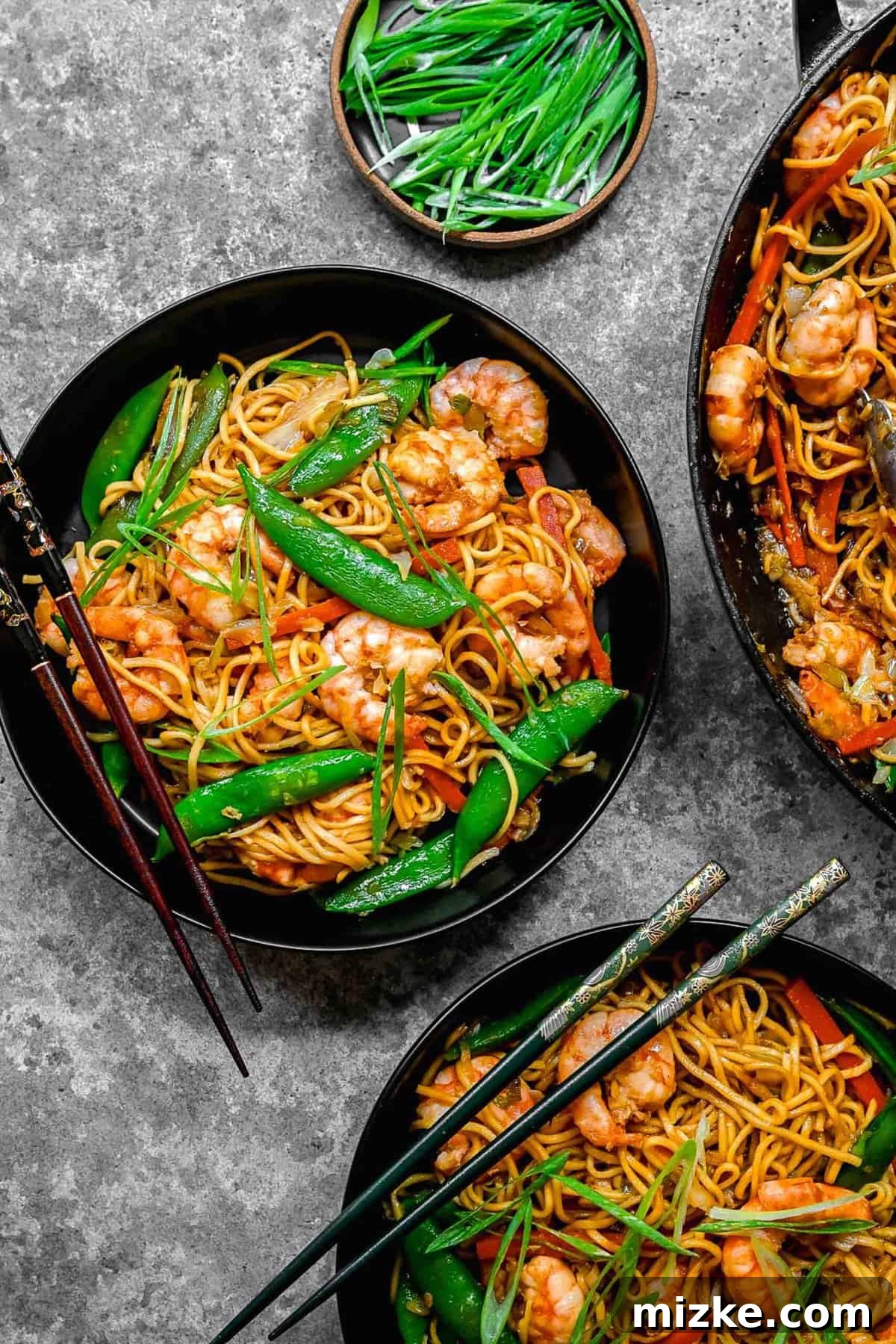
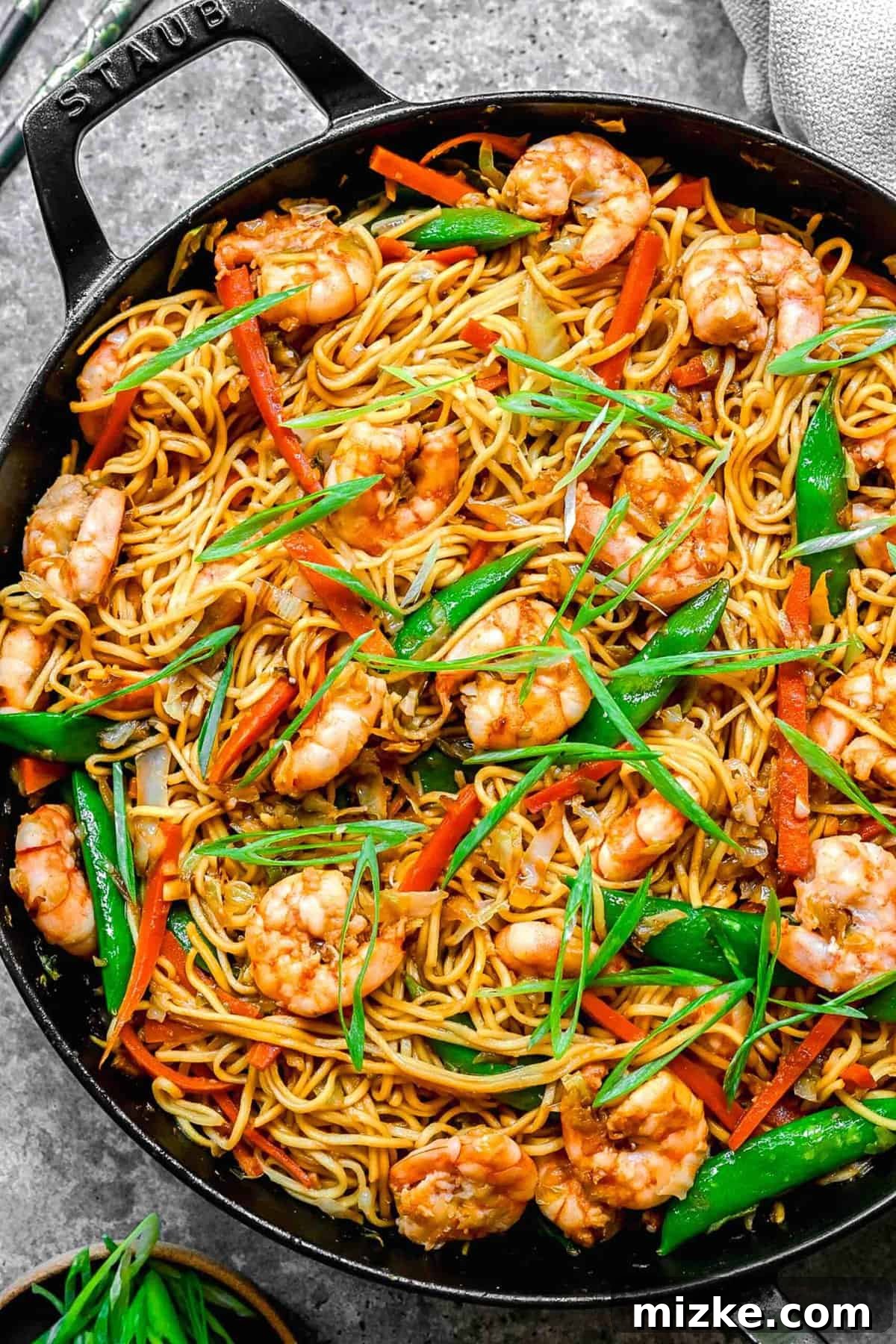
Indulge in a symphony of irresistible flavors and delightful textures with this incredible shrimp chow mein. Featuring succulent shrimp, a medley of vibrant stir-fried vegetables, and perfectly pan-fried noodles lightly coated in a crave-worthy savory-sweet sauce, this dish is guaranteed to impress. Say goodbye to greasy takeout and embrace the joy of creating this classic Chinese favorite right in your own kitchen!
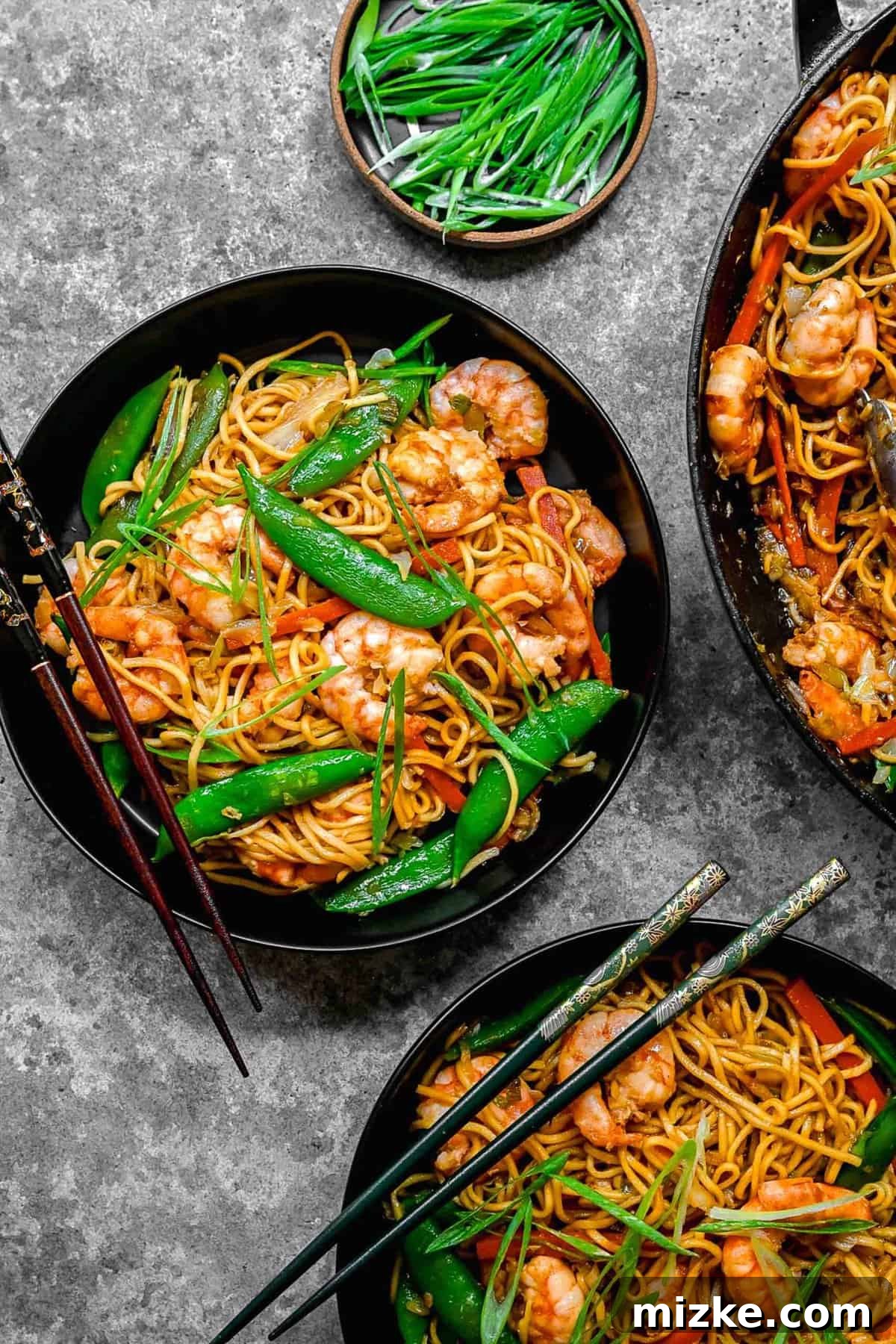
Easy & Delicious Shrimp Chow Mein Recipe
Are you craving the comforting flavors of Chinese cuisine but tired of the expense and the heavy feeling that often accompanies takeout? This simple yet exquisite, restaurant-quality shrimp chow mein recipe offers the perfect solution. An iconic staple in Asian cooking, this dish presents a harmonious blend of pan-fried noodles, plump shrimp, and an assortment of crisp-tender vegetables, all brought together by a dynamic sauce that is both savory and subtly sweet. The noodles achieve an ideal level of crispiness, creating an addictive texture, while the sauce, infused with zesty ginger, aromatic garlic, the delicate sweetness of oyster sauce, and the rich umami of soy sauce, permeates every strand and morsel. You’ll find yourself reaching for a second helping before you know it.
One of the many reasons to love this homemade meal is its incredible speed and ease – it comes together in just over 30 minutes! Furthermore, it genuinely rivals, if not surpasses, the quality of your favorite local Chinese restaurant. You get all the authentic flavor without the worry of pesky preservatives, excessive oil, or mystery additives. Plus, it’s significantly more budget-friendly than ordering in. Who could resist such a perfect combination?
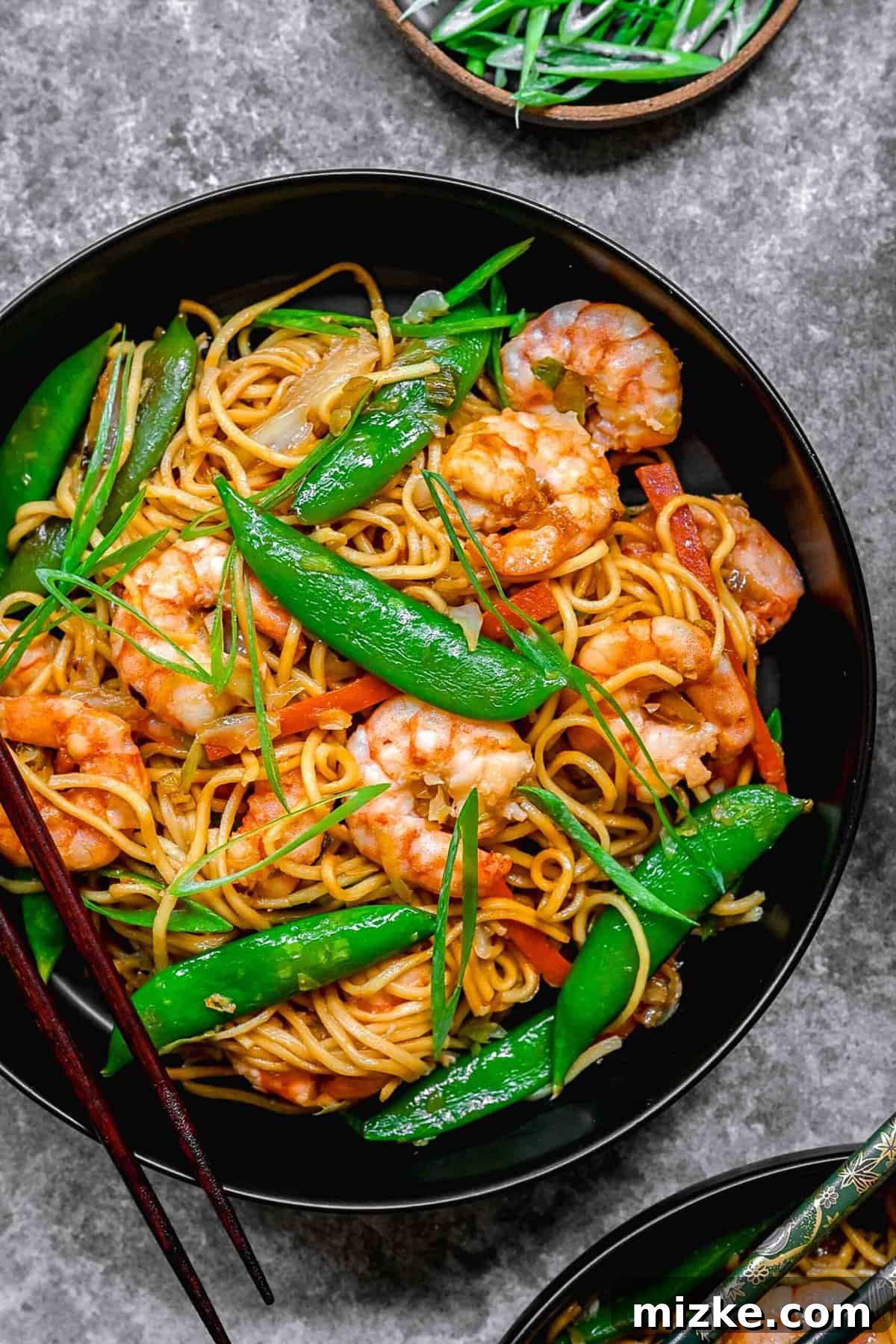
Why Make Homemade Shrimp Chow Mein?
Opting to make shrimp chow mein at home offers a multitude of benefits that extend beyond just convenience. Firstly, you gain complete control over the ingredients, allowing you to select the freshest produce and high-quality shrimp, free from artificial additives or excessive sodium often found in commercial preparations. This makes your meal inherently healthier and more nutritious.
Secondly, the cost-effectiveness is undeniable. A single homemade batch often yields multiple servings for a fraction of the price of restaurant takeout. It’s a smart way to enjoy your favorite flavors without breaking the bank. Thirdly, the satisfaction of creating a delicious meal from scratch is incredibly rewarding. The aroma of garlic and ginger sizzling in your kitchen, the vibrant colors of fresh vegetables, and the perfect sizzle of noodles all contribute to a truly immersive cooking experience.
Finally, homemade chow mein allows for endless customization. You can adjust the spice level, swap out vegetables based on seasonal availability or personal preference, and even experiment with different proteins. This adaptability ensures that every batch can be tailored exactly to your taste, making it a truly versatile and beloved dish in any home cook’s repertoire.
What Exactly Is Chow Mein?
Chow Mein, a deeply cherished and widely recognized dish in Chinese culinary traditions, is essentially a delightful medley of stir-fried noodles, complemented by a chosen protein (such as beef, chicken, pork, shrimp, or even tofu), and an array of colorful vegetables, all united by a vibrant, savory, and often slightly sweet sauce. The very name “chow mein” holds a literal translation of “fried noodles,” directly indicating the star component of this iconic dish: the perfectly cooked noodles that are then quickly pan-fried to achieve a subtle, yet satisfying, crispy texture.
These distinctive, lightly crisp noodles are then tossed with a wonderfully flavorful sauce – one that enhances rather than overwhelms – along with a generous assortment of fresh, crunchy vegetables and your chosen protein. This combination of textures, from the chewy-crisp noodles to the tender protein and vibrant veggies, all coated in an utterly delicious sauce, explains why chow mein has garnered immense popularity and become a beloved comfort food across the globe. It’s a testament to simple ingredients coming together to create something truly extraordinary and universally appealing.
Chow Mein vs. Lo Mein: Understanding the Key Difference
While both chow mein and lo mein are iconic Chinese noodle dishes that feature noodles, sauce, vegetables, and often a protein, their primary distinction lies in the preparation method of the noodles themselves. This subtle difference leads to markedly different textures and overall dish profiles.
The names themselves offer the clearest clue: “chow mein” translates to “fried noodles,” whereas “lo mein” translates to “stirred noodles.” These translations accurately reflect their respective cooking techniques:
- Chow Mein (“Fried Noodles”): In a classic chow mein, the noodles are first boiled until they are just al dente. They are then drained and often lightly tossed with oil before being quickly pan-fried in a hot wok or skillet. This frying step is crucial, as it gives the noodles their characteristic slightly crispy, almost caramelized exterior, while retaining a pleasant chewiness inside. The protein and vegetables are typically stir-fried separately or briefly with the noodles, and the sauce is added at the end, just enough to coat the ingredients lightly without making the noodles soggy. The focus is on the distinct texture of the “fried” noodles.
- Lo Mein (“Stirred Noodles”): For lo mein, the noodles are also boiled until al dente but are then gently stirred directly into the luscious sauce, along with the pre-cooked stir-fried vegetables and protein. Unlike chow mein, lo mein noodles are not explicitly pan-fried for crispness. Instead, they absorb the sauce, resulting in a softer, more pliable, and thoroughly coated noodle texture. The sauce is generally more prominent and coats the noodles more thoroughly, making it a “saucy” noodle dish.
Understanding this distinction helps appreciate the unique qualities of each dish, though both offer incredibly satisfying culinary experiences.
Essential Recipe Ingredients
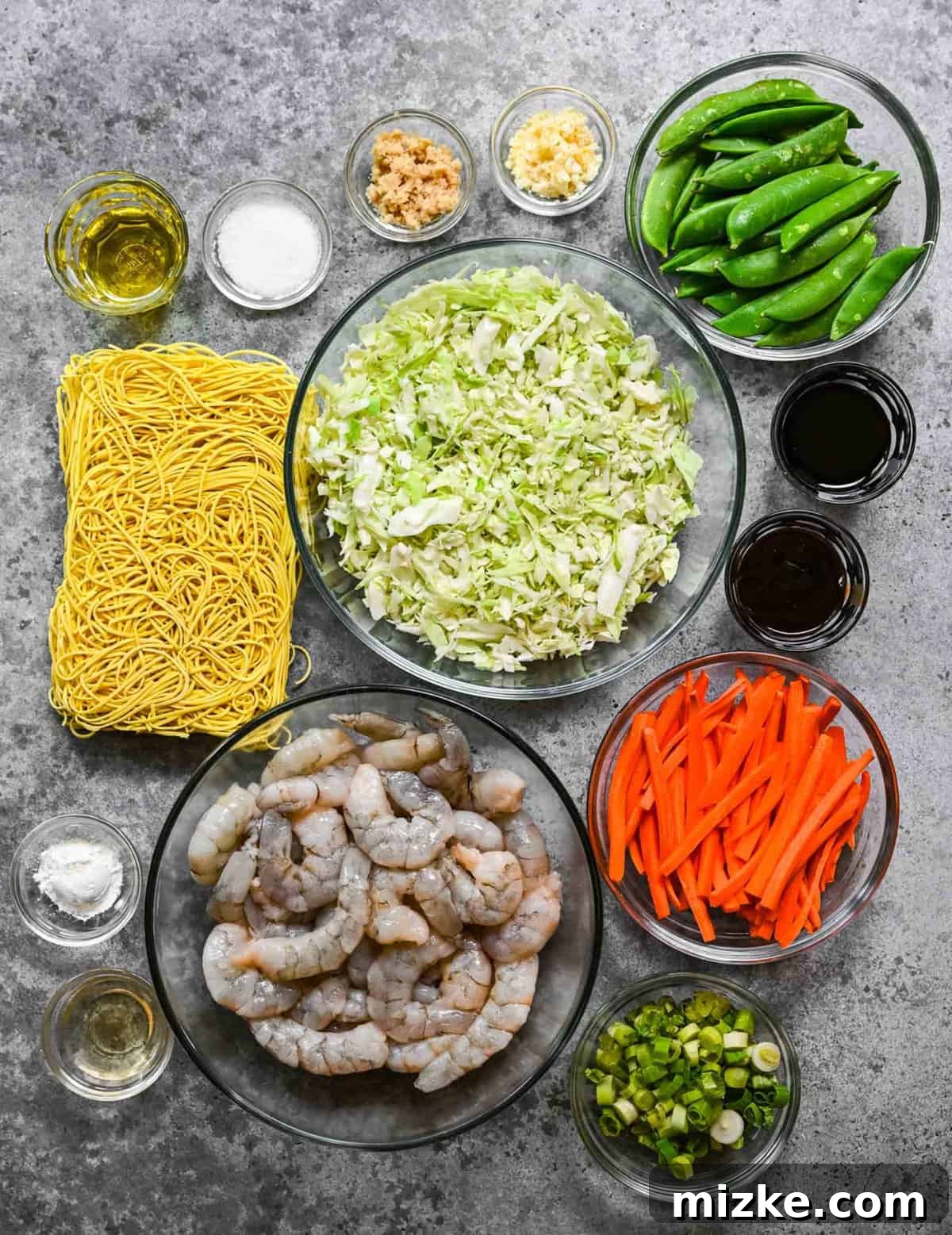
Gathering your ingredients before you begin cooking is a vital step for any stir-fry, and this flavorful shrimp chow mein is no exception. Having everything prepped and ready will ensure a smooth and enjoyable cooking process. Below is a detailed list of what you’ll need to create this fantastic dish. For precise measurements, please refer to the complete recipe card at the bottom of this article.
For the Flavorful Stir Fry
- Chow Mein Noodles: It’s important to seek out dried, thin egg pasta specifically labeled as “chow mein noodles.” These are distinct from the crunchy, fried noodle pieces often used as salad toppings. If authentic chow mein noodles are unavailable, thin spaghetti or angel hair pasta can serve as an excellent substitute, delivering a similar texture.
- Sesame Oil: Used both for cooking and for its distinctive nutty aroma, essential for an authentic Asian flavor profile.
- Large Shrimp: Opt for fresh or frozen large shrimp that are already peeled and deveined to save on prep time. Their sweet and tender texture is perfect for this dish.
- Minced Garlic: Freshly minced garlic provides a pungent, aromatic base that is fundamental to Chinese cooking.
- Grated Ginger: Freshly grated ginger adds a warm, spicy, and zesty kick, elevating the overall flavor.
- Chopped Scallions (Green Onions): Used for both flavor within the stir-fry and as a fresh, vibrant garnish, adding a mild oniony note.
- Shredded Green Cabbage: Offers a pleasant crunch and subtle sweetness that stands up well to stir-frying.
- Sugar Snap Peas: These provide a lovely crisp-sweet contrast and a bright green color.
- Carrots: Julienne-cut carrots add natural sweetness, a vibrant orange hue, and a firm, crisp texture.
For the Irresistible Sauce
This sauce strikes a perfect balance of umami, sweetness, and tanginess, creating the signature chow mein flavor.
- Oyster Sauce: A key ingredient for its rich, savory, and slightly sweet umami depth. It’s a foundational flavor in many Chinese dishes.
- Low-Sodium Soy Sauce: Provides essential saltiness and umami without making the dish overly salty. Coconut aminos can be used as a gluten-free alternative.
- Rice Vinegar: Adds a crucial touch of acidity and tang, brightening the overall flavor of the sauce.
- Sesame Oil: Incorporated into the sauce for its intense, nutty aroma, which is vital for the authentic taste.
- Cornstarch: Acts as a thickening agent, giving the sauce a glossy finish and ensuring it clings beautifully to the noodles and vegetables.
- Granulated Sugar: Balances the savory and tangy elements, bringing out the subtle sweetness inherent in the dish.
How To Make Shrimp Chow Mein: Step-by-Step Guide
You’ll be pleasantly surprised by how quickly and effortlessly this superior-to-takeout shrimp chow mein comes together. Follow these straightforward steps to create a truly memorable meal. For a comprehensive breakdown with exact measurements and timings, please scroll down to the detailed recipe card.
- Prepare the Noodles: Begin by cooking the chow mein noodles according to the package instructions. Aim for an al dente texture to ensure they don’t become mushy when stir-fried. Once cooked, drain them thoroughly and set aside.
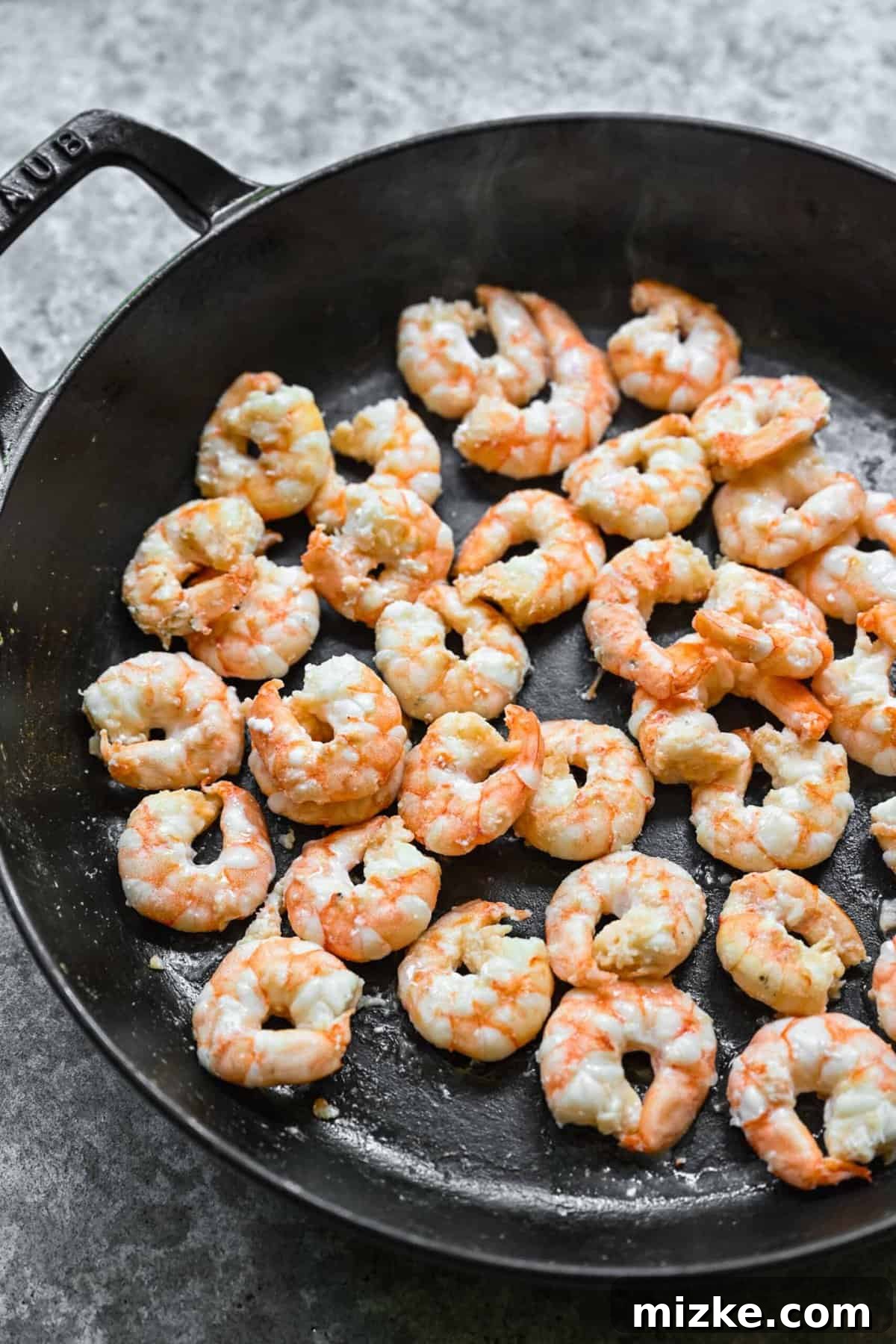
- Stir-Fry the Shrimp: Heat a portion of the sesame oil (about 2 tablespoons) in a large skillet or wok over medium-high heat. Add the peeled and deveined shrimp and stir-fry for 4-5 minutes until they turn pink and opaque, indicating they are cooked through. Be careful not to overcook them, as shrimp can become tough quickly. Remove the cooked shrimp from the pan and set them aside.
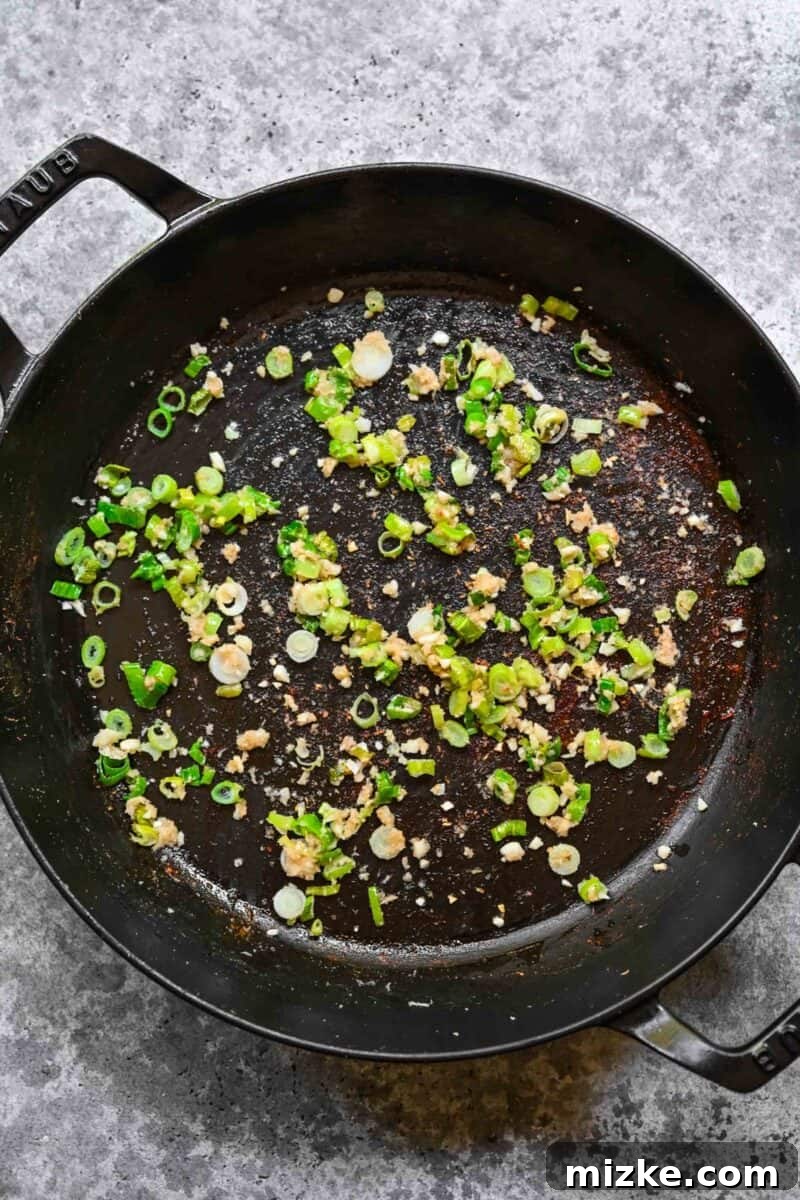
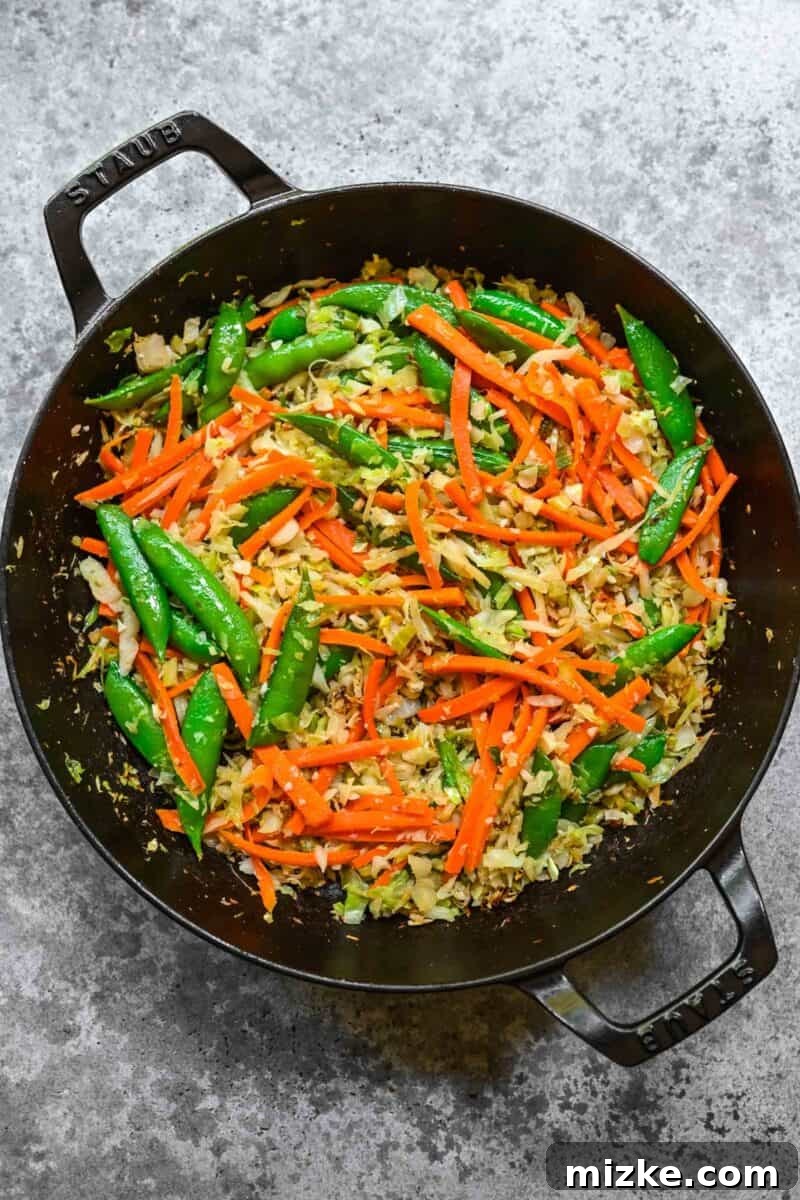
- Sauté the Aromatics and Vegetables: Add the remaining sesame oil (1 tablespoon) to the same pan. Introduce the minced garlic, grated ginger, and chopped scallions. Sauté for 1-2 minutes until fragrant. Then, add the shredded green cabbage, sugar snap peas, and julienned carrots. Continue to sauté for 6-8 minutes, stirring frequently, until the vegetables are crisp-tender, retaining a slight bite.
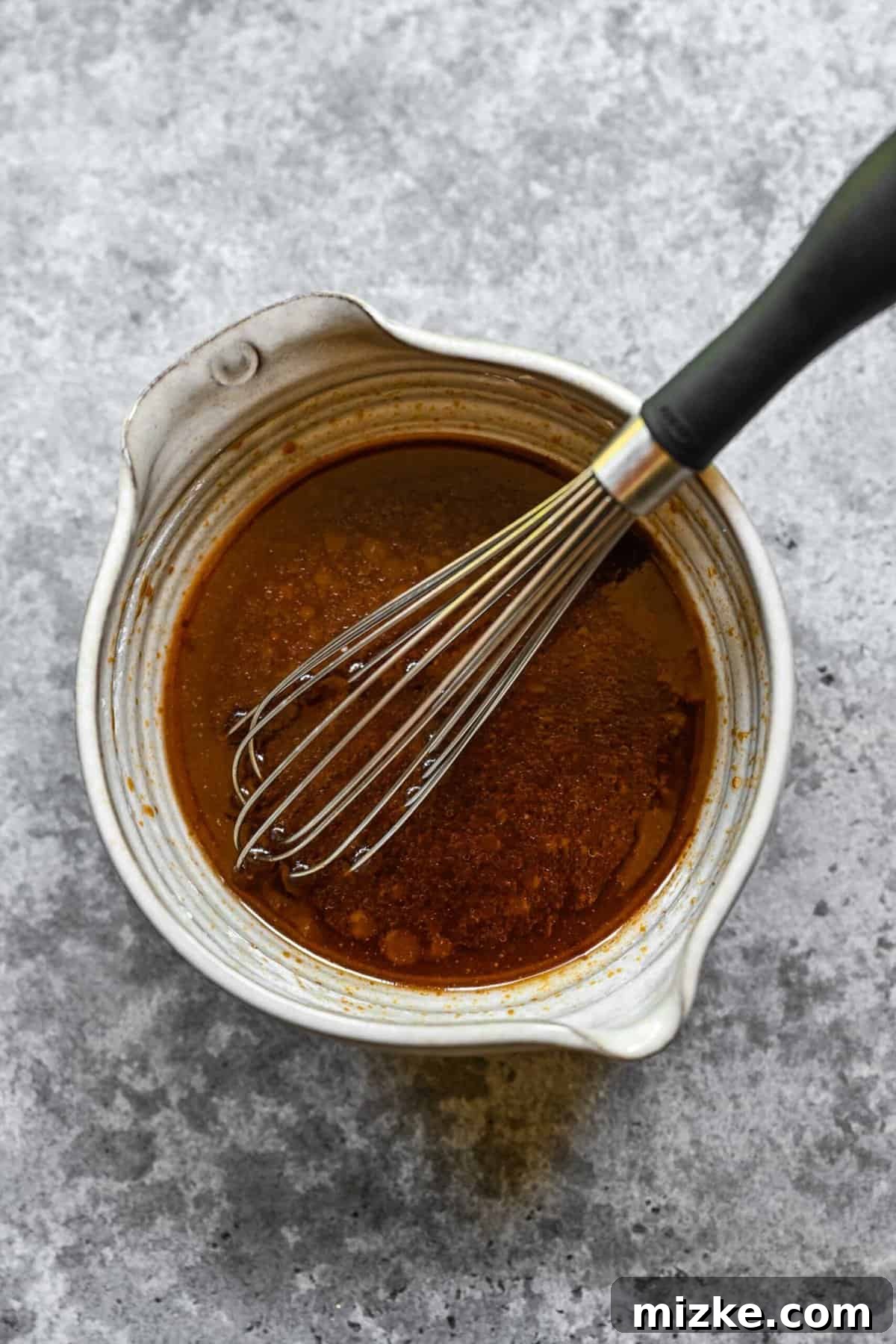
- Craft the Sauce: While the vegetables are cooking, whisk together all the ingredients for the sauce in a small bowl until thoroughly combined and the cornstarch is dissolved. This ensures a smooth, lump-free sauce.
- Combine and Finish: Return the cooked shrimp and the prepared noodles to the pan with the sautéed vegetables. Pour the whisked sauce over everything. Toss vigorously to ensure all components are evenly coated. Continue to stir and cook for another 2-3 minutes, allowing the sauce to thicken slightly and everything to heat through completely.
- Serve Immediately: Transfer the hot shrimp chow mein to serving bowls. Garnish with additional fresh scallions for a pop of color and extra flavor. Serve immediately to enjoy the best texture and taste.
Expert Recipe Tips & Flavorful Variations
I am absolutely thrilled for you to experience this incredible shrimp chow mein recipe. Before you dive into cooking, I strongly recommend taking a moment to review these valuable tips and tricks. They are designed to help you achieve the most delicious, perfectly textured noodles you’ve ever tasted. I’ve also included some exciting variations to inspire you to truly make this recipe your own culinary masterpiece.
- Strategic Prep Ahead (Mise en Place): Stir-frying is a rapid cooking method. Once ingredients hit the hot pan, things move very quickly. To ensure success and prevent burning, it is absolutely essential to slice, dice, and measure all your ingredients—including whisking the sauce—and arrange them within easy reach of your stove before you even turn on the heat. This technique, known as “mise en place,” will make the cooking process stress-free and efficient.
- Achieve Al Dente Noodles: The key to perfect chow mein noodles is to avoid overcooking them in the initial boiling stage. You want them to be just al dente, meaning they still have a slight bite. If they are too soft, they will become mushy and break apart when you stir-fry them in the pan, losing that desired slightly crispy texture.
- Maintain Constant Movement: To ensure even cooking, prevent sticking, and develop those wonderful caramelized edges on the noodles and vegetables, it’s crucial to stir constantly. From the moment you add the garlic, ginger, and scallions to the pan until you remove the finished dish from the heat, keep everything moving in the wok or skillet.
- Prevent Overcooking the Shrimp: Shrimp cooks incredibly fast. Keep a close eye on them; they are done as soon as they curl into a C-shape and turn opaque pink. Overcooked shrimp become rubbery and lose their succulent tenderness, so remove them from the skillet promptly.
- Infuse Some Spice: If you enjoy a bit of heat, feel free to personalize your chow mein. Add a few drops of Sriracha sauce directly into the prepared sauce, or sprinkle a pinch of red pepper flakes into the stir-fry alongside the aromatics for a delightful kick.
- Experiment with Protein: Shrimp is fantastic, but this recipe is wonderfully versatile. If shrimp isn’t your preference, consider swapping it for other seafood like tender scallops, or thinly sliced chicken or beef. For a vegetarian option, replace the shrimp with firm tofu or tempeh, cut into cubes or slices, and pan-fried until golden. You can also simply increase the quantity and variety of vegetables for a wholesome plant-based meal.
- Customize Your Vegetables: My recipe calls for carrots, cabbage, and sugar snap peas, which provide a great balance of flavor and texture. However, feel free to use your favorite stir-fry friendly vegetables. Sliced mushrooms, bell peppers (any color), broccoli florets, or bok choy would all be delicious additions, allowing you to tailor the dish to your tastes and what’s in season.
Delightful Serving Suggestions
Packed with vibrant vegetables, lean protein, and satisfying carbohydrates, this shrimp chow mein is truly a complete and fulfilling meal on its own. However, like any great dish, it absolutely loves good company! Elevate your dining experience and tantalize your taste buds by pairing it with one or several of these complementary Asian-inspired dishes.
- Fresh Vegetable Sides: Add an extra layer of freshness and crunch to your meal with a side of cold garlic and soy green beans, or perhaps a refreshing and zesty Smashed Asian Cucumber Salad. Both provide a light contrast to the rich noodles.
- Steamed Buns for Sopping: There’s nothing quite like using fluffy steamed buns to soak up any lingering delicious sauce left behind by the chow mein. Serve with classic Chinese Mantou steamed buns or delightful Bao Buns for an authentic touch.
- Heartwarming Soups: For a truly comforting and well-rounded meal, pair this delectable stir-fry with a bowl of classic hot and sour soup or a delicate egg drop soup. The contrasting flavors and textures create a wonderfully balanced dining experience.
- Appetizer Pairings: Transform your meal into a festive feast by serving shrimp chow mein as the main course, preceded by a selection of tantalizing Asian-inspired starters. Recently, I’ve been enjoying these crispy Crab Rangoons, delicate Shrimp Shumai, and the warmly spiced Chinese Curry Pockets.
Storing and Reheating Leftover Chow Mein
While this shrimp chow mein is best enjoyed fresh, leftovers are equally delicious and can be easily stored for future enjoyment. Proper storage ensures your meal retains its flavor and quality.
- Refrigerator Storage: Once your chow mein has cooled completely to room temperature, transfer any leftovers to an airtight container. Store it in the refrigerator for up to 3-4 days. This keeps the noodles and vegetables fresh and prevents bacterial growth.
- Freezer Storage: For longer preservation, allow the stir-fry to cool completely. Then, seal the leftovers in a freezer-safe airtight container or heavy-duty freezer bags. It can be stored in the freezer for up to 2-3 months. When you’re ready to enjoy it, thaw the chow mein in the refrigerator overnight before reheating.
- Reheating Instructions: For the best results, reheat chow mein in a skillet. Add a small amount of sesame oil to a large skillet over medium heat. Once hot, add your desired portion of chow mein to the pan and sauté, stirring frequently, until everything is heated through and the noodles regain a slight crispness. Alternatively, you can reheat individual portions in the microwave; microwave in 30-second intervals, stirring between each, until piping hot.
More Asian-Inspired Culinary Adventures
Feeling inspired to expand your repertoire of delectable, Asian-inspired dishes? Culinary exploration is one of the greatest joys! Here are some of my personal favorites that I highly recommend you try. Each offers a unique taste of Asia, perfect for weeknight dinners or special occasions. Let me know which ones become your new go-to!
- Asian Beef and Broccoli Noodles
- Chicken Bao Buns
- Moo Shu Pork
- Kimchi Ramen
- Bo Luc Lac (Vietnamese Shaking Beef)
- Chicken Katsu Curry
Shrimp Chow Mein
By: Julie Chiou
This shrimp chow mein is better (and better for you) than takeout. It’s made of succulent shrimp, stir-fried veggies, and ever so slightly crisp noodles all tossed in a savory-sweet sauce. Yummy!
Equipment
- Wok or Large Skillet
Ingredients
For the Stir Fry
- 12 ounces (340 g) chow mein noodles, cooked according to package directions
- 3 tablespoons sesame oil, divided
- 1 ½ pound large shrimp, peeled and deveined
- 1 tablespoon minced garlic
- 1 tablespoon grated ginger
- ½ cup finely chopped scallions + more for garnish
- 3 cups (210 g) shredded green cabbage
- 1 ½ cups (147 g) sugar snap peas
- 2 large carrots, julienned
For the Sauce
- ⅓ cup (77 g) oyster sauce
- ⅓ cup (79 ml) low sodium soy sauce
- 2 tablespoons rice vinegar
- ¼ cup (59 ml) sesame oil
- 2 teaspoon cornstarch
- 1 tablespoon granulated sugar
Instructions
- Cook chow mein noodles according to package directions until al dente, drain, and set aside.
- Heat 2 tablespoons of sesame oil in a large skillet or wok over medium-high heat. Add the shrimp and sauté for 4-5 minutes, until pink and cooked through. Remove the shrimp from the skillet and set aside.
- Add the remaining 1 tablespoon of sesame oil to the pan. Add the minced garlic, grated ginger, and ½ cup of chopped scallions. Sauté for 1-2 minutes until fragrant.
- Add the shredded cabbage, sugar snap peas, and julienned carrots to the pan. Continue cooking for 6-8 minutes, stirring frequently, until the vegetables are crisp-tender.
- Meanwhile, in a small bowl, whisk together all ingredients for the sauce: oyster sauce, low sodium soy sauce, rice vinegar, sesame oil, cornstarch, and granulated sugar until smooth.
- Once the vegetables are cooked, return the shrimp and the cooked noodles to the pan. Pour the prepared sauce over all ingredients. Toss well to coat evenly, cooking for another 2 minutes to heat through and allow the sauce to thicken slightly.
- Remove from heat and serve immediately. Garnish with additional fresh scallions as desired.
Nutrition (per serving)
Serving: 315 grams, Calories: 484 kcal, Carbohydrates: 52 g, Protein: 27 g, Fat: 18 g, Saturated Fat: 2 g, Polyunsaturated Fat: 7 g, Monounsaturated Fat: 7 g, Trans Fat: 0.01 g, Cholesterol: 143 mg, Sodium: 1881 mg, Potassium: 392 mg, Fiber: 6 g, Sugar: 6 g
This information is an estimate based on ingredients used and may vary. For the most precise nutritional data, use your preferred nutrition calculator based on the actual ingredients you use in the recipe.