
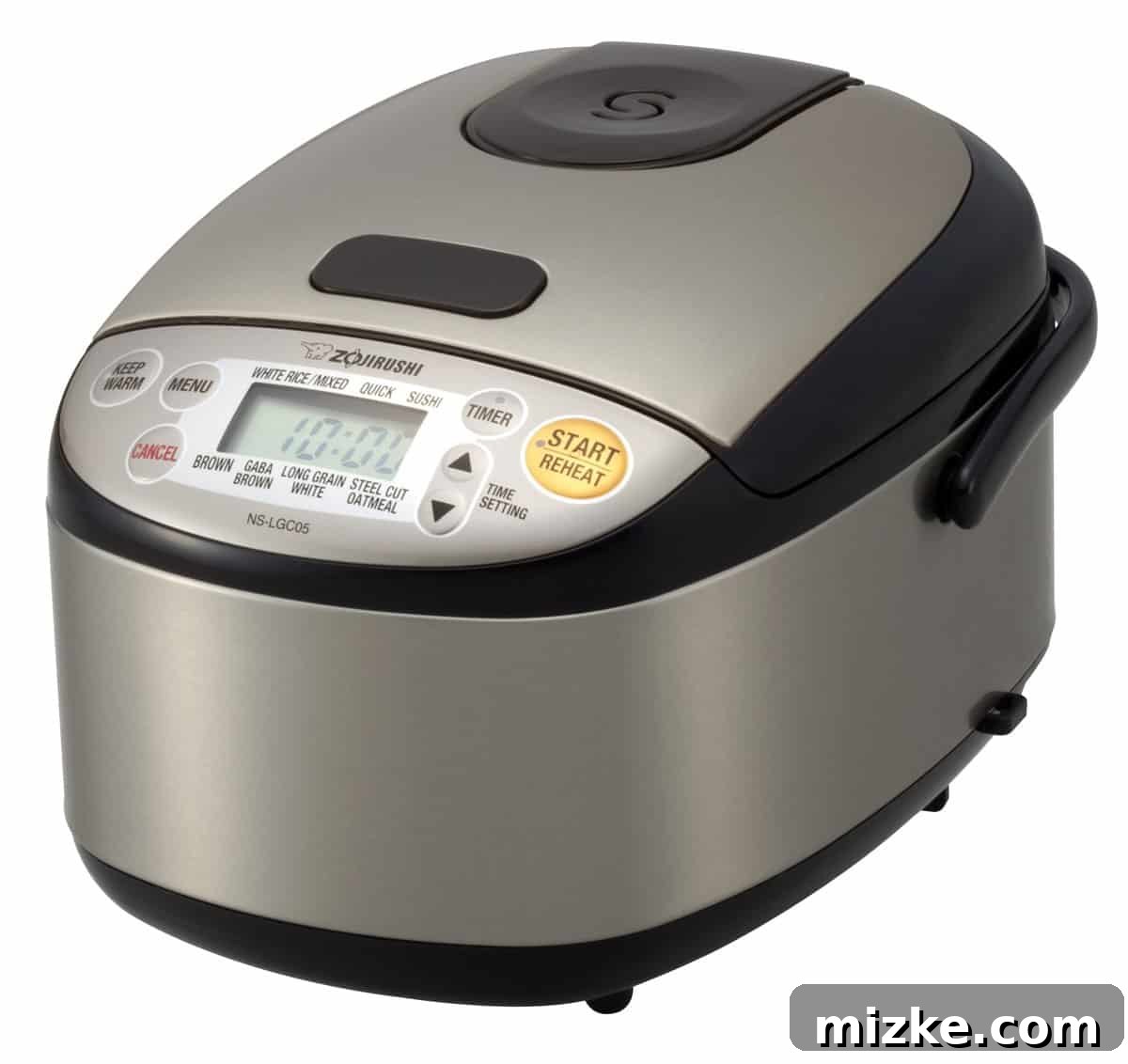
The Ultimate Guide to Choosing the Best Rice Cooker: Why Japanese Brands Excel
Are you navigating the exciting yet often overwhelming world of kitchen appliances, specifically in search of the perfect rice cooker? With a myriad of options flooding the market, it’s easy to feel lost. Allow us to simplify your decision-making process: for consistently flawless rice, you cannot go wrong with a simple, high-quality Japanese brand. When it comes to reliability and performance, names like Zojirushi and Tiger stand head and shoulders above the rest.
While some kitchen gadgets might seem like fleeting trends, a dedicated rice cooker is, in our humble opinion, a truly indispensable small appliance. Forget the debate over whether you *really* need that trendy ice cream maker; a rice cooker offers unparalleled utility. It’s a foundational piece of equipment, a staple in countless Asian households worldwide, and for good reason. In fact, we’ve personally witnessed many non-Asian households embrace the rice cooker, quickly realizing its transformative power. It consistently delivers perfectly cooked rice – fluffy, distinct grains, and ideal texture – every single time. This perfection is not a coincidence; it’s a testament to the sophisticated technology embedded within these machines, a level of precision simply unattainable with a stovetop pot, Instant Pot, or microwave.
Understanding Rice Cooker Technology: Micom vs. Conventional
To guide you through your purchase, we’ll delve into the two primary categories of rice cookers available today: digital (often featuring “Micom” or “Fuzzy Logic” technology) and conventional models. Our recommendations will focus on the two brands we trust implicitly, Zojirushi and Tiger, both of which have graced our family kitchens for decades. Their enduring quality and simple, effective design perfectly embody the Japanese standard for excellence.
The Precision of Micom and Fuzzy Logic Rice Cookers
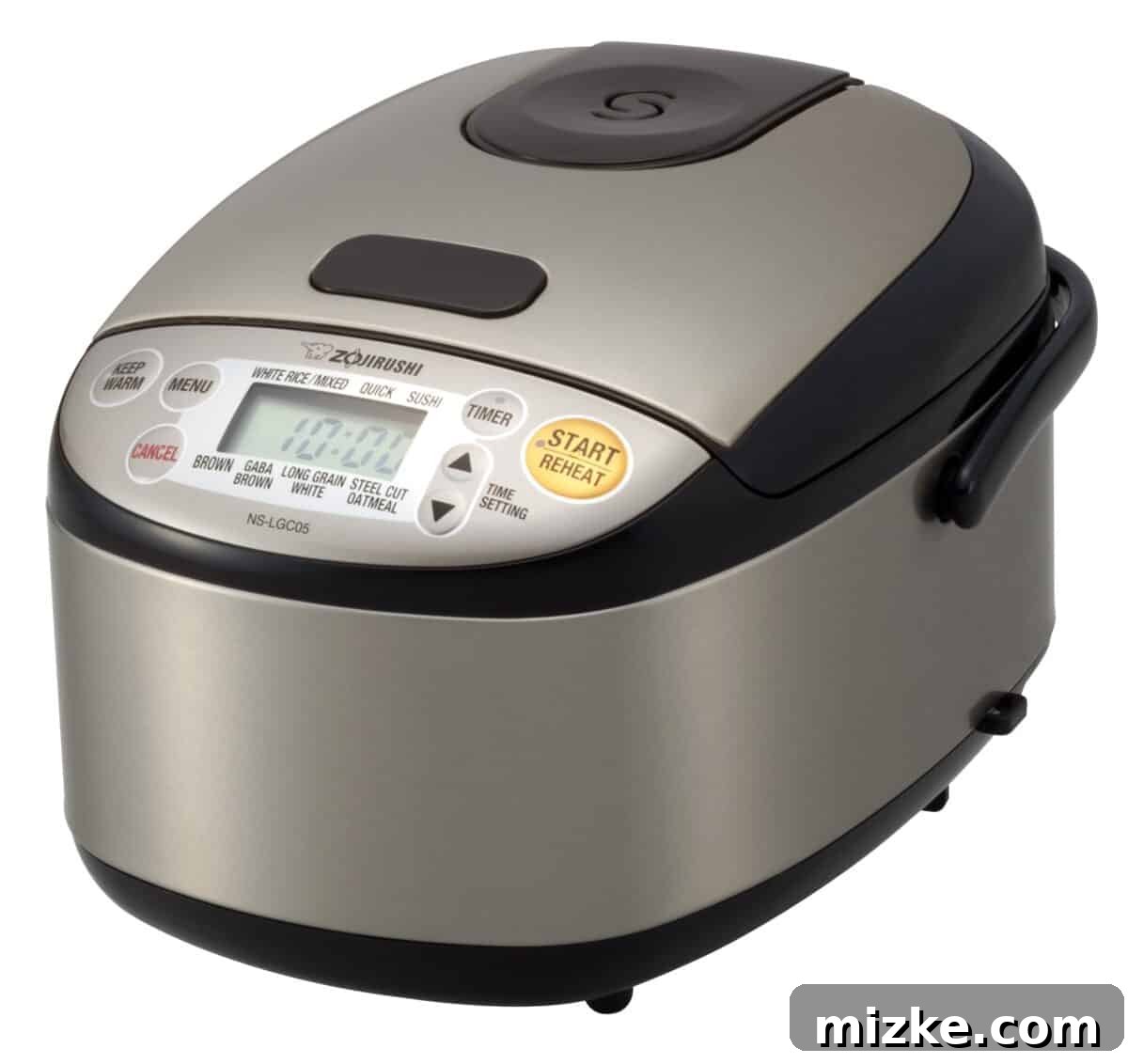
As you explore rice cookers in stores or online, you’re likely to encounter terms like “Micom” or “Fuzzy Logic.” Zojirushi, a pioneer in the field, utilizes a patented technology known as Micom, short for “microcomputer,” in its digital rice cookers. This microcomputer employs “fuzzy logic” technology, an advanced computational method that allows the rice cooker to make intelligent, real-time adjustments to cooking time and temperature based on the specific type and quantity of rice, and even ambient conditions. It’s this ingenious technology that guarantees consistently perfect rice, batch after batch.
While Zojirushi holds a patent for its specific Micom application, other leading brands have developed their own proprietary microcomputer-controlled systems, often using different names, to achieve similar levels of precision. Essentially, most modern digital rice cookers leverage some form of advanced microcomputer technology to constantly monitor and optimize the cooking environment. This is why many of these sophisticated appliances often feature a streamlined interface with just a few essential settings: typically options for white rice, brown rice, and a simple start button. Anything beyond these fundamental functions, in our experience, tends to be an unnecessary embellishment. After all, you’re preparing a foundational grain, not an elaborate multi-tiered cake.
The Unwavering Simplicity of Conventional Rice Cookers
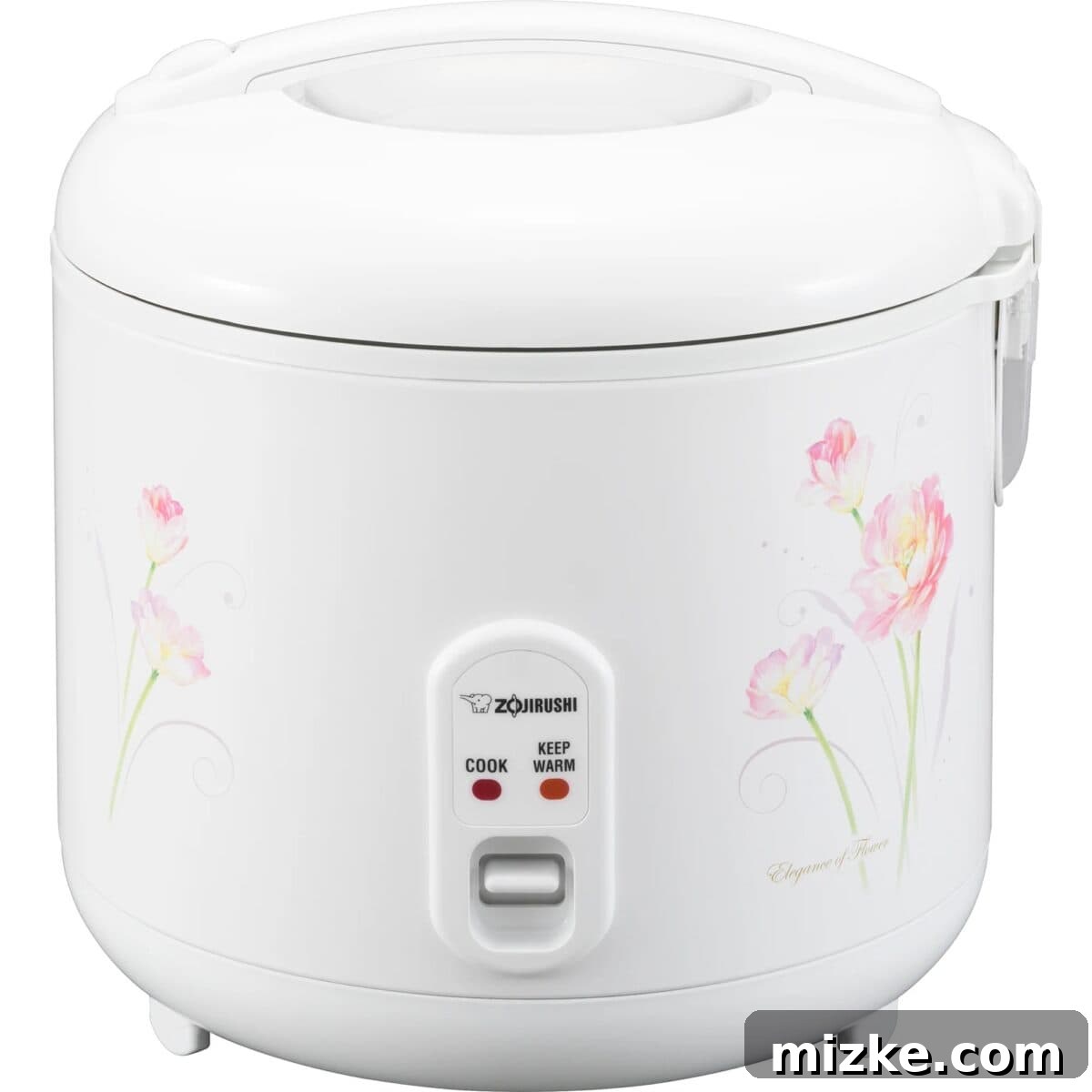
On the other end of the spectrum are conventional rice cookers, which we affectionately call “simple” models. These are the more traditional units, often recognized by their single ‘on/off’ switch, and they are a common sight in many traditional Asian households. Their design is elegantly straightforward yet remarkably effective.
A conventional rice cooker operates with an electric heating plate at its base and a central thermal sensing device. When the inner pot, filled with rice and water, is placed into the cooker, it depresses this sensor. The heating plate rapidly brings the water to a boil. Crucially, the thermal sensing device is also equipped with a spring-loaded thermometer that continuously gauges the temperature of the pot’s contents. As the rice absorbs all the water, the temperature inside the pot begins to rise sharply beyond the boiling point of water. The intelligent rice cooker detects this distinct temperature change, signalling that the water has been fully absorbed and the rice is cooked. At this precise moment, the switch automatically flips up, transitioning the unit from “cook” to “keep warm” mode. This ingenious, yet simple, mechanism ensures that your rice is never undercooked or burnt, maintaining its ideal texture until you’re ready to serve.
Why Zojirushi and Tiger are Unrivaled: The “Made in Japan” Difference
After exploring both cutting-edge and classic rice cooker technologies, one truth remains paramount: you absolutely cannot go wrong with Japanese brands like Zojirushi and Tiger. However, for the ultimate assurance of quality, there’s a critical detail to look for: ensure the box explicitly states MADE IN JAPAN. This isn’t just a geographical marker; it’s a profound declaration of quality, precision, and a commitment to meticulous craftsmanship.
Seriously, ask any elder generation Asian about this; their conviction is unwavering. We vividly recall countless trips to Asian grocery stores with our parents, meticulously scrutinizing Zojirushi boxes, searching exclusively for the “MADE IN JAPAN” label because, without a doubt, IT MATTERS. Similarly, when our parents generously gifted us our very first rice cooker, they embarked on a dedicated quest across multiple stores to find a Tiger model bearing that coveted “MADE IN JAPAN” stamp. This unwavering preference stems from a deep-seated understanding of Japanese engineering prowess, rigorous quality control standards, and a cultural dedication to producing appliances that are not only highly functional but also built to last for decades. Our parents’ last Zojirushi rice maker, for instance, reliably served them for over 20 years, a testament to the exceptional durability and timeless performance embedded in these products.
Choosing the Right Size and Features for Your Needs
When selecting your ideal rice cooker, consider your household size and typical meal preparation. Rice cookers are typically measured by their raw rice capacity, often in cups. A 3-cup model is perfect for singles or couples, yielding about 6 cups of cooked rice. For families of 3-5, a 5.5-cup cooker is generally ideal, while larger families or those who frequently entertain might opt for a 10-cup model. While Micom models offer various settings for different types of rice (e.g., sushi, sweet, porridge), we still advocate for simplicity. Focus on a model that excels at white and brown rice, as these are the most commonly cooked varieties.
Another factor to consider is the inner pot material. Most high-quality Japanese rice cookers feature non-stick inner pots, often with multiple layers for enhanced heat distribution and durability. These are incredibly easy to clean and contribute to the perfect cooking environment. While some premium models might boast induction heating (IH) technology for even more precise temperature control, for most home cooks, a standard Micom or conventional cooker will deliver exceptional results without the added cost.
Beyond Just Rice: The Versatility of Your Rice Cooker
While its primary function is cooking rice, a good quality rice cooker offers surprising versatility that enhances its value in your kitchen. Beyond perfect white and brown rice, many Micom models have dedicated settings for preparing other grains like quinoa, steel-cut oats, and mixed grains. You can also effortlessly achieve perfectly cooked sushi rice, ensuring the ideal texture and stickiness. The “keep warm” function is another invaluable feature, allowing you to cook rice in advance and keep it at an optimal serving temperature for hours without drying out or becoming mushy. Some advanced models even offer options for steaming vegetables or making simple soups, further expanding their utility. This hands-off cooking capability frees up stovetop space and your attention, making meal preparation less stressful and more efficient.
Where to Purchase Your Authentic Japanese Rice Cooker
Where to Buy
To guarantee you’re acquiring a genuine “Made in Japan” rice cooker from Zojirushi or Tiger, we strongly recommend visiting specialty Asian grocery stores like H-Mart or 99 Ranch. These retailers often stock the authentic models that meet the high standards we’ve discussed. Alternatively, purchasing directly from the manufacturer’s official website or authorized distributors is an excellent way to ensure authenticity and product warranty.
While big-box retailers like Costco occasionally carry these brands, it’s crucial to exercise diligence. Always inspect the packaging carefully to confirm the “Made in Japan” origin. We’ve noticed that Costco has also begun stocking Korean brands, such as Cuckoo. While we haven’t personally tested Korean rice cookers, we have heard positive feedback about their performance and features. However, our decades of experience and trust remain firmly with the Japanese-made Zojirushi and Tiger models for their unmatched longevity and consistent perfection.
Maintenance and Care for Longevity
Ensuring your rice cooker lasts for decades, like our family’s trusted Zojirushi, is surprisingly simple. Regular cleaning is key. After each use, allow the inner pot to cool, then wash it with warm, soapy water and a soft sponge. Avoid abrasive scrubbers that could damage the non-stick coating. The inner lid and steam vent should also be detached and cleaned regularly, as rice starch can accumulate and affect performance. For Micom models, occasionally wipe down the exterior and control panel with a damp cloth. Always ensure all parts are thoroughly dry before reassembling and storing your rice cooker. With these basic care steps, your Japanese rice cooker will continue to deliver perfect rice for many years to come, solidifying its place as a truly enduring kitchen essential.
Conclusion: Invest in Perfection
In conclusion, while the market offers a vast array of rice cookers, the path to consistently perfect, fluffy rice is clear: invest in a high-quality, simple Japanese brand. Whether you opt for the intelligent precision of a Micom model or the reliable simplicity of a conventional unit, Zojirushi and Tiger stand as pillars of excellence. Prioritize models explicitly marked “Made in Japan” to benefit from unparalleled craftsmanship and durability that will serve your household for generations. A rice cooker isn’t just an appliance; it’s an investment in culinary convenience, consistent quality, and the simple joy of perfectly cooked rice, every single time.