

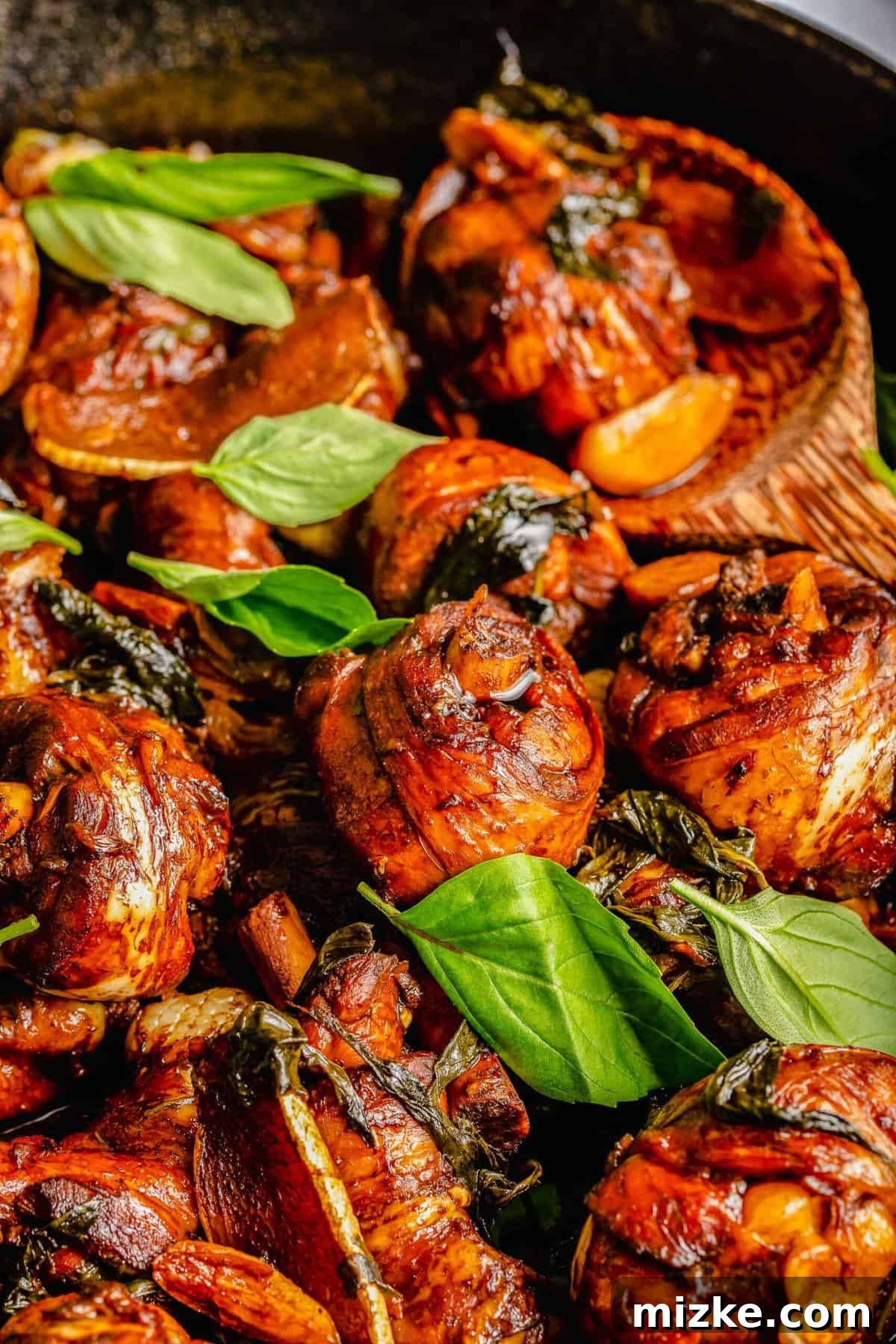
Three Cup Chicken (San Bei Ji, 三杯雞) is a revered Taiwanese culinary gem, celebrated for its exquisite balance of savory, sweet, and aromatic flavors. This iconic dish features succulent chicken, bathed in an irresistible glaze crafted from three foundational ingredients: soy sauce, sesame oil, and rice wine, enhanced by generous amounts of garlic, ginger, and fresh basil. Renowned for its comforting appeal and straightforward preparation, Three Cup Chicken is destined to become a staple in your home cooking repertoire.
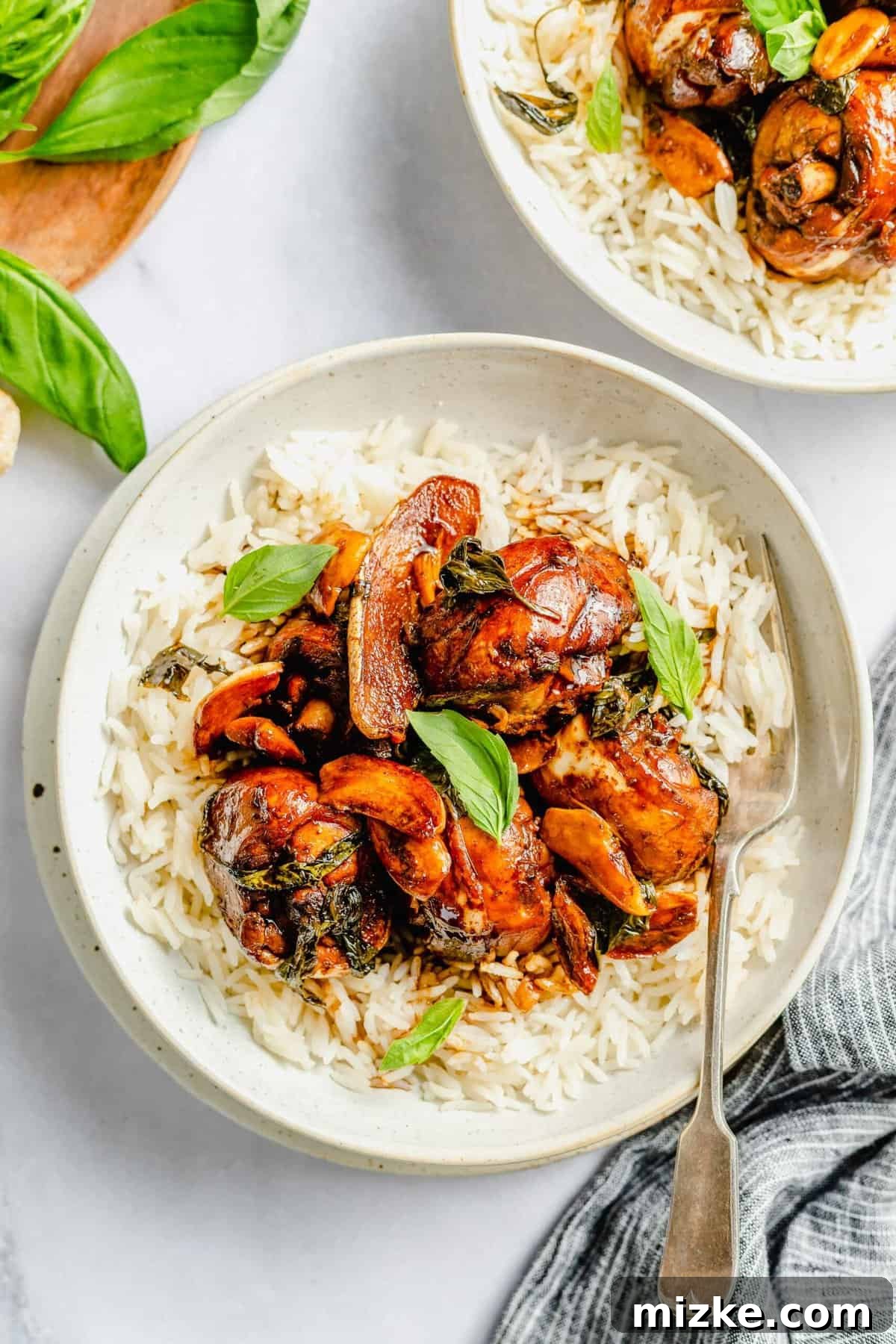
There’s a special kind of magic in a dish that instantly transports you back to cherished memories and a sense of home. For me, that dish is undoubtedly Three Cup Chicken. This authentic San Bei Ji recipe, passed down from my mother, embodies the warmth and comfort of Taiwanese cuisine. It’s a taste of nostalgia that thankfully isn’t complicated to recreate, allowing me to indulge in this comforting classic whenever a craving strikes.
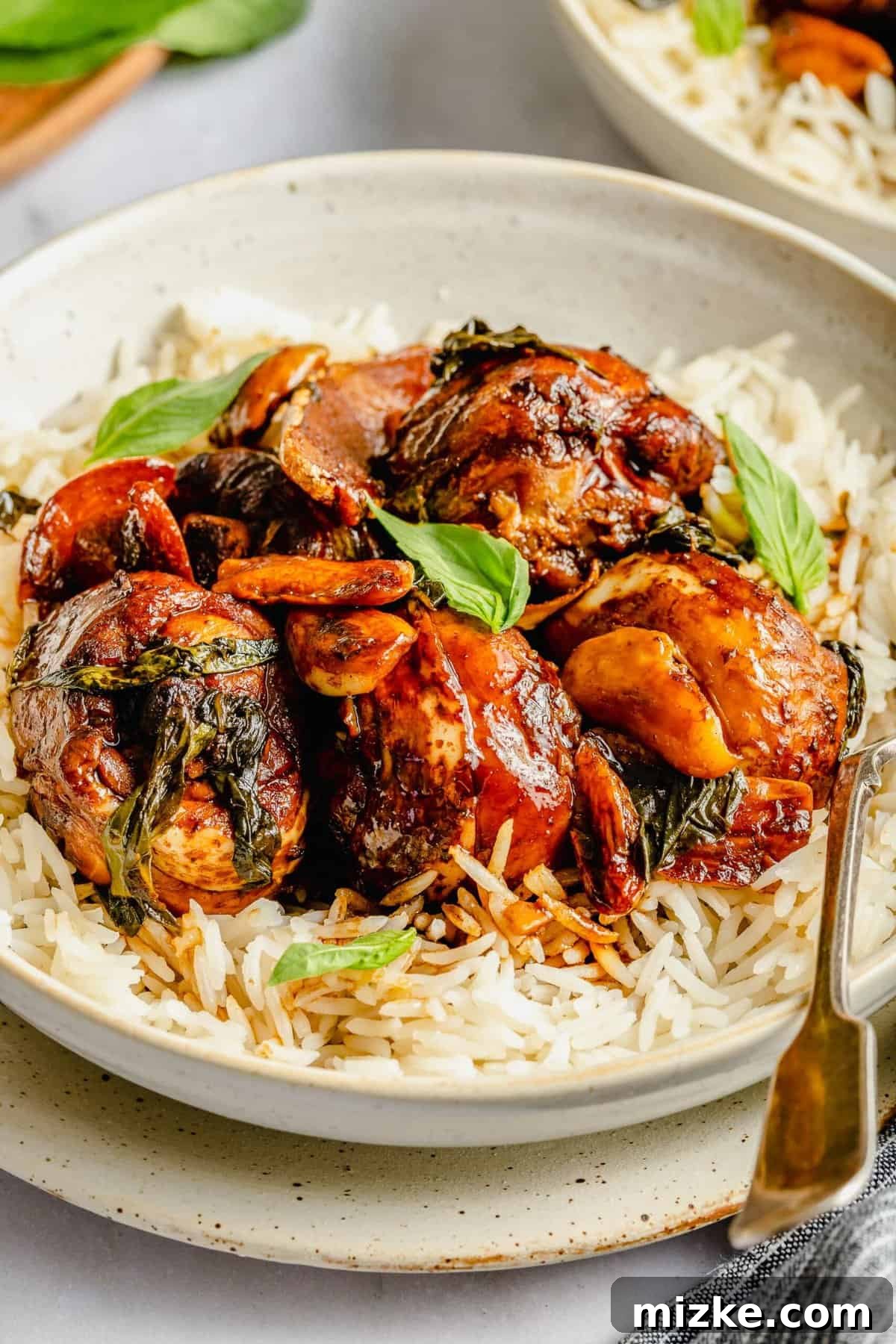
Today, I’m thrilled to guide you through the process of making this flavorful Taiwanese masterpiece. If you’re new to the vibrant world of Taiwanese cooking, this recipe serves as an excellent introduction. Its simple steps, robust flavors, and versatility make it a fantastic starting point. While it pairs beautifully with diverse Asian delights like scallion pancakes or homemade dumplings, I often find myself serving this juicy, tender chicken – richly coated in its aromatic sauce – simply over a steaming bed of white rice. The choice, of course, is yours to make!
For those eager to explore more easy and authentic Asian chicken recipes, be sure to delve into our popular Orange Chicken, comforting Chicken Lo Mein, and crispy Chicken Katsu. Each offers a unique culinary adventure perfect for home cooks.
Why Three Cup Chicken Will Be Your New Favorite
Three Cup Chicken stands out as a true delight for dinner, and here’s why it’s poised to become an instant favorite in your kitchen:
- Explosion of Garlicky, Flavorful Chicken: This dish is a celebration of profound flavors. Each piece of tender, juicy chicken is lovingly cooked with an abundance of aromatic smashed garlic and warm, pungent ginger. The signature sauce, a harmonious blend of salty soy sauce, nutty sesame oil, and sweet Chinese cooking wine, meticulously seeps into the chicken, creating an unparalleled depth of flavor. It’s a symphony of tastes that truly elevates a simple chicken dinner.
- Effortlessly Easy Preparation: Don’t let the gourmet taste intimidate you – Three Cup Chicken is surprisingly simple to make. With only about 10 minutes of active preparation, most of the cooking time is hands-off. You’ll primarily be flipping the chicken occasionally, allowing the ingredients to meld and the sauce to reduce to a glossy perfection. It’s an ideal recipe for busy weeknights when you crave something extraordinary without the fuss.
- The Epitome of Comfort Food: There’s an undeniable warmth and satisfaction that comes from a plate of saucy, flavorful chicken served over fluffy rice. This dish delivers that ultimate comfort, transforming an ordinary meal into a heartwarming experience. It’s the perfect culinary embrace to unwind and end your day on a deliciously high note, reminding you of home-cooked meals filled with love.
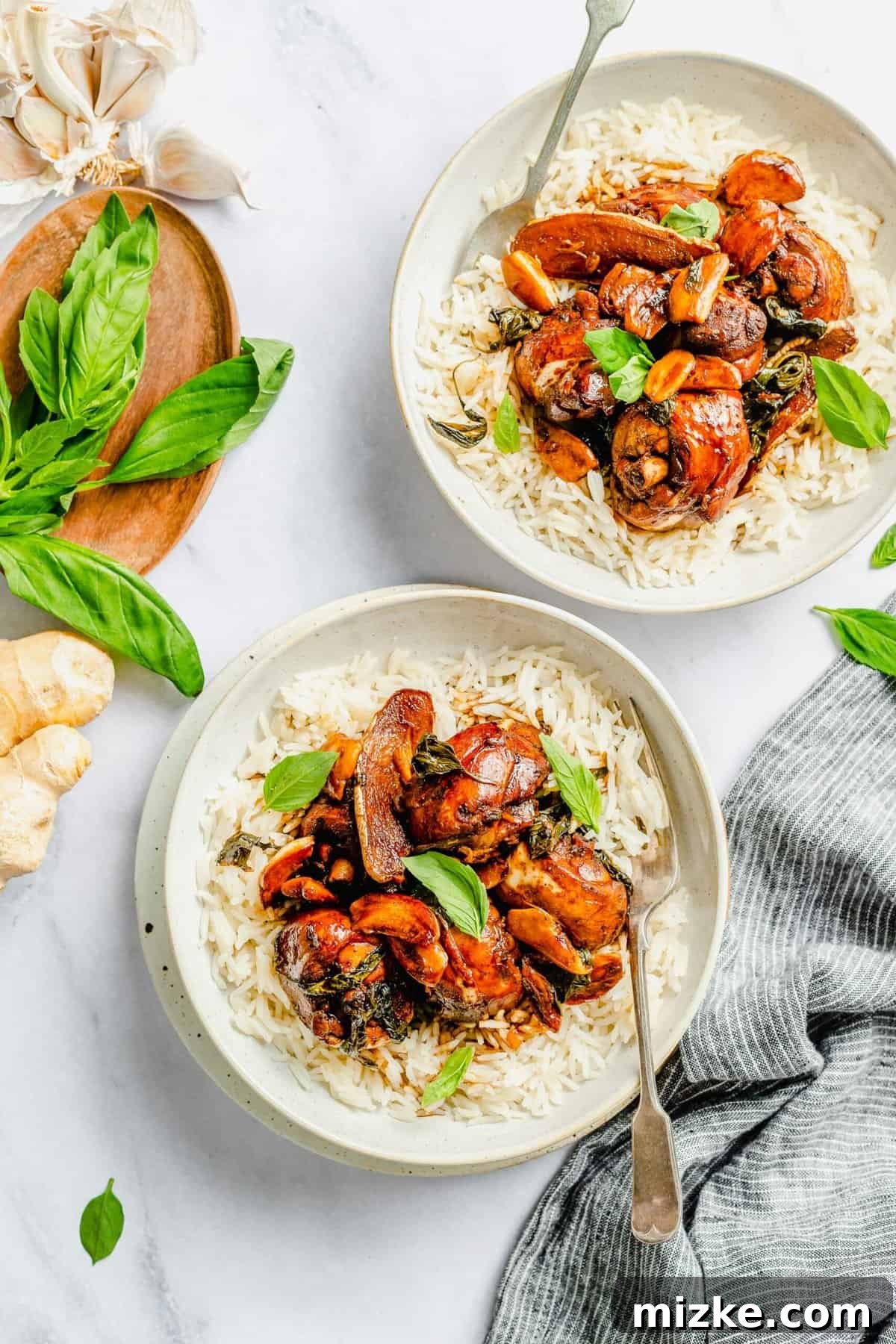
Unveiling San Bei Ji: The Story Behind Three Cup Chicken
The name “Three Cup Chicken,” or San Bei Ji (三杯雞), is as intriguing as the dish itself, originating from a culinary tradition that emphasizes balance and distinct flavors. While the name might suggest using literal cups of each ingredient, it actually refers to the historical method of combining *equal parts* (or ratios) of the three principal sauce components: soy sauce, sesame oil, and Chinese rice wine. This harmonious trinity forms the soul of the dish, creating a unique umami-rich foundation.
Originating from Jiangxi province in mainland China, Three Cup Chicken found its way to Taiwan and evolved into the distinct Taiwanese version beloved today. The Taiwanese interpretation is particularly renowned for its generous use of fresh basil leaves, which are stirred in at the end, infusing the dish with an aromatic, slightly peppery, and incredibly fresh nuance. This subtle addition elevates the entire flavor profile, making it truly unforgettable.
Another defining characteristic of authentic San Bei Ji? A surprising amount of garlic. We’re talking about a significant quantity – often 20 or more cloves – which might sound excessive at first glance. However, trust me when I say this garlic mellows beautifully during cooking, imparting a deep, sweet, and robust flavor without being overpowering. It’s a key player in the dish’s irresistible aroma and taste.
Like many traditional recipes, San Bei Ji is often adapted to suit individual tastes and regional preferences. This recipe provides a solid foundation for an authentic experience, but feel free to experiment and adjust it to your liking. A crucial tip I always share: taste the sauce before introducing the chicken. Once the chicken is in, it’s harder to adjust the seasoning, so ensure the balance is perfect from the start!
Essential Ingredients for Authentic Three Cup Chicken
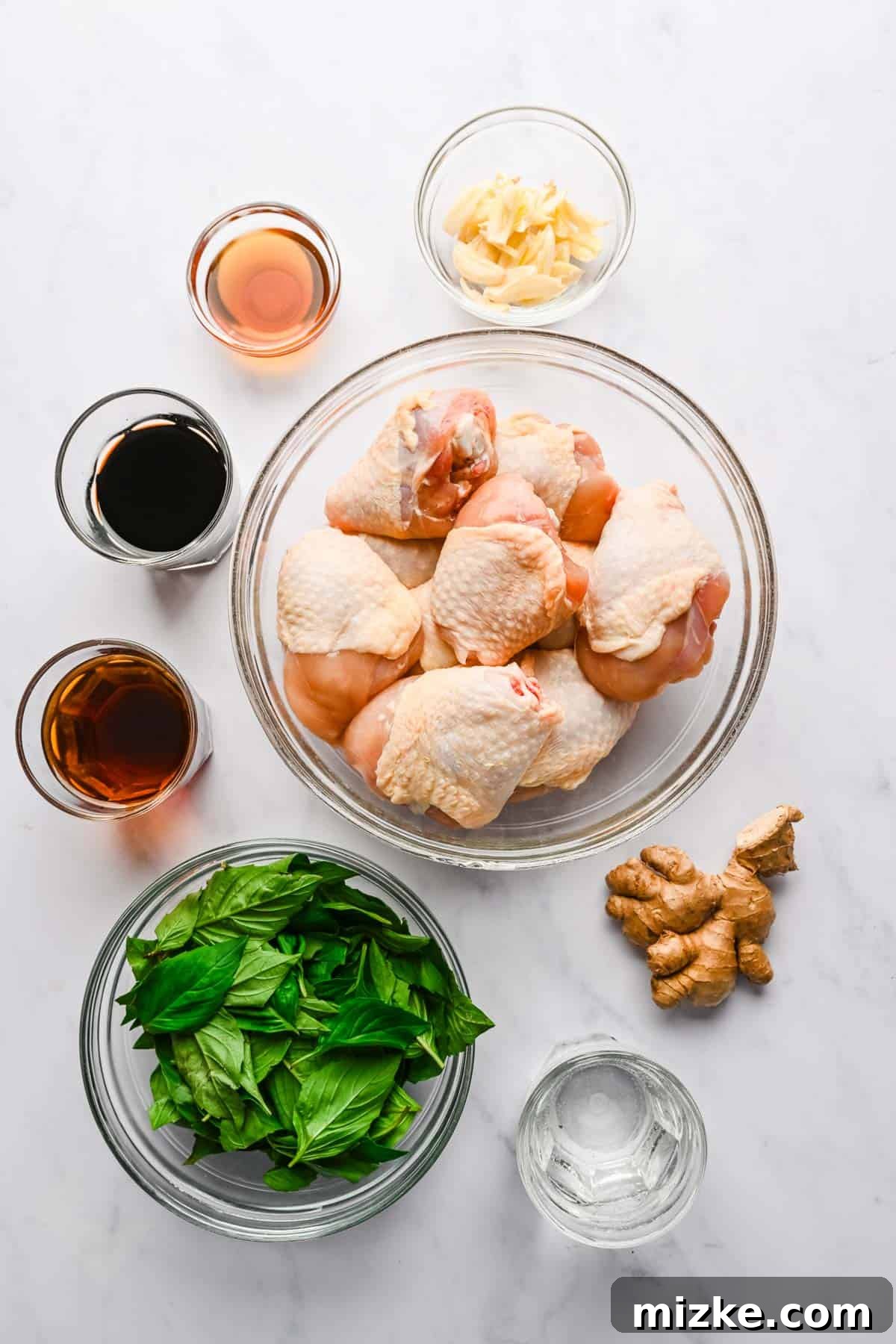
Crafting the perfect Three Cup Chicken begins with selecting the right ingredients. Below is a detailed look at what you’ll need, along with helpful notes and substitution tips. For precise quantities and step-by-step instructions, please refer to the comprehensive recipe card below.
- Black Sesame Oil: This is a cornerstone ingredient, offering a distinctly richer and nuttier flavor compared to regular sesame oil. It’s important to note that black sesame oil is distinct from toasted sesame oil; it’s pressed from black sesame seeds, yielding a deeper, more robust profile. While it’s commonly found in Asian markets, you can also order it online. If unavailable, regular sesame oil can be used as a substitute, though the flavor will be slightly milder.
- Smashed Garlic Cloves: Fresh garlic is paramount for this recipe, delivering unparalleled pungency and sweetness. The act of smashing the cloves helps to release their aromatic oils more effectively into the dish. While pre-minced garlic from a jar can be a convenient last resort, fresh garlic will always yield the best results for that authentic flavor.
- Ginger Root: Just like garlic, fresh ginger root is non-negotiable for its vibrant, spicy, and warming notes. Sliced ginger adds another layer of aromatic complexity that truly defines the dish. Always opt for fresh over dried or ground ginger for optimal taste.
- Chicken Drumsticks: We highly recommend using chicken drumsticks for their rich flavor, tender texture, and bone-in juiciness, which contributes significantly to the sauce. Halving them helps in even cooking and better absorption of the flavors. Many Asian markets sell drumsticks already halved, but it’s easy to cut them yourself at home. Chicken thighs can also be a good alternative due to their similar fat content and tenderness.
- Dark Soy Sauce: This isn’t just for color; dark soy sauce provides a deeper, more complex umami flavor than standard light soy sauce, in addition to its characteristic rich hue. It is also typically saltier. If dark soy sauce is hard to find, regular or low-sodium soy sauce can be used instead. Remember to taste and adjust the seasoning accordingly, as the salt level will vary.
- Chinese Cooking Wine (Shaoxing Wine): Also known as Shaoxing wine or rice wine, this is a crucial ingredient for authentic San Bei Ji. It adds a distinctive fragrant, slightly sweet, and tangy depth that is hard to replicate. Do not confuse it with rice vinegar. In a pinch, a dry sherry can serve as a substitute, but for the true Taiwanese flavor, Shaoxing wine is highly recommended.
- Water: Incorporated to help balance the intense flavors of the soy sauce and cooking wine, preventing the sauce from becoming overly salty or concentrated as it reduces. It also aids in creating the perfect consistency for the glossy glaze.
- Basil Leaves: Fresh basil leaves are the aromatic crown jewel of Taiwanese Three Cup Chicken. They infuse the dish with a unique herbaceous aroma and a subtle peppery finish. While Thai basil (with its anise-like notes) is often preferred for its robust fragrance, common sweet basil also works wonderfully, adding a fresh, vibrant lift to the rich sauce.
How to Properly Smash a Garlic Clove
Smashing garlic cloves is a simple yet effective technique that releases their potent flavor and makes peeling much easier. For this recipe, where large quantities of garlic are used to infuse the oil, mastering this skill is essential. Here’s how to do it:
- Place a garlic clove on a sturdy cutting board.
- Lay the flat side of a chef’s knife blade over the clove. Ensure the sharp edge of the knife is facing away from your hand for safety.
- With the heel of your hand, firmly press down on the blade, directly over the garlic clove. You should hear and feel the clove flattening and breaking slightly.
- Gently remove the knife. The skin should now be loosened, making it effortless to peel away. Repeat this process for all your garlic cloves. This method ensures maximum flavor extraction for your Three Cup Chicken.
Step-by-Step: Crafting Your Authentic Three Cup Chicken
Get ready to bring the vibrant flavors of a Taiwanese restaurant meal right into your home kitchen. Follow these simple steps to create a truly authentic Three Cup Chicken:
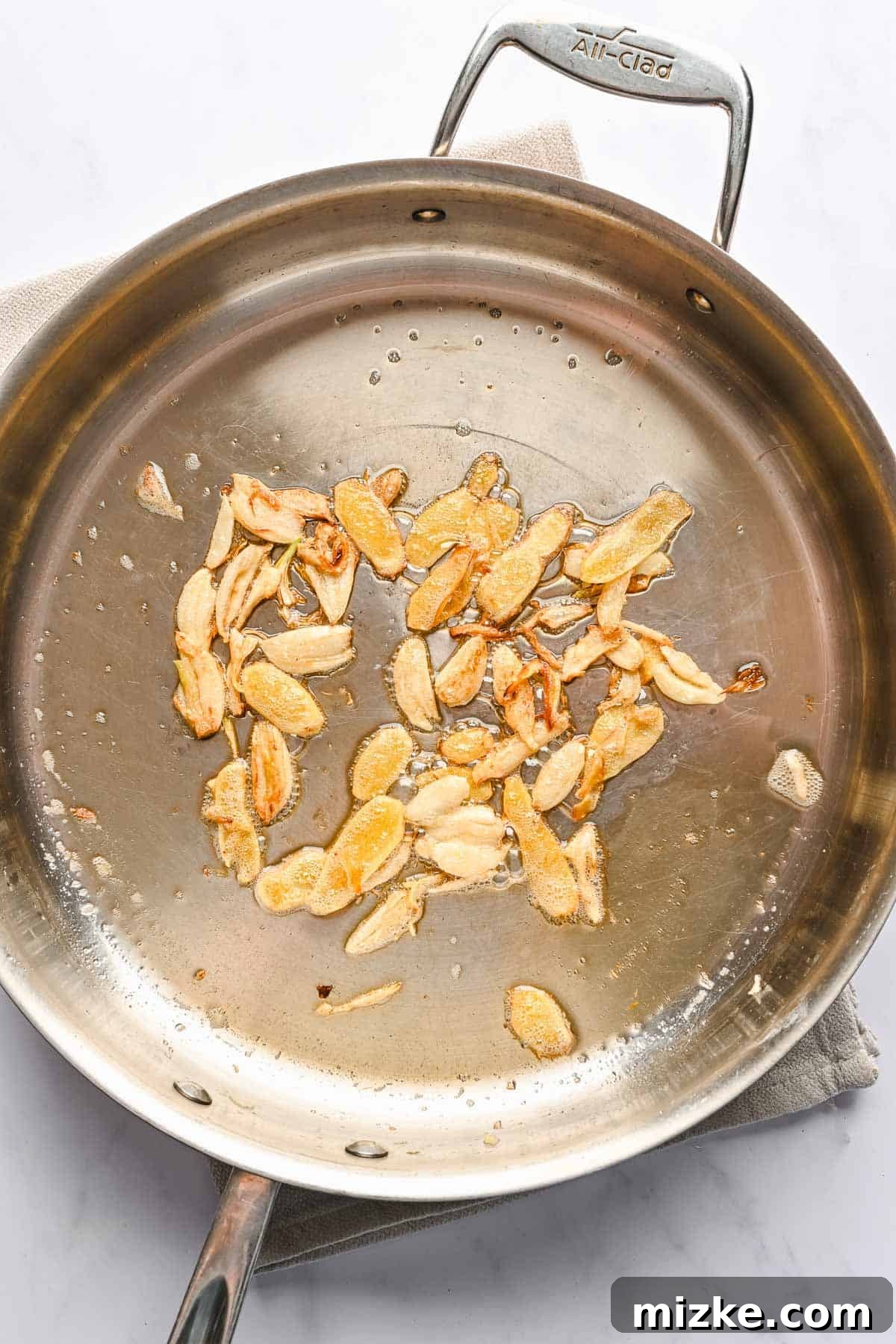
- Sauté the Aromatics: Begin by heating a large skillet or Dutch oven over medium-high heat. Add the black sesame oil, and once it shimmers, carefully add your smashed garlic cloves and sliced ginger root. Sauté, stirring frequently, for about 7 minutes, until the edges of the ginger slices are beautifully browned and golden. This initial step is crucial for building the foundational aromatic layer of the dish, infusing the oil with rich flavor. Be mindful not to let the garlic burn; a gentle sizzle and golden hue are what you’re aiming for.
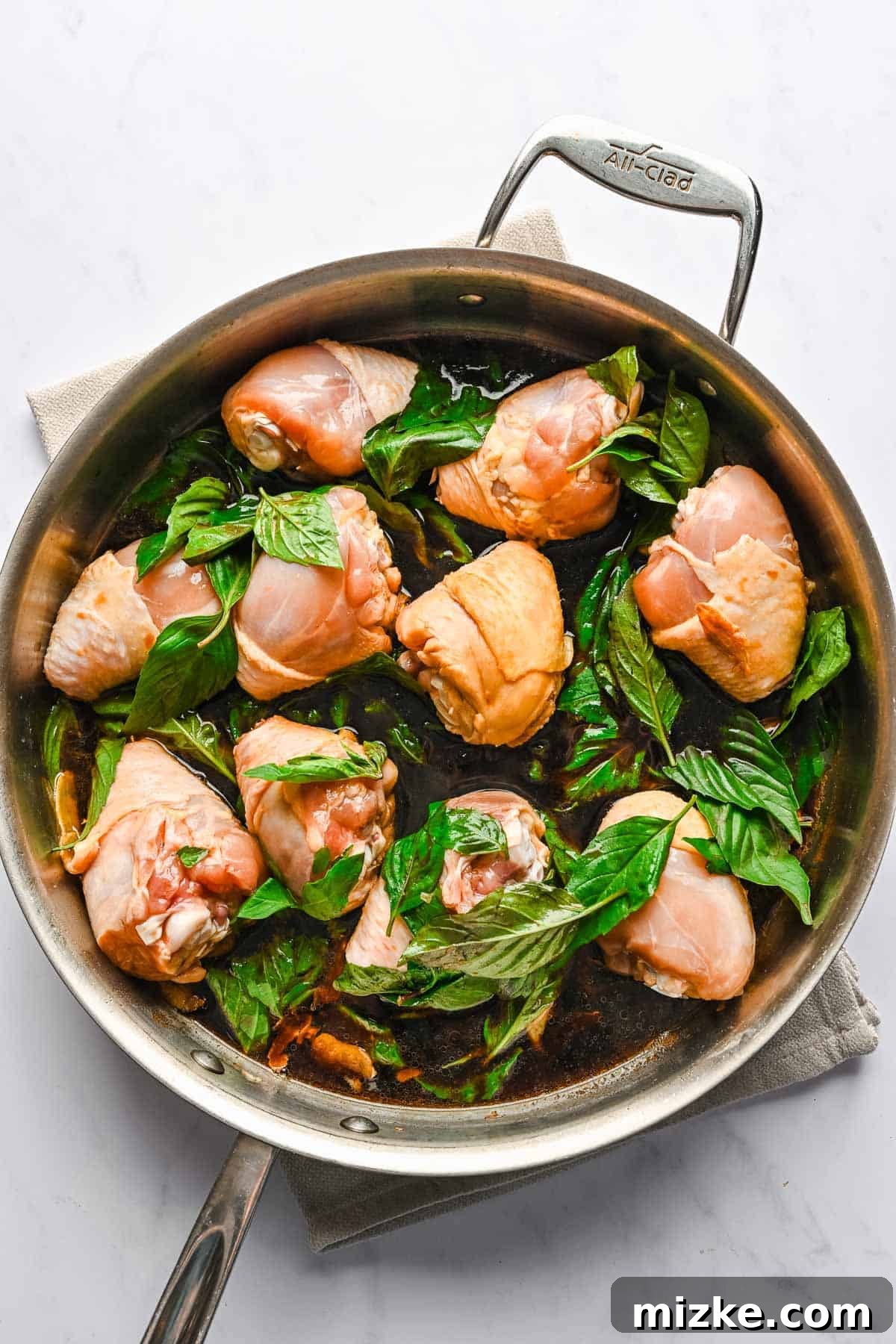
- Combine and Simmer: Once your aromatics are fragrant and golden, place the halved chicken drumsticks into the skillet. Now, pour in the dark soy sauce, Chinese cooking wine, and water. Finally, scatter the fresh basil leaves over the chicken. Gently toss all the ingredients to ensure the chicken is thoroughly coated in the burgeoning sauce. Reduce the heat to medium-low, cover the skillet, and allow it to simmer undisturbed for 10 minutes. This initial simmering period allows the chicken to begin cooking and soak up the initial flavors.
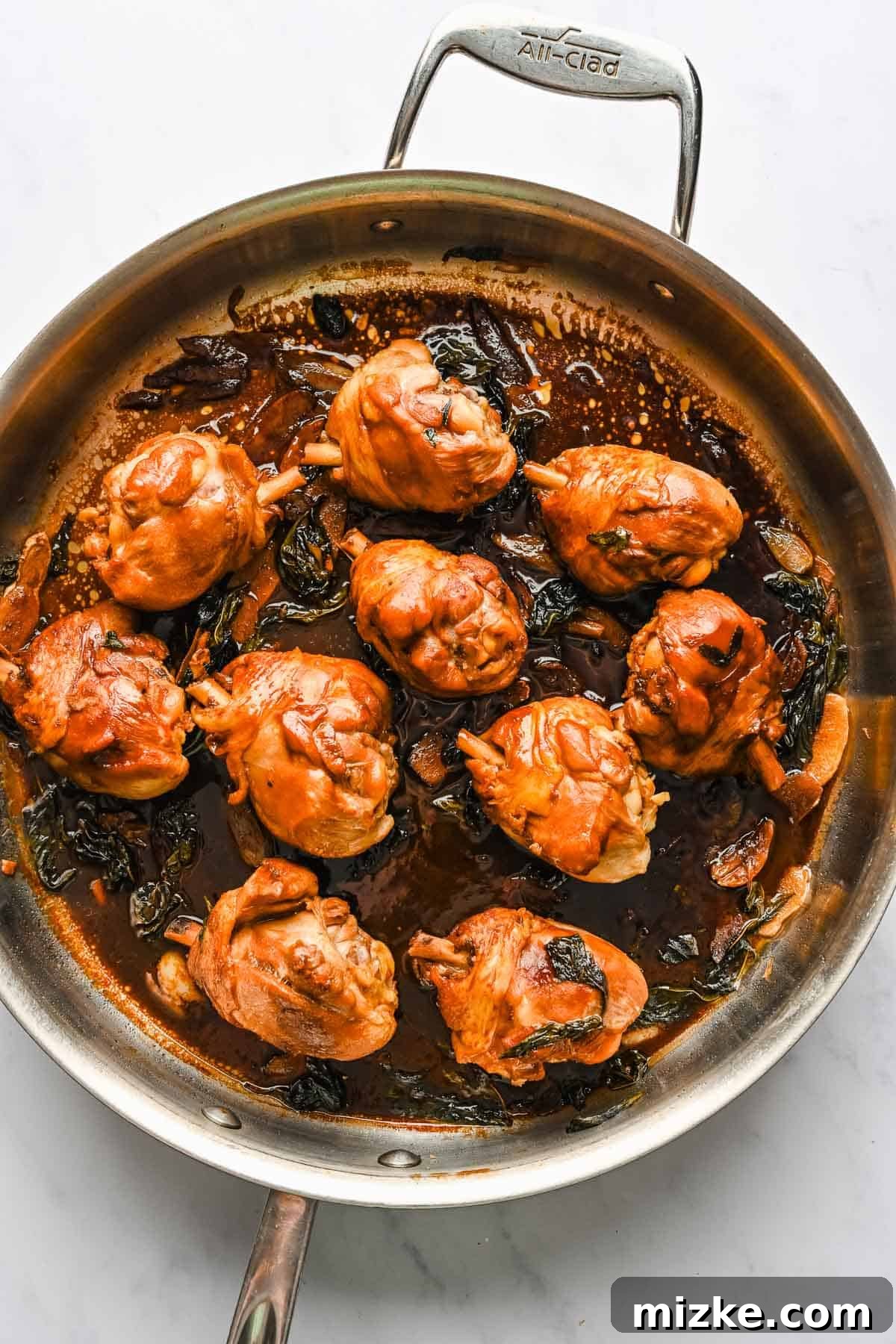
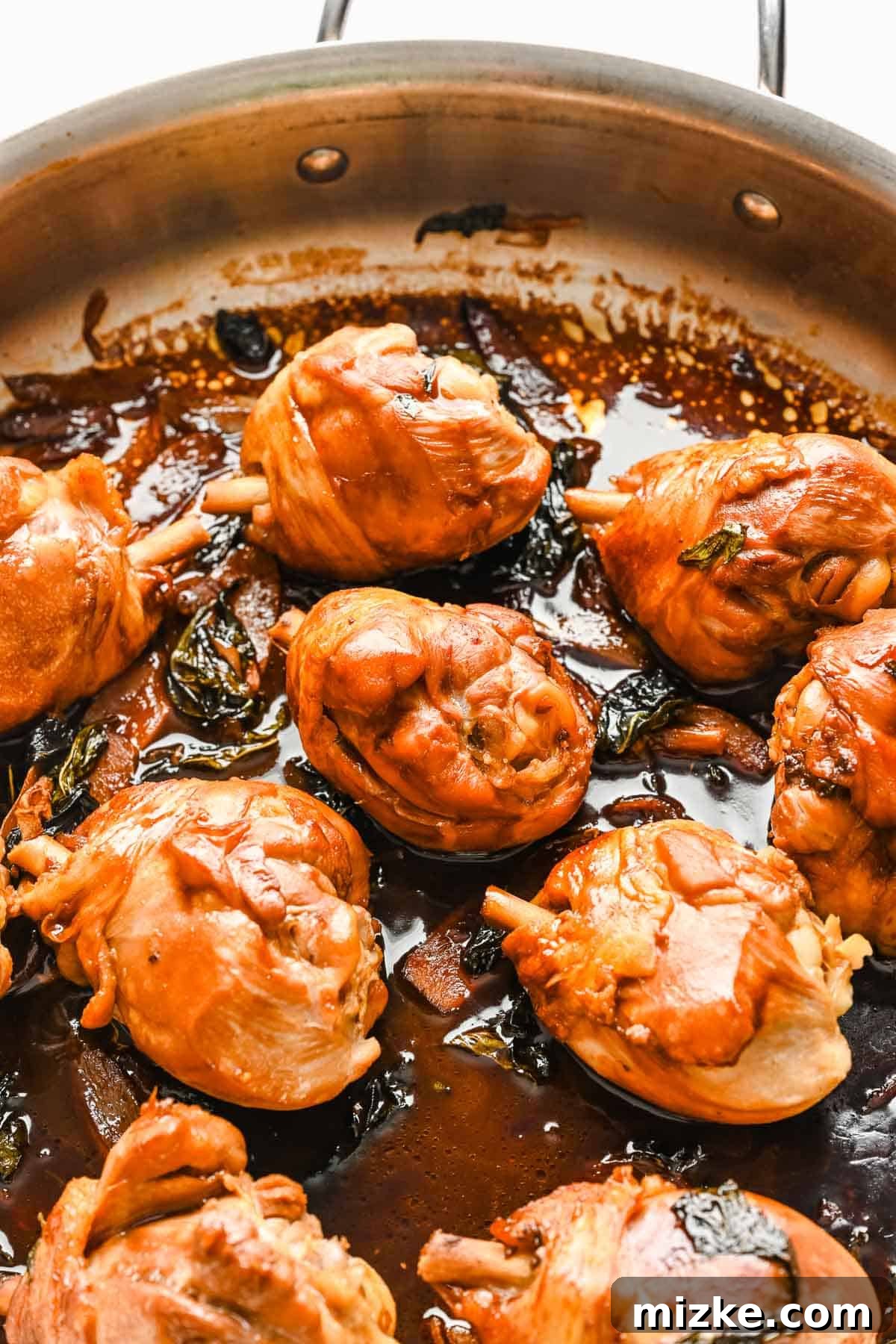
- Develop Color and Flavor: After the initial 10 minutes, uncover the skillet and turn each piece of chicken to expose a new side to the rich sauce. Continue cooking, turning the chicken every 10 minutes, until the meat achieves a beautiful dark brown, caramelized hue. This patient process, typically taking between 35-40 minutes after the initial simmer, is essential for rendering the chicken incredibly tender, allowing it to absorb the full depth of the sauce, and developing that signature glossy, sticky glaze. The extended cooking time ensures the flavors intensify and meld perfectly.
- Serve with Rice: While your chicken is simmering to perfection, prepare a pot of your favorite white rice – jasmine or short-grain sticky rice are excellent choices. Once the chicken is ready, glistening with its rich sauce, serve it immediately over the freshly cooked rice. Don’t forget to generously spoon any extra sauce from the skillet over both the chicken and the rice; this flavorful elixir is too good to leave behind!
Enhancing Your Three Cup Chicken with Crispy Skin
If you prefer your Three Cup Chicken with a delightfully crispy exterior, there’s a simple modification you can make. Before adding the chicken to the sauce and other ingredients, briefly pan-fry the halved drumsticks in a separate pan with a touch of oil over medium-high heat. Cook each side until the skin is golden brown and wonderfully crisp. Once browned, drain any excess oil, then transfer the chicken to your main skillet and proceed with the rest of the recipe instructions. This extra step will add a textural contrast that many find incredibly appealing, complementing the tender meat and rich sauce.
Expert Tips for Three Cup Chicken Success
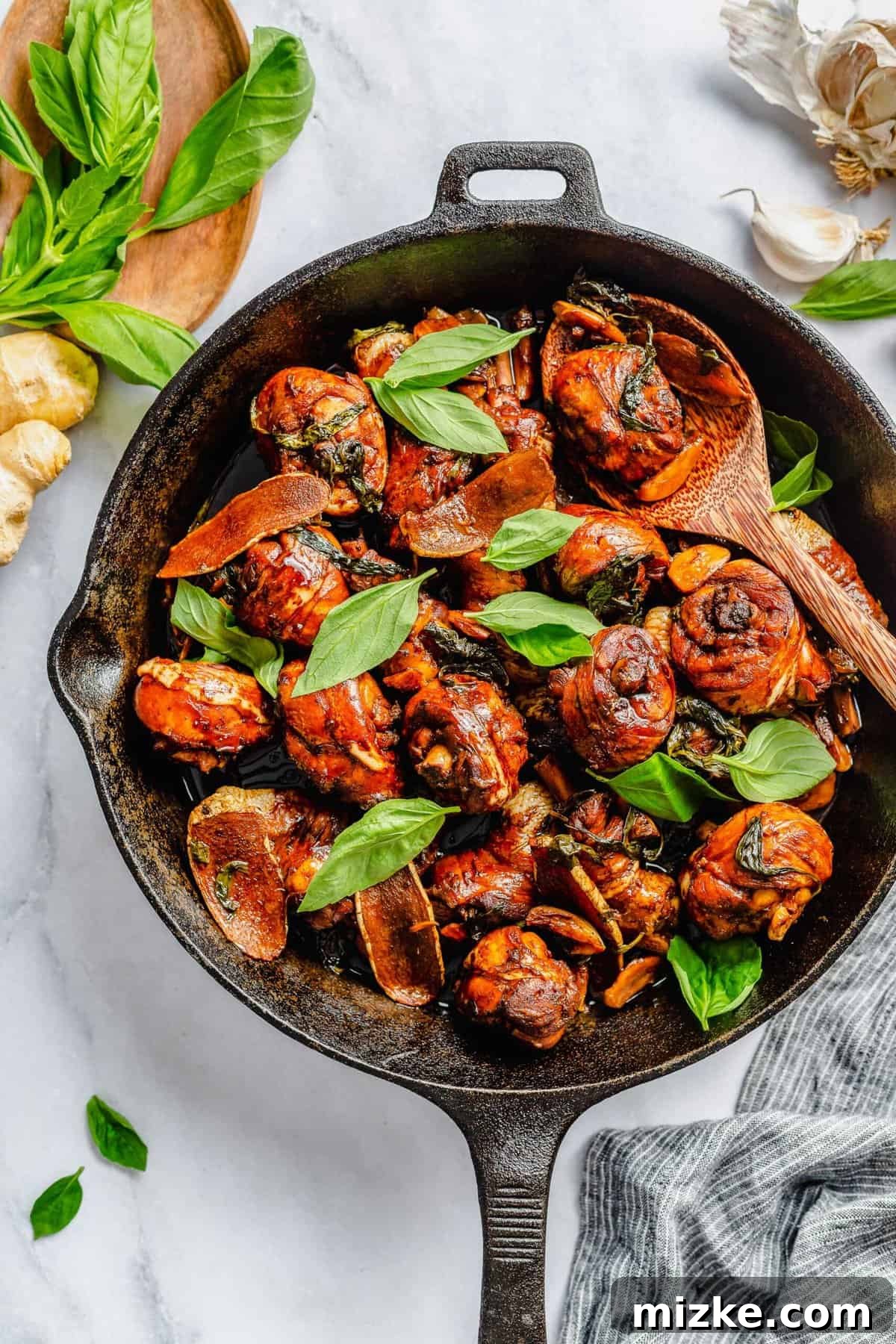
While Three Cup Chicken is relatively straightforward, a few expert tips can elevate your dish from good to truly exceptional. Follow these suggestions to ensure a super delicious and authentic result every time:
- Ginger Preparation – To Peel or Not to Peel: When grating ginger, peeling isn’t always necessary as the peel is thin and blends in. However, for sliced ginger, as used in this recipe, you might prefer to remove the skin. The easiest method is to scrape the edge of a spoon down the root, gently peeling away the thin skin without losing much of the precious ginger flesh.
- Mastering the Drumstick Cut: If you can’t find pre-halved drumsticks at your local Asian market, don’t fret – cutting them yourself is manageable. The key is to use a very sharp cleaver or a heavy-duty chef’s knife. Position the blade at the joint or the thinnest part of the bone. You’ll need to apply more force than you might expect, using a confident, decisive chop to ensure a clean cut. A sturdy cutting board is also essential for safety.
- The Importance of Sauce Balance: Before the chicken is fully integrated, it’s a wise practice to taste the sauce after all the liquid ingredients have been added and heated. This is your window to adjust the saltiness or sweetness. While the ratios are classic, personal preference varies, and subtle tweaks (like a pinch of sugar or a splash more water) can make a big difference before the flavors fully meld with the chicken.
- Authentic Flavor with Chinese Cooking Wine: For the most authentic taste, Shaoxing wine (Chinese cooking wine) is highly recommended. It imparts a unique depth and aroma that is central to San Bei Ji. If Shaoxing wine is unavailable, a dry sherry or Japanese mirin can be used as a substitute, but be aware that the flavor profile will be slightly different. Mirin is sweeter, so adjust other sweet elements if using it.
- Don’t Skimp on the Garlic: The recipe calls for 20 cloves of garlic, and for good reason! This generous amount might seem daunting, but it cooks down beautifully, mellowing into a sweet, rich, and aromatic component rather than an aggressively pungent one. The garlic cloves become incredibly tender and flavorful, almost like a confit, contributing significantly to the dish’s overall deliciousness.
Perfect Pairings: What to Serve with Three Cup Chicken
Three Cup Chicken is a versatile dish that shines brightest when paired with complementary sides. Here are some excellent suggestions to create a truly authentic and satisfying Taiwanese meal:
- Rice – The Essential Companion: A steaming bowl of rice is practically mandatory for soaking up every drop of that incredible sauce. While plain white rice is always a classic choice, consider Sticky Rice for a more substantial and comforting option. Jasmine rice also works beautifully, offering a fragrant base that complements the chicken’s rich flavors.
- Refreshing Salads: To balance the richness of the chicken, a light and tangy salad is perfect. Our Spicy Chinese Cucumber Salad is an excellent go-to veggie side, offering a crisp texture and a refreshing, zesty counterpoint. Other simple options include blanched greens with a light soy-sesame dressing.
- Steamed Buns (Mantou): For a truly traditional experience, serve your Three Cup Chicken with fresh Mantou 饅頭 (Chinese Steamed Buns). These soft, slightly sweet buns are ideal for absorbing the savory sauce and adding a wonderful textural element to the meal.
- Scallion Pancakes: You can never go wrong with a side of homemade scallion pancakes (linked above!). Their crispy, chewy texture and savory onion flavor make them a perfect accompaniment, offering another delicious way to enjoy the rich sauce.
- Stir-Fried Greens: Simple stir-fried vegetables like bok choy, gai lan (Chinese broccoli), or snow peas, lightly seasoned, provide a fresh, vibrant contrast and ensure a balanced meal.
Storing and Reheating Your Three Cup Chicken Leftovers
One of the best qualities of Three Cup Chicken is how wonderfully it stores and reheats, often tasting even better the next day as the flavors have more time to meld. Here’s how to manage your delicious leftovers:
- To Store: Once the dish has cooled to room temperature, transfer any leftover Three Cup Chicken, along with its flavorful sauce, into an airtight container. Refrigerate promptly, and it will keep beautifully for 3 to 4 days.
- To Reheat: For quick reheating, the microwave is a convenient option. Heat in short intervals, stirring occasionally, until warmed through. Alternatively, for a stovetop refresh, place the chicken and sauce in a skillet over medium heat, adding a splash of water or chicken broth if the sauce has thickened too much. Gently simmer until heated through, ensuring the chicken remains tender and moist.
Can You Freeze Three Cup Chicken?
Yes, Three Cup Chicken is suitable for freezing, making it an excellent option for meal prepping or having a comforting dinner ready on demand. To freeze, ensure the chicken is completely cool, then transfer it to a freezer-safe airtight container or a heavy-duty freezer bag. It can be stored in the freezer for up to 3 months. When you’re ready to enjoy it, thaw the frozen chicken overnight in the refrigerator, then reheat it following the instructions provided above.
Discover More Easy Asian Chicken Recipes
If Three Cup Chicken has ignited your passion for delicious, homemade Asian cuisine, you’re in luck! We have a treasure trove of easy chicken recipes that bring authentic flavors right to your table. Explore these favorites:
- Moo Shu Chicken
- Salt and Pepper Chicken Wings
- Instant Pot General Tso’s Chicken
- Kung Pao Chicken
- Chicken and Broccoli
Three Cup Chicken (三杯雞)
Equipment
- Dutch oven or large skillet
Ingredients
- 2 ½ tablespoons black sesame oil
- 20 cloves garlic, kept whole but smashed
- 1 large ginger root, sliced
- 3 pounds (1361 g) chicken drumsticks, halved
- ⅓ cup (79 ml) dark soy sauce*
- ½ cup (118 ml) Chinese cooking wine
- ¾ cup (178 ml) water
- 2 cups (48 g) loosely packed basil leaves
Instructions
- In a large skillet or Dutch oven, heat the sesame oil over medium-high heat until it glistens. Add the smashed garlic and sliced ginger into the skillet. Cook for about 7 minutes, stirring frequently, until the edges of the ginger slices are slightly browned and golden. Be sure to keep tossing the garlic and ginger to prevent them from burning.
- Add the halved chicken drumsticks to the skillet, then pour in the dark soy sauce, Chinese cooking wine, and water. Scatter the basil leaves over the chicken. Gently toss to coat all the chicken pieces in the sauce. Reduce the heat to medium-low, cover the skillet, and let it cook for 10 minutes.
- After 10 minutes, uncover and turn the chicken pieces to ensure all sides cook evenly in the sauce. Continue to cook, turning the chicken every 10 minutes, until the meat darkens to a rich brown color and the sauce has reduced and thickened into a glossy glaze. This process typically takes about 35-40 minutes after the initial covered simmer.
- Serve the Three Cup Chicken immediately over freshly cooked white rice. Be sure to spoon any remaining flavorful sauce generously over both the chicken and the rice for the ultimate taste experience.
Notes
- Pouring the extra sauce over rice and chicken is highly recommended – it’s incredibly delicious!
- Dark soy sauce provides a deeper color and richer flavor than regular soy sauce and is typically saltier. If you cannot find dark soy sauce, regular or low-sodium soy sauce can be used; simply adjust the seasonings to your personal taste preference.
- To Store: Transfer any leftover Three Cup Chicken to an airtight container and refrigerate for 3 to 4 days.
- To Reheat: It can be reheated in the microwave or in a skillet set over medium heat, adding a splash of water if the sauce is too thick.
Nutrition
Serving: 1 serving,
Calories: 518 kcal,
Carbohydrates: 8 g,
Protein: 44 g,
Fat: 30 g,
Saturated Fat: 7 g,
Trans Fat: 1 g,
Cholesterol: 210 mg,
Sodium: 1323 mg,
Potassium: 660 mg,
Fiber: 1 g,
Sugar: 1 g
Disclaimers
This website provides approximate nutrition information for convenience and as a courtesy only. Nutrition information can vary for a variety of reasons. For the most precise nutritional data use your preferred nutrition calculator based on the actual ingredients you used in the recipe.
The default measuring system for this website is US Customary. Unit conversions are provided for convenience and as a courtesy only. While we strive to provide accurate unit conversions, please be aware that there may be some discrepancies.