
Mastering the Art of French Press Coffee: Your Ultimate Home Brewing Guide
For many, coffee isn’t just a beverage; it’s a daily ritual, a moment of solace, and a delightful sensory experience. If you’re tired of lukewarm, bitter, or uninspiring coffee and yearn for a brew that truly awakens your senses, then the French press method is your gateway to coffee nirvana. Often perceived as intimidating or reserved for coffee connoisseurs, brewing with a French press is surprisingly simple, yet yields an unparalleled depth of flavor and smoothness.
Like many dedicated coffee enthusiasts, my mornings are incomplete without that first glorious cup. The intoxicating aroma alone is enough to pull me from the deepest slumber. There’s a distinct comfort in the routine, the anticipation of that rich, warm liquid. While a quick trip to the local coffee shop has its place, there’s an undeniable satisfaction in crafting a superior cup right in your own kitchen. Over time, the French press has become our go-to method for achieving that perfect morning brew, transforming our home into a personal coffee sanctuary.
Why Choose French Press? Unlocking Superior Coffee Flavor
The French press method stands apart from other brewing techniques due to its unique immersion process. Unlike drip coffee makers that pass water through grounds, the French press allows coffee grounds to steep directly in hot water for an extended period. This full immersion ensures maximum extraction of desirable flavors and aromatic compounds, resulting in a brew that is:
- Remarkably Robust and Full-Bodied: Without the use of paper filters, the natural oils from the coffee beans remain in your cup. These oils contribute significantly to coffee’s body and enhance its complex flavors, delivering a truly rich and concentrated taste that often gets stripped away by paper filters.
- Exceptionally Smooth with Minimal Bitterness: This is perhaps the most significant advantage for many. Traditional drip coffee can often taste bitter due to over-extraction or the use of water that’s too hot. With a French press, you have precise control over the steeping time and water temperature, preventing the harsh, burnt notes. For someone like me, who typically finds black coffee too bitter to drink without a generous splash of cream and sugar, French press coffee is a revelation. Its inherent smoothness makes it incredibly enjoyable straight up, allowing the true character of the beans to shine through.
- Pure and Unfiltered: Embrace the purest form of coffee. The mesh filter in a French press allows fine coffee particulates to pass through, contributing to a slightly “muddy” but full-bodied mouthfeel that many coffee lovers adore. This isn’t a flaw; it’s a feature that adds to the unique texture and deep flavor profile.
It’s not snobbery; it’s simply appreciating the science and artistry behind a truly exceptional cup of coffee. Once you experience the unparalleled depth and smoothness of a properly brewed French press, it’s hard to go back.
Essential Tools for French Press Excellence
Achieving that perfect cup requires just a few key components. While the process itself is straightforward, investing in quality tools can significantly elevate your brewing game:
1. The French Press Brewer
Naturally, you’ll need the star of the show! French presses come in various sizes and materials, including glass, stainless steel, and ceramic. Glass presses are popular for their aesthetic appeal and ease of cleaning, while stainless steel options offer superior durability and heat retention. Choose a size that suits your typical consumption – a smaller press for personal use or a larger one for serving multiple people. For those curious about our preferred model, this is the French press coffee maker we currently use and highly recommend.
2. High-Quality Coffee Beans
The foundation of any great coffee is the bean itself. This is not the time for generic, pre-ground supermarket coffee. Seek out fresh, whole beans from a reputable source. Your local specialty coffee shop or a store like Whole Foods often carries excellent single-origin beans or artisanal blends. Don’t be afraid to ask questions about the origin, roast level, and flavor notes. Freshness is paramount, so look for roast dates rather than “best by” dates.
3. A Burr Grinder (or Expert Grinding Service)
This is where many home brewers miss a crucial step. For French press, you need a very specific, coarse grind. Imagine the consistency of sea salt or breadcrumbs – definitely not the fine powder used for espresso or the medium grind for drip coffee. A burr grinder at home provides the most consistent grind, ensuring even extraction. Blade grinders, on the other hand, chop the beans unevenly, leading to inconsistent extraction and a muddy cup. If you don’t have a burr grinder, purchase whole beans and ask your local coffee shop (a specialty roaster, not a chain like Starbucks) to grind them specifically for a French press. They’ll know exactly how coarse it needs to be.
4. Quality Water
Coffee is over 98% water, so its quality directly impacts the final taste. Avoid tap water if it has strong flavors or odors. Filtered water or good quality bottled spring water is ideal. Avoid distilled water, as it lacks the minerals necessary to properly extract flavors from the coffee.
5. Kettle, Timer, and Scale (Recommended for Precision)
While not strictly necessary, these tools significantly enhance consistency. An electric kettle with temperature control is fantastic for hitting the optimal brewing temperature. A kitchen scale helps you maintain a precise coffee-to-water ratio, and a timer ensures you don’t over or under-steep your brew.
Your Step-by-Step Guide to Brewing the Perfect French Press Coffee
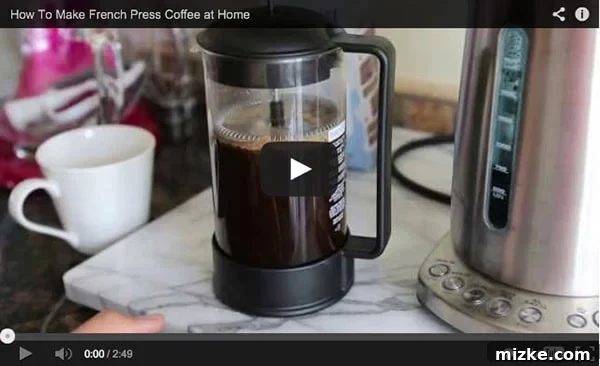
Ready to brew? Follow these steps to achieve a rich, aromatic, and incredibly smooth cup of French press coffee at home. For a visual demonstration, be sure to watch the video tutorial below!
Step 1: Heat Your Water to the Ideal Temperature
Bring your filtered water to a boil, then let it sit for 30-60 seconds. The ideal brewing temperature for French press is between 195°F and 205°F (90°C – 96°C). Using water that’s too hot can scald the coffee grounds, leading to a bitter taste. If you have a temperature-controlled kettle, set it to this range. While the water heats, you can pre-warm your French press by adding a small amount of hot water, swirling it around, and then discarding it. This helps maintain the brewing temperature.
Step 2: Measure and Grind Your Fresh Beans
For a balanced cup, a common coffee-to-water ratio is 1:15 (e.g., 1 gram of coffee for every 15 grams of water). For a 3-cup (350ml) French press, you’d typically use about 23-25 grams of coffee. Grind your chosen fresh beans to a coarse, even consistency. Remember, it should look like coarse sea salt or large breadcrumbs, not fine powder. If the grind is too fine, you’ll end up with a muddy, over-extracted, and bitter coffee that’s also hard to plunge.
Step 3: Add Coffee Grounds to the Press and Bloom
Pour your precisely measured, coarsely ground coffee into the bottom of your pre-warmed French press. Next, gently pour just enough hot water (about twice the weight of your coffee grounds) over the grounds to saturate them. Don’t plunge yet! Let it sit for 30 seconds. This process, known as “blooming,” allows the coffee to release trapped carbon dioxide, which can otherwise create sour notes. You’ll see the grounds expand and bubble; this is a good sign of fresh coffee.
Step 4: Pour Remaining Water and Steep
After the bloom, slowly pour the remaining hot water over the saturated grounds, ensuring all grounds are thoroughly wet. Give the mixture a gentle stir with a wooden or non-abrasive spoon to ensure even saturation. Place the lid on the French press, but do not plunge the filter down yet. Set a timer for 4 minutes. This steeping time is crucial for proper extraction; too short and it will be weak, too long and it could become over-extracted and bitter.
Step 5: Plunge Slowly and Steadily
Once your timer goes off, it’s time for the plunge. Slowly and steadily press the plunger down, applying gentle, even pressure. It should take about 20-30 seconds to push the plunger all the way to the bottom. If it feels too easy, your grind might be too coarse. If it’s very difficult, your grind is likely too fine. The plunger separates the coffee grounds from the liquid, leaving you with a clear, delicious brew above the filter.
Step 6: Serve Immediately and Enjoy
As soon as you’ve finished plunging, pour all the coffee from the French press into your cup or a separate carafe. Do not let the coffee sit in the French press with the grounds after plunging, as it will continue to extract and become bitter and over-extracted, ruining all your hard work. Now, savor the rich aroma and robust flavor of your perfectly brewed French press coffee!
Troubleshooting & Tips for the Best French Press Brew
Even with a guide, you might encounter a few hiccups. Here’s how to troubleshoot common issues and refine your technique:
- My coffee is too bitter:
- Check your grind: It might be too fine, leading to over-extraction.
- Check your water temperature: Water that is too hot can burn the grounds.
- Reduce steeping time: Try 3.5 minutes instead of 4.
- My coffee is too weak or sour:
- Check your grind: It might be too coarse, leading to under-extraction.
- Check your water temperature: Water that is too cool won’t extract enough flavor.
- Increase steeping time: Try 4.5 minutes instead of 4.
- Adjust coffee-to-water ratio: You might need more coffee for your desired strength.
- There’s too much sludge at the bottom:
- A little bit of fine sediment is normal for French press due to the mesh filter.
- Ensure your grind is consistently coarse.
- Avoid stirring too vigorously after adding water.
- Pour gently and don’t drink the very last sip if sediment bothers you.
- Cleaning your French press: Rinse immediately after use. For a deeper clean, disassemble the plunger and wash all parts with warm, soapy water. Periodically, you can use a mixture of vinegar and water to remove any coffee oil buildup.
Beyond the Basics: Customizing Your French Press Experience
Once you’ve mastered the fundamentals, don’t hesitate to experiment!
- Explore Different Beans: Try single-origin beans from various regions (Ethiopian, Colombian, Guatemalan) to discover unique flavor profiles. Experiment with different roast levels – light roasts often highlight floral and fruity notes, while dark roasts offer bolder, richer flavors.
- Adjust Ratios and Steep Times: Your perfect cup is a matter of personal preference. Play with the coffee-to-water ratio to find your ideal strength, and vary the steeping time by 30-second increments to see how it affects the flavor.
- Cold Brew with a French Press: Your French press isn’t just for hot coffee! It’s an excellent tool for making cold brew. Simply combine coarse-ground coffee with cold water, let it steep in the refrigerator for 12-24 hours, then plunge. The result is a smooth, low-acid coffee concentrate perfect for iced coffee.
Elevate Your Coffee Experience Today
The journey to perfect coffee is a delightful one, and the French press method offers an incredibly rewarding path. It demystifies the brewing process, puts control back in your hands, and consistently delivers a cup that surpasses many professional offerings. By paying attention to the quality of your beans, the coarseness of your grind, and the precision of your brew, you can transform your daily coffee ritual into an extraordinary experience.
So, take the plunge (pun intended!), follow this guide, and prepare to savor the rich, smooth, and full-bodied coffee you’ve always dreamed of. Your taste buds will thank you.
This post contains an affiliate link.