
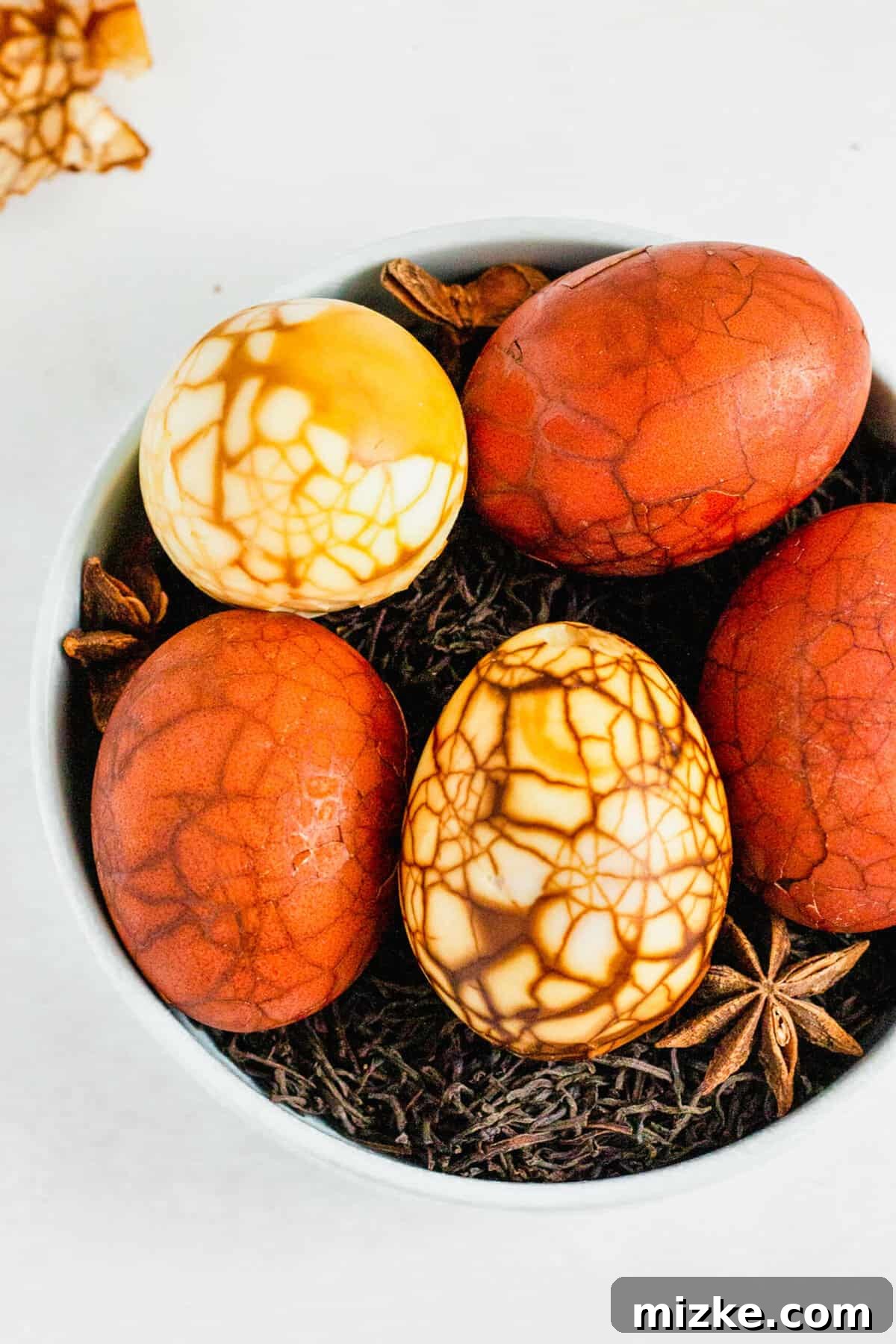
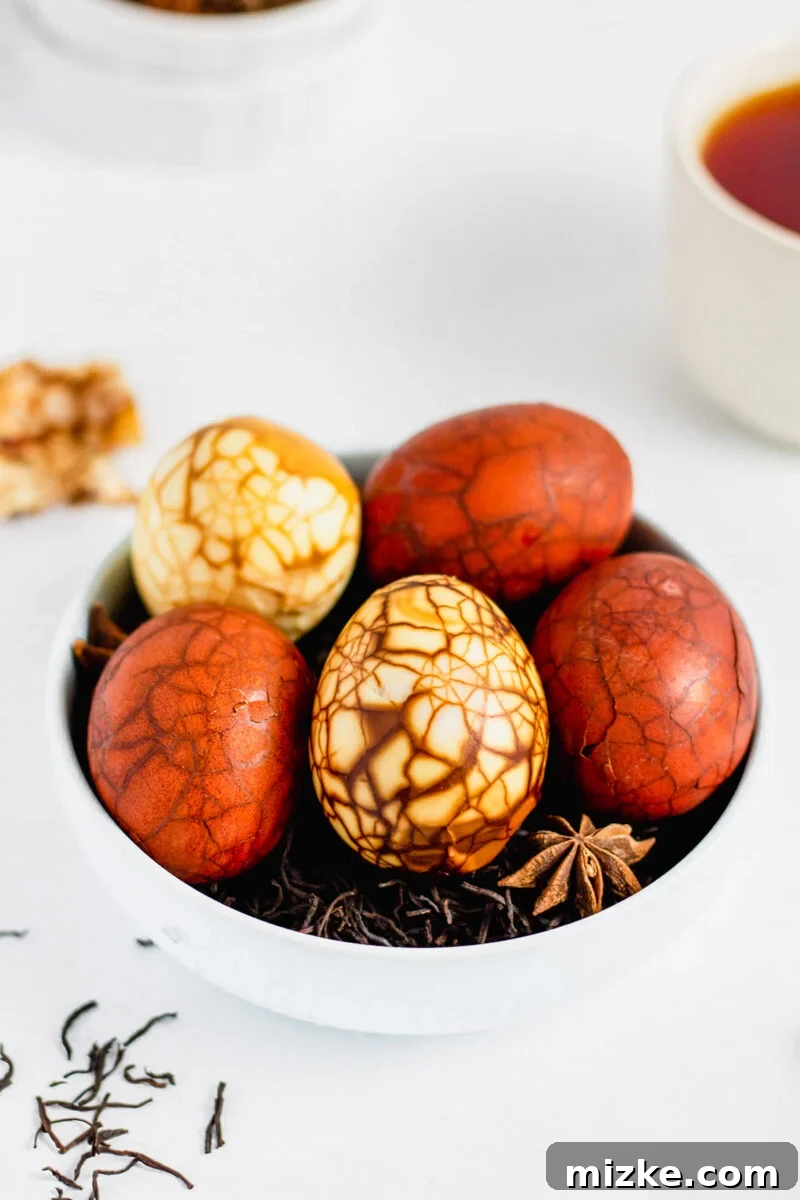
Step into the vibrant culinary landscape of Taiwan, and you’ll quickly encounter a snack that is as visually stunning as it is delicious: **Taiwanese Tea Eggs**. These aren’t just ordinary hard-boiled eggs; they are a true testament to the artistry of traditional Chinese cuisine, transformed into an edible masterpiece with a unique marble-like pattern and an intoxicating aroma. Often found simmering in aromatic broths at bustling night markets, roadside stalls, and even local 7-Eleven convenience stores across Taiwan, tea eggs are more than just a snack; they’re a cultural staple, deeply woven into the fabric of daily life.
For many, the scent of star anise and Chinese five-spice powder emanating from a pot of simmering tea eggs evokes a powerful sense of nostalgia, a warm embrace of childhood memories. Growing up with this comforting aroma, the experience of Taiwanese tea eggs transcends mere taste; it’s a sensory journey that connects you to generations of culinary tradition. This article will guide you through the allure of this traditional delicacy, from its captivating appearance to its complex flavor profile, and empower you to recreate this authentic taste of Taiwan in your own kitchen.
The Captivating Artistry of Marbled Tea Eggs
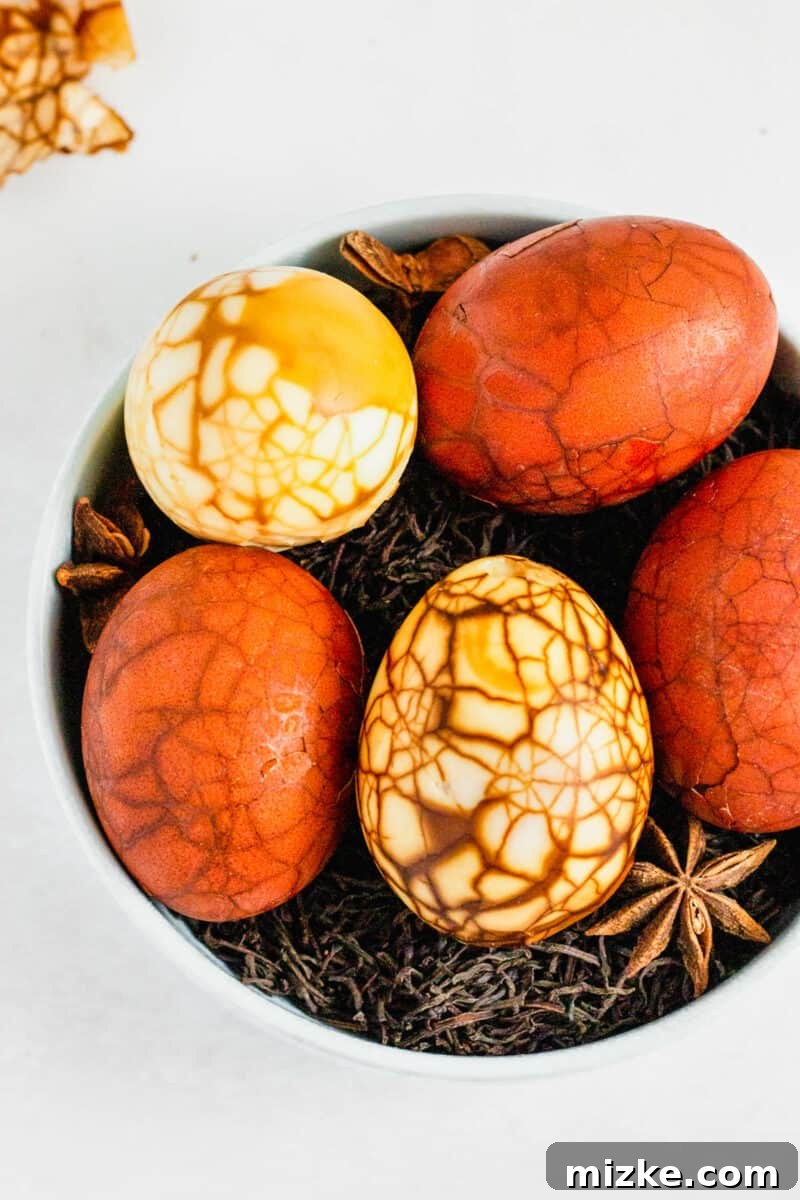
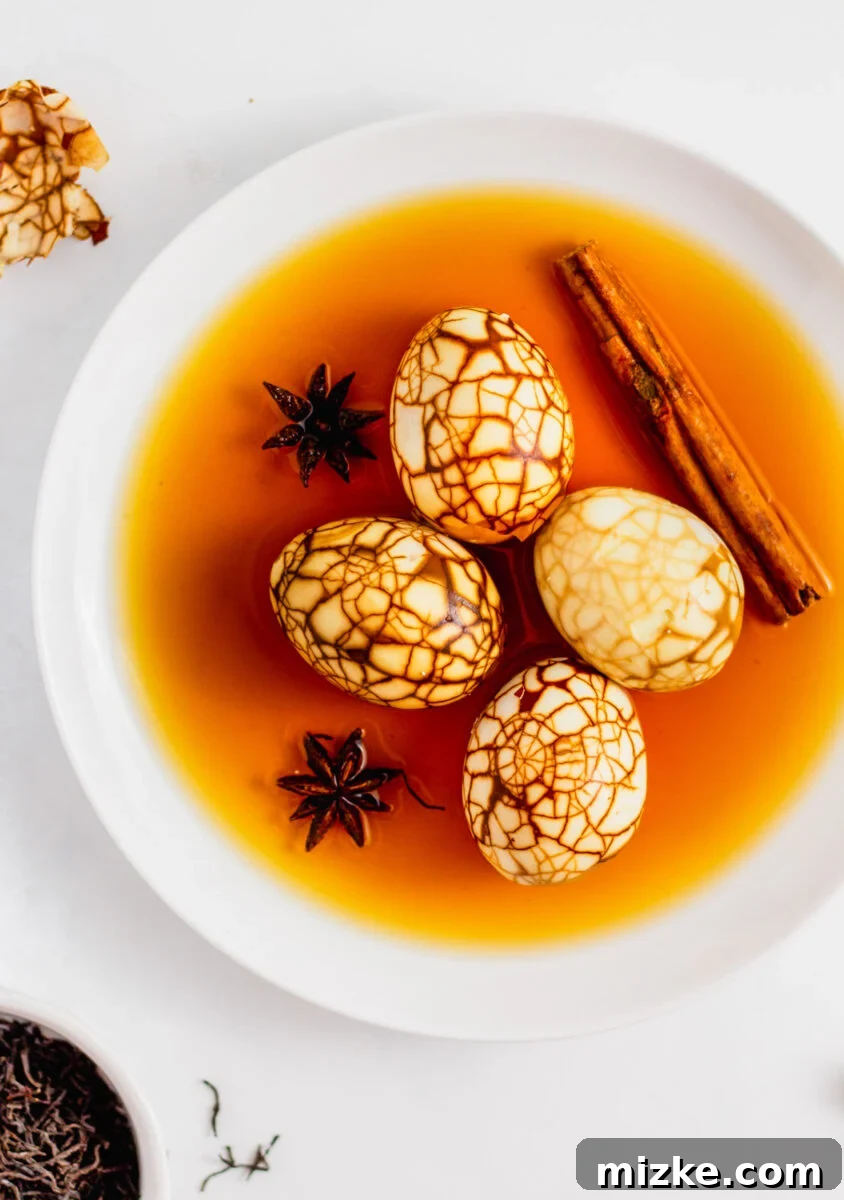
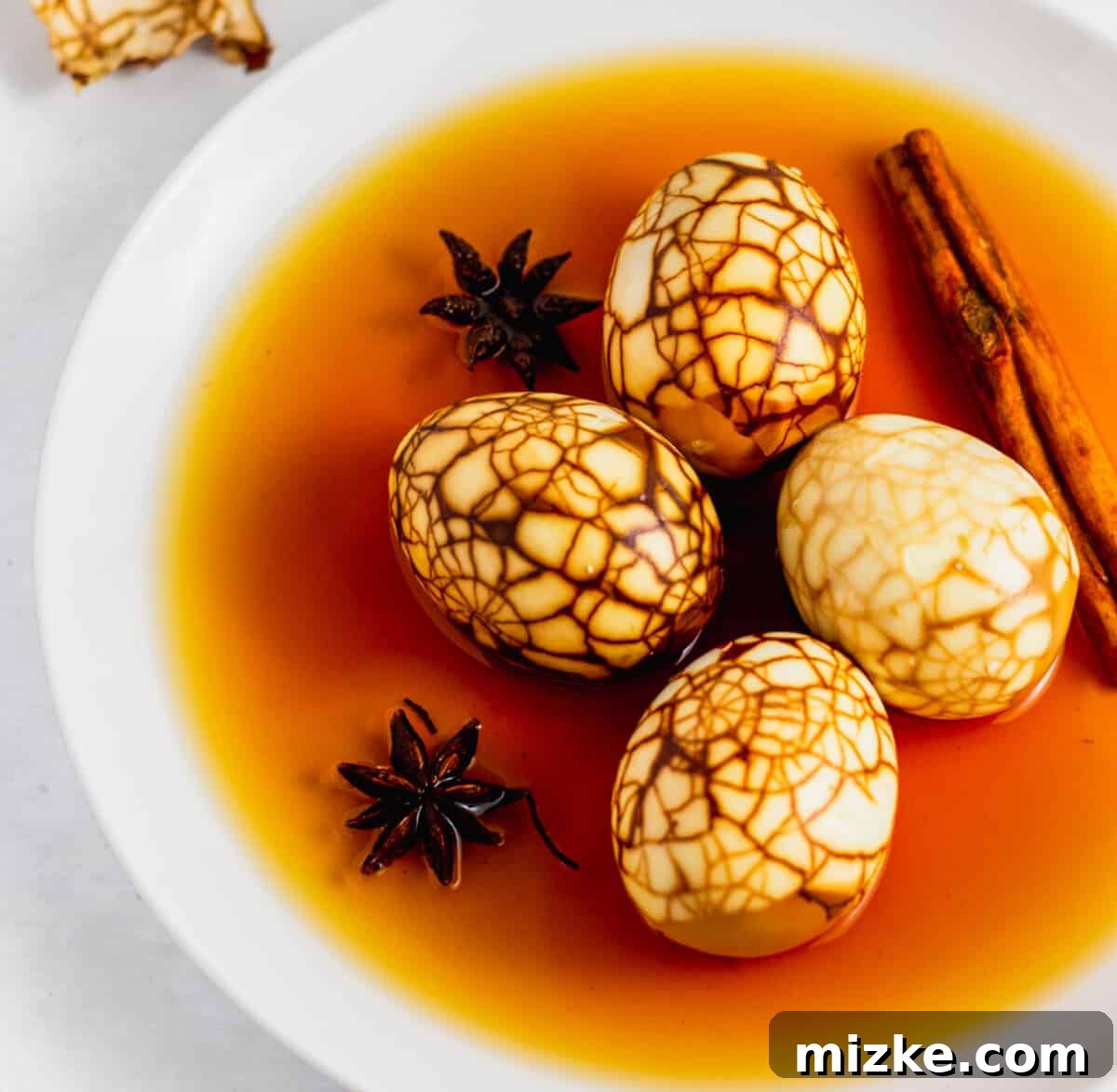
What truly sets Taiwanese tea eggs apart is their mesmerizing appearance. Each eggshell boasts an intricate, crackled pattern resembling delicate spiderwebs or beautiful marbling. This unique aesthetic is not coincidental but a result of the meticulous braising process. After the eggs are gently boiled and their shells are lightly cracked, they are submerged in a fragrant mixture of tea and spices. Over time, this rich braising liquid seeps into the fine cracks, staining the egg white beneath and creating a stunning, artistic design. The contrast between the dark lines and the pale egg white is so striking that it almost makes you hesitate before taking a bite, as if you’re about to disrupt a piece of culinary art.
This visual appeal contributes significantly to their popularity, making them not just a tasty snack but also a feast for the eyes. It’s this delicate balance of aesthetics and flavor that elevates Taiwanese tea eggs from a simple street food to a cherished cultural icon.
Understanding the Flavor Profile
The taste of Taiwanese tea eggs is a complex symphony of savory, sweet, and aromatic notes, deeply infused into the egg white and subtly complementing the yolk. The primary flavors come from the distinct blend of soy sauce and the iconic Chinese five-spice powder, which typically includes star anise, cloves, Chinese cinnamon, Sichuan peppercorns, and fennel seeds. Star anise, with its warm, licorice-like essence, is particularly prominent, offering a comforting and earthy undertone. This savory spice blend is beautifully balanced by the subtle bitterness and earthy notes of black tea, creating a truly unique and irresistible flavor. While the tea flavor is often delicate, its presence adds a layer of depth and sophistication to the overall experience.
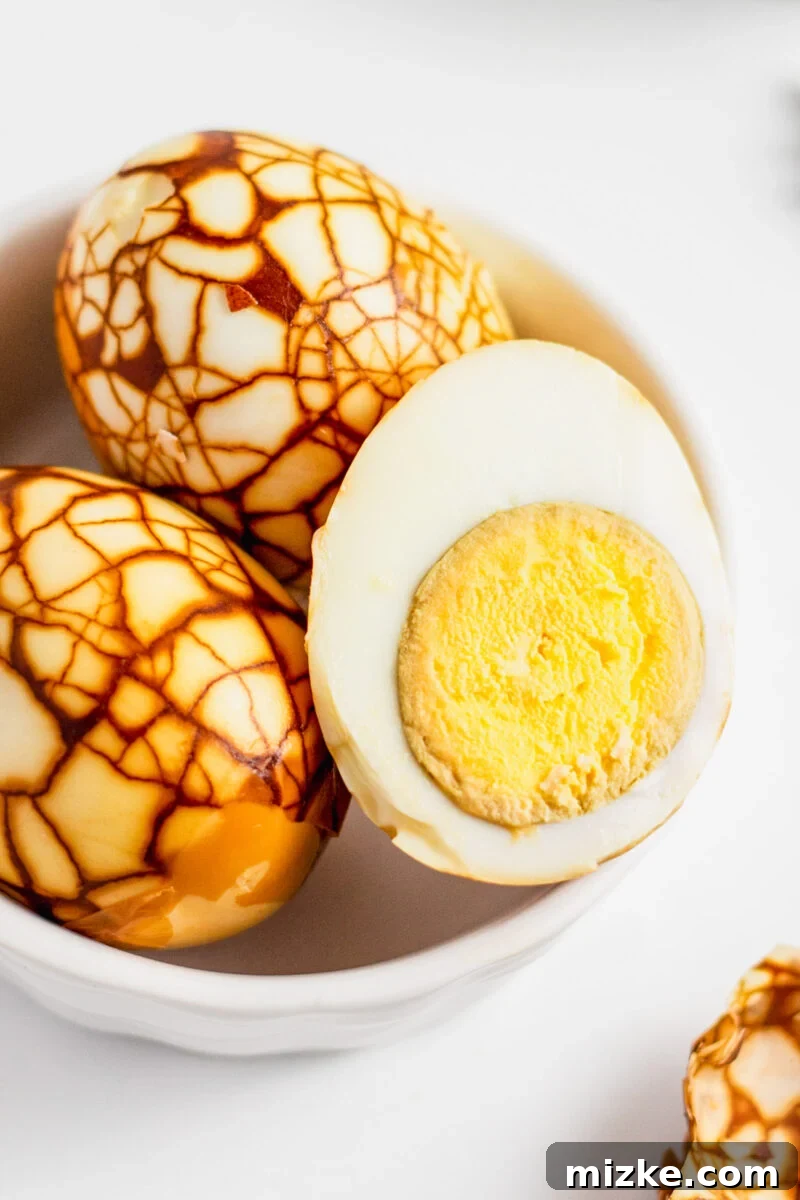
It’s important to note a common characteristic of traditionally prepared tea eggs: the yolk tends to be fully cooked and can sometimes develop a greyish-green hue around its edges due to the prolonged braising. This results in a slightly chalkier texture compared to a jammy, soft-boiled egg. While some might prefer a softer yolk, this firm texture is typical and part of the authentic tea egg experience, allowing the rich spice flavors to permeate every part of the egg. The vibrant taste of the braising liquid makes this firm yolk absolutely worthwhile, offering a delightful contrast to the deeply flavored egg white.
The Simple Yet Rewarding Process of Making Tea Eggs
Crafting Taiwanese tea eggs at home is surprisingly straightforward, though it does require a touch of patience. The beauty of this recipe lies in its minimal active cooking time; most of the work involves allowing the eggs to gently simmer and then marinate in their flavorful braising liquid. This extended steeping time is crucial for two reasons: it allows the eggs to fully absorb the complex flavors of the spices and tea, and it enables the liquid to seep into the cracked shells, creating that signature marbled effect. While the process is mostly hands-off, a little supervision is needed to ensure the pot doesn’t boil over and the liquid doesn’t reduce too quickly.
The longer the eggs luxuriate in the aromatic broth, the more profound their flavor becomes and the more pronounced their beautiful crackled design. This makes it an ideal recipe for a weekend project or for preparing a batch to enjoy throughout the week.
How to Make Authentic Taiwanese Tea Eggs at Home
Embark on your journey to create these delightful tea eggs with this detailed, step-by-step guide:
- Initial Boil & Cooling: Begin by placing your desired number of eggs in a large pot. Cover them with cold water, ensuring they are fully submerged. Add the essential ingredients for the braising liquid: dark soy sauce, loose black tea leaves, star anise pods, Chinese five-spice powder, and kosher salt. Bring the mixture to a rolling boil over high heat. Once boiling, immediately remove the pot from the heat and let the eggs sit in the hot water for approximately 15 minutes. This gentle cooling period allows the eggs to cook through without over-boiling while making them easier to handle. You can also transfer them to an ice bath for quicker cooling, but letting them cool naturally helps prevent the shells from becoming too fragile.
- Cracking the Shells: Once the eggs are cool enough to comfortably handle, carefully remove each egg from the pot using a slotted spoon, preserving the braising liquid. With the back of a spoon, gently tap all around the eggshell to create a network of fine cracks. The goal is to crack the shell without completely breaking or peeling it. These tiny fissures are what allow the flavorful liquid to penetrate and create the signature marbled pattern.
- The Marination: Return all the cracked eggs to the pot with the braising liquid. Ensure they are fully submerged. For optimal flavor infusion and marbling, allow the eggs to sit and marinate overnight. You can safely leave them out on the kitchen counter in a cool spot, especially if it’s not excessively warm, or for extra precaution and longer storage, place the pot in the refrigerator. The longer the marination, the richer the color and deeper the flavor will be.
- The Reveal: After their overnight bath, carefully remove the eggs from the liquid. Gently peel away the cracked shells to reveal your stunning masterpieces! The intricate, dark brown lines contrasting against the smooth white egg are a truly satisfying sight.
- Serving: Your Taiwanese tea eggs are now ready to be enjoyed! You can serve them whole, slice them in half or quarters, or incorporate them into other dishes.
Essential Ingredients and Helpful Tips for Success
While the core recipe is simple, understanding the nuances of each ingredient and incorporating a few tips can elevate your homemade Taiwanese tea eggs to perfection.
Key Ingredients and Substitutions:
- Dark Soy Sauce: This ingredient is crucial for achieving the characteristic deep, rich reddish-brown color of tea eggs. Dark soy sauce is thicker, less salty than light soy sauce, and has a slightly sweet molasses-like flavor. It’s readily available at most Asian grocery stores. If you absolutely cannot find it, light soy sauce can be used as a substitute, but be aware that your eggs will have a lighter color and you might need to adjust the salt content.
- Rock Sugar: A common sweetener in Taiwanese cuisine, rock sugar (often clear and resembling small crystal rocks) is sometimes added to the braising liquid. It contributes a subtle sweetness that balances the savory spices without overpowering them. This addition is entirely optional, but a small piece or two can enhance the overall complexity of the flavor. Regular granulated sugar or brown sugar can be used as alternatives, but rock sugar dissolves slowly and offers a unique depth.
- Cinnamon Stick: While not always included in every recipe, adding a cinnamon stick can impart an extra layer of warm, aromatic spice that beautifully complements the star anise and Chinese five-spice powder. It adds a comforting, sweet-spicy note.
- Sichuan Peppercorns: For those who appreciate a slight tingly sensation and a more complex spice profile, a pinch of Sichuan peppercorns can be a wonderful addition. This ingredient introduces a unique citrusy, floral, and slightly numbing “ma la” quality, found in many authentic Chinese dishes. It’s an optional but highly recommended enhancement for adventurous palates.
- Black Tea Leaves: The “tea” in tea eggs is best delivered through loose black tea leaves. Varieties like Taiwanese Oolong tea or robust black teas such as Pu-erh or a strong English Breakfast blend work exceptionally well, imparting a stronger, more authentic tea flavor. While black tea bags can be used in a pinch, loose leaves generally yield a more intense and nuanced tea essence. Crucially, avoid using green tea, as its flavor profile is too delicate and can turn bitter when over-brewed.
- Bay Leaves: A common misconception is confusing black tea leaves with bay leaves. Bay leaves are not part of a traditional tea egg recipe and have a distinct flavor that would alter the authentic taste. Ensure you are using actual black tea leaves.
Tips for the Perfect Batch:
- Gentle Cracking: The key to the beautiful marble pattern is a careful cracking technique. Avoid breaking the shell into large pieces or peeling it entirely. Small, intricate cracks are ideal for allowing the braising liquid to seep in evenly.
- Marination Time: While you can enjoy them after a few hours, true flavor development and deep marbling occur with an overnight (8-12 hour) or even 24-hour marination. Patience is a virtue here!
- Reheating & Storage: Tea eggs can be stored in their braising liquid in the refrigerator for up to a week. To reheat, gently warm them in a small amount of the liquid on the stovetop or in the microwave. They are also delicious served chilled or at room temperature.
- Batch Cooking: These eggs are perfect for meal prepping. Make a larger batch and enjoy them as a snack or side dish throughout the week.
Delightful Ways to Serve Taiwanese Tea Eggs
Taiwanese tea eggs are incredibly versatile and can be enjoyed in numerous ways. While they make for a satisfying standalone snack, they also complement a variety of Asian dishes beautifully, adding a burst of flavor and a touch of elegance.
- With Noodle Soups: Tea eggs are a fantastic addition to various noodle soup dishes. For an authentic Taiwanese experience, slice them in half and serve them alongside a hearty bowl of traditional Taiwanese Beef Noodle Soup. If you’re already making tea eggs, you can skip cooking an egg directly in the soup and simply garnish with these flavorful beauties. They also pair wonderfully with other Asian noodle dishes, like a rich Ramen, offering a unique flavor twist compared to the more common jammy eggs.
- Alongside Braised Pork (Lu Rou Fan): A classic pairing, these tea eggs are an excellent side dish for a comforting bowl of Taiwanese Braised Pork Rice (Lu Rou Fan). The savory, aromatic notes of the tea eggs perfectly echo the similar spice profiles found in the braised pork, creating a harmonious and deeply satisfying meal. Traditionally, eggs might be braised directly with the pork, but serving your pre-made tea eggs alongside saves time and adds an extra layer of deliciousness.
- As a Quick Snack or Appetizer: Their portability and rich flavor make tea eggs an ideal on-the-go snack, reminiscent of buying them from a street vendor. They’re also perfect as an appetizer or a light breakfast, offering a protein-packed and flavorful bite to start your day.
The Unforgettable Taste and Cultural Connection
Describing the exact taste of Taiwanese tea eggs can be challenging for those who haven’t experienced them, as it truly is a flavor unto itself. Imagine a savory egg white, deeply permeated with the robust notes of soy sauce and a warm, complex spice blend. The star anise provides a distinct, almost licorice-like sweetness, while the five-spice powder contributes an earthy, aromatic depth, a subtle saltiness, and often a hint of warmth that tantalizes the palate. Underlying these dominant flavors is a delicate, earthy hint of black tea, which enhances the natural richness of the egg yolk. It’s an intricate dance of sweet, savory, and umami, culminating in a comforting and highly addictive taste.
Beyond their deliciousness, Taiwanese tea eggs hold a special place in the hearts of many, including my own. For me, they are a powerful link to my childhood, instantly transporting me back to the bustling night markets and familiar convenience stores of Taiwan. The nostalgic scent of the spice mix is an instant trigger for cherished memories, a comforting aroma that feels like home. Making and sharing this traditional dish is a way to pass on a piece of that cultural heritage and offer a taste of the flavors that shaped my upbringing. We encourage you to try this recipe, explore its unique flavors, and perhaps even create your own cherished memories with this delightful Taiwanese delicacy!
Taiwanese Tea Eggs
Julie Chiou
15 minutes
1 hour
8 hours
9 hours 15 minutes
6
Ingredients
-
6
eggs -
4 cups
(946 ml)
water, enough to submerge the eggs completely -
2 tablespoons
dark soy sauce -
2 tablespoons
loose black tea leaves -
5
star anise pods -
2 teaspoons
Chinese five spice powder -
1 teaspoon
kosher salt
Instructions
-
In a large pot, place eggs and cover with cold water. Add dark soy sauce, tea leaves, star anise pods, five spice powder, and salt. Bring the water to a boil, then remove from heat and let sit for 15 minutes.
-
Once the eggs are cool enough to touch, remove them with a slotted spoon, keeping the braising liquid in the pot.
-
Using the back of a spoon, gently tap each egg all around its shell to create an intricate network of cracks. Do not peel.
-
Return the cracked eggs to the braising liquid in the pot. Let them marinate overnight on the countertop (in a cool spot) or in the refrigerator.
-
Gently peel off the egg shells to reveal the beautiful marbled pattern on your masterpiece!
-
Serve whole, sliced in half, or in quarters. Refer to the blog post for serving suggestions.
Nutrition
Calories: 74kcal,
Carbohydrates: 2g,
Protein: 7g,
Fat: 5g,
Saturated Fat: 1g,
Polyunsaturated Fat: 1g,
Monounsaturated Fat: 2g,
Trans Fat: 1g,
Cholesterol: 164mg,
Sodium: 794mg,
Potassium: 107mg,
Fiber: 1g,
Sugar: 1g
Disclaimers: This website provides approximate nutrition information for convenience and as a courtesy only. Nutrition information can vary for a variety of reasons. For the most precise nutritional data use your preferred nutrition calculator based on the actual ingredients you used in the recipe. The default measuring system for this website is US Customary. Unit conversions are provided for convenience and as a courtesy only. While we strive to provide accurate unit conversions, please be aware that there may be some discrepancies.