
For those who follow my culinary journey, especially on platforms like Instagram, you’ve undoubtedly noticed my frequent use of a diverse array of noodles in countless recipes. Whether I’m crafting a rich ramen broth or preparing a vibrant stir-fry, I often emphasize specific types, like ‘fresh ramen’ or particular dimensions of ‘rice noodles.’ This precision, while aiming for authenticity, can sometimes lead to confusion, especially for those not accustomed to navigating the extensive aisles of an Asian supermarket or who may not have access to a wide selection of specialty ingredients.
The world of Asian noodles is incredibly vast and wonderfully varied, offering a spectrum of textures, flavors, and forms that can elevate any dish. However, deciphering which noodle to use for which recipe, how to identify them, and what to do if your preferred option isn’t available can be daunting. This comprehensive guide is designed to be your definitive resource, dispelling common myths and providing practical insights into the most popular noodles I use in my Asian-inspired cooking. We’ll explore their unique characteristics, ideal applications, tips for sourcing, and invaluable substitution advice, transforming any potential kitchen conundrum into a confident culinary adventure.
Navigating the Asian Supermarket Noodle Aisle
Before we dive into specific noodle types, let’s talk about the experience of shopping for them. Asian supermarkets are treasure troves of ingredients, but their noodle sections can be overwhelming. You’ll encounter everything from fresh, refrigerated noodles to dried, shelf-stable varieties. Don’t be intimidated! The key is to pay attention to packaging details, especially regarding ingredients, thickness, and country of origin. Often, a quick visual inspection of the noodles themselves – their color, shape, and perceived texture – can provide significant clues. Look for clear English labels where available, or use a translation app if you’re feeling adventurous. Remember, half the fun is in the discovery!
Rice Noodles: The Versatile Staple
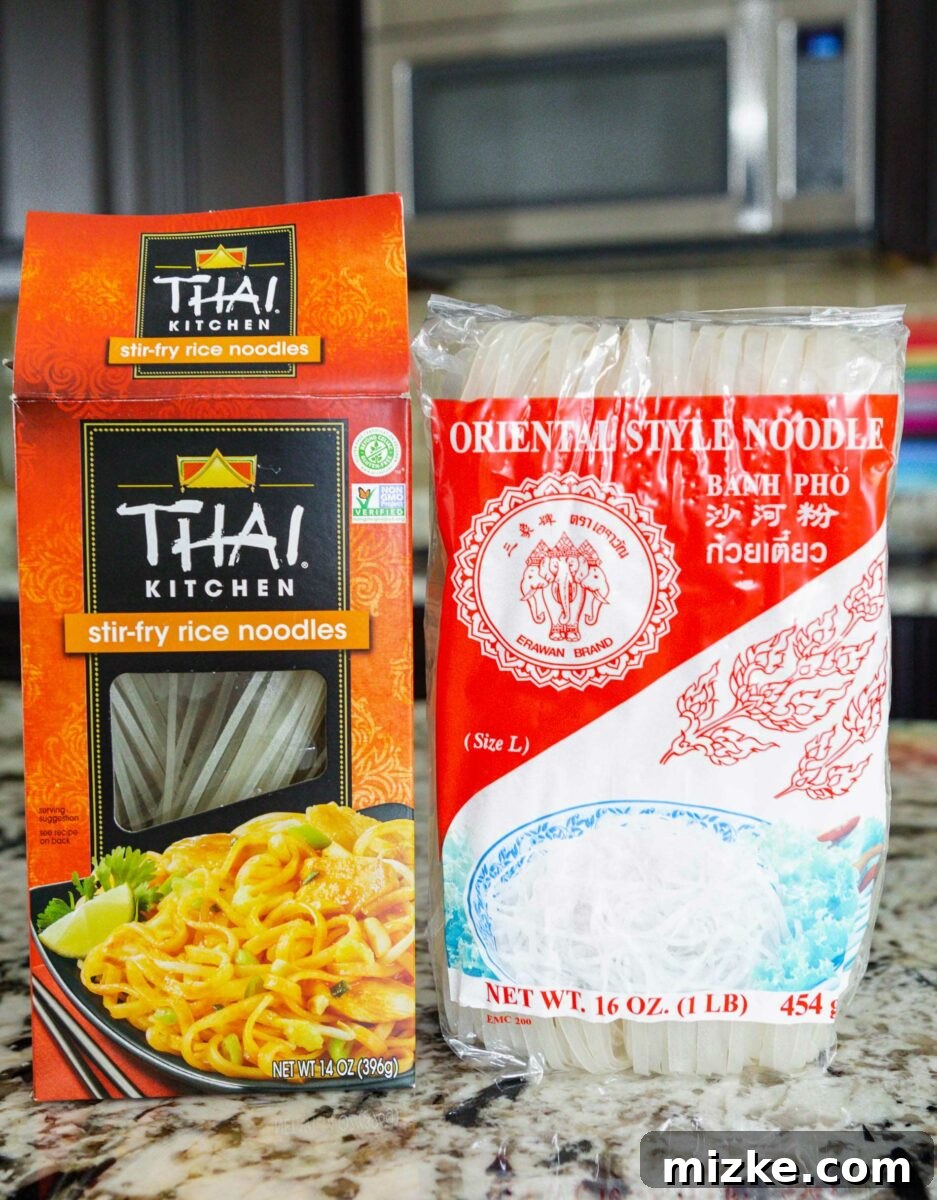
When I refer to “rice noodles,” it’s often a broad category encompassing a wide variety of shapes and sizes, all made primarily from rice flour and water. This versatility makes them a cornerstone in many Asian cuisines, particularly those from Thailand, Vietnam, and China. One of the best ways to identify these noodles, especially if the packaging is unclear, is by their appearance: they are typically white or translucent when dried, and they lack the yellow hue of wheat-based egg noodles. Like conventional pasta, they are usually sold in dried form, making them an excellent pantry staple.
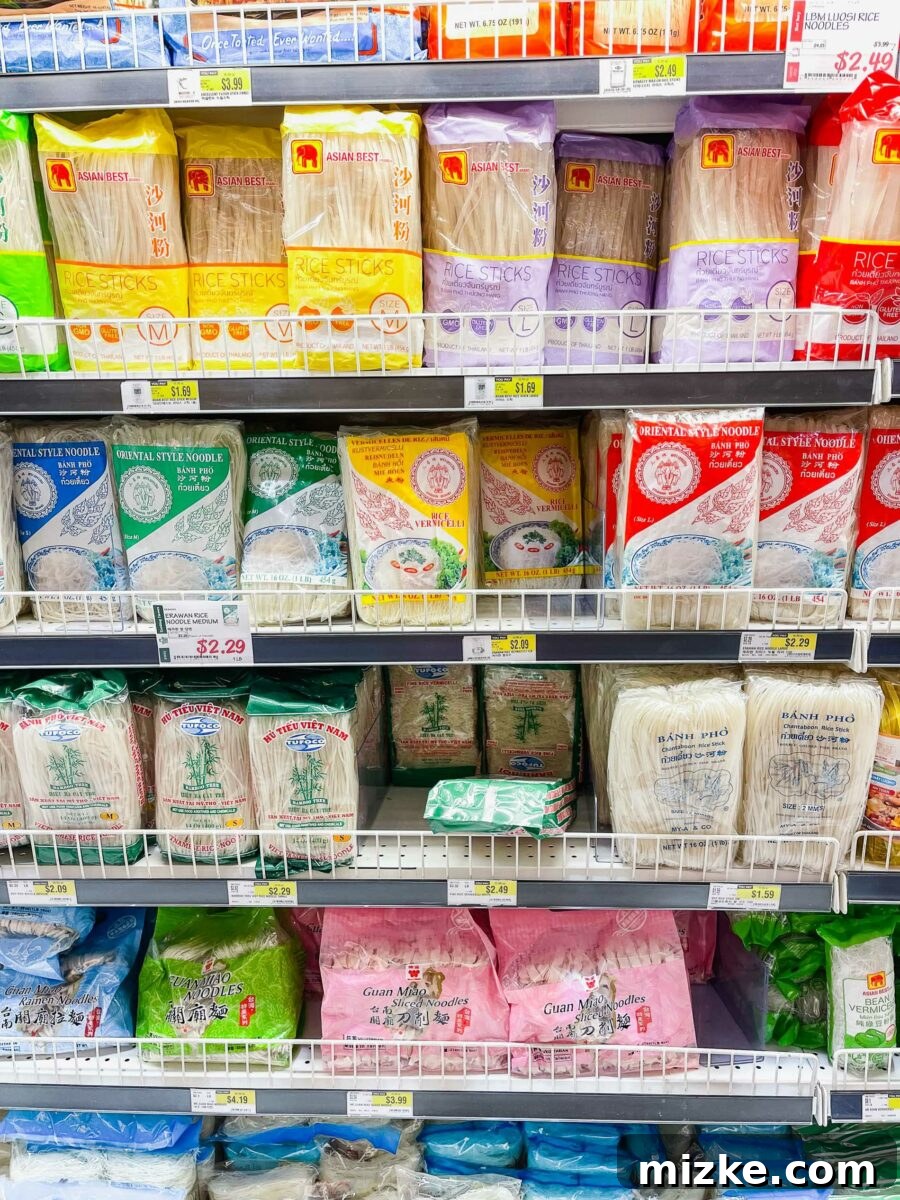
In my cooking, I generally gravitate towards clear, flat rice noodles, often opting for the thickest size available. You’ll notice that brands use different terminology for thickness – ‘L’ for large, ‘M’ for medium, or even specific numerical designations. It’s important to remember that these size labels aren’t universally consistent across all brands. A ‘large’ from one brand might be equivalent to a ‘medium’ from another. Therefore, it’s more effective to visually assess the noodles through the packaging to determine if you prefer a thicker, more substantial noodle or a finer, delicate strand.
My personal preference for thicker rice noodles stems from a desire for a heartier texture that can truly bulk up a dish, providing a satisfying mouthfeel. This is particularly true for recipes like Pad Thai or Pho, where the broad, chewy noodles are integral to the dish’s character. They absorb flavors beautifully and offer a delightful chewiness that thin noodles simply can’t replicate. When preparing dried rice noodles, remember to soak them in warm water (not boiling) until pliable before stir-frying or adding to soup, as this prevents them from breaking during cooking and ensures a perfect al dente texture.
Mi Fen (Rice Vermicelli): Light and Delicate
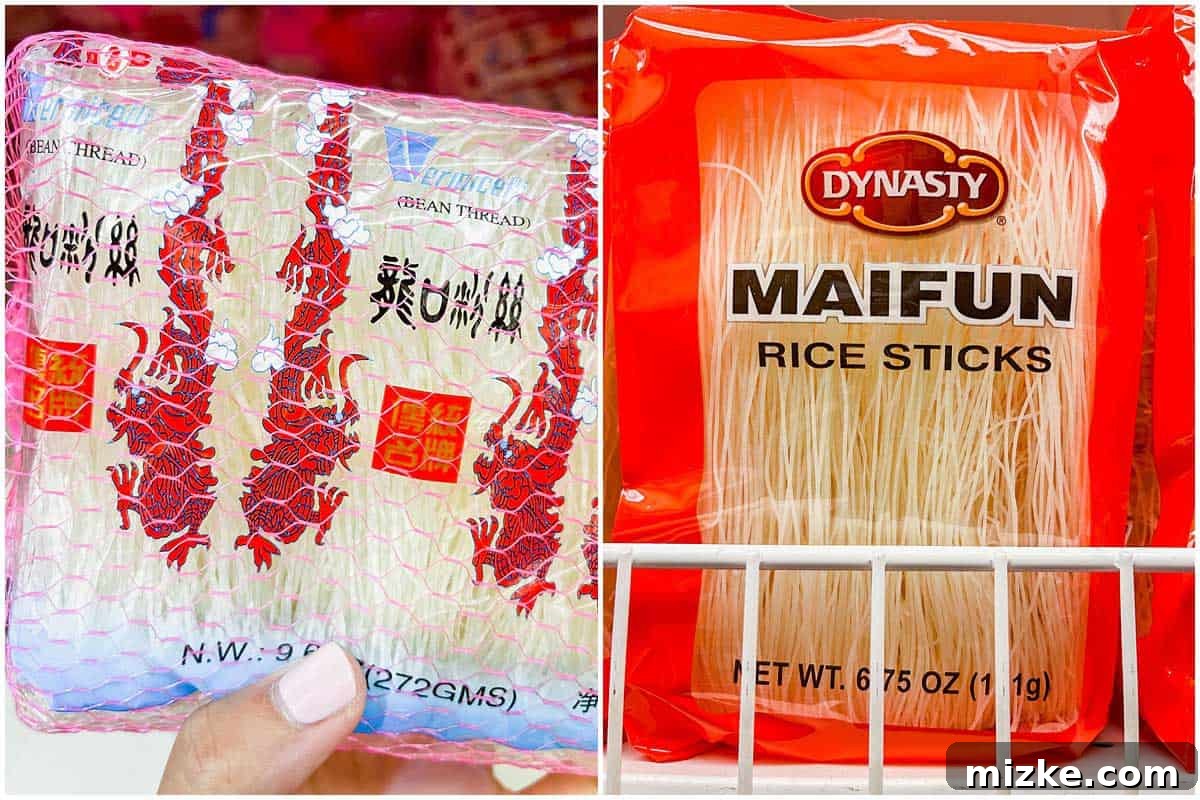
Mi Fen, often translated simply as “rice noodles” in Chinese, specifically refers to fine, thread-like rice vermicelli. This noodle holds a special place in my childhood memories; my mother was renowned for her exquisite Mi Fen dishes, often requested at potlucks by all her friends. Despite this nostalgic connection, I confess a personal disinclination towards Mi Fen. Perhaps it was the sheer frequency with which we ate it, or perhaps their extremely thin nature, which sometimes reminds me of playfully tangled hair on the plate!
When selecting these very thin noodles, you’ll generally encounter two main types at the Asian grocery store. The first is pure rice vermicelli (Mi Fen), made from rice flour, which offers a soft yet slightly springy texture. The second, often found in similar thin strands, is soybean vermicelli, also known as cellophane noodles or glass noodles. These are made from mung bean starch and become wonderfully translucent and gelatinous when cooked, offering a distinct chewy bounce. The choice between rice and soybean vermicelli largely comes down to personal texture preference and the dish you’re preparing. Both are incredibly delicate and require minimal cooking time, often just a quick soak in hot water or a brief simmer. They are excellent in soups, spring rolls, and light stir-fries, where their fine texture can absorb flavors without overpowering other ingredients.
Ramen Noodles: Beyond the Instant Pack
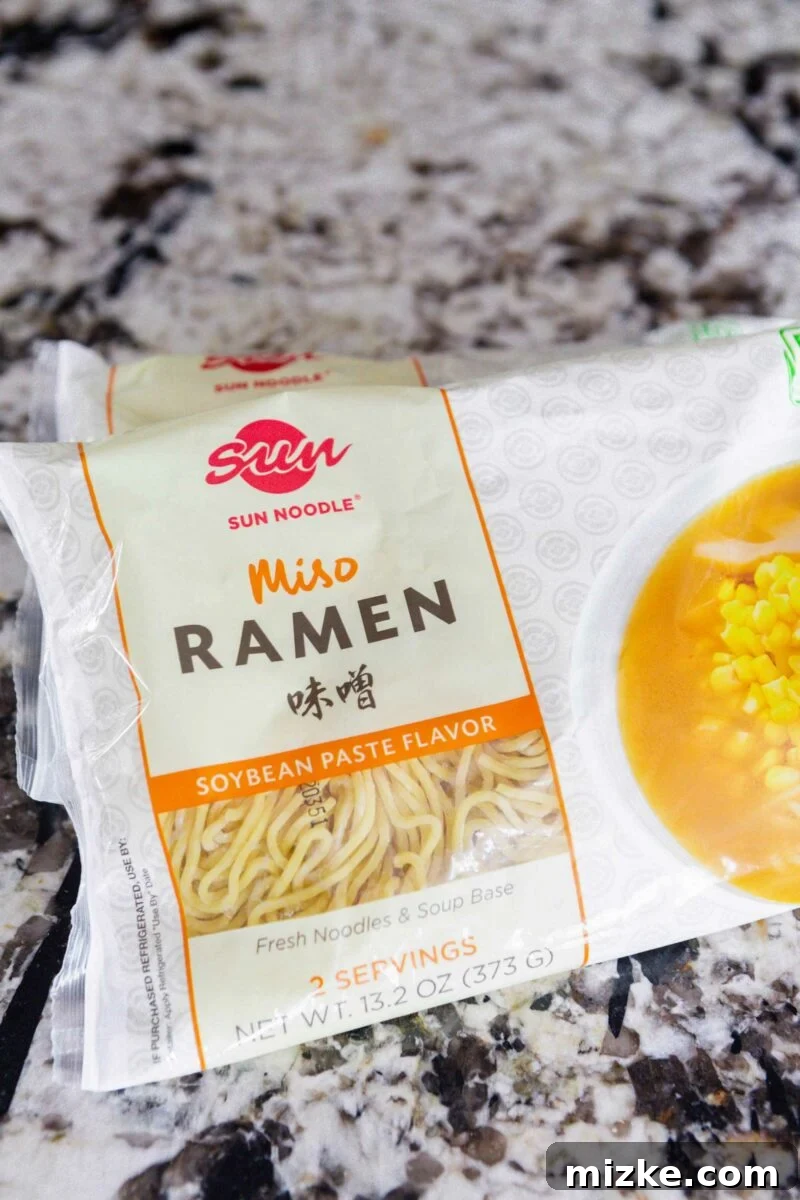
When one hears “ramen noodles,” the immediate image that often springs to mind is the ubiquitous instant variety, a nostalgic symbol of college life and quick meals. While these dried, wavy packets certainly have their place – and yes, you can absolutely use the noodles (discarding the sodium-laden seasoning packet) in a pinch for homemade sauces – they are a world apart from the ‘fresh ramen’ I champion in my recipes. The difference is truly astounding, akin to comparing fresh, artisan Italian pasta to its dried, boxed counterpart. Once you try fresh ramen, there’s no turning back.
My go-to brand for authentic fresh ramen noodles is Sun Noodle. They are widely regarded as the gold standard in the fresh ramen world, known for their perfect texture and chewiness, attributed to the inclusion of kansui, an alkaline mineral water that gives ramen its characteristic springiness and yellow hue. Finding Sun Noodle can sometimes be a challenge, as they are typically found in the refrigerated section of well-stocked Asian supermarkets or specialty food stores. They often come with “flavors” indicated on the packaging, such as shoyu (soy sauce), miso, or tonkotsu. These “flavors” refer solely to the seasoning packets included; if an unflavored option is available, I’ll always choose that. Otherwise, I simply purchase any flavor and discard the seasoning packet, as I prefer to build my own rich, complex ramen broth from scratch. Cooking fresh ramen is incredibly quick, usually just a minute or two in boiling water, yielding noodles that are perfectly tender with a satisfying bite.
Yakisoba: The Sizzling Stir-Fry Star
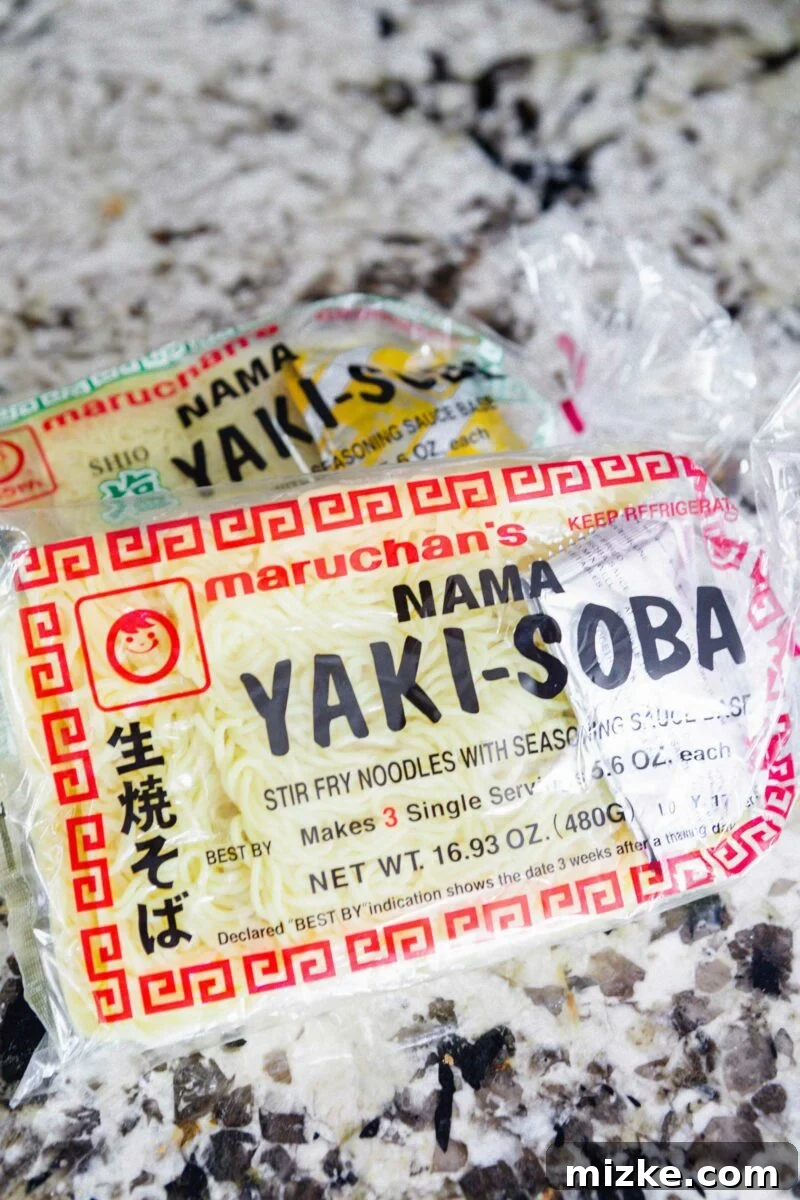
Yakisoba noodles hold a special place in my heart, often being my absolute favorite growing up. These are typically pre-cooked, steamed wheat noodles, distinguishing them from other dried varieties. What truly sets yakisoba apart, and what makes it utterly irreplaceable in my kitchen (unless I ever master the art of replicating it myself), is its distinctive seasoning packet. This packet delivers an unparalleled depth of savory, sweet, and umami flavors that are the hallmark of authentic yakisoba.
Preparing yakisoba is incredibly simple and remarkably quick, yielding intensely flavorful results. My mom often transforms it into a wholesome meal by loading it with an array of vegetables like onions, celery, carrots, and shiitake mushrooms, along with any available protein. However, it’s so incredibly delicious that we often enjoy it simply with vegetables, and there’s never a single noodle left. The entire process takes perhaps 15 minutes: sauté your chosen vegetables and protein first, then add the pre-cooked noodles. Allow them to warm through and gently break apart, then stir in the magical seasoning packets. A quick toss to coat everything, and it’s ready to serve – effortlessly delicious!
The brand I usually recommend, and the one my mom consistently bought, features distinct red-bordered packets. While green-bordered packets from the same brand are perfectly acceptable, I always seek out the red ones for that authentic, beloved flavor profile. Yakisoba itself is not spicy, so if you crave a kick, a drizzle of sriracha just before serving is the perfect addition.
Exploring the World of Fresh Noodles
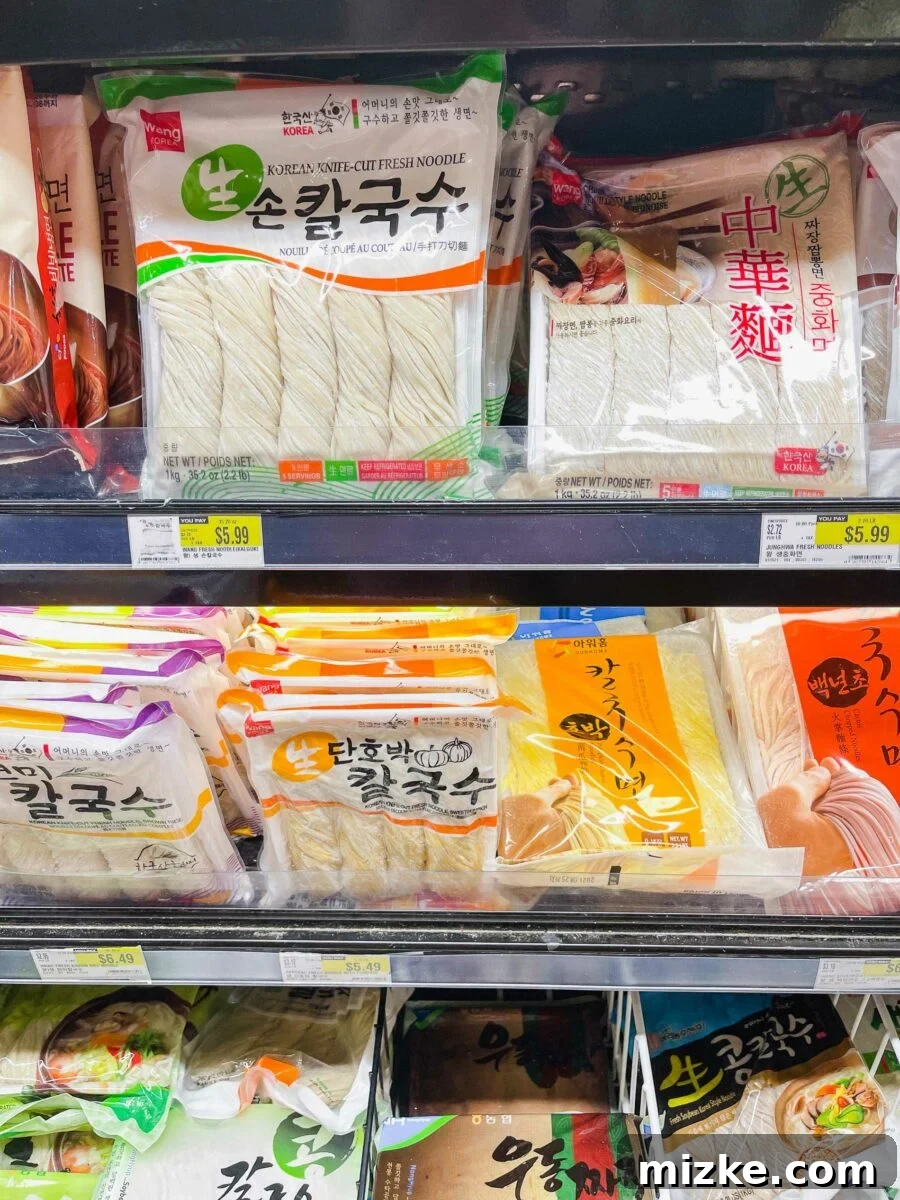
Beyond the specific types discussed, the refrigerated section of any well-stocked Asian supermarket is a veritable wonderland of “fresh noodles.” These are truly a game-changer in Asian cooking, offering a superior taste and texture that dried varieties simply cannot match. Their appeal lies in their wonderfully chewy consistency and delightful softness, which allows them to beautifully absorb sauces and broths.
The range of fresh noodles is extensive, encompassing various wheat-based noodles like thick, springy Udon from Japan, thin and savory Soba (buckwheat noodles), or the dense and satisfying Shanghai noodles, as well as distinct egg noodles often labeled as Hokkien noodles. Each type offers a unique culinary experience, from the comforting slurp of a noodle soup to the satisfying bite in a stir-fry. When cooking with fresh noodles, remember they require significantly less cooking time than dried varieties – often just a minute or two of blanching or tossing directly into a hot pan. They are perfect for elevating simple stir-fries, enriching hearty noodle soups, or even serving as the base for vibrant cold noodle salads. Don’t hesitate to explore this section; you’ll be amazed by the quality and diversity available.
Noodle Substitutions: Your Kitchen Lifeline
Even with the best intentions and a well-stocked pantry, sometimes you might not find the exact noodle specified in a recipe. Don’t let this deter your culinary ambitions! With a little creativity, you can often find suitable substitutes that will still result in a delicious dish, perhaps with a slightly different but equally enjoyable texture. The key is to understand the characteristics you’re trying to replicate – thickness, chewiness, and how well it absorbs flavor.
- For Fresh Ramen: If fresh ramen (like Sun Noodle) is unavailable, dried instant ramen noodles (without the seasoning packet) are a decent substitute for stir-fries or lighter broths. For a slightly firmer texture, you can even try thin Italian spaghetti or linguine, though their composition is different, they can offer a similar length and mouthfeel in a pinch.
- For Thick Rice Noodles (e.g., for Pad Thai or Pho): If you can’t find the wide, flat rice noodles, opt for thinner flat rice noodles and adjust your cooking time. If absolutely no rice noodles are available, fettuccine or linguine can offer a similar shape and width for stir-fries, though they will introduce gluten and a different flavor profile.
- For Mi Fen (Rice Vermicelli) or Cellophane Noodles: These are quite distinct. If one is unavailable, the other can usually stand in for similar light dishes, though you’ll notice a difference in texture (rice vermicelli is softer, cellophane noodles are chewier). Very thin angel hair pasta can be a last-resort substitute for the ‘fine thread’ characteristic, but again, be mindful of the flavor and ingredient difference.
- For Yakisoba Noodles: Since yakisoba noodles are usually pre-steamed, fresh or dried Chinese egg noodles (often labeled as chow mein noodles) can be a good substitute for the stir-fry aspect, though you’ll need to source or create a yakisoba-style sauce separately.
- For Fresh Wheat or Egg Noodles (General): Many fresh noodles are somewhat interchangeable based on their thickness and shape. Chinese lo mein noodles or even fresh linguine can sometimes work for stir-fries if the desired texture is chewy and robust.
Remember that substitutions will alter the original dish to some extent, but they also open doors to new culinary discoveries. Embrace the flexibility and let your taste buds guide you!
Conclusion: Embrace Your Noodle Adventure
The journey through the diverse and delectable world of Asian noodles is an incredibly rewarding one. From the delicate strands of Mi Fen to the satisfying chew of fresh ramen and the flavorful zest of yakisoba, each noodle type brings its unique character to the table. My hope is that this guide has equipped you with the knowledge and confidence to explore the Asian supermarket aisles with a newfound sense of adventure, no longer daunted by the array of choices.
Understanding the nuances of different noodles – how they look, where to find them, and how to cook with them – truly empowers you to recreate authentic Asian flavors in your own kitchen. Don’t be afraid to experiment, to try new varieties, and to discover your own personal favorites. The beauty of Asian cuisine lies in its rich history and endless possibilities. So, next time you’re planning a meal, reach for a packet of noodles, and embark on a delicious culinary journey. Happy cooking, and may your noodle bowls always be full and flavorful!