
In this comprehensive post, we’ll answer your most pressing questions about obtaining a Limited Liability Company (LLC) for your growing business or blog.
Finally an LLC! Navigating the World of Limited Liability Companies
The journey of transforming a passion project into a viable business is incredibly rewarding, yet it often comes with a myriad of legal and financial considerations. For many entrepreneurs, especially those venturing into the digital realm with blogs or online services, the question of formalizing their business structure eventually arises. I recently took that leap and proudly declared my business an LLC!
This decision wasn’t made overnight. It stemmed from a long period of contemplation about the future of my venture, Table for Two. My sister-in-law, a successful small business owner herself with her own bridal store, played a pivotal role in pushing me past the initial hesitation. During one of our conversations, I expressed my desire for Table for Two to become something more substantial, to truly establish it as “mine,” and to formalize its growing status as a business. With her invaluable first-hand experience and encouragement, I dove into some quick research and ultimately decided it was the perfect time to register my burgeoning blog as an LLC.
Soon after sharing my exciting news, my inbox and comments section were flooded with insightful questions. Readers wanted to know my motivations, the step-by-step process, the underlying benefits, and the crucial differences between an LLC and a sole proprietorship. Recognizing that these queries likely resonate with many of you on a similar path, I’ve compiled this detailed guide to address them all. Should you find that I’ve missed anything, please don’t hesitate to reach out via email or leave a comment below!
Understanding the Basics: What Exactly is a Limited Liability Company (LLC)?
An LLC, or Limited Liability Company, is a popular business structure that combines the best features of a corporation with the simplicity of a partnership or sole proprietorship. It’s designed to protect its owners from personal liability for the company’s debts or actions. Here’s a breakdown of its core characteristics:
- Limited-Liability Protection: This is arguably the most significant benefit. As an owner, your personal assets (like your home, car, and personal savings) are shielded from business debts or lawsuits. If your business faces legal action – for instance, a disgruntled client sues your company, or your business incurs significant debt – creditors can only pursue the assets of the company, not your personal wealth. This provides an invaluable layer of security and peace of mind for entrepreneurs.
- Pass-Through Taxation: LLCs typically enjoy “pass-through” tax status. This means the business itself is not taxed. Instead, profits and losses are “passed through” to the owners’ personal income tax returns. Owners then report these on their individual tax forms (e.g., Schedule C for single-member LLCs). This structure avoids the “double taxation” common with traditional corporations, where profits are taxed at the corporate level and again when distributed to shareholders. It also allows owners to claim eligible business expenses as deductions, reducing their taxable income.
- Flexibility: LLCs offer significant operational and management flexibility. They can be managed by their members (owners) or by a designated manager(s). They also have fewer compliance formalities compared to corporations, making them easier to establish and maintain, especially for small businesses and solo entrepreneurs.
In essence, an LLC helps you maintain a clear and vital separation between your personal finances and your business operations. Losing your company, while certainly undesirable, is far preferable to losing all your personal property, and an LLC is instrumental in ensuring that distinction.
Why Consider an LLC for Your Growing Business or Blog? My Personal Reasons
My decision to form an LLC was driven by a combination of personal ambition and practical considerations:
- Formalizing Growth and Ownership: Table for Two has evolved beyond a hobby into a genuine business, generating revenue primarily through advertising. I wanted to formalize this growth and truly make it “mine” in a legal sense, signaling a serious commitment to its future.
- Accessing Tax Benefits: As a revenue-generating entity, the tax advantages offered by an LLC were a significant draw. Being able to document and write off business-related expenses provides crucial financial relief and optimizes profitability. This is a critical step in managing my finances more efficiently.
- Future-Proofing and Scalability: Becoming an LLC positions my business for future expansion. Should I decide to transition to full-time blogging or diversify into other ventures (like product creation or consulting), having an established legal structure simplifies many processes. It provides a professional foundation that can attract future partners, investors, or employees.
- Essential Liability Protection: The digital landscape, while exciting, can also be unpredictable. While most food bloggers don’t regularly encounter frivolous lawsuits, the possibility exists. The assurance that my personal assets, like my home, are protected from potential business-related legal claims offers invaluable peace of mind. It allows me to innovate and grow without the constant worry of losing everything I’ve worked for personally.
Choosing an LLC was about more than just legal paperwork; it was about defining the professional identity of my business, securing its financial future, and protecting my personal well-being.
The Formation Process: How Do I Apply for an LLC?
The process of forming an LLC is generally straightforward, though specific requirements can vary slightly from state to state. The best starting point is usually a quick online search for “how to form LLC in [Your State]”.
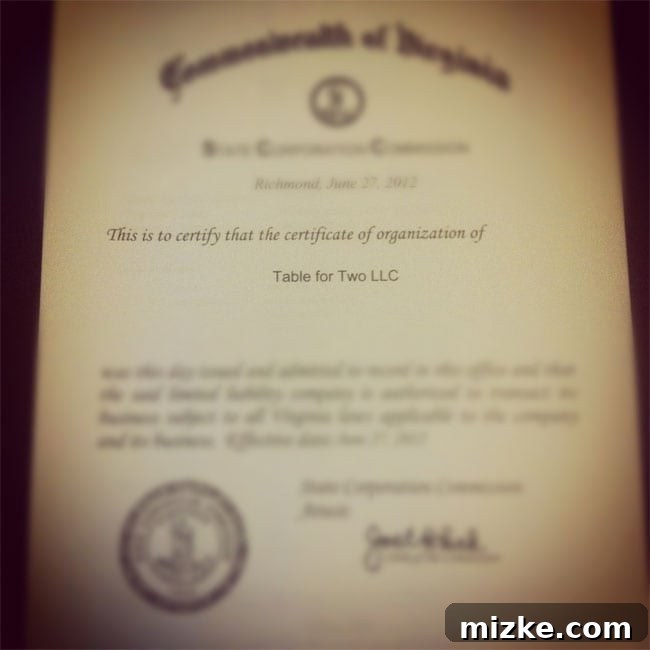
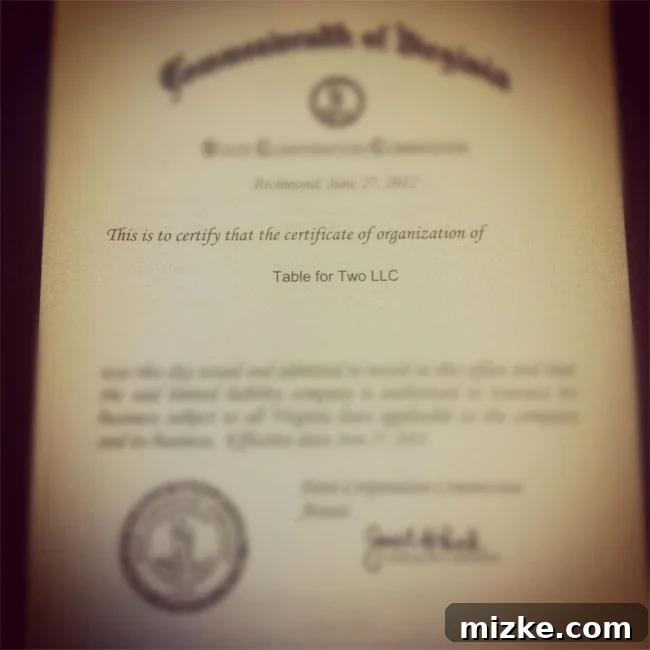
For me, residing in Virginia, the process was remarkably simple. I visited the Commonwealth of Virginia’s State Corporation Commission’s website, completed an e-form, paid the filing fee (mine was $100), submitted the application, and then printed my certificate of formation. Many states offer similar online portals, making the process accessible and efficient. My sister-in-law, who established her business in Louisiana, confirmed that her experience was quite similar. While the filing fees vary by state, they are generally reasonable, making LLC formation an accessible option for many small businesses.
Key Steps in Forming an LLC:
- Choose a Business Name: Select a unique name that complies with your state’s naming rules (e.g., includes “LLC” or “Limited Liability Company”). You’ll typically perform a name availability search through your state’s Secretary of State or Corporation Commission website.
- Appoint a Registered Agent: This is an individual or company designated to receive legal documents on behalf of your LLC. The registered agent must have a physical street address (not a P.O. Box) in the state where your LLC is formed.
- File Articles of Organization: This is the foundational document that formally creates your LLC. It typically includes your LLC’s name, registered agent information, and sometimes the names of its members.
- Create an Operating Agreement: While not always legally required, an operating agreement is highly recommended. It’s an internal document that outlines the ownership structure, management responsibilities, and operating procedures of your LLC. Even for single-member LLCs, it serves as a crucial guide.
- Obtain Necessary Licenses and Permits: Depending on your industry and location, you may need additional state or local business licenses and permits.
Are There Ongoing Costs? Annual Fees and Compliance
Yes, most states require an annual fee or report to maintain your LLC’s active status. In Virginia, for example, the annual registration fee is $50. These fees are vital for keeping your business legally registered with the state.
You will typically receive a notice in the mail annually reminding you to renew. Failing to pay these annual fees or file required reports can lead to the administrative dissolution of your LLC, meaning it effectively ceases to exist in the state’s records, and you could lose its liability protection. It’s crucial to stay on top of these compliance requirements to ensure your business remains in good standing.
Unlocking the Power of Tax Benefits for Your LLC
One of the most attractive aspects of forming an LLC, particularly for a growing business, is the potential for significant tax benefits. While I’m not an accountant (and always recommend consulting a qualified professional for tax advice!), here’s a general overview of what an LLC can enable you to do:
- Business Expense Write-Offs: Once your business is formalized as an LLC, you can begin meticulously documenting and deducting a wide array of business-related expenses. This includes items like:
- Equipment and Software: Photography lenses, cameras, computers, editing software, website hosting, domain fees, and other tools essential for your blog or business.
- Office Supplies: Printer ink, paper, stationery, and other consumables.
- Internet and Phone Bills: A portion of these utility costs can be deducted if used for business.
- Professional Development: Costs associated with attending industry conferences (like food blogging conferences), workshops, online courses, and subscriptions to trade publications are often deductible as they contribute to your business knowledge and networking. Travel and accommodation for these events can also be included.
- Marketing and Advertising: Expenses for promoting your business, such as social media ads, graphic design, or website development.
- Professional Services: Fees paid to accountants, lawyers, virtual assistants, or other contractors supporting your business.
- Home Office Deduction: If you use a specific, exclusive, and regular part of your home solely for business purposes, you may be eligible for a home office deduction. This can include a portion of your mortgage interest (or rent), utilities, homeowner’s insurance, and depreciation. For my blog, my kitchen and dedicated office space could qualify.
The key to maximizing these benefits is diligent record-keeping. Maintain a well-organized system for all your receipts, invoices, and financial statements. When tax season arrives, your accountant will be able to leverage this documentation to ensure you claim all eligible deductions, significantly reducing your taxable income.
Obtaining Your Business Tax ID Number (EIN)
After your LLC is formally established, one of your next crucial steps will be to obtain an Employer Identification Number (EIN) from the IRS. This is a unique nine-digit number assigned to businesses, much like a Social Security Number (SSN) is assigned to individuals.
Applying for an EIN is a straightforward and free process that can be done directly through the IRS website. You will need an EIN for several important business functions:
- Opening a Business Bank Account: Banks will require your EIN to open a dedicated checking or savings account for your LLC, further solidifying the separation between personal and business finances.
- Filing Business Taxes: Your EIN is your official business tax identification number for all IRS filings.
- Hiring Employees: If you plan to hire employees in the future, an EIN is mandatory for payroll and tax reporting purposes.
- Establishing Business Credit: An EIN helps your business establish its own credit profile, separate from your personal credit.
- Working with Vendors and Wholesale Suppliers: Many suppliers and partners will require an EIN for B2B transactions.
Acquiring an EIN is a fundamental step in legitimizing your business operations and is another critical way your LLC helps keep your personal and business entities distinct.
LLC vs. Sole Proprietorship: Understanding the Key Differences
Many early-stage entrepreneurs operate as sole proprietors by default, simply by starting to offer goods or services. However, understanding the core differences between a sole proprietorship and an LLC is paramount for protecting your assets and planning for growth.
The most significant distinction lies in liability protection:
-
Sole Proprietorship:
In a sole proprietorship, there is no legal separation between you, the owner, and your business. You are personally responsible for all business debts, obligations, and liabilities. This means if your business is sued, or if it defaults on a loan or contract, creditors can pursue your personal assets – your home, car, and savings – to satisfy those obligations. This lack of protection can expose you to significant personal financial risk, especially as your business grows and takes on more responsibilities.
-
Limited Liability Company (LLC):
An LLC provides a crucial shield of limited liability between you and your business. As the owner, your personal assets are generally protected from business debts and lawsuits. Should legal action be initiated against your business, or if it encounters financial difficulties, creditors can only go after the company’s assets, not your personal property. This fundamental separation is precisely why I chose an LLC – it’s all about keeping business finances and personal life distinctly separate, offering a vital layer of security against unforeseen circumstances.
Beyond liability, LLCs often convey a greater sense of professionalism to clients and partners, can make it easier to secure business loans, and offer more flexibility for future growth and the addition of partners. While a sole proprietorship might suffice for a low-risk hobby or very early-stage venture, an LLC becomes an indispensable upgrade as your business generates revenue and expands its operations.
The Verdict: Is an LLC Right for You?
If you’re generating any form of revenue from your blog, freelance work, or any other entrepreneurial activity – whether it’s through ads, sponsored content, product sales, or consulting – you are technically operating a business. In such cases, taking the step to form an LLC is a wise and proactive decision.
The benefits are clear: unparalleled personal liability protection ensures your peace of mind, while the potential tax advantages can significantly boost your bottom line. It’s a relatively simple process with substantial long-term gains, safeguarding your personal assets and providing a professional foundation for your growing venture.
I sincerely hope this detailed guide has clarified many of your questions regarding LLCs. Remember, while I’ve shared my experience and general information, always consult with a legal professional and a tax advisor specific to your location and situation before making any definitive business structure decisions.
Let me know in the comments if this post encourages you to take the leap and form your own LLC!