
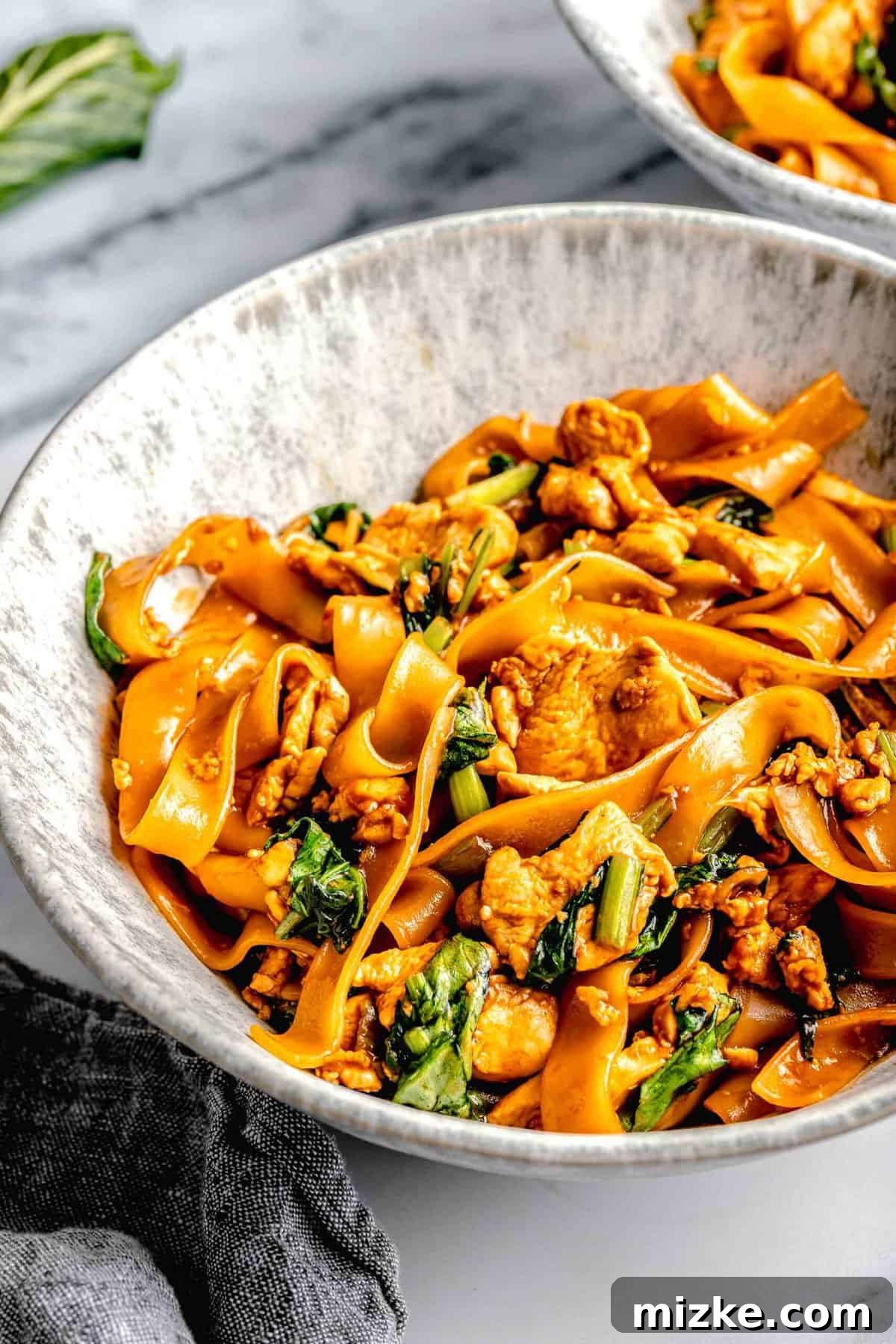
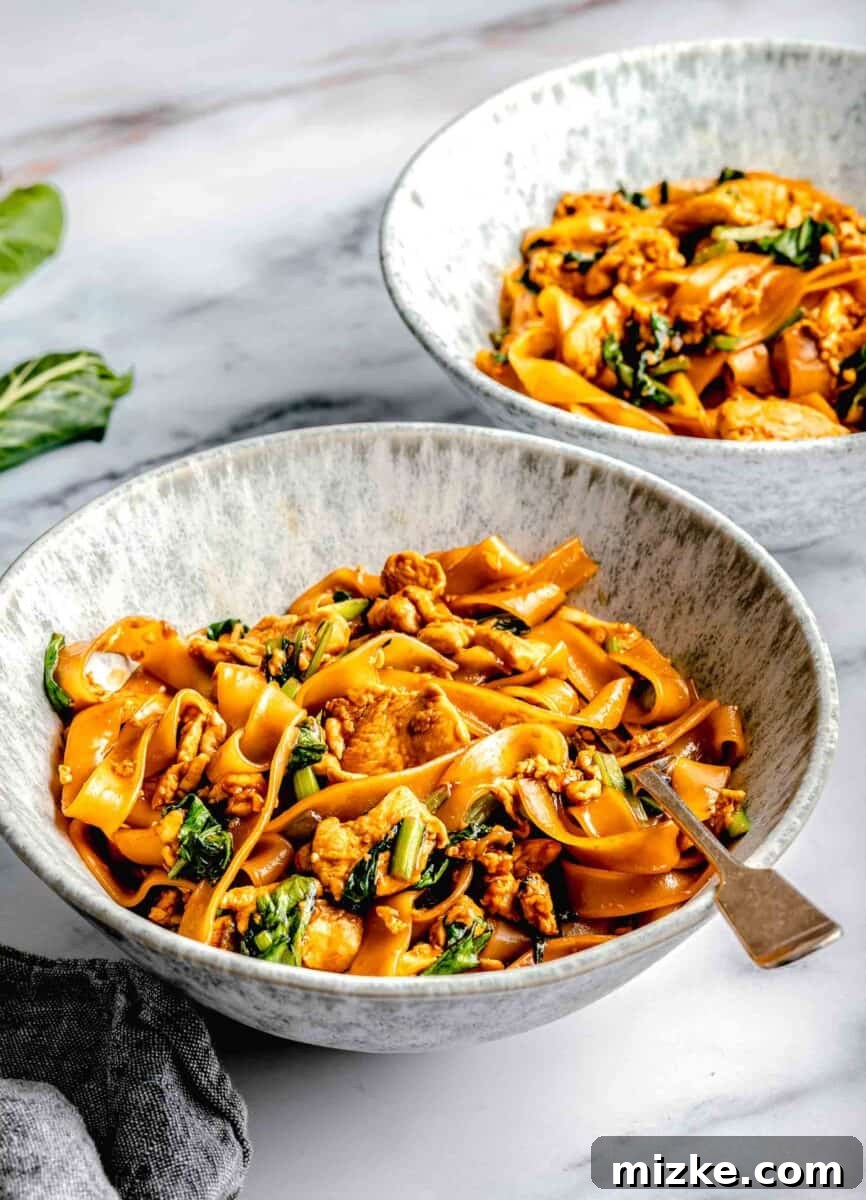
Imagine wide, delightfully chewy, and tender rice noodles expertly tossed in a rich, savory-sweet sauce, perfectly complemented by succulent chicken, fluffy scrambled eggs, and crisp Chinese broccoli. Pad See Ew is undeniably one of Thailand’s most beloved and frequently ordered dishes at Thai restaurants worldwide. Now, you can effortlessly recreate this iconic street food experience in the comfort of your own home, satisfying your cravings whenever they strike!
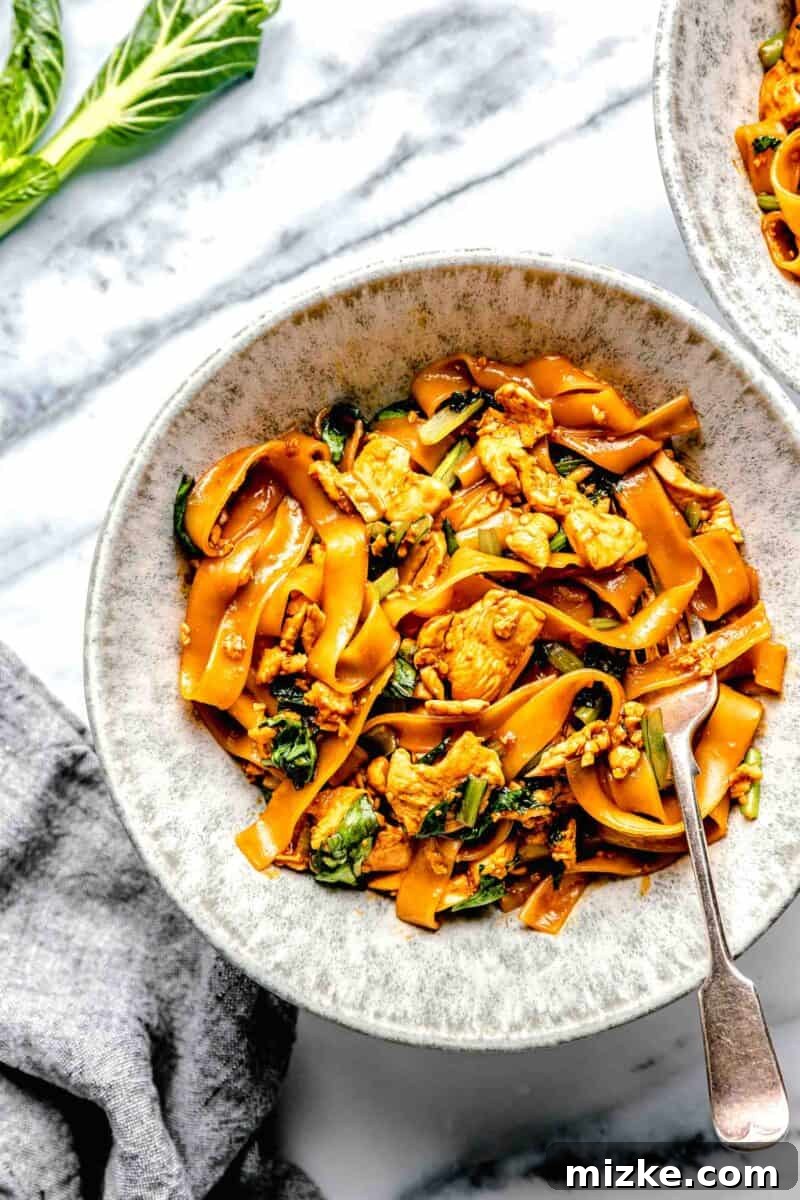
Pad See Ew has long held a special place as my all-time favorite Thai dish. My passion for it runs so deep that I first shared a recipe for it back in 2011, when I was just beginning my blogging journey. It’s the dish I consistently order every single time I visit a Thai restaurant, and for good reason. I’m utterly captivated by the perfectly balanced, slightly sweet sauce that generously coats every single noodle strand. While beef is my personal go-to protein, I’ve savored it with chicken countless times, and more recently, I’ve fallen in love with a delicious tofu variation.
At its heart, Pad See Ew features distinctive wide, flat rice noodles, masterfully stir-fried in a deeply flavorful sauce. This signature sauce is a harmonious blend of light and dark soy sauces, a touch of sugar for sweetness, and savory oyster sauce. The result is a slightly thick, glossy sauce that clings beautifully to the noodles and all the other components of the dish. Aromatic garlic, vibrant Chinese broccoli, and perfectly scrambled egg are typically added to the mix, creating a symphony of textures and tastes. The finished dish offers an exquisite combination of sweet, salty, and umami flavors, delivering a truly addictive culinary experience that will leave you yearning for more.
What is Pad See Ew? Understanding This Thai Stir-Fried Noodle Masterpiece
Literally translating to “soy sauce stir-fried noodles,” Pad See Ew is a staple of Thai street food and a cornerstone of Thai cuisine found in restaurants across the globe. It’s an excellent entry point for anyone looking to explore the rich and diverse flavors of Thailand, offering a comforting yet complex taste that appeals to a wide palate. Originating from Chinese stir-frying techniques adapted with local Thai ingredients and flavor profiles, Pad See Ew embodies the culinary fusion that makes Thai food so unique. Its widespread popularity stems from its comforting nature, satisfying texture, and the delightful interplay of its sweet and savory notes.
The Irresistible Flavor of Pad See Ew: Decoding the “Wok Hei” Secret
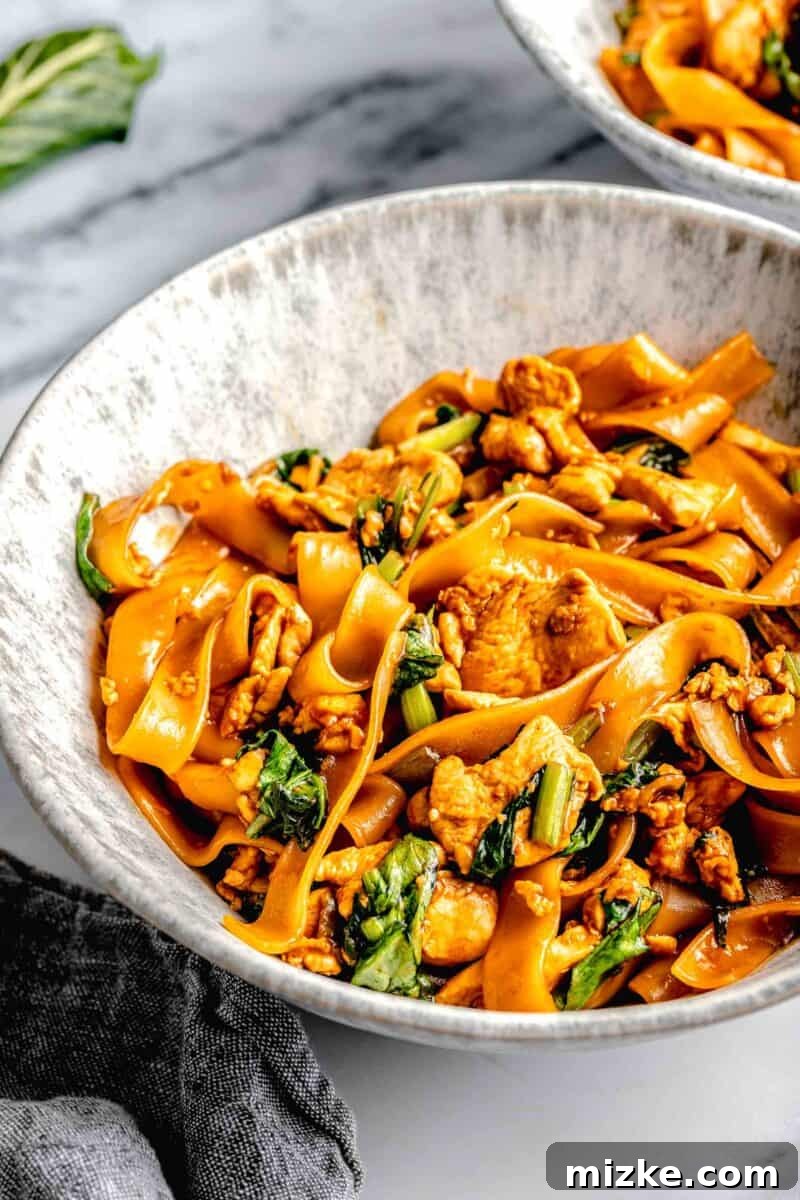
The flavor profile of Pad See Ew is a captivating balance of salty, savory, and subtly sweet, elevated by a distinctive chargrilled essence known as “wok hei” (or “breath of the wok”). This unique smoky flavor is what truly made me fall head over heels for Pad See Ew. Wok hei is achieved when the noodles and other ingredients caramelize and slightly char in a searingly hot wok, imparting an inimitable depth of flavor that is highly prized in many Asian stir-fries. For some, this intense, slightly smoky taste might initially seem like the dish is overcooked, but it’s actually the hallmark of a perfectly executed Pad See Ew.
While achieving true wok hei at home can be challenging without the high-powered, open gas flames of a professional kitchen, you can certainly get close. The key is to use the highest heat your stovetop can muster and ensure your wok (or large, heavy-bottomed skillet) is screaming hot before adding ingredients. Avoid overcrowding the pan, as this lowers the temperature and steams the food instead of searing it. Working in batches, if necessary, helps maintain that crucial high heat, allowing for better caramelization and a delightful hint of that coveted chargrilled flavor.
Why You’ll Adore This Authentic Homemade Pad See Ew Recipe
- Unforgettable Flavor and Texture Harmony: This Pad See Ew recipe delivers a complete sensory experience. It’s a delectable fusion of sweet, salty, and savory notes that dance on your palate. Beyond taste, the dish offers a fantastic textural contrast: the satisfying chewiness of the wide rice noodles perfectly complements the tender, slightly crisp bite of the Chinese broccoli, ensuring every mouthful is exciting.
- Restaurant Quality, Effortlessly Achieved at Home: While the convenience of ordering takeout is tempting, trust me when I say that making Pad See Ew from scratch is surprisingly easy and incredibly rewarding. You gain complete control over the quality and freshness of your ingredients, allowing you to tailor the dish precisely to your preferences and dietary needs. Prepare to impress yourself with restaurant-worthy results!
- Simple, Accessible Ingredients: You’ll be pleased to find that most of the ingredients required for this recipe are readily available at your local grocery store or any Asian market. There’s no need for an extensive hunt for obscure components; you might even have many of them already in your pantry. This commitment to accessible ingredients makes preparing authentic Thai cuisine a joy, not a chore.
Essential Ingredients You’ll Need for Perfect Pad See Ew
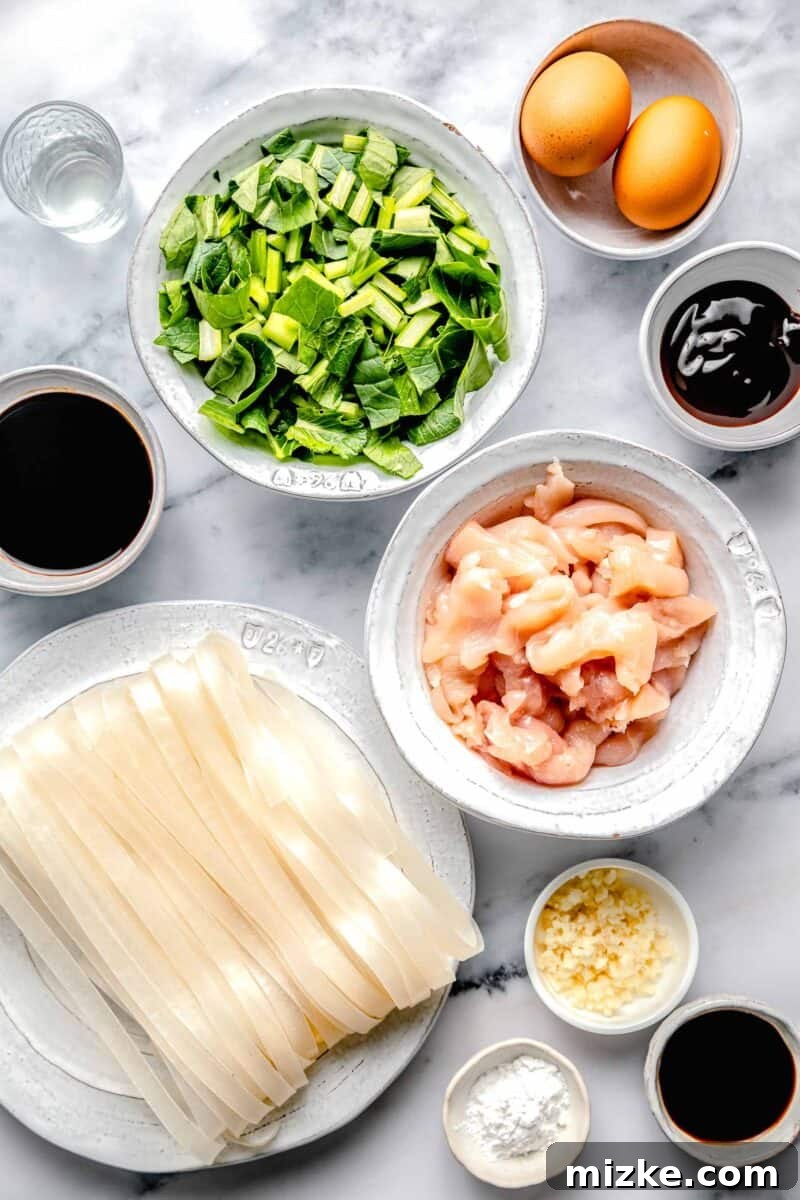
To craft this incredible Pad See Ew, you’ll need a selection of key components. Here’s a breakdown of the ingredients, explaining their importance. Specific measurements can be found in the detailed recipe card below.
For the Irresistible Sauce:
- Oyster Sauce: A foundational ingredient that provides rich umami and a subtle sweetness, crucial for authentic Thai flavor. For a vegetarian option, use mushroom-based vegetarian oyster sauce.
- Soy Sauce: Typically light or thin soy sauce, providing the primary salty and umami base for the stir-fry.
- Sweet Soy Sauce (or Kecap Manis): This is a thick, syrupy, sweetened soy sauce that gives Pad See Ew its signature dark color and adds a delightful caramel sweetness. If unavailable, a mixture of regular soy sauce and dark brown sugar can be substituted (see recipe notes for precise guidance).
- Rice Vinegar: Adds a touch of tanginess that brightens the rich sauce and balances the sweetness.
- Arrowroot Powder or Cornstarch: Acts as a thickening agent, ensuring the sauce coats the noodles and other ingredients beautifully without being watery.
For the Main Dish Components:
- Wide Flat Rice Noodles (Sen Yai): These are the traditional star of Pad See Ew. They are thick, wide, and flat, offering a wonderful chewy texture. Fresh noodles are preferred if you can find them in an Asian grocery store, as they absorb sauce better and have a superior texture. If fresh are unavailable, dried wide rice noodles are a good alternative; just ensure they are wide and follow package instructions for cooking. While traditionally short, finding fresh wide noodles can be tricky; wide long noodles are a perfectly acceptable substitute.
- Garlic: Freshly minced garlic provides an aromatic base, infusing the dish with its characteristic fragrant warmth.
- Chicken: Thinly sliced chicken breast or thigh is a popular protein choice, cooking quickly and absorbing the sauce’s flavors. You can easily substitute with beef, shrimp, or tofu.
- Chinese Broccoli (Gai Lan): A vital component, Gai Lan is a leafy green vegetable with thick stems, offering a slightly bitter, earthy flavor and a satisfying crunch that contrasts with the noodles. It differs significantly from regular American broccoli, more closely resembling kale or collard greens in texture.
- Eggs: Scrambled eggs are incorporated into the stir-fry, adding richness, texture, and additional protein to the dish.
How To Make Pad See Ew: A Simple Step-by-Step Guide
While making Pad See Ew at home might seem daunting, I assure you it’s incredibly straightforward and yields fantastic results. Here’s a general overview of the steps involved; remember to consult the full recipe card at the bottom of this post for precise measurements and detailed instructions.
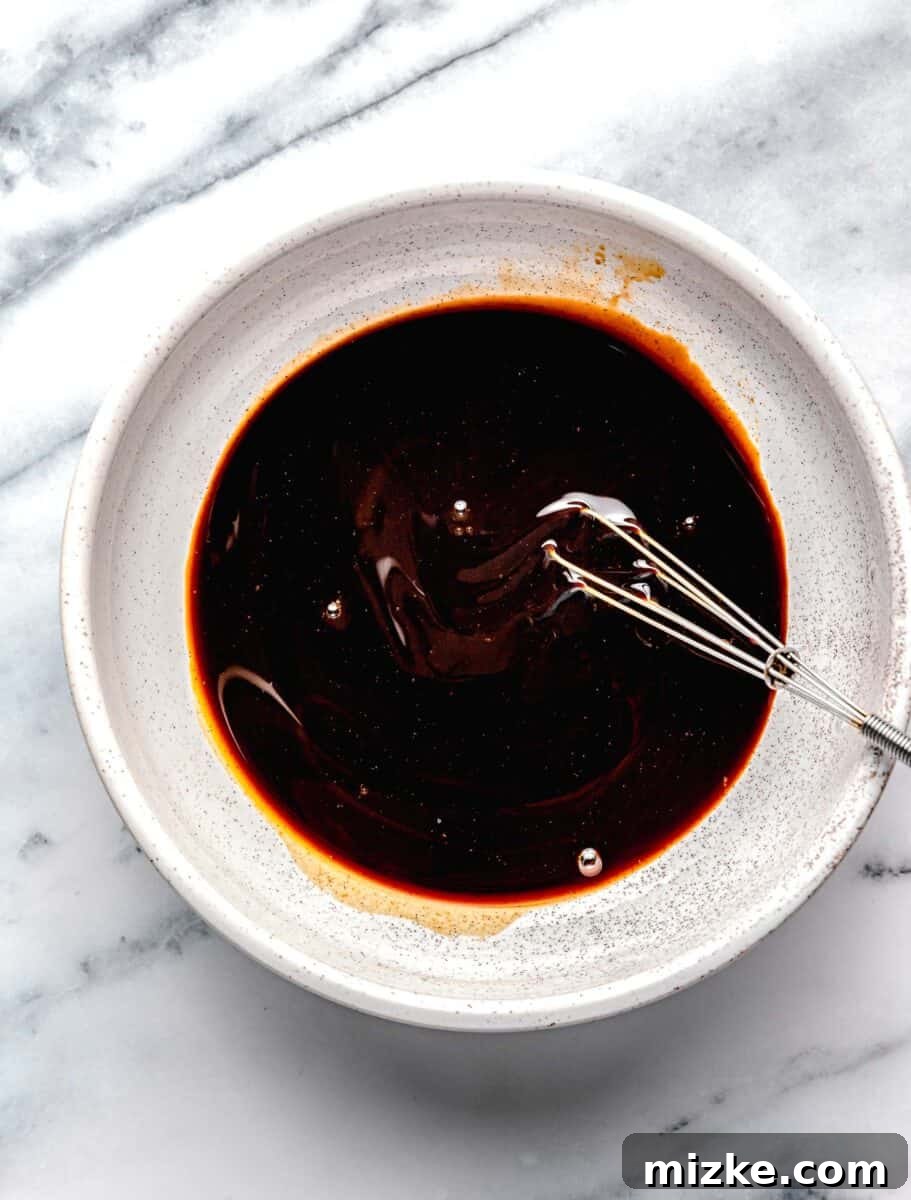
Step 1: Prepare the Flavorful Sauce
In a small bowl, combine all the pre-measured ingredients for the sauce. Whisk them together until thoroughly mixed and the thickener (arrowroot or cornstarch) is fully dissolved. Set this flavorful concoction aside, as it will be added at the end of the stir-fry process.
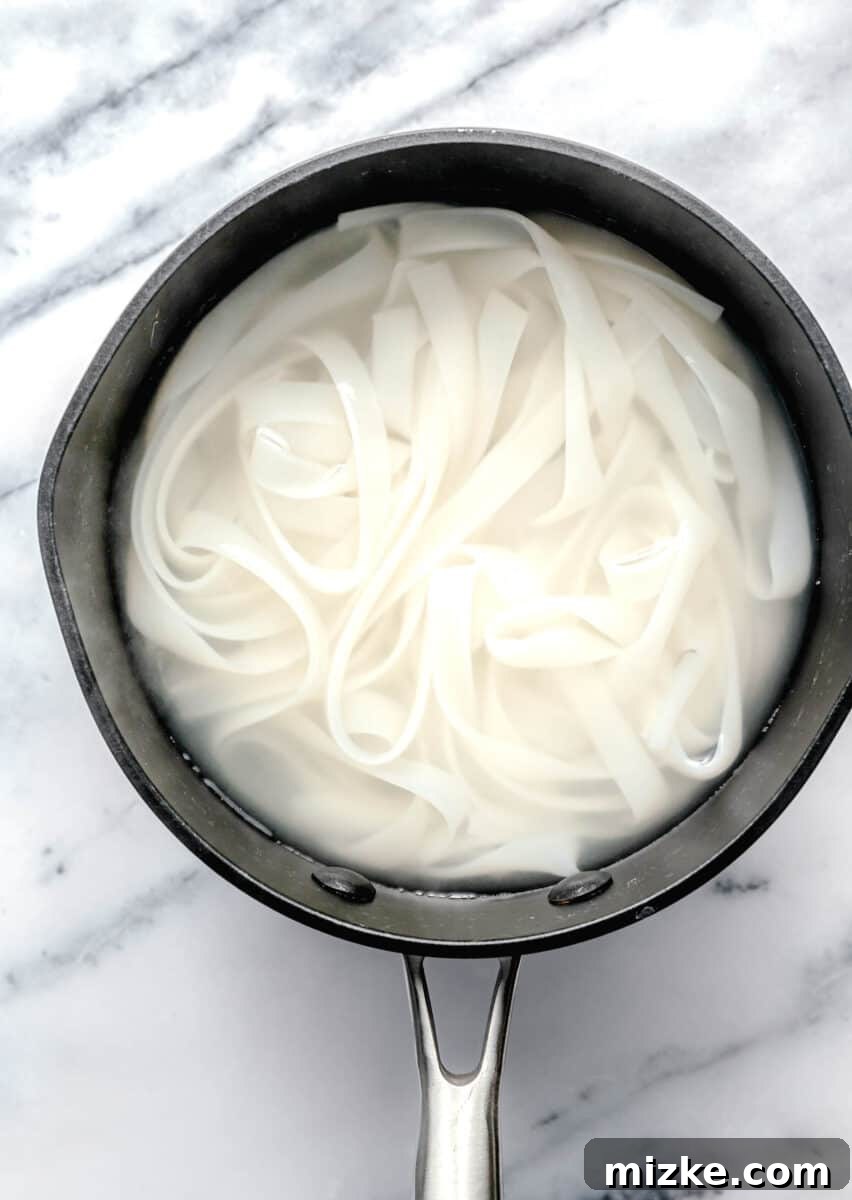
Step 2: Cook the Rice Noodles
Bring a pot of water to a rolling boil. Carefully add your wide rice noodles and cook them according to the package directions. It’s crucial not to overcook them, as they will continue to cook in the wok. They should be al dente, or slightly firm, as they will soften further during the stir-fry. Once cooked, drain them immediately and set aside. Rinsing with cold water can prevent sticking if you’re not using them right away, but if you’re quick, a light toss with a bit of oil can also help.
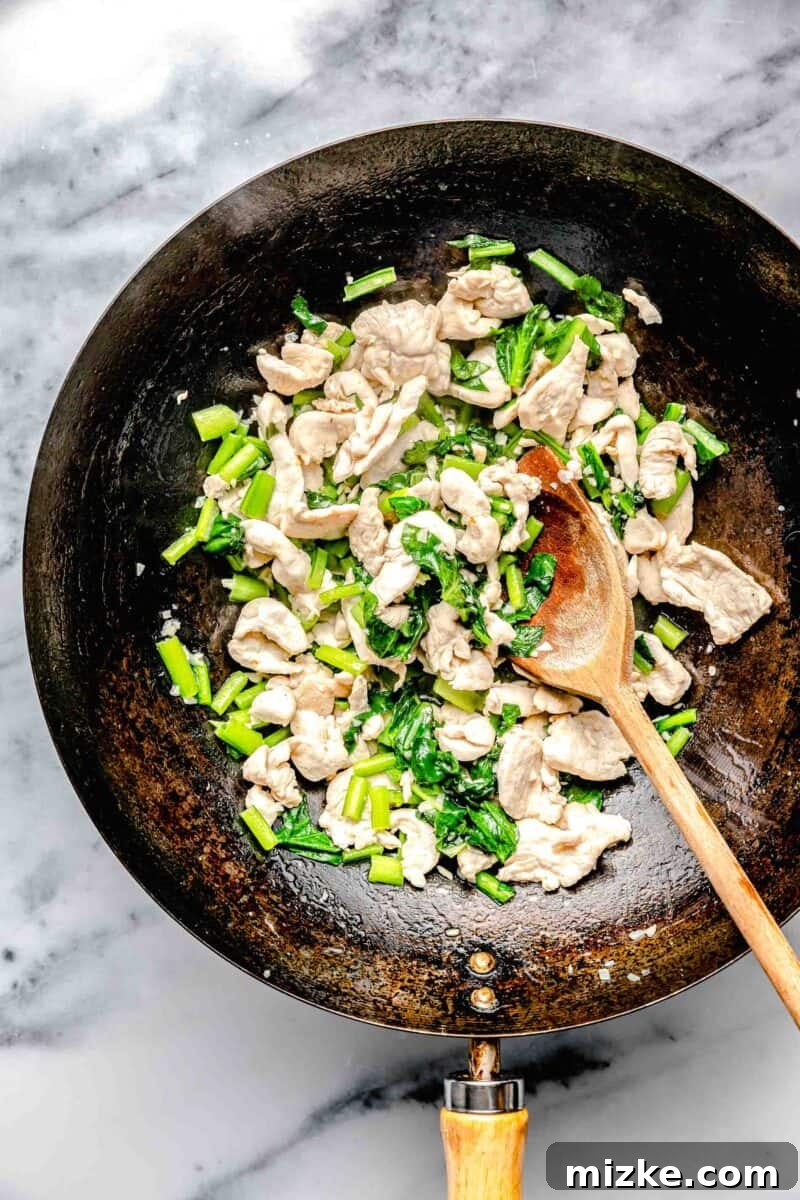
Step 3: Stir-Fry the Proteins and Vegetables
Heat a wok or a large, heavy-bottomed skillet over high heat. Add your preferred cooking oil and allow it to get smoking hot. Quickly add the minced garlic, stirring briefly until fragrant (about 15-30 seconds). Immediately add the thinly sliced chicken, tossing and stirring continuously until it’s mostly cooked through and no longer pink. Next, add the Chinese broccoli (Gai Lan). Continue to stir-fry until the Gai Lan softens and wilts slightly, which usually takes about 5-7 minutes. Once cooked, push the chicken and Gai Lan to one side of the wok, creating a clear space in the center.
Step 4: Scramble the Eggs
In the empty center of the wok, crack in the eggs. Quickly scramble them with your spatula until they are fully cooked and fluffy. Once scrambled, gently mix the cooked eggs into the chicken and Gai Lan mixture.
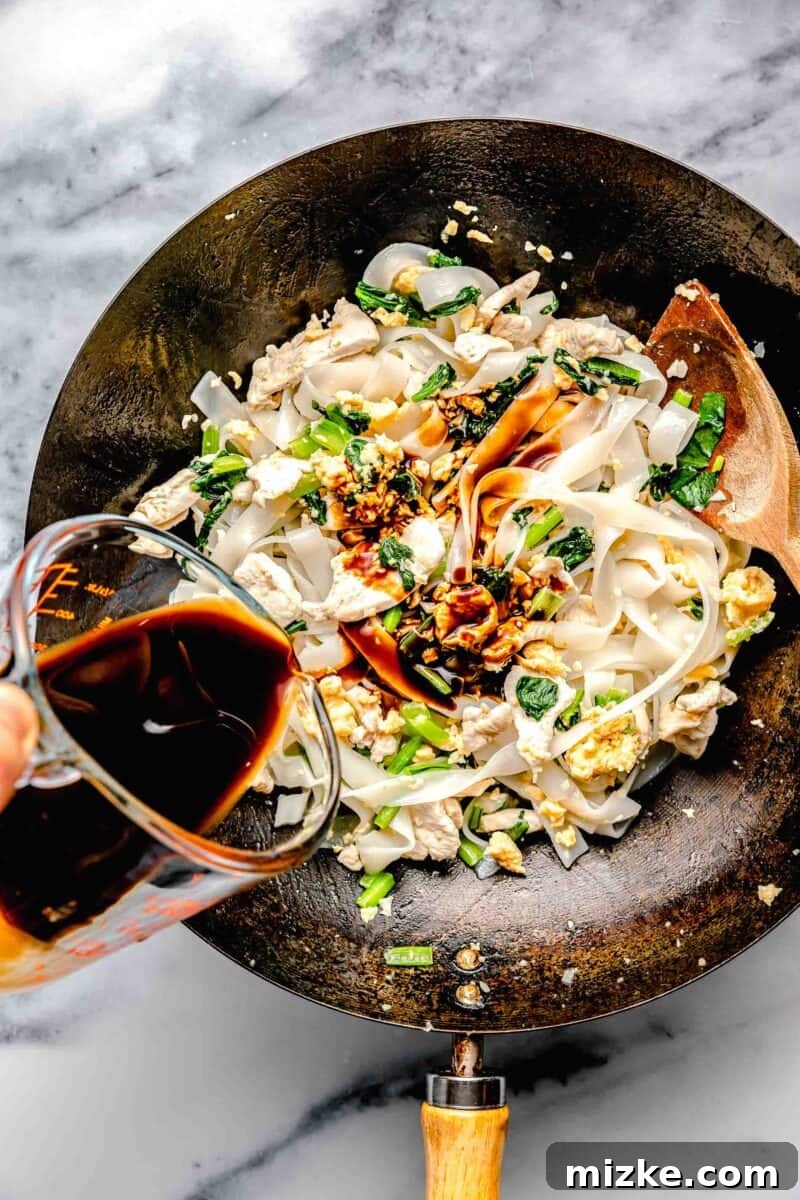
Step 5: Combine and Finish the Dish
Add the drained rice noodles to the wok with the cooked ingredients. Pour the prepared sauce evenly over everything. Using your spatula or tongs, toss all the ingredients vigorously and quickly until the noodles, chicken, vegetables, and eggs are uniformly coated with the rich sauce. For that signature “wok hei” caramelization, allow the mixture to rest undisturbed on the hot surface of the wok for 1-2 minutes, letting the noodles and sauce slightly char. Then, toss again and repeat this brief resting and tossing process until you achieve your desired level of caramelization and flavor. This crucial step develops those deep, smoky notes.
Step 6: Serve and Enjoy
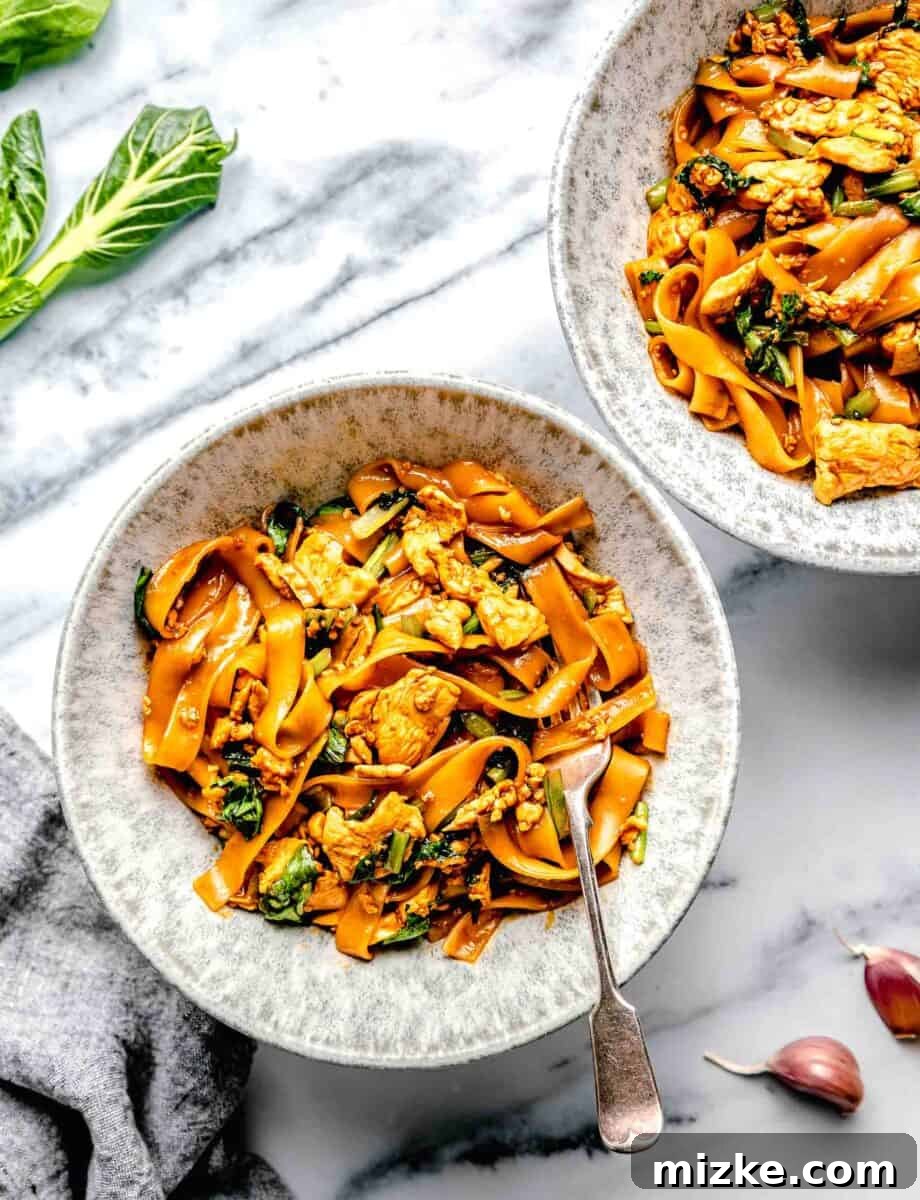
Once everything is perfectly coated and caramelized to your liking, divide the Pad See Ew into individual serving bowls. Serve immediately and savor the authentic flavors of this classic Thai dish.
Expert Tips, Substitutions, and Variations for Your Pad See Ew
This recipe is incredibly versatile, allowing for many delicious adjustments:
- Protein Power-Ups: While chicken is classic, feel free to experiment with other proteins. Thinly sliced beef (such as sirloin or flank steak), plump shrimp, or even firm tofu are all excellent choices that integrate beautifully into this dish. Ensure any protein is sliced thinly for quick cooking and even distribution. For beef or shrimp, marinating briefly in a little soy sauce and cornstarch can tenderize them and add flavor.
- Noodle Nuances: As mentioned, traditional Pad See Ew uses wide, flat rice noodles (Sen Yai). These can sometimes be surprisingly hard to find, even in well-stocked Asian grocery stores. If fresh wide noodles are unavailable, look for dried wide rice noodles or even fresh wide rice noodles sold in sheets that you can cut yourself. If all else fails, regular wide rice noodles (often labeled as “rice stick noodles” or “pad thai noodles”) will work, though the texture will be slightly different. The key is to aim for wide noodles to capture the authentic mouthfeel.
- Broccoli Brilliance: Chinese broccoli, or Gai Lan, offers a unique flavor and texture. If you can’t find Gai Lan, suitable substitutes include Choi Sum (another Asian leafy green) or even regular American broccoli florets or broccolini. Just ensure they are cut into bite-sized pieces so they cook evenly in the stir-fry.
- Egg-Free Option: If you have an egg allergy or prefer not to eat eggs, you can easily omit them from the recipe without significantly compromising the dish’s core flavor. I’ve personally requested egg-free Pad See Ew at restaurants during dietary restrictions, and it’s still delicious!
- Crafting a Vegetarian or Vegan Version: Transforming this dish into a vegetarian or vegan delight is simple. Substitute regular oyster sauce with a mushroom-based vegetarian oyster sauce (which offers a similar umami depth). For protein, swap the chicken for extra-firm tofu, pressed and cut into cubes or slices, then pan-fried or baked until golden before adding to the stir-fry. You can omit the egg for a fully vegan dish, or keep it for a vegetarian option.
- Gluten-Free Adaptation: To make your Pad See Ew gluten-free, ensure all soy sauces are substituted with gluten-free tamari, and verify that your oyster sauce (or vegetarian oyster sauce) is also gluten-free. Most rice noodles are naturally gluten-free, but always check the packaging.
Storage and Reheating Instructions
Pad See Ew is undoubtedly best enjoyed fresh, hot off the wok. However, if you find yourself with delightful leftovers, they can be stored in an airtight container in the refrigerator for up to three days. When it’s time to reheat, add a small splash (about 1-2 tablespoons) of water or chicken broth to the container before microwaving. The added liquid will generate steam, helping to loosen the noodles and sauce, which tend to firm up in the cold. Stir halfway through reheating for even warming and to restore the dish’s lovely texture. Alternatively, you can reheat it in a skillet over medium heat with a tiny bit of oil or broth.
What to Serve with Pad See Ew
While Pad See Ew is hearty and satisfying enough to be a complete meal on its own, it also pairs beautifully with a variety of Thai appetizers and side dishes to create a more elaborate feast. Whenever I order Thai takeout, I love to complement my Pad See Ew with some crispy golden spring rolls or fresh, vibrant rainbow summer rolls. For a light and aromatic start to your meal, a classic Tom Yum Soup would be an excellent choice. And for those who love to explore more Thai flavors, a creamy green curry served alongside offers a wonderful contrast and a truly authentic dining experience.
Frequently Asked Questions (FAQ) about Pad See Ew
What is the difference between Pad See Ew and Pad Thai?
While both are popular Thai noodle dishes, they have distinct characteristics. Pad Thai features thinner, chewy rice noodles stir-fried in a sweet, sour, and savory tamarind-based sauce, often with peanuts, bean sprouts, and lime. Pad See Ew uses wider, flatter noodles with a darker, more savory-sweet soy sauce-based sauce and Chinese broccoli, focusing more on the “wok hei” char.
Can I use dried rice noodles instead of fresh ones?
Yes, you can! Dried wide rice noodles are a perfectly acceptable substitute if fresh ones are unavailable. Just make sure to soak or boil them according to the package instructions until they are al dente. Overcooked dried noodles can become mushy, which you want to avoid.
How do I prevent my noodles from sticking together?
There are a few tricks: 1) Don’t overcook them initially; aim for al dente. 2) If using dried noodles, rinse them briefly with cold water after draining to remove excess starch. 3) Toss the cooked noodles with a teaspoon or two of neutral oil (like vegetable or canola) before adding them to the wok. 4) Ensure your wok is very hot and don’t overcrowd it during stir-frying.
What if I can’t find sweet soy sauce?
Sweet soy sauce (often called Kecap Manis) is key for authentic flavor and color. If you can’t find it, you can create a substitute by combining regular soy sauce with dark brown sugar. A common ratio is 1/2 tablespoon of dark brown sugar for every 2 tablespoons of regular soy sauce to achieve a similar sweetness and depth, but keep in mind the consistency will be thinner. Refer to the recipe notes for exact substitution measurements.
Authentic Homemade Pad See Ew
Wide rice noodles tossed in a savory, sweet sauce with tender chicken, fluffy eggs, and crisp Chinese broccoli. This beloved Thai stir-fried noodle dish is incredibly easy to make from scratch in your own kitchen!
By: Julie Chiou
Equipment
- Wok (or large, heavy-bottomed skillet)
Ingredients
For the Sauce:
- 2 ½ tablespoons oyster sauce
- 2 tablespoons soy sauce (light/thin soy sauce)
- 3 tablespoons sweet soy sauce (Kecap Manis)
- 1 ½ tablespoons rice vinegar
- 2 teaspoons arrowroot powder (or cornstarch)
For the Rest of the Dish:
- 5 ounces (142 g) flat, wide, rice noodles
- 2 cloves garlic, minced
- ¾ pound (340 g) thinly sliced chicken (breast or thigh)
- 1 ½ cups (355 g) gai lan (Chinese broccoli), chopped
- 2 large eggs
- 2 tablespoons vegetable oil (for stir-frying)
Instructions
- In a small bowl, combine all ingredients for the sauce: oyster sauce, soy sauce, sweet soy sauce, rice vinegar, and arrowroot powder. Whisk until smooth and set aside.
- In a medium pot, bring a generous amount of water to a boil. Cook the flat, wide rice noodles according to package directions until al dente. Drain well and set aside.
- Heat a wok or large heavy-bottomed skillet over high heat until smoking. Add 2 tablespoons of vegetable oil. Once hot, add the minced garlic and thinly sliced chicken. Stir-fry quickly until the chicken is mostly cooked through, about 2-3 minutes.
- Add the chopped gai lan to the wok. Continue to stir-fry until the gai lan is softened and slightly wilted, typically 5-7 minutes.
- Push the chicken and gai lan to one side of the wok, creating a clear space. Crack the eggs into the clear space and quickly scramble them until cooked through. Mix the scrambled eggs into the chicken and gai lan.
- Add the drained rice noodles to the wok. Pour the prepared sauce over all the ingredients. Toss everything vigorously until all ingredients are evenly coated with the sauce.
- To achieve “wok hei” (chargrilled flavor), let the noodles sit undisturbed on the hot surface of the wok for 1-2 minutes to caramelize slightly. Then toss and repeat this step if desired, until you reach your preferred level of char.
- Divide the Pad See Ew into serving bowls and serve immediately. Enjoy your homemade authentic Thai dish!
Notes
If you cannot find sweet soy sauce (Kecap Manis), you can substitute by increasing regular soy sauce to 5 tablespoons and adding 1/2 tablespoon of dark brown sugar. This substitution is only recommended if sweet soy sauce is genuinely unavailable.
Nutrition
Serving: 1 serving, Calories: 631kcal, Carbohydrates: 84g, Protein: 56g, Fat: 7g, Fiber: 6g, Sugar: 28g
Disclaimer: This website provides approximate nutrition information for convenience and as a courtesy only. Nutrition information can vary for a variety of reasons. For the most precise nutritional data, please use your preferred nutrition calculator based on the actual ingredients you used in the recipe. The default measuring system for this website is US Customary. Unit conversions are provided for convenience and as a courtesy only. While we strive to provide accurate unit conversions, please be aware that there may be some discrepancies.