
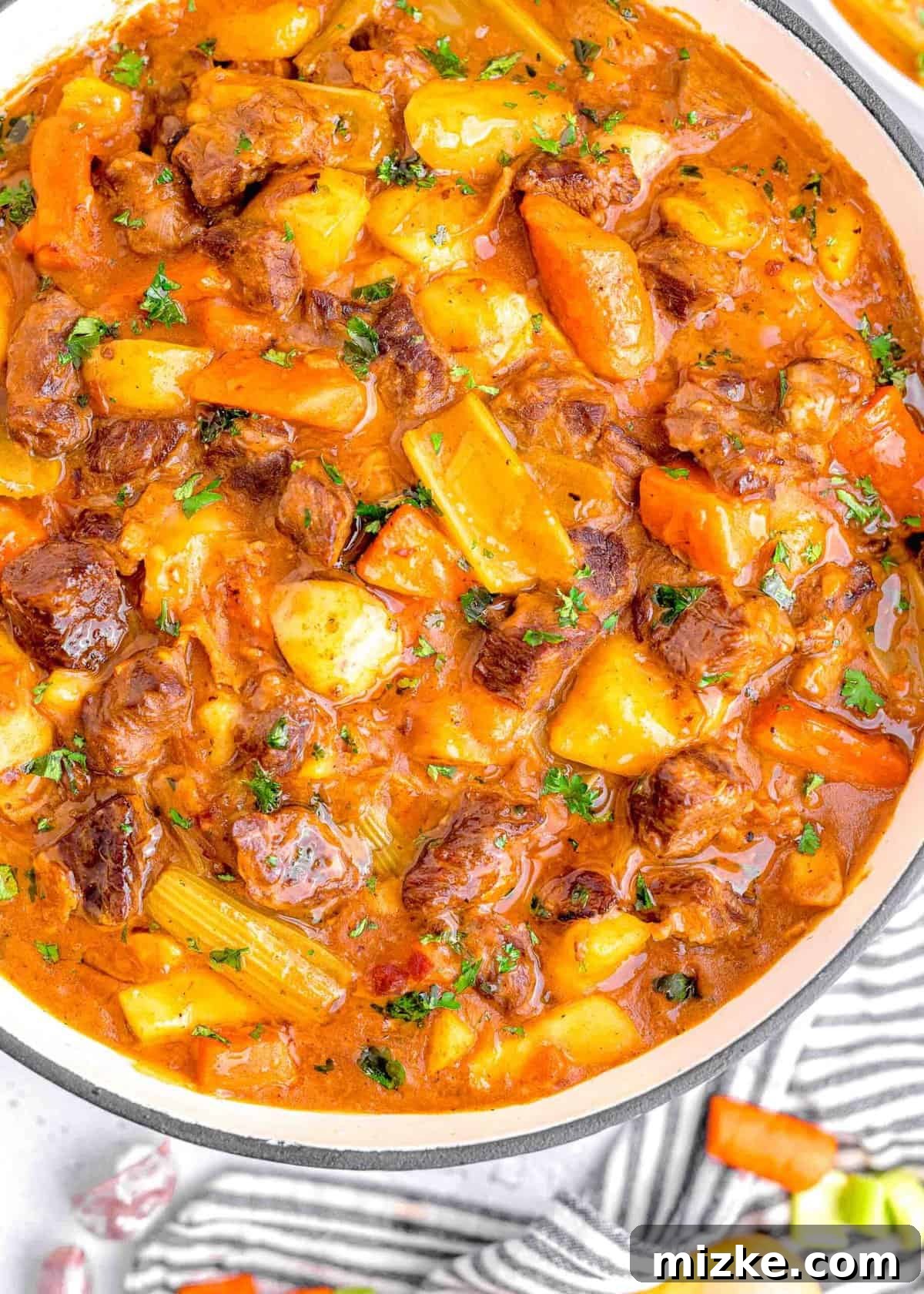
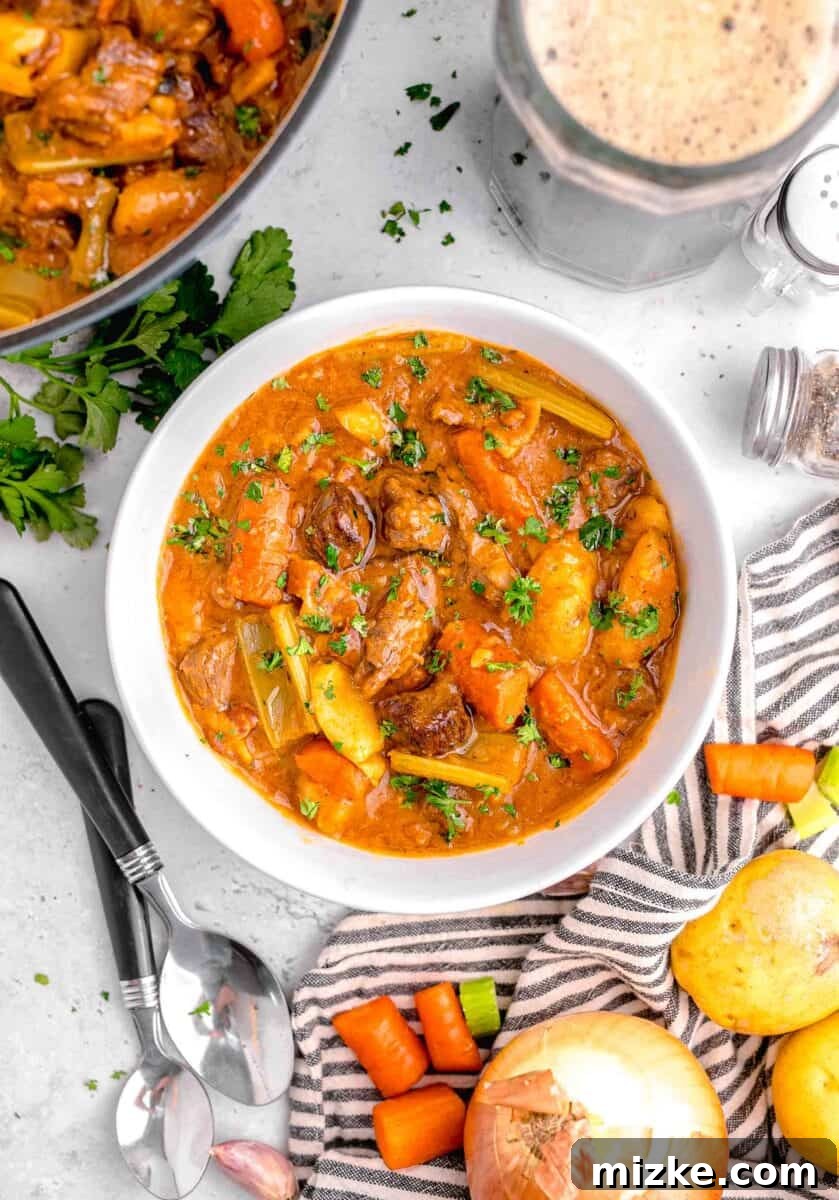
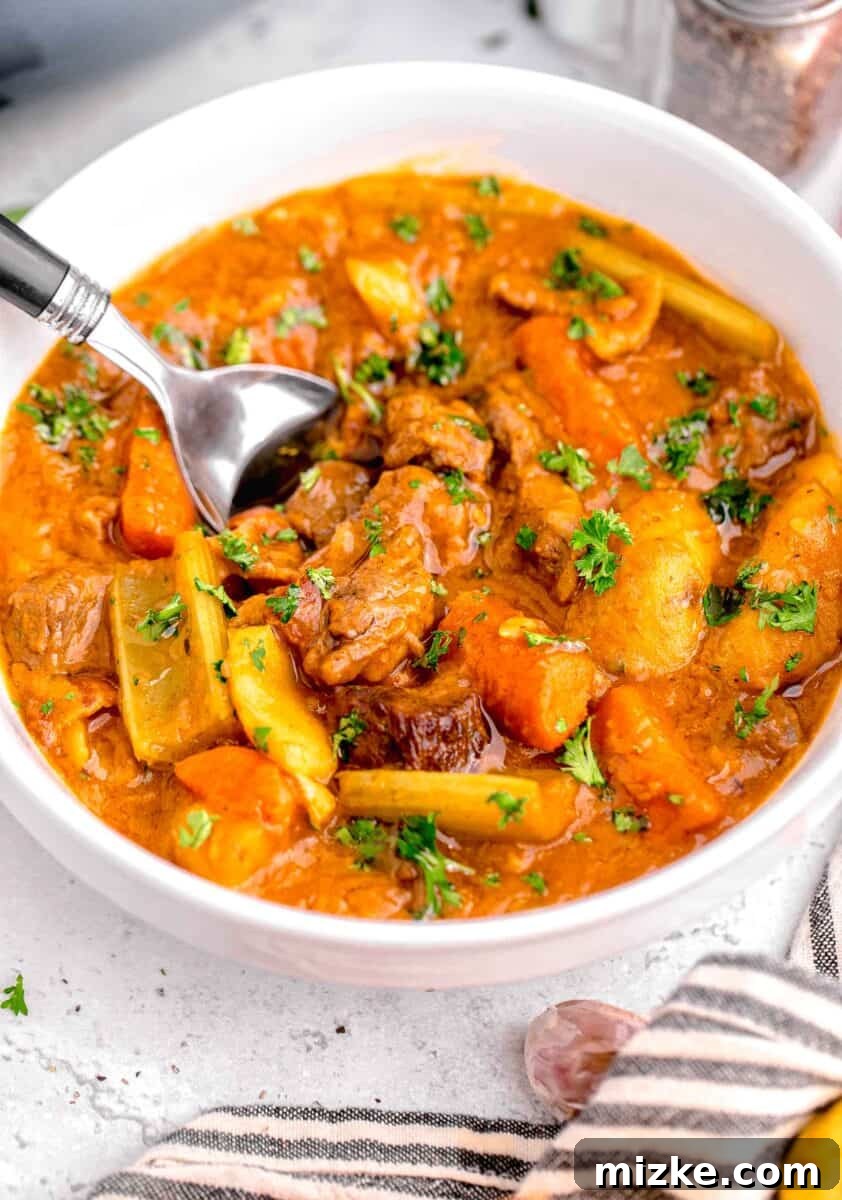
Imagine coming home to the comforting aroma of a rich, deeply flavorful stew simmering all day long. This cozy Slow Cooker Guinness Beef Stew transforms humble ingredients into an extraordinary meal with minimal effort. Tender chunks of beef, fragrant carrots, potatoes, and celery are enveloped in a velvety, dark sauce infused with the iconic notes of Guinness beer and a surprising touch of bittersweet chocolate. Get ready to experience a melt-in-your-mouth beef stew that promises to be a staple in your cold-weather cooking repertoire.
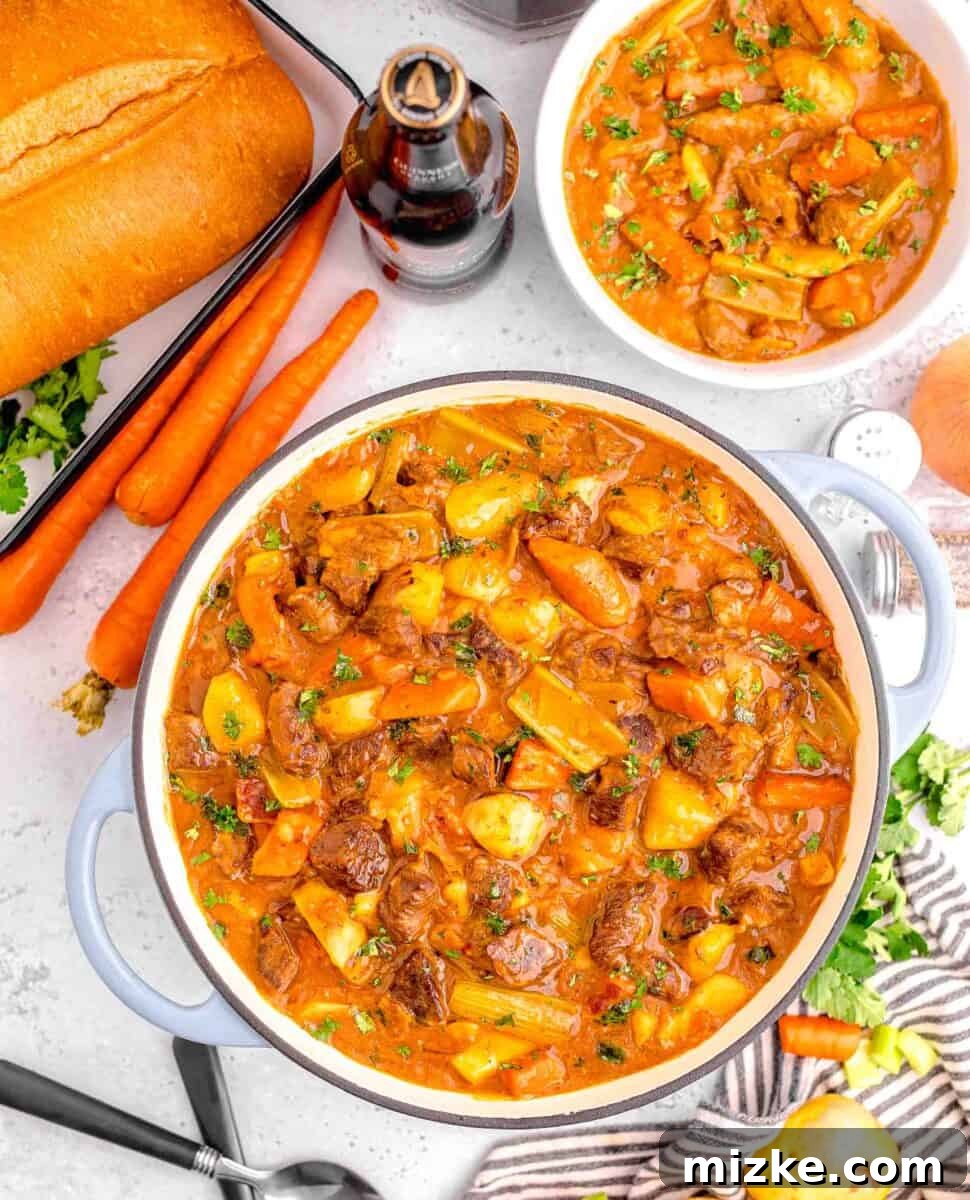
Are you craving a meal that delivers incredible depth of flavor without demanding hours of active kitchen time? Look no further than this Slow Cooker Guinness Beef Stew. This recipe harnesses the power of your trusty slow cooker, allowing a harmonious blend of ingredients to slowly meld and develop into a robust, satisfying dish. The secret lies in the long, gentle simmer, which breaks down tough cuts of beef into succulent, fork-tender morsels and infuses every vegetable with the stew’s hearty essence. It’s the perfect solution for busy weeknights or a lazy Sunday when you desire gourmet taste with minimal fuss.
Beyond its sheer deliciousness, this Guinness beef stew offers unparalleled convenience. A quick initial sear locks in flavor, then everything goes into the slow cooker to work its magic. No constant stirring, no worrying about burning, just set it and forget it! By dinner time, you’ll be greeted with a warming, hearty meal that tastes like you spent all day slaving over it. Prepare to delight your taste buds and impress your family with an amazing flavor experience that requires surprisingly little effort or fancy ingredients. Keep reading to unlock the full potential of this incredible slow cooker recipe!
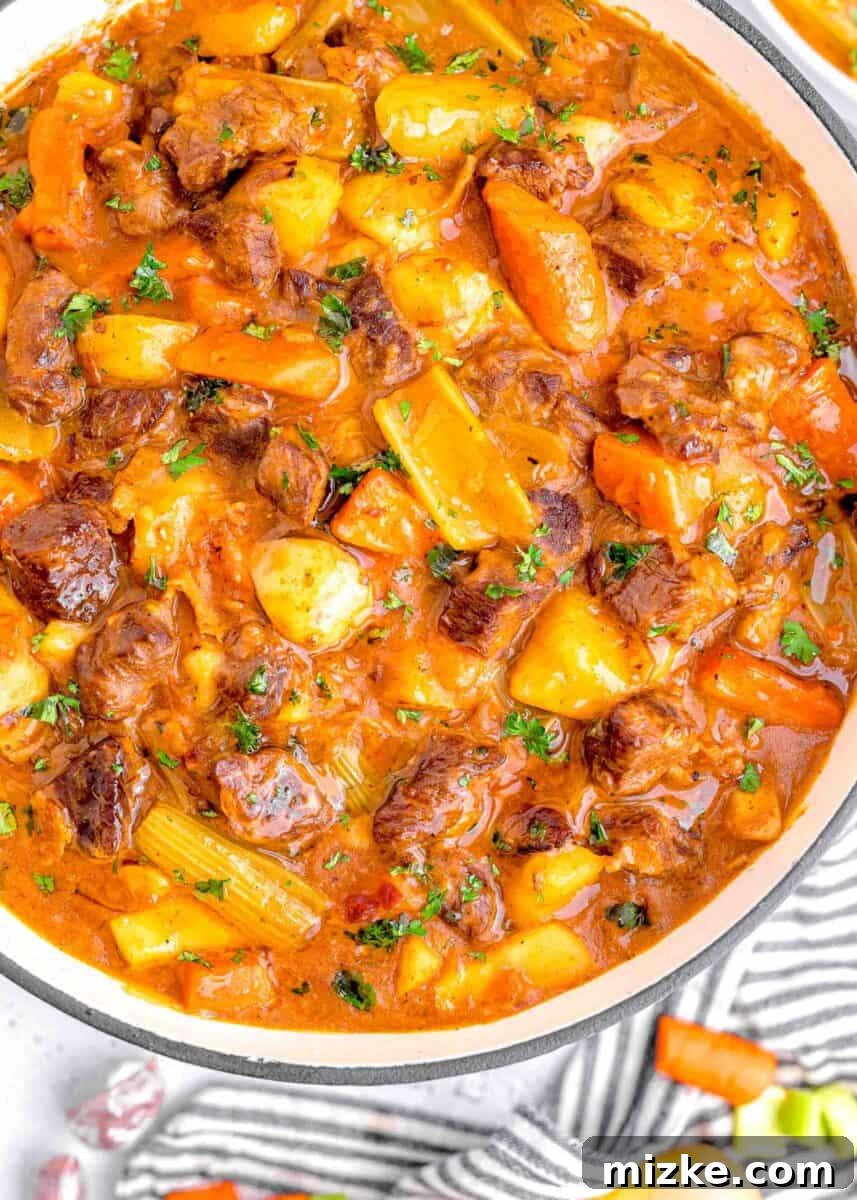
Why This Slow Cooker Guinness Beef Stew Will Become Your New Favorite
- Unrivaled Complex and Rich Flavors: The combination of dark, malty Guinness stout with a hint of bittersweet chocolate creates an incredibly deep, savory, and slightly sweet sauce that is truly addictive. The long, slow cooking process allows these flavors to meld and intensify, resulting in an exceptionally nuanced and satisfying broth that begs to be savored.
- Effortless, Hands-Off Cooking: This recipe is a slow cooker champion! After a brief initial searing of the beef and bacon, the majority of the work is done by your appliance. Simply combine the ingredients, set the timer, and let the slow cooker transform them into a culinary masterpiece while you go about your day. It’s perfect for busy schedules, ensuring a wholesome, homemade meal is ready when you are.
- Incredibly Tender, Melt-in-Your-Mouth Beef: The secret to perfectly tender beef lies in using the right cut (like chuck roast) and cooking it low and slow. This method breaks down the connective tissues in the meat, rendering it unbelievably soft, succulent, and falling apart with just a fork. Each bite is silken and buttery, a true testament to patient cooking.
- Versatile and Adaptable: While designed for the slow cooker, this robust beef stew recipe is wonderfully versatile. Instructions are also provided for stovetop or oven preparation, giving you flexibility based on your preferences and kitchen equipment. You can also easily adjust vegetables or even protein for different dietary needs or taste preferences.
- Hearty, Wholesome & Comforting: This stew is the epitome of comfort food. Packed with nutrient-rich vegetables and protein, it’s a wholesome and incredibly filling meal. It’s particularly perfect for chilly evenings, offering warmth and satisfaction that nourishes both body and soul.
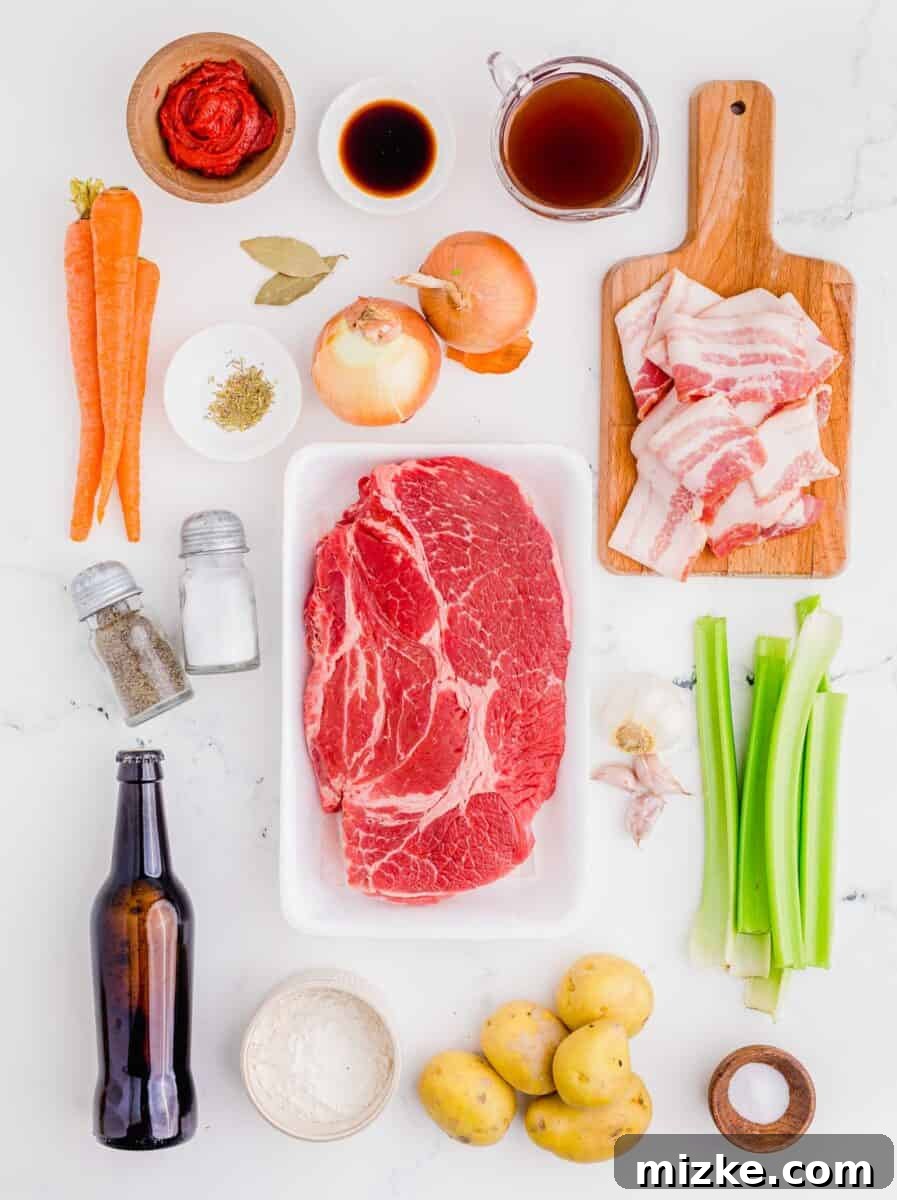
Essential Ingredients for Your Flavorful Guinness Beef Stew
Every ingredient in this recipe plays a crucial role in building the deep, rich flavors of this Guinness beef stew, so try not to skip any! For precise measurements, please refer to the full recipe card below.
- Bacon: Adds a foundational smoky flavor and renders delicious fat for searing the beef. Pork bacon provides the best flavor, but turkey bacon can be used as an alternative.
- Boneless Beef Chuck: This is the star of the show. We’ll delve deeper into why chuck is the best choice for tender stew meat.
- Salt and Pepper: Essential for seasoning the beef and the stew, enhancing all the other flavors.
- Onions: Aromatic base, adding sweetness and depth as they slowly cook down.
- Garlic: Another key aromatic, providing pungent depth.
- Carrots: Contribute natural sweetness, vibrant color, and texture.
- Celery: Adds a subtle earthy flavor and aromatic complexity to the stew.
- Potatoes: Yukon Gold potatoes are recommended for their creamy texture, but Russets work well if Yukon Golds are unavailable. They absorb the stew’s flavors beautifully.
- Worcestershire Sauce: A powerful umami booster that adds a savory, tangy complexity.
- Sugar: A small amount balances the bitterness of the Guinness and enhances the overall flavor profile.
- Thyme: Classic herb for stews, offering an earthy, slightly minty note.
- Bay Leaf: Infuses the stew with a subtle, aromatic depth that rounds out the flavors.
- Beef Broth: Forms the liquid base of the stew, contributing savory richness.
- Tomato Paste: Adds concentrated tomato flavor, depth, and a touch of acidity that brightens the stew.
- Guinness or Another Dark Beer (Stout, Ale, or Porter): The signature ingredient! Guinness provides a unique malty, roasted flavor that pairs perfectly with beef and develops incredible depth during slow cooking.
- Bittersweet Chocolate (or Dark Chocolate): This secret ingredient might surprise you, but it’s a game-changer. It doesn’t make the stew sweet; instead, it deepens the color, adds a profound richness, and a subtle complexity that elevates the entire dish.
- Flour: Used at the end to thicken the stew to a luscious, spoon-coating consistency.
Does the Cut of Beef Really Matter for Stew? Absolutely!
When it comes to crafting the perfect beef stew, the cut of beef you choose is paramount. It can truly make or break your dish, determining whether you end up with tender, flavorful meat or tough, chewy disappointments. I consistently advise against using pre-cut “stew meat” found in most grocery stores. While convenient, these packages often contain an assortment of cuts that don’t cook uniformly and frequently result in gristly, undesirable textures, regardless of cooking method or duration.
My unequivocal favorite for stews, especially slow-cooked ones, is **boneless beef chuck roast**. Here’s why:
- Ideal Marbling: Chuck roast is known for its excellent marbling—those flecks of fat interspersed throughout the meat. As the stew cooks slowly, this fat renders, basting the meat from within, keeping it moist, and infusing the sauce with incredible flavor.
- Connective Tissue Breakdown: Chuck roast contains a significant amount of collagen, a tough connective tissue. Slow cooking at low temperatures is precisely what’s needed to break down this collagen into gelatin. This gelatin then melts into the stew, creating that luscious, silky mouthfeel and contributing to the incredible tenderness of the beef.
- Flavor Profile: Beef chuck has a robust, beefy flavor that stands up beautifully to the rich ingredients in a Guinness stew. It absorbs the aromatic liquids and spices, deepening its own taste.
When you purchase a chuck roast, you have control over the size and consistency of your beef cubes. Always remember to cut the beef **against the grain**. This shortens the muscle fibers, making the cooked meat much easier to chew and ensuring that coveted melt-in-your-mouth texture. Trust me, investing a little extra time to choose and prepare your own chuck roast will elevate your slow cooker Guinness beef stew to an entirely new level of deliciousness.
Mastering the Art of Slow Cooker Guinness Beef Stew: A Step-by-Step Guide
Crafting this deeply flavorful beef stew in your slow cooker is simpler than you might think. This general overview outlines the key stages. For the complete, detailed recipe, please scroll to the bottom of this post.
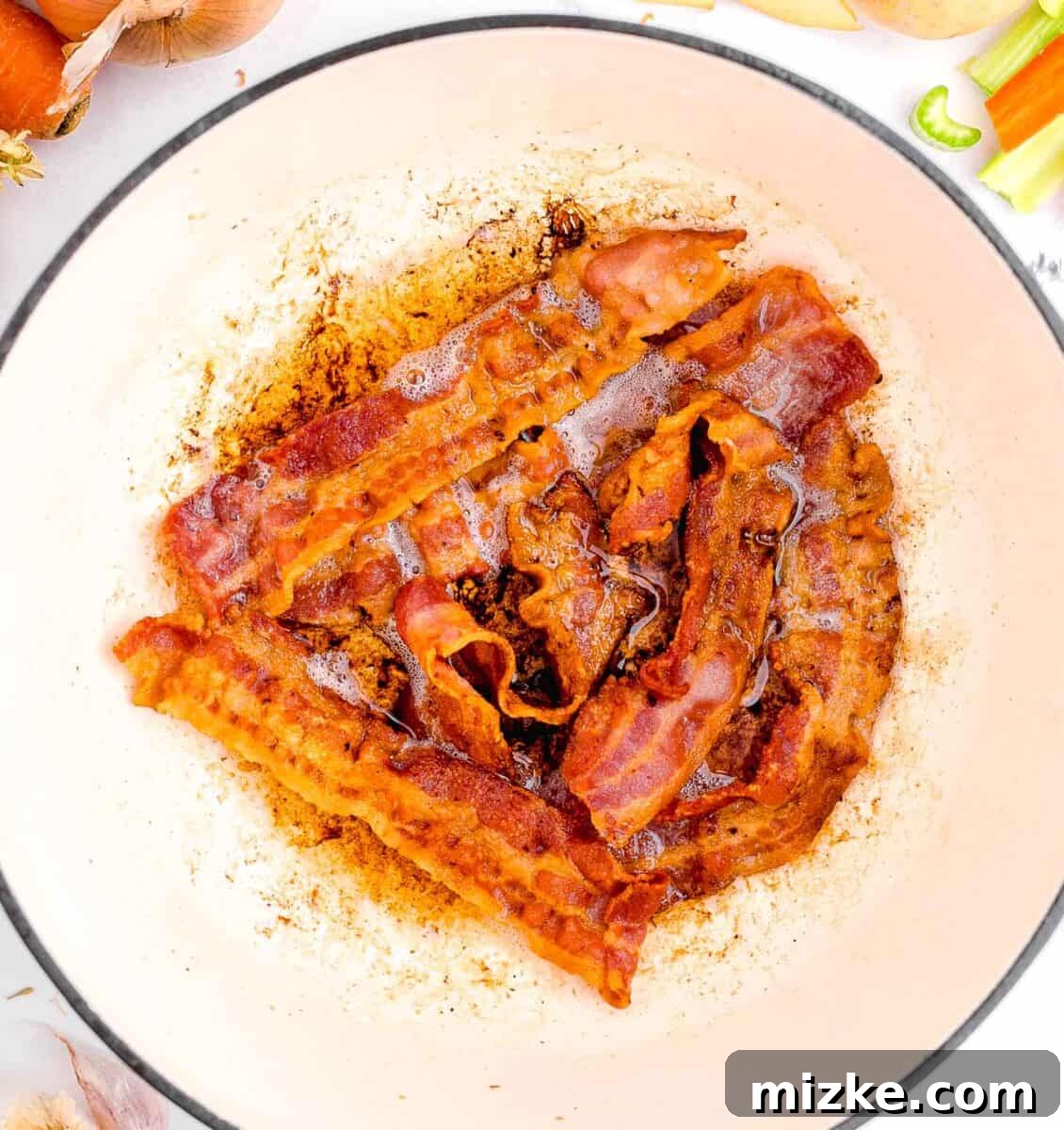
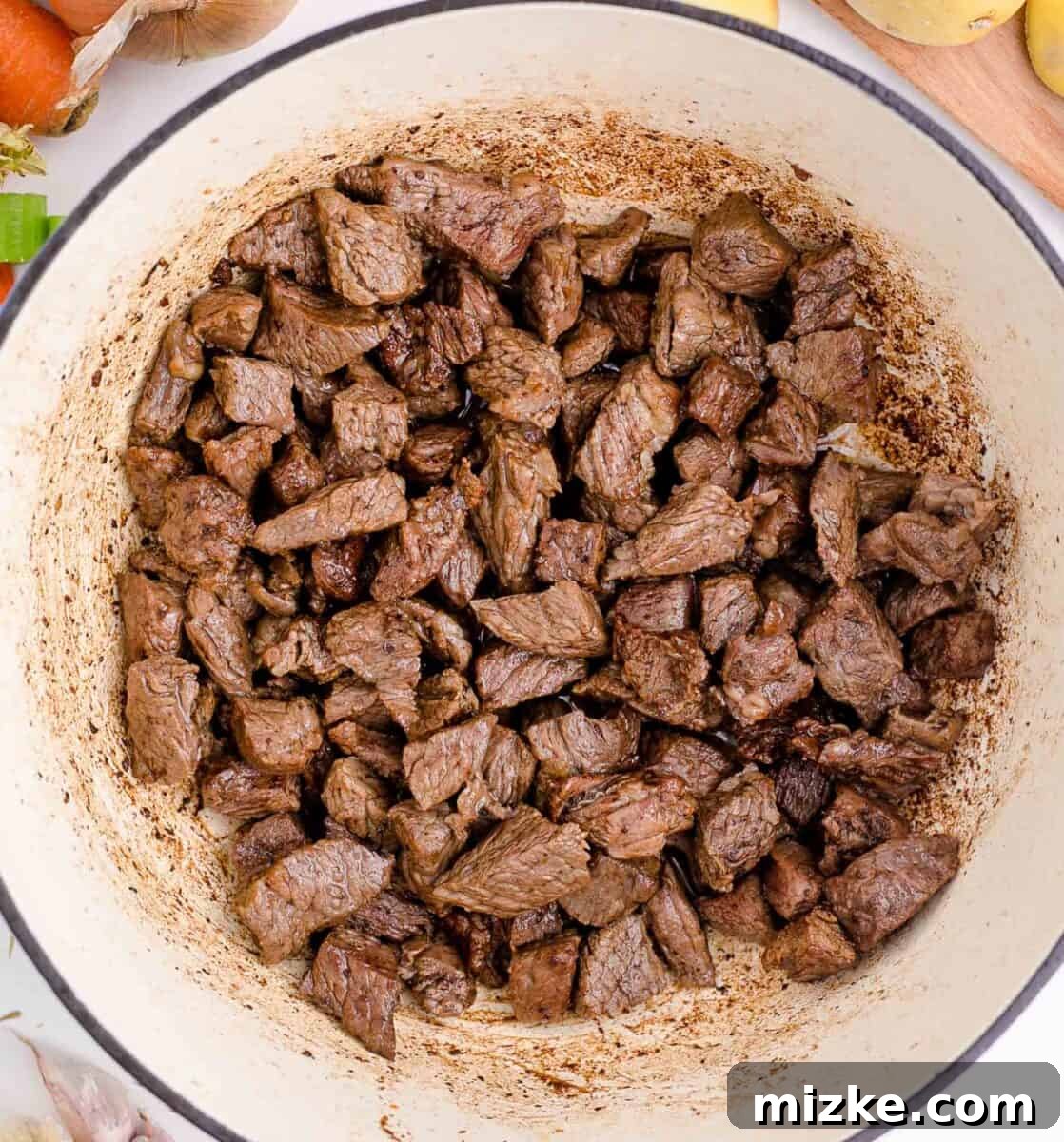
- Prepare and Sear the Beef and Bacon: Begin by cutting your boneless beef chuck into uniform 1½-inch chunks and generously season them with salt and pepper. In a large skillet or Dutch oven, cook the bacon until it reaches your desired crispiness. Remove the bacon, crumble it for garnish later (optional), but crucially, leave the rendered bacon fat in the pan. This fat is liquid gold for flavor! Now, in batches, sear the seasoned beef chunks in the bacon fat over medium-high heat. You’re aiming for a beautiful brown crust on all sides, not to cook the meat through. This searing step is vital for developing rich, caramelized flavors (the Maillard reaction) that will deepen the stew’s overall taste. Transfer the browned beef to your slow cooker insert.
- Build the Flavor Base in the Slow Cooker: Once the beef is seared and transferred, add the chopped onions, minced garlic, sliced carrots, celery, and cubed potatoes to the slow cooker insert. These aromatic vegetables will cook down beautifully and contribute to the stew’s wholesome texture and flavor.
- Combine the Liquids and Key Flavorings: In a separate bowl or large measuring cup, whisk together the beef broth and tomato paste until the paste is fully incorporated and smooth. This prevents lumps in your stew. Pour this mixture into the slow cooker. Next, add the star ingredient – the Guinness (or your chosen dark beer) – and the bittersweet chocolate. Give everything a good stir to ensure all ingredients are well combined.
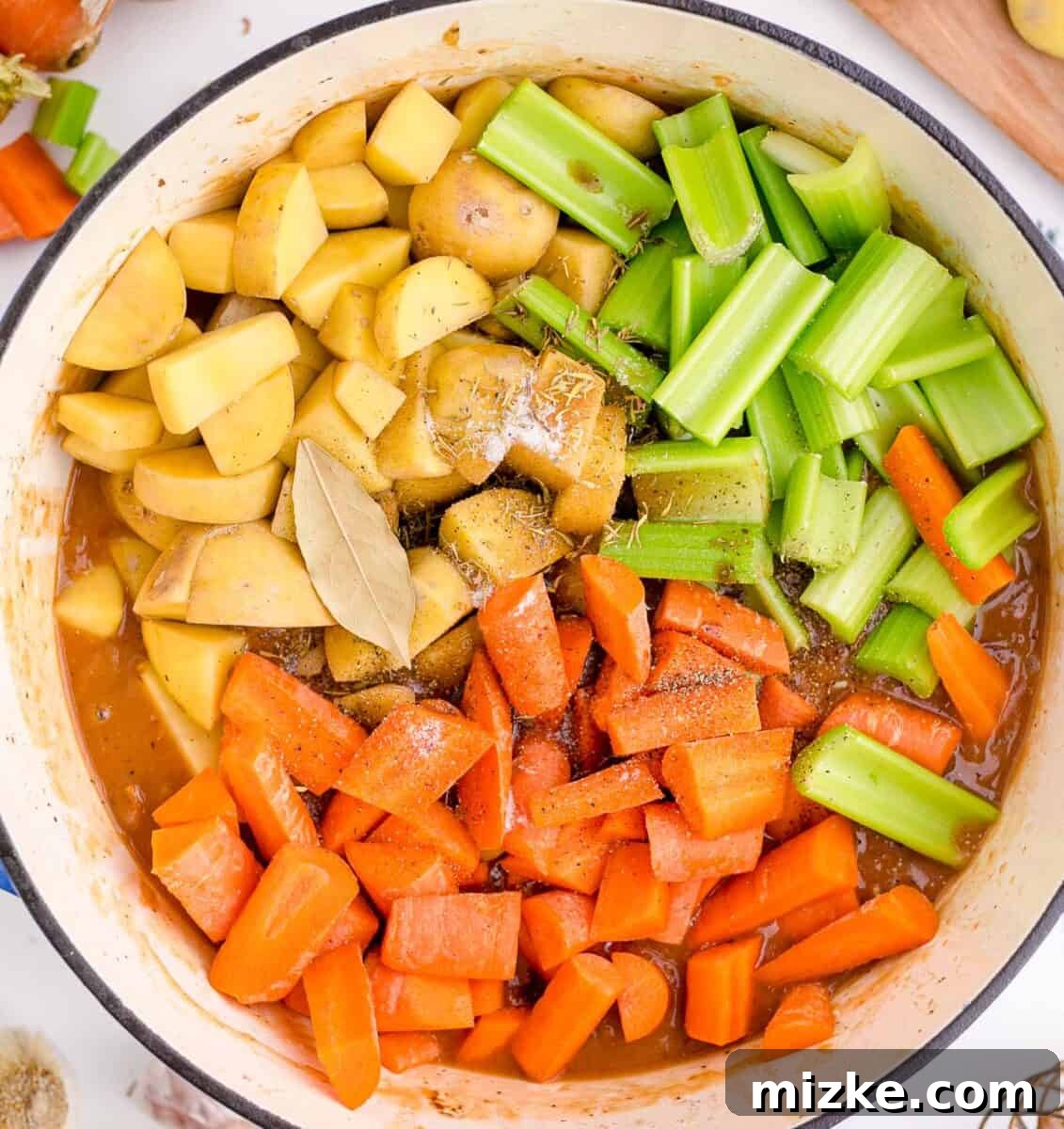
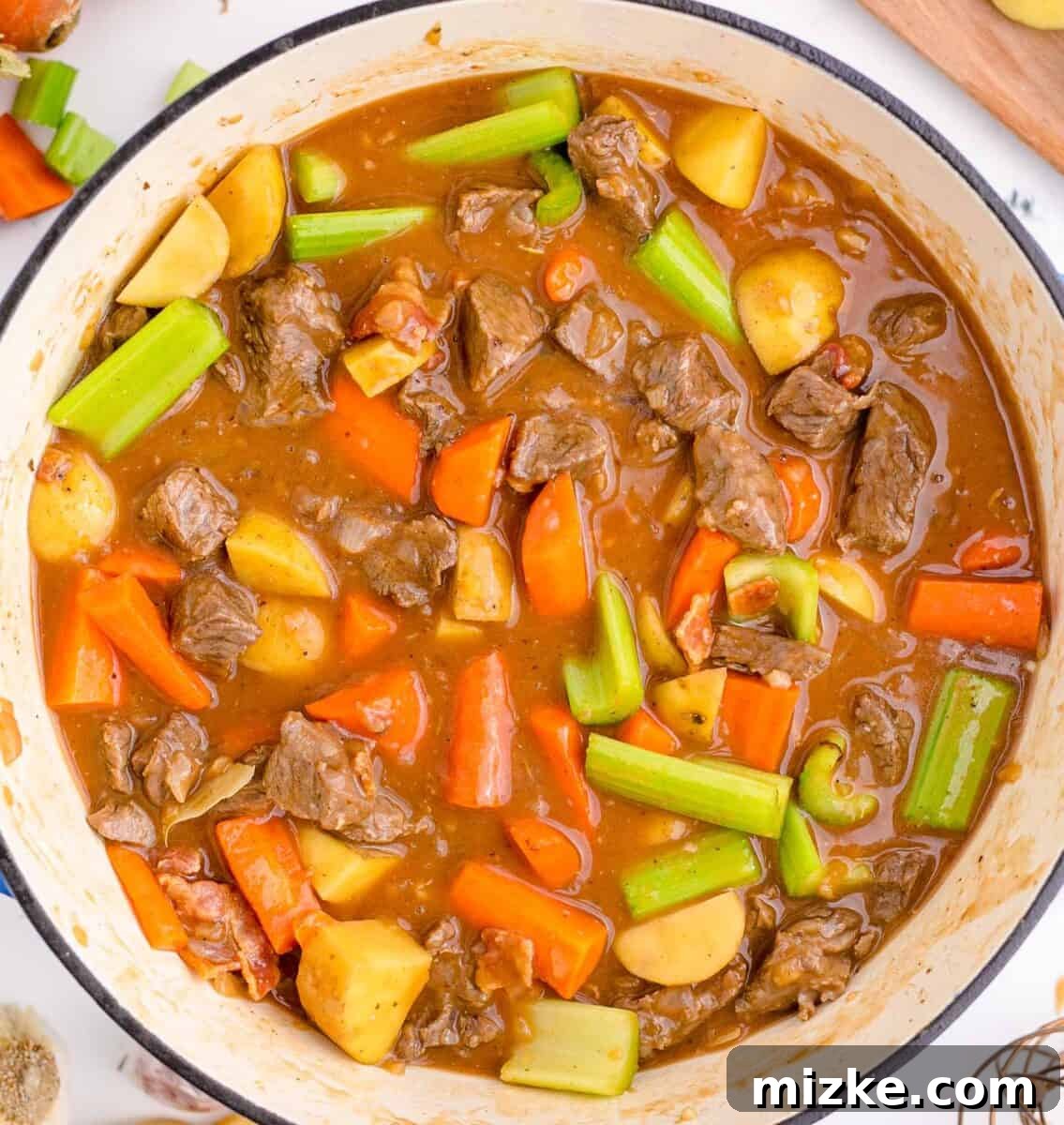
- Set the Slow Cooker and Let it Simmer: Secure the lid on your slow cooker. Set the appliance to the LOW setting and allow the stew to cook undisturbed for approximately 8 hours. This extended, gentle cooking time is essential for tenderizing the beef and allowing all the complex flavors to fully develop and marry together.
- Thicken to Perfection: Once the cooking time is complete, carefully remove the lid from the slow cooker. The stew will appear quite liquidy. To achieve that perfect, rich consistency, ladle about 1 cup of the hot liquid from the stew into a separate bowl or measuring cup. Whisk the flour into this liquid until completely smooth and lump-free, creating a slurry. Pour this flour mixture back into the slow cooker with the stew. Stir continuously for about 5 minutes, allowing the stew to come to a gentle simmer on the “high” setting if needed, until the sauce thickens to your desired, luscious consistency.
- Serve and Enjoy: Before serving, remember to remove the bay leaf. Ladle generous portions into bowls and garnish with fresh parsley or the crumbled bacon, if desired. Serve hot and savor every comforting spoonful!
Customizing Your Guinness Beef Stew: Substitutions and Variations
One of the beauties of a hearty stew is its adaptability! This Guinness Beef Stew is incredibly flexible, allowing you to tailor it to your dietary needs, preferences, or what you have on hand. Here are some suggestions to spark your culinary creativity:
- Explore Different Proteins:
- Lamb: For a slightly different but equally rich flavor profile, consider substituting beef chuck with lamb shoulder or leg of lamb, cut into similar 1½-inch cubes. Lamb’s robust flavor pairs exceptionally well with the dark beer and earthy spices, offering a more traditional Irish stew essence.
- Avoid Chicken or Pork: While versatile meats, chicken and pork tend to become dry or stringy during the long slow-cooking process required for this stew. Their flavor profiles also don’t complement the deep, malty notes of Guinness and chocolate as effectively as beef or lamb.
- Amplify the Vegetable Content: If you prefer a stew heavy on vegetables, feel free to add more! Since this stew cooks for an extended period, opt for heartier vegetables that can withstand long cooking without becoming mushy. Excellent additions include:
- Butternut Squash: Adds sweetness and a creamy texture.
- Parsnips: Offers a unique, slightly sweet, and peppery flavor.
- Rutabaga: A robust root vegetable that holds its shape well.
- Mushrooms: Sliced cremini or button mushrooms can be added during the last hour for an extra layer of umami.
- Green Peas: Stir in frozen peas during the last 15-20 minutes of cooking for a pop of color and fresh flavor.
- Alternative Cooking Methods: Make it on the Stovetop or in the Oven!
Don’t have a slow cooker or prefer a different method? This recipe can easily be adapted for a Dutch oven on the stovetop or in the oven:
- For the Stovetop: After completing the bacon frying and beef searing steps in your Dutch oven, remove the beef and bacon from the pot. Add the chopped onions and minced garlic to the pot, sautéing until softened. Stir in the flour to create a roux, cooking for 1-2 minutes. Gradually whisk in the beef broth and tomato paste mixture, followed by the Guinness and chocolate, scraping up any browned bits from the bottom of the pot. Return the seared beef and bacon to the pot, along with the remaining vegetables, Worcestershire sauce, sugar, pepper, thyme, and bay leaf. Bring the mixture to a boil, then reduce the heat to low, cover tightly, and simmer gently for about 2 hours, or until the beef is fork-tender. For a thicker consistency, remove the lid during the last 30 minutes of cooking to allow some liquid to evaporate.
- For the Oven: Follow all the stovetop preparation steps for searing beef, cooking aromatics, and adding liquids and remaining ingredients in an oven-safe Dutch oven. Preheat your oven to 350°F (175°C). Once the stew mixture in the Dutch oven has been brought to a boil on the stovetop, carefully transfer it to the preheated oven. Cook, covered, for approximately 2 to 2½ hours, or until the beef is incredibly tender. Similar to the stovetop method, remove the lid for the final 30 minutes if you desire a thicker sauce.
- Spice it Up: For a subtle kick, add a pinch of red pepper flakes with the other spices.
- Herbal Freshness: While dried thyme is used for convenience, fresh thyme sprigs or a sprinkle of fresh chopped parsley or chives stirred in at the very end can add a lovely bright finish.
Pro Tips for a Flawless Slow Cooker Guinness Beef Stew
While slow cooking is inherently forgiving, a few expert tips can elevate your hearty beef stew from good to absolutely phenomenal. Anyone can toss ingredients into a pot, but these tricks will ensure your dish is a resounding success!
- Don’t Skip the Sear – It’s Crucial for Flavor: Browning the beef chunks before adding them to the slow cooker isn’t just for aesthetics; it’s a fundamental step in building deep, complex flavor. The Maillard reaction, which occurs during searing, creates hundreds of new flavor compounds, adding a rich, savory depth that simply cannot be achieved by skipping this step.
- Cut Against the Grain for Ultimate Tenderness: You’ve likely heard this advice often when dealing with meat, and it’s particularly vital for stew. Cutting beef chuck roast against the grain shortens the muscle fibers, resulting in a much more tender, easier-to-chew cooked product. Cutting with the grain can make the meat tough and stringy, even after hours of slow cooking.
- Season Generously and Taste as You Go: Large batches of stew require a significant amount of seasoning to taste balanced. Don’t be shy with salt and freshly ground black pepper on your beef before searing. Then, once the stew is finished cooking, taste it and adjust the seasoning as needed. A pinch more salt, a dash of pepper, or even a tiny bit more sugar can truly bring all the flavors into harmony.
- Invest in the Right Cut, But Don’t Overspend: While quality beef is essential, you don’t need to splurge on prime cuts like Wagyu or sirloin for stew. Boneless beef chuck roast, with its generous marbling and connective tissue, is the perfect, economical choice. Its inherent toughness is exactly what benefits from slow cooking, transforming into luxurious tenderness.
- Ensure You Have an Adequately Sized Pot: There’s nothing more frustrating than preparing all your ingredients only to find your pot is too small and on the verge of overflowing. For this recipe, aim for at least a 6-quart slow cooker or Dutch oven to comfortably accommodate all the ingredients and allow for proper simmering.
- Resist the Urge to Lift the Lid: Every time you lift the lid on your slow cooker, a significant amount of heat escapes, and the internal temperature drops. This can extend the overall cooking time by 30 minutes or more. Trust the process and keep that lid on until it’s time to check for doneness or thicken the sauce.
- Prep Ahead for Morning Ease: If you’re planning to start this stew in the morning before work, consider preparing your vegetables the night before. Peel and chop the carrots, celery, and potatoes, and store them in an airtight container in the refrigerator. Potatoes can be stored submerged in cold water to prevent browning. This little bit of prep makes assembly in the morning incredibly quick and easy.
Storing and Reheating Your Delicious Leftovers
This Slow Cooker Guinness Beef Stew often tastes even better the next day as the flavors continue to meld and deepen! Here’s how to properly store and reheat any leftovers:
- Refrigerator Storage: Once the stew has cooled completely to room temperature, transfer it to an airtight container. It can be safely stored in the refrigerator for up to 3 days.
- Reheating:
- Microwave: For individual servings, place the stew in a microwave-safe bowl and heat on high in 1-2 minute intervals, stirring in between, until thoroughly warmed through.
- Stovetop: For larger quantities, transfer the stew to a saucepan or Dutch oven. Heat over medium-low heat, stirring occasionally, until simmering gently and completely hot. If the stew has thickened too much in the fridge, you can add a splash of beef broth or water to reach your desired consistency.
Can you freeze beef stew?
Absolutely! Beef stew freezes exceptionally well, making it perfect for meal prepping. After the stew has cooled completely, transfer it into an airtight, freezer-safe container or heavy-duty freezer bags (removing as much air as possible). It can be stored in the freezer for up to 3 months.
- Thawing and Reheating Frozen Stew: To reheat, transfer the frozen stew to the refrigerator to thaw overnight. Once thawed, reheat on the stovetop over medium-low heat, stirring occasionally, until hot and simmering. Alternatively, you can reheat from frozen on the stovetop, but it will take longer, requiring more frequent stirring to prevent sticking. A microwave can also be used for smaller, thawed portions. Always ensure the stew is heated to an internal temperature of 165°F (74°C).
Perfect Pairings: What to Serve with Guinness Beef Stew
A hearty, flavorful stew like this Guinness Beef Stew deserves equally delicious accompaniments. The key is to choose sides that can either soak up the rich sauce or offer a contrasting texture and flavor to balance the dish. Here are some of my favorite recommendations:
- Crusty Bread: This is a non-negotiable for me! A generous serving of crusty bread is perfect for mopping up every last drop of the delectable stew liquid.
- Garlic Herb Parker House Rolls: Soft, buttery, and incredibly flavorful, these rolls are ideal for soaking up the rich sauce.
- Homemade Garlic Naan: While untraditional, the soft, chewy texture and garlic flavor of naan make it an surprisingly wonderful vessel for this beef stew.
- Fluffy Buttery Biscuits: The tender, flaky layers of a classic biscuit are a comforting complement to the stew.
- Classic French Baguette or Sourdough Bread: Simple yet elegant, these offer a delightful chew and tangy note that pairs wonderfully.
- Creamy Mashed Potatoes: For an extra layer of comfort and richness, serve the stew over a bed of creamy mashed potatoes. They absorb the stew’s liquid beautifully, creating a truly decadent experience.
- Colcannon: Embrace the Irish theme with Colcannon – a traditional Irish dish of mashed potatoes with cabbage or kale. It’s a flavorful and authentic pairing.
- Steamed Greens: To add a touch of freshness and cut through the richness of the stew, a simple side of steamed green beans, broccoli, or asparagus can be lovely.
- Simple Green Salad: A light, crisp green salad with a bright vinaigrette provides a refreshing contrast and palate cleanser to the hearty stew.

Slow Cooker Guinness Beef Stew
Julie Chiou
25 minutes
8 hours
8 hours
25 minutes
8
Equipment
-
Slow Cooker
Ingredients
- 2 pounds (907 g) boneless beef chuck
- Salt and pepper for seasoning
- ½ pound bacon, about 8 slices
- 1 ½ cups (355 ml) beef broth
- ¼ cup (66 g) tomato paste
- 3 onions, chopped
- 3 cloves garlic, minced
- 2 large carrots, peeled and sliced
- 2 large celery ribs, sliced
- 1 ½ cups (355 g) Yukon gold potatoes, cut into 1 inch cubes
- 2 teaspoons Worcestershire sauce
- 1 teaspoon sugar
- 1 teaspoon ground pepper
- ½ teaspoon dried thyme
- 1 bay leaf
- 18 ounces (510 ml) dark beer like Guinness
- 1 ounce (28 g) bittersweet chocolate, chopped
- ⅓ cup (42 g) flour
Instructions
-
Cut the beef into 1 ½ inch chunks. Sprinkle it generously with salt and pepper and set it aside.2 pounds (907 g) boneless beef chuck, Salt and pepper for seasoning
-
In a Dutch oven or large skillet, fry the bacon until crisp. Remove it from the pan, crumble (if desired for garnish) and set aside. Leave the rendered bacon fat in the pan.½ pound bacon
-
Working in batches if necessary, brown the beef chuck cubes in the bacon fat, searing all sides until a rich crust forms. You are not cooking it through, just browning the exterior. As pieces brown, remove them to the insert of your slow cooker. Once all beef is browned, add the reserved crumbled bacon to the slow cooker as well.
-
In a separate bowl or measuring cup, whisk the beef broth and tomato paste together until completely smooth. Pour this mixture into the slow cooker over the beef.1 ½ cups (355 ml) beef broth, ¼ cup (66 g) tomato paste
-
Add the remaining solid ingredients to the slow cooker: chopped onions, minced garlic, sliced carrots, celery, cubed Yukon gold potatoes, Worcestershire sauce, sugar, ground pepper, dried thyme, and the bay leaf.3 onions, 3 cloves garlic, 2 large carrots, 2 large celery ribs, 1 ½ cups (355 g) Yukon gold potatoes, 2 teaspoons Worcestershire sauce, 1 teaspoon sugar, 1 teaspoon ground pepper, ½ teaspoon dried thyme, 1 bay leaf
-
Finally, pour in the dark beer (Guinness) and add the chopped bittersweet chocolate. Give all the ingredients a final stir to combine everything evenly.18 ounces (510 ml) dark beer like Guinness, 1 ounce (28 g) bittersweet chocolate
-
Cover the slow cooker with its lid and cook on the LOW setting for 8 hours. Resist the urge to lift the lid during this time, as it extends the cooking process.
-
Once the stew has finished cooking, carefully remove the lid. Ladle about 1 cup of the hot liquid from the stew into a separate bowl. Whisk the ⅓ cup of flour into this liquid until it forms a smooth, lump-free slurry. Pour this flour mixture back into the slow cooker and stir well. Allow the stew to continue cooking for about 5-10 minutes (you can switch to high for quicker thickening if preferred), stirring occasionally, until the sauce has thickened to your desired consistency.⅓ cup (42 g) flour
-
Before serving, remember to carefully remove and discard the bay leaf. Serve hot and enjoy!
Notes
To make mornings even easier, I sometimes prepare the vegetables (scrubbing, peeling, and cutting them) the night before. I store the cut vegetables, especially potatoes, in a bowl covered with cold water overnight to prevent discoloration. This way, in the morning, all that’s left is to brown the beef and simply toss everything into the slow cooker for a stress-free start to a delicious meal.
Nutrition
Serving:
1serving
,
Calories:
594kcal
,
Carbohydrates:
24g
,
Protein:
25g
,
Fat:
43g
,
Saturated Fat:
18g
,
Polyunsaturated Fat:
4g
,
Monounsaturated Fat:
20g
,
Trans Fat:
1g
,
Cholesterol:
105mg
,
Sodium:
410mg
,
Potassium:
852mg
,
Fiber:
3g
,
Sugar:
6g
This website provides approximate nutrition information for convenience and as a courtesy only. Nutrition information can vary for a variety of reasons. For the most precise nutritional data use your preferred nutrition calculator based on the actual ingredients you used in the recipe.
The default measuring system for this website is US Customary. Unit conversions are provided for convenience and as a courtesy only. While we strive to provide accurate unit conversions, please be aware that there may be some discrepancies.