
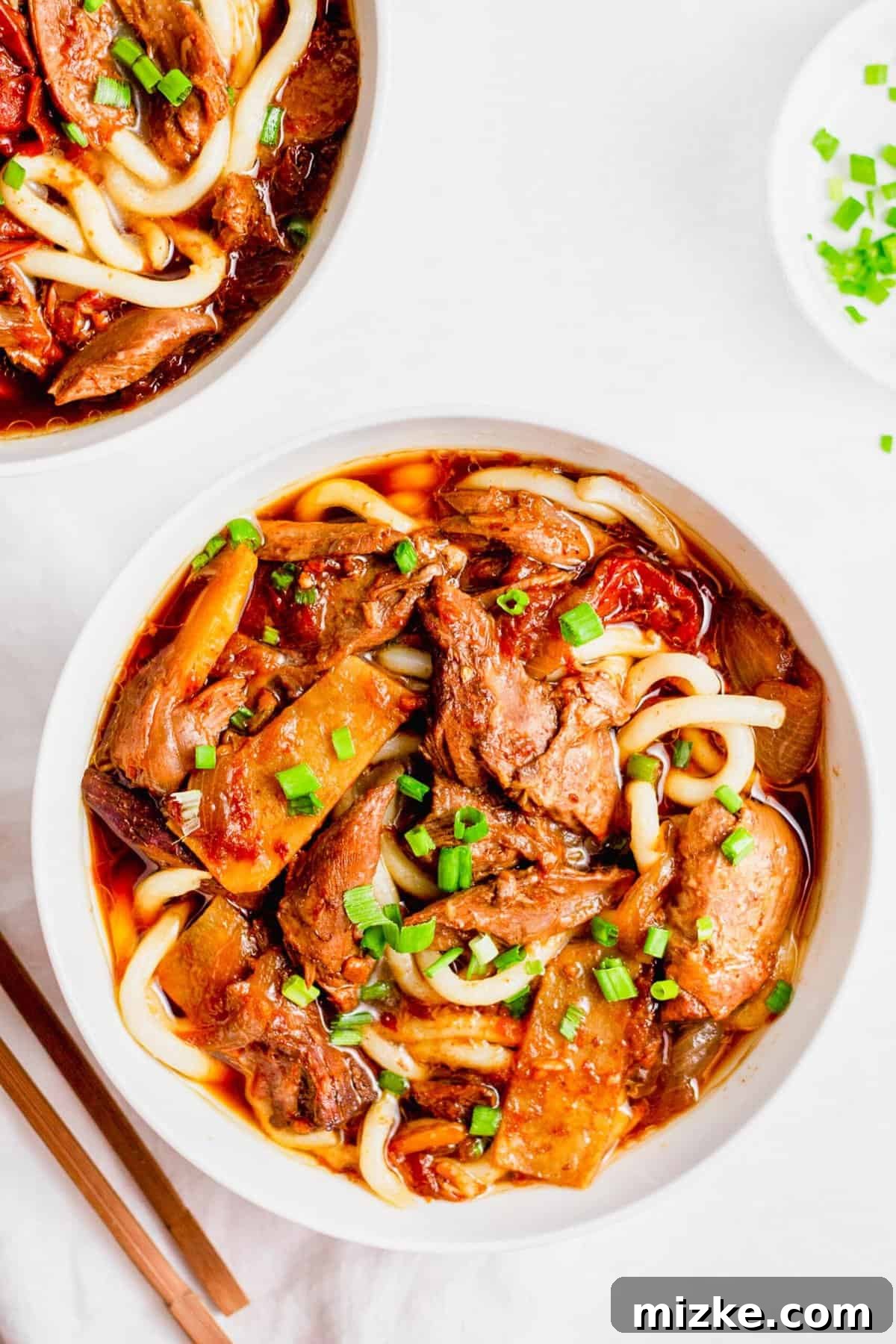
Taiwanese Beef Noodle Soup (牛肉麵), often hailed as Taiwan’s national dish, is the ultimate comfort food, especially as the colder months approach. This iconic, deeply satisfying soup masterfully combines a fragrant, savory, and spicy broth with incredibly tender beef and perfectly chewy noodles. The best part? You can create this culinary masterpiece right in your Instant Pot, making it accessible and quick for any home cook.
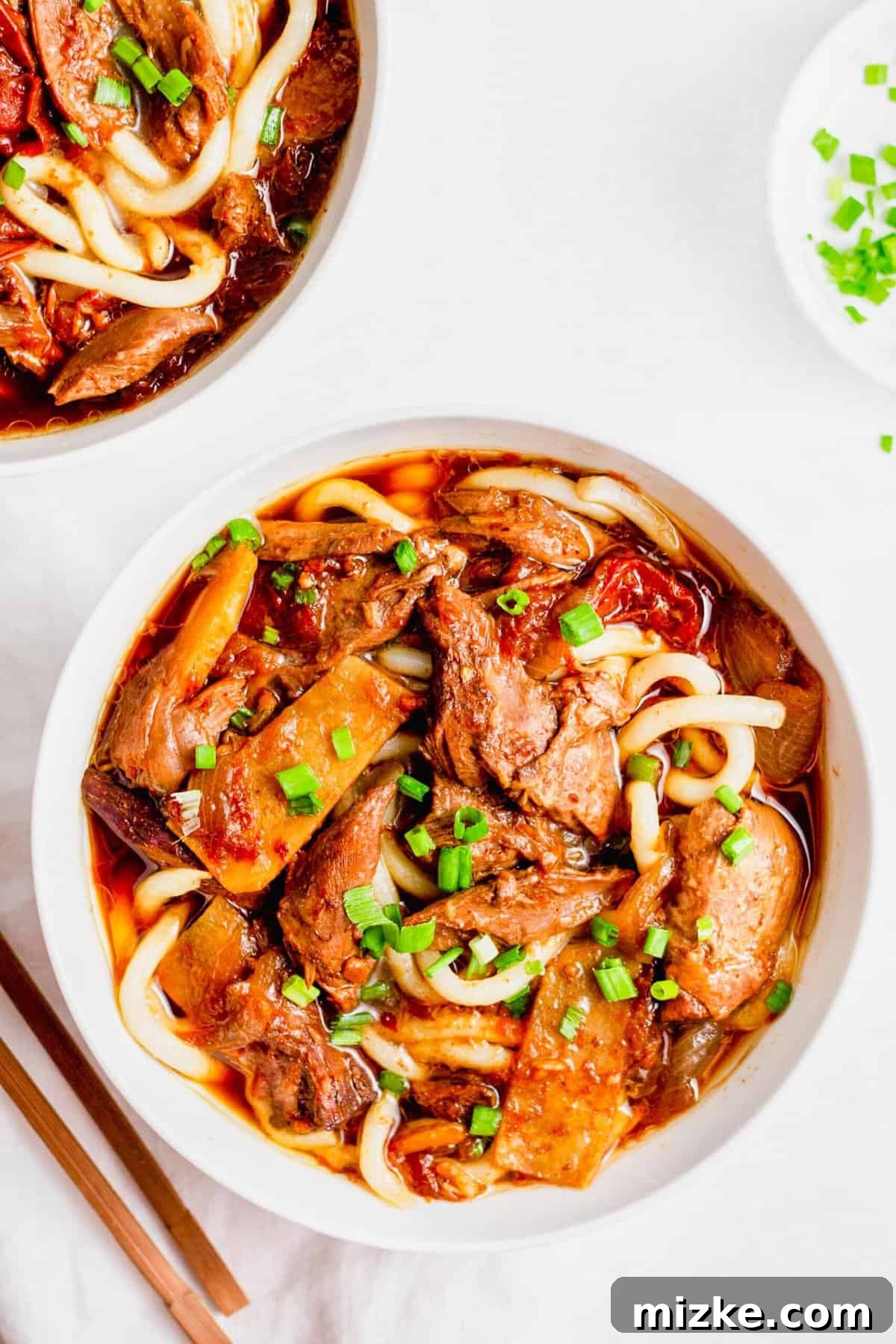
My love for Taiwanese Beef Noodle Soup (牛肉麵) runs deep. It’s a dish that, despite its complex layers of flavor, is surprisingly simple to prepare, relying on a symphony of warming spices, pungent garlic, fresh ginger, and vibrant chilies. Every spoonful is a journey, offering tender slices of beef shank and slurp-worthy noodles that promise to warm you from the inside out. This Instant Pot beef noodle soup recipe brings you the closest thing to the authentic bowls you’d savor on the bustling streets of Taiwan, where Niu Rou Mian is a beloved staple year-round. I have vivid memories of venturing to the local market, indulging in a steaming bowl for lunch, and happily slurping it down, even amidst Taiwan’s 90-degree heat and humidity. Absolutely worth every bead of sweat!
If your palate enjoys the bold flavors of Chinese-American classics such as Beijing beef and orange beef, then prepare for an exciting culinary journey to Taiwan with this incredible spicy beef noodle soup recipe. It’s a dish that transcends mere sustenance, offering a taste of Taiwanese culture and comfort in every bowl.
Why You’ll Love This Instant Pot Taiwanese Beef Noodle Soup Recipe
There are countless reasons to fall in love with this particular rendition of Niu Rou Mian:
- Effortless Instant Pot Preparation: Preparing Taiwanese Beef Noodle Soup in the Instant Pot is a true game-changer. This method drastically reduces cooking time while achieving fall-apart tender beef and a deeply infused broth. It’s quick, incredibly tasty, and largely hands-free, perfect for busy weeknights or a cozy weekend meal. This one-pot recipe is a cherished family secret, passed down from my mom, ensuring it’s tried, true, and bursting with authentic flavor!
- Unparalleled Flavor Depth: Much like other traditional Asian dishes such as Vietnamese Bo Luc Lac, this hearty beef soup is a masterclass in complex, savory, and subtly spicy flavors. Each bite delivers succulent beef, a vibrant kick from chilies, the aromatic warmth of garlic and ginger, and a balanced array of traditional Taiwanese five-spices. These elements meld together in a rich, warming broth, complemented by the sweetness of tender onions and tomatoes, creating an unforgettable taste experience.
- Perfect for Any Occasion: While this soup undoubtedly shines as a soul-soothing meal on a chilly day, its comforting embrace makes it one of those classic recipes you’ll want to enjoy year-round. The convenience of the pressure cooker means you can whip up this flavorful masterpiece whenever a craving strikes, making authentic Taiwanese Beef Noodle Soup more accessible than ever before.
What Is Taiwanese Beef Noodle Soup (牛肉麵)?
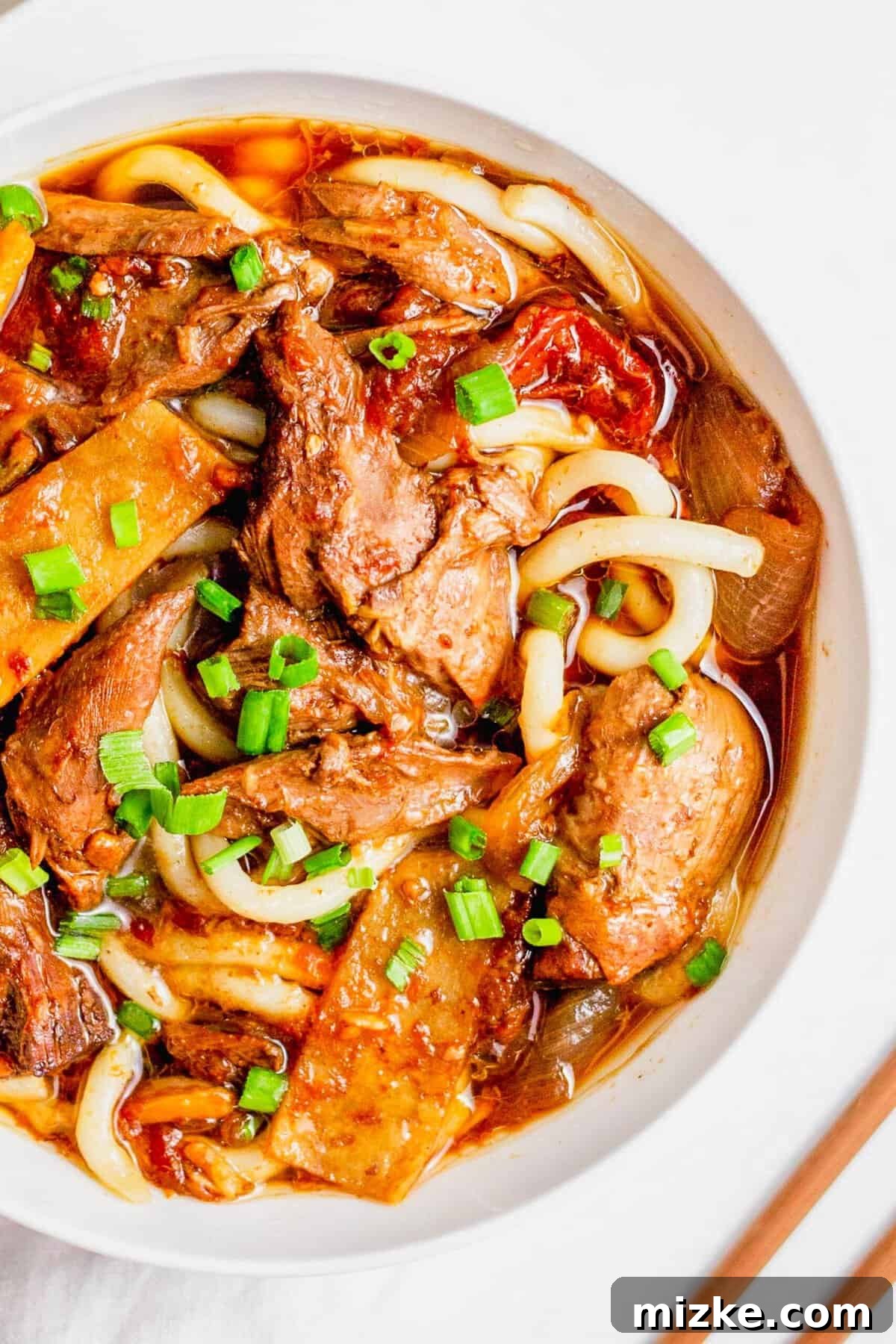
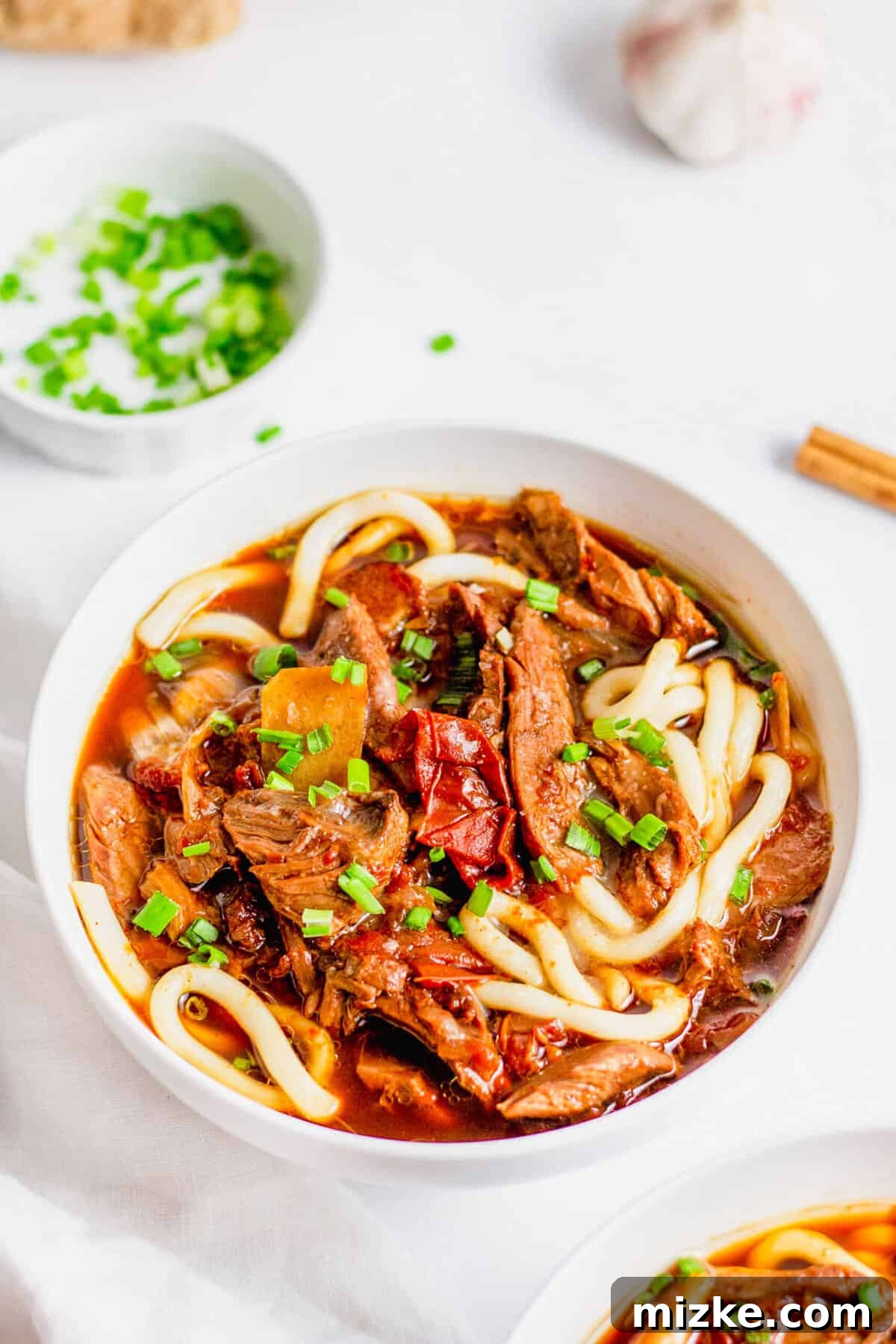
Taiwanese Beef Noodle Soup (牛肉麵), or Niu Rou Mian, holds a special place as the unofficial national dish of Taiwan. Though its culinary roots can be traced back to mainland China, it has evolved into a distinct Taiwanese specialty, celebrated for its unique flavor profile and comforting qualities. At its heart, it’s a robust dish featuring fork-tender beef, often beef shank, simmered to perfection in a delectably spiced, aromatic broth. This rich foundation is then generously paired with freshly cooked, wonderfully chewy noodles and an assortment of tender vegetables.
The flavor profile of Niu Rou Mian is a harmonious blend of savory, salty, umami-rich notes, intertwined with a refreshing hint of freshness and a delightful, chili-infused warmth. These characteristics often draw comparisons to the bold and layered flavors found in Sichuan-style cuisine or dishes like Hunan beef, but with its own unique Taiwanese twist. Our recipe brings all these authentic elements together in the efficiency of an Instant Pot, ensuring a quick, easy, and incredibly flavorful bowl of this beloved soup.
Essential Ingredients for Authentic Niu Rou Mian
Crafting the perfect Taiwanese Beef Noodle Soup starts with selecting the right ingredients. Below, you’ll find notes on the key components that bring this dish to life. The full recipe with precise measurements is provided in the recipe card at the bottom of this post. Keep in mind that when my family prepares this recipe, we often “eyeball” the amounts, so feel free to adjust to your personal taste preferences and desired intensity!
- Bone-in Beef Shank: This is the traditional and preferred cut for Niu Rou Mian, prized for its collagen and connective tissue that break down during cooking, yielding incredibly tender, flavorful beef and a rich, gelatinous broth. Excellent substitutes include beef arm, oxtail, chuck roast, skirt steak, or silverside, all of which benefit from long, slow cooking.
- Onion and Tomatoes: A large yellow onion, quartered, provides a foundational sweetness and depth. Ripe tomatoes, also cut into quarters, add a crucial acidity and umami to the broth, balancing the richness of the beef and spices.
- Garlic and Ginger: Freshly minced garlic and thinly sliced ginger root are non-negotiable for their aromatic potency. They form the backbone of the soup’s fragrant profile, infusing the broth with their distinctive warmth and pungency.
- Soy Sauce: The primary seasoning for the savory depth of the broth. Use a good quality light soy sauce. If you prefer a gluten-free option, tamari works beautifully as a substitute.
- Shaoxing Wine (Chinese Cooking Wine): This essential ingredient adds a distinct depth, complexity, and aromatic note characteristic of Chinese and Taiwanese cooking. In a pinch, a dry sherry can be used, though Shaoxing wine is highly recommended for authenticity.
- Traditional Taiwanese Five-Spice Blend: This combination of spices is fundamental to the unique flavor of Taiwanese beef noodle soup. Our blend includes:
- Star Anise: For its distinctive licorice-like aroma.
- Cinnamon Sticks: Adding a warm, sweet, and woody note.
- Ground Fennel Seed: Contributing a subtle sweet and earthy anise flavor.
- Ground Cloves: Providing an intense, aromatic spice.
- Ground Cumin: Adding an earthy, warm undertone.
Together, these spices create the iconic “five-spice” profile.
- Thai Red Chilies: For those who appreciate a fiery kick, dried Thai red chilies are perfect for infusing the broth with heat. Feel free to omit them entirely for a milder soup, or substitute with red pepper flakes if fresh or dried chilies are hard to find.
- Asian Noodles: The soulmate to the rich broth. You can use any variety of Asian noodles you prefer – fresh wheat noodles, udon, or even ramen noodles. The amount is entirely up to your ideal broth-to-noodle ratio; some like it soupy, others noodle-heavy!
- Green Onions: Sliced green onions are the classic garnish, adding a touch of freshness, color, and a mild oniony bite that brightens the entire dish just before serving.
Step-by-Step: Crafting Taiwanese Beef Noodle Soup in an Instant Pot
One of the greatest advantages of this recipe is its simplicity, thanks to the Instant Pot. The process is streamlined, making it possible to achieve deep, authentic flavors with minimal fuss. You’ll likely spend more time gathering your ingredients than actively cooking! Here’s a detailed guide to preparing this mouthwatering soup:
- Prepare the Beef (Blanching): Begin by bringing a large pot of water to a rolling boil. Carefully add the beef shanks to the boiling water and allow them to cook for just 2 to 3 minutes. This crucial step, known as blanching, helps to cook off impurities that can lead to a cloudy broth. You’re not aiming to cook the beef through, merely to clean it. Once blanched, remove the beef from the pot and discard the murky water.
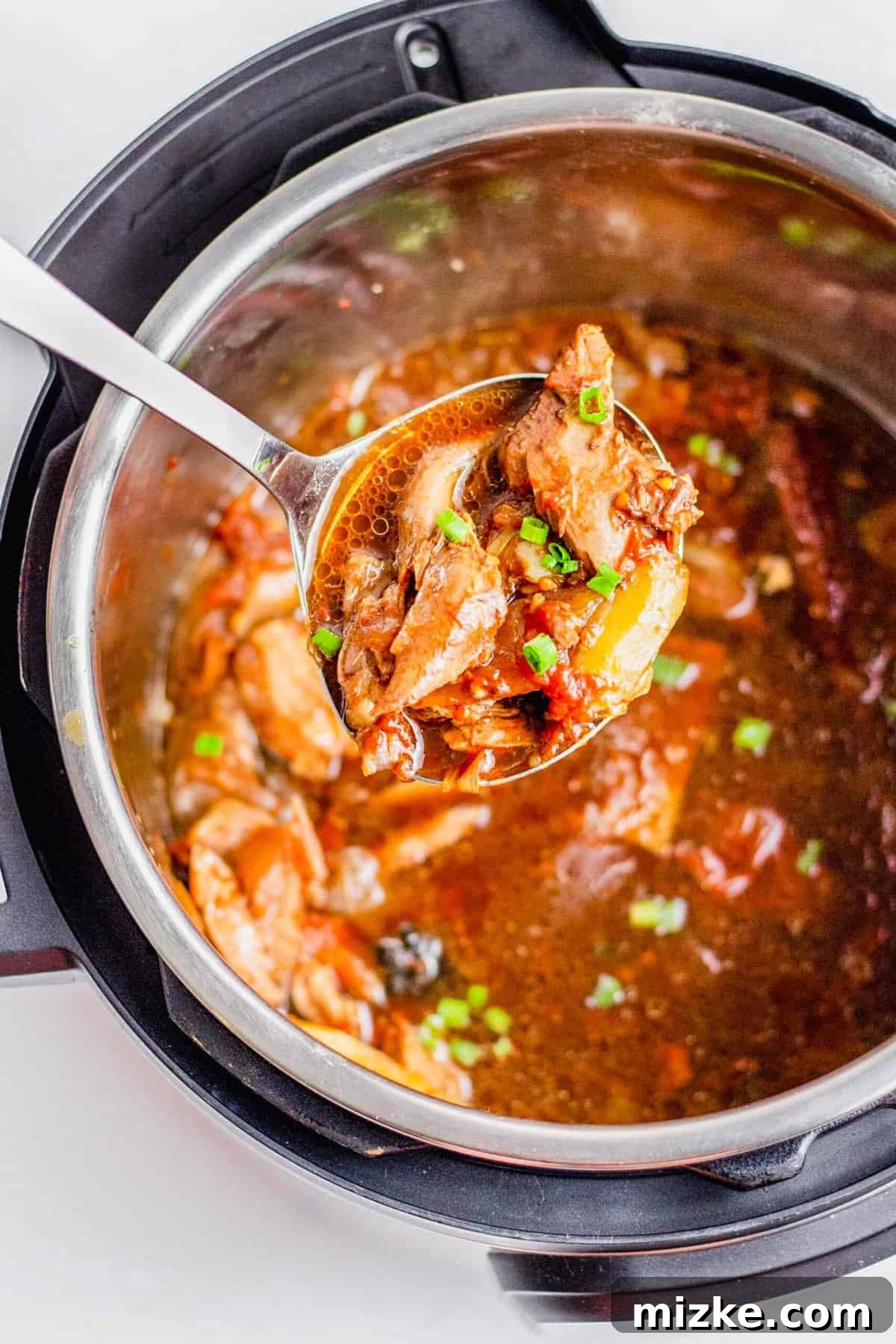
- Assemble and Cook the Soup: Transfer the blanched beef shanks directly into the inner pot of your pressure cooker. Now, add all the remaining ingredients: the quartered onion and tomatoes, peeled garlic cloves, sliced ginger, soy sauce, Shaoxing wine, star anise, cinnamon sticks, ground fennel seed, ground cloves, ground cumin, and the optional dried Thai red chilies. Importantly, you do NOT need to add extra water at this stage. The beef, along with the other vegetables, will naturally release a sufficient amount of liquid during the pressure cooking process, creating a rich and flavorful broth.
- Pressure Cook to Perfection: Secure the lid on your Instant Pot and ensure the sealing valve is set to the ‘Sealing’ position. Select the ‘Meat/Stew’ preset, or manually set the pressure cooker to cook on high pressure for 25 to 26 minutes. Cooking times can vary slightly between different pressure cooker models. My mom sometimes runs the meat preset twice on her older model, but 25-26 minutes should be ample for tender beef.
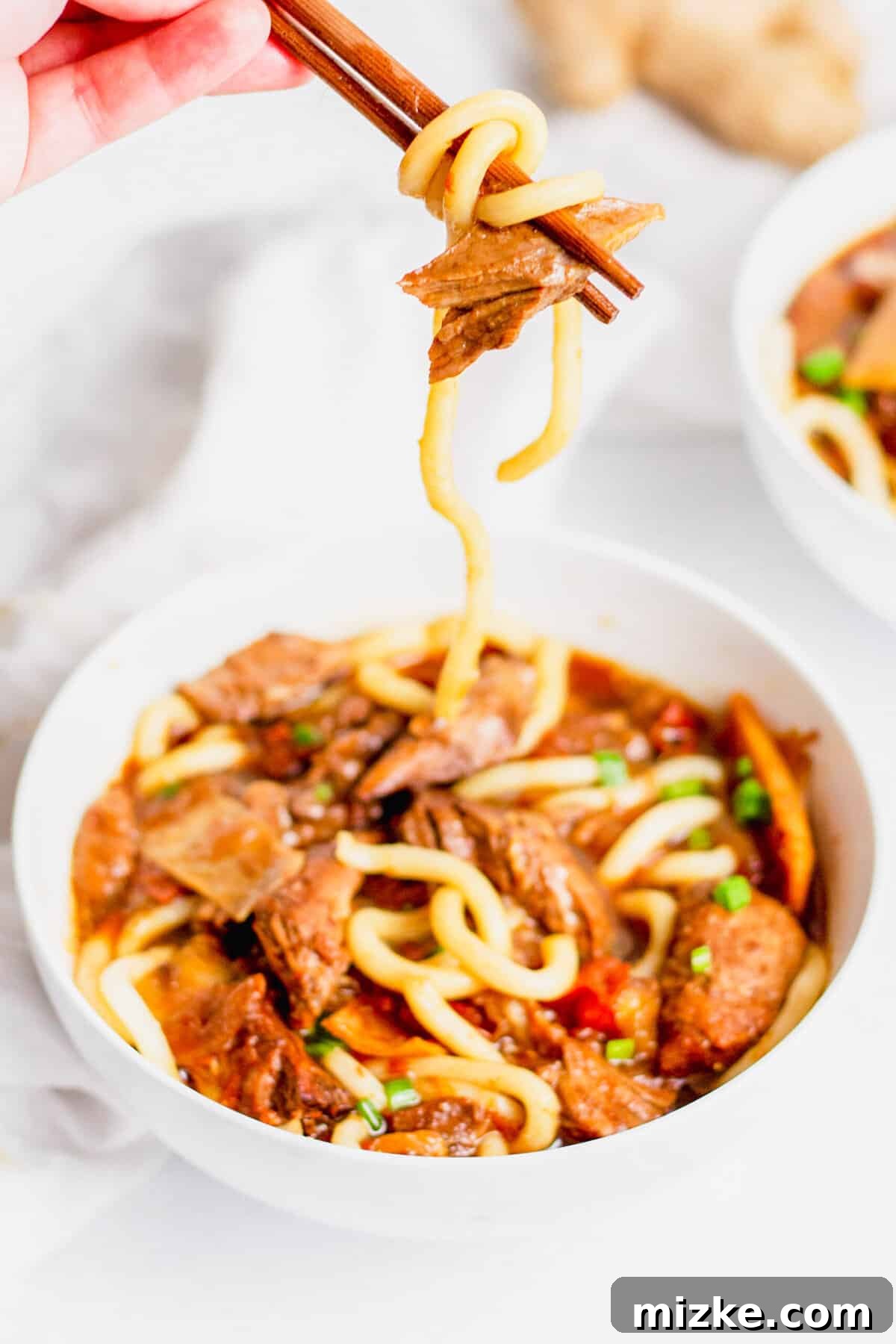
- Prepare the Noodles: While the beef is pressure cooking, take this opportunity to prepare your Asian noodles. Cook them according to the package instructions. Once cooked, drain them well and divide them evenly among individual soup bowls, ready for the fragrant broth and tender beef.
- Finish and Serve: Once the Instant Pot has completed its cooking cycle, allow for a natural pressure release for about 10-15 minutes, or follow your model’s instructions for a quick release. Carefully open the lid (mind the hot steam!). Ladle generous portions of the tender beef and rich soup over the noodles in each bowl. Garnish with a sprinkle of fresh green onions for a vibrant finish, and serve immediately.
Why Blanch the Beef?
Blanching the beef shanks in boiling water before pressure cooking is a traditional technique, and while not strictly essential for cooking the beef, it significantly contributes to the quality of your final soup. This brief boiling process effectively removes impurities, excess blood, and any surface scum from the beef. When this water is discarded, you’re left with cleaner beef, which in turn produces a remarkably clearer, cleaner, and more visually appealing broth. This prevents the soup from having a murky or cloudy appearance, allowing the rich, amber hue of the broth to shine through.
Expert Tips & Delicious Variations for Niu Rou Mian
To ensure your Taiwanese Beef Noodle Soup is nothing short of perfect, and to encourage culinary exploration, here are some invaluable tips and exciting variations:
- Customize to Your Taste: This recipe is incredibly forgiving and designed for customization. If you find the spice levels or liquid amounts aren’t quite to your liking, don’t hesitate to adjust. Add more soy sauce for extra savory depth, increase the chilies for more heat, or dilute slightly with beef broth if you prefer a lighter flavor. My mom, a seasoned cook, often adjusts ingredients by eye, proving that personal preference is key to the best Niu Rou Mian!
- Handle Hot Steam with Care: Always exercise caution when operating a pressure cooker. After the cooking cycle is complete and the pressure has been released, be extremely careful when opening the lid. The steam will be intensely hot, so it’s wise to use an oven mitt or a towel to protect your hands and face.
- Spice Sachet for Easy Removal: For those who prefer a clearer broth without whole spices floating around, consider creating a spice sachet. Simply tie the star anise, cinnamon sticks, and dried chilies in a piece of cheesecloth before adding them to the Instant Pot. This allows their flavors to infuse the broth while making them effortless to remove before serving.
- Boost Your Greens: While traditionally garnished with green onions, this soup is wonderfully versatile when it comes to added vegetables. Enhance its nutritional value and freshness by incorporating other leafy greens such as tender bok choy, nutrient-rich kale, or crisp cabbage. Add them in the last few minutes of pressure cooking or wilt them in the hot broth just before serving.
- Adjust Noodle Texture: If you prefer your noodles al dente, consider slightly undercooking them according to package directions, as they will continue to soften slightly when the hot soup is poured over them. For softer noodles, cook them as directed.
- Make it Gluten-Free: Easily adapt this recipe for gluten sensitivities by using tamari instead of regular soy sauce and ensuring your noodles are gluten-free (rice noodles are a great option).
- Add a Touch of Sweetness: Some variations of Taiwanese Beef Noodle Soup include a small amount of rock sugar or brown sugar to balance the savory and spicy notes. A teaspoon or two can round out the flavor profile beautifully.
Frequently Asked Questions About Niu Rou Mian
This homemade beef noodle soup recipe offers a rich tapestry of flavors. It is distinctly savory, with deep umami notes from the beef and soy sauce, balanced by the aromatic warmth of ginger and garlic. A carefully selected blend of cozy spices (the five-spice blend) adds complexity, while the chilies provide a pleasant, invigorating spiciness that makes each spoonful exciting. The broth is hearty yet well-balanced, a truly comforting and satisfying experience.
In Taiwan, this traditional and beloved dish is universally known as niu rou mian (牛肉麵). More formally, it can be referred to as tai wan niu rou mian to emphasize its Taiwanese identity.
Absolutely! The spiciness level is entirely customizable. You can reduce the number of dried Thai red chilies or omit them entirely for a milder soup. If you still want a hint of warmth without intense heat, a tiny pinch of red pepper flakes can be used.
For authentic Taiwanese Beef Noodle Soup, thick, chewy wheat noodles are typically preferred. However, you can use a variety of Asian noodles like udon, ramen, or even fresh Lanzhou-style noodles. The key is to choose noodles that can stand up to the rich broth without becoming mushy and that provide a satisfying chew.
Serving Suggestions & Perfect Pairings
While Taiwanese Beef Noodle Soup is a complete and satisfying meal on its own, pairing it with complementary side dishes can elevate the dining experience. We often enjoy our Niu Rou Mian with a simple side of cooked spinach, which provides a light, fresh contrast to the rich soup. However, feel free to get creative:
- Greens: Any cooked green vegetable, such as blanched bok choy, steamed gai lan (Chinese broccoli), or sautéed kale, makes an excellent accompaniment.
- Rice: For those who enjoy a heartier meal, a small side of plain white rice or fragrant sticky rice can be served alongside, perfect for soaking up any leftover broth.
- Salads: A refreshing and zesty smashed Asian cucumber salad offers a cool, crisp counterpoint to the warm, spicy soup, cleansing the palate with its tangy dressing.
- Stir-fries: A light side of Chinese cabbage stir-fry adds another layer of texture and vegetable goodness.
- Buns: For a delightful treat, serve fluffy steamed mantou buns on the side. They are perfect for dipping into the flavorful broth or enjoying with a piece of tender beef.
Storing and Reheating Your Delicious Leftovers
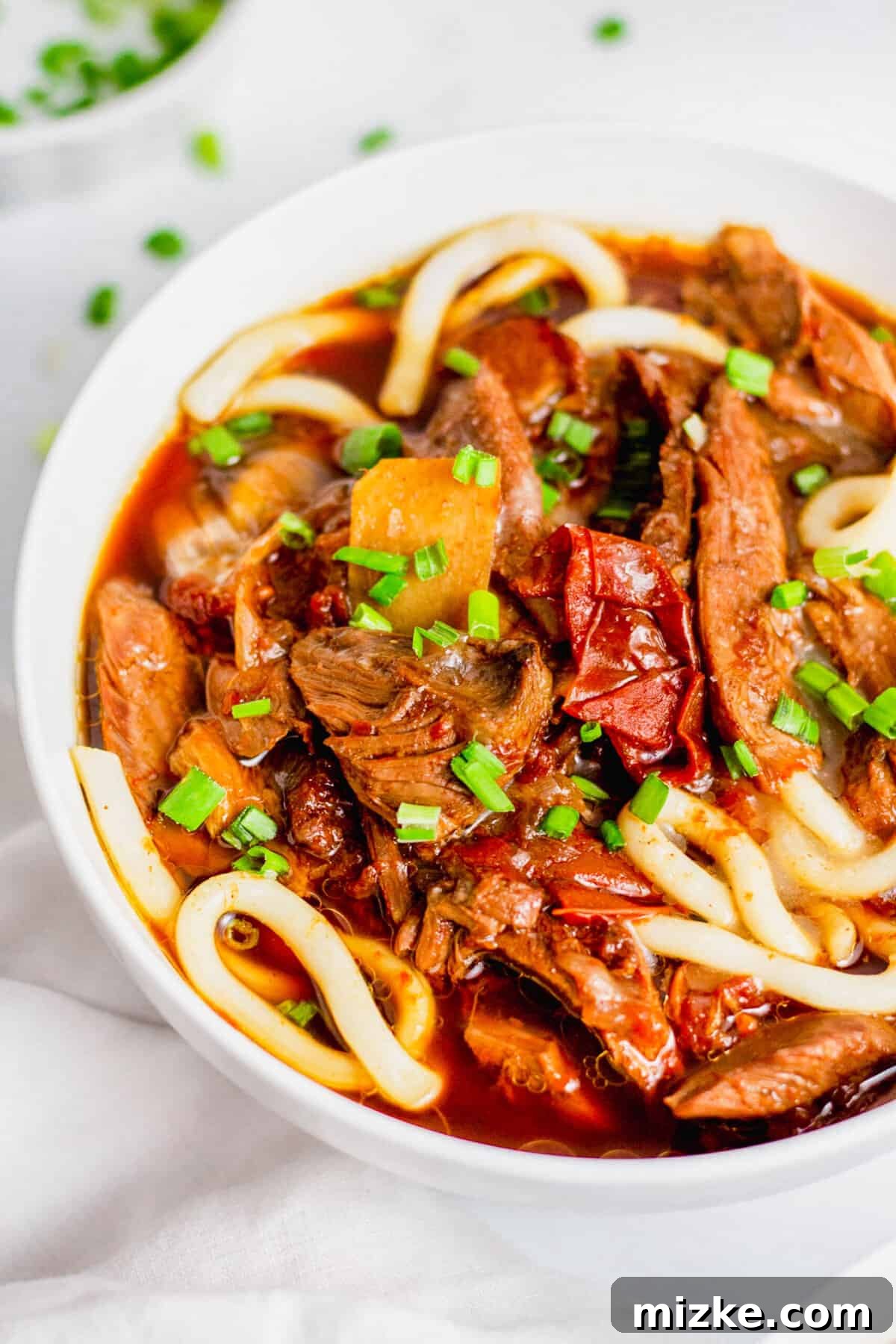
Taiwanese Beef Noodle Soup often tastes even better the next day as the flavors have more time to meld. Proper storage and reheating will ensure you can enjoy your delicious leftovers safely:
- Refrigeration: Transfer any leftover soup (ideally with the noodles stored separately to prevent them from getting too soggy) into an airtight container. It can be safely refrigerated for up to 3 days. For best results, gently reheat the soup in a saucepan on the stovetop over medium heat until it’s simmering. Cook fresh noodles if needed.
- Freezing: For longer storage, the broth and beef can be frozen separately from the noodles. Place the cooled soup and beef in a freezer-safe, airtight container and freeze for up to 2 months. When ready to enjoy, let it thaw in the refrigerator overnight, then warm it on the stovetop. Cook fresh noodles right before serving.
More Asian-Inspired Soup Recipes to Explore
If you loved this Taiwanese Beef Noodle Soup, be sure to explore other comforting and flavorful Asian-inspired soup recipes from our collection:
- Hearty Beef Ramen Noodle Soup
- Soothing Drunken Chinese Chicken Soup with Goji Berries
- Creamy Coconut Curry Ramen
- Spicy Kimchi Ramen
- Fragrant Curry Lemongrass Chicken Noodle Bowl
Instant Pot Taiwanese Beef Noodle Soup (牛肉麵)
Equipment
- Instant Pot
Ingredients
- 2 ½ pounds (1134 g) bone-in beef shank
- 1 large onion, quartered
- 2 tomatoes, quartered
- 4 peeled garlic cloves
- 1 piece of large ginger, sliced into large thin pieces
- ⅓ – ½ cup (79 ml) soy sauce
- ¼ cup (59 ml) shaoxing wine (Chinese cooking wine)
- 3 star anise
- 2 cinnamon sticks
- ½ teaspoon ground fennel seed
- ½ teaspoon ground clove
- ½ teaspoon ground cumin
- 3 dried Thai red chilies, optional
- 1-2 pounds (454 g) Asian noodles, depends on how much soup vs. noodle ratio you like
- Green onions, for topping
Instructions
- Bring a large pot of water to a boil then blanch the beef shanks. You don’t want to cook them all the way through, just about 2-3 minutes. This allows the impurities to get cooked off. Remove the beef shanks and discard the water with the impurities.
- Add the beef shanks to the pressure cooker then add the remaining ingredients (onion, tomatoes, garlic, ginger, soy sauce, shaoxing wine, star anise, cinnamon sticks, ground fennel seed, ground clove, ground cumin, and dried Thai red chilies). You DON’T need to add water because the beef naturally releases water throughout the cooking process.
- Using the meat preset (or similar), pressure cook the beef. If unsure about your specific pressure cooker model, pressure cook for 25-26 minutes on high pressure.
- In the meantime, cook the Asian noodles according to package directions and divide evenly into bowls.
- Once the pressure cooker is done and pressure is released, ladle the meat and soup on top of the noodles. Garnish with fresh green onions before serving.
Notes
- If you feel the spices and liquid amounts are not enough, feel free to add more. My mom gave me this recipe and since she has been making this for years and years, she pretty much eyeballs it all so tweaking this recipe is very easy to do yourself 🙂
- We typically serve this soup with a side of cooked spinach but you can enjoy it with any vegetable of your choosing.
Nutrition
This website provides approximate nutrition information for convenience and as a courtesy only. Nutrition information can vary for a variety of reasons. For the most precise nutritional data use your preferred nutrition calculator based on the actual ingredients you used in the recipe.
The default measuring system for this website is US Customary. Unit conversions are provided for convenience and as a courtesy only. While we strive to provide accurate unit conversions, please be aware that there may be some discrepancies.