
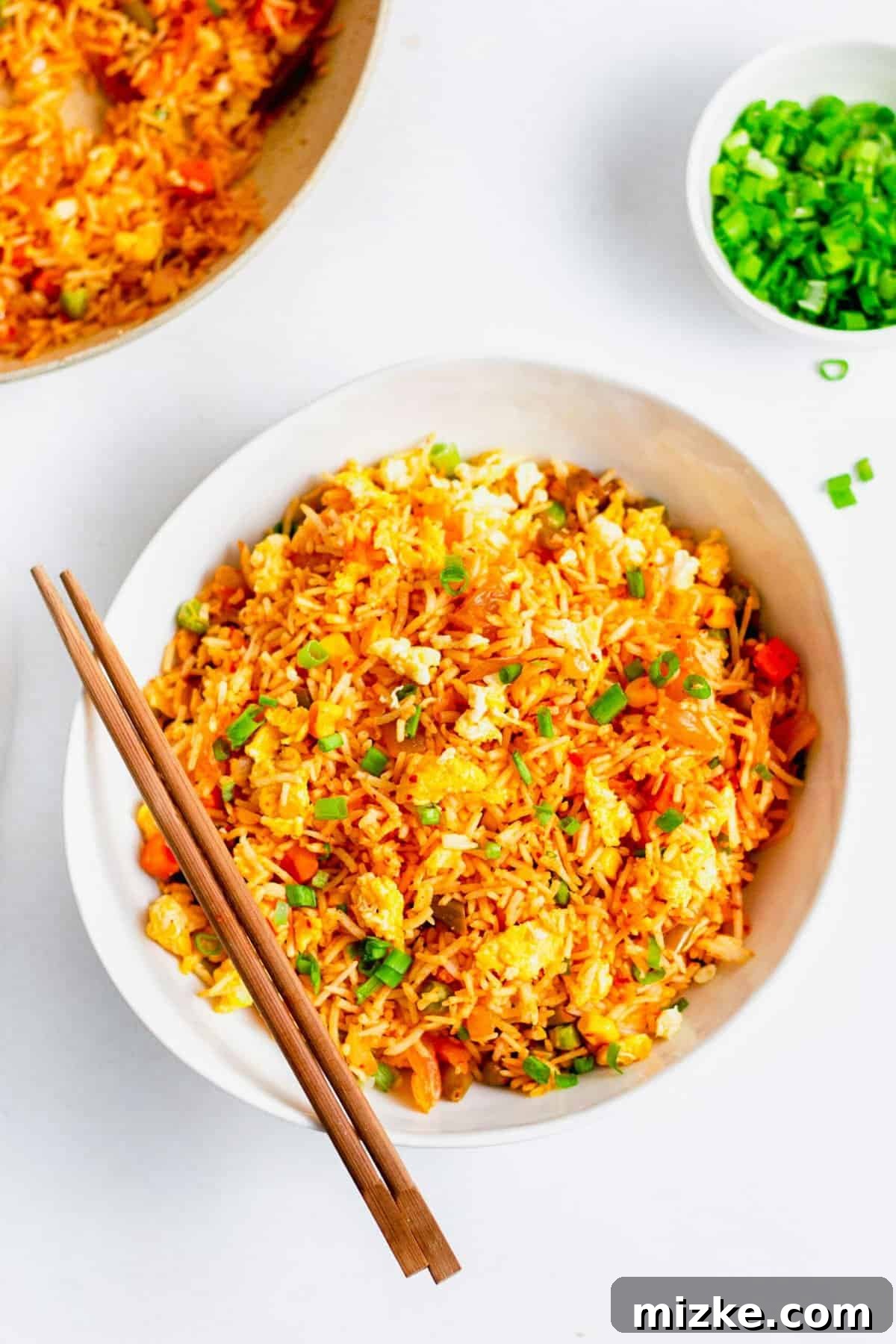
This kimchi fried rice recipe is your ultimate answer to a quick, delicious, and incredibly satisfying weeknight dinner. It’s not just easy to prepare; it’s bursting with complex flavors, highly customizable to your taste, and can be on your table in less than 30 minutes. A truly winning meal for any occasion!
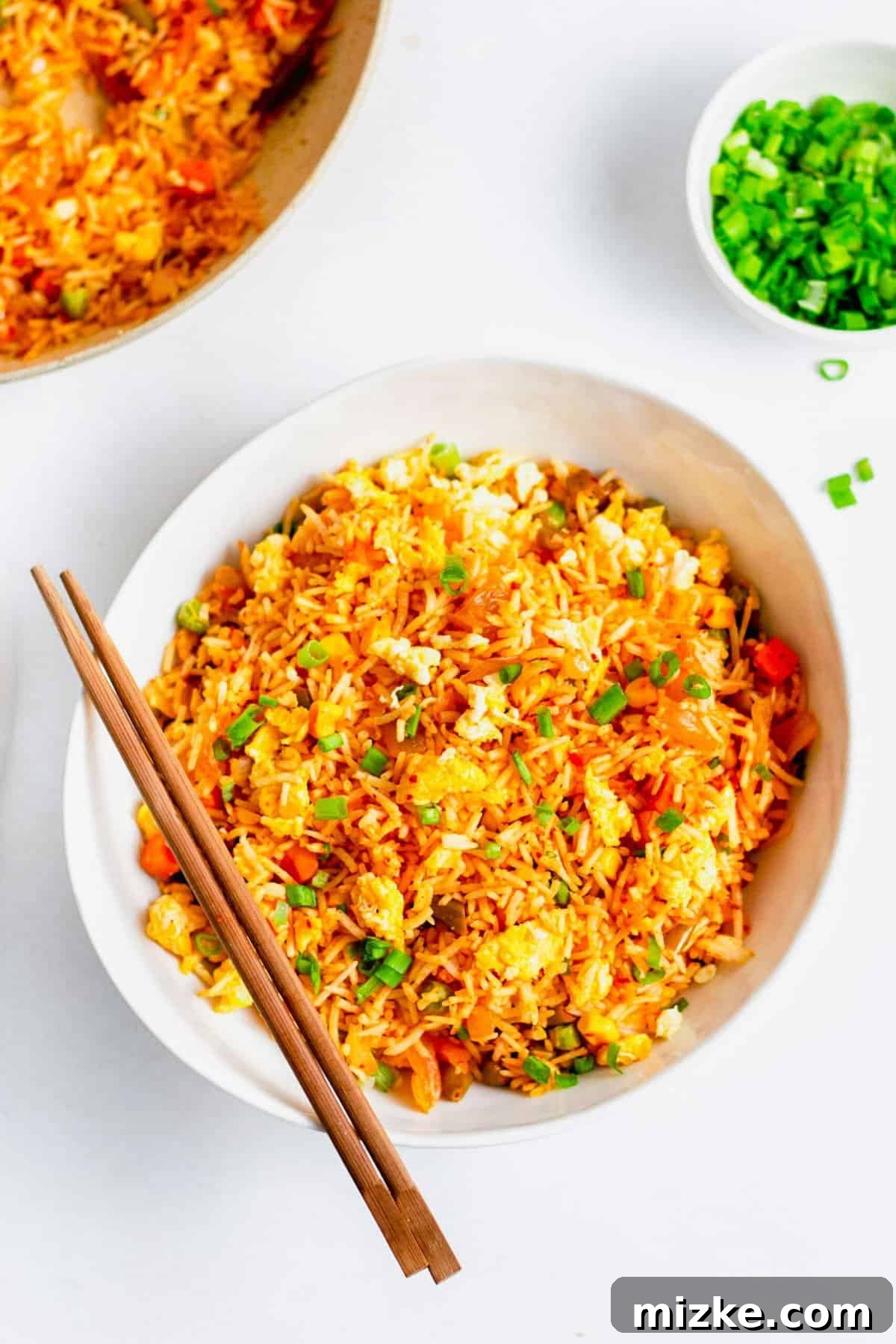
There’s something inherently comforting and exciting about a bowl of perfectly executed fried rice, and when you introduce the vibrant, fermented goodness of kimchi, it transforms into an unforgettable culinary experience. This isn’t just any fried rice; this is Kimchi Fried Rice, known in Korea as Kimchi Bokkeumbap, a beloved staple that offers a delightful balance of spicy, savory, and tangy notes with every spoonful.
I find joy in always having a jar of homemade kimchi readily available in my refrigerator. Its distinct pungent, garlicky, spicy, and tangy profile instantly elevates any dish it graces. Beyond its incredible flavor, kimchi is a nutritional powerhouse, fermented with probiotic bacteria that contribute to gut health. Among the myriad ways to enjoy this Korean superfood, kimchi fried rice stands out as one of my absolute favorites – a testament to its versatility and irresistible taste.
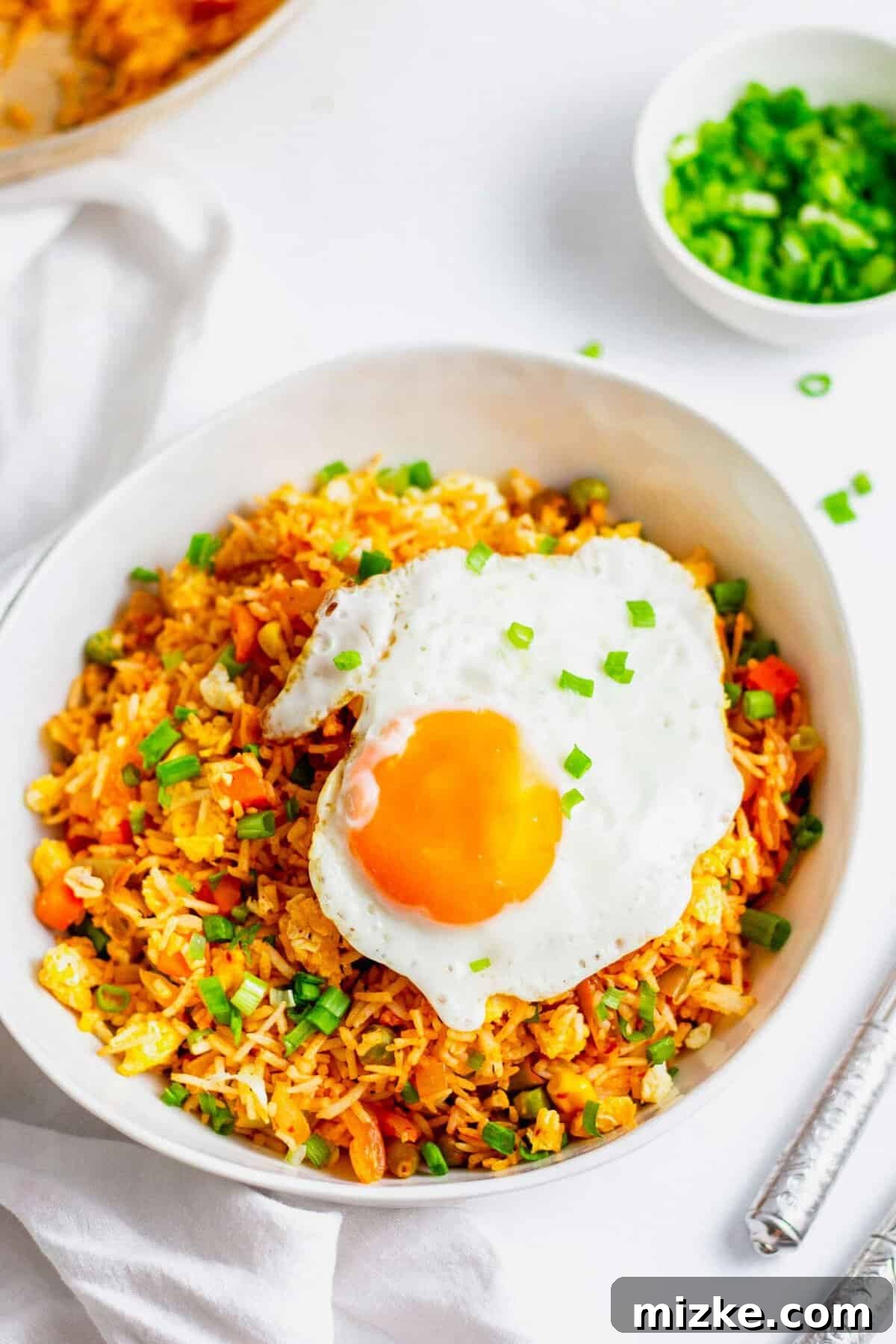
This particular recipe, a personal classic from my cookbook, has become a consistent go-to in my kitchen, prepared countless times for family and friends. It’s about time I shared this cherished recipe with all of you! While it serves as an impeccable side dish (pairing beautifully with main courses like Pineapple Soy Grilled Chicken or Korean Beef), it truly shines when transformed into a hearty main meal. A simple addition of a perfectly fried egg, its yolk ready to burst and mingle with the rice, elevates it to a complete and satisfying dish.
The secret to exceptional fried rice, including this kimchi version, lies in using day-old white rice. This crucial detail ensures that your rice achieves that desirable slightly chewy, separate grain texture rather than a mushy, clumpy mess. To facilitate this, I often plan my weekly meals around my rice preparation: I’ll cook a generous pot of white rice, enjoy half of it with something like Crockpot Honey Sesame Chicken, and then reserve the remainder specifically for a future batch of sensational kimchi fried rice. This little trick guarantees perfect results every time.
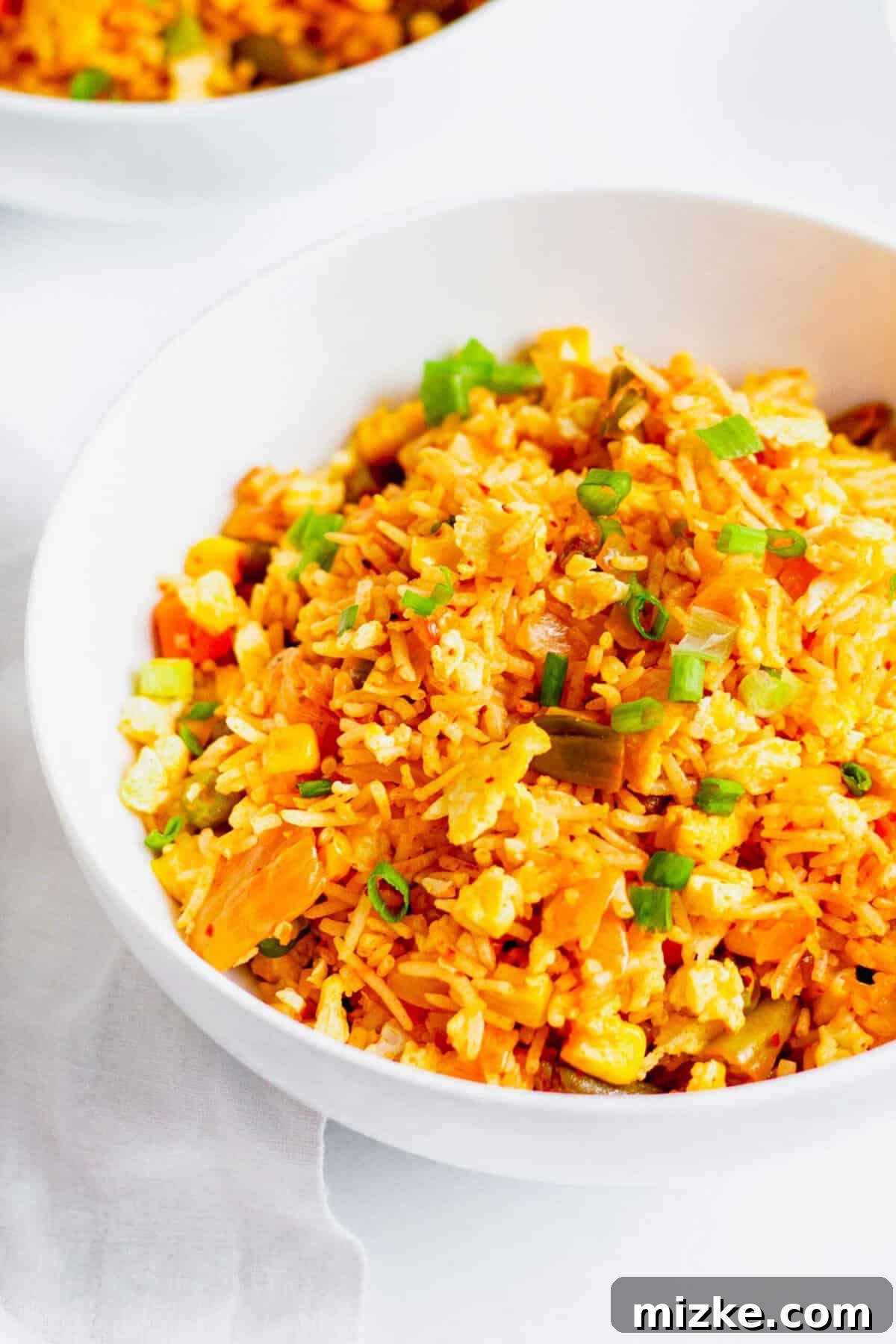
Essential Ingredients for Perfect Kimchi Fried Rice
Crafting delicious kimchi fried rice requires a few key ingredients, most of which are pantry staples, along with the star of the show: quality kimchi. Here’s a detailed look at what you’ll need to gather:
- Vegetable Oil: A neutral-flavored oil like canola, grapeseed, or sunflower oil is ideal. It allows the robust flavors of the kimchi and other ingredients to shine through without interference.
- Eggs: Large eggs are perfect for scrambling into fluffy bits that add texture and richness to the dish. They also serve as an excellent topping, especially when fried to perfection.
- Onion: A small, finely diced onion provides a foundational sweetness and aromatic depth that complements the strong flavors of kimchi.
- Frozen Mixed Vegetables: For convenience and a pop of color, I typically use a blend of corn, peas, and carrots. These thaw quickly and add a pleasant sweetness and tender bite. Feel free to use other frozen vegetable mixes or even fresh vegetables you have on hand, such as bell peppers or zucchini.
- Garlic: While kimchi itself is very garlicky, a single clove of finely minced fresh garlic added during cooking amplifies the aromatic base without overpowering the dish. Resist the urge to add too much, as the kimchi already brings a significant garlic punch!
- Kimchi: The cornerstone of this dish! Whether you opt for homemade or a good quality store-bought variety, ensure it’s well-fermented. Sour, older kimchi often yields the best flavor for fried rice, offering a deeper tang and complexity. Rough chopping makes it easier to incorporate into the rice.
- Kimchi Juice: Don’t discard this! The flavorful liquid from the kimchi jar is essential. It adds an extra layer of fermented tang, spice, and moisture, enhancing the overall authenticity and depth of the fried rice.
- Day-Old, Cooked White Rice: This is non-negotiable for truly great fried rice. Stale rice is drier and firmer, preventing it from clumping and becoming mushy when stir-fried at high heat. Any type of white rice will work, such as Jasmine, Basmati, or short-grain Korean rice.
- Kosher Salt: Used to season the dish and balance the flavors. Adjust according to your preference and the saltiness of your kimchi.
- Ground Black Pepper: A touch of freshly ground black pepper adds a subtle warmth and aroma, rounding out the flavor profile.
Why Day-Old Rice is Non-Negotiable for Superior Fried Rice
Many home cooks wonder about the insistence on using day-old rice for fried rice. The reason is simple and crucial for achieving the perfect texture. Freshly cooked rice retains a significant amount of moisture, making it sticky and soft. When stir-fried, this excess moisture leads to mushy, clumpy, and often oily rice that lacks the desired distinct grain separation. Day-old rice, having had time to dry out in the refrigerator, becomes firmer and less prone to sticking. This allows each grain to crisp up beautifully in the hot skillet, absorbing the flavors without becoming soggy.
If you find yourself craving kimchi fried rice but only have freshly cooked rice, there’s a quick workaround: spread the hot, cooked white rice evenly onto a rimmed baking sheet. Allow it to cool completely at room temperature for about 15-20 minutes, then transfer it to the refrigerator for another 20 minutes. This accelerated cooling and drying process will help remove enough moisture to make it suitable for frying, though traditionally chilled rice is always preferred for optimal results.
Step-by-Step: Crafting Your Kimchi Fried Rice
Ready to whip up a deeply satisfying and flavor-packed dinner in under 30 minutes? This recipe is incredibly straightforward, relying on quick cooking and high heat to build layers of taste. Here’s a detailed guide to creating your perfect bowl of kimchi fried rice:
Step 1: Scramble the Eggs to Perfection.
Begin by heating 1/2 tablespoon of vegetable oil in a large skillet or wok over medium-high heat. The key here is to get the oil sufficiently hot before adding the eggs. Once shimmering, crack in your eggs and scramble them quickly. Cook until they are just set but still tender, then immediately transfer the fluffy scrambled eggs to a separate bowl and set them aside. This prevents them from overcooking and ensures they retain their soft texture when added back later.
Step 2: Sauté the Aromatics and Kimchi.
Into the same skillet, add the remaining 1/2 tablespoon of vegetable oil. Once hot, introduce the diced onion, frozen vegetables, finely minced garlic, the roughly chopped kimchi, and the essential kimchi juice. Sauté this vibrant mixture, stirring frequently, for about 3 minutes. The goal is to cook until the onion becomes translucent and tender, the frozen vegetables are heated through, and the rich, pungent aroma of the kimchi fills your kitchen. This step develops a foundational layer of flavor for your fried rice.
Step 3: Introduce and Incorporate the Rice.
Now, add the day-old cooked white rice to the skillet. Using a sturdy spatula or a wooden spoon, carefully but firmly break up any clumps of rice. It’s crucial to ensure the rice is distributed evenly across the pan so it can properly absorb the flavors and develop a slight crispness. Reduce the heat to medium-low at this stage, allowing the rice to gently warm through and marry with the sautéed kimchi mixture without burning.
Step 4: Combine and Season.
Continue to stir the rice mixture, ensuring all ingredients are well combined. The rice should take on a reddish-orange hue from the kimchi. Once the rice is thoroughly heated and integrated with the kimchi and vegetables, return the scrambled eggs to the skillet. Gently fold them into the fried rice. Season generously with kosher salt and ground black pepper to taste. Give it one final stir to ensure even seasoning. Serve your piping hot kimchi fried rice immediately to enjoy its freshest, most vibrant flavors.
Expert Tips for the Best Kimchi Fried Rice
Once you master the basics of fried rice, you’ll find yourself making it a regular part of your culinary repertoire. Here are some invaluable tips and tricks to ensure your kimchi fried rice is nothing short of spectacular every single time:
- Don’t Crowd the Skillet: This is arguably the most critical rule for excellent fried rice. Using a skillet that’s too small for the amount of ingredients will lead to steaming rather than frying. When ingredients are piled too high, moisture can’t evaporate quickly, resulting in soggy rice. Always opt for the largest skillet or a traditional wok you own. A wide surface area allows the ingredients to spread out, ensuring they get properly seared and develop those coveted crispy edges.
- Achieve the Perfect Fried Egg Topping: A fried egg is a classic accompaniment, adding a creamy richness that beautifully complements the spicy rice. If you want to top your fried rice with an egg (or two!), you don’t even need a separate pan. Once your fried rice is finished cooking, simply push it to one side of the skillet to create an empty space. Add a tiny bit more oil if needed, then crack an egg directly into the cleared area. Cook it to your desired doneness—a runny yolk is highly recommended for that extra lusciousness—and then gently slide it onto your serving of rice.
- Customize the Spice Level: For those who love an extra fiery kick, incorporating gochujang paste is the way to go. Gochujang, a savory, sweet, and spicy fermented Korean chili paste, adds incredible depth and heat. Stir in 1 tablespoon of gochujang along with the kimchi in Step 2. You can typically find gochujang paste in the Korean section of Asian grocery stores or sometimes in the international aisle of larger local supermarkets. Start with a small amount and add more to taste.
- Embrace Sesame Oil: For an authentic nutty aroma and flavor, drizzle a teaspoon of toasted sesame oil over the finished fried rice just before serving. A little goes a long way, and it adds a wonderful layer of traditional Korean flavor.
- Garnishes for Freshness and Color: Don’t underestimate the power of garnishes! Freshly chopped green onions (scallions) are a must, providing a bright, pungent contrast. A sprinkle of toasted sesame seeds adds both visual appeal and a delightful crunch. For an extra touch, crumbled nori (seaweed) or a dash of finely chopped cilantro can also be used.
- High Heat is Your Friend: Fried rice cooks best over medium-high to high heat. This creates a quick sear on the ingredients, preventing them from steaming and ensuring a desirable slightly charred flavor and texture. Be ready to stir frequently to prevent burning.
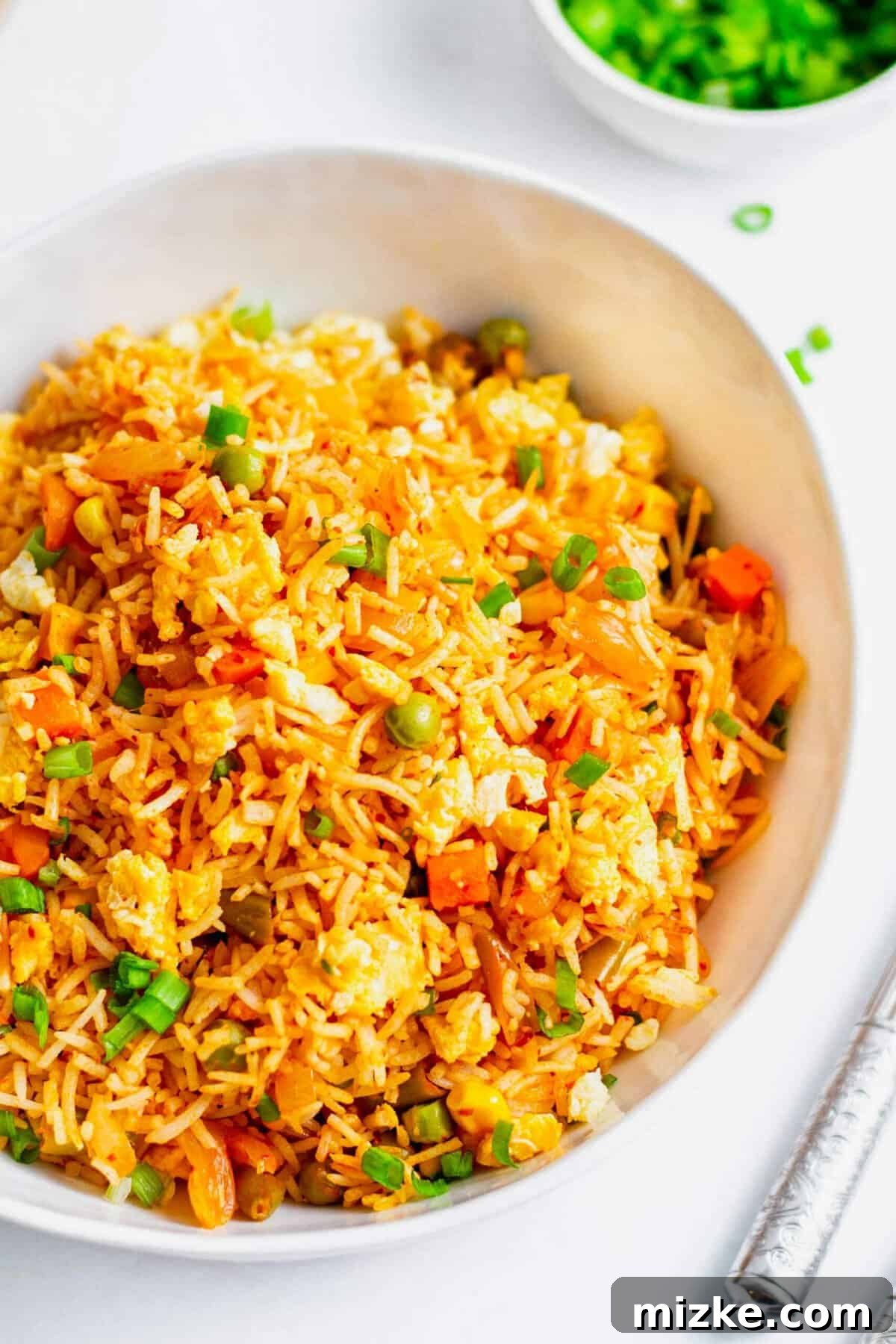
Storing and Reheating Your Kimchi Fried Rice
Kimchi fried rice is truly best enjoyed fresh off the skillet, but leftovers are still incredibly delicious and make for a fantastic next-day meal. To store any remaining portions, allow the fried rice to cool completely to room temperature first. Then, transfer it to an airtight container and refrigerate it promptly. It will stay fresh and flavorful for up to 2 days.
When you’re ready to reheat, you have a couple of excellent options:
- Microwave: For a quick reheat, place the fried rice in a microwave-safe dish, cover it loosely, and heat on high for 1-2 minutes, stirring halfway through, until thoroughly warmed. Adding a tiny splash of water or kimchi juice before microwaving can help rehydrate the rice and prevent it from drying out.
- Stovetop: For best results, especially if you want to restore some of that crispy texture, reheat in a skillet. Heat a small amount of oil in a skillet over medium-high heat. Add the fried rice and stir-fry for 3-5 minutes, breaking up any clumps, until it’s hot and slightly crispy again.
Freezing Kimchi Fried Rice for Later
While I believe kimchi fried rice is most enjoyable when freshly prepared, it is possible to freeze it for longer storage. This can be a convenient option for meal prepping or when you have an abundance of leftovers. To freeze, ensure the fried rice has completely cooled. Transfer individual portions into freezer-safe airtight containers or heavy-duty freezer bags, pressing out as much air as possible to prevent freezer burn. It can be frozen for up to 2 months.
When you’re ready to enjoy it, thaw the frozen kimchi fried rice overnight in the refrigerator. Once thawed, you can reheat it in a skillet over medium-high heat, stirring frequently until it is heated through and any excess moisture has evaporated, bringing back some of its original texture and flavor. Adding a fresh fried egg and green onions after reheating will make it feel just as satisfying as a freshly made batch.
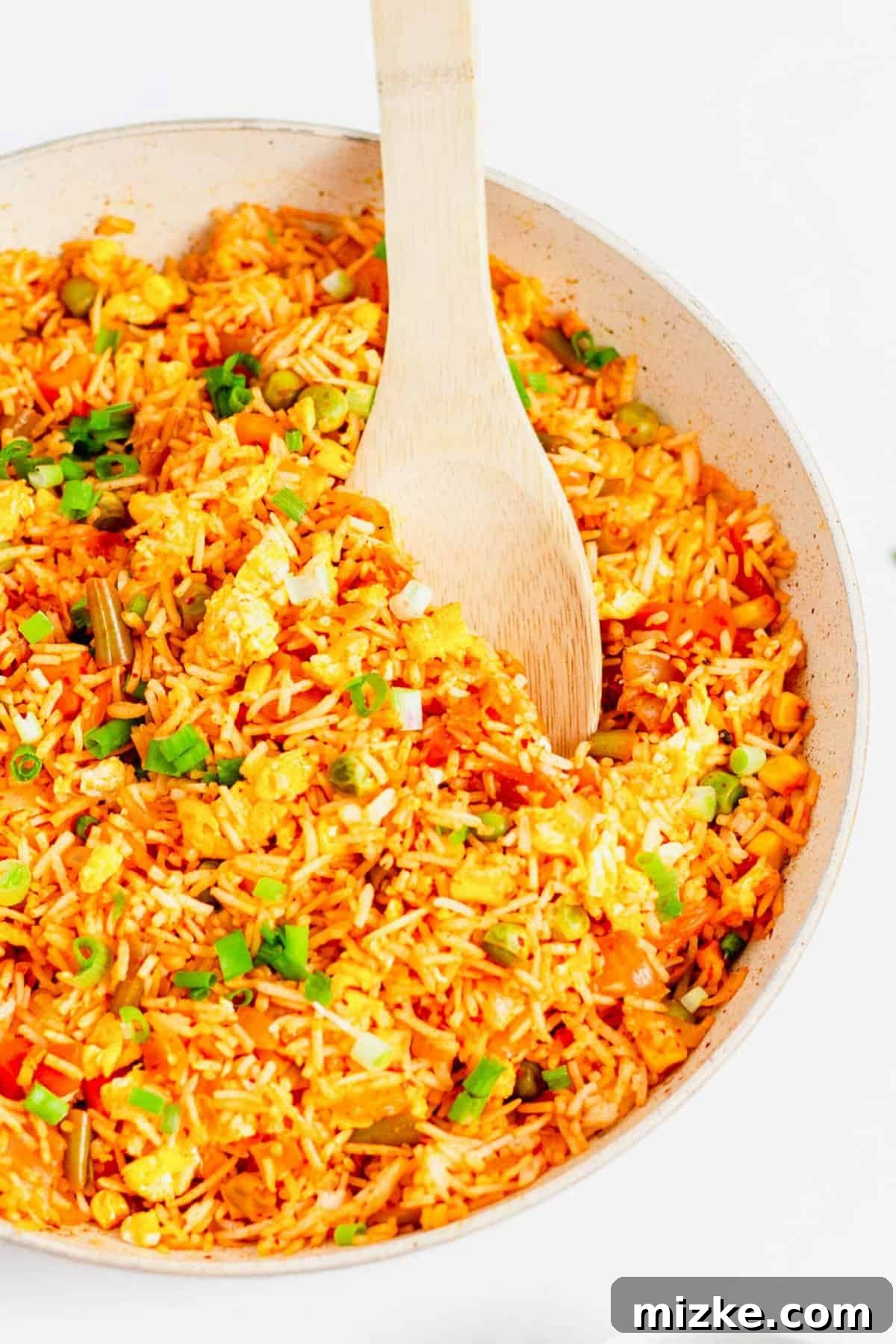
Explore More Delicious Fried Rice Variations
The world of fried rice is vast and full of exciting possibilities. Once you’ve mastered this kimchi version, you might be inspired to explore other delicious variations. Each offers a unique flavor profile and a satisfying meal:
- Classic Fried Rice: Feeling a bit more traditional? This classic fried rice recipe is a timeless favorite, often featuring a blend of soy sauce, eggs, peas, carrots, and sometimes a hint of sesame oil. It’s the perfect canvas for adding your favorite proteins or vegetables.
- Chicken Fried Rice: A perennial crowd-pleaser, chicken fried rice incorporates tender pieces of chicken, making it a complete and fulfilling meal. It’s a great way to use up leftover cooked chicken and adds a significant protein boost.
- Steak Fried Rice: For a heartier option, steak fried rice brings rich, savory notes to the dish. Using thinly sliced or diced steak, it creates a robust flavor that pairs wonderfully with the rice and vegetables.
- Vegetarian/Vegan Fried Rice: Easily adapt any fried rice recipe by focusing on an abundance of vegetables like mushrooms, bell peppers, broccoli, or tofu. Swap eggs for scrambled tofu for a delicious vegan alternative.
- Seafood Fried Rice: Incorporate shrimp, squid, or scallops for a delightful oceanic twist. The delicate flavors of seafood complement the savory rice beautifully.
- Bacon or Pork Belly Kimchi Fried Rice: For an even richer, more indulgent version of kimchi fried rice, consider adding crispy bits of bacon or diced pork belly. The rendered fat from the pork adds incredible flavor, while the meat provides a satisfying texture and depth. Cook the bacon or pork belly first, then use some of the rendered fat to cook the other ingredients, adding the crispy pork back at the end.
Kimchi Fried Rice
By: Julie Chiou
Kimchi fried rice is easy, packed with flavor, customizable, and done in under 30 minutes, making it perfect for a busy weeknight. This recipe yields a delicious and satisfying Korean staple.
10 minutes
15 minutes
25 minutes
2 servings
Ingredients
- 1 tablespoon vegetable oil, divided
- 2 large eggs
- 1 small onion, diced
- 1 cup (182 g) frozen vegetables (peas, carrots, corn, or others), thawed
- 1 clove garlic, finely minced
- 1 ½ cups (173 g) kimchi, roughly chopped (homemade or store-bought)
- 1 tablespoon kimchi juice (from the kimchi jar)
- 3 cups (474 g) day-old cooked white rice
- 1 teaspoon kosher salt
- ½ teaspoon ground black pepper
Instructions
- In a large skillet or wok over medium-high heat, add 1/2 tablespoon of vegetable oil. Once the oil is hot and shimmering, add the eggs and scramble them until just set. Remove the scrambled eggs from the skillet and set aside in a bowl.
- Add the remaining 1/2 tablespoon of vegetable oil to the skillet. Then, add the diced onion, frozen vegetables, minced garlic, chopped kimchi, and kimchi juice. Sauté, stirring occasionally, until the onion is translucent and softened, which should take about 3 minutes.
- Add the day-old cooked white rice to the skillet. Use a spatula or wooden spoon to carefully break up any clumps of rice, ensuring it’s evenly distributed and begins to mix with the kimchi and vegetables.
- Reduce the heat to medium-low. Continue to stir the rice into the mixture until all ingredients are well incorporated and the rice is thoroughly heated through. Finally, add the reserved scrambled eggs back into the skillet. Season the entire mixture with kosher salt and ground black pepper to taste. Give it a final gentle stir.
- Serve immediately, garnished with fresh green onions or a fried egg if desired.
Notes
For an even more authentic flavor and an extra spicy kick, consider stirring in 1 tablespoon of gochujang paste (Korean chili paste) along with the kimchi in Step 2. Gochujang can be found in the Korean section of most Asian grocery stores or sometimes in the international aisle of larger supermarkets.
Nutrition
Approximate values per serving (based on 2 servings):
Calories: 455kcal, Carbohydrates: 85g, Protein: 16g, Fat: 5g, Saturated Fat: 2g, Polyunsaturated Fat: 1g, Monounsaturated Fat: 2g, Trans Fat: 1g, Cholesterol: 164mg, Sodium: 1273mg, Potassium: 430mg, Fiber: 6g, Sugar: 3g
This nutrition information is an estimate provided for convenience and as a courtesy only. Nutritional data can vary for many reasons. For the most precise nutritional data, use your preferred nutrition calculator based on the actual ingredients you used in the recipe.
The default measuring system for this website is US Customary. Unit conversions are provided for convenience and as a courtesy only. While we strive to provide accurate unit conversions, please be aware that there may be some discrepancies.
Email Yourself This Recipe!
Get the recipe link sent directly to your inbox! Plus, we’ll send you fresh recipes weekly!