
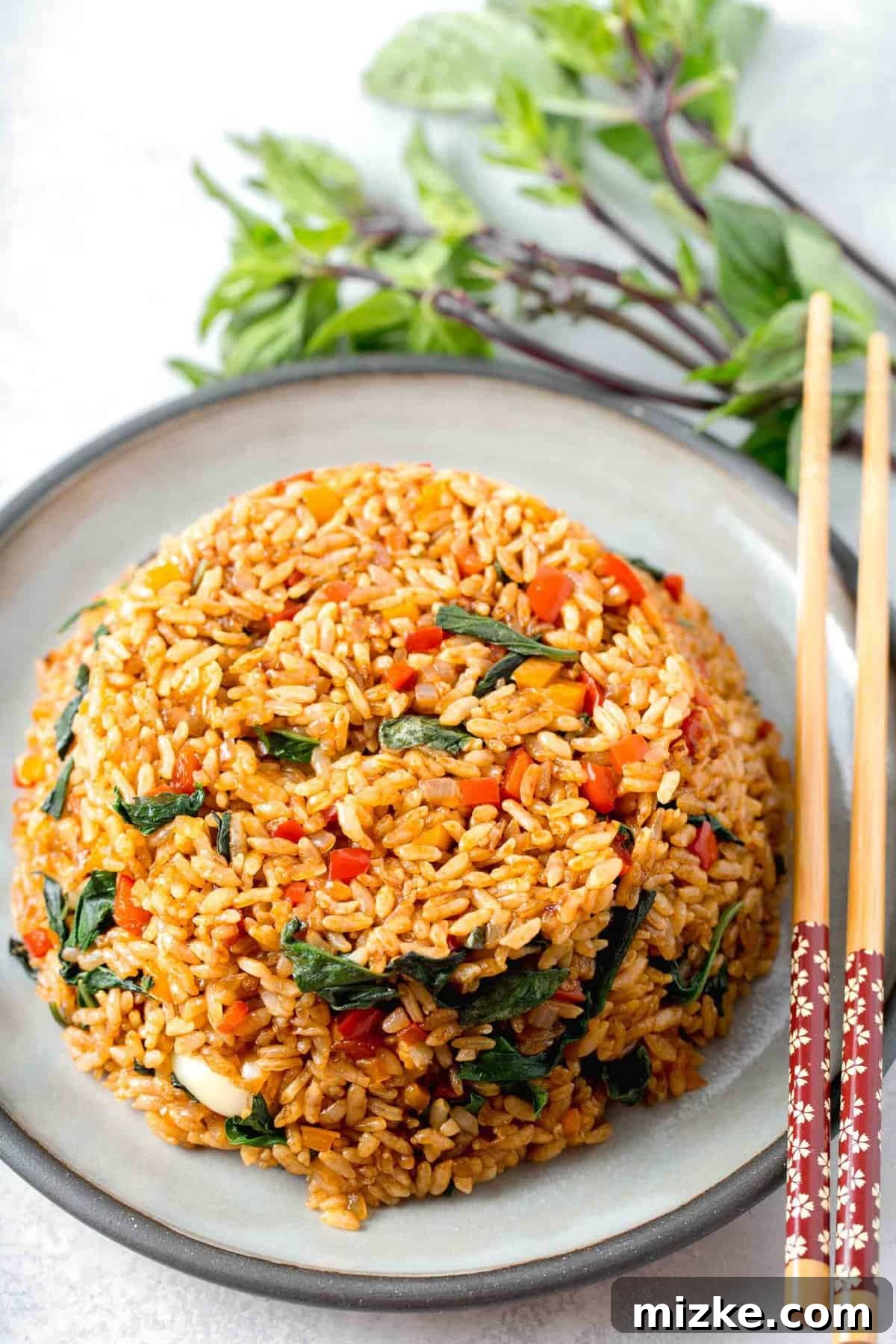
Authentic Thai Basil Fried Rice: Your New Go-To 20-Minute Meal
Experience an explosion of vibrant flavors with every bite of this quick and incredibly easy Thai Basil Fried Rice recipe. Crafted with the freshest Thai basil, perfectly cooked jasmine rice, and just the right amount of spice, this restaurant-quality dish brings the essence of Thailand right into your kitchen. Whether served as a satisfying main course or a delightful side, this mouthwatering meal can be on your table in under 20 minutes, promising to leave everyone craving more.
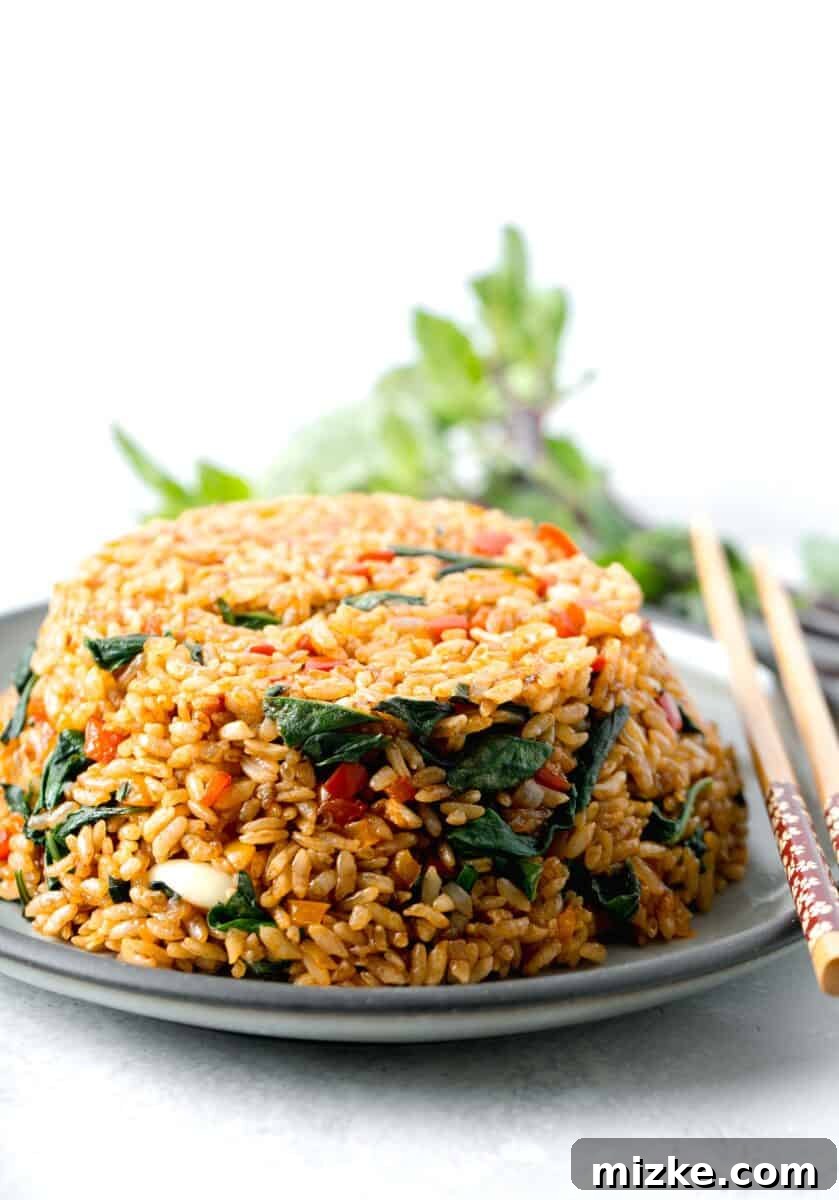
Thai cuisine holds a special place in my heart, often topping my list of favorite Asian foods. The rich, complex flavors and aromatic spices call to me at least once a week. While I often gravitate towards beloved classics like Pad See Ew or the fiery Drunken Noodles, venturing out of my usual order once led me to discover the sheer delight of Thai Basil Fried Rice, and I haven’t looked back since. It was a revelation, a dish I had been completely missing out on!
This basil fried rice offers a distinctly different experience compared to its Chinese counterpart. The Thai version shines with the use of fresh Thai basil, which I find possesses a more intense and captivating fragrance than common sweet basil. It combines beautifully with tender jasmine rice, crisp bell peppers, sweet onions, and pungent garlic, all tossed in a wonderfully savory and subtly sweet sauce. The inclusion of fish sauce in the rich blend contributes a deep umami flavor, while a hint of special Thai red chili paste – a treasured gift from a friend’s Thai grandmother – adds the perfect spicy kick. Even a mere quarter teaspoon of this potent paste transforms the dish, elevating its warmth and complexity without overwhelming the palate.
Thai Basil vs. Sweet Basil: Understanding the Flavor Profile
The core distinction between Thai basil and regular, or sweet, basil lies fundamentally in their flavor profiles and aromatic compounds. Thai basil, scientifically known as Ocimum basilicum var. thyrsiflora, is characterized by its robust anise-like or licorice notes, often accompanied by hints of citrus and a slightly peppery undertone. This unique flavor makes it an indispensable ingredient in Southeast Asian cuisine, particularly in dishes that benefit from a spicy and aromatic complexity, such as curries, stir-fries, and, of course, fried rice. Its sturdy leaves also hold up well to high heat cooking without wilting excessively.
In contrast, common sweet basil (Ocimum basilicum) offers a milder, sweeter, and more subtly peppery flavor, often described as having hints of clove. This variety is much more prevalent in Western cooking, especially in Italian dishes like pesto, Caprese salads, and various tomato-based sauces. While you can substitute sweet basil for Thai basil in a pinch, be aware that the dish’s overall character will shift significantly, lacking the distinctive aromatic punch that Thai basil provides. For an even more authentic Thai experience, some recipes might call for holy basil (Ocimum tenuiflorum), known as “Pad Krapow” in Thai, which has a distinct peppery, clove-like, and slightly bitter taste, adding another layer of complexity to its namesake dishes.
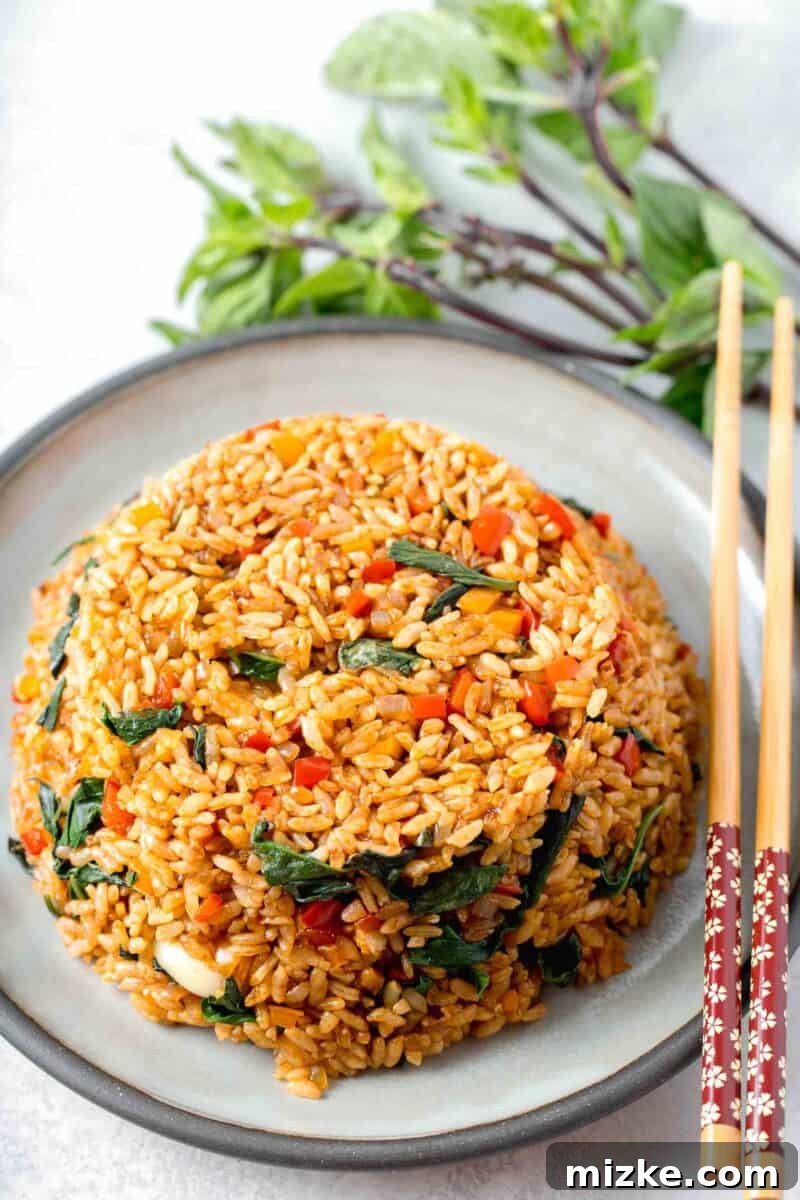
Why This Homemade Thai Basil Fried Rice Will Become Your Favorite
Thai Basil Fried Rice is a beloved staple found on nearly every Thai restaurant menu, and for good reason. It’s one of my personal favorites to order out, but discovering how simple and satisfying it is to prepare at home has been a game-changer. Here are compelling reasons why you’ll adore making this flavorful dish in your own kitchen:
- Effortlessly Easy & Incredibly Fast: This fried rice dish truly comes together in lightning speed. With minimal prep time – just a quick chop of vegetables and a whisk of the sauce – the cooking process itself takes less than 20 minutes. Everything swiftly goes into a hot wok, transforming into the best rice side dish or main meal you could imagine. It’s the perfect solution for busy weeknights when you crave something extraordinary without the fuss.
- Authentic & Irresistible Thai Flavors: Prepare for a sensory journey. The distinct notes of anise and subtle spice from fresh Thai basil are perfectly complemented by a harmonious blend of sweet and salty sauces. The fish sauce adds an essential layer of umami, creating a complex and deeply satisfying flavor profile that is unmistakably Thai. Each spoonful delivers a rich tapestry of tastes that will transport your palate to the streets of Bangkok.
- Remarkable Savings & Unmatched Convenience: Dining out for this particular dish at a local Thai restaurant can easily cost upwards of $16 or more. By making it at home, you save significantly! A generous bunch of fresh Thai basil from your local Asian market is typically just a few dollars, and pantry staples like white rice, bell peppers, and onions are usually on hand. Not only does this recipe save you money on the meal itself, but it also eliminates the need for a trip out, saving time and fuel. If you’re accustomed to food delivery services, imagine bypassing those often outrageous delivery fees entirely!
- Customizable to Your Liking: When you cook at home, you’re the chef! Adjust the spice level to your preference, add your favorite proteins like chicken, shrimp, tofu, or beef, and even experiment with different vegetables. This recipe serves as a fantastic foundation, allowing you to tailor it perfectly to your taste buds and dietary needs.
Essential Ingredients for Your Thai Basil Fried Rice
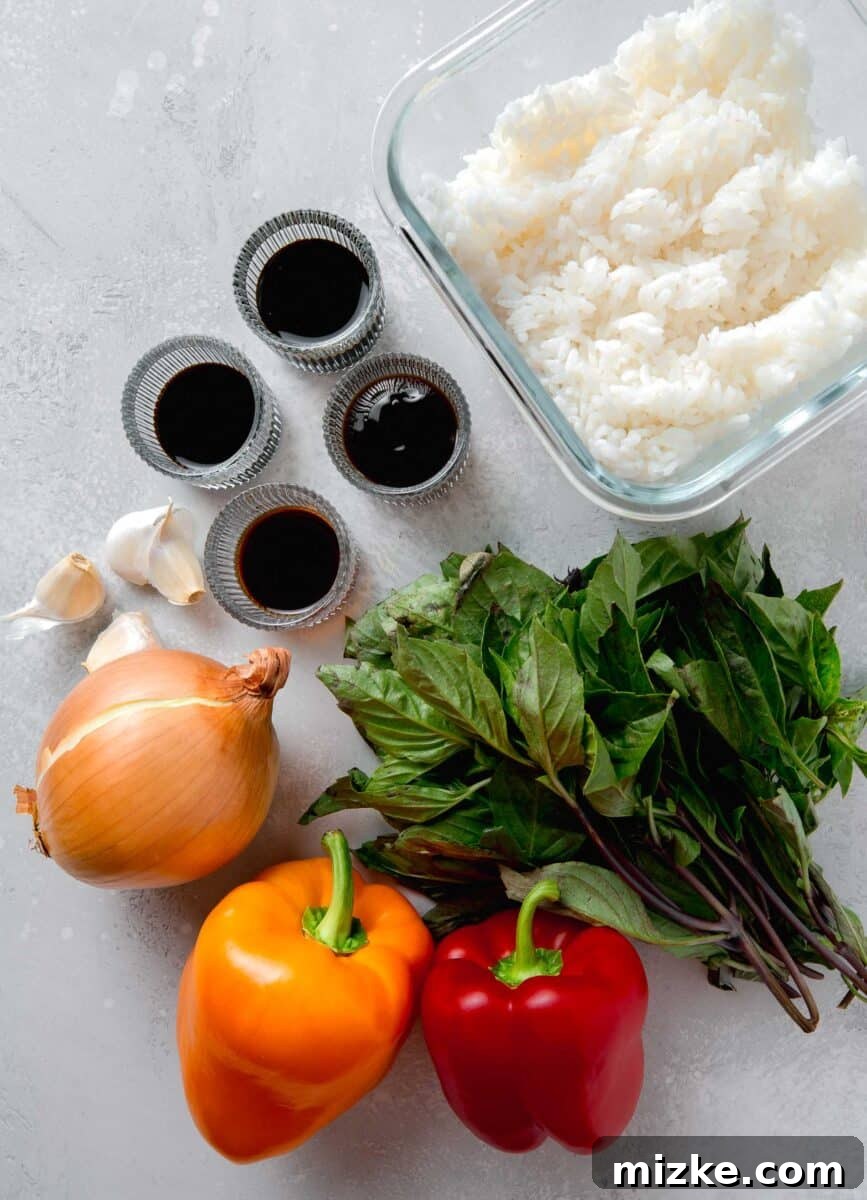
Achieving restaurant-quality results doesn’t require an extensive list of obscure ingredients. This recipe relies on a straightforward selection of key components that, when combined, create a truly exceptional Thai Basil Fried Rice. Below is a concise list of what you’ll need. For precise measurements, please refer to the full recipe card further down this page.
- Garlic: We use full, smashed cloves here, not minced. This technique is crucial for infusing the oil with a deep, fragrant garlic essence without burning it at high heat.
- Thai Basil: This is unequivocally the star of the dish. Its distinctive anise and peppery notes are what define Thai Basil Fried Rice. While regular sweet basil can be a last resort substitute, be prepared for a noticeable shift in the dish’s authentic flavor profile. Seek out fresh Thai basil for the best results.
- Bell Peppers: A combination of red and orange bell peppers not only adds a delightful crunch and sweetness but also contributes beautiful, vibrant color to the finished dish.
- Onion: Diced onion provides a foundational layer of savory sweetness and aromatic depth to the stir-fry.
- Soy Sauces (Sweet & Dark): You’ll need both sweet soy sauce (often called “kecap manis” or Thai sweet dark soy sauce) for its rich, molasses-like sweetness and thick consistency, and regular dark soy sauce for its deep color and slightly less salty, more complex flavor compared to light soy sauce.
- Fish Sauce: An essential ingredient in Thai cuisine, fish sauce provides a critical umami punch and savory depth that cannot be replicated. Don’t skip it!
- Oyster Sauce: This thick, savory sauce adds a glossy texture and a rich, slightly sweet, and salty flavor that beautifully complements the other ingredients.
- Day-Old White Rice: This is perhaps the most crucial ingredient for perfect fried rice. Freshly cooked rice contains too much moisture, which can lead to a mushy, clumpy result. Day-old rice, ideally jasmine rice, has dried out slightly, allowing for separate, fluffy grains that fry beautifully.
- Chili Paste (Optional but Recommended): For an authentic spicy kick, a touch of Thai red chili paste can elevate the flavor tremendously. Adjust to your heat preference.
- Cooking Oil: A high smoke point oil like avocado or peanut oil is ideal for the high-heat stir-frying method.
The Secret to Perfect Fried Rice: Why Day-Old Rice is Non-Negotiable
If you’ve ever wondered why your homemade fried rice doesn’t quite achieve that perfectly separated, slightly chewy texture found in restaurants, the answer almost certainly lies in the rice itself. Using day-old rice for fried rice is a fundamental technique for a reason: moisture control. Freshly cooked rice, especially warm rice, retains a significant amount of moisture. When introduced to a hot wok, this excess moisture creates steam, which then causes the rice grains to clump together, become soggy, and ultimately result in a mushy consistency.
Day-old rice, on the other hand, has had ample time for its excess surface moisture to evaporate. This natural drying process allows the individual grains to become firmer and less sticky, making them much easier to break apart and stir-fry evenly. When these drier grains hit the high heat of a wok, they can achieve that desirable “wok hei” – the smoky, charred flavor that is a hallmark of expertly cooked fried rice – without turning into a sticky mess. For best results, cook your jasmine rice a day in advance, spread it out on a tray to cool completely, and then refrigerate it uncovered for several hours or overnight before using. This simple step guarantees superior texture and flavor in your Thai Basil Fried Rice.
Mastering Thai Basil Fried Rice: A Step-by-Step Guide
Creating this vibrant Thai Basil Fried Rice is surprisingly straightforward, focusing on efficient preparation and high-heat cooking. Here’s a general overview of the steps involved to bring this delicious dish to life. For detailed measurements and a printable recipe, please scroll to the bottom of this post.
1. Prepare the Aromatic Sauce: In a small bowl, combine all the ingredients for your savory and sweet sauce. Whisk them together until they are thoroughly blended. This ensures all flavors are evenly distributed. Set this bowl aside, ready for action when the time comes.
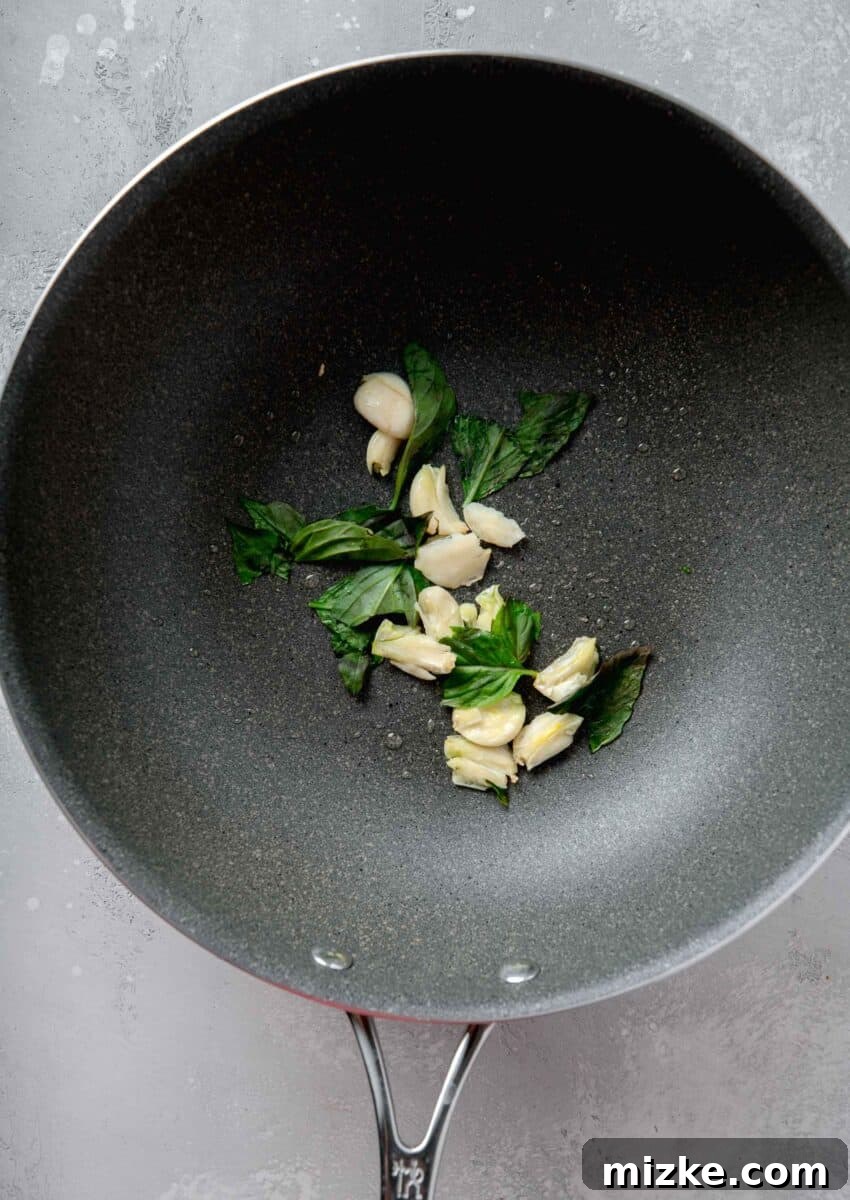
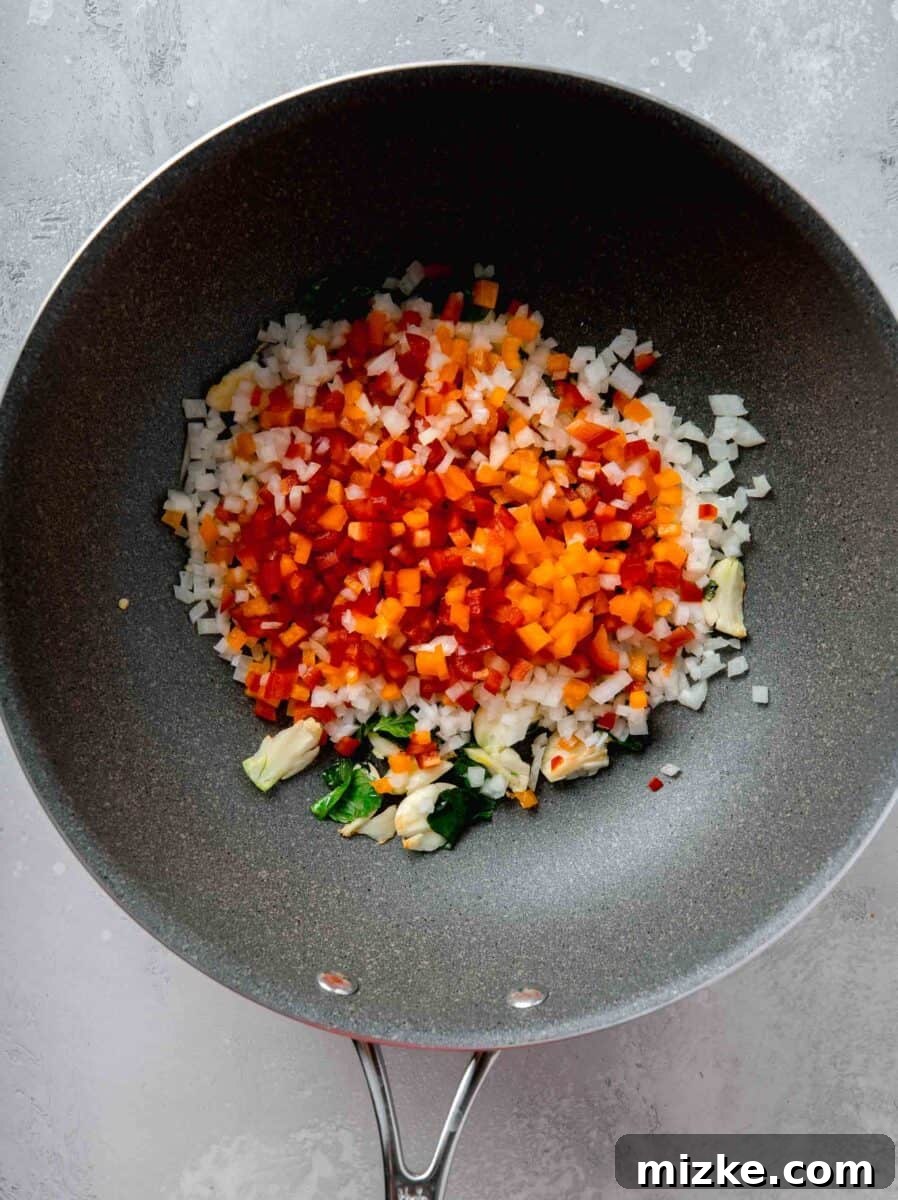
2. Build Your Fragrant Base with Garlic and Thai Basil: Heat 1 tablespoon of high-smoke-point vegetable oil in a large skillet or wok over high heat until shimmering. Add the smashed garlic cloves and a generous handful of Thai basil leaves. Sauté them together for a brief moment, just until they become incredibly fragrant. This step is essential for infusing the cooking oil with a deep, aromatic essence. Using smashed garlic instead of minced prevents it from burning too quickly at the high temperatures required for stir-frying, allowing its flavor to mellow and develop beautifully.
3. Sauté the Vegetables: Once the garlic and basil have released their captivating aromas, add the diced bell peppers and onions to the skillet. Continue to cook on high heat, stirring frequently, until the vegetables begin to soften and develop a slight char, about 3-5 minutes. The high heat ensures they cook quickly while retaining some crunch, rather than steaming.
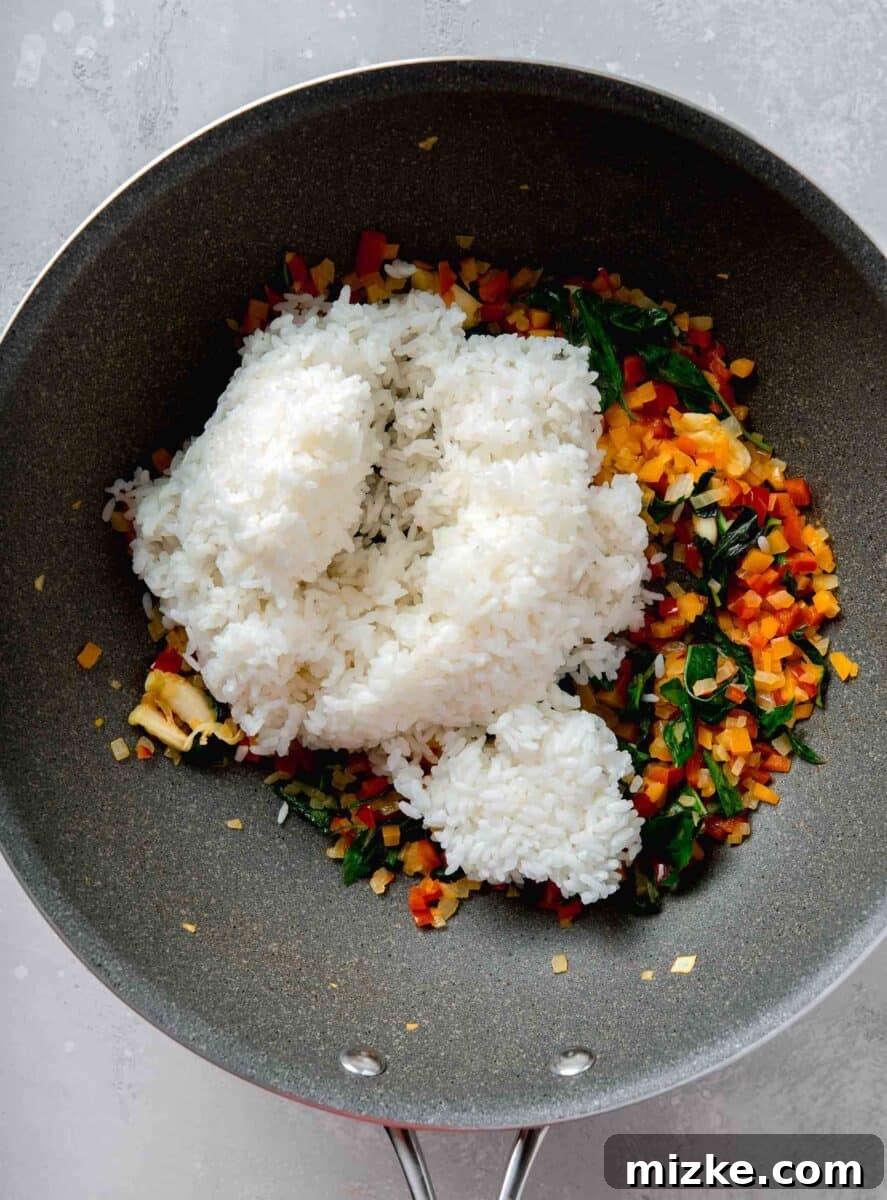
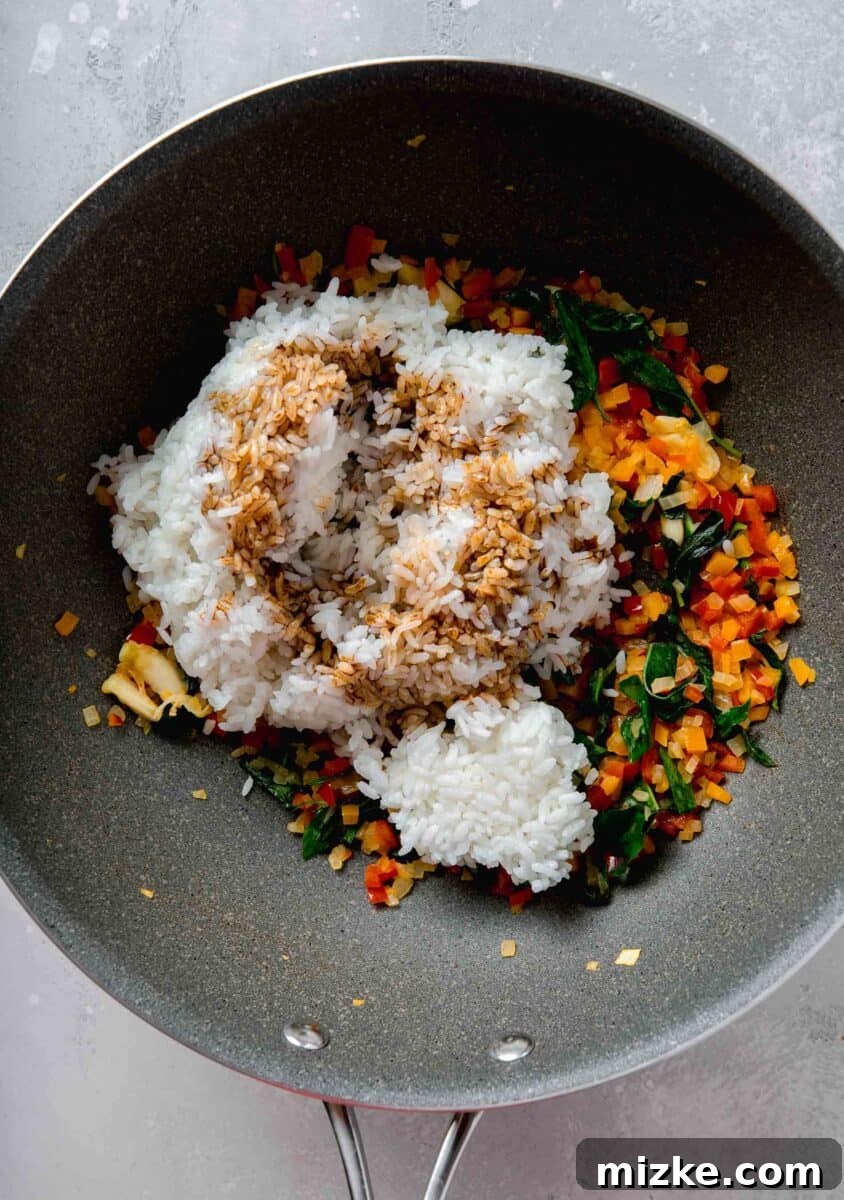
4. Incorporate Rice and Sauce: Add the day-old white rice to the skillet/wok. Using your spatula or a wooden spoon, gently break up any clumps of rice, ensuring the grains separate. Allow the rice to heat through for a minute or two, letting the heat work its magic to further dry and slightly toast the grains. Next, pour your pre-mixed sauce directly over the rice and vegetables. Toss everything vigorously and continuously, ensuring the sauce evenly coats every grain of rice and every piece of vegetable. Continue to stir-fry for another 2-3 minutes, allowing the flavors to meld and the rice to achieve that characteristic fried rice texture. If desired, add a final fresh handful of Thai basil leaves during the last minute of cooking to amplify the aroma.
5. Personalize with Spice and Serve: This is where you can truly make the dish your own! If you desire more heat, now is the time to add a dash of red chilies, a pinch of chili flakes, or your preferred spicy condiment. Stir it in quickly. Taste and adjust seasonings as needed, adding a touch more fish sauce for umami, or sweet soy for balance. Serve your Thai Basil Fried Rice immediately while it’s hot and fresh, garnished with extra basil or a lime wedge if you wish.
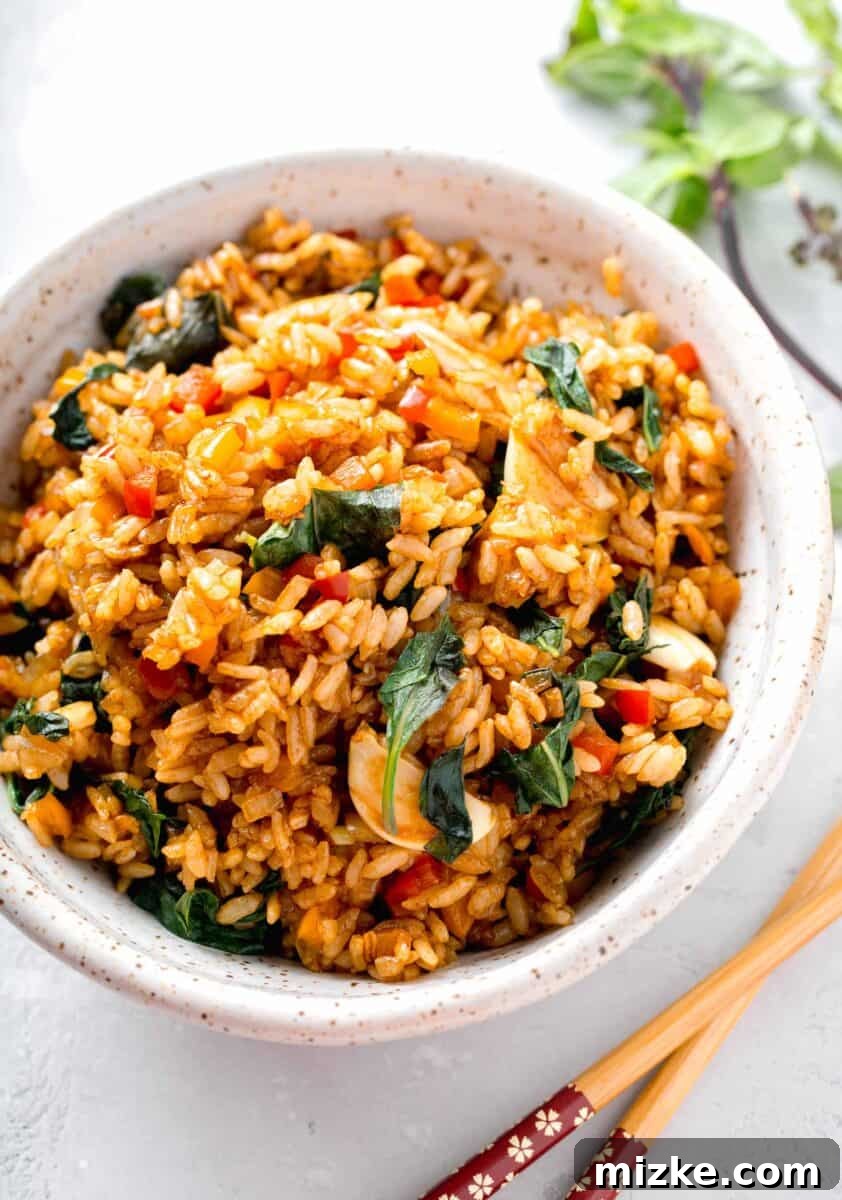
Creative Substitutions and Delicious Variations for Your Fried Rice
This Thai Basil Fried Rice recipe is wonderfully adaptable, allowing for numerous substitutions and variations to suit your taste preferences, dietary needs, or whatever ingredients you have on hand. Don’t hesitate to get creative!
- Rice Varieties: While jasmine white rice is traditional and highly recommended for its aroma and texture, you can certainly experiment with other types of rice. However, I generally suggest sticking to white rice varieties. Brown rice, with its chewier texture and higher fiber content, tends to behave differently in a stir-fry and might not achieve the desired light and fluffy fried rice consistency. If you must use it, ensure it’s day-old and well-dried.
- Basil Alternatives: Fresh Thai basil is the soul of this dish, but if it’s unavailable, you have options. Regular sweet basil can be used, though be aware that the dish will have a different, milder aromatic profile, lacking the characteristic peppery anise notes. If you can find it, Thai holy basil (krapow) makes an excellent and even more authentic alternative, offering a spicier, more pungent flavor.
- Protein Power-Ups: This recipe is fantastic on its own, but it’s also a perfect canvas for adding your favorite proteins. Feel free to incorporate thinly sliced chicken breast or thigh, tender strips of beef, succulent shrimp (add towards the end, as they cook quickly), or firm tofu (pressed and diced, then fried until golden) to make it a more substantial meal. I’ve personally made this with shrimp, and it was absolutely delicious – a perfect light protein boost.
- Vegetable Enhancements: Beyond bell peppers and onions, consider adding other quick-cooking vegetables. Thinly sliced carrots, green beans, corn kernels, peas, or even a handful of baby spinach or bok choy can add extra nutrition, color, and texture. Add harder vegetables earlier with the bell peppers, and softer greens towards the end.
- Adjusting the Spice Level: The original recipe suggests a hint of chili paste, but you are the master of your heat! Increase the amount of chili paste for a fiery kick, or omit it entirely for a milder version. You can also add fresh sliced bird’s eye chilies with the garlic for an intense heat burst, or simply serve with sriracha or chili oil on the side for individual customization.
- Making it Vegetarian/Vegan: To make this dish vegetarian, ensure your oyster sauce is a vegetarian mushroom-based oyster sauce. For a fully vegan version, substitute fish sauce with a high-quality vegetarian fish sauce alternative or an extra dash of soy sauce and a squeeze of lime to balance the flavors. Add tofu or an array of mixed vegetables as your main components.
- Cultural Variety: While this recipe captures the distinct flavors of Thai Basil Fried Rice, if you’re ever in the mood for a different style, like the familiar Chinese takeout fried rice, there are many excellent recipes available. For instance, this Chinese-style fried rice version offers a contrasting flavor profile with ingredients like soy sauce, sesame oil, and often includes egg and various meats.
Insider Tips for Achieving the Best Thai Basil Fried Rice
While this recipe is generally straightforward and forgiving, incorporating a few expert tips and tricks can elevate your Thai Basil Fried Rice from good to absolutely phenomenal. Follow these pointers for a truly successful dish every time:
- The Importance of Pre-Planning with Day-Old Rice: This is arguably the most critical tip for any fried rice recipe. For optimal texture, you absolutely need day-old (or even two-day-old) cooked white rice. Plan ahead and cook your rice the day before you intend to make this dish. Spreading freshly cooked rice on a baking sheet to cool completely before refrigerating it overnight will help it dry out even more efficiently, ensuring perfectly separated, non-mushy grains for frying.
- Harnessing High Heat (The “Wok Hei” Effect): Authentic Asian stir-fries, especially fried rice, are cooked over intensely high heat. This rapid cooking method is crucial for creating what is known as “wok hei” – the coveted smoky, charred, and complex flavor that develops when ingredients are quickly seared in a very hot wok. A blazing hot pan ensures the rice fries rather than steams, giving it a delightful slight crispness. To withstand these high temperatures, ensure your cooking oil has a high smoke point. Avocado oil, peanut oil, or grapeseed oil are excellent choices. Do not overcrowd the pan; cook in batches if necessary to maintain high heat.
- Mise en Place is Your Best Friend: “Mise en place” is a French culinary term meaning “everything in its place.” For stir-frying, this concept is non-negotiable. Because the cooking process is so fast, you need to have all your ingredients chopped, sauces mixed, and within arm’s reach before you even turn on the stove. This prevents frantic scrambling and ensures a smooth, successful cooking experience.
- Don’t Overcrowd the Wok/Skillet: Working in batches might seem like an extra step, but if your skillet isn’t large enough, overcrowding it will drastically lower the temperature. This leads to steaming rather than frying, resulting in soggy ingredients and a lack of that delicious “wok hei.”
- Taste and Adjust Seasoning: Always taste your fried rice before serving. The balance of sweet, salty, and umami is key in Thai cuisine. You might find you want a little more fish sauce for depth, a touch more sweet soy sauce for richness, or a squeeze of fresh lime juice to brighten the flavors.
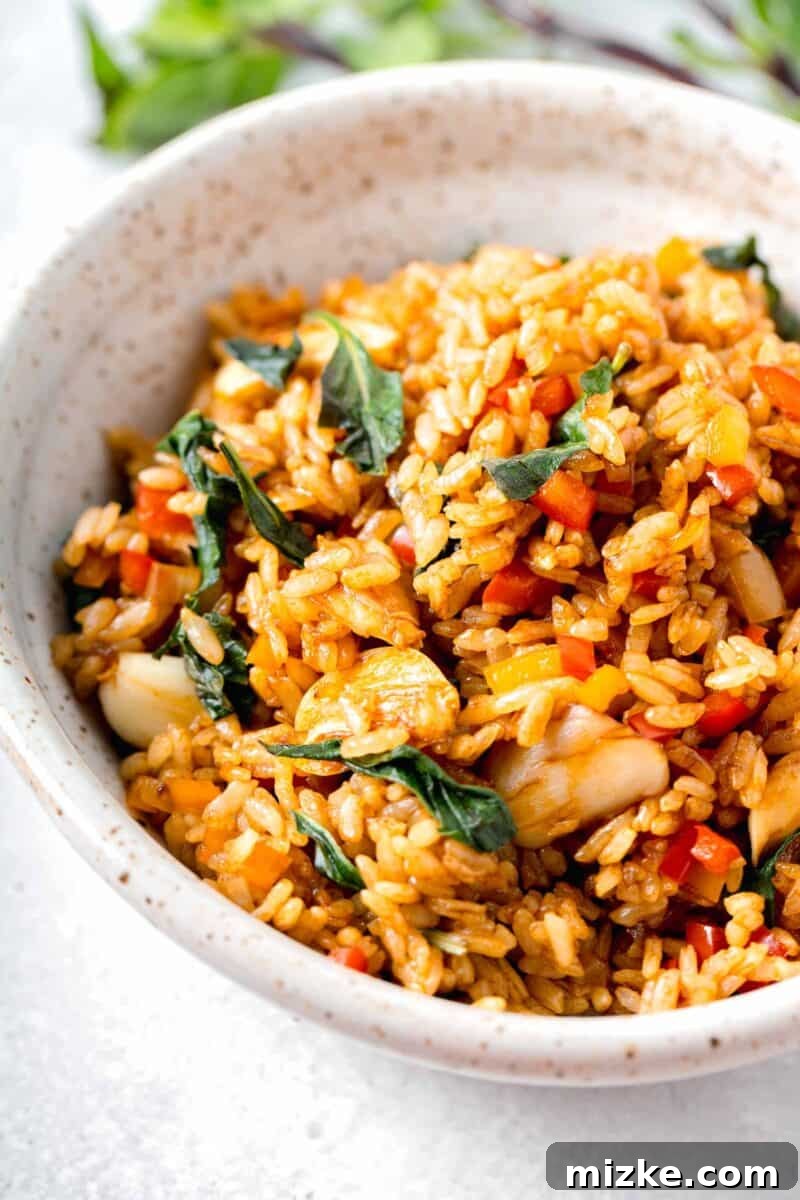
Storage and Reheating Instructions for Leftovers
One of the many great things about fried rice is how well it stores and reheats, making it perfect for meal prepping or enjoying leftovers. Store any leftover Thai Basil Fried Rice in an airtight container in the refrigerator. It will maintain its delicious flavor and quality for up to five days.
When you’re ready to reheat, there’s a simple trick to prevent the rice from drying out. I highly recommend placing a damp paper towel directly over the rice in its container (or on a plate if reheating a single serving). Then, cover the container loosely (or use a microwave-safe cover for the plate) and microwave on medium heat. The damp paper towel creates steam, which helps to rehydrate the rice, keeping it tender, moist, and flavorful, rather than turning dry and hard. You can also reheat in a skillet over medium heat with a tiny bit of oil, stirring frequently until heated through.
Perfect Pairings: What to Serve with Thai Basil Fried Rice
This flavorful Thai Basil Fried Rice recipe is incredibly versatile and makes a fantastic side dish to complement a wide array of your favorite Thai entrees. Its vibrant flavors and comforting texture pair wonderfully with many classic dishes:
- Pad See Ew: The broad, chewy rice noodles stir-fried with Chinese broccoli and a sweet-savory sauce offer a delightful textural contrast.
- Drunken Noodles with Chicken (Pad Kee Mao): For those who love a spicy kick, pairing basil fried rice with the intensely flavored, spicy Drunken Noodles creates a truly authentic Thai feast.
- Drunken Noodles with Tofu: A vegetarian-friendly option that maintains the fiery zest and aromatic herbs of its chicken counterpart, providing a great balance to the fried rice.
- Thai Green Curry or Red Curry: The rich, creamy, and aromatic flavors of a classic Thai curry are beautifully absorbed by the fried rice, creating a harmonious and comforting meal.
- Grilled Satay Skewers: The smoky, peanut-marinated flavors of chicken or beef satay provide a wonderful appetizer or side to this rice dish.
- Tom Yum Soup or Tom Kha Gai: Starting your meal with a bowl of spicy and sour Tom Yum or the creamy coconut-based Tom Kha Gai can perfectly cleanse the palate and prepare it for the main flavors.
And for an truly authentic and refreshing conclusion to your meal, why not wash it all down with a delightful Chè Thái (Vietnamese Fruit Cocktail)? Its sweet, creamy, and fruity notes provide the perfect contrast to the savory and spicy flavors of your Thai meal.
Thai Basil Fried Rice
Julie Chiou
10 minutes
15 minutes
25 minutes
2 servings (600 grams total)
Equipment
-
Wok
Ingredients
For the rice:
- 4 cloves garlic, smashed
- 2 large handfuls Thai basil leaves
- 2 bell peppers, diced
- 1 medium onion, diced
- 400 grams day old white rice
For the sauce:
- 2 tablespoons oyster sauce
- 1 ½ tablespoons sweet soy sauce
- 1 teaspoon dark soy sauce
- 1 teaspoon fish sauce
Instructions
-
Whisk all the ingredients for the sauce together in a small bowl and set aside.2 tablespoons oyster sauce, 1 ½ tablespoons sweet soy sauce, 1 teaspoon dark soy sauce, 1 teaspoon fish sauce
-
Add 1 tablespoon of vegetable oil to a large skillet or wok over high heat. Sauté the smashed garlic and Thai basil leaves until just fragrant, about 30 seconds to 1 minute.4 cloves garlic, 2 large handfuls Thai basil leaves
-
Add the diced bell peppers and onions to the skillet. Cook, stirring frequently, until they are softened and slightly charred, about 3-5 minutes.2 bell peppers, 1 medium onion
-
Add the day-old white rice to the skillet/wok. Break up any clumps with your spatula. Pour the prepared sauce over the rice and vegetables, then toss to incorporate everything evenly. Continue to stir-fry for 2-3 minutes until the rice is thoroughly coated and heated through. Add more fresh Thai basil leaves at this stage if desired for extra aroma.400 grams day old white rice
-
Taste the fried rice and adjust seasoning if necessary. Feel free to add extra spice with red chilies, chili flakes, or a dash of your preferred hot sauce, then stir to combine. Serve immediately.
Nutrition
Calories: 388kcal,
Carbohydrates: 85g,
Protein: 8g,
Fat: 1g,
Saturated Fat: 0.3g,
Polyunsaturated Fat: 0.4g,
Monounsaturated Fat: 0.2g,
Sodium: 1147mg,
Potassium: 451mg,
Fiber: 4g,
Sugar: 18g
This website provides approximate nutrition information for convenience and as a courtesy only. Nutrition information can vary for a variety of reasons. For the most precise nutritional data use your preferred nutrition calculator based on the actual ingredients you used in the recipe.
The default measuring system for this website is US Customary. Unit conversions are provided for convenience and as a courtesy only. While we strive to provide accurate unit conversions, please be aware that there may be some discrepancies.