
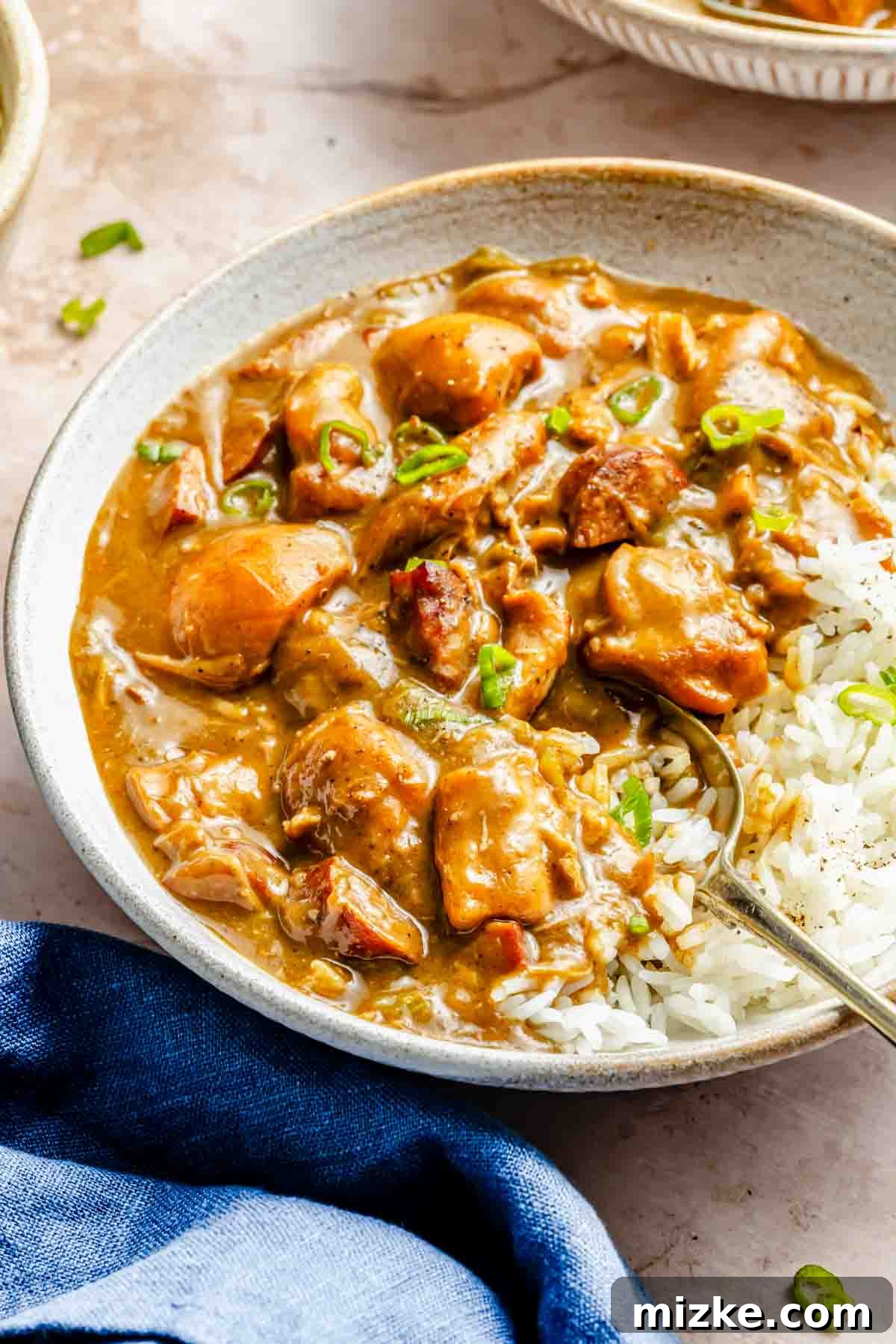
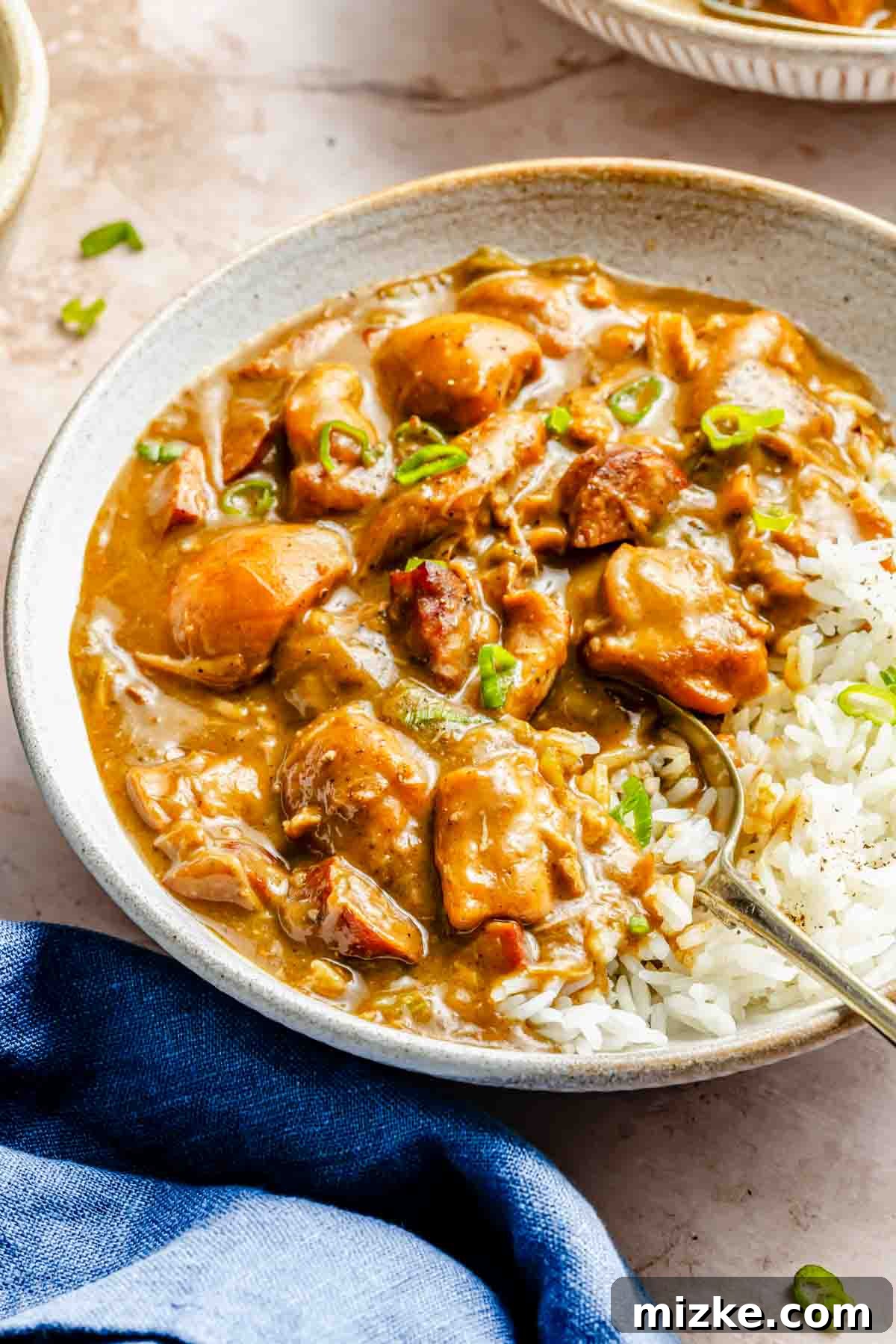
Embark on an unforgettable culinary journey to the heart of Louisiana with this incredible recipe for **authentic Chicken and Andouille Sausage Gumbo**. This isn’t just a meal; it’s a celebration of rich flavors, deep history, and Southern hospitality, a true labor of love that promises a deeply satisfying reward. At its foundation lies a meticulously crafted, dark roux – the very soul of any great gumbo – paired with succulent chicken thighs, smoky Andouille sausage, and a vibrant medley of aromatic vegetables. Get ready to bring this iconic Louisiana specialty to life right in your own kitchen!

Chicken and Sausage Gumbo: A Louisiana Culinary Tradition
Gumbo stands as a monumental pillar in Louisiana’s culinary landscape, a dish steeped in history and flavor. Originating from a blend of African, Native American, French, and Spanish influences, gumbo represents the diverse cultural tapestry of the region. This particular recipe leans towards a more traditional **Cajun gumbo**, prioritizing a hearty base of meats and a robust, slow-cooked roux. While often compared, Cajun and Creole gumbos possess distinct characteristics.
Cajun gumbo, typically found in the swampy bayous and prairies of Southwest Louisiana, is known for its darker roux, absence of tomatoes, and a focus on locally sourced meats like chicken, sausage, or wild game. It’s often thicker and richer, relying heavily on the deep flavor of the roux. In contrast, Creole gumbo, originating from cosmopolitan New Orleans, frequently incorporates a tomato base, a broader range of spices, and a diverse seafood mix alongside chicken and sausage, reflecting the city’s port influences and European culinary traditions. Regardless of its specific lineage, gumbo is a communal dish, a symbol of gathering, and a testament to the soulful cooking of Louisiana.
The magic of this **authentic Louisiana chicken and sausage gumbo** truly begins with its base: a meticulously prepared, richly flavored dark roux. This isn’t merely a thickening agent; it’s the foundational component that imparts a complex, nutty, and subtly smoky depth, defining the very essence and character of the dish. Without a proper roux, gumbo simply isn’t gumbo. It’s the element that binds all the ingredients, creating a luxurious texture and an unparalleled taste experience that transports you straight to the bayou, making every spoonful a taste of authentic Southern comfort.
Mastering the Gumbo Roux: The Soul of Your Stew
The hallmark of a truly flavorful and authentic gumbo lies indisputably in its roux. Forget bland, light brown versions; for this **chicken and andouille sausage gumbo**, we’re aiming for a deep, lustrous, **chocolate brown color**. Achieving this gorgeous, rich shade requires unwavering patience and continuous attention, typically taking about 45 minutes to an hour of steady stirring over medium-low heat. This slow process allows the flour to toast and caramelize without burning, developing hundreds of complex flavor compounds.
It’s crucial to distinguish this deep, nutty brown from a burnt, bitter dark chocolate color. A roux that is too dark will become acrid and impart an irreversible, unpleasant bitterness to your entire gumbo, necessitating a complete restart. The goal is a color reminiscent of milk chocolate or a rich copper penny, offering a profound nutty aroma and depth of flavor without any harshness. Your senses of smell and sight will be your best guides here; as it darkens, it will develop a distinct, savory, toasted scent. A well-made roux is more than just a thickener; it’s a flavor enhancer that forms the aromatic backbone of traditional Louisiana gumbo. It’s a foundational step that cannot be rushed, and the time invested will pay dividends in every spoonful of your finished dish.

Essential Tips and Delicious Variations for Your Gumbo
Creating a truly magnificent gumbo involves a blend of tradition, technique, and a little bit of love. Here are some invaluable tips and potential variations to ensure your **chicken and sausage gumbo** is a resounding success and tastes authentically Louisiana:
- Roux Vigilance is Key: The most important rule for making your roux is to **never walk away from it**. A roux can go from perfect to burnt in a matter of seconds. If it burns, even slightly, it will impart an irreversible bitter taste to your entire gumbo, necessitating a complete restart. Continuous, patient stirring with a sturdy wooden spoon or whisk is your best friend here.
- Temperature Harmony for Roux: When you’re ready to combine your roux with other ingredients, it’s vital to ensure all subsequent additions, particularly liquids like chicken broth and the sautéed vegetables, are at or near room temperature. Adding cold ingredients directly to a hot roux can cause it to seize, separate, or become grainy, severely impacting the final smooth texture of your gumbo. This temperature differential can be the difference between a silky-smooth gumbo and one that’s unpleasantly clumpy.
- Choose the Right Fat for Your Roux: For an authentic, stable, and flavorful roux, always use a neutral-flavored oil with a high smoke point. **Vegetable oil, canola oil, or avocado oil** are ideal choices. Avoid butter, olive oil, coconut oil, or peanut oil, as their lower smoke points and distinct flavors can either burn too quickly, become bitter, or overpower the delicate balance of the gumbo’s overall taste profile.
- Exploring Creole Variations: While this recipe champions a rich Cajun-style chicken and sausage gumbo, you can easily adapt it into a Creole version. To transform it, consider swapping out some or all of the chicken and sausage for a delightful mix of fresh seafood such as succulent shrimp, tender crawfish, or flaky white fish. You might also introduce a small amount of canned diced tomatoes (about ½ cup to 1 cup) to the base for that characteristic Creole tang and color.
- The Perfect Accompaniment: Gumbo is traditionally served over a bed of fluffy white rice, which perfectly soaks up the rich broth and helps to temper the spice. For an even more indulgent and flavorful experience, try it with dirty rice, a savory rice dish cooked with ground meat and seasonings. Other fantastic traditional sides include a crisp green salad, a spoonful of creamy potato salad, or a slice of warm, buttery cornbread to sop up every last drop of that delicious gravy.
- Don’t Forget the “Holy Trinity”: The combination of diced onions, green bell peppers, and celery is famously known as the “Holy Trinity” in Louisiana cooking. These three aromatic vegetables form the indispensable flavor base for countless Cajun and Creole dishes, including gumbo. Their proper sautéing until soft and translucent is crucial for building a deep and complex flavor profile that underpins the entire dish.
- Seasoning to Perfection: Taste your gumbo throughout the simmering process and adjust seasonings as needed. Remember that Andouille sausage and Cajun seasoning can contribute a significant amount of salt and spice, so add additional salt and cayenne pepper gradually. It’s always easier to add more spice than to take it away, so proceed with caution until it reaches your desired flavor profile.
Storage and Reheating Instructions for Optimal Flavor
Gumbo is one of those magical dishes that often tastes even better the next day, as the flavors have more time to meld and deepen, becoming even more complex and harmonious. Proper storage ensures you can enjoy its rich taste for days, and even months, to come:
Refrigerator Storage: Allow any leftover gumbo to cool completely to room temperature before transferring it to an airtight container. Store the container in the refrigerator for up to 4-5 days. This allows the gumbo to retain its freshness and flavor, and prevents bacterial growth. For best results, consider storing the gumbo separately from any leftover rice, as rice can absorb too much liquid and become mushy, compromising its texture.
Reheating from the Refrigerator: When ready to enjoy, portion out your desired amount of gumbo into a microwave-safe bowl. Heat in the microwave on high in 1-minute intervals, stirring between each, until thoroughly warmed through and steaming hot. Alternatively, for a more even and gentle reheat that preserves the texture, transfer the gumbo to a small pot or saucepan on the stovetop over medium-low heat. Stir occasionally to prevent sticking and ensure even heating, until it is simmering gently and completely hot. If the gumbo appears too thick after refrigeration, you can add a splash of chicken broth or water to reach your preferred consistency.
Freezing for Long-Term Enjoyment: Gumbo freezes exceptionally well, making it an excellent meal prep option for busy weeks or unexpected cravings. Once leftovers have cooled completely, spoon the gumbo into freezer-safe containers or heavy-duty freezer bags. For convenient individual portions, specialized trays like Souper Cubes (or even muffin tins, once frozen) work wonderfully. Ensure there is minimal air exposure in your chosen container to prevent freezer burn, which can affect flavor and texture. Freeze for up to 3 months. Clearly label containers with the date for easy tracking.
Reheating from the Freezer: To reheat frozen gumbo, you have a couple of options. You can either thaw it overnight in the refrigerator for a quicker reheat later, or reheat it directly from frozen. If reheating from frozen, transfer the solid block of gumbo into a pot on the stovetop over low to medium heat. Cover the pot and let it gently warm, stirring frequently to break up any ice and prevent scorching at the bottom. As it thaws and heats, stir regularly until it reaches a gentle simmer and is warmed through completely. Again, if the consistency is too thick, add a little chicken broth or water to achieve your ideal texture. Avoid high heat when reheating from frozen, as it can cause the gumbo to break.

Authentic Chicken and Andouille Sausage Gumbo
This authentic chicken and sausage gumbo is a labor of love, and it is well worth it. A rich, dark roux is at the base of this chicken and Andouille sausage gumbo, along with tender chicken thighs, smoky Andouille sausage, and fresh vegetables, bringing the true, robust taste of Louisiana to your home kitchen.
1 hour 30 minutes
3 hours
4 hours 30 minutes
8 servings
Equipment
- Large Heavy-Bottomed Dutch oven (at least 6-quart)
- Sturdy wooden spoon or whisk
- Slotted spoon
- Cutting board and sharp knife
Ingredients
For the Roux:
- 1 cup (125 g) all-purpose flour
- ½ cup (118 ml) neutral vegetable oil (such as canola, avocado, or standard vegetable oil)
For the Gumbo:
- 12 ounces Andouille sausage, cut into ½-inch thick half-moons
- 3 pounds (1361 g) boneless, skinless chicken thighs, cut into 2-inch cubes
- 1 tablespoon Cajun seasoning (adjust to taste, depending on spice preference)
- 1 large onion, diced (about 1.5 cups)
- 1 large green bell pepper, diced (about 1 cup)
- 1 cup (101 g) chopped celery, about 3-4 stalks (the “Holy Trinity”)
- 8 cups (1893 ml) chicken broth (preferably low sodium, homemade is best)
- ⅛ – ¼ teaspoon cayenne pepper, or more to taste for desired heat level
- 4 bay leaves
- Salt and freshly ground black pepper, to taste
- 1 ½ tablespoons file powder (added towards the end of cooking)
- Optional garnish: chopped fresh green onions or parsley
Instructions
-
Prepare the Roux: In a large, heavy-bottomed Dutch oven or thick-walled saucepan, combine the flour and vegetable oil over medium-low heat. Using a sturdy wooden spoon or whisk, stir continuously and patiently. The mixture will gradually transition from a light blonde to a peanut butter color, then to a rich, deep chocolate brown. This process will take approximately 45-60 minutes. It’s imperative not to leave the roux unattended as it can burn very quickly, becoming bitter and unusable. Once the desired deep brown color is achieved, immediately remove the roux from the heat and allow it to cool to room temperature. You can make this a day ahead and store it in an airtight container in the refrigerator, or simply let it sit in the pot while you prep the other ingredients if making the gumbo on the same day.

-
Brown the Sausage: In the same large Dutch oven (ensure it’s clean if you made the roux separately, adding 2 tablespoons of fresh vegetable oil if needed), add the sliced Andouille sausage. Brown it over medium-high heat until it develops a nice crust and renders some of its flavorful fat, typically about 5-7 minutes. Using a slotted spoon, remove the browned sausage and set it aside on a plate, leaving the rendered fat and flavorful bits in the pot.
-
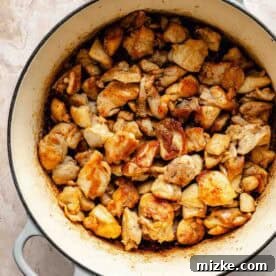
Sear the Chicken: Add the cubed chicken thighs to the same pot with the remaining oil and sausage drippings. Season generously with the Cajun seasoning, ensuring all pieces are coated. Brown the chicken pieces on all sides until nicely golden and lightly seared, about 8-10 minutes. This step is crucial for building a deep, savory flavor base. Once browned, remove the chicken with a slotted spoon and add it to the plate with the sausage, setting both aside.
-
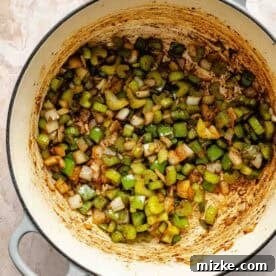
Sauté the “Holy Trinity”: With the remaining oil and flavorful bits in the pot, add the diced onion, green bell pepper, and celery. Sauté these vegetables over medium heat, stirring occasionally, until they become soft and tender, usually about 8-10 minutes. This aromatic trio, known as the “Holy Trinity” in Louisiana cooking, is absolutely essential for developing the complex and authentic flavor profile of the gumbo.
-
Combine with Roux: Return the browned sausage and chicken to the pot with the sautéed vegetables. Add the prepared dark roux on top of the mixture (ensure the roux is at room temperature to prevent seizing). Stir everything together thoroughly, ensuring the meats and vegetables are well coated with the roux. Allow this mixture to warm through for a few minutes, stirring gently, which helps to further marry the flavors and distribute the roux evenly.
-
Simmer the Gumbo: Pour the 8 cups of chicken broth into the pot, stirring continuously and vigorously to combine it completely with the roux and other ingredients, ensuring no lumps remain and the roux is fully dissolved. Add the cayenne pepper and bay leaves. Season with salt and freshly ground black pepper to taste, keeping in mind the seasoning already present from the sausage and Cajun spices. Bring the mixture to a rolling boil, then immediately reduce the heat to low, cover the pot, and let it simmer gently for at least 2-3 hours, stirring occasionally to prevent sticking and to ensure even flavor distribution. The longer it simmers, the deeper, richer, and more complex the flavors will become.
-
Add File Powder: Approximately 30 minutes prior to finishing and serving the gumbo, whisk in the file powder. File powder (ground sassafras leaves) acts as both a traditional thickener and imparts a unique, earthy, almost root-beer-like flavor that is characteristic of authentic gumbo. Continue to let the gumbo simmer gently for the remaining time to allow the file powder to integrate and for the flavors to fully develop. Important: Do not boil the gumbo after adding file powder, as it can cause it to become stringy and slimy.
-
Serve and Enjoy: Before serving, carefully remove and discard the bay leaves from the gumbo. Ladle the hot gumbo generously over a bed of freshly cooked fluffy white rice. Garnish with chopped fresh green onions or a sprinkle of fresh parsley, if desired, for a burst of color and freshness. Serve immediately and savor the deeply authentic, comforting taste of Louisiana in every spoonful!




Nutrition Information (Approximate)
Serving Size: 1 serving (approx. 302 grams)
- Calories: 545 kcal
- Carbohydrates: 16 g
- Protein: 44 g
- Fat: 33 g
- Saturated Fat: 8 g
- Polyunsaturated Fat: 12 g
- Monounsaturated Fat: 10 g
- Trans Fat: 0.2 g
- Cholesterol: 203 mg
- Sodium: 1381 mg
- Potassium: 721 mg
- Fiber: 1 g
- Sugar: 3 g
This website provides approximate nutrition information for convenience and as a courtesy only. Nutrition information can vary significantly for a variety of reasons, including exact ingredient brands, preparation methods, and portion sizes. For the most precise nutritional data, we recommend using your preferred nutrition calculator based on the actual ingredients and quantities you used in the recipe.
The default measuring system for this website is US Customary. Unit conversions are provided for convenience and as a courtesy only. While we strive to provide accurate unit conversions, please be aware that there may be some slight discrepancies due to rounding or different conversion factors.
Photographs by Eat Love Eat