
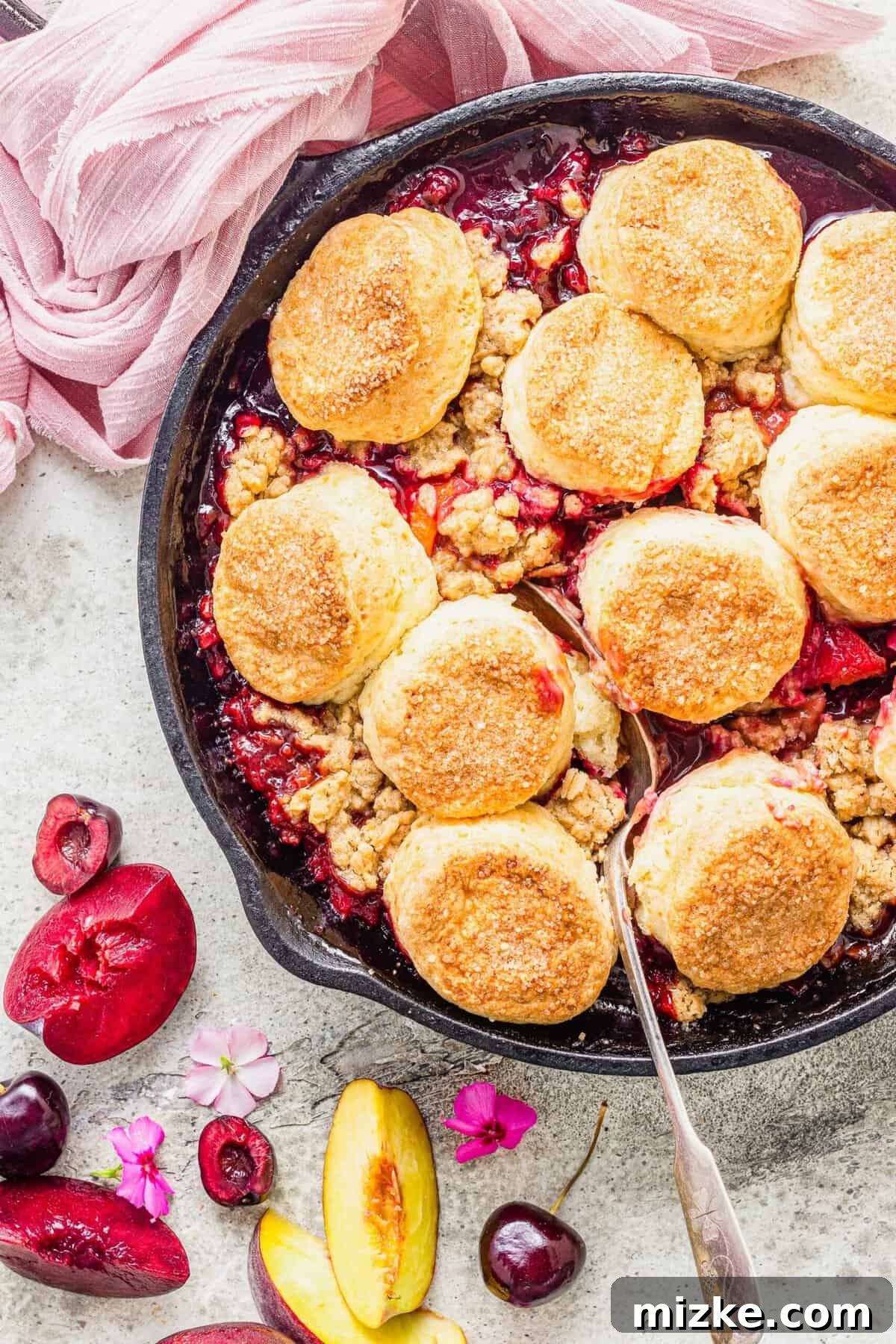
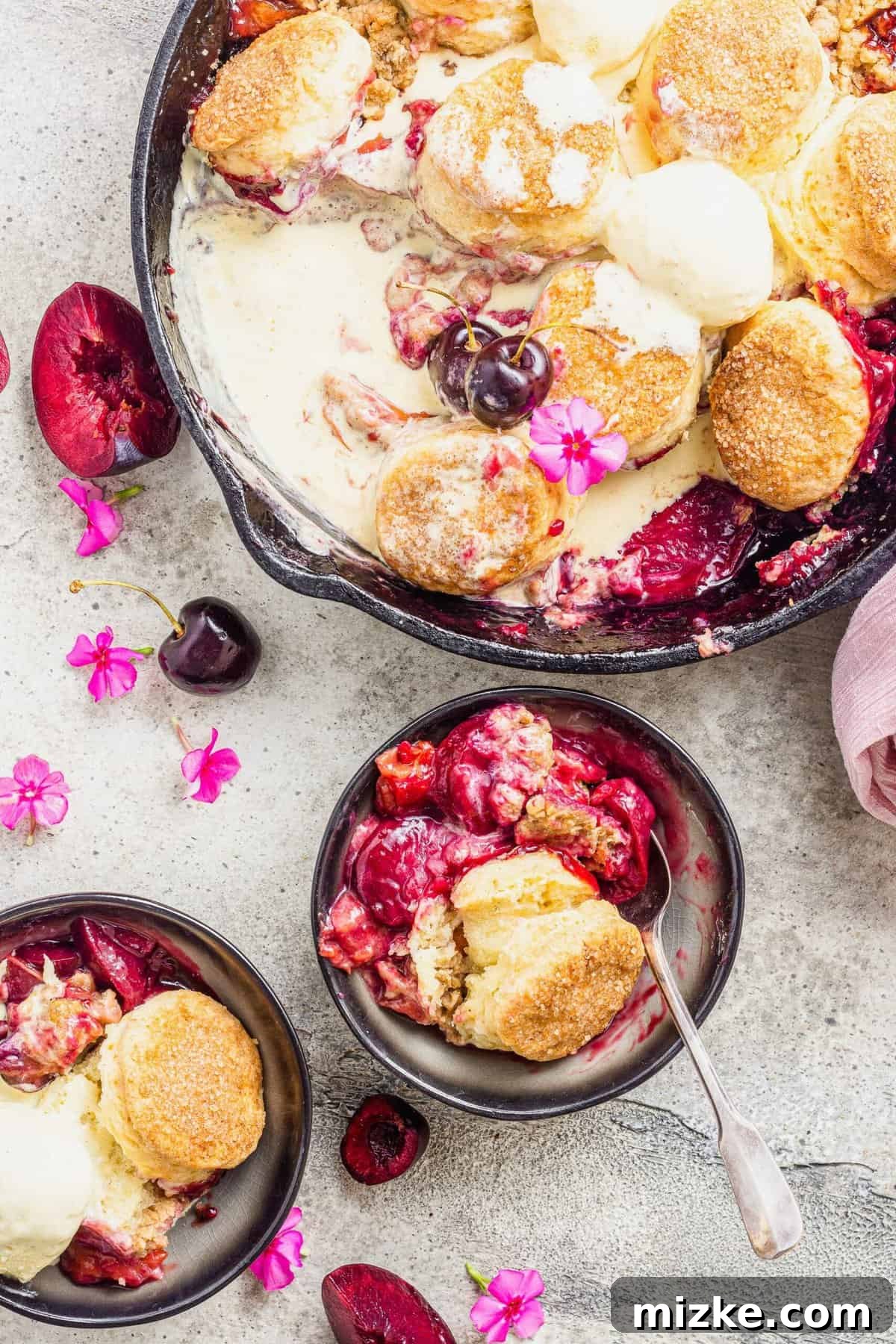
Indulge in the quintessential taste of summer with this incredible Double-Crust Stone Fruit Cobbler. This recipe celebrates the season’s bounty, combining succulent, ripe stone fruits with a unique dual topping: flaky, tender buttermilk biscuits and a rich, buttery brown sugar and cinnamon oat crumble. Finish with a generous scoop of melting vanilla ice cream for a truly unforgettable dessert experience.
The Ultimate Double-Crust Stone Fruit Cobbler: Your Summer Dessert Dream
Summer brings an abundance of nature’s candy, and few things capture its essence quite like ripe stone fruits. From the classic sweetness of peaches and nectarines to the tart notes of plums and cherries, along with delightful hybrids like pluots and apriums, these fruits are at their peak, bursting with flavor. While they’re perfect for snacking, their true potential shines in baked goods, making them ideal candidates for pies, crumbles, and especially this spectacular stone fruit cobbler.
What sets this recipe apart is its incredible versatility and a topping that offers the best of both worlds. You have the freedom to select any stone fruit combination your heart desires – whether it’s a medley of peaches, nectarines, plums, and cherries, or a single fruit hero like juicy peaches. Furthermore, the topping is a delightful hybrid itself, much like the innovative pluots and apriums. It features both a traditional, light, and flaky biscuit topping, reminiscent of classic cobblers, alongside a crunchy, buttery oat crumble similar to what you’d find on a fruit crisp. This ingenious combination delivers a captivating contrast of textures and flavors in every spoonful.
The best part? Despite its gourmet appeal, this rustic dessert comes together in just about 20 minutes of active preparation time. The most challenging aspect will be patiently waiting for its golden-brown perfection to emerge from your oven.
If your heart yearns for more delightful summer fruit desserts, be sure to explore these other fantastic recipes: Peach Fritters, Deep Dish Wild Blueberry Pie, and Stone Fruit and Blackberry Galette.
Understanding Stone Fruits: What Are They?
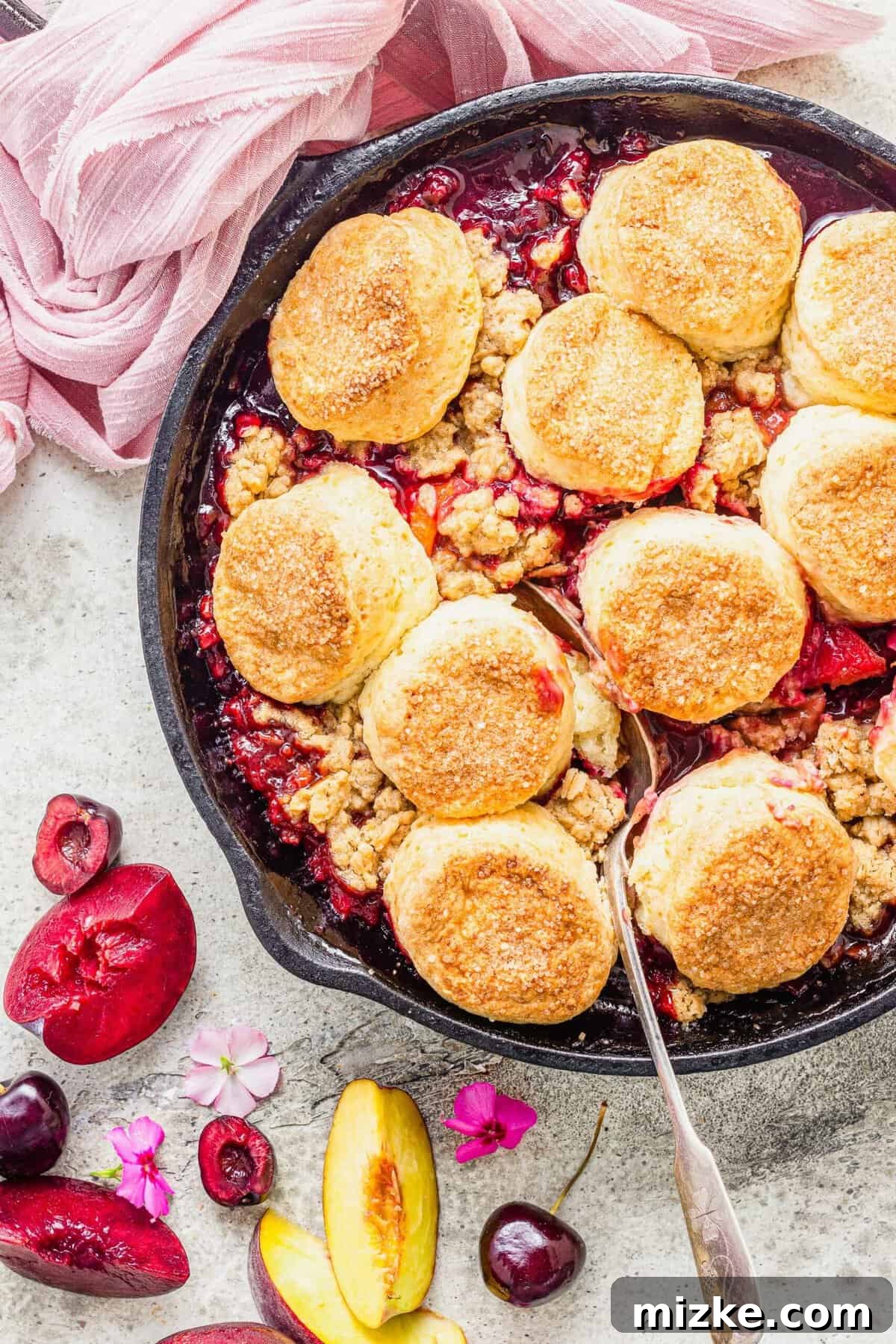
Before we dive into the recipe, let’s clarify what “stone fruit” actually means. Botanically speaking, stone fruits are technically called “drupes.” They are characterized by a fleshy outer part that surrounds a single, hard pit or “stone” at its center, which contains the seed. This group includes many of our favorite summer delights such as peaches, nectarines, plums, cherries, and apricots.
Beyond these common culinary varieties, the botanical definition also encompasses fruits like mangoes, lychees, dates, and even olives! While you might not typically associate a mango with a cobbler (though adding some thinly sliced mango to this recipe could be an exciting, exotic twist!), for baking purposes, we generally focus on the more classic temperate climate stone fruits. These fruits are typically abundant during the warmer months, making summer the prime time to enjoy their sweet, juicy flavors in desserts like this cobbler.
Ingredients for Your Perfect Double-Crust Stone Fruit Cobbler
Crafting this memorable cobbler requires a few distinct sets of ingredients, each playing a crucial role in achieving that perfect balance of textures and tastes. Below is a detailed breakdown of what you’ll need for the flaky biscuits, the irresistible crumble topping, and the vibrant fruit filling. For specific quantities and complete instructions, refer to the full recipe section below.
For the Flaky Buttermilk Biscuits:
- All-purpose flour: The foundation for your tender biscuits.
- Salt: Enhances all the other flavors.
- Baking powder & Baking soda: These leavening agents work with the buttermilk to create a light, airy rise.
- Granulated sugar: A touch of sweetness for the biscuits themselves.
- Unsalted butter: Crucially, it must be cold and cubed for the biscuit dough to achieve maximum flakiness. You’ll also need a little extra melted butter for brushing the tops, giving them a golden sheen.
- Buttermilk: Also cold, buttermilk reacts with the leavening agents and contributes to the biscuits’ signature tangy flavor and tender crumb.
- Coarse sugar for sprinkling: Sanding sugar or Demerara sugar provides a lovely sparkle and a slight crunch on top of the baked biscuits.
For the Buttery Oat Crumble Topping:
- All-purpose flour: Binds the crumble together.
- Rolled oats: Essential for that satisfying chewy texture and rustic appearance. Avoid steel-cut or quick oats, which will yield a different result.
- Light brown sugar: Adds a deep, caramel-like sweetness and moisture to the crumble.
- Cinnamon: The warm spice perfectly complements the stone fruits.
- Salt: Balances the sweetness and amplifies other flavors.
- Unsalted butter: Just like for the biscuits, this butter needs to be cold and cubed to create a crumbly, rather than cake-like, topping.
For the Juicy Stone Fruit Filling:
- Mixed stone fruit: This is where you can truly customize! Use any combination of peaches, nectarines, cherries, plums, and apricots. Aim for ripe, but still firm, fruits.
- Light brown sugar: Sweetens the fruit and helps create a luscious syrup.
- Cornstarch: A thickening agent that prevents the fruit filling from becoming too watery, ensuring a perfectly spoonable consistency.
- Lemon juice: A splash of fresh lemon juice brightens the fruit flavors and adds a hint of essential tartness, balancing the sweetness.
- Vanilla extract: Enhances the overall aroma and depth of flavor in the fruit filling.
Step-by-Step Guide to Crafting Your Double-Crust Stone Fruit Cobbler
Creating this beautiful and delicious summer dessert is a straightforward process, broken down into manageable steps. Follow these instructions to bring your summery fruit cobbler to life at home:
1. Prepare Your Oven and Equipment
Begin by preheating your oven to 400ºF (200ºC). This ensures the oven is at the correct temperature when your cobbler is ready, promoting even baking and golden biscuits.
2. Master the Buttermilk Biscuits
Form the Dough:
In the bowl of a large food processor, combine the all-purpose flour, baking powder, baking soda, granulated sugar, and salt. Pulse a few times to ensure these dry ingredients are well mixed. Next, add the cold, cubed unsalted butter to the food processor. Pulse several more times until the mixture resembles coarse crumbs, with some pea-sized pieces of butter still visible. This is key for flaky biscuits. Transfer this crumbly mixture to a large mixing bowl. Create a well in the center of the dry ingredients. Pour in the cold buttermilk. Using a rubber spatula or a wooden spoon, gently fold the ingredients together until just combined. The dough will appear crumbly with some wet spots; avoid overmixing at this stage.
Shape the Biscuits:
Lightly flour a clean work surface. Turn the biscuit dough out onto the floured surface and use floured hands to gently bring the dough together. It might be slightly sticky, so don’t hesitate to dust your hands with flour as needed. Flatten the dough into a rough rectangle. Using a pastry cutter or a sharp knife, cut the dough into four equal pieces. Stack these four pieces on top of each other and gently press down to flatten them slightly. Repeat this stacking and pressing process two more times. This layering technique helps create extra flaky biscuits. Finally, roll the dough to approximately a 1-inch thickness, forming a rectangle. Use a round cookie cutter (or even a sharp-edged glass) to cut out 12 to 15 biscuits, depending on the size of your cutter.
Chill the Biscuits:
Carefully transfer the cut biscuits to a parchment-lined plate or baking sheet. Place them in the refrigerator to chill for 15 to 20 minutes. Chilling the dough before baking helps the butter stay cold, which prevents excessive spreading and contributes to a higher, flakier biscuit.
3. Prepare the Buttery Oat Crumble
In a small bowl, combine the dry ingredients for the crumble: all-purpose flour, rolled oats, light brown sugar, cinnamon, and salt. Mix well. Add the cold, cubed unsalted butter. Using your fingertips, work the butter into the dry ingredients until the mixture is moist and forms coarse, distinct crumbs. Place the bowl of crumble topping in the refrigerator to chill while you prepare the fruit filling. This helps maintain its crumbly texture during baking.
4. Create the Juicy Fruit Filling and Assemble the Cobbler
Combine the Filling Ingredients:
In a 9 to 10-inch baking dish (a cast-iron skillet works wonderfully for a rustic presentation), gently toss together your mixed stone fruit, light brown sugar, cornstarch, fresh lemon juice, and vanilla extract. Ensure the fruit is evenly coated with the sugar and cornstarch mixture.
Assemble the Cobbler:
Evenly sprinkle the chilled oat crumble mixture over the prepared fruit filling. Next, remove the biscuits from the refrigerator and artfully arrange them on top of the fruit and crumble layer. Brush the tops of the biscuits generously with a little extra melted butter, then sprinkle them with coarse sugar for a beautiful sparkle and crunch.
Bake to Perfection:
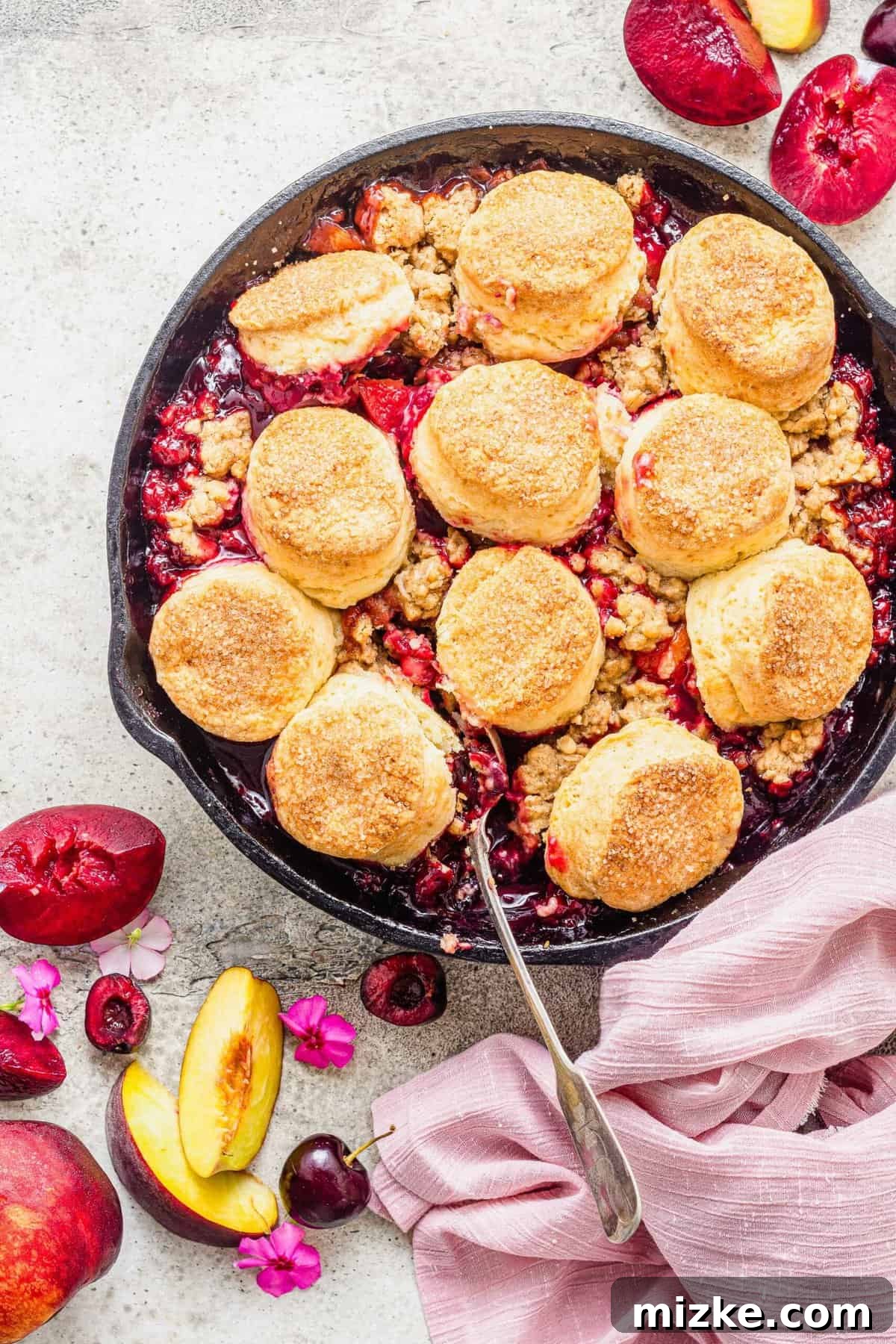
Carefully place the baking dish into your preheated oven. Bake for approximately 40 to 50 minutes, or until the fruit filling is visibly bubbling around the edges and the biscuit topping is beautifully golden brown. The aroma filling your kitchen will be irresistible!
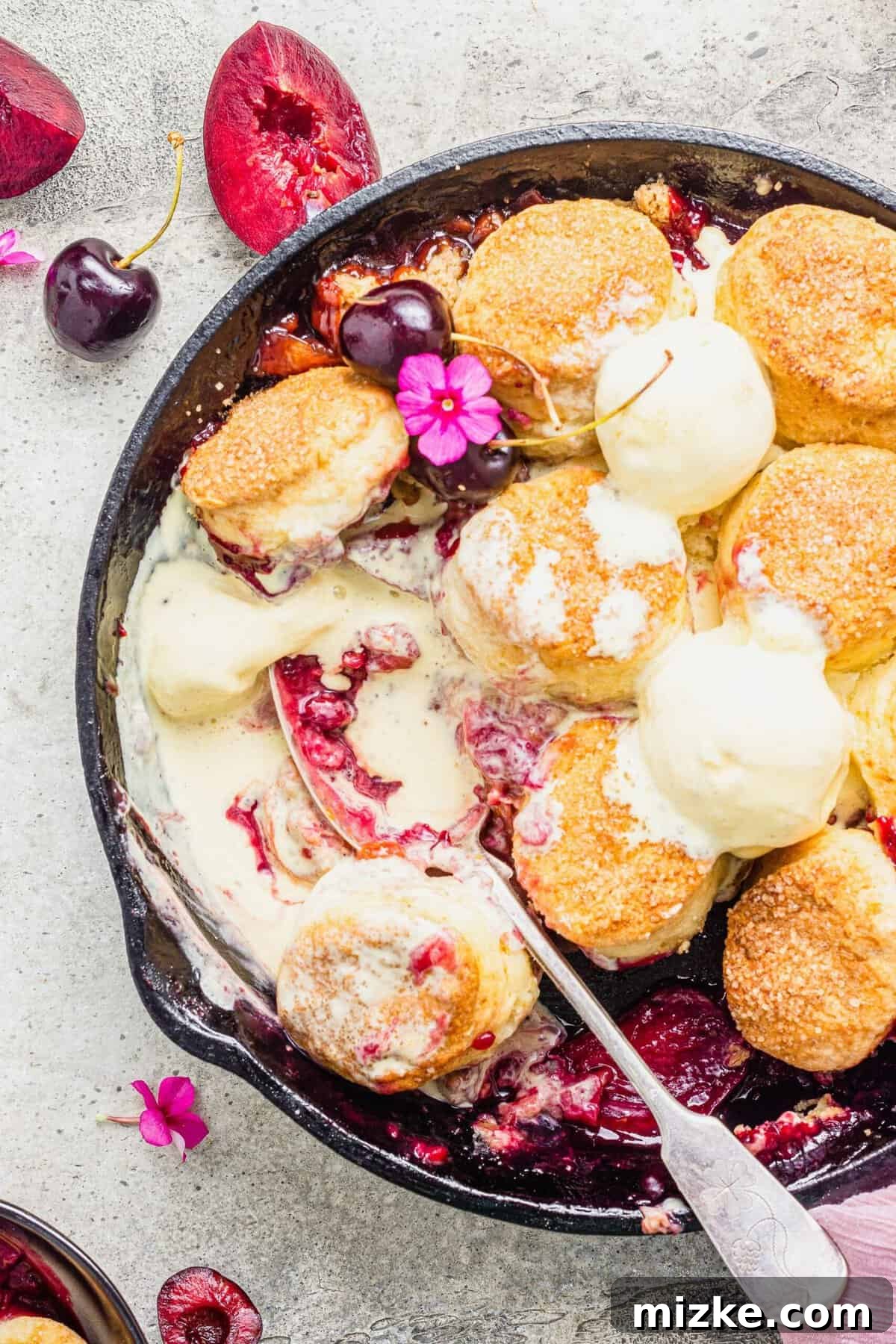
Essential Tips for Cobbler Success
Achieving the perfect stone fruit cobbler is simpler than you think with a few key pointers. Follow these tips to ensure your dessert turns out flawless every time:
- Choose Ripe, High-Quality Fruit: The quality of your fruit directly impacts the flavor of your cobbler. If your fruit doesn’t taste good raw, it won’t magically transform into a delicious dessert when baked. Opt for ripe, firm, and sweet stone fruits that are free from blemishes.
- Don’t Overmix the Biscuit Dough: This is perhaps the most crucial rule for tender biscuits. Once you’ve added the cold buttermilk to the dry ingredients, mix just until everything is moistened and barely comes together. Overmixing develops the gluten in the flour, leading to tough, dense biscuits rather than light and flaky ones. A few dry spots are perfectly fine and will hydrate during baking.
- The Importance of Cold Butter: For both the biscuits and the oat crumble, using very cold butter is non-negotiable. Cold butter creates pockets of steam as it melts in the oven, which results in flaky biscuits and a wonderfully crumbly, textured topping.
- Chill Your Dough and Crumble: Don’t skip the chilling steps! Refrigerating the biscuit dough helps the butter stay firm, promoting better rise and flakiness. Chilling the crumble also helps it maintain its texture and prevents it from melting too quickly in the oven.
- No Food Processor? No Problem! If you don’t own a food processor, you can still make excellent biscuits. Simply whisk the dry ingredients in a large bowl. Then, using two forks or a pastry blender, cut in the cold, cubed butter until the mixture resembles coarse meal. Proceed with adding the buttermilk as directed.
- Consider Your Baking Dish: A 9-10 inch cast-iron skillet not only provides even heat distribution but also lends a charming, rustic aesthetic to your cobbler. If using a ceramic or glass baking dish, ensure it’s oven-safe and of similar dimensions.
Cobbler Variations & Customizations
While this recipe is fantastic as is, don’t hesitate to get creative and customize your cobbler to your taste. Here are a few ideas to inspire you:
- Fruit Combinations: Experiment with different fruit blends! Add blueberries or raspberries for a mixed berry and stone fruit cobbler, or include thinly sliced apples for a fall-inspired twist.
- Spice It Up: Enhance the warm flavors by adding a pinch of nutmeg, cardamom, or even a tiny bit of ginger to your fruit filling or oat crumble. A hint of almond extract can also complement cherries and peaches beautifully.
- Sweetness Adjustment: The amount of sugar needed for the fruit filling can vary depending on the sweetness and ripeness of your chosen fruits. Taste a small piece of fruit before adding sugar and adjust accordingly.
- Topping Twists: For extra texture and flavor, add chopped nuts like pecans or walnuts to your oat crumble. You can also swap the coarse sugar on the biscuits for a dusting of cinnamon sugar for another layer of spice.
- Can I Use Canned Biscuits? Absolutely! If you’re short on time or prefer a shortcut, refrigerated canned biscuit dough can be used for the topping. Simply arrange them over the fruit and crumble, then brush with melted butter and sprinkle with coarse sugar before baking. While homemade biscuits are highly recommended for optimal flakiness, canned biscuits will still yield a delicious and convenient dessert.
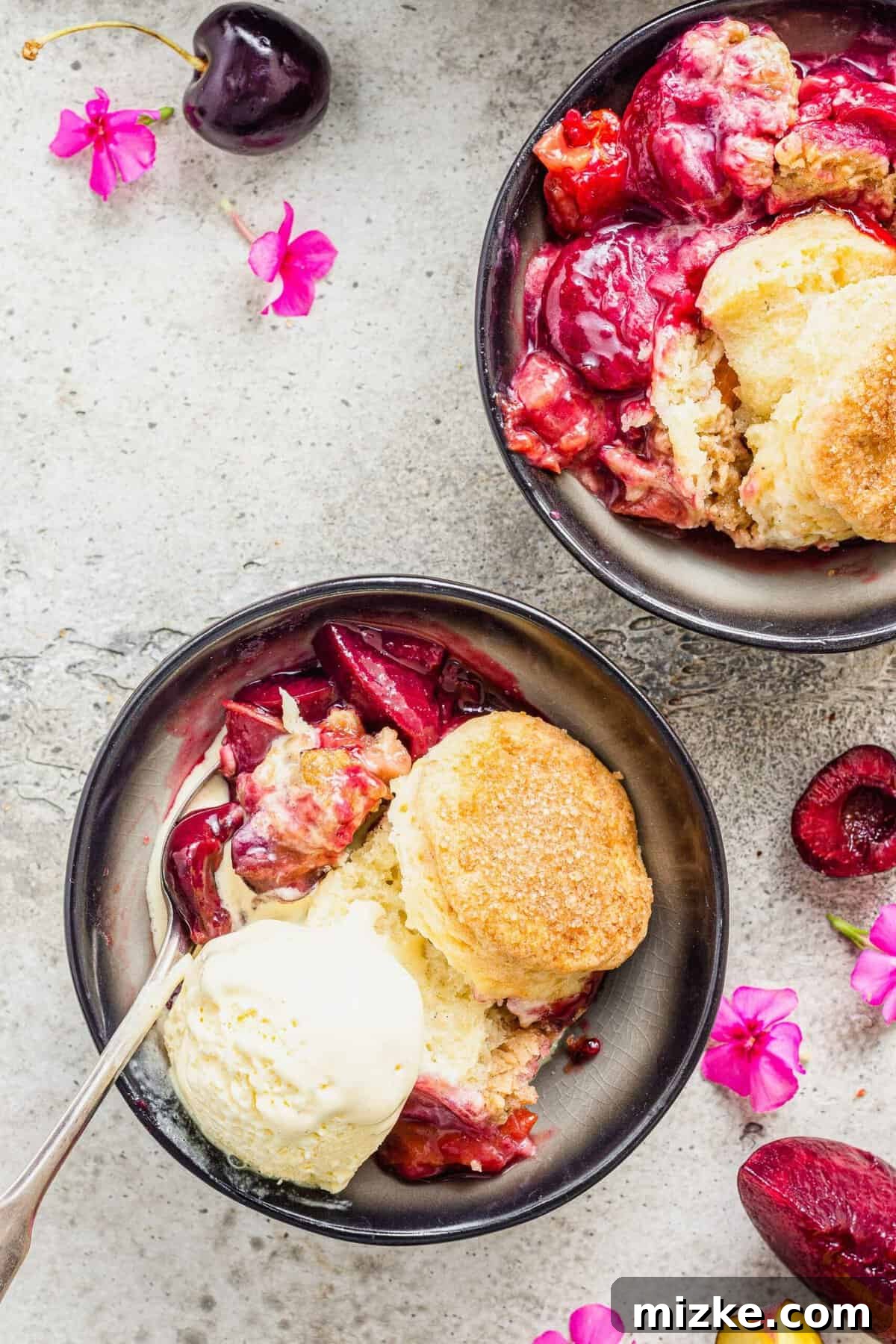
Serving Your Delicious Cobbler
The classic and arguably best way to enjoy a warm fruit cobbler is with a generous scoop of cold vanilla ice cream. The creamy ice cream slowly melts into the warm, bubbling fruit, creating a divine sauce that is pure comfort. It’s like a deconstructed crème anglaise without any of the extra effort! However, there are many other delightful ways to serve this irresistible dessert:
- A dollop of freshly whipped cream, its lightness providing a perfect contrast to the rich cobbler.
- A spoonful of tangy crème fraîche or even Greek yogurt for a slightly tart, creamy element.
- Garnish with a sprig of fresh mint or thyme for a touch of elegance and an herbaceous note.
- A delicate drizzle of honey or a homemade caramel sauce for an extra layer of sweetness.
- Simply dusted with powdered sugar for a beautiful presentation.
Remember, this cobbler is truly at its peak when served warm, allowing the flavors to meld and the fruit filling to remain perfectly gooey.
How to Store Leftovers
While stone fruit cobbler is undoubtedly best enjoyed the day it’s made, especially while still warm from the oven, any leftovers can be stored. Cover the baking dish tightly with plastic wrap or aluminum foil and refrigerate within two hours of baking. Leftovers will keep well in the fridge for up to 1-2 days. You can enjoy them cold, or gently rewarm individual servings in the microwave or in a 350ºF (175ºC) oven until heated through.
Can This Recipe Be Frozen?
Yes, this double-crust stone fruit cobbler freezes beautifully! You can freeze it as a whole cobbler or portion it into individual servings for easy reheating later. To freeze, ensure the cobbler is completely cooled. Then, transfer it to an airtight, freezer-safe container. It can be stored in the freezer for up to 3 months. When you’re ready to enjoy, thaw the cobbler overnight in the refrigerator. Once thawed, reheat it in a 350ºF (175ºC) oven until warmed through and bubbling, or microwave individual portions until hot.
Print Recipe
Double-Crust Stone Fruit Cobbler
Julie Chiou
20 minutes
50 minutes
1 hour 10 minutes
8 servings
Equipment
- Food processor
- Large rimmed baking sheet
- Baking dish (or cast-iron skillet)
Ingredients
Biscuits:
- 2 cups all-purpose flour, spooned and leveled (250 grams)
- 1 ½ teaspoon baking powder
- ¼ teaspoon baking soda
- 2 teaspoons granulated sugar
- ½ teaspoon salt
- ½ cup unsalted butter, cold and cubed (115 grams), plus more to brush the tops of the biscuits
- ⅔ cup buttermilk, cold (160 grams)
- Coarse sugar, for sprinkling
Crumble Topping:
- ½ cup all-purpose flour (62 grams)
- ½ cup rolled oats (50 grams)
- 2 Tablespoons light brown sugar (30 grams)
- ½ teaspoon cinnamon
- Pinch of salt
- 4 Tablespoons unsalted butter, cold and cubed (60 grams)
Filling:
- 6 cups mixed stone fruit, sliced, approx 2 pounds (see tips for fruit selection)
- ⅓ cup light brown sugar, packed (80 grams)
- 2 Tablespoons cornstarch (15 grams)
- 1 Tablespoon lemon juice
- 1 teaspoon vanilla extract
Instructions
- Preheat oven to 400°F (200°C).
- To make the biscuits, place flour, baking powder, baking soda, sugar, and salt in a large food processor bowl. Pulse a few times until combined.
- Add cubed butter and pulse several times until coarse crumbs form. Transfer the dough into a large bowl and make a well. Drizzle in the buttermilk and fold everything together using a rubber spatula or a wooden spoon. The dough will be crumbly with some wet spots. (See notes if you don’t have a food processor).
- Turn the dough out onto a floured surface and bring it together with floured hands. The dough may become sticky, so flour your hands often.
- Flatten the dough into a rectangle, and using a pastry cutter or a knife, cut it into four pieces. Stack the pieces on top of each other and gently press down to flatten. Repeat this step 2 more times. Roll the dough to about a 1-inch thick rectangle, and using a round cookie cutter, cut the dough into 12-15 smaller biscuits (how many biscuits you’ll get depends on how large your cookie cutter is). Transfer biscuits to a parchment-lined plate or a baking sheet and place them in the fridge for 15-20 minutes.
- For the crumble, combine dry ingredients in a small bowl. Add butter and mix with your hands until the mixture is moist and crumbly. Place the mixture in the fridge while you make the filling.
- For the filling, in a 9-10 inch baking dish (or cast-iron skillet), toss together the fruit, brown sugar, cornstarch, lemon juice, and vanilla. Sprinkle the crumble evenly over the fruit. Remove the biscuits from the fridge and arrange them on top of the filling/crumble. Brush with melted butter and sprinkle with coarse sugar.
- Bake for 40-50 minutes or until the filling is bubbling and the biscuits are golden brown.
- Serve warm with a scoop of ice cream, if desired.
Notes
- If you don’t own a food processor, whisk the dry ingredients in a large bowl, using two forks or a pastry blender, cut in the butter until the mixture resembles coarse meal. Make a well in the center of the dough and pour buttermilk; stir until combined. Continue with the steps written in the method.
- You can use any kind of stone fruit or a mixture. We used a mix of peaches, nectarines, cherries, plums, and apricots.
- The cobbler is best eaten the same day it’s made, especially while still warm. Keep leftovers in the fridge and eat them within a day.
Nutrition Information (Approximate)
This website provides approximate nutrition information for convenience and as a courtesy only. Nutrition information can vary for a variety of reasons. For the most precise nutritional data, use your preferred nutrition calculator based on the actual ingredients you used in the recipe.
The default measuring system for this website is US Customary. Unit conversions are provided for convenience and as a courtesy only. While we strive to provide accurate unit conversions, please be aware that there may be some discrepancies.