
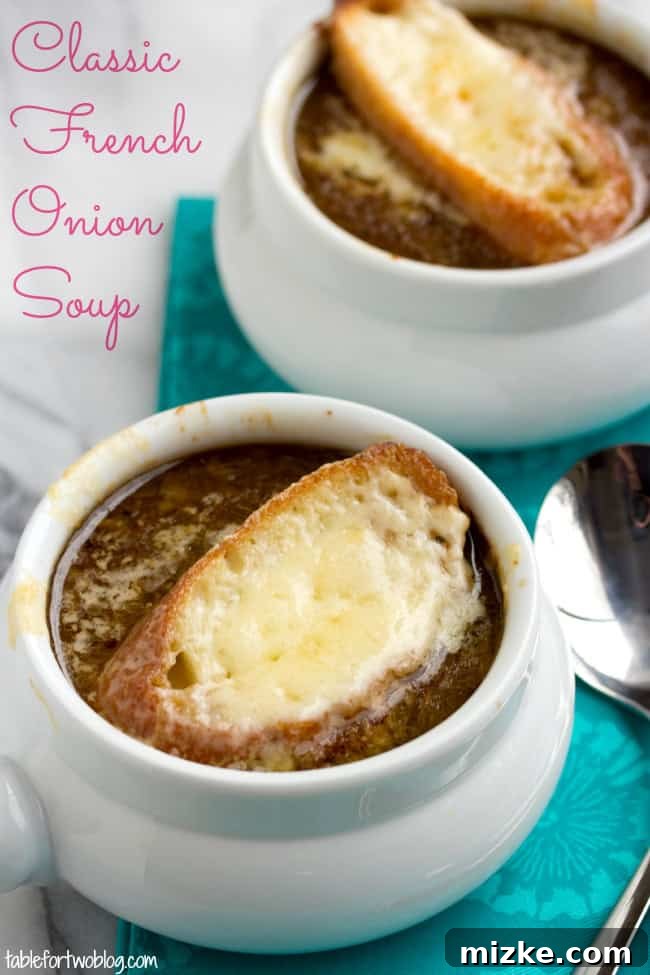
For a significant part of my life, the mere thought of onions in anything beyond a subtle flavoring was enough to make me politely decline a dish. As a food blogger, admitting to a long-standing aversion to such a fundamental ingredient might sound paradoxical. How did I manage in the kitchen, you ask? Simple: I’d cook with them, but meticulously pick out every last piece before serving myself. This rather particular habit meant that many classic dishes, particularly those where onions are the undeniable star, remained unexplored territory for me. And perhaps no dish epitomized this more than French Onion Soup – a concoction I couldn’t fathom, let alone enjoy, given its very essence is built upon layers of this once-dreaded vegetable.
The Allure of Classic French Onion Soup: A Culinary Revelation
My journey to becoming an onion enthusiast was a gradual one, truly blossoming during my college years. Still, it took another significant step before I was ready to embrace French Onion Soup. That moment arrived a little over a year into my relationship with Jason, when we decided to dine at an elegant French restaurant. By then, my palate had evolved, and I had not only grown to tolerate but actually cherish the depth and sweetness onions could bring to a dish. With newfound confidence, we each ordered a bowl of the restaurant’s famous French Onion Soup. It was my very first time experiencing this iconic dish, and I can unequivocally say, I don’t think I had ever been so utterly captivated by a soup in my entire life.
A Personal Journey: From Onion Aversion to Culinary Love
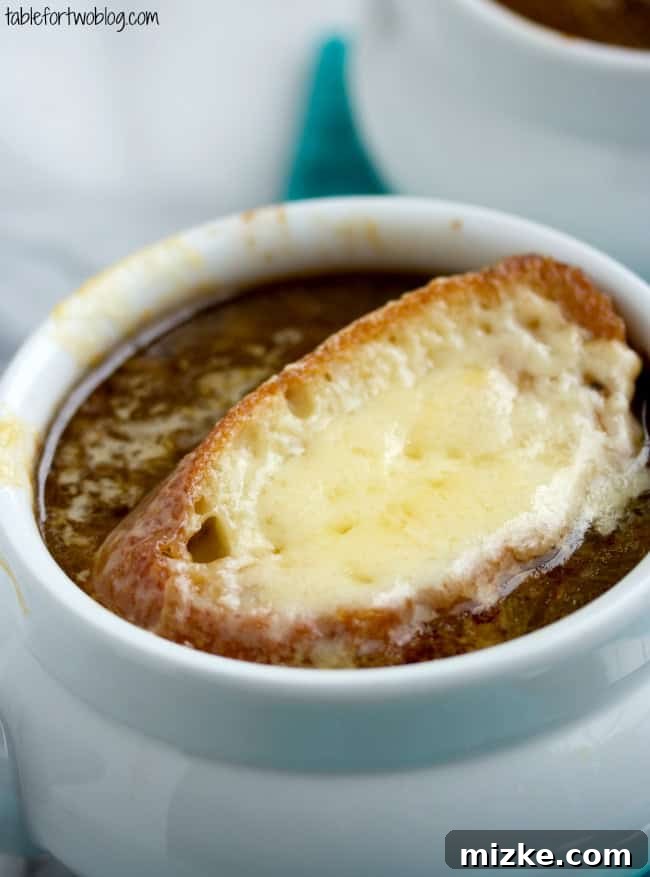
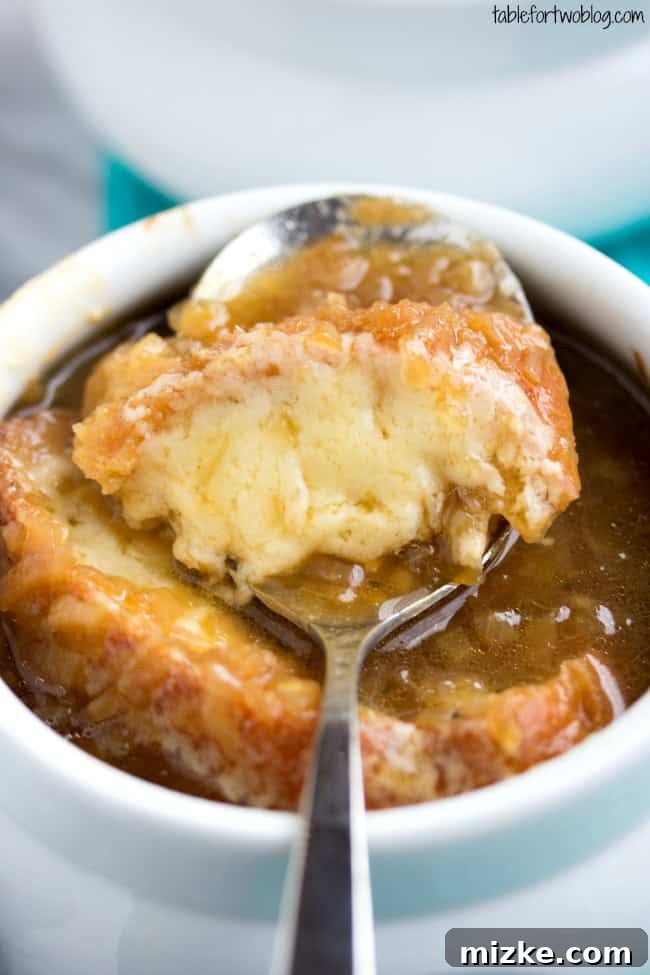
The experience was nothing short of a revelation. The golden-brown, bubbly Gruyère topping, perfectly melted over a crisp slice of baguette, provided an irresistible salty-savory counterpoint. But what truly enchanted me was the soup itself: a luxurious, deeply flavored broth infused with the most incredible sweet caramelized onion essence. It wasn’t just a meal; it was an experience of pure comfort, warmth, and culinary sophistication. The aroma, the texture, the harmonious blend of flavors – it all combined into a memory that has stayed with me. To this day, I still dream about that soup, and every time Jason and I pass that restaurant, I’m reminded of that unforgettable first taste of French Onion Soup.
Unveiling the Magic: Why This Soup Transcends the Ordinary
French Onion Soup is more than just a dish; it’s a testament to the transformative power of simple ingredients and the magic of patience. It’s widely regarded as one of the ultimate comfort foods, a hearty, soulful bowl that warms you from the inside out. Its rich history traces back centuries, often served as a modest meal for the working class due to its reliance on inexpensive, readily available ingredients like onions, broth, and stale bread. Over time, it evolved, gaining its signature cheesy topping and becoming a staple in French bistros and fine dining establishments worldwide. What makes it so universally beloved is its profound depth of flavor, achieved through a process that, while requiring time, is surprisingly straightforward.
The Art of Patience: Mastering Caramelized Onions
Inspired by that memorable restaurant experience and facing a weekend forecast of brutal chill, I decided it was the perfect time to attempt making this beloved soup at home. The process was a joy from start to finish. The sweet, inviting scent of onions slowly caramelizing permeated every corner of my home, creating an atmosphere of warmth and anticipation. There’s truly nothing quite like it. However, I must emphasize a crucial point: making this soup is unequivocally a labor of love. The bulk of the time, and indeed the secret to its outstanding taste, lies in the meticulous caramelization of the onions. This isn’t a step you can rush.
The Transformative Power of Time
For those new to the process, “caramelizing onions” might sound daunting, but it’s simply cooking them very slowly over low heat until their natural sugars break down and they turn a beautiful, deep golden-brown. This transformation takes time – significant time. In this recipe, we dedicate a full two hours to this stage alone. This extended cooking time is what coaxes out the incredible sweetness and complex savory notes from the onions, creating the rich, amber base that defines authentic French Onion Soup. If you’re pressed for time and cannot commit to this patient process, I strongly advise saving this recipe for another day. Rushing the caramelization will result in a soup that lacks the signature depth and exquisite flavor, and trust me, you won’t get the desired outstanding results.
Another distinctive aspect of this particular recipe is its departure from traditional beef stock. Instead, it utilizes water, which might surprise some French Onion Soup purists. However, I can assure you, the absence of beef stock is not only unnoticed but actually highlights the pure, unadulterated flavor of the caramelized onions even more. It allows their natural sweetness and savory complexities to shine through without competition, making for an incredibly clean and vibrant soup. This thoughtful adaptation also means that this recipe is wonderfully suitable for both vegetarians and meat lovers alike, allowing everyone to savor its comforting embrace without compromise. Do not be tempted to add beef stock, as it could fundamentally alter the delicate balance of flavors we’re striving for here.
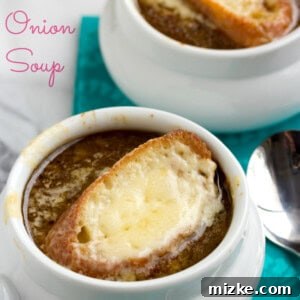
Classic French Onion Soup
By: Julie Chiou
Making this Classic French Onion Soup truly is a labor of love, but it’s so worth it for this comforting, flavorful masterpiece!
Prep Time: 5 minutes
Cook Time: 3 hours
Total Time: 3 hours 5 minutes
Servings: 6
Print Recipe
Equipment
- Dutch oven
Ingredients
- 3 tablespoons (42 g) unsalted butter
- 3 pounds (1361 g) yellow onions, cut into 1/8-inch pieces
- ½ teaspoon salt, plus more if needed
- 1 pinch of sugar
- 1 tablespoon all purpose flour
- 8 cups (1893 ml) of water
- 1 sprig fresh thyme, or 1/2 tsp. dried thyme
- ¼ cup (59 ml) dry white wine
- 1 crusty baguette
- 8 ounces (227 g) gruyere cheese
Instructions
- Melt butter in a large Dutch oven or soup pot over medium heat. Add the sliced yellow onions, salt, and sugar. Cover the pot and cook for 10 minutes to allow the onions to soften and release their moisture.
- Remove the lid and continue cooking the onions over medium-low heat, stirring frequently, for an additional 90 minutes. This extended cooking period is crucial for achieving a beautiful, even golden-brown caramelization.
- Once the onions reach a golden-brown stage, begin stirring every 5 minutes and add a tablespoon of water at a time. This technique, known as deglazing, helps to loosen the flavorful browned bits from the bottom of the pan. Continue this process for another 30 minutes until the onions are an even darker, deeply caramelized brown, rich in color and flavor.
- Sprinkle the all-purpose flour over the caramelized onions and stir continuously for 1-2 minutes. The flour will lightly toast and help to thicken the soup.
- Gradually add the 8 cups of water and the sprig of fresh thyme to the pot. Bring the mixture to a boil, then reduce the heat to a simmer. Pour in the dry white wine and let the soup gently simmer for 10 minutes, allowing the flavors to meld. Taste and adjust the seasoning with additional salt if needed.
- While the soup simmers, prepare the baguette for the topping. Turn on your oven broiler and position an oven rack in the upper-middle section. Slice your crusty baguette into 3/4-inch thick pieces.
- Carefully place the baguette slices on a baking sheet and broil them for 1-2 minutes on each side, or until they are lightly golden brown and crisp. Watch them closely to prevent burning. Remove the toasted baguette slices from the oven and set them aside.
- Once the soup is ready, carefully ladle it into individual oven-safe bowls. Place one slice of toasted baguette on top of each bowl of soup, then top the baguette with a generous slice or sprinkle of Gruyère cheese.
- Place the filled bowls back into the oven under the preheated broiler. Broil for approximately 5 minutes, or until the Gruyère cheese is completely melted, bubbly, and has achieved a beautiful golden-brown crust.
- Allow the French Onion Soup bowls to cool for 5 minutes before serving. Please exercise extreme caution, as the ceramic bowls will be very hot. Enjoy your comforting, homemade soup!
- Store any leftover soup (without the baguette and cheese topping) in an airtight container in the refrigerator for up to 3-4 days.
Notes
Source: Cook’s Illustrated
Nutrition Information (per serving)
- Serving:
- 1 serving
- Calories:
- 424kcal
- Carbohydrates:
- 44g
- Protein:
- 18g
- Fat:
- 20g
- Saturated Fat:
- 11g
- Trans Fat:
- 1g
- Cholesterol:
- 57mg
- Sodium:
- 602mg
- Potassium:
- 419mg
- Fiber:
- 5g
- Sugar:
- 10g
Important Disclaimers
This website provides approximate nutrition information for convenience and as a courtesy only. Nutrition information can vary for a variety of reasons. For the most precise nutritional data, use your preferred nutrition calculator based on the actual ingredients you used in the recipe.
The default measuring system for this website is US Customary. Unit conversions are provided for convenience and as a courtesy only. While we strive to provide accurate unit conversions, please be aware that there may be some discrepancies.
Why Homemade French Onion Soup is a Must-Try
There’s a unique satisfaction that comes from creating a classic dish from scratch, and French Onion Soup is no exception. Beyond the incredible flavor, making it at home allows you to control the quality of ingredients, adapt it to dietary preferences (like this vegetarian-friendly version), and truly appreciate the culinary process. It transforms your kitchen into a haven of comforting aromas, especially during colder months. The slow, meditative process of caramelizing onions can even be a therapeutic experience, offering a delightful escape into the world of flavor development. It’s a meal that feels special enough for a dinner party, yet comforting enough for a quiet night in, making it incredibly versatile.
Tips for Perfect French Onion Soup Every Time
Achieving French Onion Soup perfection isn’t difficult, but a few key pointers can elevate your homemade batch from good to unforgettable:
- Choose the Right Onions: Yellow onions are generally preferred for French Onion Soup due to their balanced sweetness and pungency, which mellows beautifully during caramelization. Avoid red onions, which can be too sweet, or white onions, which might be too sharp.
- Slice Uniformly: Consistent slicing ensures that all onion pieces caramelize evenly. A mandoline can be a great tool for this, or simply take your time with a sharp knife to achieve uniform 1/8-inch thickness.
- Don’t Skimp on Butter: Butter is essential for both flavor and facilitating the caramelization process. Use good quality unsalted butter to control the overall saltiness.
- Patience is Key for Caramelization: This cannot be stressed enough. Low heat and long cooking times are non-negotiable for truly sweet, deeply flavored caramelized onions. Resist the urge to crank up the heat, as this will burn the onions rather than caramelize them.
- Deglaze Thoroughly: The browned bits at the bottom of your pot (fond) are packed with flavor. Using small amounts of water or wine to scrape them up is crucial for building the soup’s depth.
- Use a Good Wine: A dry white wine, like Sauvignon Blanc or Pinot Grigio, adds a delightful acidity and complexity to the broth. Don’t use cooking wine; choose something you’d enjoy drinking.
- Quality Cheese Matters: Gruyère cheese is the traditional choice for its nutty, slightly sweet, and excellent melting qualities. While other cheeses like Comté or Emmenthal can be used, Gruyère offers that quintessential French Onion Soup experience.
- Serve Immediately: French Onion Soup is best enjoyed fresh from the broiler, with the cheese still bubbling and the broth piping hot.
Embracing the Comfort
As the colder months approach, or simply when you’re in need of a dish that offers a comforting embrace, this Classic French Onion Soup is an absolute winner. It’s a culinary journey from simple ingredients to profound flavors, a true testament to the beauty of slow cooking and patience. I hope this detailed guide encourages you to embark on your own French Onion Soup adventure. The aroma, the warmth, the exquisite taste – it’s all waiting for you. May your weekend be warm, relaxing, and filled with delicious homemade meals like this one!