
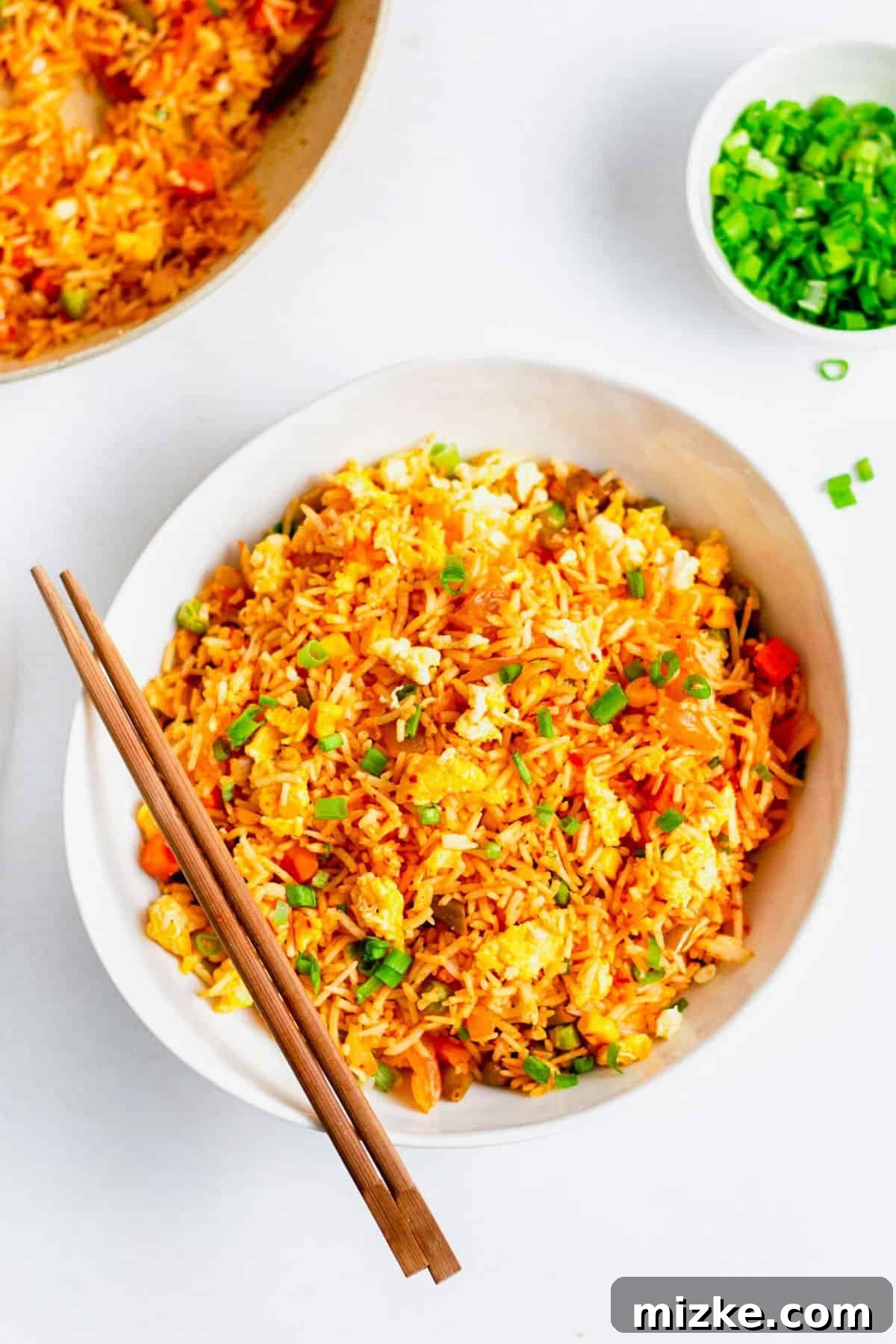
Welcome to your new favorite weeknight meal! This Kimchi Fried Rice recipe is a culinary triumph – incredibly easy to prepare, bursting with vibrant flavors, endlessly customizable, and ready on your table in less than 30 minutes. It’s truly a winning dish that will quickly become a staple in your rotation.
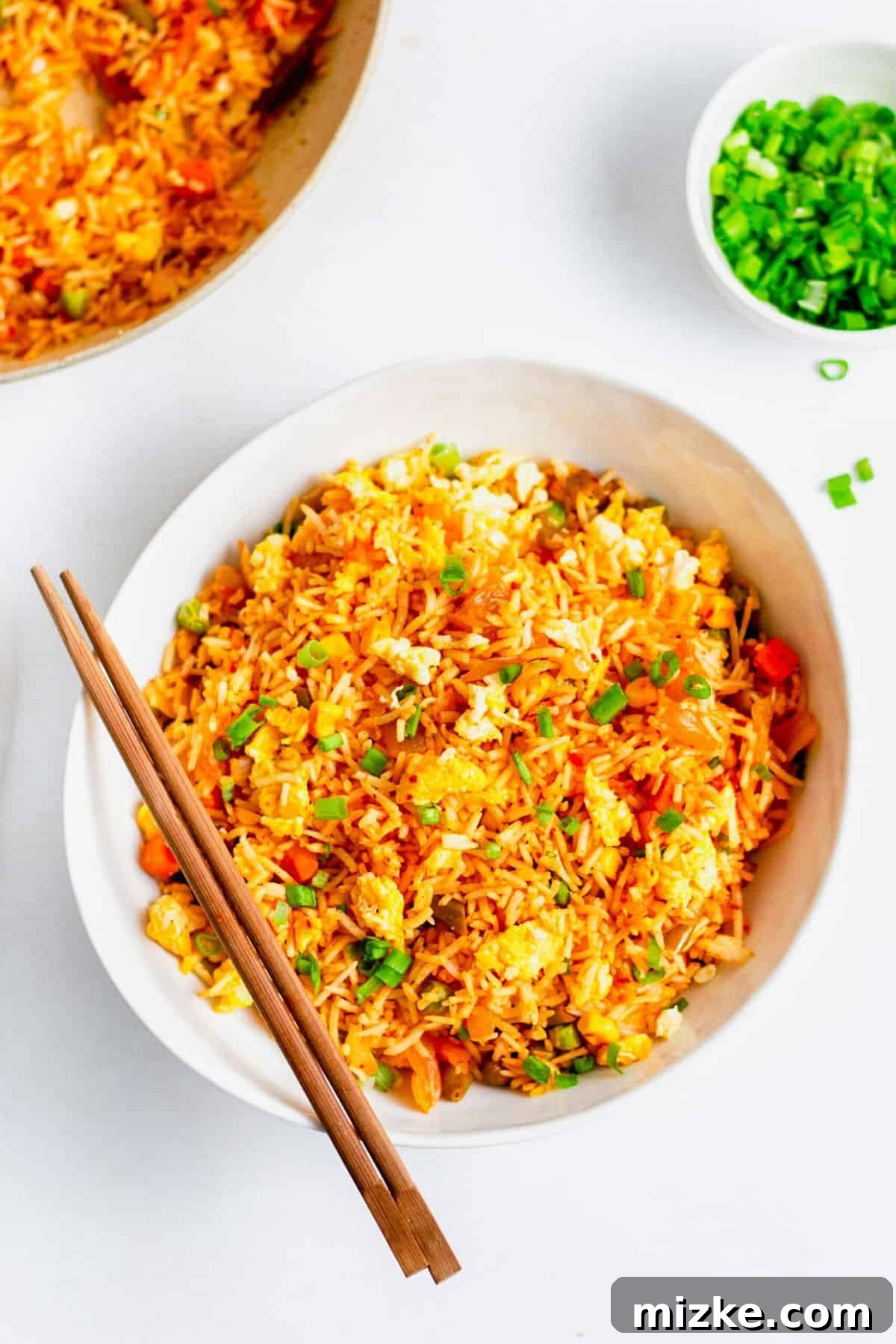
The Irresistible Allure of Kimchi Fried Rice
There’s a reason kimchi fried rice (also known as Kimchi Bokkeumbap) holds a special place in the hearts of many, both in Korea and around the globe. It’s the ultimate comfort food, marrying the unique, tangy, spicy, and umami-rich flavors of fermented kimchi with fluffy rice and a medley of simple ingredients. What makes it even better is how incredibly simple it is to whip up, especially when you have leftover rice on hand.
For me, keeping a jar of homemade kimchi in my refrigerator is an absolute must. Its pungent garlicky, fiery spicy, and distinctly tangy profile offers an instant flavor boost to almost any dish. Beyond its delicious taste, kimchi is a nutritional powerhouse, packed with probiotic bacteria from its fermentation process, making it a super healthy addition to your diet. This kimchi fried rice stands out as one of my absolute favorite and most frequent ways to enjoy kimchi!
Why This Recipe Will Become Your Go-To
This particular recipe, a beloved staple from my personal cookbook, is one I find myself making time and time again. Its versatility is unmatched: it can serve as a vibrant side dish, complementing robust main courses like Pineapple Soy Grilled Chicken or savory Korean Beef. Alternatively, elevate it to a complete meal by crowning it with a perfectly fried egg, its runny yolk adding an extra layer of richness.
Planning is key to making this dish truly shine. Since it relies on day-old white rice for optimal texture, I often strategize my weekly meals around it. I’ll prepare a generous batch of white rice early in the week, enjoying half of it with something like Crockpot Honey Sesame Chicken, and then consciously reserving the rest specifically for this mouthwatering kimchi fried rice. This simple trick ensures I’m always just minutes away from a flavorful, satisfying meal.
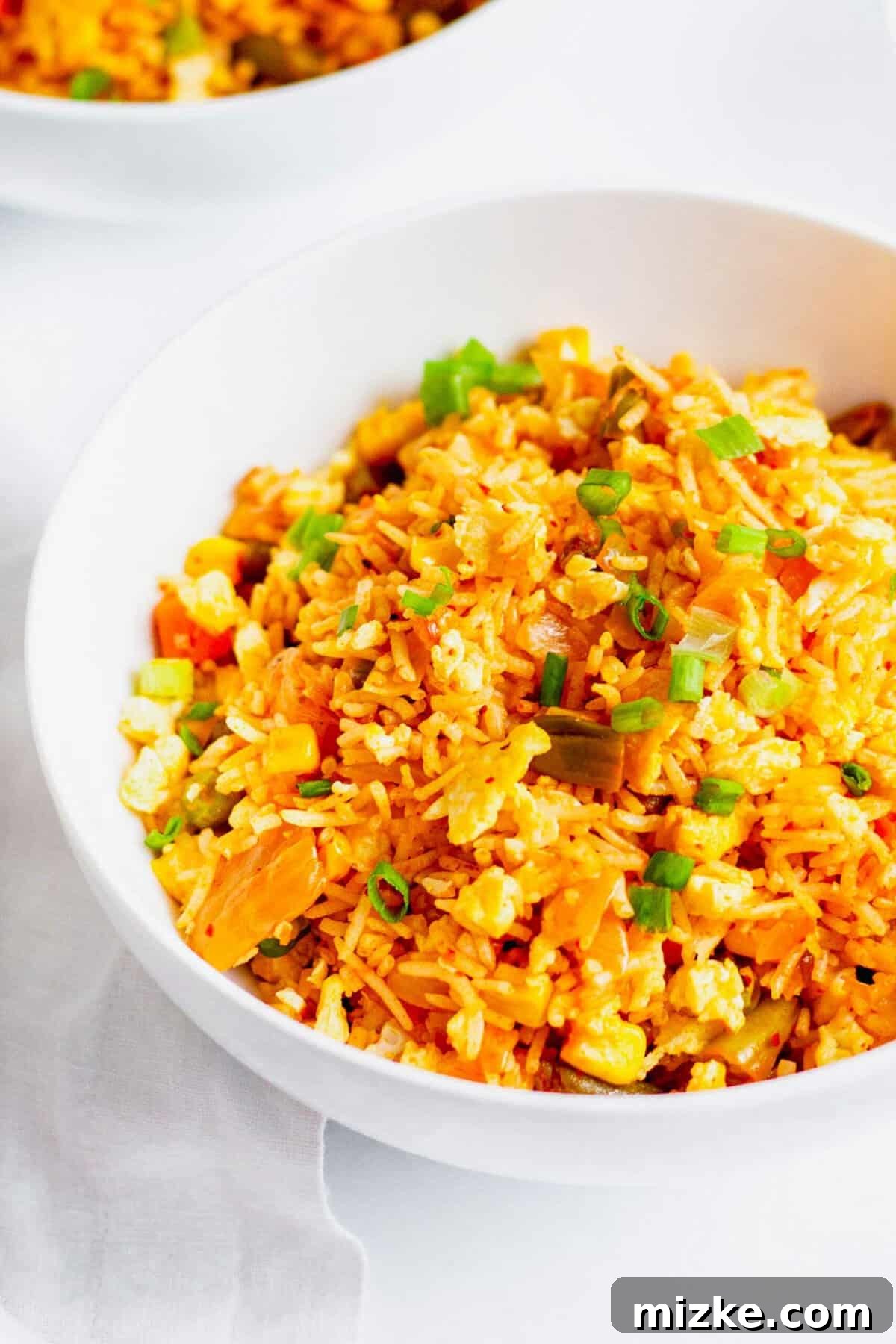
Essential Ingredients for Perfect Kimchi Fried Rice
Beyond the star ingredient, kimchi, you’ll find that most of what you need for this recipe are standard fried rice staples. Each plays a crucial role in building layers of flavor and texture:
- Vegetable Oil: A neutral-flavored cooking oil like canola oil or grapeseed oil is ideal. It allows the other ingredients’ flavors to shine without imparting its own. You’ll use it to scramble the eggs and sauté the vegetables.
- Eggs: Essential for that classic fried rice texture and added protein. They’re scrambled separately and then folded in, adding a delightful creaminess and rich flavor.
- Onion: Diced small, onions provide a foundational sweetness and aromatic depth once sautéed, mellowing as they cook.
- Frozen Mixed Vegetables: A convenient way to add color, texture, and nutrition. I typically opt for a blend of corn, peas, and carrots, but feel free to use your favorite mix. Ensure they are thawed before adding to the pan for even cooking.
- Garlic: While kimchi itself is very garlicky, a single clove of finely minced fresh garlic further enhances the aromatic base of the dish. Be mindful not to overdo it, as the kimchi brings a significant garlic punch already!
- Kimchi: The undeniable star! Whether you choose homemade or quality store-bought kimchi, ensure it’s ripe and flavorful. Roughly chop it into bite-sized pieces for easier eating and distribution throughout the rice. Fermented, older kimchi often provides a deeper, more complex flavor profile perfect for frying.
- Kimchi Juice: Don’t discard the liquid from your kimchi jar! This flavorful juice is a golden secret ingredient, intensifying the kimchi flavor in the fried rice and contributing to its vibrant color.
- Day-Old, Cooked White Rice: This is arguably the most critical ingredient for achieving authentic fried rice texture. We’ll delve into why below.
- Kosher Salt: For seasoning and balancing the overall taste. Adjust to your preference.
- Ground Black Pepper: Adds a subtle warmth and aromatic finish.
The Day-Old Rice Secret: Why It’s Crucial
You might be wondering why “day-old” rice is so frequently emphasized in fried rice recipes. It’s not just a suggestion; it’s a fundamental principle for achieving the perfect, non-mushy texture! Freshly cooked rice retains a high moisture content, which, when stir-fried, tends to steam rather than fry. This results in a soft, clumpy, and often oily final product.
Day-old rice, on the other hand, has had time to dry out in the refrigerator, reducing its moisture. This allows the individual grains to separate beautifully and absorb the flavors of your other ingredients without becoming soggy. It gets that desirable slightly chewy texture and a subtle crispness on the edges when properly fried.
What if I don’t have leftover white rice? Here’s a quick fix: If you’re short on time and craving kimchi fried rice right now, you can quickly prepare fresh rice for frying. Cook your white rice as usual, then immediately spread it out in a thin, even layer on a rimmed baking sheet. This maximizes surface area for cooling and drying. Place it in the refrigerator for at least 20-30 minutes, or even in the freezer for 10-15 minutes, until it’s cool and relatively dry to the touch. This process rapidly reduces its moisture content, mimicking day-old rice, and will prevent your fried rice from becoming mushy.
How to Make Kimchi Fried Rice: A Simple Step-by-Step Guide
Ready to create a satisfying and flavor-packed dinner in under 30 minutes? Follow these easy steps to prepare your ultimate kimchi fried rice:
- Prepare the Eggs: Begin by heating 1/2 tablespoon of vegetable oil in a large skillet or wok over medium-high heat. Once the oil is shimmering and hot, crack in your eggs and quickly scramble them until they are just cooked through but still tender. Transfer the cooked scrambled eggs to a clean bowl and set them aside.
- Sauté Aromatics and Kimchi: To the same skillet, add the remaining 1/2 tablespoon of vegetable oil. Once hot, add the diced onion, thawed frozen vegetables, finely minced garlic, the roughly chopped kimchi, and the kimchi juice. Sauté this vibrant mixture, stirring occasionally, for about 3 minutes, or until the onion becomes translucent and softened, and the kimchi has softened slightly and released its fragrant aromas.
- Introduce the Rice: Add the day-old cooked white rice to the skillet. Use a sturdy spatula or wooden spoon to carefully break up any clumps of rice, ensuring it separates into individual grains. This is crucial for even cooking and to prevent a clumpy texture.
- Combine and Season: Reduce the heat to medium-low. Continue to stir and fold the rice into the vegetable and kimchi mixture, making sure everything is thoroughly incorporated and the rice is evenly coated with the vibrant flavors. Finally, return the scrambled eggs to the skillet. Season generously with kosher salt and ground black pepper, tossing gently to distribute.
- Serve Immediately: Your delicious kimchi fried rice is now ready! Serve it hot, straight from the skillet.
Expert Tips for Your Best Kimchi Fried Rice
Once you master the basics of fried rice, you’ll find yourself reaching for this recipe constantly. Here are some extra tips and tricks to ensure every batch is perfect:
- Don’t Crowd the Skillet: This is a golden rule for all fried rice. Overcrowding cools down the pan too much, causing ingredients to steam instead of fry. Use the largest skillet you have, or ideally, a wok, to ensure ingredients have enough space to cook evenly and develop that desirable slightly crispy texture. Cook in batches if necessary.
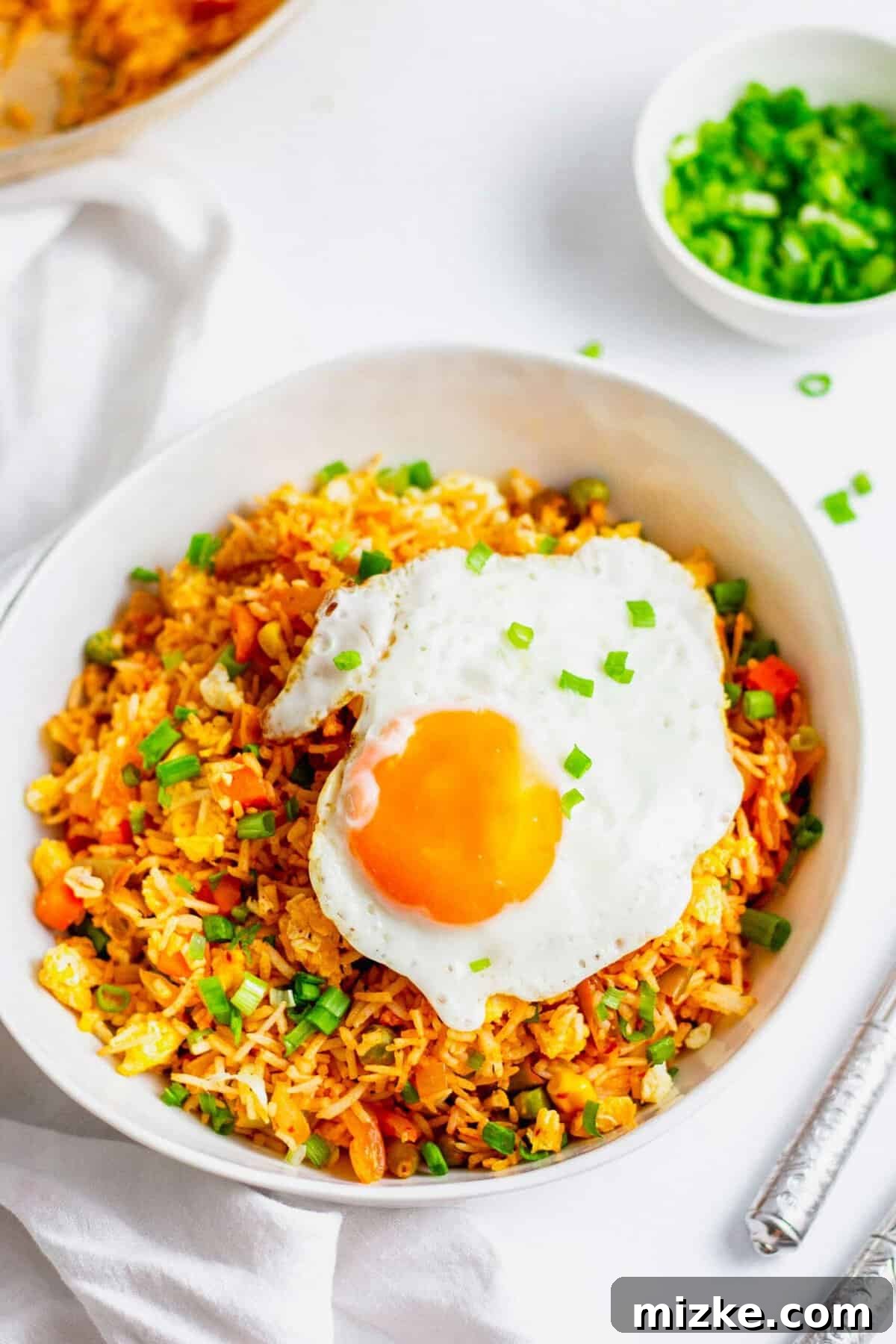
- Perfect Your Fried Egg Topping: A fried egg is a classic accompaniment. For an easy method, once your fried rice is fully cooked, push it to one side of the skillet. Add a tiny bit more oil to the empty side, crack an egg, and fry it to your desired doneness (a runny yolk is highly recommended!). Then, simply slide it onto your serving of rice.
- Boost the Spice with Gochujang: For those who love an extra fiery kick and deeper umami, incorporating gochujang (Korean chili paste) is a game-changer. Add about 1 tablespoon (or more, to taste) of gochujang paste along with the kimchi in step 2. You can typically find gochujang paste in the Korean section of Asian grocery stores or sometimes in the international aisle of larger supermarkets.
- High Heat is Your Friend (Mostly): Fried rice benefits from high heat to achieve that characteristic ‘wok hei’ or smoky flavor and crispness. However, be mindful not to burn the garlic or kimchi. Adjust heat as needed to keep things sizzling without scorching.
- Chop Ingredients Evenly: Uniformly chopped onions, kimchi, and vegetables ensure they cook at the same rate and integrate seamlessly into the rice.
- Customize Your Protein: While delicious on its own, feel free to add cooked protein like diced ham, bacon bits, shredded chicken, or even tofu to make it even heartier. Add cooked proteins in the last minute of cooking to warm through.
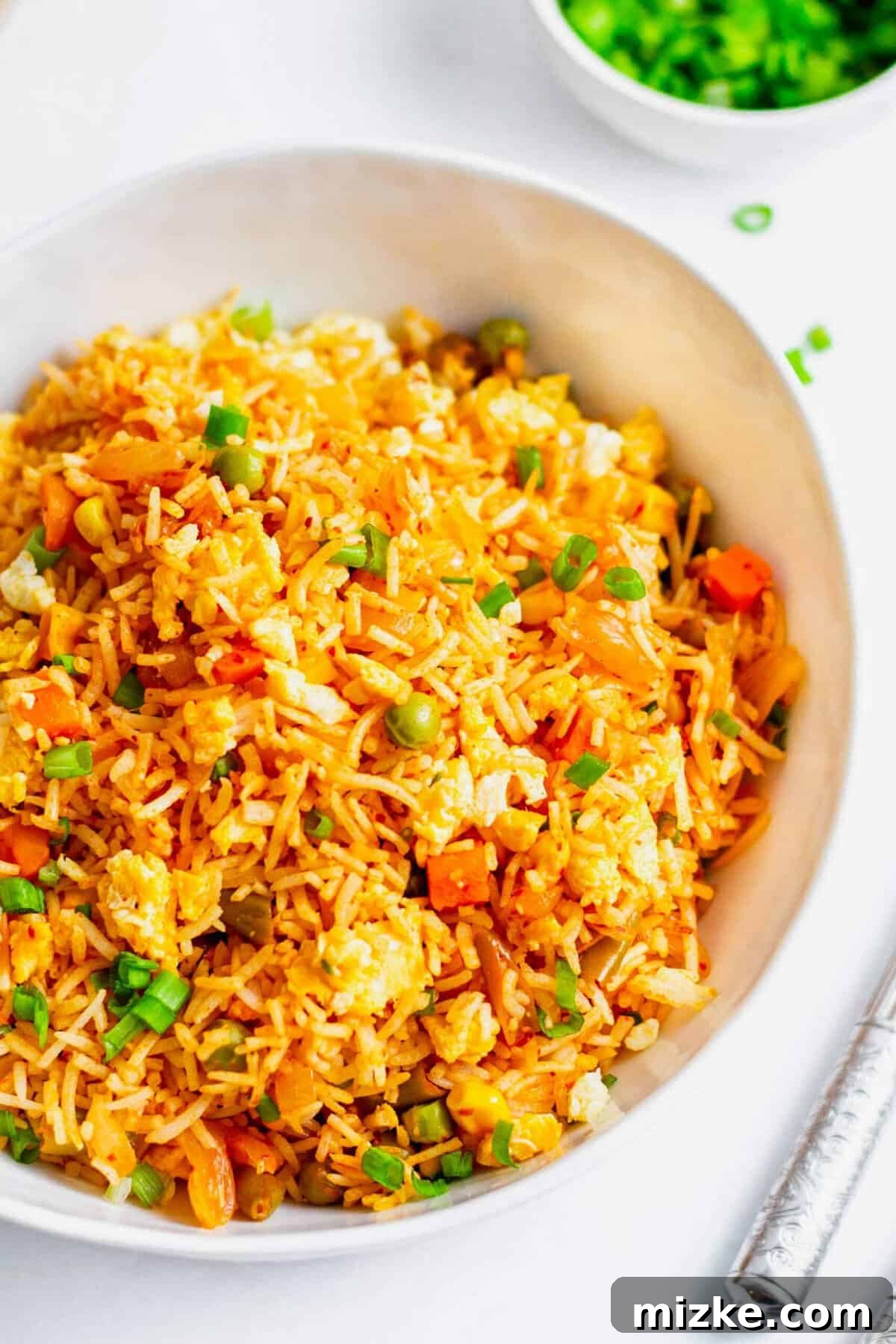
Storing and Reheating Your Kimchi Fried Rice
Kimchi fried rice is always best enjoyed fresh, but leftovers are certainly a treat! To store, transfer any remaining fried rice into an airtight container and refrigerate promptly. It will keep well for up to 2 days.
When you’re ready to enjoy it again, reheat the fried rice in the microwave until warmed through, or for a superior texture, reheat it in a skillet set over medium-high heat on the stovetop. A quick stir-fry will help restore some of its original crispness.
Can Kimchi Fried Rice Be Frozen?
While I believe kimchi fried rice is truly at its peak when eaten fresh, it can indeed be frozen if you have an abundance of leftovers or wish to meal prep. To freeze, allow the cooked fried rice to cool completely. Then, transfer it to an airtight, freezer-safe container or a heavy-duty freezer bag, removing as much air as possible to prevent freezer burn. It can be stored in the freezer for up to 2 months.
When you’re ready to eat, thaw the frozen kimchi fried rice in the refrigerator overnight. Once thawed, reheat it in a skillet over medium-high heat on the stovetop, breaking up any clumps and stirring until it is thoroughly heated and some of its texture returns.
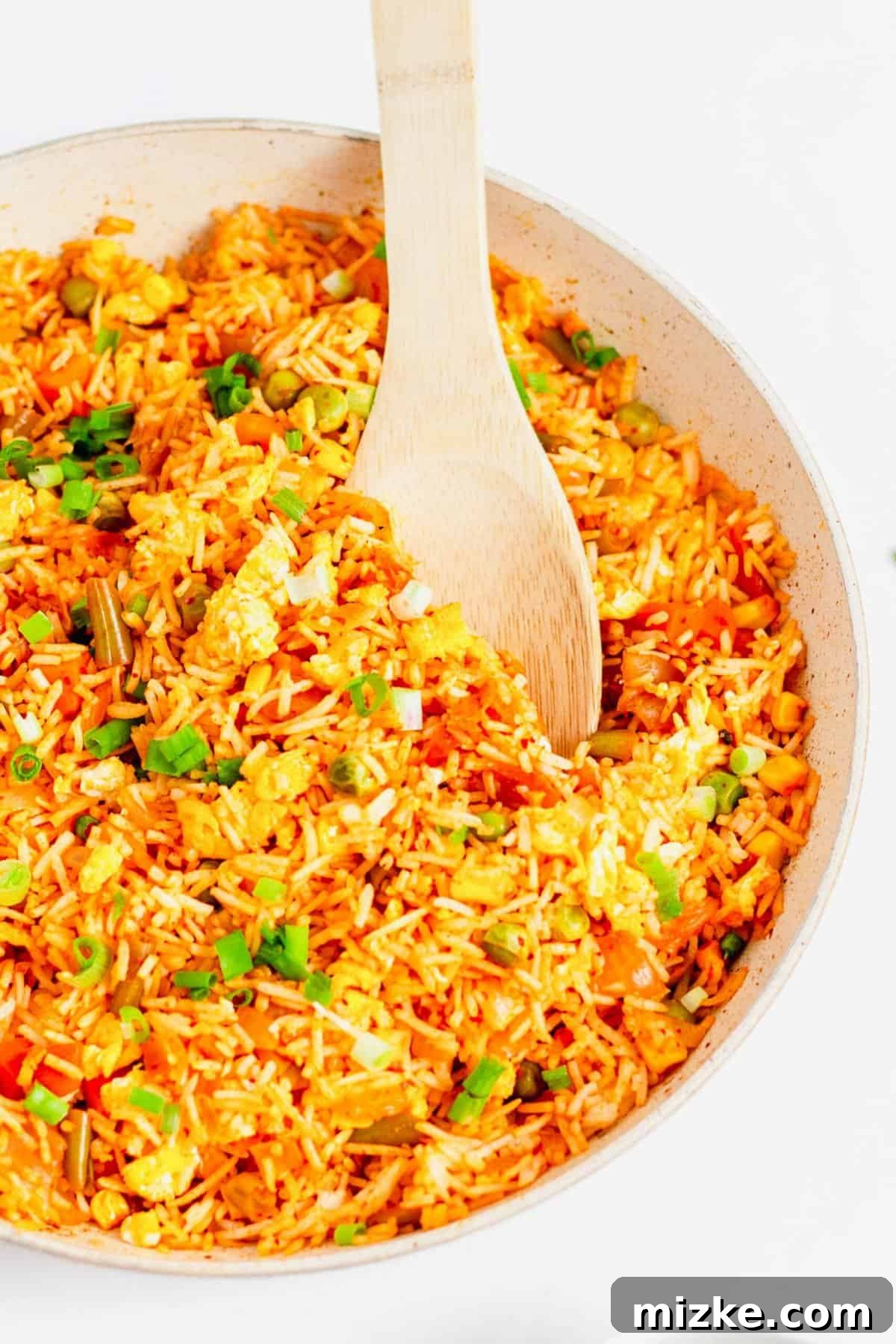
Explore More Delicious Fried Rice Variations
Once you’ve mastered the art of kimchi fried rice, a world of other fried rice possibilities opens up! If you’re yearning for something a bit more traditional and subtly savory, this classic fried rice recipe is calling your name. For those looking to add a satisfying protein kick, both chicken fried rice and hearty steak fried rice offer excellent, flavor-packed options to explore. The beauty of fried rice lies in its adaptability, so don’t hesitate to experiment with your favorite ingredients!
Frequently Asked Questions About Kimchi Fried Rice
- What kind of kimchi is best for fried rice?
A good quality, well-fermented (or “sour”) kimchi is ideal. The fermentation process deepens the flavors, making it more tangy and complex, which translates into a more delicious fried rice. Fresh kimchi can be used, but it might lack the intense flavor punch of older kimchi.
- Can I add meat to kimchi fried rice?
Absolutely! Many popular versions include meat. Diced Spam, bacon, thin slices of pork belly, ground pork or beef, or even leftover cooked chicken work wonderfully. Cook the meat separately until browned, then add it back to the skillet with the vegetables and kimchi.
- How can I make this vegetarian or vegan?
To make it vegetarian, simply omit the egg or use a plant-based egg substitute. For a vegan version, ensure your kimchi is vegan-friendly (some contain fish sauce or shrimp paste; look for brands explicitly labeled vegan) and omit the egg. You can add extra tofu or mushrooms for protein.
- Why is my fried rice mushy?
The most common culprit for mushy fried rice is using freshly cooked rice that’s too moist. Always use day-old, refrigerated rice. Overcrowding the skillet or not allowing excess moisture to evaporate can also contribute to a mushy texture.
- What can I garnish kimchi fried rice with?
Popular garnishes include a fried egg, toasted sesame seeds, thinly sliced green onions (scallions), a drizzle of sesame oil, or even crumbled seaweed (gim).
Kimchi Fried Rice
Julie Chiou
10 minutes
15 minutes
25 minutes
2 servings
Ingredients
- 1 tablespoon vegetable oil, divided
- 2 large eggs
- 1 small onion, diced
- 1 cup (182 g) frozen vegetables (peas, carrots, corn, or others), thawed
- 1 clove garlic, finely minced
- 1 ½ cups (173 g) kimchi, roughly chopped
- 1 tablespoon kimchi juice
- 3 cups (474 g) day-old cooked white rice
- 1 teaspoon kosher salt
- ½ teaspoon ground black pepper
Instructions
-
In a large skillet over medium-high heat, add 1/2 tablespoon vegetable oil. Once the oil is hot, add the eggs to skillet and scramble them. Remove the scrambled eggs from the skillet and set aside in a bowl.
-
Add the remaining 1/2 tablespoon vegetable oil, onion, frozen vegetables, garlic, kimchi, and kimchi juice. Sauté until onion is translucent and cooked through, about 3 minutes.
-
Add the rice to the skillet and carefully break it up with your spatula or wooden spoon.
-
Turn the heat down to medium-low, and continue to stir the rice into the mixture until all is incorporated. Finally, add the scrambled eggs and season with salt and pepper.
-
Serve immediately.
Notes
Nutrition
Calories:
455kcal
,
Carbohydrates:
85g
,
Protein:
16g
,
Fat:
5g
,
Saturated Fat:
2g
,
Polyunsaturated Fat:
1g
,
Monounsaturated Fat:
2g
,
Trans Fat:
1g
,
Cholesterol:
164mg
,
Sodium:
1273mg
,
Potassium:
430mg
,
Fiber:
6g
,
Sugar:
3g
This website provides approximate nutrition information for convenience and as a courtesy only. Nutrition information can vary for a variety of reasons. For the most precise nutritional data use your preferred nutrition calculator based on the actual ingredients you used in the recipe.
The default measuring system for this website is US Customary. Unit conversions are provided for convenience and as a courtesy only. While we strive to provide accurate unit conversions, please be aware that there may be some discrepancies.