
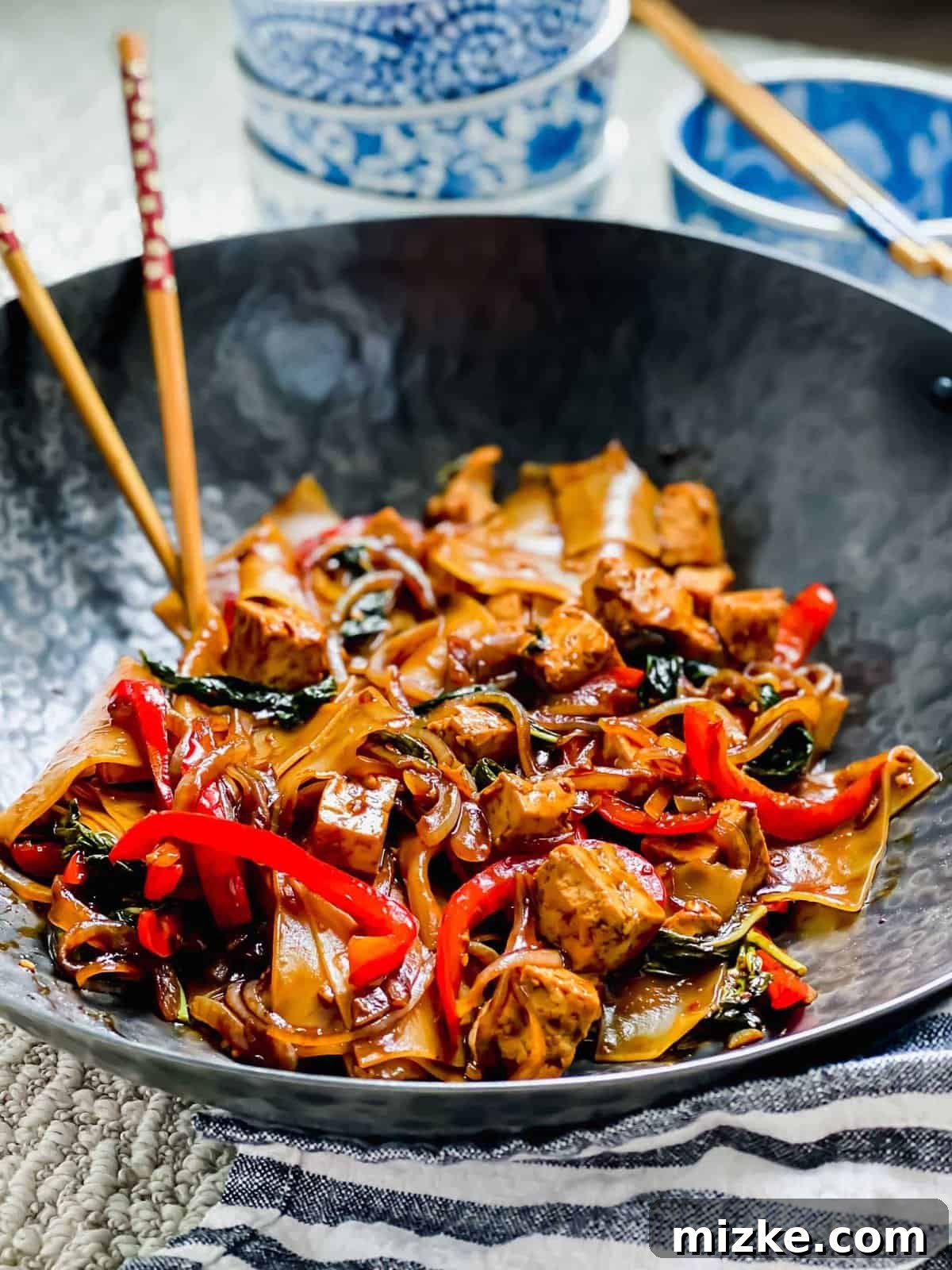
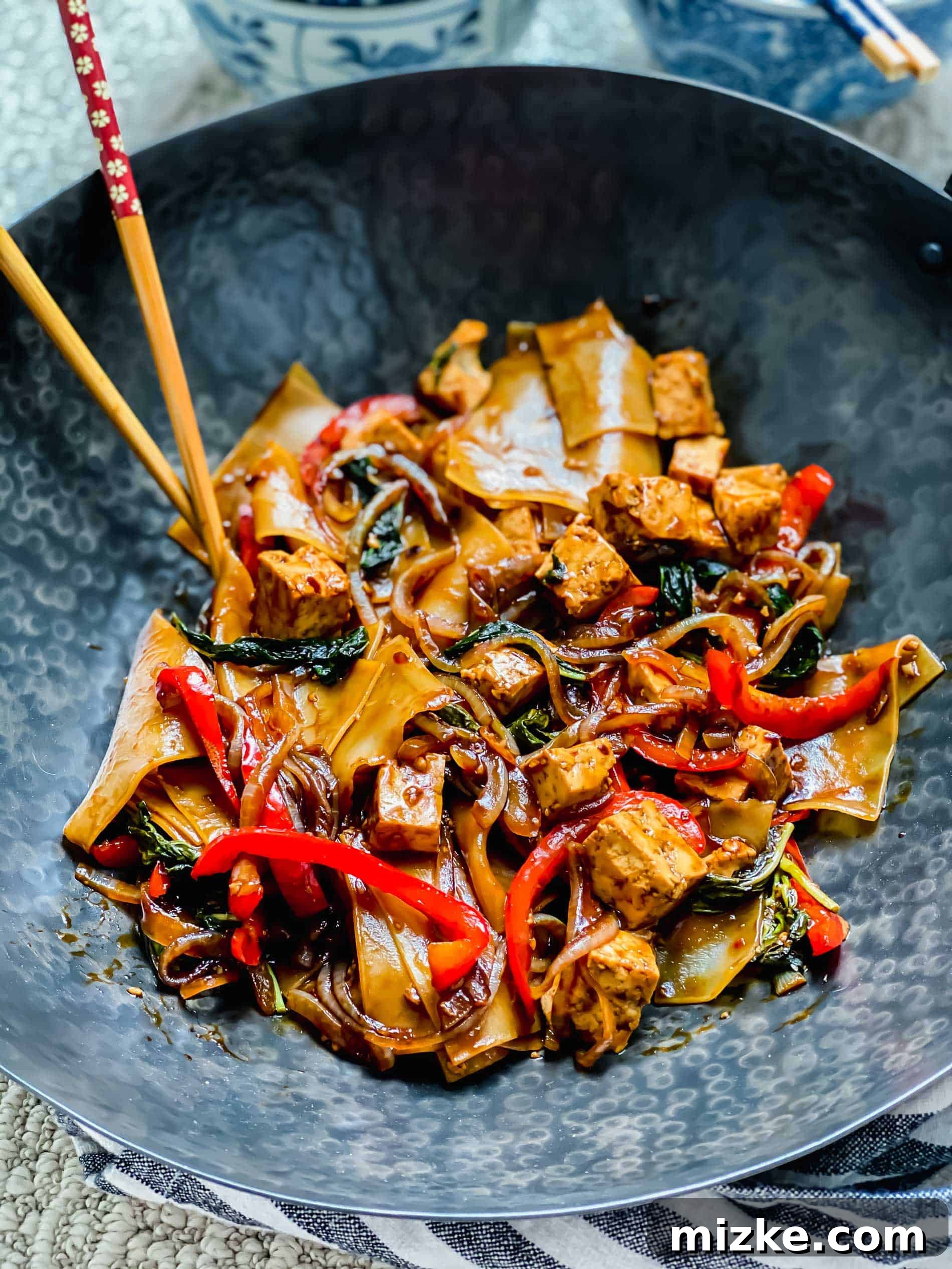
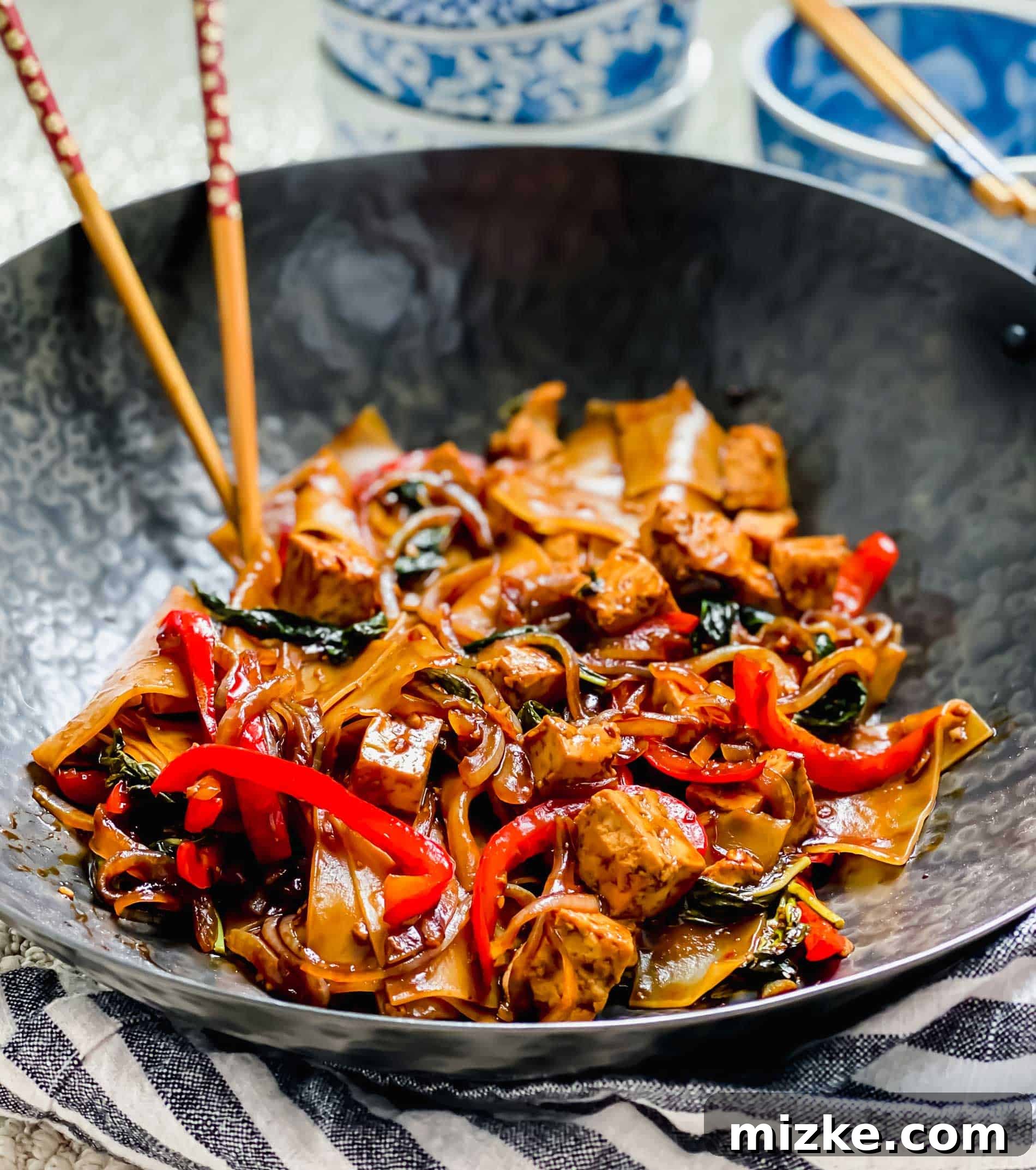
Forget the takeout menus and endless waits for delivery. This recipe empowers you to create your own authentic, intensely flavorful Thai Drunken Noodles with Tofu (Pad Kii Mao) right in your home kitchen! Bursting with sweet, spicy, and savory notes, this iconic Thai dish captures everything you adore about the restaurant favorite, offering a fresh, vibrant, and utterly satisfying experience.
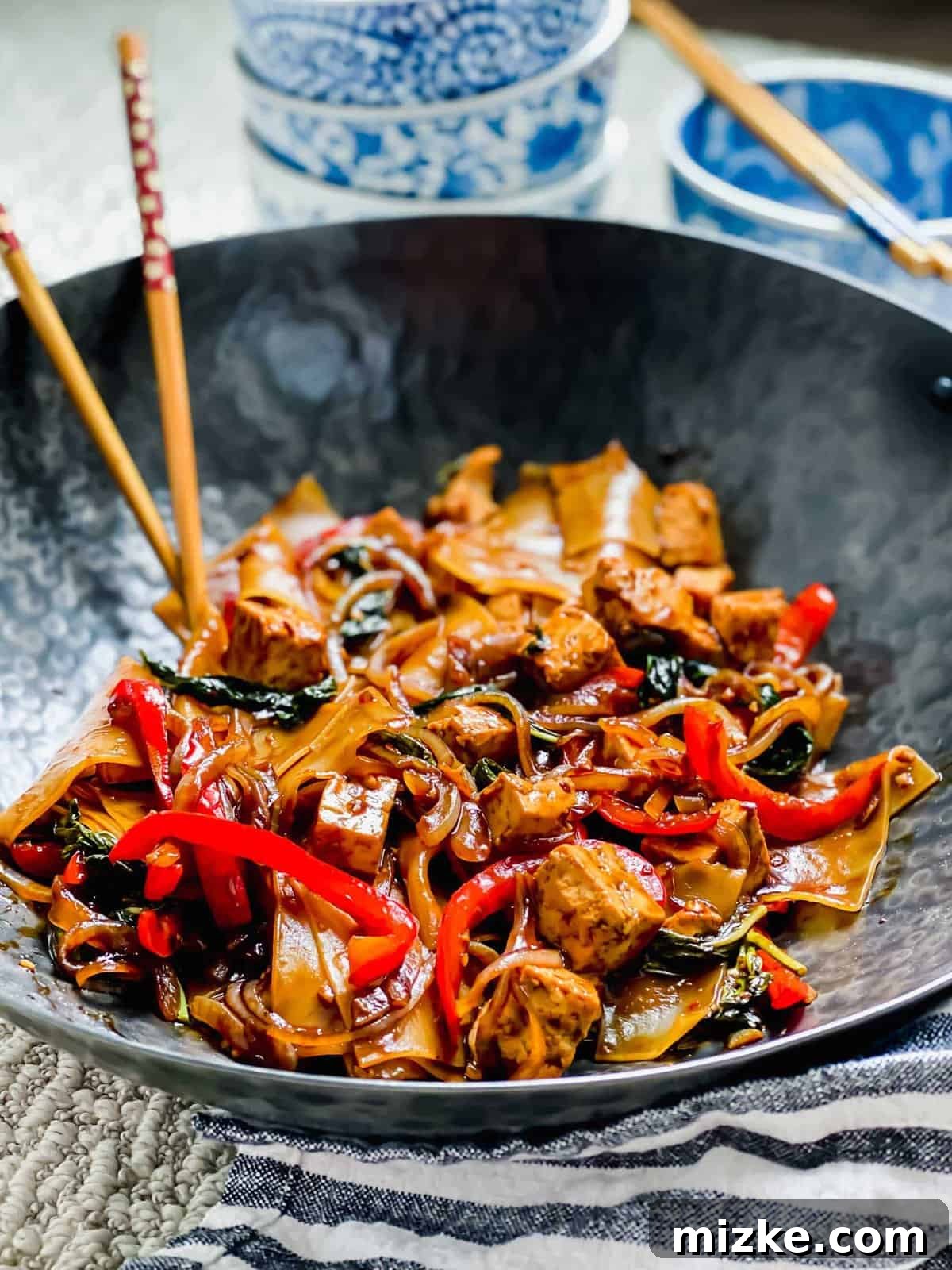
For many years, my Thai restaurant order was exclusively Pad See Ew, a milder, sweet and savory noodle dish. However, as my palate evolved to embrace spicier flavors, I ventured into the fiery world of Drunken Noodles, also known as Pad Kii Mao. It quickly became my ultimate go-to Thai dish. While Pad See Ew and Pad Kii Mao are distinctly different in their flavor profiles, you’ll discover that their foundational sauce ingredients share some striking similarities. This means if you already have the essential Asian pantry staples for Pad See Ew, you’re well on your way to whipping up a fantastic batch of spicy Drunken Noodles with tofu!
This recipe for homemade Thai Drunken Noodles is designed to be effortlessly simple, making it a perfect candidate for a quick and satisfying weeknight meal. Beyond its ease, it’s incredibly versatile, capable of delighting a wide range of tastes. While I’ve opted for firm tofu—a personal favorite and a staple in many plant-based diets—this dish welcomes almost any protein. Sliced chicken, succulent shrimp, tender beef, or even ground pork would be equally delicious additions. Feel free to incorporate an array of your favorite vegetables, adjust the spice level precisely to your preference, and adorn your creation with fresh garnishes like fragrant Thai basil leaves, thinly sliced green onions, crunchy chopped cashews, or a squeeze of fresh lime for an extra zing.
If you’re looking to explore more delightful and easy tofu recipes to expand your culinary repertoire, I highly recommend diving into some of my other favorites, such as Pan-Fried Sesame Garlic Tofu, a dish celebrated for its crispy texture and aromatic coating. For those who enjoy a classic sweet and tangy experience, my Sweet and Sour Tofu offers a vibrant burst of flavor. And for an adventurous kick, the Spicy Chili Tofu Stir Fry promises an exciting and zesty meal.
Why You’ll Love This Homemade Thai Drunken Noodles Recipe
Homemade Thai Drunken Noodles (Pad Kii Mao) have become an indispensable part of my weeknight meal rotation, and I’m confident they’ll win a special place in your heart, too. Here’s a deeper dive into why this recipe is truly exceptional:
- An Exquisite Balance of Flavors: Sweet, Savory, and Powerfully Spicy. Imagine broad, chewy rice noodles and perfectly cooked tofu, all generously coated in a dynamic sauce that is nothing short of an umami explosion. This masterful blend features the rich saltiness of premium soy sauce, the caramelized depth of sweet soy sauce (kecap manis), and the complex savory notes of oyster sauce. To elevate the experience and deliver its signature kick, vibrant bird’s eye chilies are expertly integrated, providing a fiery warmth that awakens the palate. The beauty of this dish is its customizability; you are the master of your spice destiny, free to adjust the chili quantity to perfectly match your preferred heat level, from a gentle warmth to an intense blaze.
- Remarkably Quick and Effortless for Busy Weeknights. In today’s fast-paced world, finding time for elaborate cooking can be a challenge. This Drunken Noodles with Tofu recipe is a true lifesaver, designed to go from raw ingredients to a steaming, delicious meal on your table in under 30 minutes. It’s significantly faster than ordering takeout or waiting for delivery, making it an ideal choice for those evenings when you need a satisfying and flavorful dinner without compromising on time or quality. Its streamlined process ensures that even novice cooks can achieve impressive results.
- Infinitely Adaptable to Your Tastes and Pantry. One of the most compelling features of this recipe is its incredible flexibility. It serves as a fantastic foundation that you can effortlessly tailor to suit your dietary preferences, what’s available in your fridge, or simply what you’re craving. Want more greens? Load it up with broccoli, snap peas, or bok choy. Prefer a different protein? Swap the tofu for chicken, beef, shrimp, or even a mix. Craving extra aromatics? Add more garlic or ginger. This adaptability ensures that the dish never gets boring and can be reimagined countless times, offering a fresh culinary adventure with every preparation. Discover even more customization ideas in our dedicated “Variations” section further down!
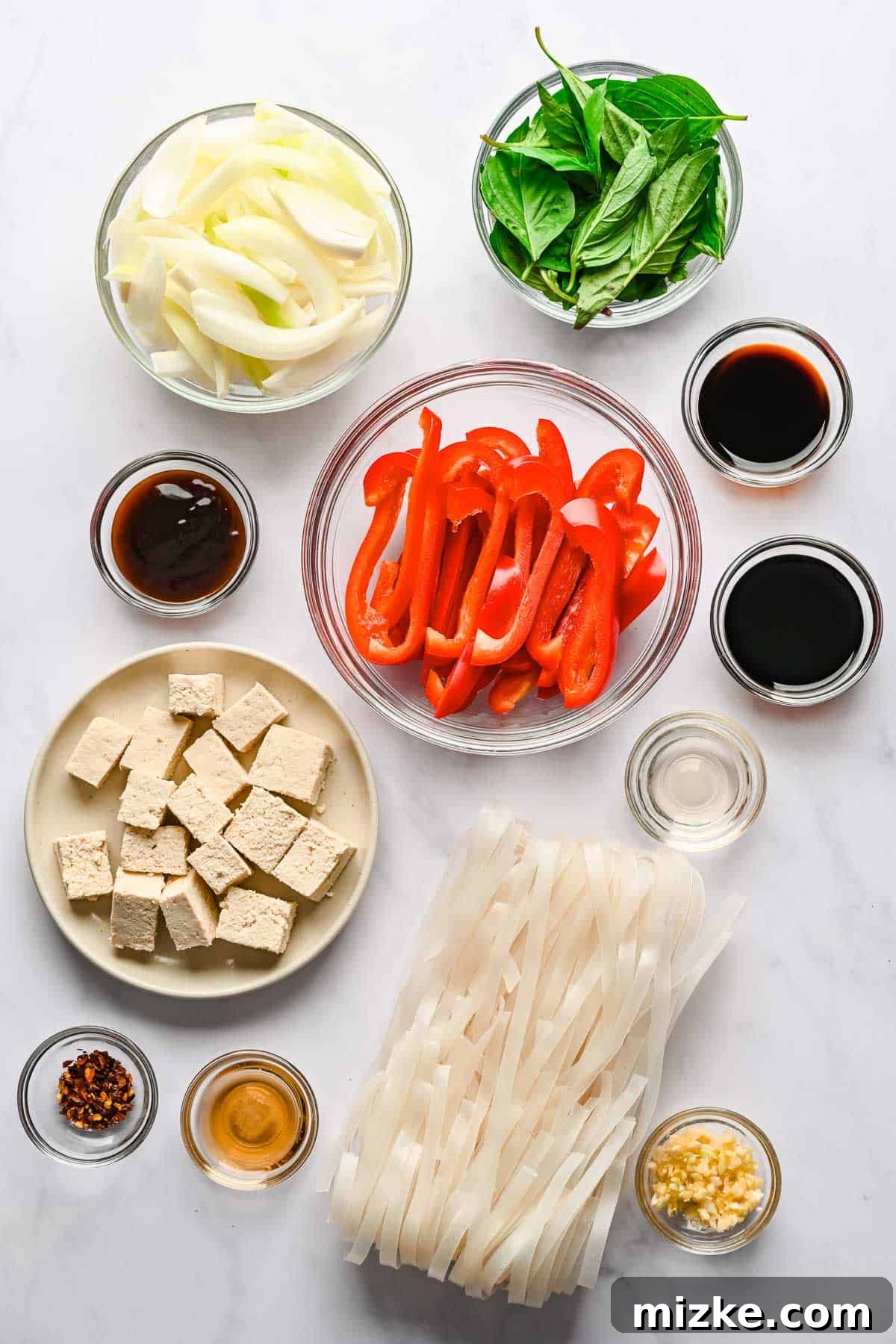
Essential Ingredients for Thai Drunken Noodles
Crafting authentic and delicious Drunken Noodles with tofu at home requires a few key ingredients, each playing a crucial role in building the dish’s signature flavor profile. Below is a comprehensive list of what you’ll need. For precise measurements, please refer to the detailed recipe card at the end of this article.
For the Rich and Flavorful Sauce:
- Oyster Sauce: This provides a deep, savory umami backbone to the sauce. For those seeking a plant-based alternative, vegetarian mushroom oyster sauce is an excellent substitute, offering a similar depth of flavor.
- Soy Sauce: The cornerstone of many Asian sauces, contributing essential saltiness and depth. Both low-sodium and regular soy sauce work wonderfully; choose based on your dietary preferences.
- Sweet Soy Sauce (Kecap Manis): A unique ingredient that lends a beautiful sweetness and a darker hue to the noodles. Often found in the Asian aisle next to other soy sauces, it may also be labeled as Indonesian kecap manis. Do not skip this for authentic flavor!
- Rice Vinegar: Adds a subtle tang and brightness, balancing the richness of the other sauce components. Ensure you select unseasoned rice vinegar, as seasoned varieties often contain added sugar and salt.
- Fish Sauce: An incredibly potent and essential component in Thai cuisine, providing a complex savory and umami punch. If you’re aiming for a vegetarian dish, a plant-based fish sauce can be used, or simply increase the amount of soy sauce to compensate for the savory notes.
For the Heart of the Dish – Tofu and Noodles:
- Flat, Wide Rice Noodles: These are the traditional choice for Drunken Noodles, known for their chewy texture and ability to absorb the rich sauce. If the specific short, flat variety is unavailable, standard long flat rice noodles can be used and cut to your preferred length. Always cook them according to package instructions until al dente.
- Fresh Vegetables: To keep it simple and classic, I typically use sliced yellow onion and vibrant red bell pepper. These add natural sweetness, crunch, and color. However, feel free to incorporate other favorites like carrots, broccoli florets, baby corn, or snap peas.
- Garlic: Freshly minced garlic is paramount for its pungent aroma and flavor. While pre-minced store-bought garlic can be a time-saver, nothing quite compares to the intensity of freshly crushed or chopped cloves.
- Bird’s Eye Chili: This small, potent chili is responsible for the authentic heat in Drunken Noodles. Its fiery kick is a hallmark of the dish. If fresh bird’s eye chilies are difficult to source, 1/2 to 1 teaspoon of crushed red pepper flakes can be used as a convenient substitute. Adjust the quantity to your personal spice tolerance.
- Thai Basil Leaves: Distinct from common Italian basil, Thai basil offers a unique, sharp, slightly anise-like, and peppery flavor that is crucial to the dish’s authenticity. It’s typically added at the very end to preserve its delicate aromatics. If Thai basil is unavailable, regular sweet basil can be used, though the flavor profile will be subtly different.
- Extra-Firm Tofu: This type of tofu is ideal for stir-frying as it holds its shape remarkably well and develops a pleasant texture when cooked. Tofu that is softer (silken, soft, or even firm) is more prone to crumbling during the vigorous stir-frying process. Remember to press your tofu thoroughly to remove excess water, which allows it to better absorb the delicious sauce flavors.
Mastering Homemade Thai Drunken Noodles: A Step-by-Step Guide
As promised, preparing this Drunken Noodles recipe is incredibly straightforward and efficient, making it a perfect solution for a last-minute weeknight dinner. You’ll likely be enjoying your flavorful meal before a takeout order even arrives! Here’s a detailed breakdown of the fundamental steps involved in creating this classic Thai dish at home. For the complete, precise directions and exact measurements, please refer to the comprehensive recipe card located at the end of this post.
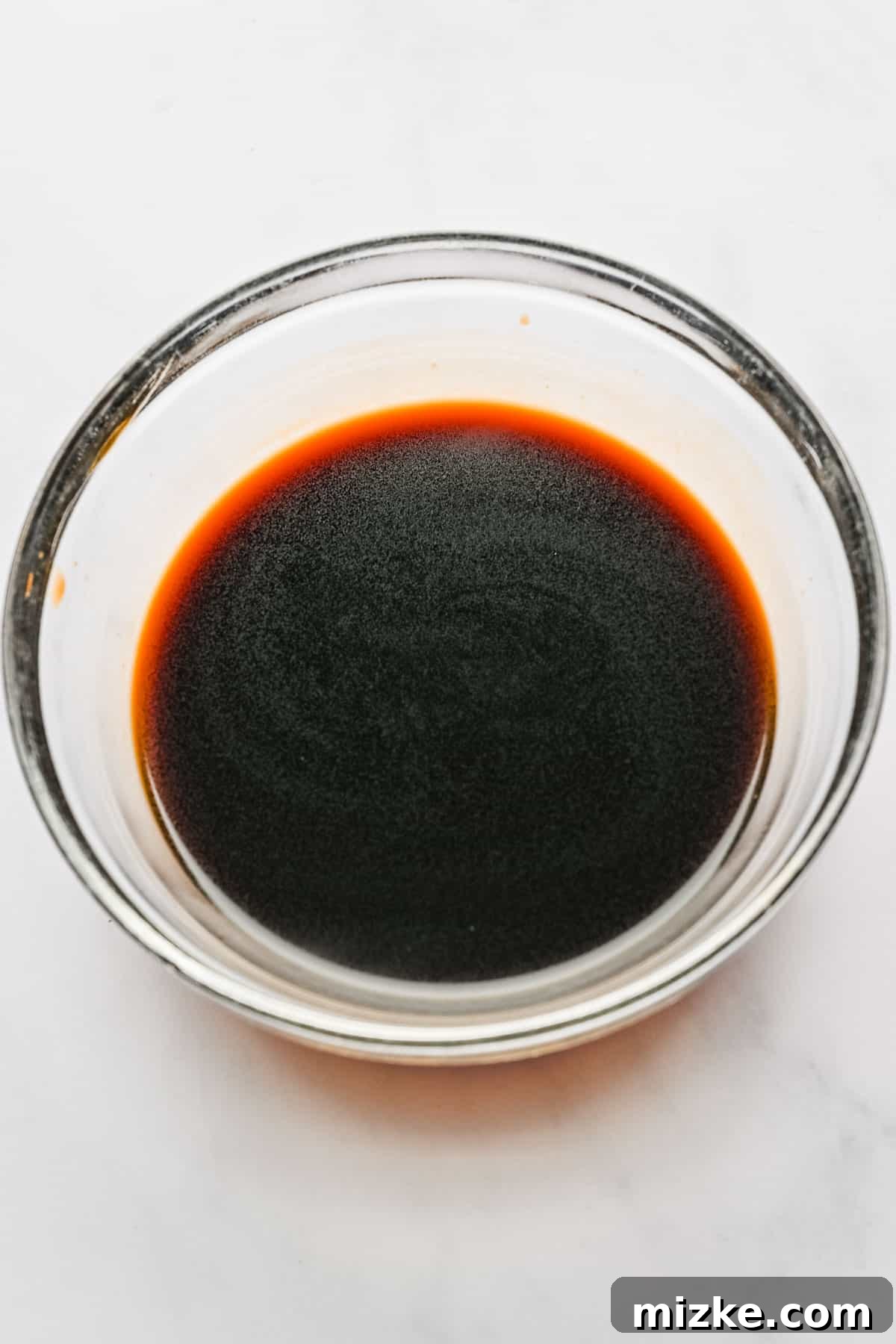
- Prepare the Flavorful Sauce: In a small bowl, combine all the designated sauce ingredients. Whisk them vigorously until thoroughly mixed and homogenous. This creates the essential flavor base for your noodles. Once combined, set the bowl aside so it’s ready to be added when the stir-fry comes together.
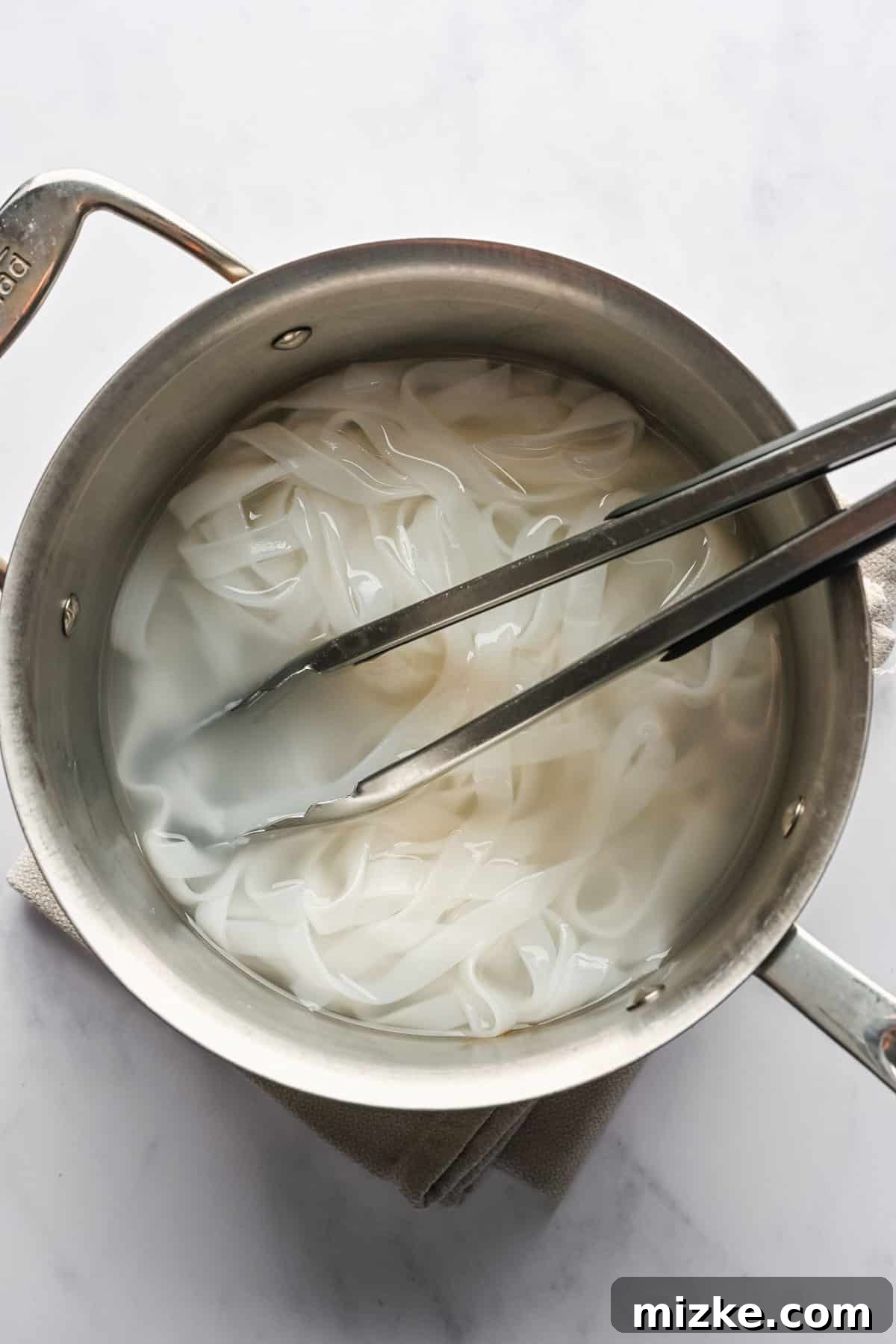
- Cook the Rice Noodles to Perfection: Bring a medium-sized pot of water to a rolling boil. Carefully add the flat, wide rice noodles to the boiling water and cook them strictly according to the package instructions. The goal is to achieve an al dente texture—tender but still with a slight chew. Avoid overcooking, as they will continue to cook briefly in the wok. Once cooked, drain the noodles thoroughly and set aside.
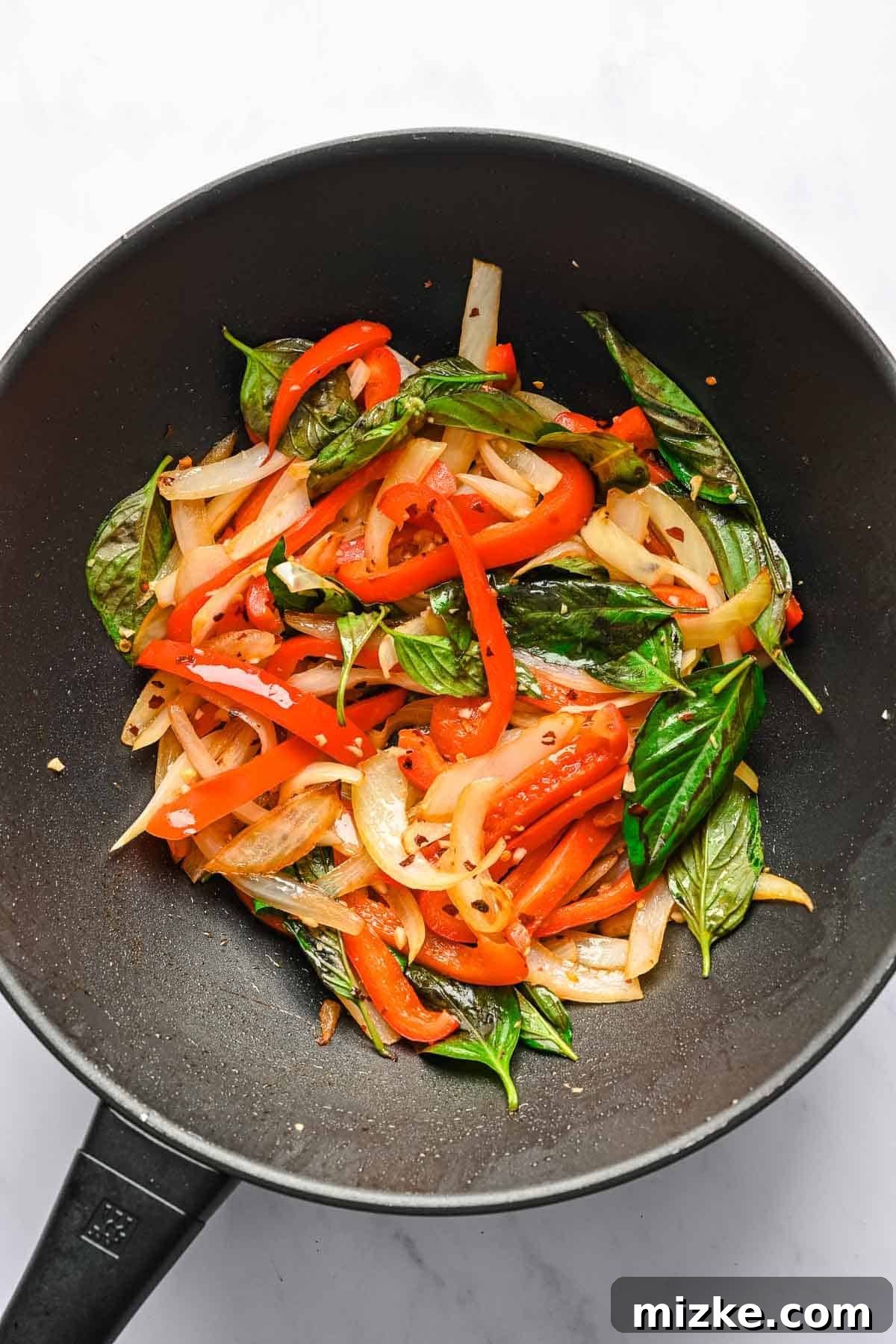
- Sauté the Vegetables and Aromatic Components: Position a large wok or a spacious, high-sided skillet over high heat. Add 2 tablespoons of neutral vegetable oil to the hot pan. Once the oil begins to shimmer, indicating it’s hot enough, add the sliced onion and red bell pepper. Stir-fry these vegetables for approximately 4-5 minutes, or until they have softened slightly and achieved a tender-crisp texture. Next, introduce the minced garlic, finely chopped bird’s eye chili (or red pepper flakes), and the aromatic Thai basil leaves. Sauté for another minute until fragrant, being careful not to burn the garlic.
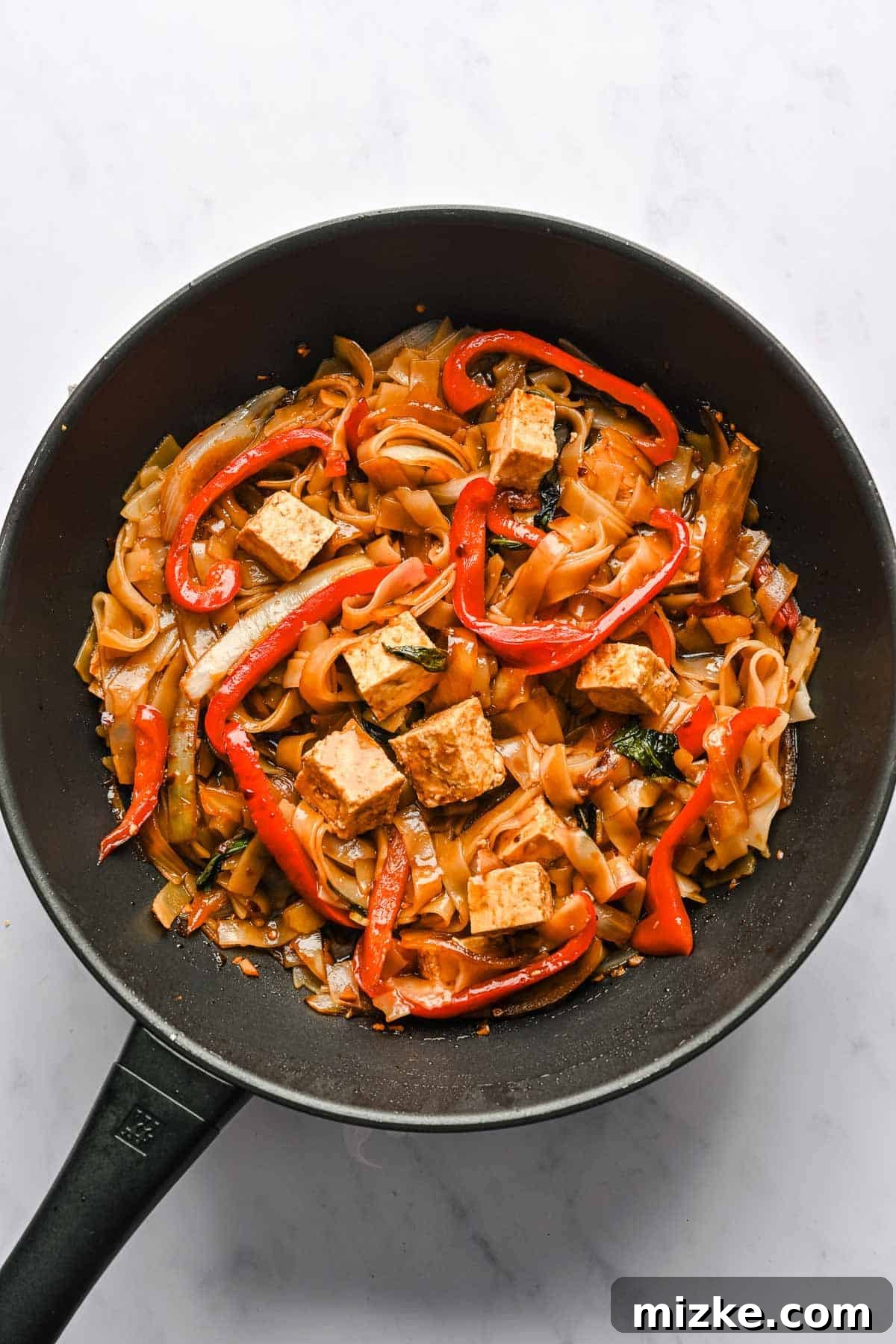
- Combine and Finish the Drunken Noodles: Reduce the heat to medium to prevent burning. Pour the pre-mixed sauce directly into the wok with the vegetables and aromatics. Stir everything together briskly to ensure all ingredients are evenly coated. Immediately add the thoroughly drained cooked rice noodles to the wok. Using tongs or two spatulas, toss the noodles vigorously to fully coat them in the rich, spicy sauce. Finally, gently fold in the cubed, pressed, and drained extra-firm tofu. Continue to gently toss all the ingredients until everything is uniformly distributed and heated through. Remove the wok from the heat immediately to prevent overcooking the noodles and vegetables. Serve hot and savor your homemade Thai masterpiece!
Alternative Cookware: What Can I Use If I Don’t Have a Wok?
While a wok is ideal for stir-frying due to its unique shape that allows for even heat distribution and easy tossing, you can certainly achieve excellent results without one. The key is to use the largest skillet or sauté pan you possess, preferably one with high sides. The generous surface area and elevated edges will provide ample room to toss and combine all the ingredients efficiently, ensuring everything cooks evenly and the sauce coats every noodle without spilling over.
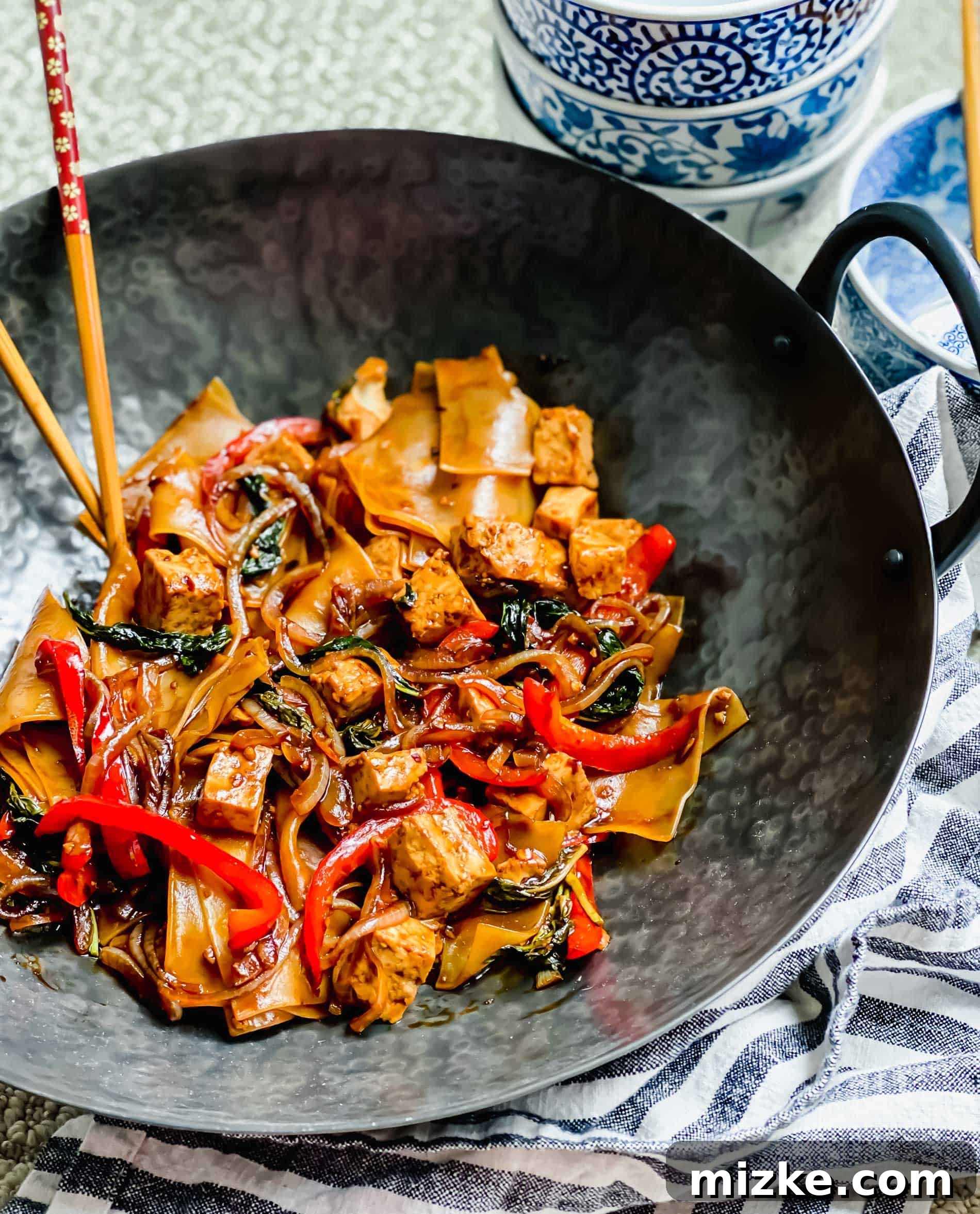
Insider Tips for Perfect Homemade Thai Drunken Noodles
Achieving restaurant-quality Thai Drunken Noodles with tofu at home is easier than you think, especially with these crucial tips:
- Thoroughly Drain Your Rice Noodles: This step is paramount. After cooking, ensure your rice noodles are exceptionally well-drained. Any residual water clinging to the noodles will dilute your beautifully crafted sauce, leading to a less concentrated and ultimately less flavorful finished dish. Take the extra minute to let them dry slightly or even pat them gently.
- Always Press Your Tofu: Don’t skip the pressing step! Extra-firm tofu, while dense, still contains a significant amount of water. Pressing the tofu—either with a dedicated tofu press or by wrapping it in paper towels and placing a heavy object on top—removes this excess moisture. This crucial process allows the tofu to become firmer, hold its shape better during stir-frying, and, most importantly, act like a sponge, eagerly absorbing all the rich, spicy flavors of the Drunken Noodles sauce.
- Master the Art of Heat Adjustment: True Drunken Noodles are traditionally served with a vibrant, often intense level of spice. However, every palate is different. If you’re preparing this dish for guests or family members who have varying preferences for heat, consider making the base recipe with a moderate amount of hot pepper (or even a very small amount). You can then reserve extra finely chopped bird’s eye chilies or a small bowl of red pepper flakes on the side, allowing individuals to customize their serving with an additional kick to their liking. This ensures everyone can enjoy the dish comfortably.
Creative Substitutions & Recipe Variations for Your Drunken Noodles
One of the joys of cooking is the freedom to customize, and this Drunken Noodles recipe is wonderfully adaptable. Here are some fantastic ways to switch up your meal and explore new flavor combinations:
- Explore Diverse Protein Options: As highlighted earlier, while tofu is a fantastic base, this dish shines with various proteins. Consider thinly sliced chicken breast or thigh, tender beef sirloin or flank steak, plump shrimp, or even ground pork. Remember, any raw protein (other than cooked tofu) will need to be stir-fried and cooked through first in the wok before adding the vegetables and sauce. This ensures it’s perfectly done and safe to eat.
- Amplify Your Veggie Power: The standard onion and bell pepper are delicious, but don’t stop there! Enhance the nutritional value and texture of your Drunken Noodles by incorporating a wider array of vegetables. Try adding vibrant scallions for a mild oniony bite, crunchy baby corn, earthy broccoli florets, thinly sliced carrots, crisp snow peas, or even tender bok choy. Incorporate these at different stages of cooking based on their desired doneness – harder vegetables like carrots and broccoli may need to go in earlier.
- Infuse with Fresh Tomatoes: For a burst of juicy sweetness and a slight tang, stir in halved cherry or grape tomatoes. Add them to the wok just after removing it from the heat, giving them just enough time to warm through without becoming mushy. Their freshness offers a delightful contrast to the rich, spicy sauce.
- Add a Citrusy Zing: Finish your dish with a generous squeeze of fresh lime juice just before serving. The bright acidity beautifully cuts through the richness of the sauce and awakens all the flavors, adding an authentic Thai touch.
- Boost the Basil: If you are a huge fan of Thai basil’s unique flavor, don’t hesitate to add an extra handful right at the very end. The aromatic leaves will slightly wilt but retain their distinctive taste.
Frequently Asked Questions About Thai Drunken Noodles
Absolutely! Customizing the spice level is one of the easiest adjustments you can make to this recipe. To reduce the heat, simply use fewer bird’s eye chilies. You can even omit them entirely if you prefer a completely mild dish. As an alternative, you can use crushed red pepper flakes, starting with a very small amount (like 1/4 or 1/2 teaspoon) and gradually adding more to taste until you reach your desired level of warmth. This allows for precise control over the spice, ensuring everyone can enjoy the dish.
Despite the intriguing name, “Drunken Noodles” (Pad Kii Mao) does not actually contain any alcohol. There are a couple of popular theories regarding its unique moniker. One widely accepted theory suggests that this highly flavorful and often very spicy dish is the perfect accompaniment to a cold, refreshing alcoholic beverage, perhaps helping to “sober up” or clear the senses after a night out. Another theory posits that the dish’s intense spiciness is so potent it might make you feel a little “drunk” or light-headed from the heat! Regardless of the true origin, the name is certainly memorable and hints at the bold flavors within.
The traditional base of Drunken Noodles, which includes flat rice noodles, is naturally gluten-free. However, many of the essential sauces, such as regular soy sauce and often oyster sauce, contain wheat or gluten. To make this dish completely gluten-free, you would need to use tamari (a gluten-free alternative to soy sauce), a certified gluten-free oyster sauce, and ensure any other ingredients, like fish sauce, are also free from gluten-containing additives. Always check the labels of all your ingredients to confirm their gluten-free status.
Delightful Serving Suggestions for Thai Drunken Noodles
Thai Drunken Noodles are a wonderfully hearty and complete meal on their own, offering a satisfying blend of protein, noodles, and vegetables. However, if you’re hosting a gathering or simply want to elevate your dining experience, there are several complementary dishes that pair beautifully. Here are a few of my favorite serving suggestions:
- Refreshing Salad: A light, crisp salad offers a fantastic contrast to the rich and spicy noodles. Something bright and invigorating, like a cool cucumber salad or a simple green salad with a zesty lime vinaigrette, would cleanse the palate perfectly.
- Roasted or Steamed Vegetables: To add more greens and varying textures, consider serving a side of simply prepared vegetables. Garlic roasted green beans, with their savory crunch, are a superb choice. Other roasted vegetables like broccoli, asparagus, or bell peppers would also complement the flavors wonderfully. Steamed vegetables are another excellent, lighter option.
- Fresh Lime Wedges: A simple yet impactful addition! Always serve your Drunken Noodles with fresh lime wedges. A squeeze of fresh lime juice over each serving adds a bright, tangy acidity that cuts through the richness of the sauce, enhances the overall flavor profile, and truly elevates the dish to the next level.
- Spring Rolls or Dumplings: For a more substantial feast, consider serving crispy vegetarian spring rolls or savory steamed or pan-fried dumplings as an appetizer. These provide a different texture and flavor dimension that complements the main noodle dish.
Storing and Reheating Your Drunken Noodles Leftovers
Drunken Noodles with tofu are not only delicious fresh but also make fantastic leftovers, perfect for meal prep! Here’s the best way to ensure your dish remains delicious for days:
- To Store: Once cooled to room temperature, transfer your leftover Drunken Noodles with tofu into an airtight container. Store it promptly in the refrigerator, where it will maintain its quality and flavor for up to 3 days. Proper storage ensures freshness and safety.
- To Reheat: For the best results, reheat the noodles in a microwave until they are thoroughly warmed through. Alternatively, you can reheat them gently in a skillet over medium heat, adding a splash of water or broth to loosen the noodles if they seem dry. Stir occasionally until heated evenly. These noodles hold up exceptionally well, making them an excellent option for quick and satisfying meal prep lunches throughout the week.
Explore More Thai-Inspired Culinary Delights
If you’ve enjoyed the vibrant flavors of these homemade Drunken Noodles and are eager to continue your journey into Thai cuisine, you’re in for a treat! Our kitchen is filled with an array of inspiring Thai-inspired recipes that promise to bring exotic tastes right to your table. Let’s get cooking and explore more culinary adventures:
- Drunken Noodles With Chicken: A classic alternative to the tofu version, featuring tender chicken.
- Thai Basil Fried Rice: Fragrant and savory, packed with aromatic basil and your choice of protein.
- Sticky Thai Chicken: Sweet, sticky, and incredibly flavorful, perfect over a bed of rice.
- Thai-Inspired Grilled Coconut Chicken Skewers: Juicy, marinated chicken skewers, ideal for grilling season.
- Thai Chicken Curry Noodles: A comforting and rich curry noodle dish with tender chicken.
Print Recipe
Thai Drunken Noodles with Tofu
Equipment
-
Wok or Large High-Sided Skillet
Ingredients
For the Sauce:
- 2 ½ tablespoons oyster sauce (or vegetarian mushroom oyster sauce)
- 2 tablespoons soy sauce (low sodium or regular)
- 3 tablespoons sweet soy sauce (kecap manis)
- 1 ½ tablespoons rice vinegar (unseasoned)
- 2 teaspoons fish sauce (or vegetarian fish sauce/extra soy sauce)
For the Rest of the Dish:
- 5 ounces (142 g) flat, wide, rice noodles, cooked according to package directions
- ½ medium onion, sliced
- 1 medium red bell pepper, sliced
- 2 cloves garlic, minced
- 1 or 2 bird’s eye chilies, finely chopped (or use 1/2 teaspoon crushed red pepper flakes), adjust spice level to your own tolerance
- Handful of fresh Thai basil leaves
- 7 ounces (199 g) extra firm tofu, cubed, pressed, and thoroughly drained
Instructions
-
In a small bowl, combine all the ingredients for the sauce: oyster sauce, soy sauce, sweet soy sauce, rice vinegar, and fish sauce. Whisk well until thoroughly combined. Set aside.
-
In a small pot, bring a generous amount of water to a boil. Cook the flat, wide rice noodles according to the package directions until al dente. Drain the noodles very well and set them aside.
-
Heat a wok or large high-sided skillet over high heat. Add 2 tablespoons of vegetable oil. Once the oil is shimmering, add the sliced onion and red bell pepper. Stir-fry for 4-5 minutes, or until the vegetables are softened and tender-crisp. Add the minced garlic, finely chopped bird’s eye chili (or red pepper flakes), and fresh Thai basil leaves. Sauté for another minute until fragrant, being careful not to burn the garlic.
-
Reduce the heat to medium. Pour the prepared sauce into the wok and stir well to combine it with the vegetables. Immediately add the drained cooked noodles. Toss vigorously to ensure all the noodles are evenly coated in the rich sauce. Finally, gently fold in the cubed, pressed extra-firm tofu, tossing just enough to distribute all ingredients evenly without breaking the tofu.
-
Remove the wok from the heat. Serve your homemade Thai Drunken Noodles warm and enjoy this flavorful, spicy, and satisfying dish!
Notes
- To Store: Place any leftover Drunken Noodles with tofu in an airtight container and refrigerate for up to 3 days.
- To Reheat: Warm the noodles in the microwave until heated through, stirring occasionally. For best results, a skillet over medium heat with a splash of water or broth can also be used. This dish is excellent for meal prep lunches.
Nutrition Information (Approximate)
This website provides approximate nutrition information for convenience and as a courtesy only. Nutrition information can vary for a variety of reasons. For the most precise nutritional data use your preferred nutrition calculator based on the actual ingredients you used in the recipe.
The default measuring system for this website is US Customary. Unit conversions are provided for convenience and as a courtesy only. While we strive to provide accurate unit conversions, please be aware that there may be some discrepancies.