
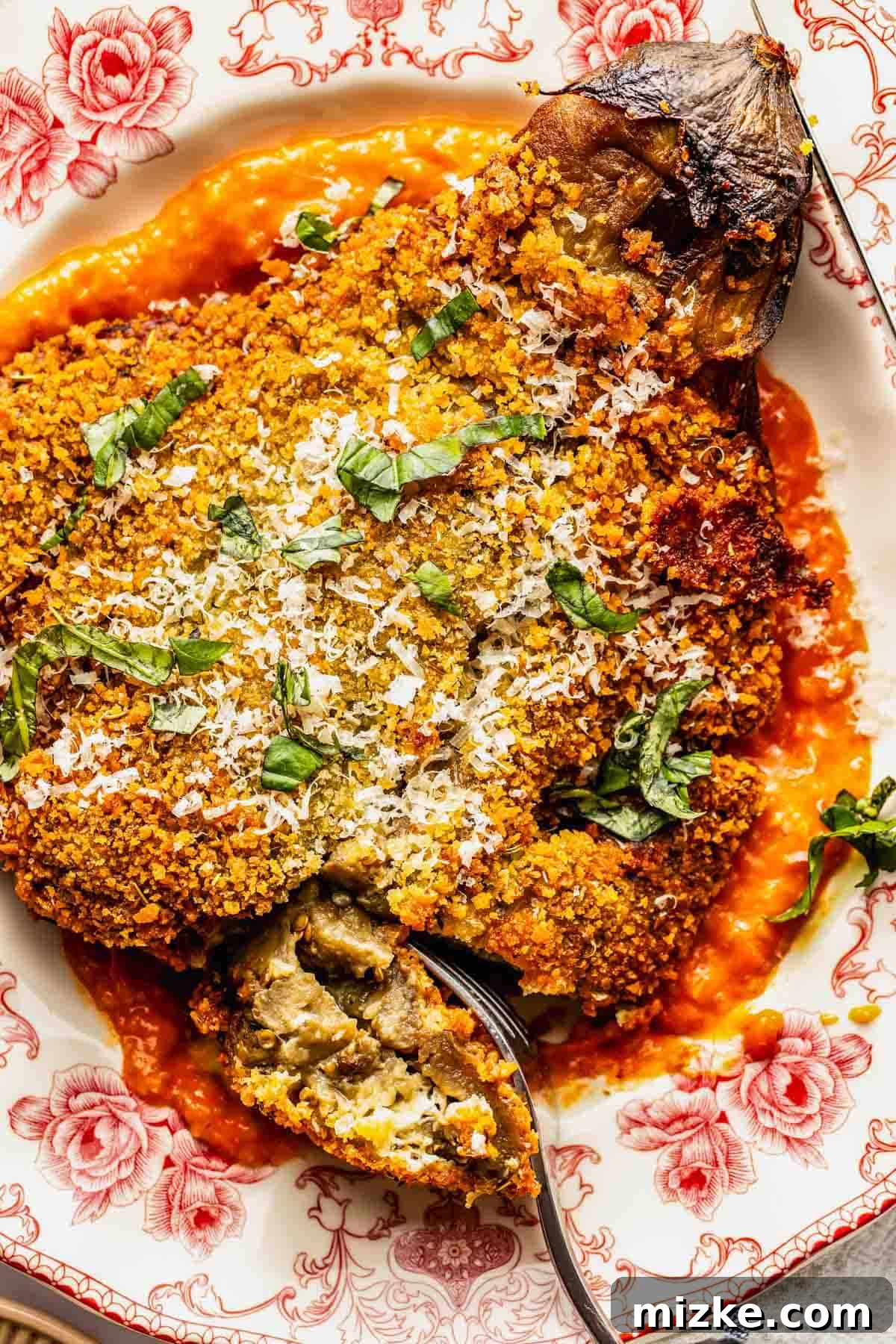
Experience a truly exceptional vegetarian dish with this incredible Crispy Eggplant Schnitzel. Inspired by a memorable restaurant meal, this recipe brings together the delicate texture of tender, roasted eggplant encased in a golden, crunchy panko crust, perfectly complemented by a rich, homemade tomato-based sauce. It’s a culinary masterpiece that’s surprisingly easy to recreate in your own kitchen.
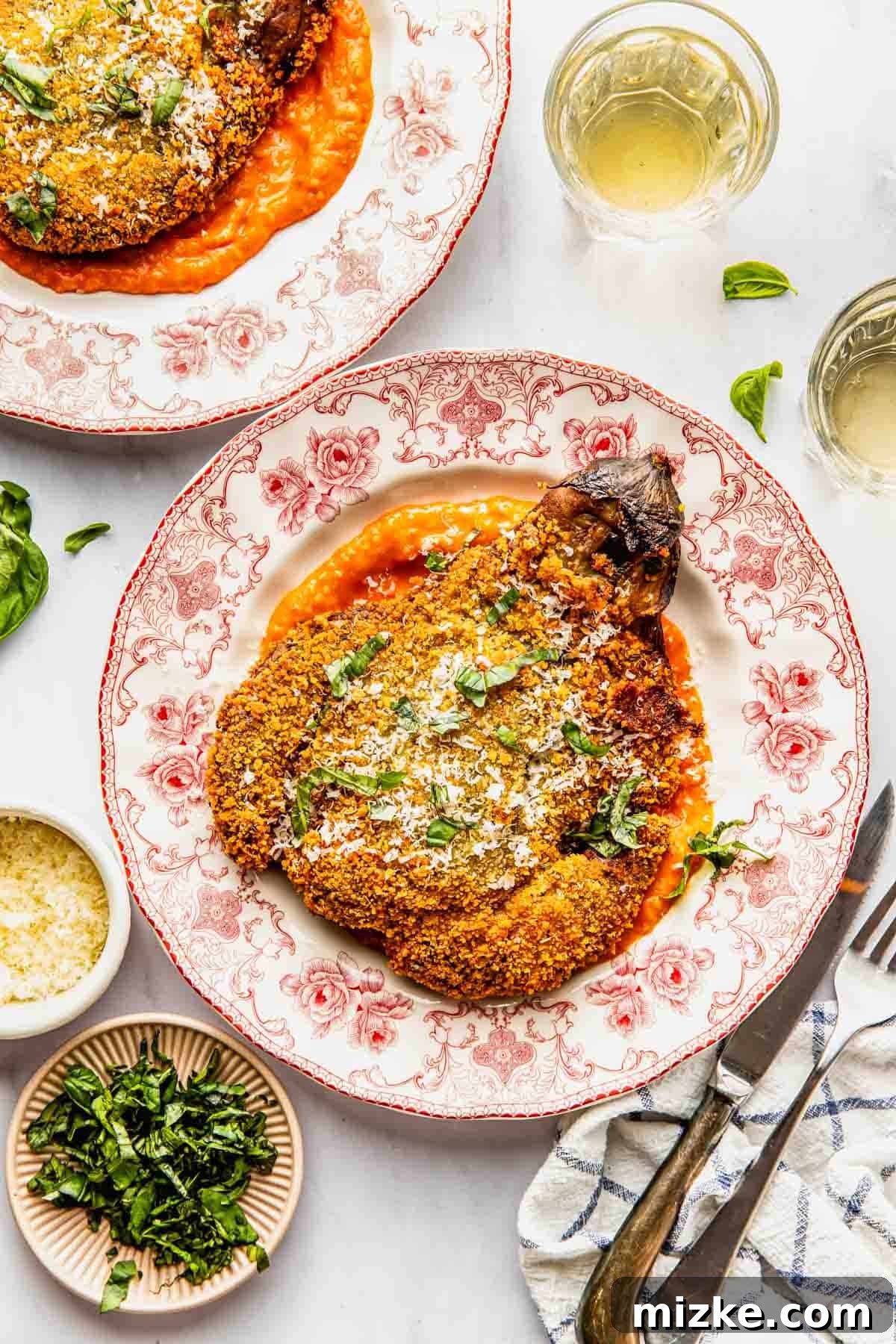
Crispy Eggplant Schnitzel: Your New Favorite Vegetarian Dinner
Have you ever encountered a dish so extraordinary that it lingered in your thoughts long after the last bite? A culinary revelation that completely reshaped your expectations, leaving you constantly yearning for its return on the menu? For me, that unforgettable experience was with a crispy eggplant schnitzel I discovered two years ago at a charming restaurant called Evelyn Rose. Its unique texture and exquisite flavor profile captivated me instantly, embedding itself firmly in my memory.
Despite numerous subsequent visits to the restaurant, hoping to relive that magical moment, the eggplant schnitzel never reappeared on their menu. Even during peak eggplant season, my hopes were dashed. A true food lover knows that when a craving is this persistent, there’s only one solution: recreate the magic at home. And that’s precisely what I did. What I discovered was that crafting this gourmet delight in your own kitchen is not only achievable but also remarkably straightforward. It’s akin to preparing a classic chicken cutlet, involving a simple breading and pan-frying process. The most time-consuming step is roasting the eggplant, but even that is largely hands-off, allowing you to prepare other elements while it cooks to perfection.
What Exactly is Schnitzel? From German Classic to Vegetarian Delight
At its core, the German word “schnitzel” translates to “cutlet” or “slice.” Traditionally, it refers to a thin slice of meat, typically pounded even thinner, then breaded and pan-fried until golden and crispy. While the most famous version is likely Wiener Schnitzel, made from veal in Austria, German cuisine often features pork schnitzel. Chicken schnitzel is also a popular variation found on many restaurant menus worldwide.
The beauty of schnitzel lies in its simplicity and the delightful contrast it offers: a tender interior shielded by a wonderfully crunchy exterior. This concept, however, isn’t limited to meat. The culinary world is constantly evolving, and adapting classic dishes to fit diverse dietary preferences has led to incredible innovations. Our eggplant schnitzel is a prime example, transforming a beloved meat dish into a sensational vegetarian option. Eggplant, with its naturally meaty texture when cooked and its ability to absorb flavors, proves to be an ideal canvas for this classic preparation, offering all the satisfying crunch and flavor without the meat.
Mastering Your Crispy Eggplant Schnitzel: Expert Tips for Success
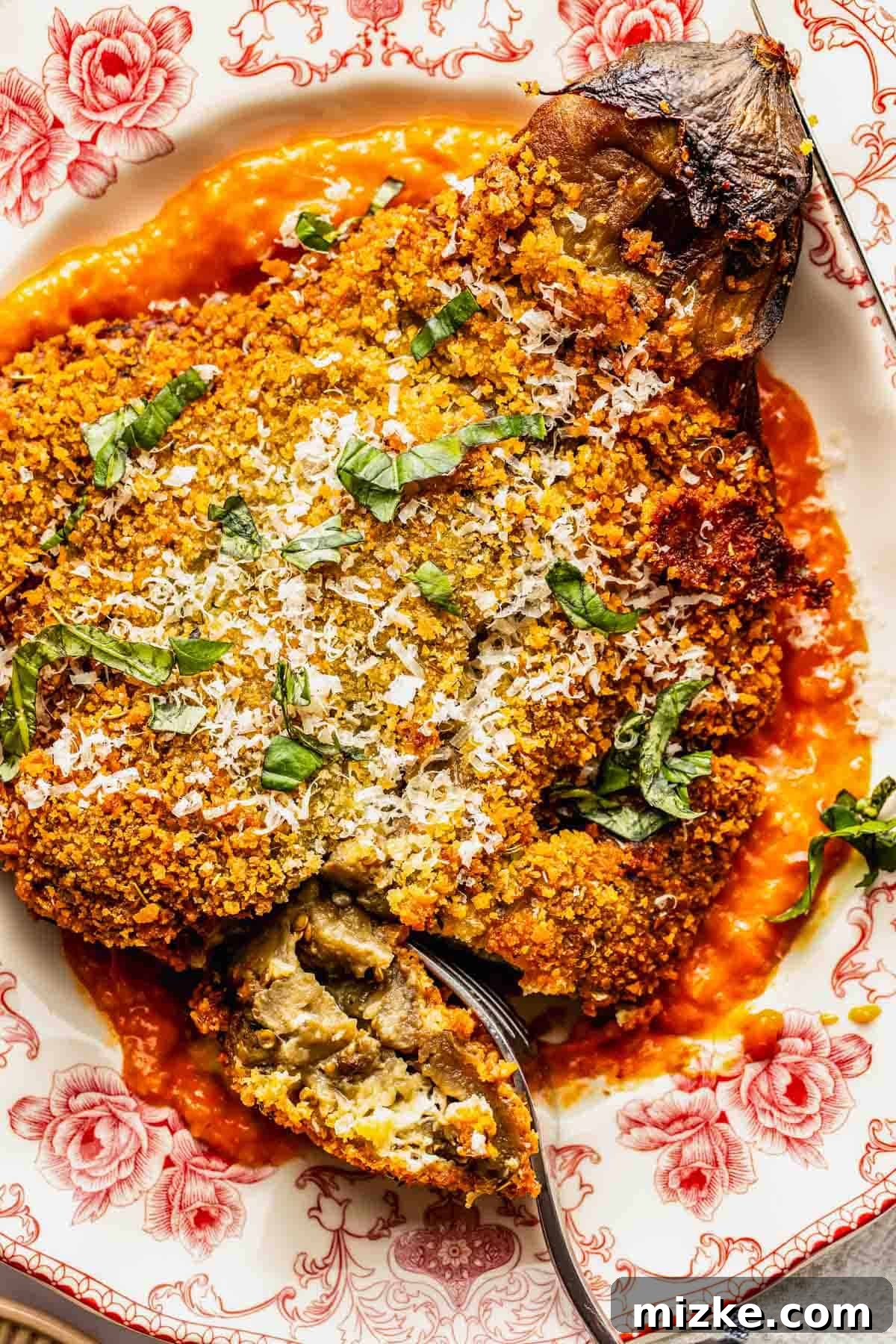
- Preserve the Stem: Your Secret Weapon! This tip is absolutely crucial for the structural integrity of your eggplant schnitzel. Leaving the stem intact acts as a natural handle, preventing the roasted eggplant from falling apart when you flatten it and, more importantly, when you dredge and flip it during the breading and frying process. It makes handling this delicate vegetable significantly easier.
- Invest in a Quality Fish Turner: When it comes to flipping delicate items like our eggplant schnitzel in a hot pan, a standard spatula might not cut it. My go-to tool is a metal fish turner. Its thin, flexible blade is designed to effortlessly slide under the entire cutlet, ensuring a clean flip without tearing or crumbling the crispy crust.
- Customize Your Tomato Sauce: While my recipe includes instructions for a fantastic homemade tomato sauce using roasted cherry tomatoes and garlic, I understand that time constraints can be a challenge. If you’re looking for a shortcut, feel free to use your favorite high-quality store-bought marinara sauce. However, if you have the time, roasting the tomatoes alongside the eggplant adds an incredible depth of flavor that is truly worth the effort, especially when cherry tomatoes are in season.
- Salt the Eggplant (Pre-Roasting): Although this recipe keeps it simple, for extra tender and less watery eggplant, you can salt the eggplant halves after slicing but before roasting. Sprinkle generously with kosher salt, let sit for 30 minutes, then pat dry thoroughly with paper towels. This draws out excess moisture, which can lead to a firmer texture and better crisping.
- Achieve the Perfect Frying Temperature: The key to a truly crispy, non-greasy schnitzel is maintaining the correct oil temperature. Aim for 325-375°F (163-191°C). If the oil isn’t hot enough, the breading will absorb too much oil and become soggy. If it’s too hot, the exterior will burn before the eggplant is properly heated through. Use a kitchen thermometer or the wooden skewer trick (if it bubbles gently, it’s ready) to ensure optimal results.
Serving Suggestions: Elevate Your Eggplant Schnitzel Experience
This crispy eggplant schnitzel is a versatile dish that pairs beautifully with a variety of sides. For a light and refreshing balance, my simple arugula salad with a lemon vinaigrette is an absolute winner. The peppery notes of the arugula cut through the richness of the schnitzel and sauce perfectly. Beyond that, consider these delightful pairings:
- Pasta: Serve over a bed of al dente spaghetti or linguine, allowing the delicious tomato sauce to coat the pasta.
- Creamy Risotto: A light Parmesan risotto would provide a wonderfully comforting and sophisticated side.
- Roasted Vegetables: Asparagus, green beans, or zucchini spears tossed with olive oil and herbs make a fantastic healthy accompaniment.
- Garlic Bread: A classic choice to soak up every last drop of that homemade tomato sauce.
- Polenta: Creamy polenta offers a smooth, complementary texture.
Storage and Reheating for Best Results
While this crispy eggplant schnitzel is undeniably at its best enjoyed fresh out of the pan, you can certainly save leftovers. Store any remaining schnitzel in an airtight container in the refrigerator for up to 3 days. To revive its delightful crispiness, avoid the microwave! My top recommendation for reheating is to use an air fryer or a toaster oven. These appliances will help restore that coveted crunchy exterior, ensuring your leftovers are almost as good as the freshly made dish.
Crispy Eggplant Schnitzel: The Full Recipe

By: Julie Chiou
This crispy eggplant schnitzel, inspired by a cherished restaurant dish, offers a delightful vegetarian twist on a German classic. Featuring tender, roasted eggplant with an irresistibly crunchy crust and a vibrant homemade tomato sauce, it’s a dish that promises to impress.
Prep Time: 20 minutes | Cook Time: 50 minutes | Total Time: 1 hour 10 minutes | Servings: 2
Equipment
- Food processor (for the sauce)
- Large rimmed baking sheet or cast iron skillet
- Cast iron skillet or Dutch oven (for frying)
- Shallow bowls (3 for breading station)
- Metal fish turner (recommended for flipping)
Ingredients
For the Roasted Vegetables & Sauce:
- 1 pint (473 g) cherry tomatoes
- Olive oil (for roasting and frying)
- 1 whole bulb of garlic, top cut off
- 2 medium eggplants, left whole with stem
- Kosher salt and freshly ground black pepper, to taste
- Fresh basil leaves, finely chopped (for garnish)
- Parmesan cheese, freshly grated (for garnish)
For the Breading:
- ⅔ cup (83 g) all-purpose flour
- ⅔ cup (40 g) panko breadcrumbs (for extra crispiness)
- 1 teaspoon Italian seasoning
- 2 eggs, beaten
Instructions
- Preheat your oven to 400°F (204°C).
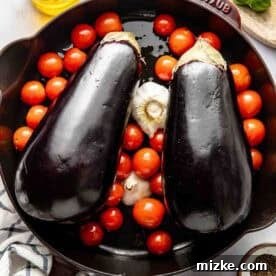
- Prepare the roasting pan: Add the cherry tomatoes to a large rimmed baking sheet or cast iron skillet. Drizzle generously with olive oil and toss to ensure an even coating. Drizzle a little olive oil over the cut side of the garlic bulb, then place it cut-side down in the skillet. Finally, place the two whole eggplants (with stems intact) on top of or alongside the tomatoes.
-

- Bake for 30-35 minutes, or until the cherry tomatoes are beautifully blistered and the eggplants are fork-tender.
- While the vegetables are roasting, set up your breading station.
- Arrange three separate shallow bowls: one with all-purpose flour, one with the panko breadcrumbs mixed with Italian seasoning, and the third with the two beaten eggs. Ensure they are in order: flour, eggs, then panko.
-
- Once the roasted vegetables are done, remove them from the oven and allow them to cool sufficiently so they can be handled comfortably.
- Heat the oil for frying: In a cast iron skillet or Dutch oven, heat about ½ inch of vegetable or avocado oil to a frying temperature, ideally between 325-375°F (163-191°C). You can test if it’s hot enough by inserting a wooden skewer or chopstick into the center; if small bubbles form around the wood, it’s ready.
- Prepare the eggplant cutlets: Holding the cooled eggplant gently by the stem, carefully peel off the exterior skin. Place the peeled eggplant onto a plate. Using a fork, gently flatten the eggplant into a large, schnitzel-like shape, similar to a thinly pounded chicken breast. Aim for approximately ¼ inch thickness, ensuring it holds together and isn’t completely mashed. Season both sides with kosher salt and freshly ground black pepper.
-
- Dredge the eggplant: Gently take the flattened eggplant by its stem and dredge both sides in the flour, tapping off any excess. Next, dip both sides into the beaten egg, allowing any excess to drip off. Finally, press both sides firmly into the panko breadcrumbs, ensuring they adhere well to create a crispy coating.
-
- Fry the schnitzel: Carefully place the breaded eggplant into the hot oil. Fry for about 2-3 minutes per side, or until it reaches a beautiful golden-brown and crispy finish. Once fried, transfer the schnitzel to a paper towel-lined plate to drain any excess oil. Repeat with the second eggplant.
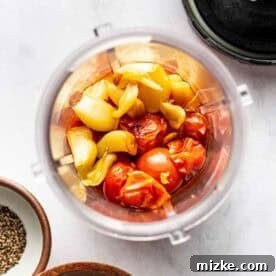
- Make the sauce: In a food processor or blender, add the roasted cherry tomatoes. Squeeze the soft, roasted garlic cloves out of their bulb directly into the processor. Process until the sauce is mostly smooth; leaving a few small chunks can add a lovely texture. Season the sauce with salt and pepper to taste.
-
- Assemble and serve: Spread a thin layer of the warm tomato sauce onto a serving plate. Carefully place one crispy eggplant schnitzel on top of the sauce. Garnish generously with fresh basil leaves and freshly grated Parmesan cheese.
- Repeat for the other schnitzel and serve immediately. Enjoy your homemade vegetarian masterpiece!



Nutritional Information (Approximate per serving)
This information is provided for convenience and as a courtesy only. Nutritional values can vary based on exact ingredients and preparation methods. For precise data, please use a trusted nutrition calculator with your specific ingredients.
- Serving Size: 1 serving (approx. 500 grams)
- Calories: 456 kcal
- Carbohydrates: 84g
- Protein: 19g
- Fat: 7g
- Saturated Fat: 2g
- Polyunsaturated Fat: 2g
- Monounsaturated Fat: 2g
- Trans Fat: 0.01g
- Cholesterol: 164mg
- Sodium: 245mg
- Potassium: 1728mg
- Fiber: 18g
- Sugar: 24g
Frequently Asked Questions About Eggplant Schnitzel
Here are some common questions you might have when making this delicious vegetarian schnitzel:
- Is eggplant schnitzel a healthy option? Yes, it can be! While pan-frying adds some fat, eggplant itself is a nutrient-dense vegetable, rich in fiber, vitamins, and minerals. Roasting the vegetables and using fresh ingredients for the sauce also contributes to its health benefits. You can also shallow-fry using less oil or even bake/air fry for a lighter version, though the texture might differ slightly from traditional pan-frying.
- Can I make this recipe gluten-free? Absolutely! To make this eggplant schnitzel gluten-free, simply substitute the all-purpose flour with a gluten-free all-purpose flour blend and use gluten-free panko breadcrumbs. Ensure any Italian seasoning you use is also certified gluten-free.
- What type of eggplant works best for schnitzel? Globe eggplants (the common large, dark purple variety) are ideal for this recipe because their size allows for generous cutlets. Look for firm eggplants with smooth, shiny skin and no blemishes. Younger, smaller eggplants tend to have fewer seeds and a less bitter taste.
- Can I prepare parts of this recipe in advance? Yes! You can roast the tomatoes and garlic for the sauce a day ahead and store the prepared sauce in the refrigerator. You can also prepare your breading station bowls, covering them until you’re ready to fry. However, it’s best to bread and fry the eggplant just before serving to ensure maximum crispiness.
- What if my eggplant falls apart when I flatten it? Eggplant can be delicate after roasting. Ensure it’s cooled enough to handle but not completely cold and stiff. If it’s very soft, try being extra gentle when flattening and shaping. Keeping the stem on, as recommended, greatly helps in maintaining its structure. If it does split, you can still try to carefully bread and fry the pieces; they will just be smaller schnitzel bites!
Photographs by Meg McKeehan Photography