
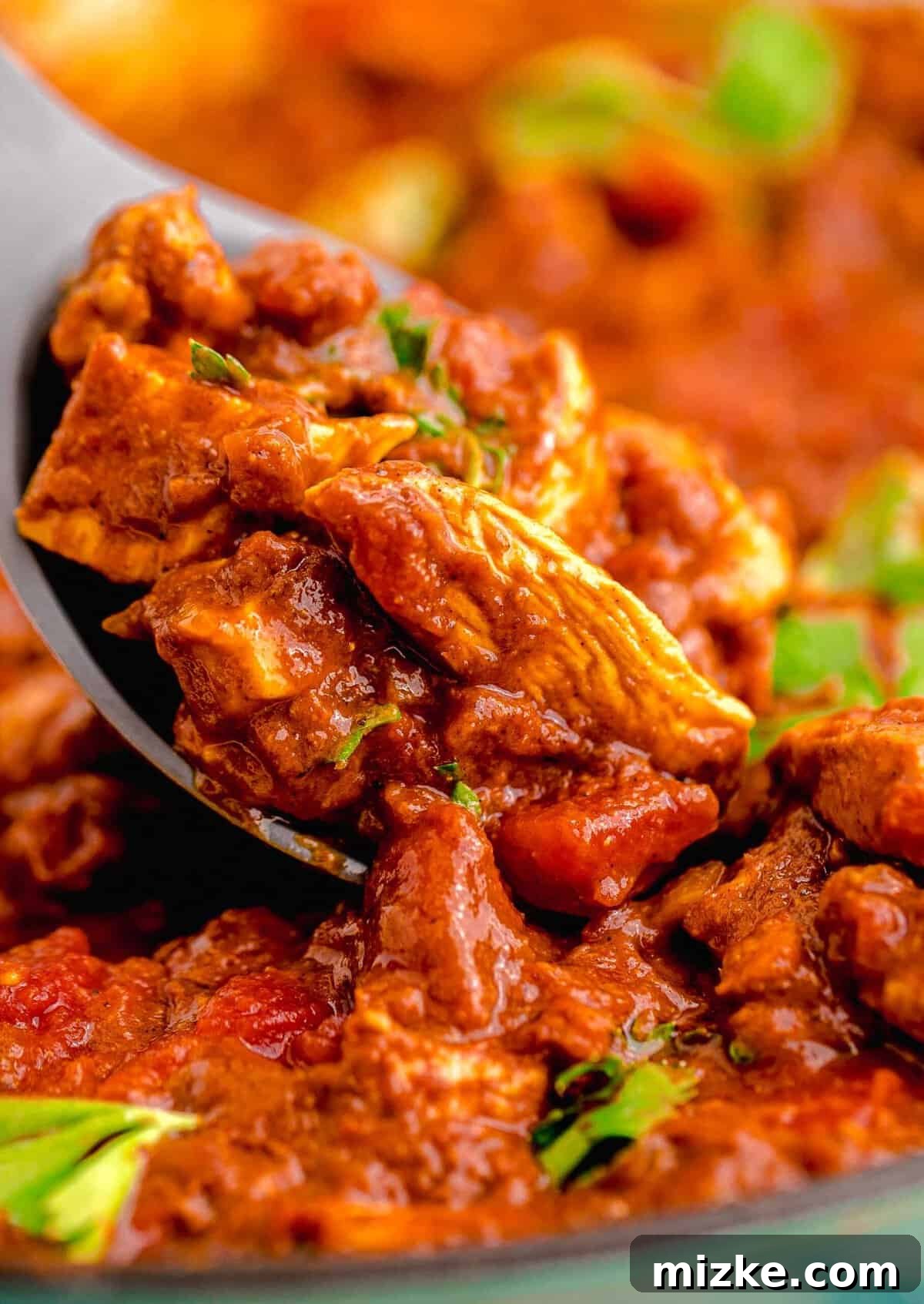
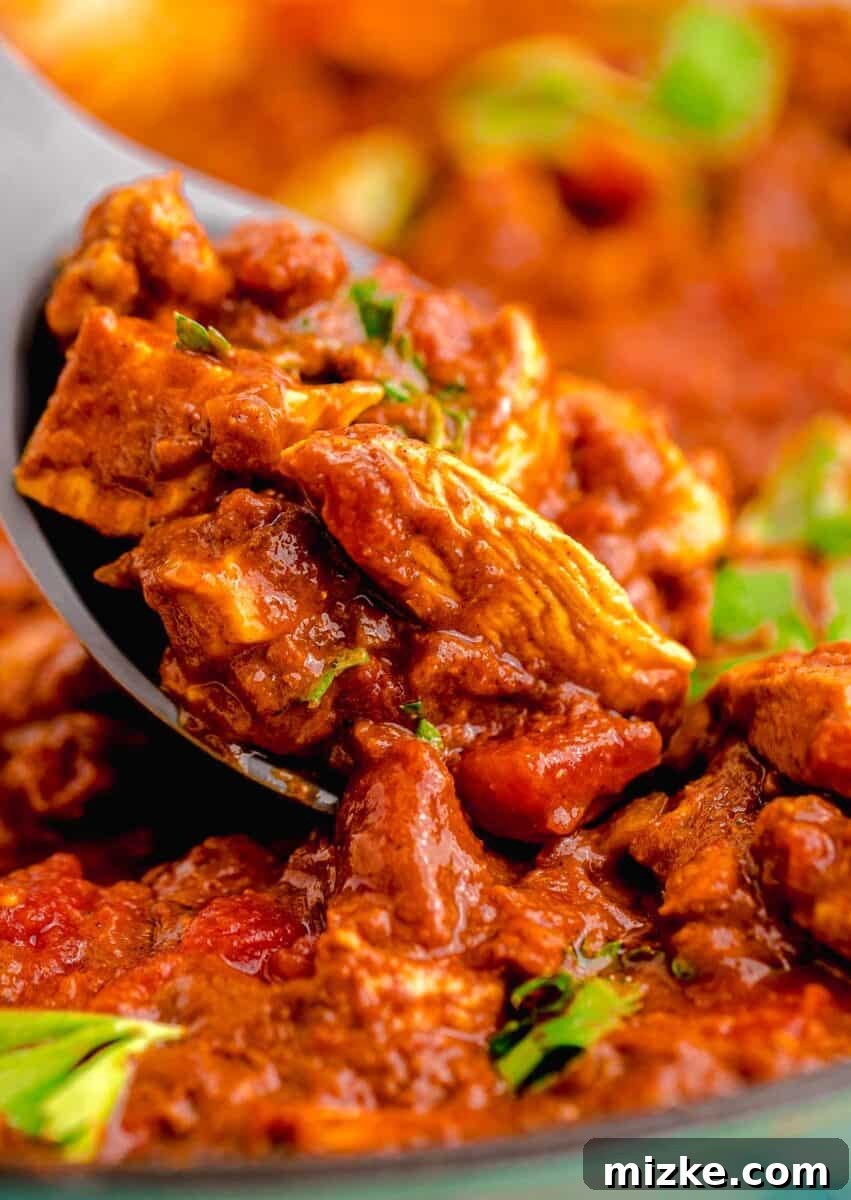
Embark on a culinary journey with a rich, fragrant, and exquisitely spicy Madras curry featuring tender chicken, a dish celebrated for its aromatically complex flavors and surprising ease of preparation at home!
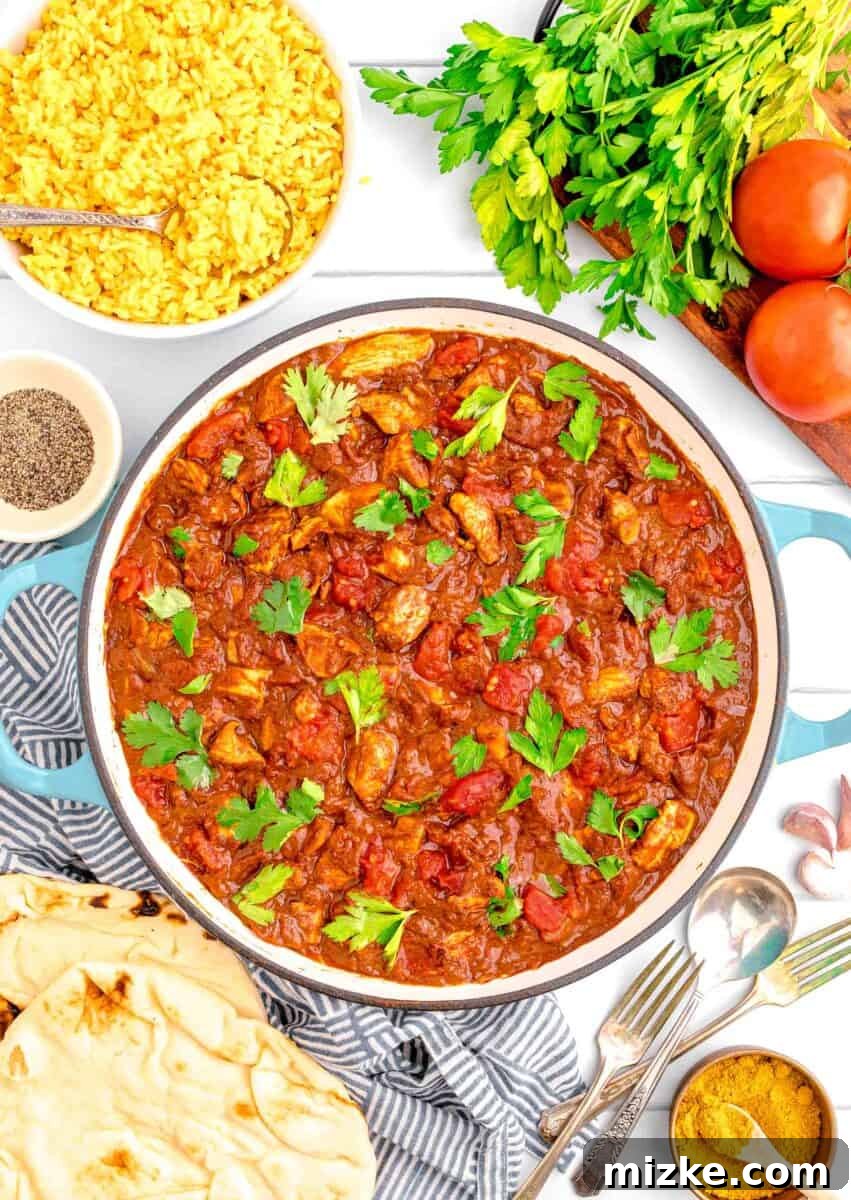
As I’ve grown older, my palate has thankfully evolved to not only tolerate but deeply appreciate the nuanced world of spicy foods. There was a time when I shied away from anything with a “kick,” feeling as though I missed out on half a lifetime of incredible flavors. Now, I’m making up for lost time, eagerly exploring diverse spicy dishes across countless cultural cuisines. My preference isn’t for mouth-numbing heat that obliterates taste, but rather for that invigorating warmth that awakens the senses and leaves a delightful buzz on the tongue. It’s about enhancing the dish, not overpowering it.
When I first encountered Madras curry, my tastebuds were instantly captivated by its audacious and profound flavor profile. This isn’t just a simple spicy dish; it’s a symphony of aromatic spices meticulously blended to create a complex, multi-layered culinary experience. Beyond its signature heat, Madras curry boasts a harmonious blend of earthy and warm notes derived from ingredients like paprika, cinnamon, and cloves. The sauce itself is luxuriantly enriched with creamy coconut milk, which not only provides a smooth, velvety texture but also ingeniously balances the intense spices, making each spoonful a perfectly harmonized delight.
What is Madras Curry? Exploring This South Indian Culinary Gem
Madras curry is a celebrated and highly popular dish that traces its origins to the southern regions of India, specifically the vibrant city of Chennai, historically known as Madras. It stands as a testament to the rich culinary heritage of South India, showcasing a spectrum of bold and diverse flavors that are both invigorating and deeply satisfying. This iconic curry is typically characterized by a thick, velvety smooth, and notably spicy sauce, which serves as the perfect canvas for various proteins. While chicken is a common choice, Madras curry is also frequently prepared with succulent lamb, delicate fish, or even a robust medley of vegetables, offering a delightful vegetarian alternative. The result is always a robust, intensely flavorful, and rich curry that is traditionally enjoyed with fluffy naan bread, ideal for soaking up every last drop of the delicious sauce, or alongside fragrant jasmine rice or basmati rice.
The distinctive spice blend used in Madras curry powder often includes coriander, cumin, turmeric, fenugreek, chili powder, and black pepper, sometimes with additional warming spices like cinnamon and cloves. This combination creates its signature reddish-brown hue and unique aroma. Unlike some other Indian curries that rely heavily on fresh ingredients like ginger and garlic paste at the start, Madras curry often integrates a dry spice blend that is toasted to intensify its flavors before liquid is added. This technique contributes significantly to its depth and the authentic, earthy undertones that make it so distinctive and beloved worldwide.
Why You’ll Love This Authentic Madras Curry Recipe
This homemade Chicken Madras Curry isn’t just another meal; it’s an experience waiting to be savored. Here’s why you’ll want to make it a staple in your kitchen:
- Authentic South Indian Flavor Experience: Whether you’re a seasoned enthusiast of Indian cuisine or just beginning your exploration, this Madras curry offers a superb entry point into the vibrant flavors of South India. It’s loaded with robust, aromatic spices and delivers that characteristic warmth and spice that is synonymous with authentic Indian cooking. You’ll taste the true essence of a classic, well-balanced curry that tantalizes every part of your palate.
- Restaurant-Quality Dining, Right at Home: Forget about costly takeout or waiting for delivery! With this recipe, you can effortlessly recreate a truly restaurant-quality Madras curry in your own kitchen. My straightforward, step-by-step instructions break down the process into manageable tasks, ensuring that even novice cooks can achieve a delicious, impressive curry that rivals your favorite Indian restaurant. Enjoy the satisfaction of a homemade meal that feels gourmet without the hefty price tag or the need to leave your home.
- Remarkably Versatile and Easily Customizable: One of the greatest beauties of this Madras curry recipe lies in its adaptability. Not a fan of intense heat? No problem at all! You have complete control over the spice levels, allowing you to tailor the dish perfectly to your personal preference. Beyond adjusting the spice, this recipe is incredibly flexible when it comes to ingredients. You can easily swap out chicken for other proteins like lamb, beef, or even firm tofu, or experiment with various vegetables such as potatoes, cauliflower, or chickpeas to create a hearty vegetarian option. This versatility ensures that Madras curry can become a regular, personalized favorite in your meal rotation.
Essential Ingredients for Your Homemade Madras Curry
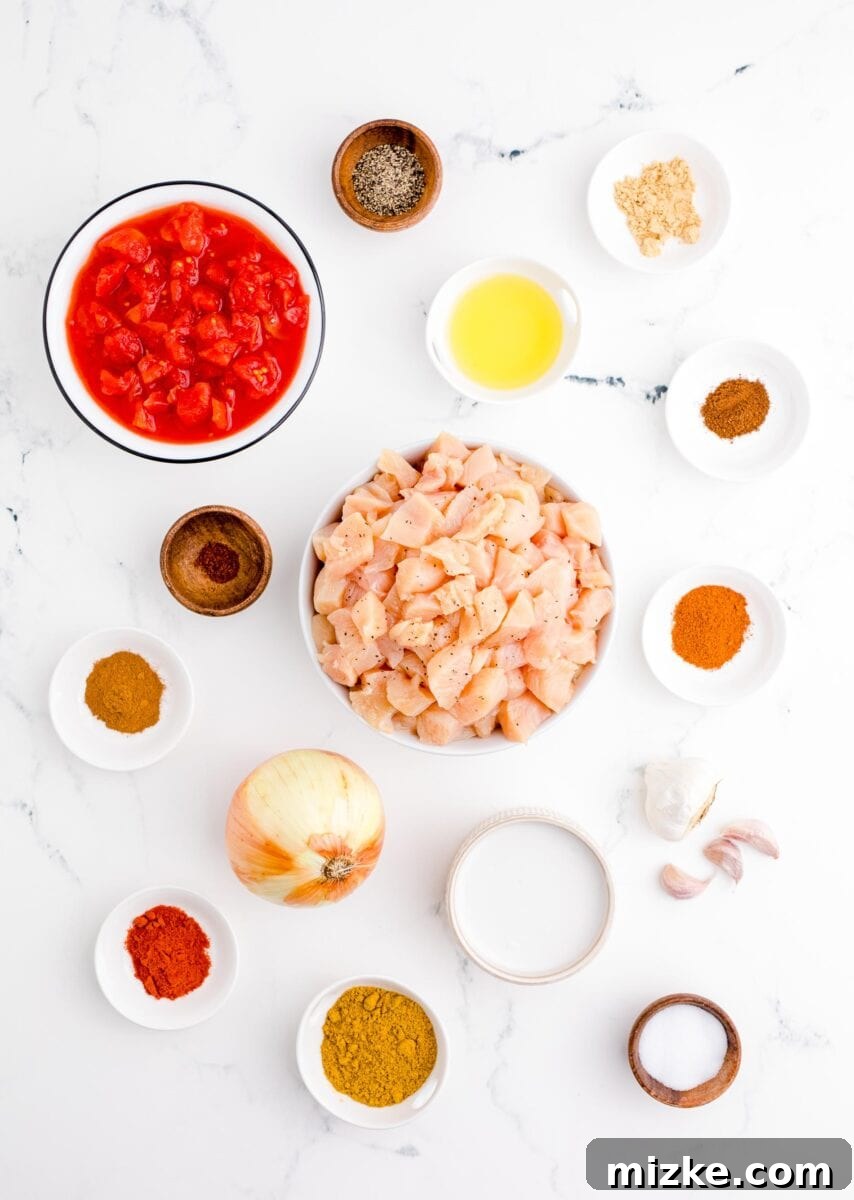
The secret to the profound depth of flavor in Indian cuisine, and particularly in this chicken curry, lies in its unique and rich blend of spices. Sourcing fresh, high-quality spices is paramount to achieving the authentic taste profile. While Madras curry powder forms the base, several other individual spices contribute to its complexity. Remember to check the full recipe card below for precise measurements to ensure a perfect balance.
- Oil: Essential for sautéing the aromatics and blooming the spices, typically a neutral oil like vegetable or canola.
- Onion: Forms the sweet and savory base of the curry, providing a foundational flavor.
- Garlic: A crucial aromatic that adds pungent depth and complexity to the sauce.
- Madras Curry Powder: The star of the show, providing the characteristic heat, aroma, and color of the dish.
- Ginger: Offers a warm, spicy, and slightly sweet undertone, balancing the other flavors.
- Chili Powder: Contributes to the overall heat level and vibrant red color.
- Sweet Smoked Paprika: Adds a beautiful reddish hue and a subtle smoky sweetness, enhancing the savory notes.
- Sugar: A touch of sweetness helps to balance the acidity of the tomatoes and the intensity of the spices.
- Pepper: Black pepper adds an additional layer of mild heat and pungent aroma.
- Cinnamon: A warm, sweet spice that brings depth and aromatic complexity.
- Cloves: Known for their intensely aromatic, sweet, and pungent flavor, they add a distinctive note.
- Cayenne Pepper: For an extra kick of heat, allowing you to fine-tune the spiciness.
- Chopped Tomatoes: Provide the tangy, acidic base for the curry sauce and contribute to its rich consistency.
- Coconut Milk: Essential for its creamy texture and mild sweetness, which harmonizes with and mellows the spices. Full-fat coconut milk is recommended for the best richness.
- Boneless Skinless Chicken Breasts: Cut into bite-sized pieces, these absorb the rich flavors of the curry and cook to tender perfection.
How To Make Delicious Chicken Madras Curry: A Step-by-Step Guide
Creating this flavorful Chicken Madras Curry at home is surprisingly simple when you follow these easy, step-by-step instructions. My detailed guide ensures a smooth cooking process, leading to a perfectly spiced and tender curry every time. For the full ingredient list with exact measurements, please scroll down to the complete recipe card at the bottom of this post.
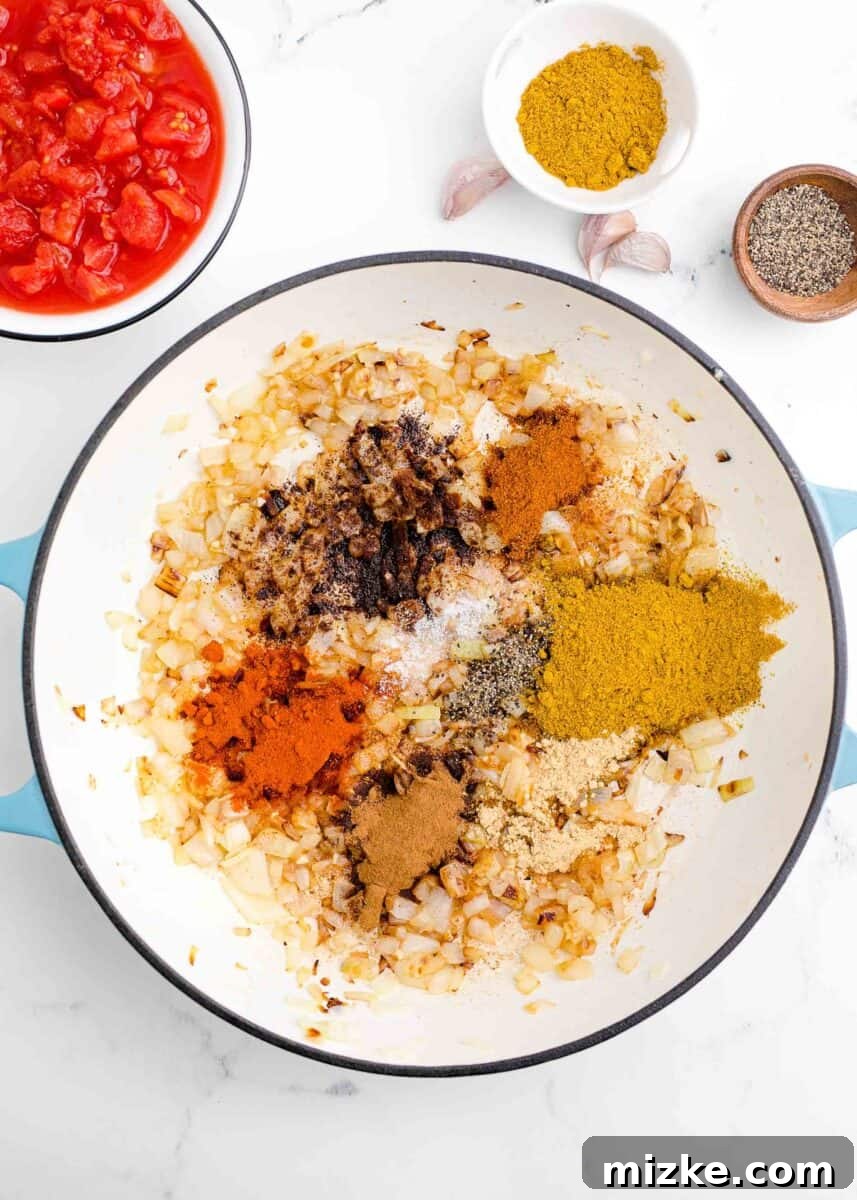
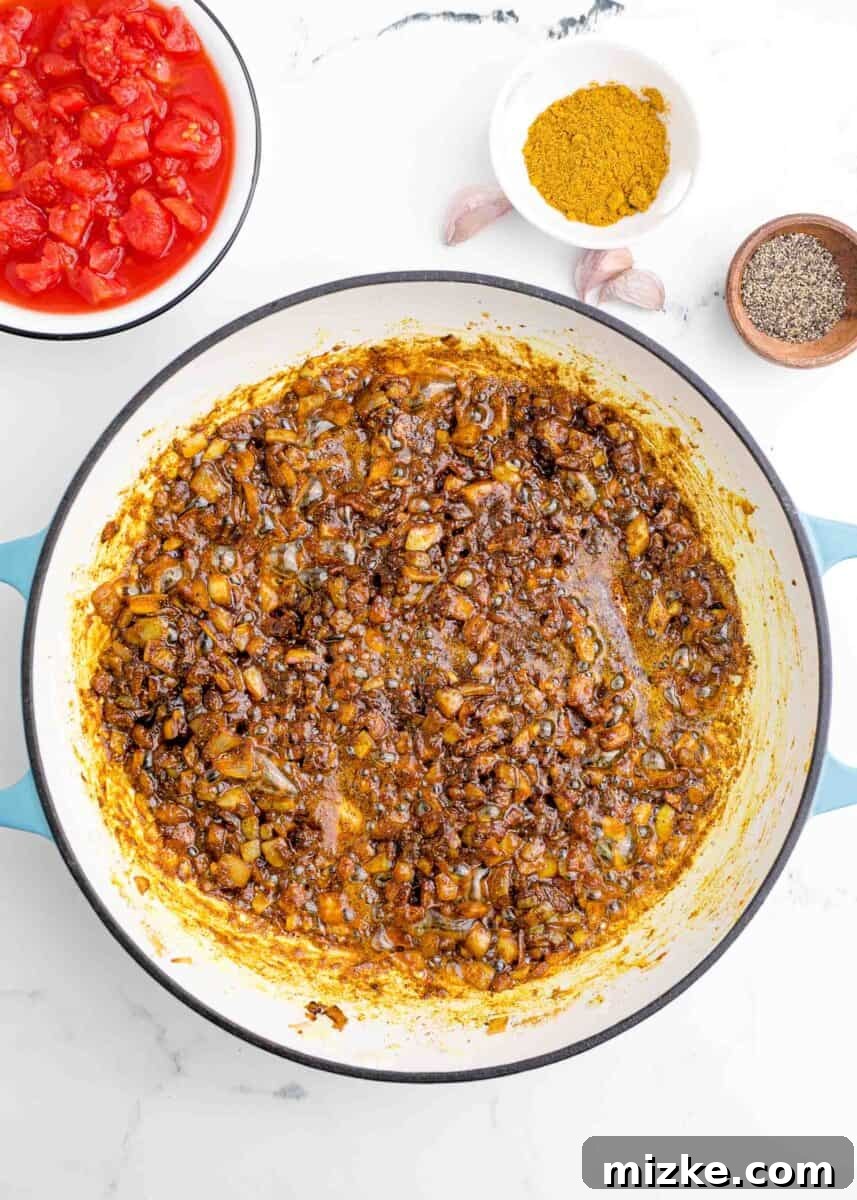
- Cook the Aromatics and Bloom the Spices: Begin by heating the oil in a large Dutch oven or a heavy-bottomed pot over low heat. Add the diced onion and cook gently for about 5 minutes, stirring occasionally, until they become soft and translucent. This low and slow cooking allows the onions to release their sweetness without browning too quickly. Next, stir in the minced garlic and continue to cook for another 5 minutes until fragrant. Finally, add all the dry spices (Madras curry powder, ginger, chili powder, sweet smoked paprika, sugar, pepper, cinnamon, cloves, and cayenne pepper) to the pot. Stir continuously for an additional 5 minutes, allowing the spices to “bloom” in the hot oil. This crucial step intensifies their flavors and aromas. If the mixture appears too dry during this stage, feel free to add a tiny splash more oil to prevent burning. Let this aromatic mixture simmer and lightly bubble for a minute, ensuring to stir frequently.
- Simmer the Flavorful Sauce: Increase the heat to medium. Carefully add the diced tomatoes (undrained, as the liquid adds flavor and moisture) and the creamy coconut milk to your pan. Stir everything together thoroughly, ensuring the spices are well incorporated into the liquids. Bring the mixture to a gentle simmer and let it cook for approximately 15 minutes. During this time, the sauce will thicken considerably as the flavors meld and deepen, creating a rich and inviting base for your curry.
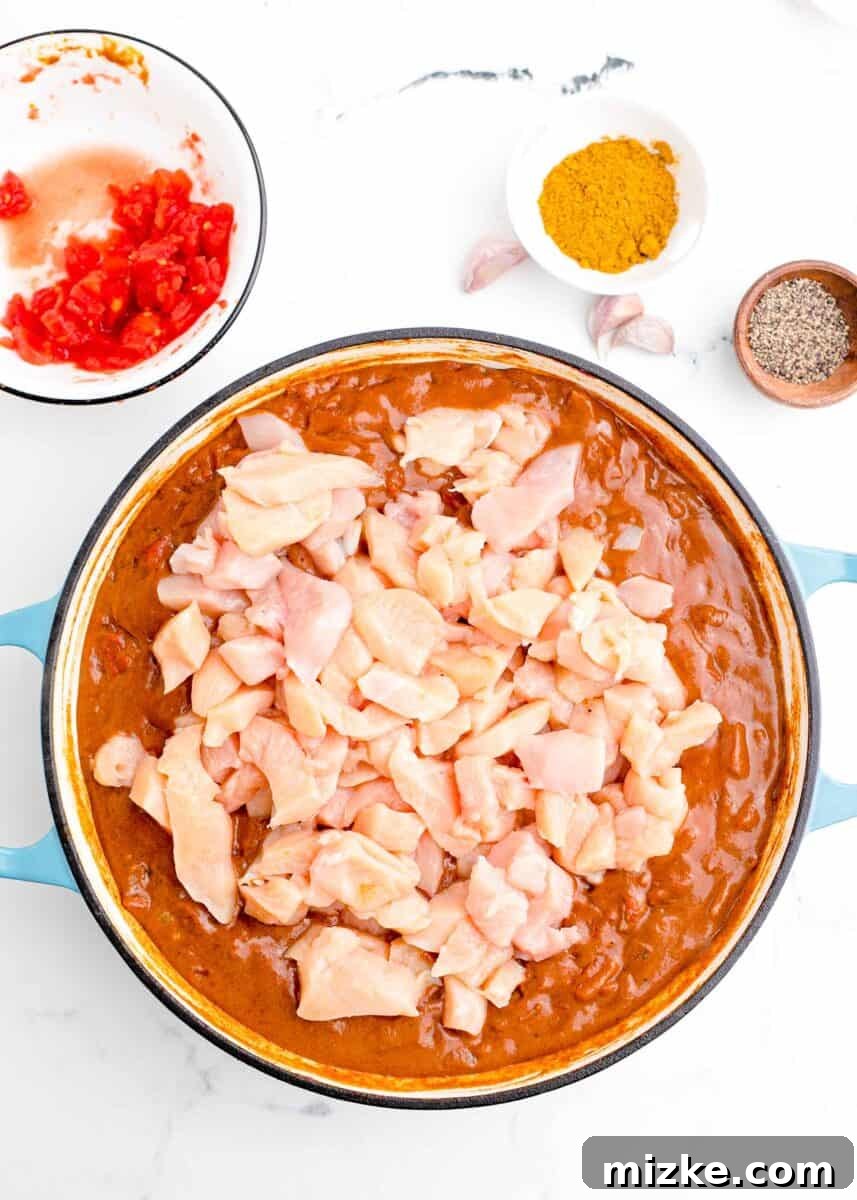
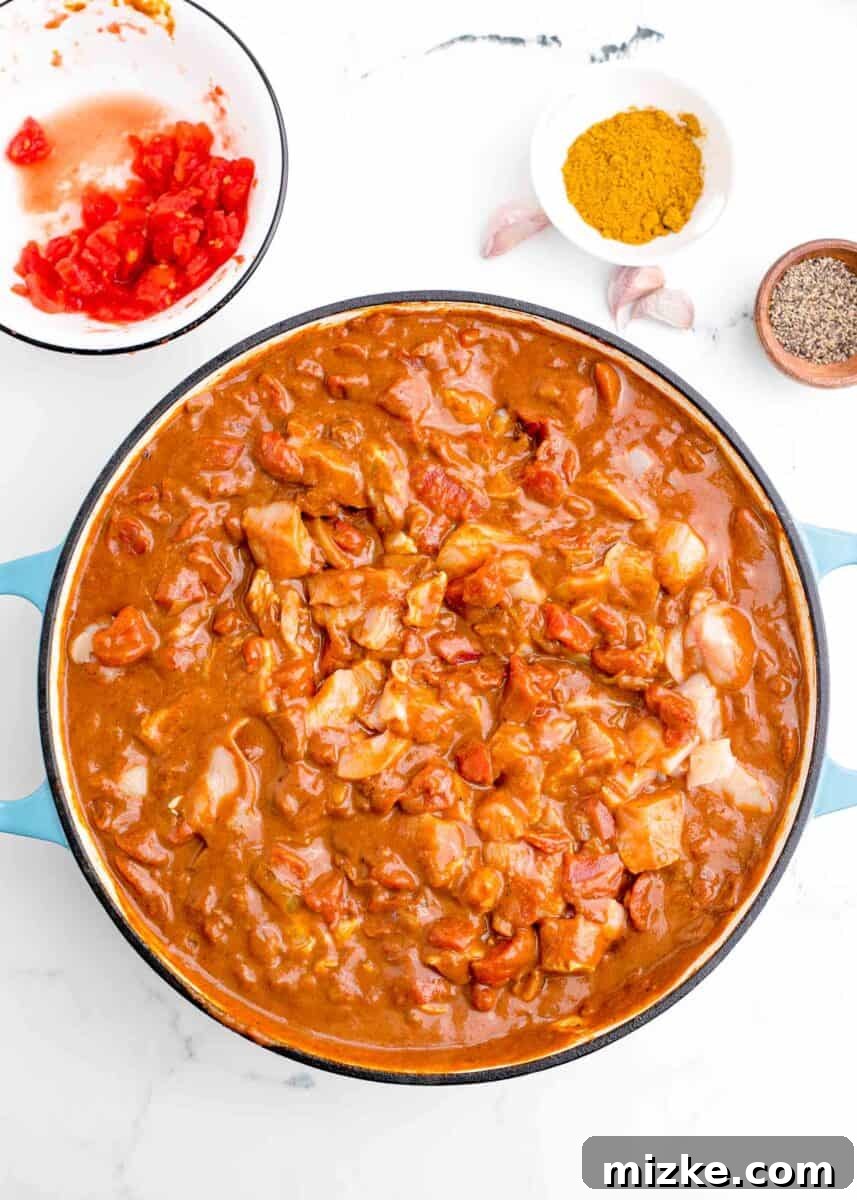
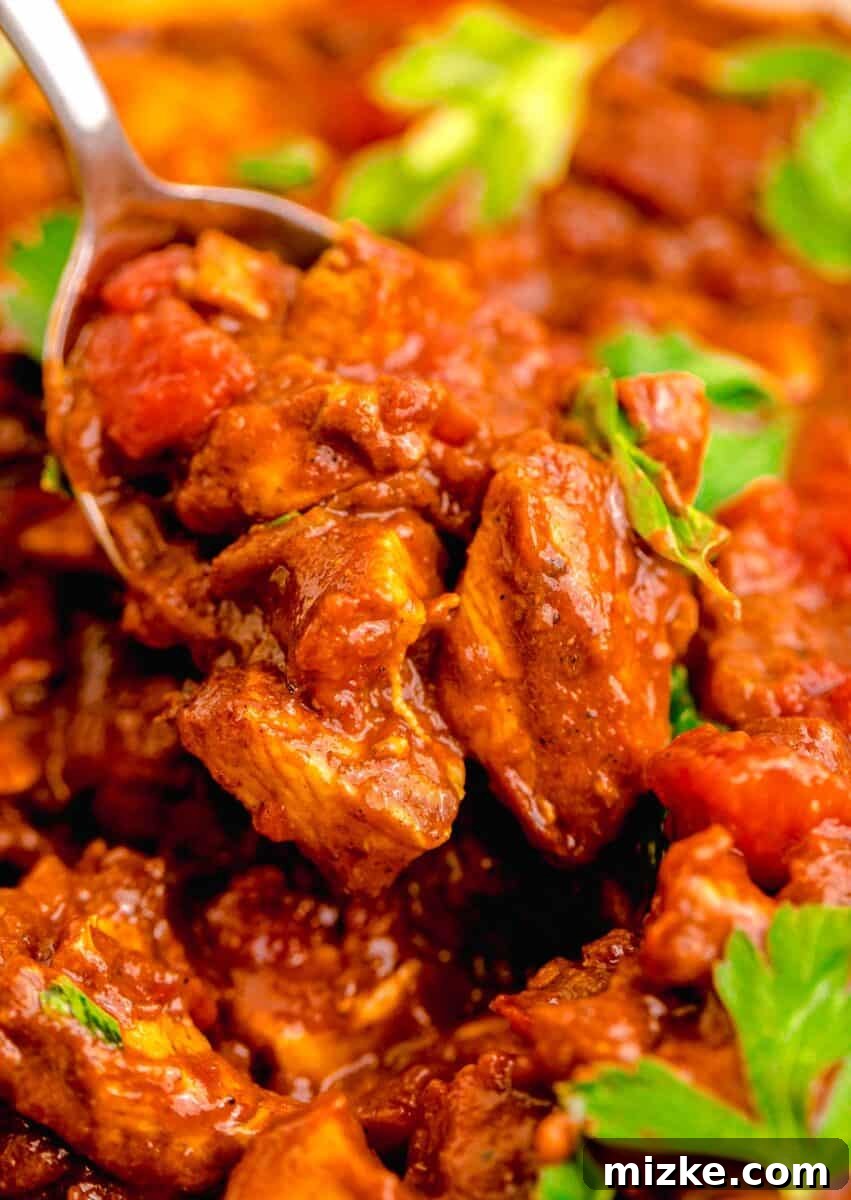
- Cook the Chicken to Tender Perfection: Add the bite-sized chicken pieces to the thickened sauce. Stir well to ensure that each piece of chicken is thoroughly coated with the rich curry. Cover the pan and allow it to cook for 10 minutes. This initial covered cooking helps to steam the chicken and infuse it with the flavors. After 10 minutes, remove the cover and continue to cook for another 10 minutes, or until the chicken is cooked through and tender. This final uncovered simmer will help reduce the sauce slightly more and deepen the flavors.
Recipe Tips, Smart Substitutions, and Flavorful Variations
To truly master this Madras curry and make it your own, consider these invaluable tips and creative variations:
- Toasting the Spices is Non-Negotiable: While it might seem tempting to simply dump all ingredients into the pot at once, resisting this urge is crucial for exceptional flavor. The act of gently toasting the dry spices in oil – a process often called “blooming” – fundamentally transforms their flavor profile. Heat helps to release the essential oils and aromatic compounds, intensifying their fragrance and deepening their taste. This step prevents the spices from tasting raw or chalky and builds a robust foundation for the entire curry. Don’t skip it!
- Experiment with Other Proteins: Chicken is fantastic in this curry, but its versatility shines with other proteins too. Succulent lamb, hearty beef, or even delicate fish fillets are commonly used in various Indian curries and can be wonderful substitutes. If using lamb or beef, opt for stewing cuts and increase the simmering time to allow the meat to become fork-tender, typically 45-60 minutes longer. For fish, add it in the final 10-15 minutes of cooking to prevent it from flaking apart. Shrimp cooks even faster, needing only 5-7 minutes.
- Adjust for Your Ideal Spice Level: Madras curry powder is inherently spicier than a standard mild curry powder. If you prefer a milder flavor, you have several options:
- Reduce the amount of Madras curry powder.
- Omit or significantly reduce the cayenne pepper.
- Consider substituting regular, milder curry powder for part or all of the Madras curry powder.
- For more heat, add an extra pinch of cayenne or a finely chopped green chili during the aromatic cooking phase.
Always taste and adjust as you go!
- Transform it into a Hearty Vegetarian Meal: This curry base is incredibly adaptable for a meatless option. Substitute the chicken with an array of robust vegetables and legumes. Excellent choices include chickpeas, lentils, sweet potatoes, butternut squash, or cauliflower florets. Add tougher vegetables like potatoes and squash during the sauce simmering phase to ensure they cook through, and softer ones like cauliflower or spinach in the last 10-15 minutes. This creates a satisfying, nutrient-rich vegetarian dish that doesn’t compromise on flavor.
Storage and Reheating Instructions for Madras Curry
Madras curry is one of those dishes that often tastes even better the next day, as the flavors have more time to meld and deepen. Proper storage is key to enjoying your leftovers safely and deliciously.
Allow the prepared Madras curry to cool completely to room temperature before transferring it to an airtight container. Stored in the refrigerator, the curry will maintain its quality and freshness for up to five days. This makes it an excellent meal prep option for busy weeks.
For longer storage, Madras curry freezes beautifully. Place the cooled curry in a freezer-safe, airtight container or heavy-duty freezer bag, leaving a little headspace for expansion. It can be frozen for up to three months without significant loss of quality. To reheat from frozen, it’s best to transfer the mixture to a pot on the stovetop over low to medium heat. You may need to let it thaw slightly in the refrigerator overnight, or gently warm it directly in the pot, stirring frequently, until it thaws and warms through evenly. If reheating from the refrigerator, simply pop individual servings in the microwave or gently warm in a pot on the stovetop until heated through, adding a splash of water or coconut milk if the sauce has thickened too much.
What to Serve with Your Delectable Chicken Madras Curry
The beauty of a rich, saucy curry like Madras is how well it pairs with accompaniments that help soak up every last bit of its flavorful goodness. My absolute favorite ways to serve curries are with a selection of classic Indian sides that complement the spice and creaminess.
- Breads: Fluffy, warm homemade naan bread is my top choice, perfect for scooping up the luscious sauce. Other excellent options include soft roti, chapati, or paratha.
- Rice: A staple accompaniment, rice provides a neutral base that beautifully absorbs the curry’s complex flavors. Fragrant basmati rice or delicate jasmine rice are always excellent choices. For a truly elevated experience, consider serving it with a flavorful biryani, which offers an additional layer of aromatic spices and textures.
- Cooling Sides: To balance the heat of the Madras curry, offer refreshing side dishes. A simple bowl of plain yogurt, or a cooling raita (yogurt with grated cucumber, mint, and a touch of spice), can provide a delightful contrast and soothe the palate. A fresh cucumber and tomato salad also works wonderfully.
- Chutneys and Pickles: A spoonful of sweet mango chutney or a spicy lime pickle can add an extra dimension of flavor and texture, enhancing the overall dining experience.
Explore More Authentic Indian Recipes
If you’ve enjoyed the rich flavors of this Madras curry, you’ll love these other authentic Indian dishes, perfect for expanding your culinary repertoire:
- Slow Cooker Butter Chicken
- Slow Cooker Chicken Tikka Masala
- Dal Makhani
- Gobi Manchurian
- Vegetable Biryani
Madras Curry Recipe
A rich, fragrant, and spicy curry with tender chicken, Madras curry is an aromatically complex dish that is easily made at home and enjoyed by many!
By: Julie Chiou
Prep Time: 10 minutes
Cook Time: 45 minutes
Total Time: 55 minutes
Servings: 4
Equipment
- Dutch oven
Ingredients
- 2 Tablespoons oil
- 1 medium onion, diced
- 4 cloves garlic, pressed or minced
- 1 tablespoon Madras curry powder
- ½ teaspoon ginger
- ½ teaspoon chili powder
- ½ teaspoon sweet smoked paprika
- 1 tablespoon granulated sugar
- ½ teaspoon pepper
- ½ teaspoon cinnamon
- ¼ teaspoon cloves
- Pinch cayenne pepper
- 28 ounce (794 g) can diced tomatoes, don’t drain
- 14 ounce (397 ml) can coconut milk
- 4 (452 g) boneless skinless chicken breasts, cut into chunks, about 2 pounds total
Instructions
- Heat oil in a Dutch oven on low heat. Add onion and cook for 5 minutes until translucent. Stir in garlic and cook for another 5 minutes. Add all spices (Madras curry powder, ginger, chili powder, sweet smoked paprika, sugar, pepper, cinnamon, cloves, cayenne) and cook for another 5 minutes, stirring occasionally to avoid burning. If the mixture becomes dry, add a bit more oil. Allow this to simmer and bubble gently for a minute.
- Raise heat to medium. Add diced, undrained tomatoes and coconut milk to your pan and stir together with the cooked spices. Allow this mixture to simmer for 15 minutes. The liquid will thicken considerably as it cooks.
- Add chicken pieces and stir thoroughly to coat them completely in the sauce. Cover the pan and cook for 10 minutes. Then, remove the cover and continue to cook for another 10 minutes, or until the chicken is cooked through and tender.
Nutrition (Approximate)
Serving: 1 serving, Calories: 483kcal, Carbohydrates: 21g, Protein: 28g, Fat: 34g, Saturated Fat: 22g, Polyunsaturated Fat: 3g, Monounsaturated Fat: 6g, Trans Fat: 0.04g, Cholesterol: 72mg, Sodium: 436mg, Potassium: 1121mg, Fiber: 5g, Sugar: 12g
This information is provided for convenience and as a courtesy only. Nutrition information can vary for a variety of reasons. For the most precise nutritional data, use your preferred nutrition calculator based on the actual ingredients you used in the recipe.