
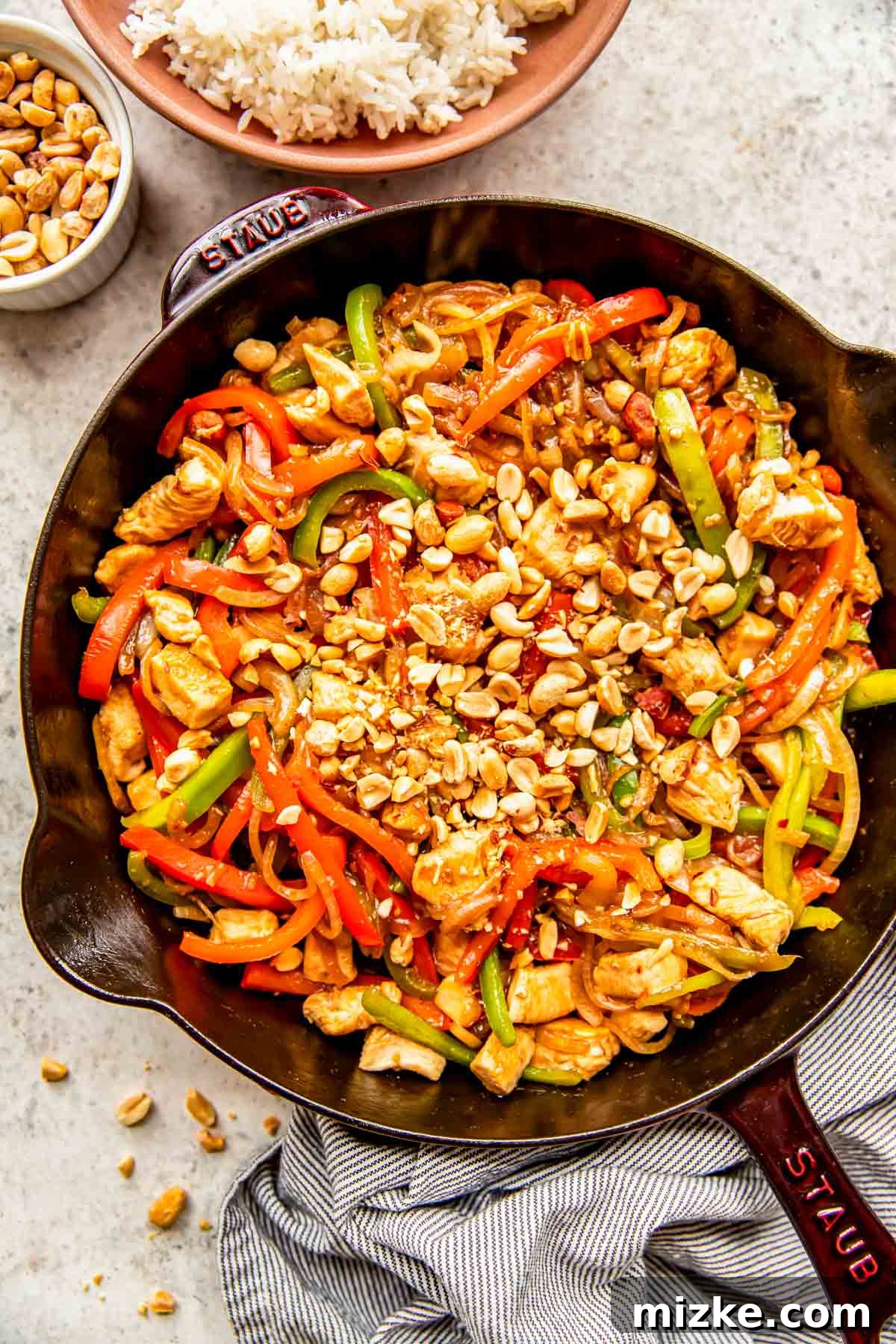
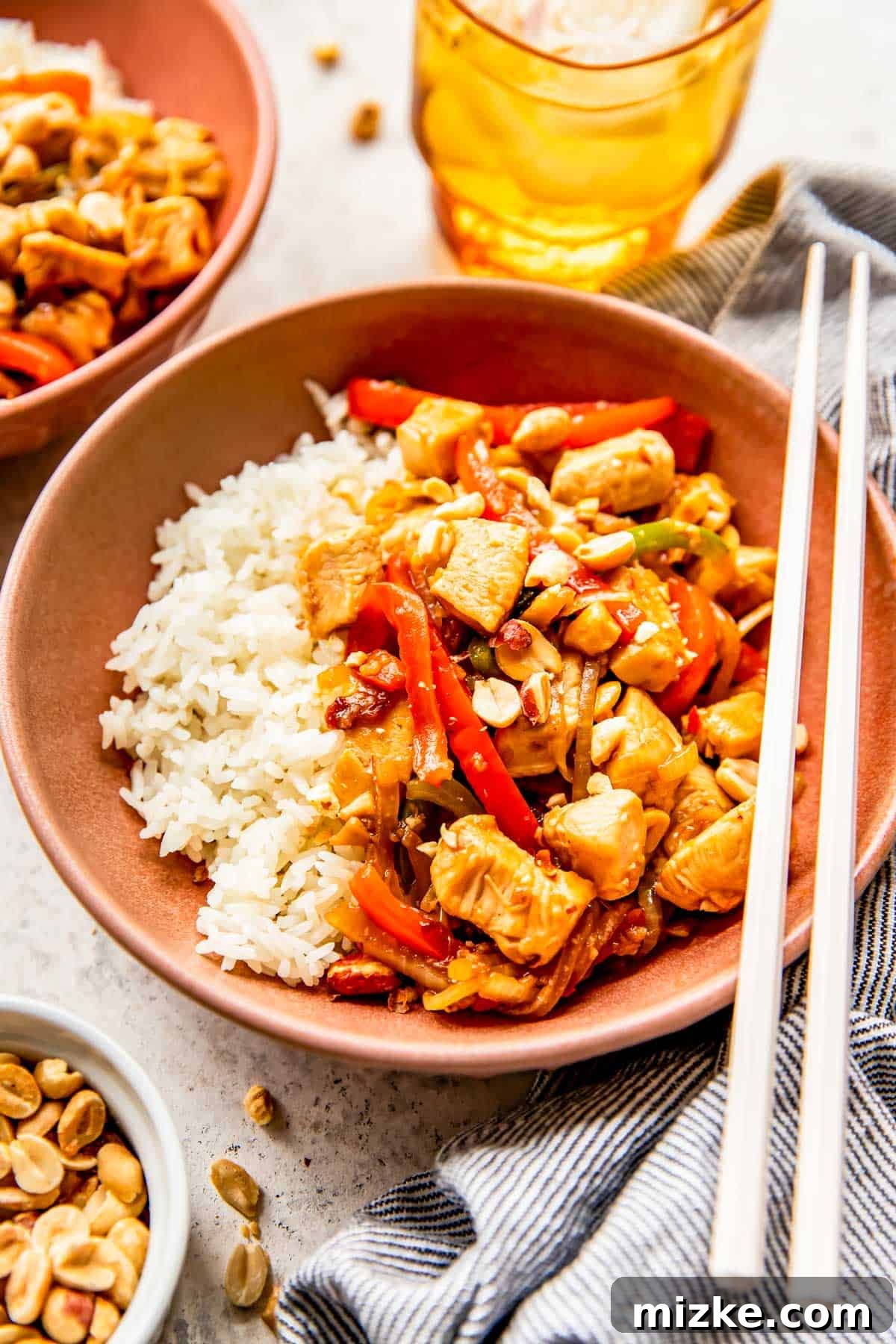
Kung Pao Chicken is a celebrated Chinese-American classic that has captured the hearts and taste buds of many. This delightful dish features succulent pieces of chicken, expertly coated in a dynamic sweet, sour, and subtly spicy sauce. Each bite is further enhanced by the satisfying crunch of roasted peanuts, the freshness of vibrant bell peppers and onions, and a fiery kick from red pepper flakes. It’s a symphony of flavors and textures, with just the right amount of heat to keep you coming back for more. Forget waiting for takeout – this homemade version promises a fresher, more flavorful experience right in your kitchen!
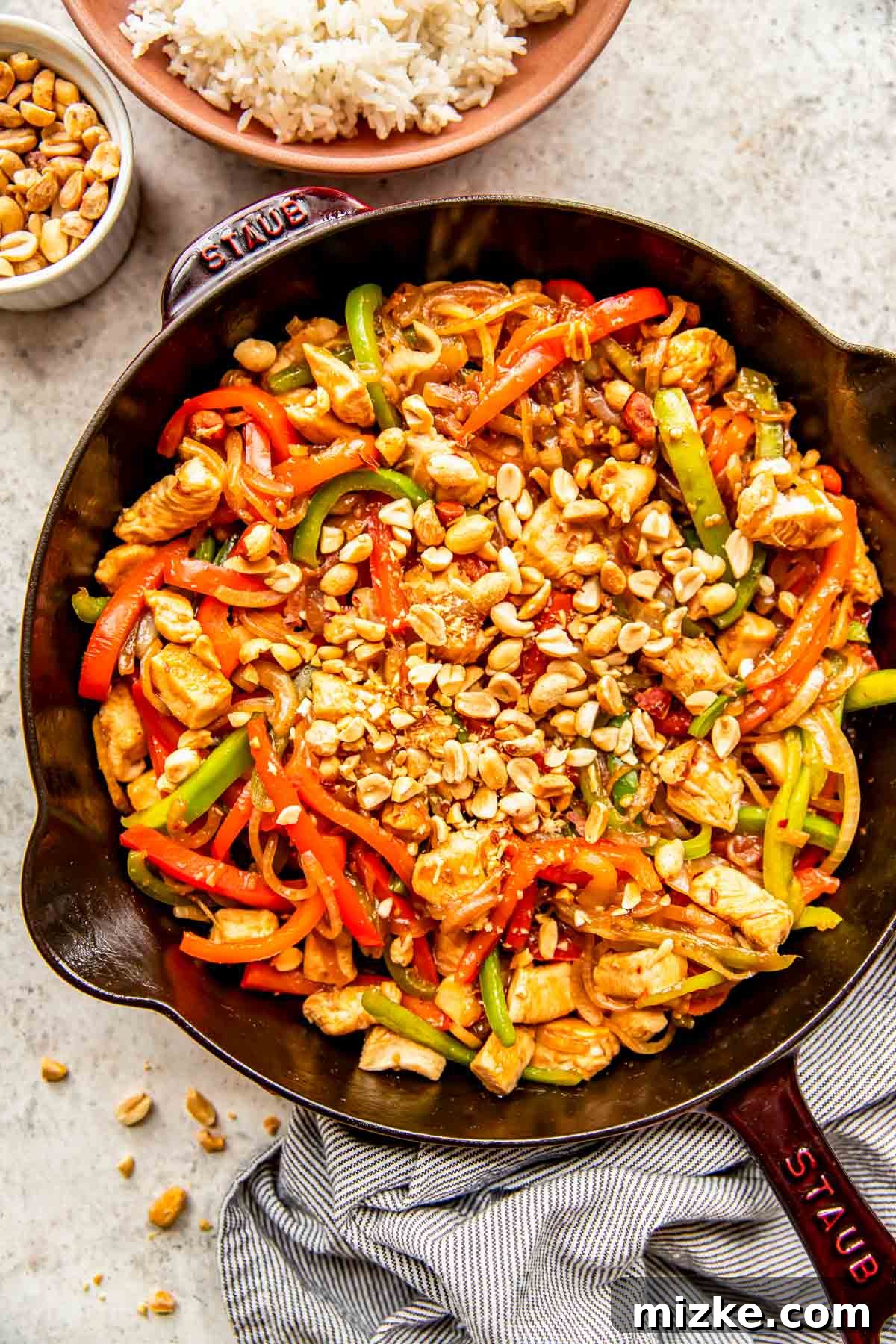
We all know the irresistible allure of ordering takeout after a demanding day or when simply unwinding during the weekend. There’s a certain comfort in knowing a delicious Chinese meal is just a phone call away. However, what if we told you that creating an authentic and incredibly delicious Kung Pao Chicken at home isn’t just possible, but surprisingly easy and far more rewarding?
Imagine this: in the same amount of time you’d spend browsing menus, placing your order, and patiently waiting for delivery, you could be enjoying a piping hot, restaurant-quality Kung Pao Chicken that’s bursting with freshness and customized exactly to your liking. This recipe isn’t just about convenience; it’s about elevating your culinary experience. Our homemade Kung Pao Chicken recipe is not only more vibrant and full of flavor than your average takeout but also a simple, fast, and incredibly satisfying meal to prepare. Get ready to ditch the delivery app and embark on a quick journey to a truly magnificent dinner!
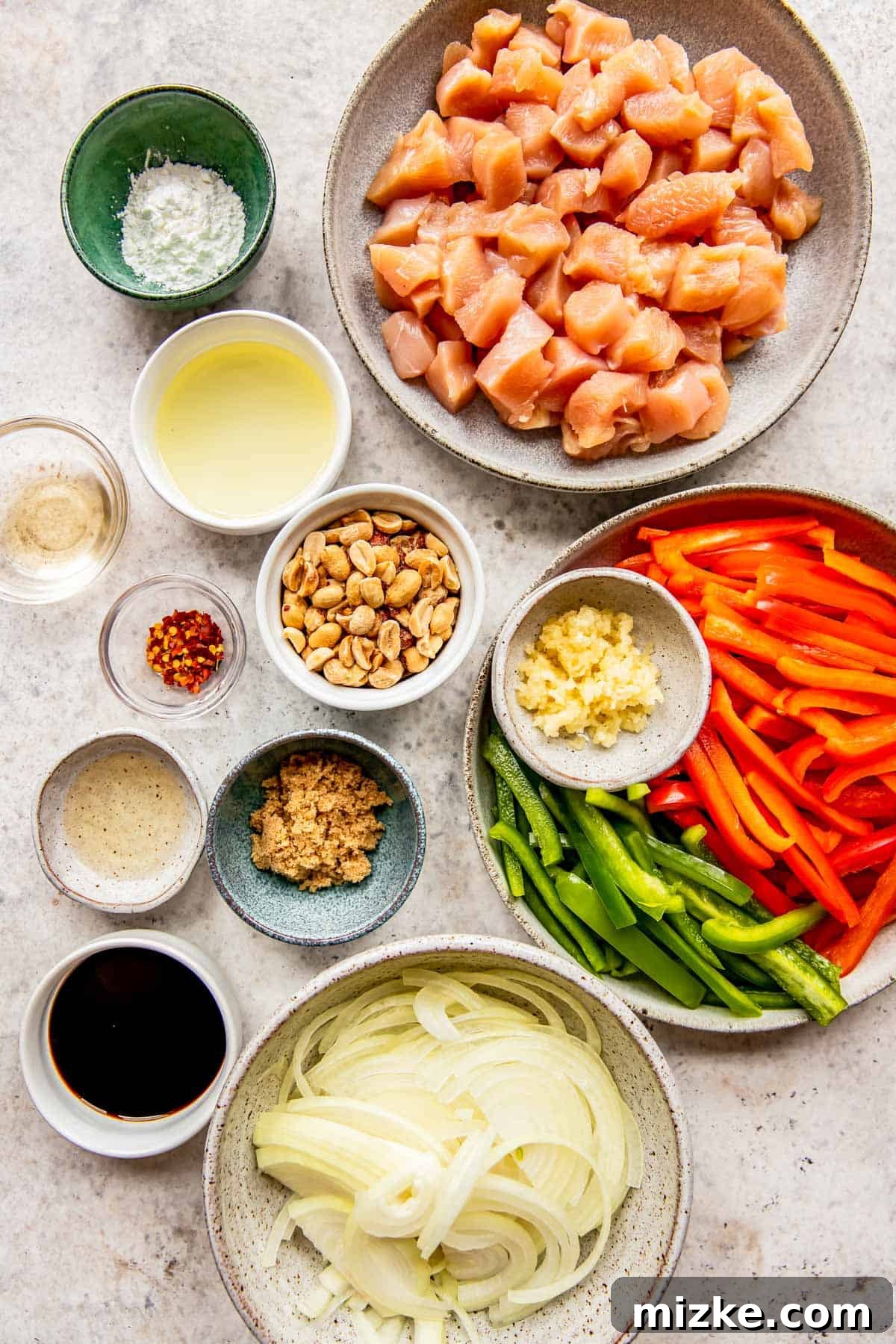
Essential Ingredients for the Perfect Kung Pao Chicken
Crafting an outstanding Kung Pao Chicken begins with selecting fresh, high-quality ingredients. Each component plays a vital role in achieving that signature balance of sweet, sour, and spicy flavors that makes this dish so beloved. Here’s a detailed look at what you’ll need:
- Vegetable Oil: A neutral oil is best for stir-frying as it has a high smoke point and won’t overpower the other flavors.
- Chicken Breast: For this recipe, boneless and skinless chicken breasts are ideal, cut into uniform 1/2-inch chunks for even cooking. If you prefer a richer flavor and slightly more tender texture, boneless, skinless chicken thighs can be used as an excellent substitute.
- Bell Peppers: To add both flavor and visual appeal, a mix of colorful bell peppers is recommended. Red and green bell peppers are classic choices, but feel free to incorporate yellow or orange peppers to make your dish even more vibrant and appealing. They provide a delightful crunch and subtle sweetness.
- Onion: Yellow onion, thinly sliced, forms an aromatic base for the stir-fry, contributing a foundational sweetness and savory depth.
- Garlic: Freshly minced garlic is indispensable for creating a robust and fragrant flavor profile, a hallmark of many Chinese dishes.
- Low-Sodium Soy Sauce: Using low-sodium soy sauce allows you to control the overall saltiness of the dish, ensuring it’s perfectly seasoned without being overly salty. For those following a gluten-free diet, tamari is a fantastic and readily available alternative that offers the same rich umami flavor.
- Dry Sherry: This is a traditional ingredient that adds a unique depth and subtle nutty sweetness to the sauce. If you prefer to avoid alcohol, you can omit it entirely or use a small amount of sherry vinegar (be mindful as it is more acidic) or even chicken broth for a milder flavor. Just remember to taste and adjust the sauce accordingly, as doubling vinegars can make it too tangy.
- Rice Wine Vinegar: Crucial for that characteristic tangy and bright kick in the Kung Pao sauce, rice wine vinegar balances the sweetness and spice. If rice wine vinegar isn’t available, white vinegar can serve as a suitable, though slightly sharper, substitute.
- Dark Brown Sugar: Essential for providing the distinct sweetness and a hint of molasses that rounds out the sauce, balancing the acidity and spice beautifully.
- Cornstarch: This acts as the thickening agent for the sauce, ensuring it beautifully coats every piece of chicken and vegetable, creating that desirable glossy finish and rich texture.
- Crushed Red Pepper Flakes: These deliver the customizable heat level for the dish. Feel free to adjust the quantity to your personal preference for mild or extra fiery. For an even more authentic and potent kick, consider using dried red chilies instead of flakes, often found in Asian markets.
- Roasted Peanuts: A signature component of Kung Pao Chicken, roasted peanuts provide a delightful nutty flavor and a crucial crunchy texture that contrasts wonderfully with the tender chicken and soft vegetables. Add as many as your heart desires!
- Green Onions: Sliced green onions serve as a fresh, aromatic garnish, adding a burst of color and a mild oniony flavor that brightens the dish. While optional, they significantly enhance the overall presentation and taste.
- Cooked Rice: The perfect accompaniment to absorb all the flavorful sauce, plain white rice is the traditional choice. For a fluffy and aromatic side, consider serving with our easy jasmine rice recipe.
Mastering the Art of Homemade Kung Pao Chicken
Creating this iconic Chinese dish at home is simpler than you might think, especially when you follow these clear, step-by-step instructions. The key to a successful stir-fry is preparation and high heat, ensuring vibrant vegetables and perfectly cooked chicken. Let’s get cooking!
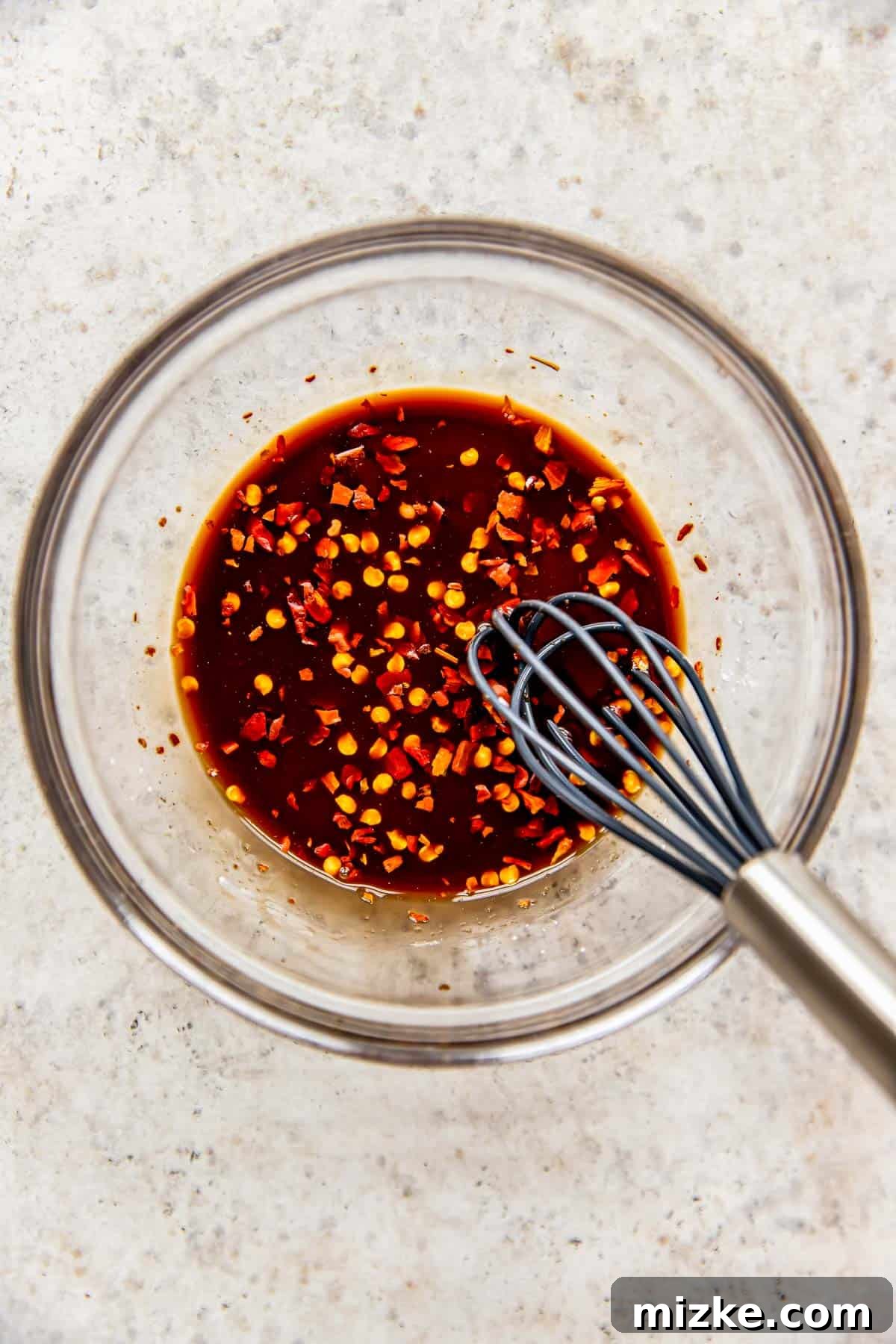
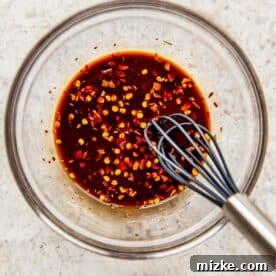
- Prepare the Signature Sauce: In a medium-sized bowl or a convenient measuring cup, combine all the ingredients designated for the sauce (low-sodium soy sauce, dry sherry, rice wine vinegar, dark brown sugar, cornstarch, and crushed red pepper flakes). Whisk vigorously until all ingredients are thoroughly combined and the sugar has dissolved. Set this flavorful mixture aside; it will be added at the end to bring the dish together.
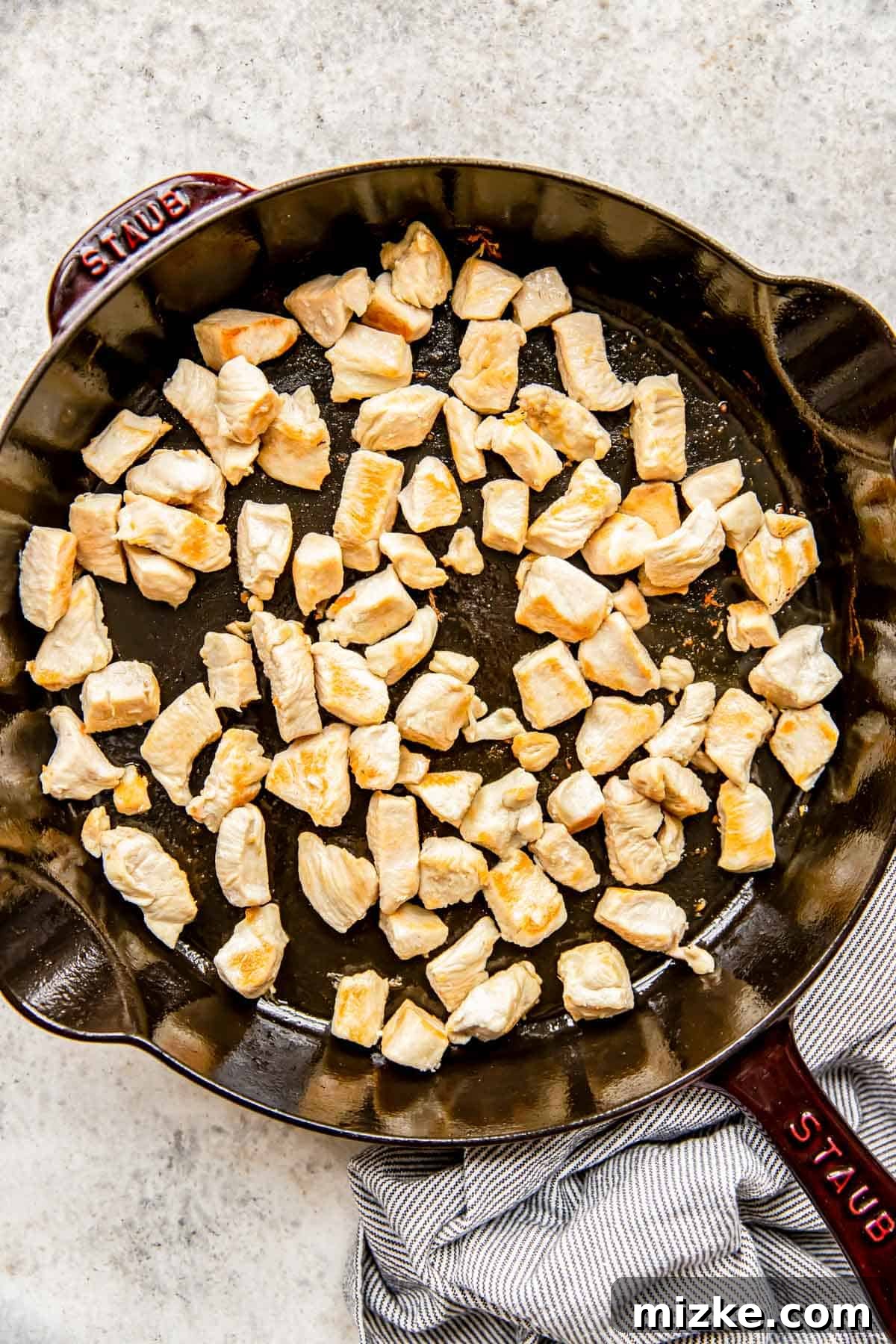
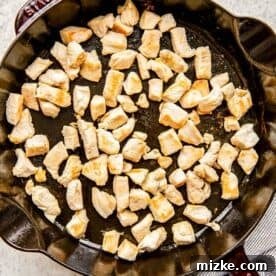
- Sear the Chicken to Golden Perfection: Place a wok or a large skillet over medium-high heat. Add the vegetable oil and allow it to heat up until shimmering. Carefully add the cut chicken pieces to the hot wok, ensuring not to overcrowd the pan. Cook the chicken, stirring occasionally, until it’s beautifully browned on the outside and mostly cooked through internally, which usually takes about 5 minutes. Don’t worry if it’s not completely cooked yet; it will finish cooking with the sauce later. Remove the browned chicken from the wok and set it aside on a plate.
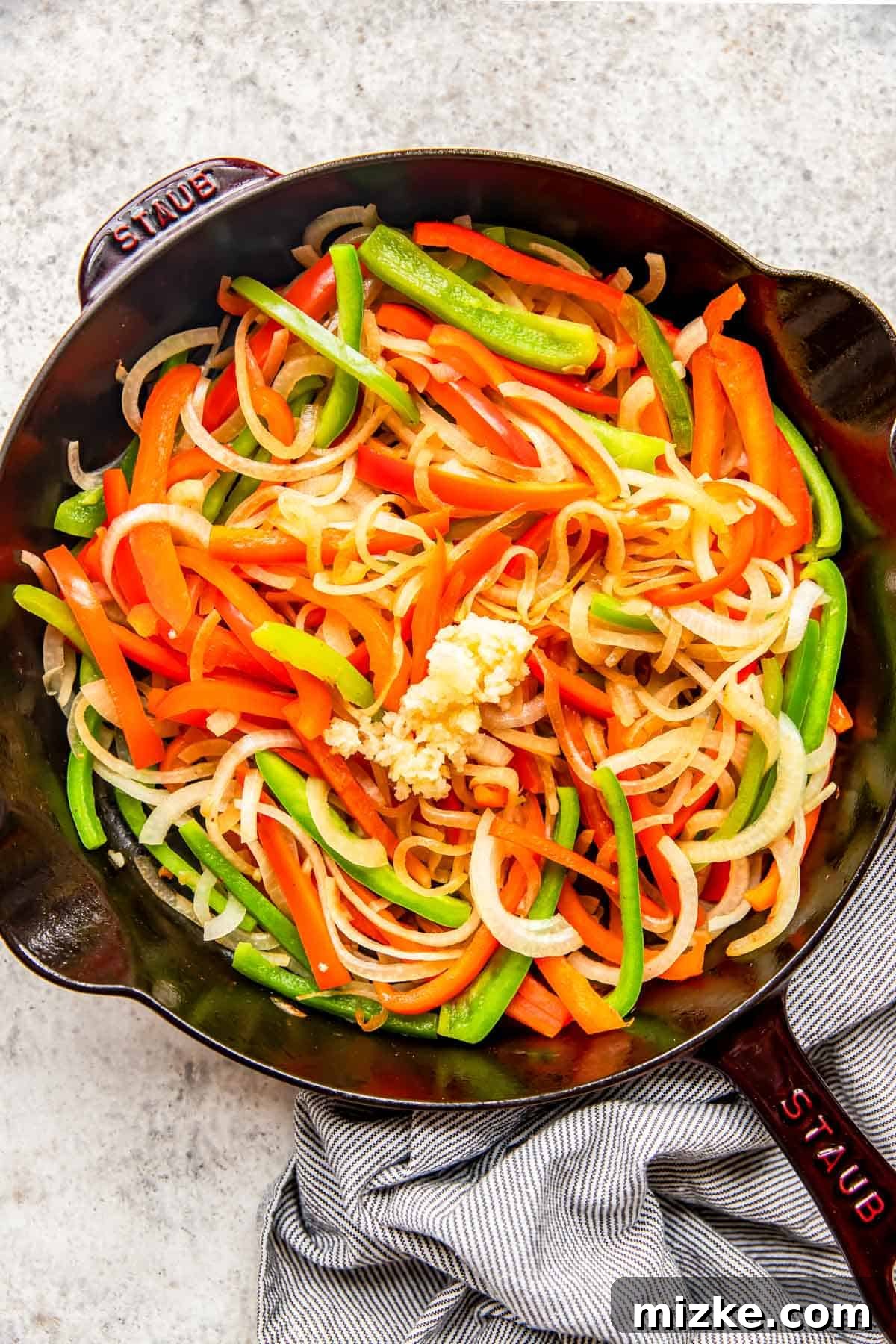
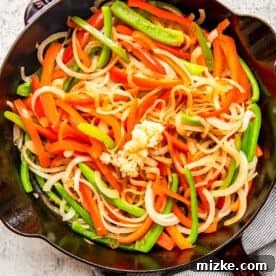
- Sauté the Aromatic Vegetables: In the same wok (add a little more oil if needed), add the bell peppers and sliced onion. Stir-fry for 3-4 minutes until the vegetables begin to soften but still retain a slight crispness. Then, add the minced garlic and sauté for an additional 30 seconds until it becomes wonderfully fragrant, being careful not to burn it.
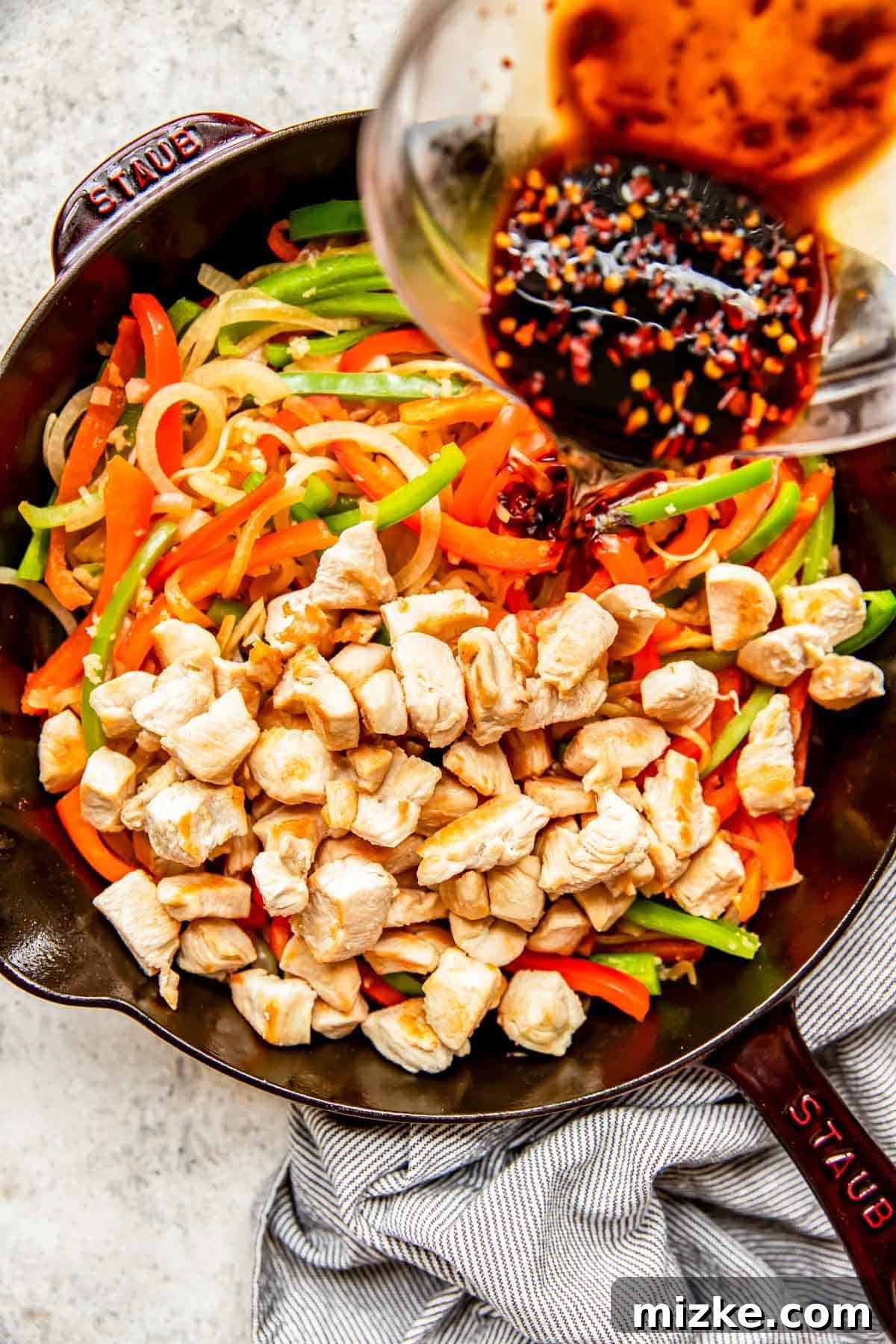
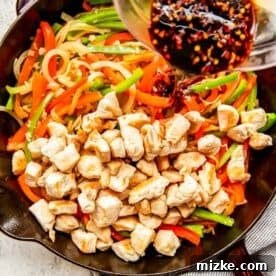
- Unite Flavors with the Sauce: Return the browned chicken pieces to the wok with the softened vegetables. Give your prepared sauce a quick whisk again to ensure the cornstarch hasn’t settled, then pour it evenly over the chicken and vegetables in the wok. Reduce the heat to medium-low. Allow the heat to activate the cornstarch, which will swiftly thicken the sauce, transforming it into a glossy coating for all the ingredients. Toss and stir continuously until everything is completely coated and simmering gently.
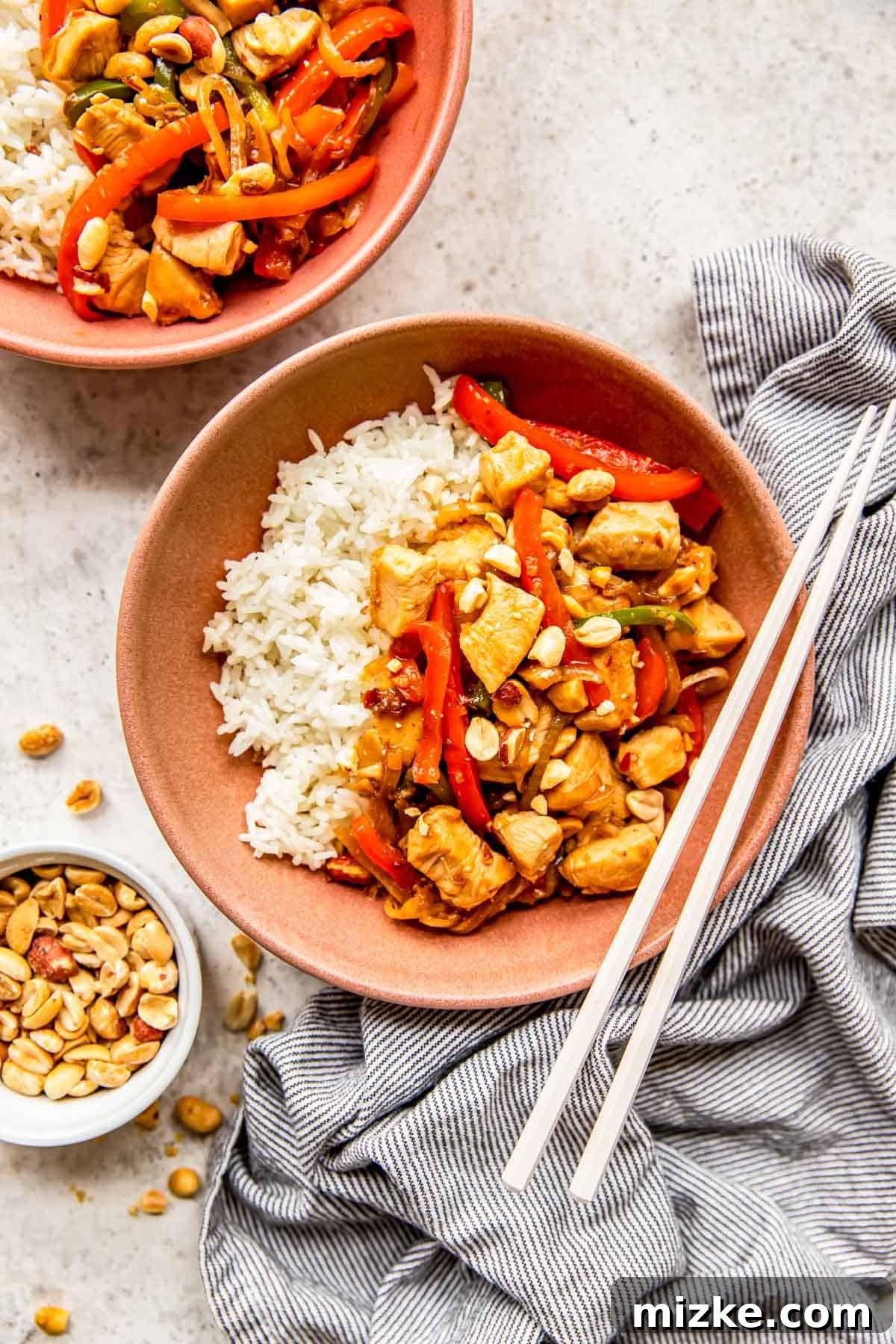
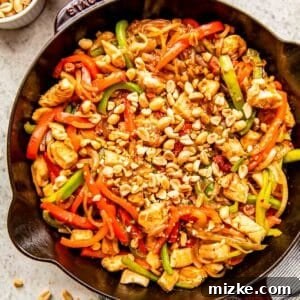
- Final Touches and Serving: Remove the wok from the heat immediately after the sauce has thickened. Stir in the roasted peanuts for that signature crunch and nutty flavor. For an extra touch of freshness and vibrant color, sprinkle chopped green onions on top just before serving.
Expert Tips for Kung Pao Chicken Perfection
To ensure your homemade Kung Pao Chicken turns out absolutely perfect every time, keep these expert tips in mind:
- Embrace Mise en Place: “Mise en place” is a French culinary term meaning “everything in its place.” For a stir-fry, this is crucial. Chop all your vegetables, chicken, and prepare your sauce ahead of time. Stir-fries cook incredibly fast, and having everything ready prevents frantic scrambling and ensures even cooking without anything burning.
- Utilize High Heat: Asian stir-frying techniques rely heavily on high heat. This creates a beautifully seared exterior on your chicken and vegetables, locking in flavors and achieving that desirable “wok hei” – the smoky, charred aroma that signifies a well-executed stir-fry. Ensure your wok or skillet is piping hot before adding ingredients.
- Do Not Overcrowd the Pan: This is a common mistake. Adding too many ingredients to the pan at once lowers the temperature drastically, causing your ingredients to steam rather than sear. Cook the chicken in batches if necessary, and ensure vegetables have enough space to caramelize properly.
- Season and Adjust the Sauce to Taste: Before pouring the entire sauce into your dish, it’s always a good practice to taste it. You can easily adjust the balance of sweet, sour, and spicy notes at this stage. Once the sauce is in the wok and thickened, it’s much harder to correct the flavor profile.
- Customize the Heat: The beauty of homemade Kung Pao Chicken is its adaptability. If you love a fiery kick, add extra crushed red pepper flakes or even a few dried whole chilies. For a milder version, reduce the amount.
- Consider a Quick Marinade for Chicken: For extra tender and flavorful chicken, consider tossing your chicken pieces with a teaspoon of cornstarch and a splash of soy sauce for 10-15 minutes before cooking. This helps create a protective barrier and keeps the chicken moist.
Frequently Asked Questions About Kung Pao Chicken
Kung Pao Chicken (Gong Bao Ji Ding) holds a fascinating historical origin. Its name is derived from Ding Baozhen (1820–1886), a governor of the Sichuan province during the late Qing Dynasty. He held the title of “Gongbao,” which translates to “Palace Guardian” or “Grand Protector.” Ding Baozhen was known to be a great lover of spicy food and is credited with having his personal chefs create this robust and fiery stir-fry dish. Over time, the dish became incredibly popular, adopting his official title as its name, which evolved into “Kung Pao” in Western transliteration.
While both are popular Chinese-American chicken dishes, they have distinct differences primarily in their preparation and sauce profiles. General Tso’s chicken typically features battered, deep-fried chicken pieces coated in a thick, very sweet, and savory sauce, often with a hint of spice. It rarely contains visible vegetables other than a garnish. Kung Pao Chicken, on the other hand, uses unbattered, stir-fried chicken chunks, and its sauce is thinner, more complex, offering a balance of sweet, sour, and notably spicier flavors, often with a prominent tangy note from vinegar. It also traditionally includes a generous amount of vegetables like bell peppers and onions, along with the characteristic roasted peanuts.
Generally, Kung Pao Chicken is spicier than General Tso’s. This is largely due to Kung Pao’s origins in Sichuan cuisine, which is renowned for its bold and spicy flavors, often utilizing dried chilies and sometimes Sichuan peppercorns for a unique numbing heat. While General Tso’s can have a mild spicy kick, its primary flavor profile leans towards sweet and savory, whereas Kung Pao prominently features heat and tanginess as core elements.
The flavor of Kung Pao Chicken is a delightful and harmonious blend of savory, tangy, and spicy notes. It offers a rich umami base from soy sauce, a bright acidity from rice wine vinegar, a mellow sweetness from brown sugar, and a distinctive heat from crushed red pepper flakes (and sometimes dried chilies or Sichuan peppercorns for an authentic kick). The roasted peanuts add a nutty depth, while the vegetables provide freshness and texture, creating a truly dynamic and incredibly satisfying taste experience.
Absolutely! Kung Pao Tofu or Kung Pao Vegetables are fantastic vegetarian alternatives. Simply substitute the chicken with firm tofu (pressed and cubed), tempeh, or a medley of your favorite stir-fry vegetables like broccoli, mushrooms, or zucchini. The sauce recipe remains the same, providing that signature Kung Pao flavor.
Storing and Reheating Your Kung Pao Chicken
Leftover Kung Pao Chicken is just as delicious the next day! To ensure its freshness and flavor, allow the dish to cool completely to room temperature before transferring it to an airtight container. It can be safely refrigerated for up to 4 days. When you’re ready to enjoy it again, you have a couple of reheating options:
- Microwave: For a quick reheat, place a portion in a microwave-safe dish and warm it through for 1-2 minutes, stirring halfway, until heated evenly.
- Stovetop: For best results, especially if you want to revive some of the texture, pour the leftovers into a skillet or wok over medium heat. Stir frequently until thoroughly warmed. You might add a splash of water or broth if the sauce seems too thick or dry.
Delightful Serving Pairings for Kung Pao Chicken
Kung Pao Chicken is a complete meal in itself, but it truly shines when served alongside complementary dishes. The classic pairing is with a bowl of perfectly cooked white rice, which soaks up all the incredible sauce. However, if you’re looking to elevate your meal, fried rice would also be an absolutely fantastic choice, adding another layer of flavor and texture to your feast.
To create an unforgettable homemade Chinese takeout experience, consider rounding out your meal with some delightful appetizers. We highly recommend whipping up a batch of crispy Crab Rangoon or savory Cream Cheese Wontons. For a lighter, healthier side, a simple steamed green vegetable like broccoli or bok choy drizzled with a little soy sauce would also complement the rich flavors of the Kung Pao Chicken wonderfully. Enjoy your gourmet home-cooked meal!
Print Recipe
Easy Kung Pao Chicken
Julie Chiou
15 minutes
20 minutes
35 minutes
4
Ingredients
-
2 tablespoons
vegetable oil -
1 pound
(454 g)
boneless skinless chicken breast,
cut into 1/2 inch chunks -
2
red bell peppers,
thinly sliced -
1
green bell pepper,
thinly sliced -
1
yellow onion,
thinly sliced -
4 cloves
garlic,
minced
For the sauce:
-
2 tablespoons
low-sodium soy sauce -
1 tablespoon
dry sherry -
1 tablespoon
rice vinegar -
1 tablespoon
dark brown sugar -
2 teaspoons
cornstarch -
1 teaspoon
crushed red pepper flakes -
¼ cup
(37 g)
roasted peanuts -
Sliced green onions,
for optional garnish -
Cooked rice,
for serving
Instructions
-
In a small bowl, whisk together soy sauce, dry sherry, rice vinegar, dark brown sugar, cornstarch, and crushed red pepper flakes until smooth. Set aside.

-
In a 12-inch skillet or wok, set over medium-high heat, add 2 tablespoons of vegetable oil.
-
When the oil is hot and shimmering, add the chicken pieces and cook, stirring occasionally, until browned on the outside and almost fully cooked through, about 5 minutes. Remove the chicken from the pan and set it aside.
-
Add the sliced bell peppers and onion to the same pan. Sauté until the peppers and onions just start to soften, about 3-4 minutes.
-
Add the minced garlic to the vegetables and sauté for another 30 seconds until fragrant.
-
Return the cooked chicken back to the pan with the vegetables.
-
Pour the prepared sauce into the skillet, then lower the heat to medium. Cook, stirring continuously, until the sauce begins to thicken and beautifully coats the chicken and vegetables.
-
Remove the pan from the heat. Stir in the roasted peanuts for crunch and garnish with sliced green onions if desired.
-
Serve immediately over hot, cooked white rice.
Nutrition
Calories: 304kcal,
Carbohydrates: 15g,
Protein: 29g,
Fat: 15g,
Saturated Fat: 2g,
Polyunsaturated Fat: 6g,
Monounsaturated Fat: 4g,
Trans Fat: 0.1g,
Cholesterol: 73mg,
Sodium: 473mg,
Potassium: 765mg,
Fiber: 3g,
Sugar: 7g
This website provides approximate nutrition information for convenience and as a courtesy only. Nutrition information can vary for a variety of reasons. For the most precise nutritional data use your preferred nutrition calculator based on the actual ingredients you used in the recipe.
The default measuring system for this website is US Customary. Unit conversions are provided for convenience and as a courtesy only. While we strive to provide accurate unit conversions, please be aware that there may be some discrepancies.
Photographs by Meg McKeehan Photography