
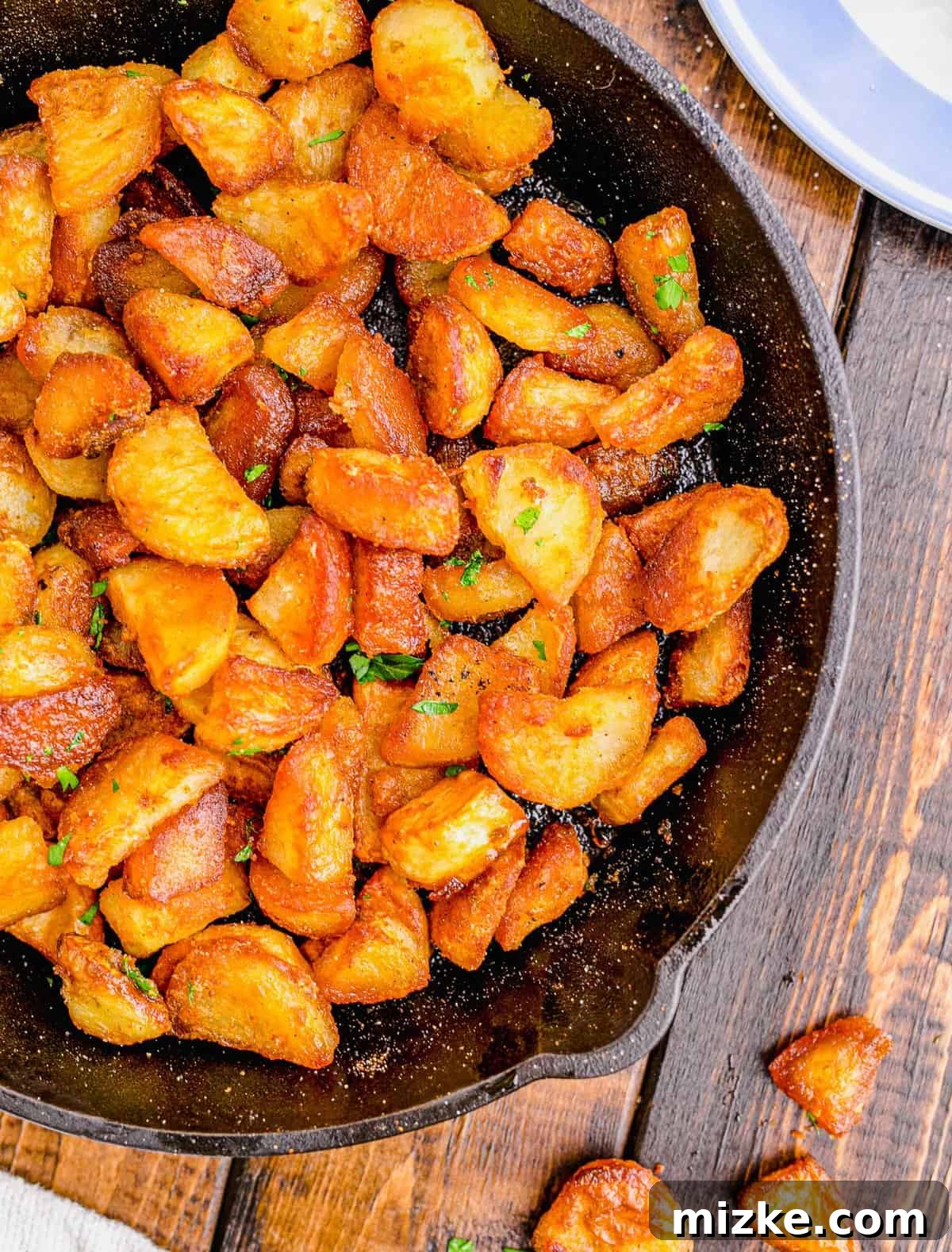
Elevate your culinary experience with this exquisite recipe for duck fat potatoes – a sophisticated twist on a beloved classic. These potatoes are not just crispy; they’re irresistibly flavorful, boasting a luxurious richness that will make them an instant favorite and a standout dish at any meal. Prepare to be captivated by their addictively delicious texture and profound taste.
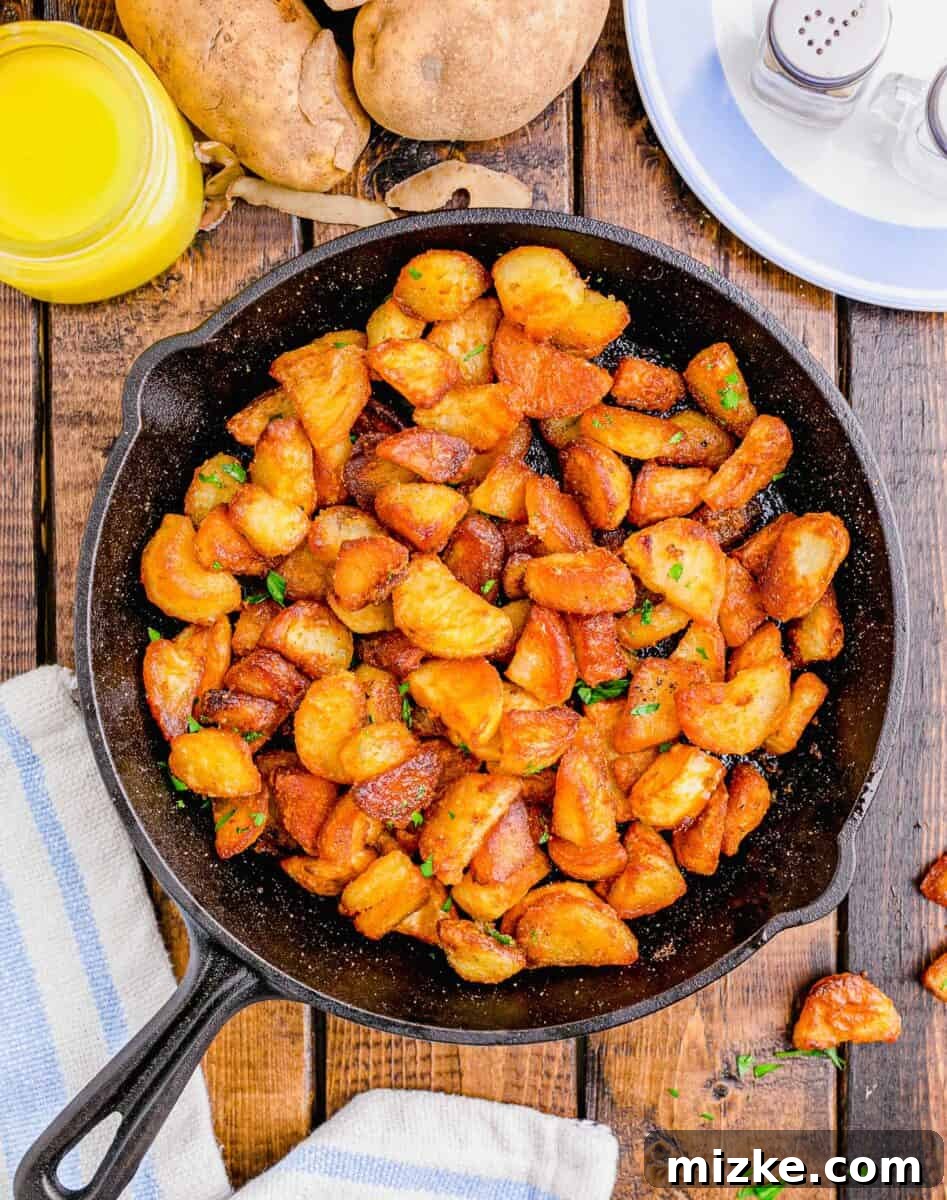
Have you ever had the pleasure of encountering duck fat potatoes or duck fat fries on the menu of an upscale restaurant? It’s often an “ooh-ahh” moment, isn’t it? The very mention of duck fat evokes a sense of gourmet indulgence and culinary excellence. There’s a tangible reason for this excitement: duck fat brings an unparalleled level of crispiness to potatoes that other fats simply cannot replicate. Beyond the crunch, it imparts a deep, savory richness and an exquisite flavor profile that transforms ordinary potatoes into something truly extraordinary. Once you experience them, you’ll understand why many consider this the definitive way to enjoy perfectly roasted or fried potatoes.
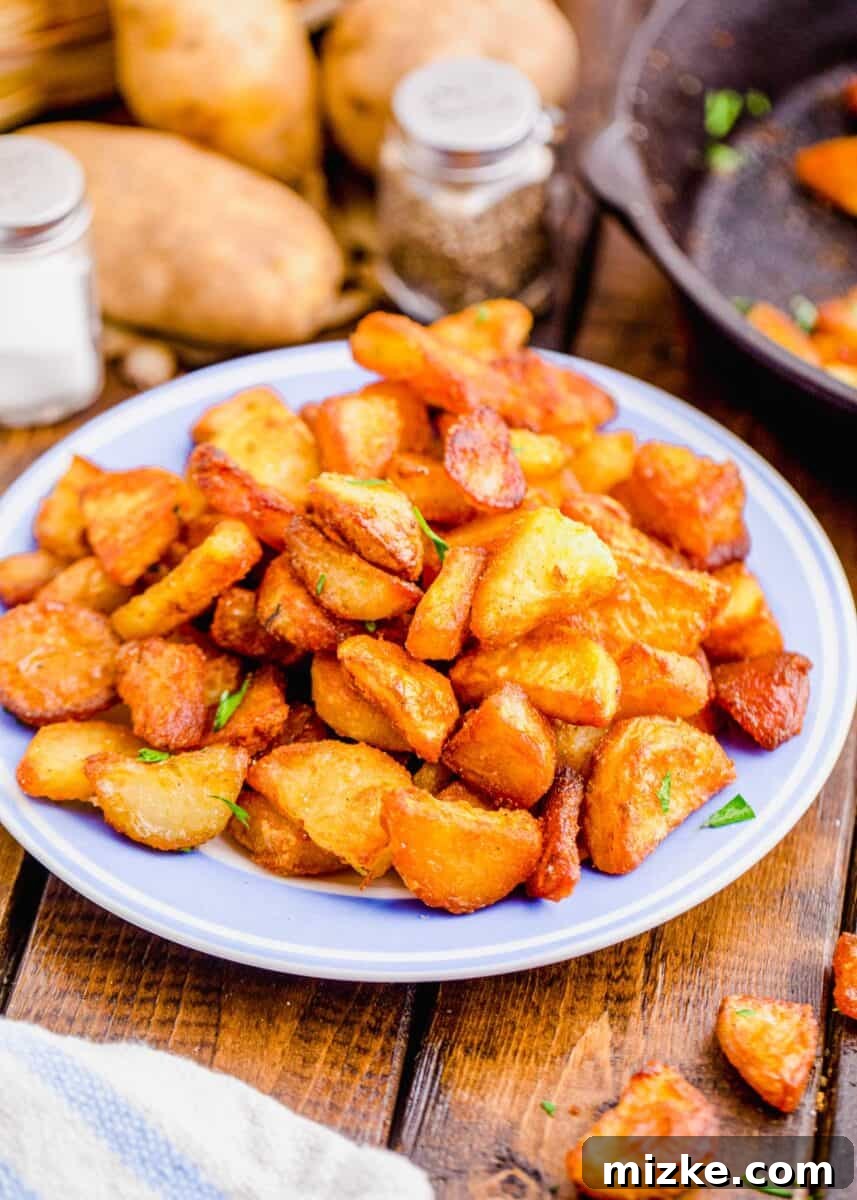
For many, fried potatoes in any form are a delightful weakness. Imagine a potato dish that consistently delivers that ideal balance: a shatteringly crispy exterior giving way to an interior that is incredibly soft, fluffy, and pillowy. These duck fat potatoes achieve just that, offering a texture reminiscent of the best patatas bravas, but with a unique, deeper flavor. Potatoes are a foundational comfort food, and mastering a recipe that elevates them to this level ensures they’ll always have a cherished place in your diet.
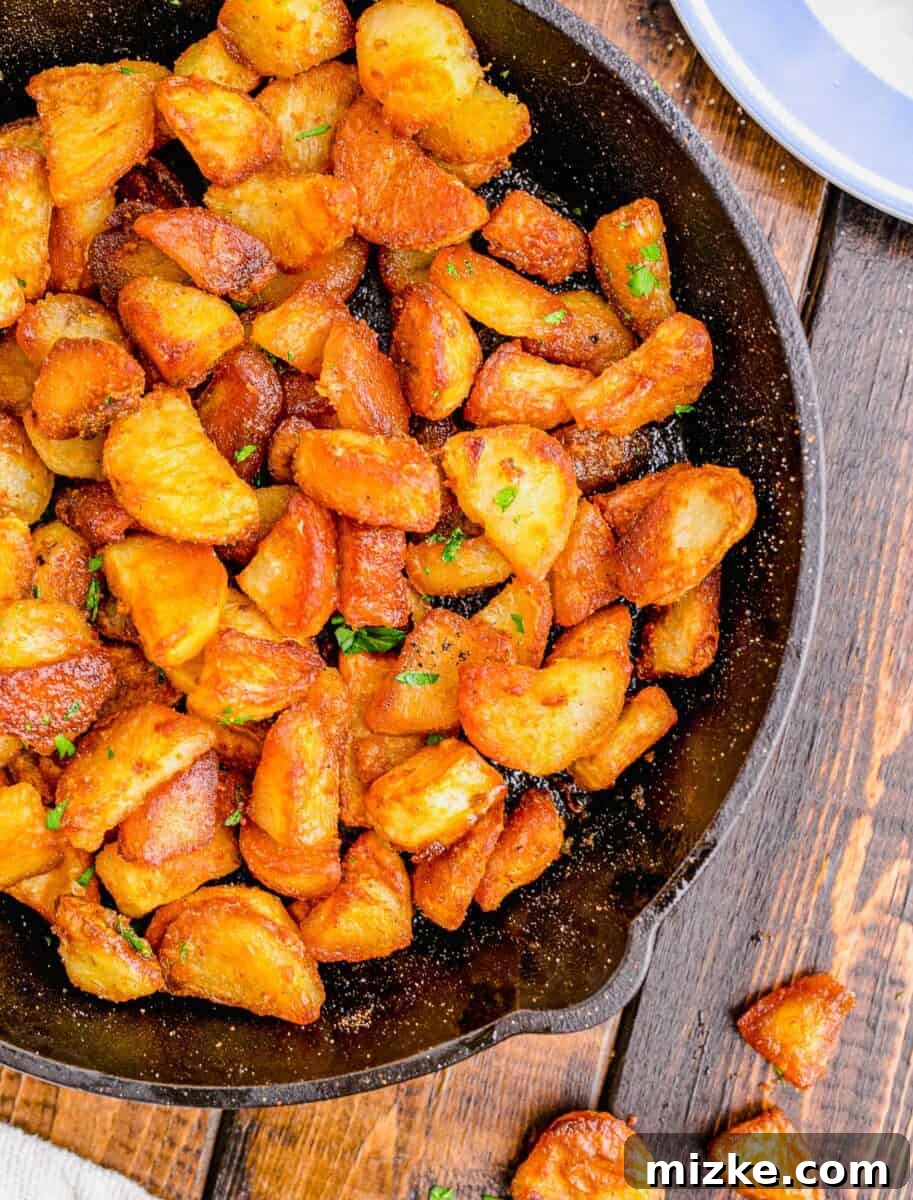
Why Duck Fat Potatoes are a Culinary Game-Changer
The tradition of cooking with duck fat dates back centuries, with its origins deeply rooted in French culinary practices. Duck fat potatoes, in particular, gained significant popularity in France, celebrated for their unique ability to achieve an incredibly crispy texture while absorbing the rich, nuanced flavor of the fat. This gourmet technique crossed oceans, finding a growing appreciation in the United States during the late 20th century as duck fat became more accessible to home cooks and professional chefs alike. Today, duck fat potatoes are a cherished staple on restaurant menus, adored by potato enthusiasts for their unparalleled crispness, profound flavor, and luxurious mouthfeel.
What makes duck fat so special? Beyond its historical prestige, duck fat boasts a remarkably high smoke point, making it an excellent choice for high-heat cooking methods like roasting and frying without the risk of burning or producing off-flavors. Unlike vegetable oils or butter, duck fat is primarily monounsaturated and saturated fat, which contributes to its stability and its ability to render food incredibly crispy. It imparts a distinct, delicate, yet rich and savory flavor – a subtle earthiness that enhances the natural taste of potatoes without overwhelming them. This isn’t just about crispiness; it’s about adding a layer of sophisticated flavor that transforms a humble side dish into a memorable culinary experience. Whether served as an elegant accompaniment or a delightful main course, these potatoes are often enjoyed with a variety of dipping sauces, further highlighting their versatility.
Essential Ingredients for Perfect Duck Fat Potatoes
For precise measurements and detailed instructions, please refer to the comprehensive recipe card located at the bottom of this article.
- Potatoes – Russet potatoes are the undisputed champion for this recipe. Their high starch content is crucial, as it allows them to break down slightly on the surface during the parboiling and shaking process, creating a rough, porous texture that becomes exquisitely crispy when roasted. Simultaneously, their starchy interior cooks down to a wonderfully soft and fluffy consistency, providing that perfect contrast.
- Duck Fat – This is the star ingredient that truly defines the dish. Duck fat delivers an unbeatable combination of rich flavor and superior texture. Its high smoke point makes it ideal for achieving that desirable golden-brown crispness without burning. Furthermore, it infuses the potatoes with a savory depth and a subtle, luxurious taste that cannot be replicated by any other cooking fat. It’s the secret to their addictive quality.
- Salt – Essential for seasoning throughout the cooking process. Adding salt to the parboiling water seasons the potatoes from the inside out, while a final sprinkle after roasting enhances their overall flavor.
- Baking Soda – A surprisingly powerful ingredient for achieving extra crispiness. When added to the parboiling water, baking soda slightly raises the pH, helping to break down the pectin in the potato cell walls. This creates a rougher exterior texture, maximizing the surface area for crisping during roasting.
- Seasoning Salt – A blend of spices that provides an additional layer of savory, umami flavor, complementing the richness of the duck fat.
- Pepper – Freshly ground black pepper adds a subtle spice and aromatic complexity.
- Garlic Powder – Offers a convenient way to infuse a warm, pungent garlic flavor evenly across the potatoes without the risk of fresh garlic burning at high temperatures.
- Onion Salt – Adds a foundational savory sweetness and a hint of onion flavor, rounding out the seasoning profile.
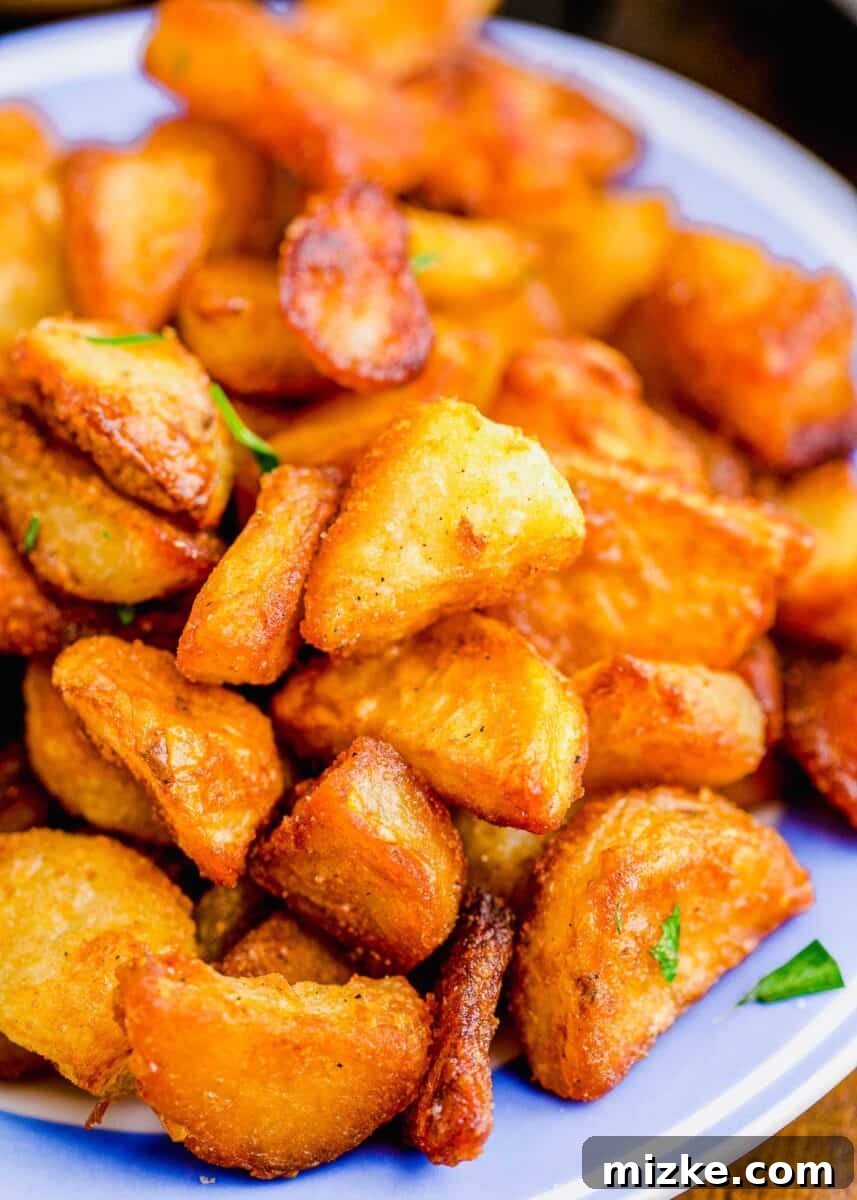
Mastering the Art of Duck Fat Potatoes: A Step-by-Step Guide
For the complete recipe, including detailed timing and precise measurements, please consult the recipe card at the conclusion of this post.
Preheat the oven. Begin by preheating your oven to a robust 450 degrees Fahrenheit (232°C). This high temperature is crucial for achieving that characteristic crisp crust on your potatoes. Ensure the oven is fully preheated before introducing the duck fat or potatoes, as consistent heat is key to success.
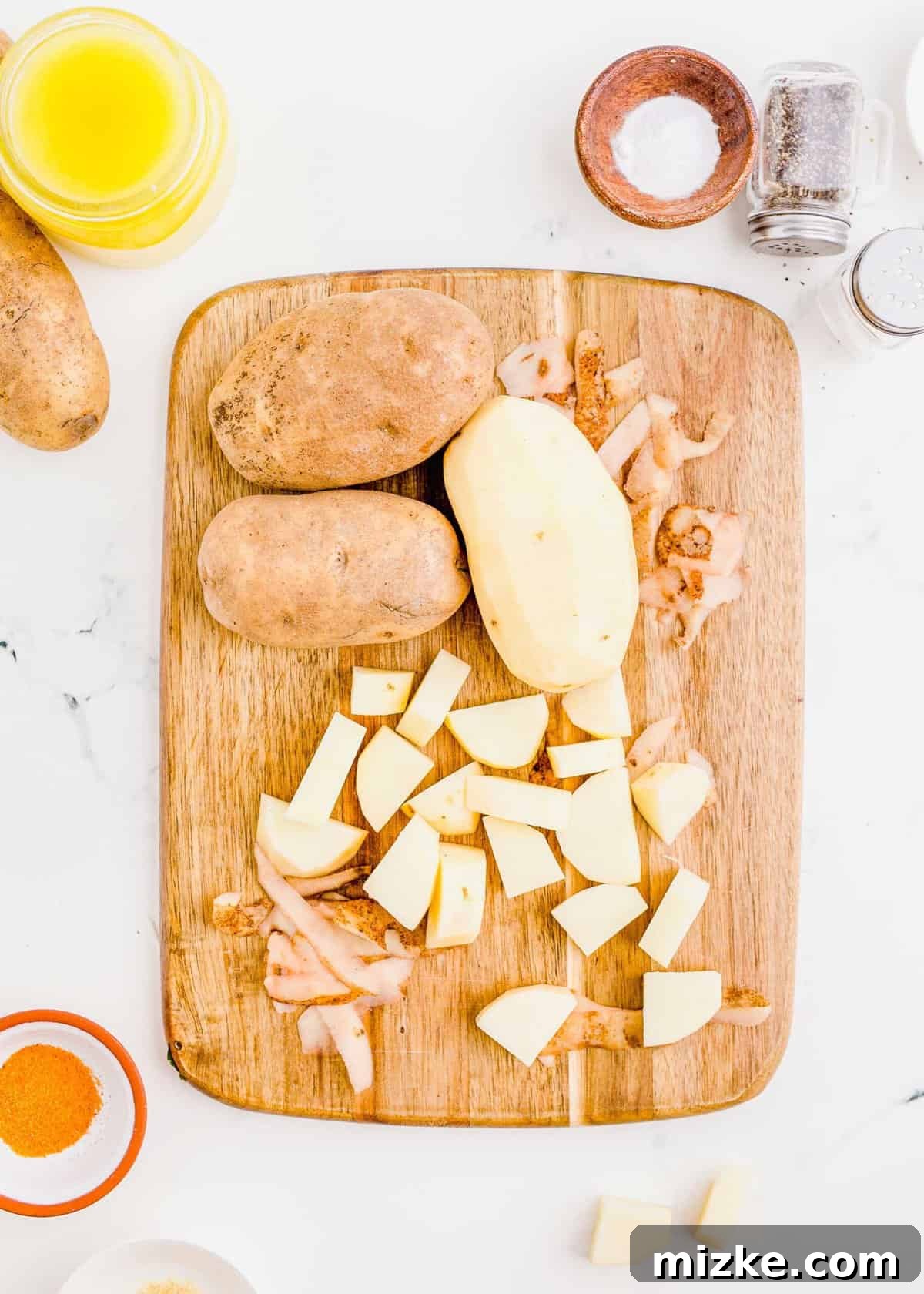
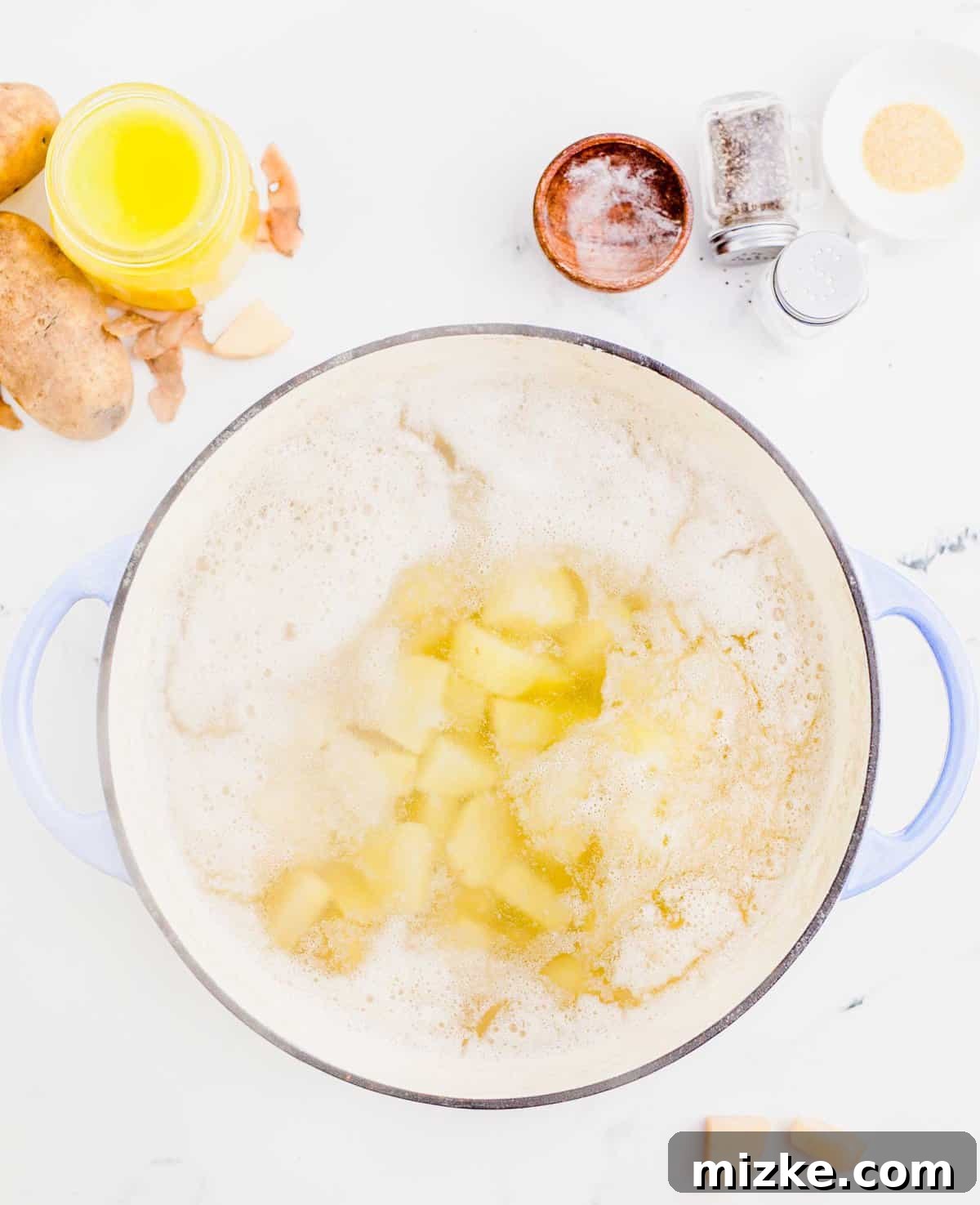
Parboil the potatoes. After you’ve meticulously peeled your russet potatoes and cut them into uniform 1½-inch cubes, place them into a large pot. Add cold water to generously cover them, along with the specified amounts of salt and baking soda. Bring the water to a rapid boil and continue to cook the potatoes until they are just fork-tender, typically around 10 minutes. The baking soda is vital here; it helps to break down the potato’s exterior starches, creating a rougher surface that will later crisp up beautifully in the duck fat.
Shake, shake, shake! Once the potatoes are fork-tender, carefully drain them thoroughly. Return the drained potatoes to the hot pot, but without the lid. Allow them to steam for a few minutes; this helps any excess moisture evaporate, which is essential for crispiness. Then, place the lid back on the pot and give the potatoes a vigorous shake. This action deliberately ‘roughs up’ the parboiled potatoes, creating a craggy, starchy surface that will develop an incredible crunch during the final cooking stage.
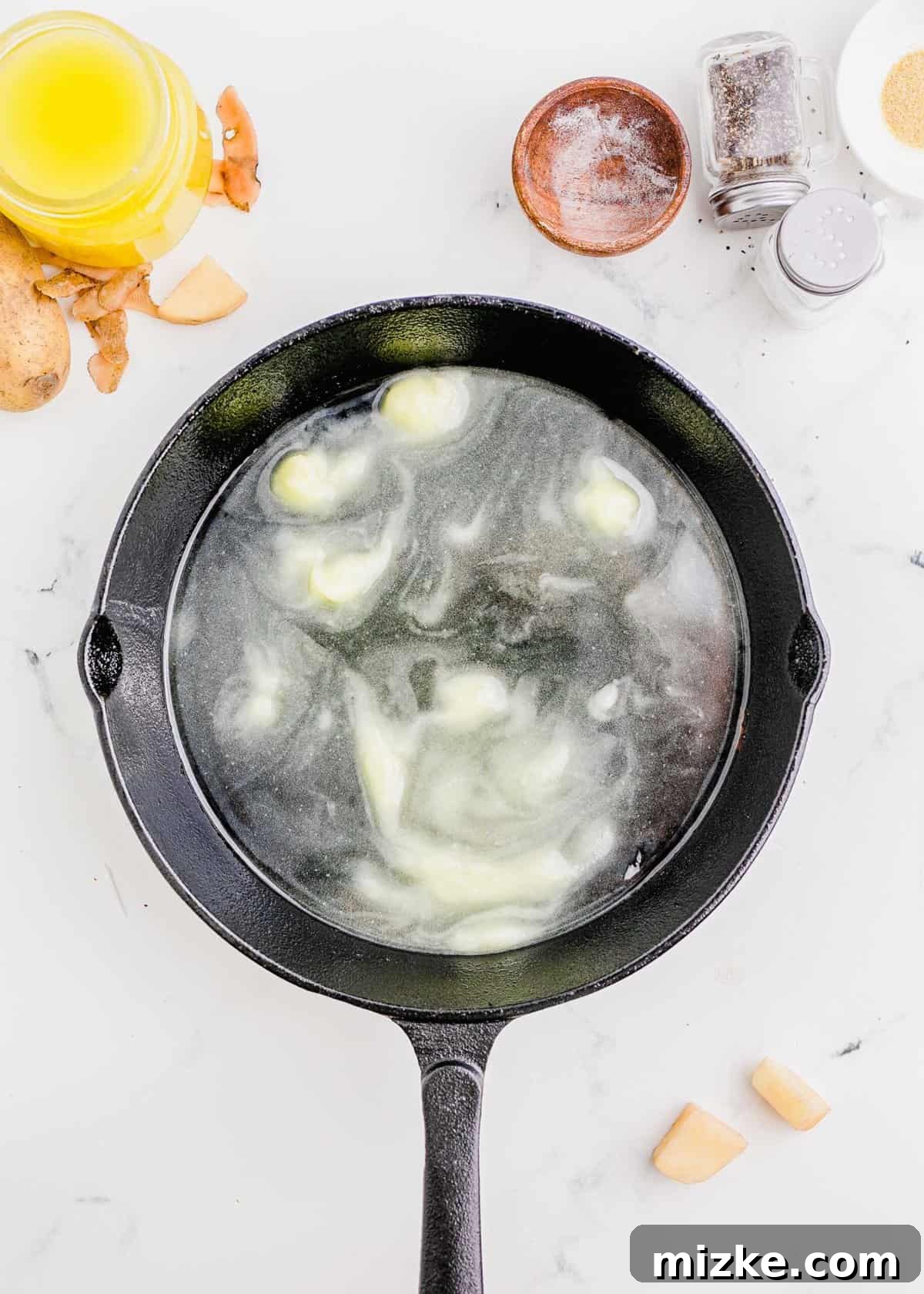
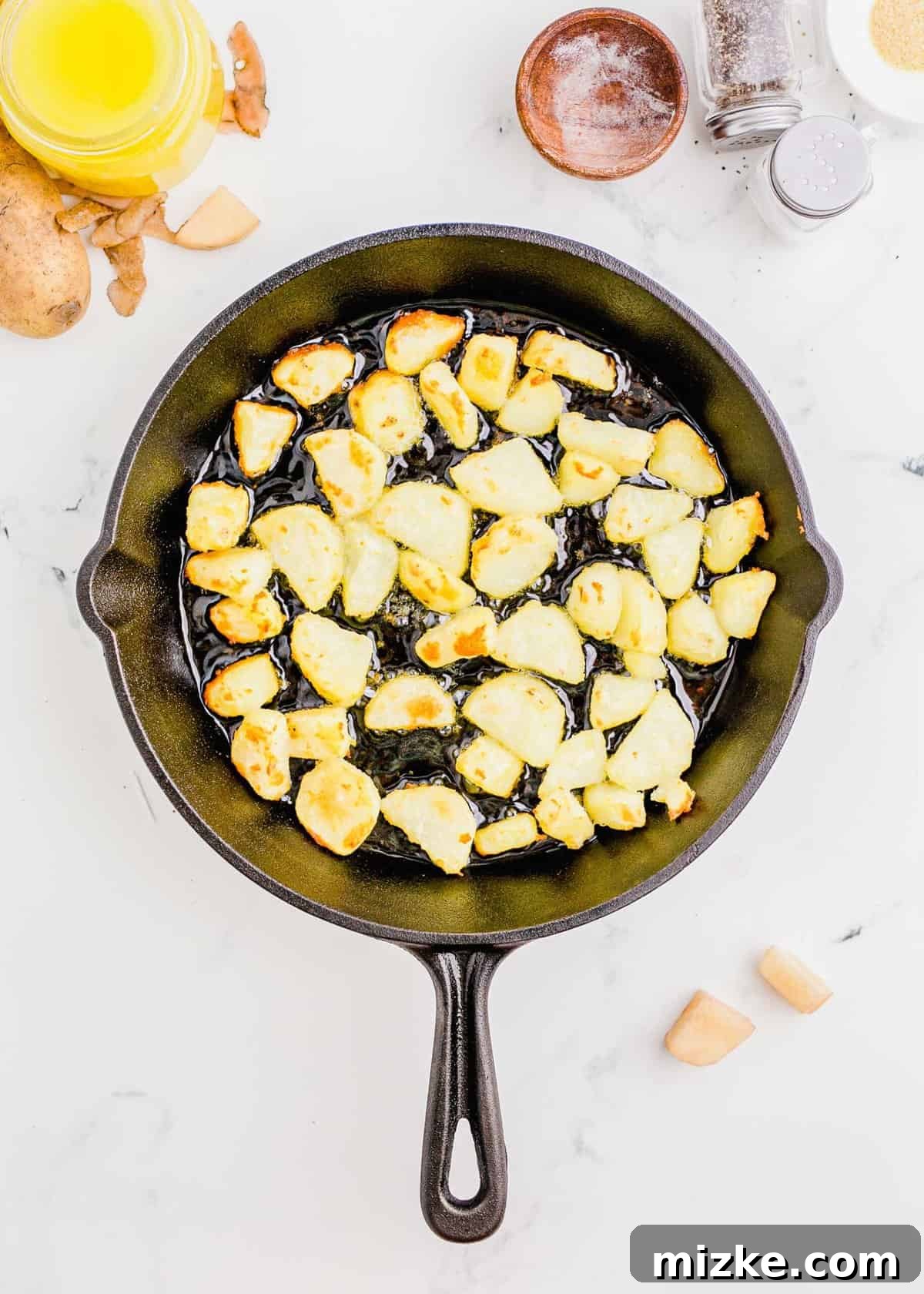
Initial fry on the stovetop. Place your duck fat in a large, deep cast iron pan and melt it on the stovetop over medium-high heat, or by placing the pan directly into the preheated oven for about 5 minutes until it just begins to smoke lightly. Once the fat is perfectly melted and shimmering, carefully add the roughed-up potatoes to the skillet, ensuring they are in a single, even layer. Avoid overcrowding the pan; if necessary, use two skillets to ensure optimal crisping. Cook on the stovetop for a few minutes, allowing them to develop an initial golden crust.
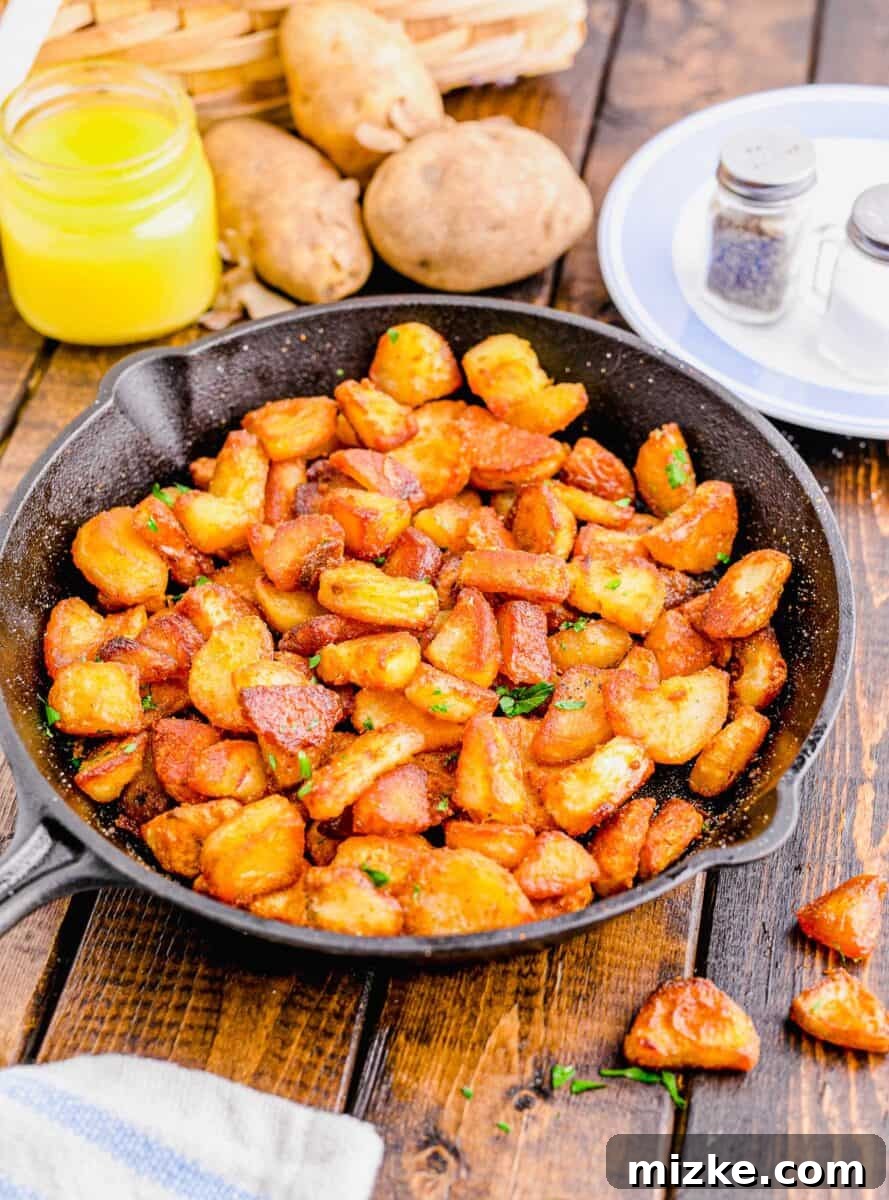
Finish cooking in the oven. After the potatoes have developed a beautiful browned exterior on the stovetop, transfer the skillet directly into the preheated oven. Allow them to cook undisturbed for the initial 30 minutes, letting the dry heat of the oven work its magic. Then, using a spatula, gently turn the potatoes over and continue cooking for another 15 minutes. Repeat this turning process one more time, cooking for a final 15 minutes, or until the potatoes are uniformly golden, profoundly crunchy, and cooked through. This two-stage cooking method (stovetop then oven) ensures maximum crispiness and an evenly cooked interior.
Savory Substitutions and Creative Variations
While duck fat is undeniably the secret to the signature flavor and texture of this dish, there are practical substitutions and exciting variations you can explore to customize your duck fat potatoes:
- Alternative Fats: If duck fat is unavailable, you can substitute other rendered animal fats like **lard** or **beef fat (tallow)**. These alternatives also have high smoke points and impart a rich flavor, though distinct from duck fat’s unique profile. For a plant-based option, **olive oil** can be used, but be mindful of its lower smoke point, which means it won’t achieve the same depth of crispiness and flavor, and there’s a higher risk of smoking at high temperatures. Avocado oil, with its higher smoke point, could be another suitable plant-based alternative.
- Herbaceous Twists: Experiment with different fresh herbs to introduce varied aromatic notes. Classic choices like **rosemary** and **thyme** pair beautifully with potatoes and rich fats, infusing an earthy, aromatic quality. For a more Mediterranean flair, try **oregano** or even a hint of **sage**. Add these herbs during the last 15-20 minutes of roasting to prevent them from burning.
- Smoky Sensation: For an added layer of complexity and a wonderful smoky aroma, sprinkle in some **smoked paprika** along with your other seasonings. This is especially fantastic if you’re aiming for a flavor profile reminiscent of barbecue or a deeper, rustic taste. A pinch of cayenne pepper can also introduce a subtle heat.
- Cheesy Indulgence: For an extra decadent treat, consider tossing the roasted potatoes with grated **Parmesan cheese** during the last few minutes of cooking, or immediately after removing them from the oven. The residual heat will melt the cheese, creating a savory, irresistible crust.
- Spicy Kick: If you enjoy a bit of heat, a dash of red pepper flakes or a pinch of finely chopped fresh chili can be added along with the dry seasonings before the final roast.
- Different Potato Cuts: While cubes are classic, you can also make these with smaller diced potatoes for a quicker cook, or even larger wedges for a heartier side, adjusting cooking times accordingly. Ensure pieces are uniform for even cooking.
Storing and Reheating Your Duck Fat Potatoes
These duck fat potatoes are undeniably at their absolute best when served fresh, hot, and straight out of the oven, when their crispiness is at its peak. However, if you find yourself with leftovers, they can be stored and reheated while still retaining a good portion of their deliciousness.
To store, allow the potatoes to cool completely to room temperature before transferring them to an airtight container. They can be safely kept in the refrigerator for up to 3 days. Beyond this, their quality and texture may begin to diminish.
For reheating, avoid the microwave, as it will soften the potatoes and make them soggy. The best method for reheating is to spread them in a single layer on a baking sheet and warm them in a preheated 350-degree Fahrenheit (175°C) oven. Cook until they are thoroughly warmed through and have regained some of their crisp texture, typically 10-15 minutes. Alternatively, you can reheat them in an air fryer at 375°F (190°C) for 5-8 minutes for a similar effect.
Frequently Asked Questions About Duck Fat Potatoes
Here are some common questions to help you perfect your duck fat potatoes:
What types of dipping sauces would be good with these?
Dipping sauces truly elevate these potatoes into a gourmet experience! Their rich, savory flavor pairs wonderfully with a variety of tangy, creamy, or spicy accompaniments. Some fantastic options include:
- Creamy Cilantro Lime Dressing: Its bright, zesty notes and creamy texture provide a refreshing counterpoint to the rich potatoes.
- Homemade Tartar Sauce: The briny capers and pickles in a creamy base offer a classic, savory pairing.
- Copycat Chick-Fil-A Sauce: Sweet, tangy, and subtly smoky, this sauce adds a beloved comfort food twist.
- Homemade Tzatziki Dip: The cool, refreshing cucumber and yogurt base with a hint of garlic offers a delightful Mediterranean touch.
- Beyond these, consider a simple garlic aioli, a spicy sriracha mayo, a classic ketchup, or even a gourmet truffle mayonnaise for an extra touch of luxury.
Can you make these entirely in the oven instead of frying on the stovetop first?
Yes, absolutely! While the initial stovetop fry helps to kickstart the browning and crisping process, you can certainly achieve excellent results by roasting the potatoes entirely in the oven. After parboiling and shaking them to create that rough texture, simply toss the potatoes directly with the melted duck fat and your desired seasonings. Then, spread them in a single layer on a baking sheet and roast them in a preheated oven at 400 degrees Fahrenheit (200°C) for approximately 40-60 minutes, or until they are golden brown and wonderfully crispy. Be sure to flip them every 15-20 minutes to ensure even cooking and browning. My personal preference for the stovetop-then-oven method is because I find it gives an initial, more intense crisp to the exterior, creating a more pronounced crunch.
What is duck fat and where can I buy it?
Duck fat is rendered fat from ducks, prized in French cuisine for its rich flavor and high smoke point. It’s often sold solidified in jars or tubs and can be found in well-stocked grocery stores, specialty food shops, or online retailers. Look in the refrigerated meats section, near butter, or gourmet oils.
Can I use frozen duck fat?
Yes, if you have rendered duck fat that you’ve frozen, it works perfectly. Simply thaw it in the refrigerator overnight or gently melt it in a saucepan over low heat before using it in the recipe. Ensure it’s fully melted and hot before adding the potatoes.
What kind of pan is best for this recipe?
A heavy-duty cast iron skillet is highly recommended. Cast iron retains and distributes heat exceptionally well, which is crucial for achieving that consistent golden-brown crisp on the potatoes. Its ability to go from stovetop to oven seamlessly also makes it ideal for this two-stage cooking method.
Why are my duck fat potatoes not crispy?
Several factors can prevent crispiness:
- Too much moisture: Ensure potatoes are well-drained and steamed dry after parboiling. The “shaking” step is also critical for creating a dry, rough surface.
- Overcrowding the pan: Potatoes need space to crisp; if they’re too close, they’ll steam instead of fry. Use two pans if necessary to maintain a single layer.
- Insufficient heat: Your oven might not be hot enough, or it wasn’t preheated long enough. Maintain the specified high temperature.
- Not enough fat: While duck fat is rich, ensure you’re using enough to coat the potatoes properly for optimal crisping.
- Not shaking/roughing up enough: The rough surface created by shaking helps maximize crisping.
Can I make these potatoes ahead of time for entertaining?
While best fresh, you can parboil and rough up the potatoes a few hours ahead of time. Store them uncovered in the refrigerator to keep them dry. When ready to serve, proceed with melting the duck fat and frying/roasting. This cuts down on prep time significantly.
What are some other great serving suggestions for these potatoes?
Beyond dipping sauces, these duck fat potatoes are incredibly versatile. They make an excellent side dish for roasted chicken, steak, lamb, or pork. They also pair wonderfully with brunch items like fried eggs or a frittata. For a simple meal, serve them alongside a fresh green salad or grilled vegetables.
Duck Fat Potatoes
Equipment
-
Cast iron skillet
Ingredients
- 3-4 pounds (3175 g) russet potatoes, peeled and cubed (approx. 1½ inch pieces)
- 1 Tablespoon salt
- ½ teaspoon baking soda
- ½ cup (103 g) duck fat
- ½ teaspoon seasoning salt
- ¼ teaspoon pepper
- ¼ teaspoon garlic powder
- ¼ teaspoon onion salt
- Optional garnish: fresh herbs like oregano, parsley, sage, rosemary, or grated parmesan cheese
Instructions
-
Preheat your oven to 450°F (232°C). Ensure it’s fully heated before you begin cooking.
-
Peel and cube the russet potatoes into approximately 1½-inch pieces. Place the cubed potatoes into a large pot. Add 1 Tablespoon of salt and ½ teaspoon of baking soda. Pour enough cold water over the potatoes to completely cover them. Place the pot on the stovetop over high heat and cover. Bring the water to a rapid boil and cook the potatoes for about 10 minutes, or until they are just fork-tender. (Once the water is boiling, you may remove the lid and reduce the heat slightly to prevent boiling over.)
-
Carefully drain the potatoes very well, then return them to the hot, empty pot without the lid. Allow the potatoes to steam off any excess moisture for a few minutes; this critical step helps achieve maximum crispiness. Then, place the lid back on the pot and vigorously shake the potatoes for about 15-30 seconds. This action will rough up the parboiled potato exteriors, creating more surface area for crisping during roasting.
-
Place ½ cup of duck fat into a large, deep cast iron pan. Place the pan into the preheated oven for about 5 minutes, or until the duck fat is fully melted and just beginning to shimmer or lightly smoke. Carefully remove the hot pan from the oven and add the roughed-up potatoes in a single, even layer. It is crucial not to overcrowd the pan; if necessary, use two skillets to ensure all potatoes can crisp properly. Return the skillet(s) to the oven and cook undisturbed for 30 minutes. After 30 minutes, gently turn the potatoes over with a spatula and cook for another 15 minutes. Turn them once more and cook for a final 15 minutes, or until they are beautifully golden brown and intensely crunchy.
-
Once you remove the perfectly crispy potatoes from the oven, immediately sprinkle them generously with ½ teaspoon seasoning salt, ¼ teaspoon pepper, ¼ teaspoon garlic powder, and ¼ teaspoon onion salt. Serve them hot and fresh for the best culinary experience.
Notes
It is very important to parboil the potatoes only until they are just fork-tender. If you overcook them, they will become too soft and break apart excessively when you shake them, making it difficult to achieve that desired crispy exterior.
Nutrition Information (Approximate)
This website provides approximate nutrition information for convenience and as a courtesy only. Nutrition information can vary for a variety of reasons. For the most precise nutritional data use your preferred nutrition calculator based on the actual ingredients you used in the recipe.
The default measuring system for this website is US Customary. Unit conversions are provided for convenience and as a courtesy only. While we strive to provide accurate unit conversions, please be aware that there may be some discrepancies.