
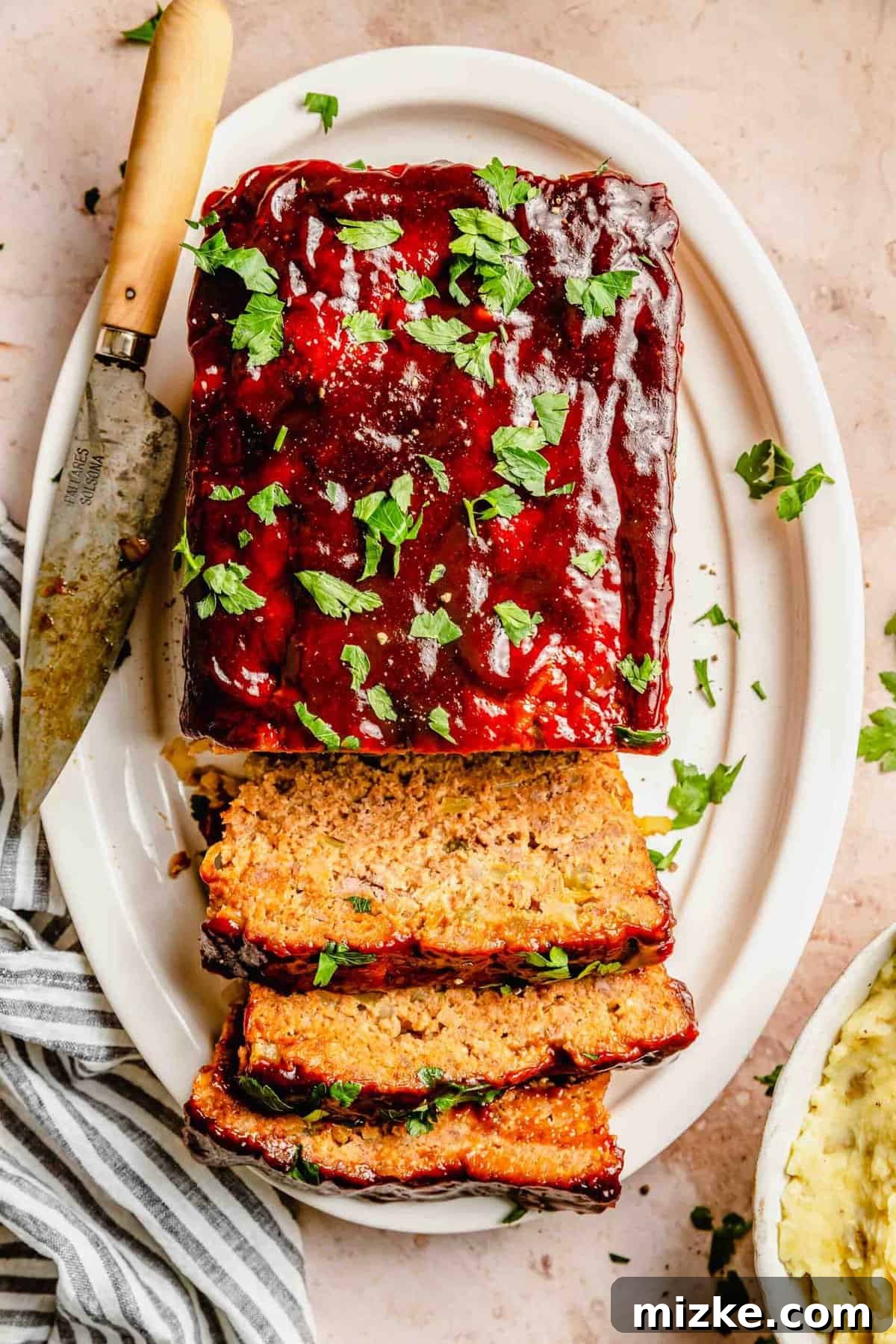
This **classic meatloaf recipe** is the epitome of comfort food, an ideal weeknight meal that brings warmth and satisfaction to your table. It’s not just delicious; it’s wonderfully moist, incredibly flavorful, and crowned with a delightful sweet and tangy sauce that elevates every bite. Prepare for this to become a cherished staple in your culinary repertoire.
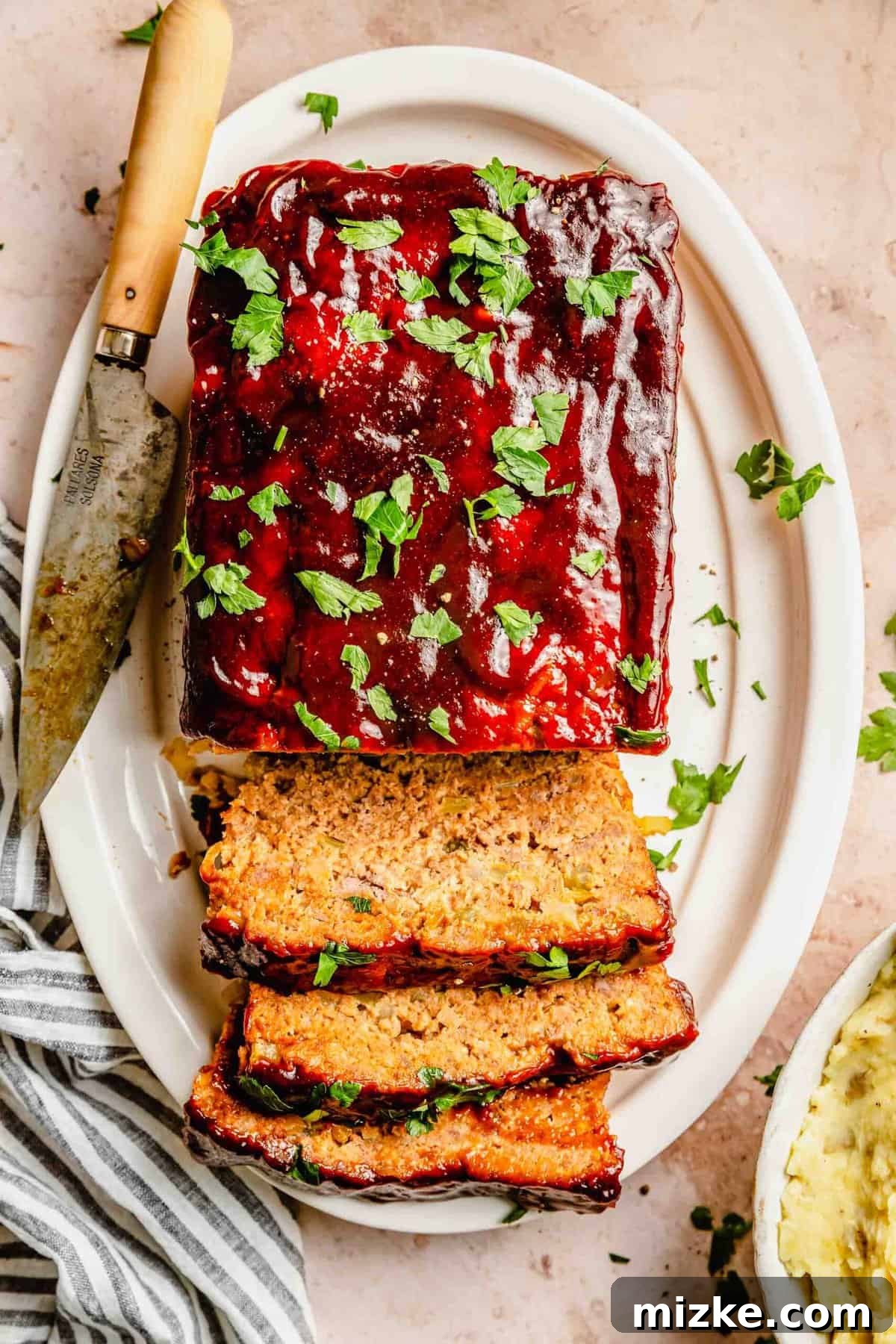
The Ultimate Classic Meatloaf: Your New Favorite Weeknight Comfort Meal
Just recently, a surprising craving for meatloaf struck me. Despite its reputation as a beloved American classic, meatloaf had never truly found its way into my regular dinner rotation. I’d only encountered it a couple of times in my life and certainly never dared to prepare it myself. Yet, when a craving calls, you answer! So, I dove into the kitchen that very evening, determined to create a truly delicious homemade meatloaf.
To my absolute delight, this popular entree proved to be remarkably simple to prepare, requiring a mere 10 minutes of active prep time. What an incredible discovery for busy weeknights! After an hour of baking, I pulled out a perfectly baked, wonderfully moist, and profoundly flavorful classic meatloaf. The balance of savory beef with the bright tang of the glaze was simply divine. Paired with some crispy roasted potatoes, it transformed into a memorable meal that was both easy and incredibly satisfying. This experience cemented meatloaf’s place in my heart – and on my dinner menu!
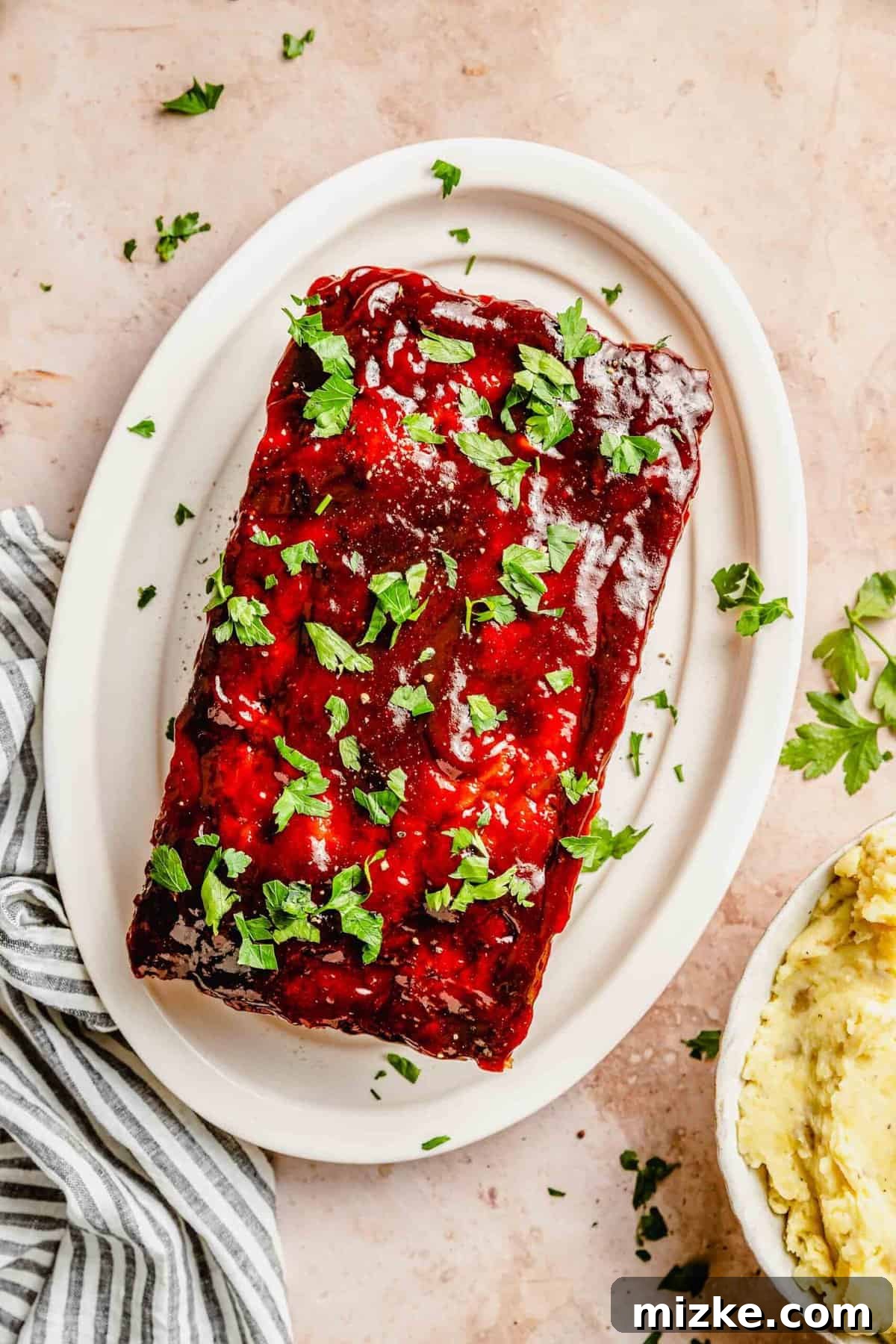
Why This Easy Meatloaf Recipe Will Become Your New Go-To
Once you try this irresistible classic meatloaf recipe, I am confident it will earn a permanent spot in your dinner rotation. Its simplicity, incredible flavor, and versatility make it a standout dish. Here are some of the compelling reasons why you’ll fall in love with this recipe:
- Minimal Prep Time: Who doesn’t love a delicious meal that doesn’t demand hours in the kitchen? You’ll only need about 10 minutes of hands-on preparation before this savory delight goes into the oven, allowing you to relax while it bakes to perfection for an hour. This makes it an ideal choice for busy weekdays when time is precious.
- Unbelievably Moist Texture: One of the most common complaints about meatloaf is its tendency to be dry and dense. Rest assured, that will not be an issue here. This recipe is carefully crafted to ensure a perfectly moist and tender finished product. The combination of eggs, milk, and the tangy glaze works synergistically to lock in moisture, guaranteeing a juicy meatloaf every single time.
- Fantastic for Leftovers: This meatloaf is not only delicious fresh out of the oven but often tastes even better the next day! The flavors have ample time to meld and deepen, transforming into an even more harmonious and rich experience. It reheats beautifully, making it perfect for meal prepping or quick lunches throughout the week.
- Excellent for Freezing (Meal Prep Dream!): Planning ahead is a breeze with this recipe. Classic meatloaf freezes exceptionally well, making it a fantastic candidate for batch cooking. Feel free to double the recipe, enjoy one loaf now, and freeze the other for a convenient, ready-to-bake meal on a busy or rainy day. Detailed freezing instructions are provided below.
- Highly Adaptable to Dietary Needs: This recipe is incredibly flexible, allowing for easy modifications to suit various dietary preferences. If you’re dairy-free, simply swap cow’s milk for your favorite neutral dairy-free milk alternative, such as unsweetened almond milk. For those avoiding gluten, gluten-free breadcrumbs are a perfect substitute for traditional ones. While I haven’t experimented with other meats extensively, I imagine ground turkey or a plant-based alternative like Beyond Beef could also work wonderfully if you’re looking for a non-beef option, though cooking times might need slight adjustment.
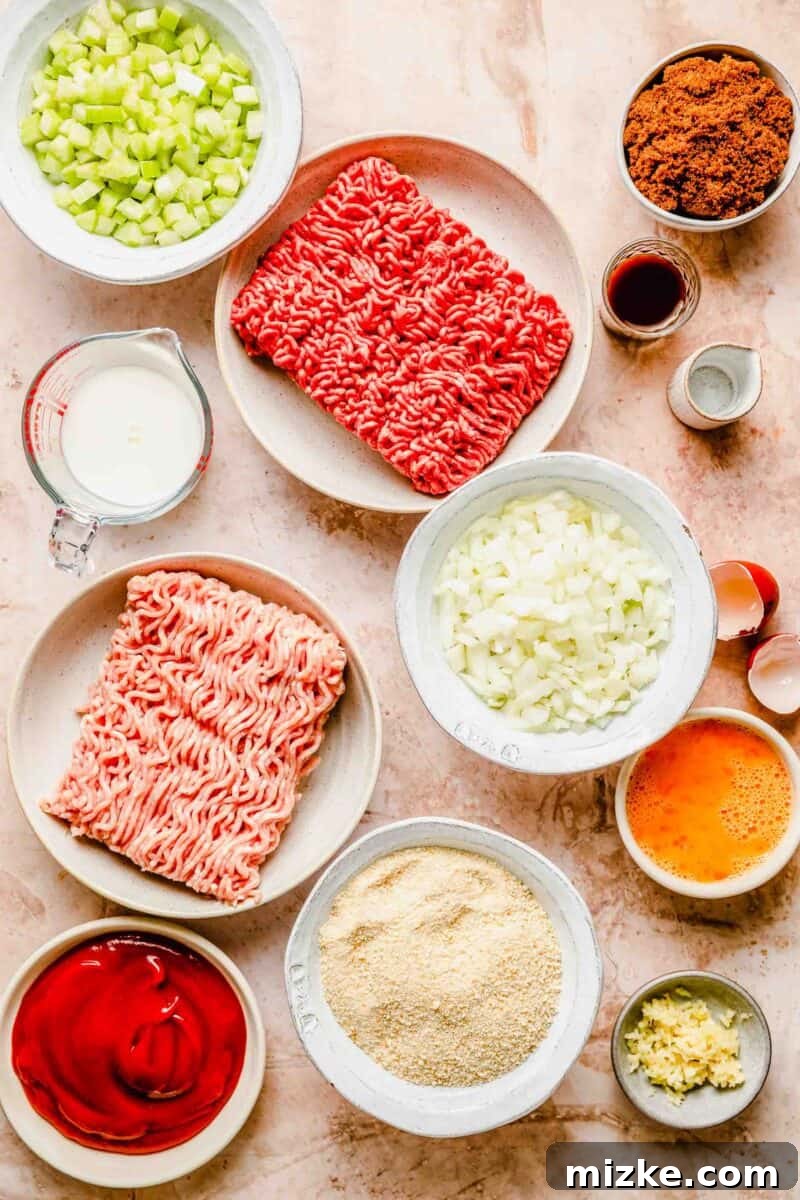
Essential Ingredients for Your Perfect Meatloaf
Crafting the perfect classic meatloaf starts with selecting quality ingredients. Each component plays a vital role in achieving that desirable moist texture and rich, savory flavor, balanced by the sweet and tangy glaze. Here’s a detailed look at what you’ll need, along with tips for making the best choices. Specific quantities can be found in the full recipe card below.
For the Hearty Meatloaf Base:
- Ground Beef: The foundation of any great meatloaf. For optimal moisture without excessive grease, aim for ground beef with an 80/20 lean-to-fat ratio. This balance ensures tenderness and flavor, preventing a dry outcome while keeping it from becoming too oily.
- Plain Bread Crumbs: These act as a binder and help retain moisture. I recommend using standard plain breadcrumbs over Panko for their finer texture, which integrates more smoothly into the meat mixture. You can often find excellent pre-seasoned varieties at your local market for an extra flavor boost. If you follow a gluten-free diet, easily substitute with your preferred gluten-free breadcrumbs.
- Fresh Onion: Finely diced onion adds a foundational layer of savory aroma and subtle sweetness, enhancing the overall depth of flavor in the meatloaf.
- Crunchy Celery: Diced celery contributes a gentle aromatic quality and a hint of freshness that complements the rich beef beautifully.
- Aromatic Garlic: Minced fresh garlic is essential for its pungent, savory notes, which are crucial for a well-rounded and deeply flavorful meatloaf.
- Large Eggs: Eggs serve as a critical binder, helping to hold the meatloaf mixture together and prevent it from crumbling. They also add a touch of richness and moisture.
- Worcestershire Sauce: This secret weapon provides a complex umami depth and a subtle tangy, savory kick that elevates the beef’s natural flavor. It’s a non-negotiable for an authentic classic meatloaf taste.
- Milk: Whole milk is ideal for adding moisture and tenderness to the meatloaf, contributing to its creamy texture. If you’re dairy-free, an unsweetened, neutral-flavored almond milk makes an excellent substitute.
For the Irresistible Sweet and Tangy Glaze:
- Worcestershire Sauce: A smaller amount is also included in the glaze to echo the flavors in the meatloaf itself, creating a cohesive taste profile and adding another layer of savory tang.
- Ketchup: The base of the classic meatloaf glaze, ketchup provides sweetness, a touch of acidity, and a familiar, comforting tomato flavor.
- Dark Brown Sugar: This adds a rich, molasses-like sweetness and helps create that beautiful caramelization on top of the meatloaf as it bakes.
- Distilled White Vinegar: A crucial ingredient for balancing the sweetness of the ketchup and brown sugar. Distilled white vinegar provides the necessary tang, cutting through the richness of the meat and brightening the overall flavor of the glaze.
Step-by-Step Guide: How to Make This Flavorful Classic Meatloaf
Creating this heartwarming classic meatloaf is surprisingly quick and straightforward. With just about 10 minutes of active prep, you’ll have it ready for the oven. This overview outlines the simple steps to achieve a perfectly cooked, moist, and delicious meatloaf. For precise measurements and detailed instructions, remember to scroll down to the complete recipe card.
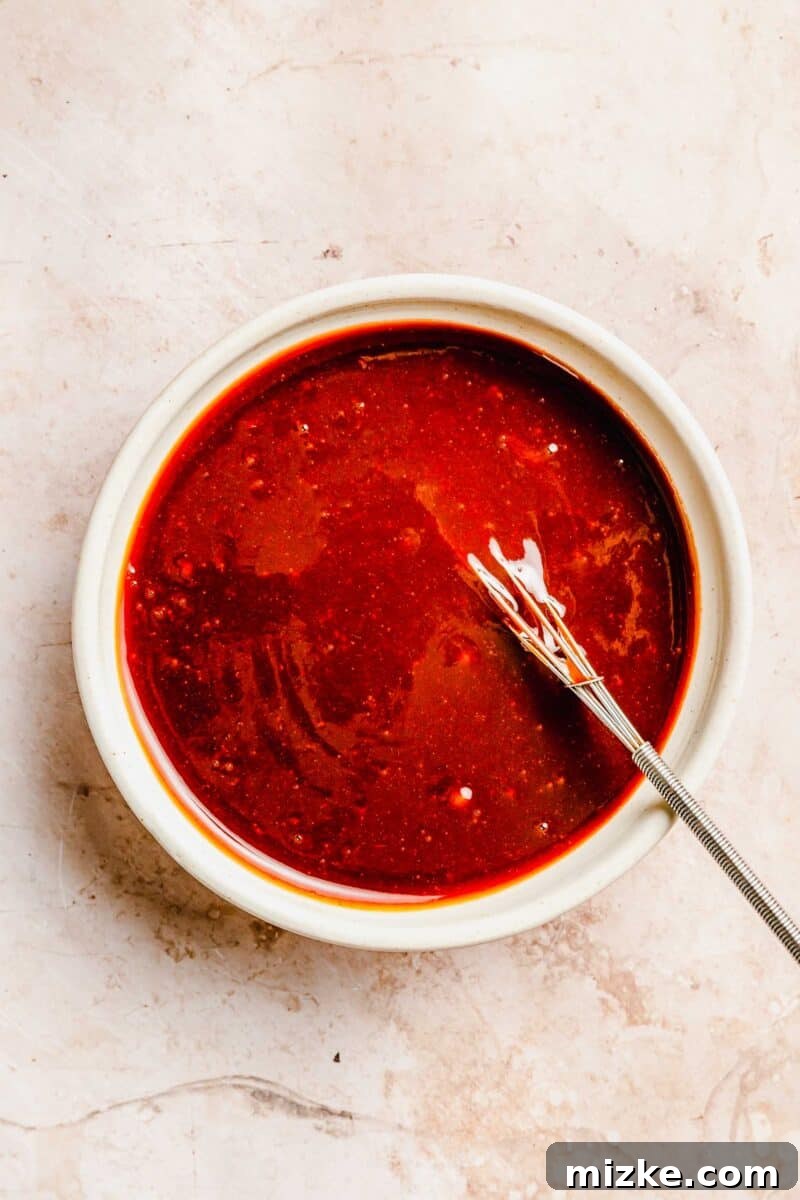

- Prepare the Glaze: In a small bowl, whisk together all the ingredients designated for the glaze until thoroughly combined. Set this aside, as it will be used for both the meatloaf mixture and as a topping.
- Sauté the Aromatics: In a small skillet over medium-high heat, gently sauté the diced onions, celery, and minced garlic. Cook until the onions and celery are tender and translucent, typically around 5 minutes. This step softens the vegetables and brings out their sweet, aromatic flavors, which will infuse into the meatloaf. Once cooked, remove from heat and allow to cool slightly.
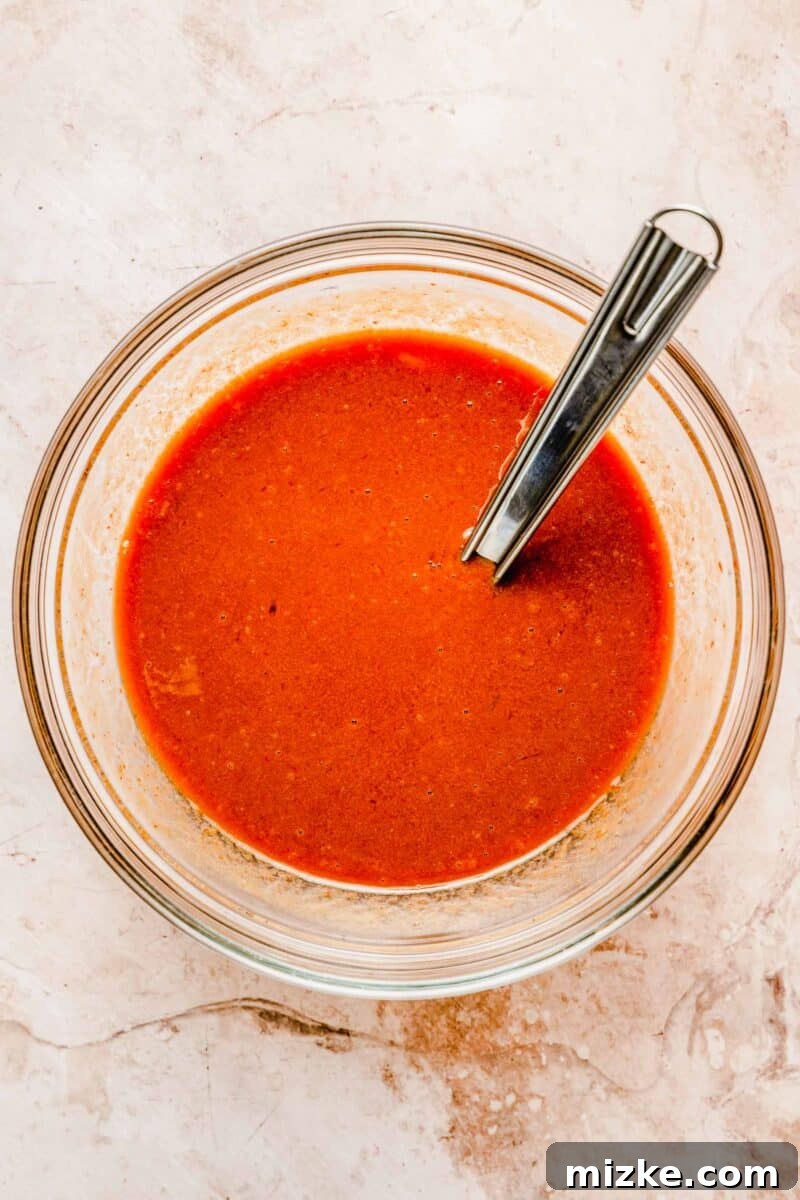
- Combine Wet Ingredients: In a medium-sized mixing bowl, combine the eggs, Worcestershire sauce, milk, and half of the prepared glaze. Whisk vigorously until all these wet ingredients are thoroughly integrated. This liquid mixture is key to adding moisture and flavor to the meat.
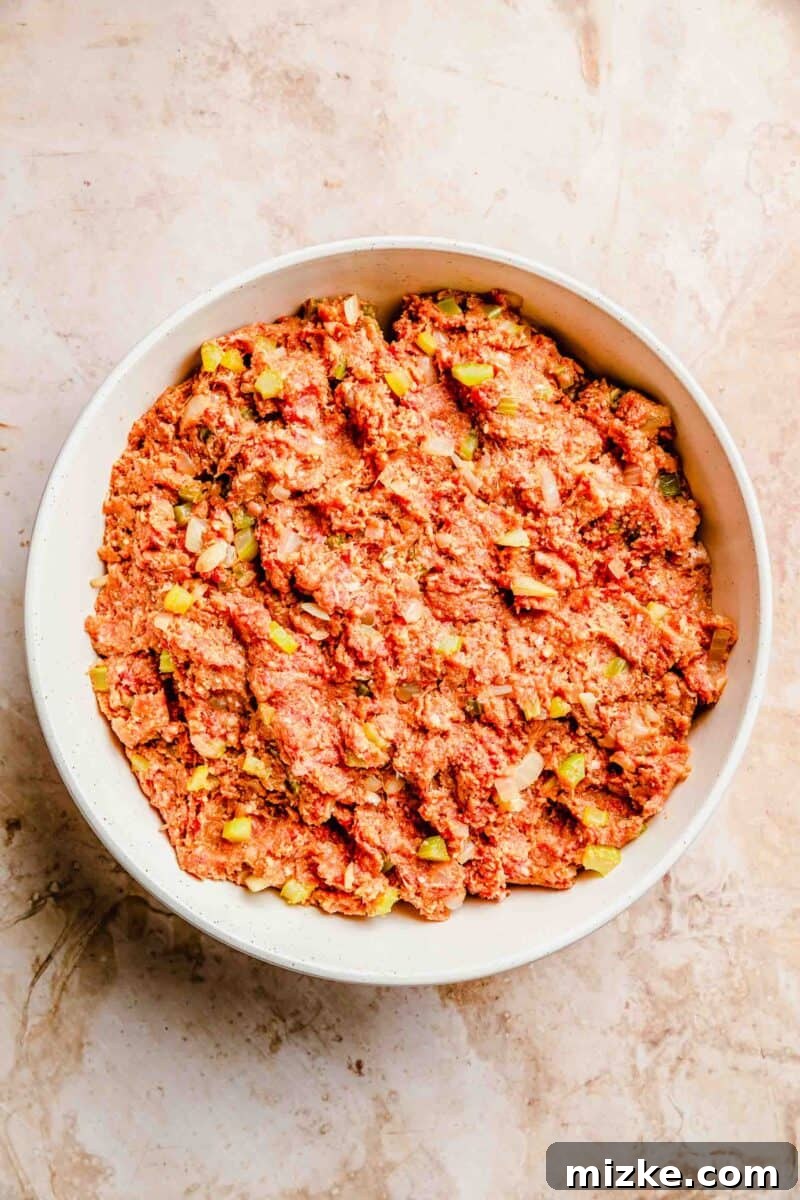
- Mix the Meatloaf Base: In a large mixing bowl, gently combine the ground beef, bread crumbs, the cooled sautéed onion mixture, and the wet ingredients. Using your hands, mix quickly and efficiently until all ingredients are just homogenous. Be cautious not to overhandle the mixture, as this can compress the meat and lead to a dry, dense meatloaf.
- Assemble the Meatloaf: Line a standard loaf pan with aluminum foil, ensuring you leave generous flaps hanging over both long sides of the pan (this will be your easy lift-out trick later!). Carefully transfer the meat mixture into the prepared loaf pan. Press the mixture down gently, ensuring it fills the corners and creates a relatively flat, even surface.
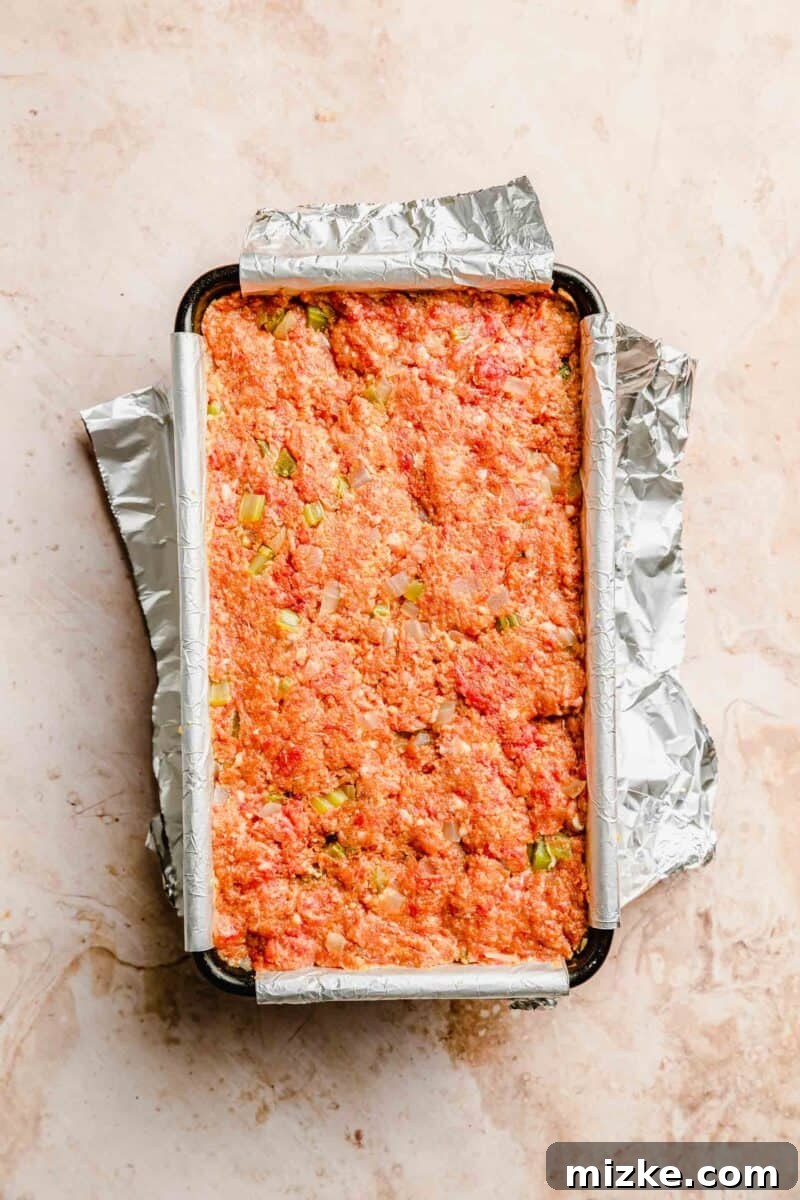
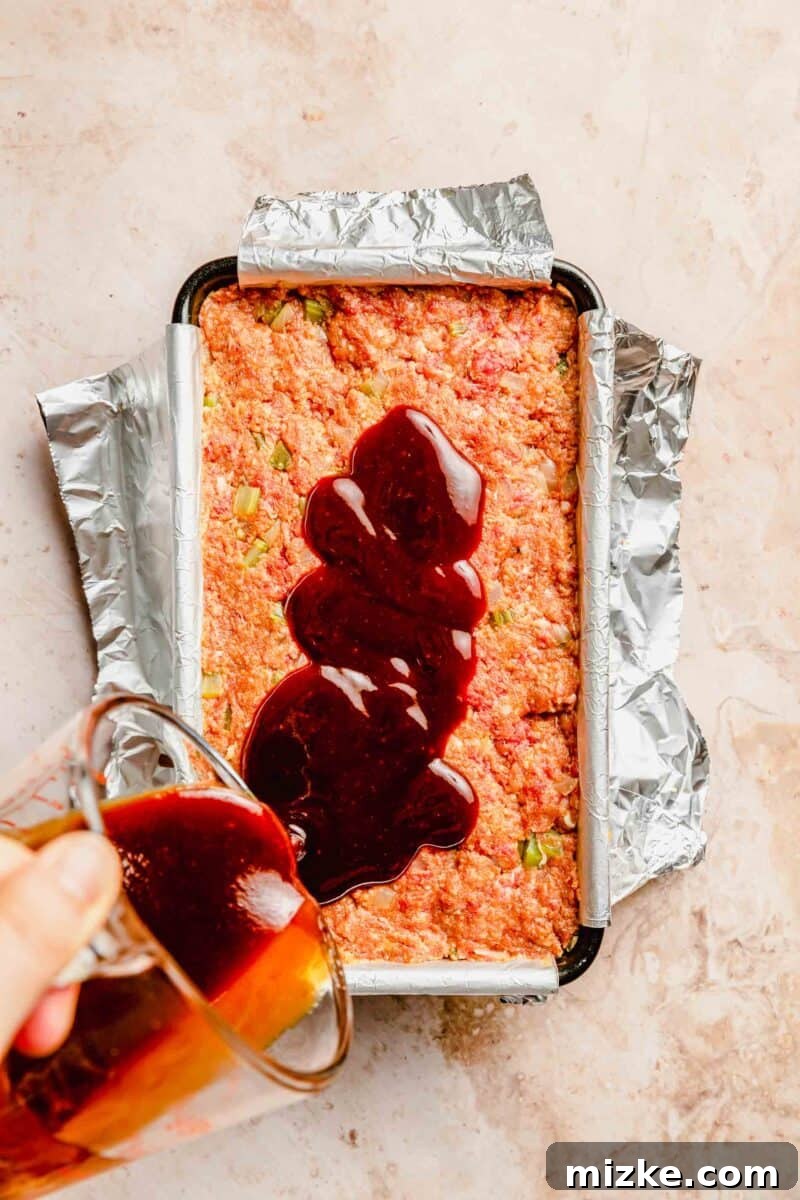
- Glaze and Bake: Pour the remaining half of the sweet and tangy glaze generously over the top of the assembled meatloaf, spreading it evenly. Bake in a preheated oven at 325°F (163°C) for approximately 1 hour.
- Rest and Serve: Once baked, the internal temperature of the meatloaf should reach 155-160°F (68-71°C). Carefully lift the meatloaf out of the pan using the foil flaps and transfer it to a cutting board. Resist the urge to slice immediately; let it rest for at least 10 minutes. This crucial resting period allows the juices to redistribute, resulting in a more moist and flavorful slice. After resting, slice into generous portions and serve alongside your favorite roasted potatoes or other complementary sides. Enjoy your perfectly homemade classic meatloaf!
Unlock the Secrets to a Perfectly Moist and Tender Meatloaf
Meatloaf often gets an unfair reputation for being dense, dry, and uninspiring. However, with a few key techniques and ingredient choices, you can achieve a consistently moist, tender, and incredibly flavorful meatloaf every single time. Avoiding that common culinary misstep is simpler than you think. Here are the secrets to a truly juicy meatloaf:
- Choose the Right Ground Beef Ratio: This is perhaps the most critical factor. Opt for ground beef with an 80/20 lean-to-fat ratio. The fat content is essential for moisture and flavor. Anything leaner, like 90/10, will likely result in a dry meatloaf, as there isn’t enough fat to keep the meat tender during baking. On the other hand, beef with too much fat (e.g., 70/30) can render excessively, leaving your meatloaf greasy and potentially crumbling. The 80/20 ratio strikes the perfect balance.
- Don’t Overmix the Ingredients: Once all your ingredients are in the bowl, mix them just enough to combine them thoroughly. Over-mixing is a common pitfall that leads to a tough, dense meatloaf. When meat proteins are overworked, they become overly compact and rubbery. Use your hands to gently, yet quickly, incorporate everything until no dry spots remain. Think of it as folding rather than kneading.
- Incorporate Binders and Moisture Agents: Ingredients like breadcrumbs, eggs, and milk are not just for binding; they are crucial for moisture. Breadcrumbs absorb and hold onto liquids, preventing them from evaporating during cooking. Eggs provide structure and additional moisture. Milk (or a dairy-free alternative) contributes to a tender crumb and overall juiciness. Ensure you use the recommended amounts for optimal results.
- Mind the Baking Temperature and Don’t Overbake: Baking at a moderate temperature, like 325°F (163°C), allows the meatloaf to cook evenly without drying out the exterior too quickly. The lower temperature helps the fat render slowly and keeps the internal moisture locked in. Always use a meat thermometer to check for doneness. The ideal internal temperature for meatloaf is between 155-160°F (68-71°C). Pull it out of the oven when it reaches this range, as it will continue to cook slightly during the resting period.
- Crucial Resting Period: This step is often overlooked but is vital for a moist meatloaf. After baking, allow your meatloaf to rest for at least 10-15 minutes before slicing. During baking, the juices in the meat are pushed towards the center. Resting allows these juices to redistribute evenly throughout the loaf. Slicing too soon will cause all those delicious, flavorful juices to run out, leaving you with a drier result.
Additional Expert Tips for Meatloaf Mastery
Beyond the core secrets to moisture, a few additional tricks can truly elevate your meatloaf from good to extraordinary. These small details can make a world of difference in the final taste, texture, and ease of preparation.
- Ensure Adequate Breadcrumbs: As mentioned, breadcrumbs are a key binder and moisture retainer. Using too few breadcrumbs can lead to a meatloaf that struggles to hold its shape and crumbles easily. The prescribed amount in this recipe is carefully balanced to work with the eggs, providing the perfect structure and ensuring moisture is locked in. Don’t skimp on them!
- Master the Foil Lift-Out Trick: Removing a freshly baked meatloaf from its pan can be tricky, especially if you want to maintain its perfect shape. My simple foil trick makes this effortless. When lining your loaf pan with aluminum foil, make sure to leave substantial flaps extending over both long sides of the pan. Once the meatloaf is baked and rested, simply grab onto these foil flaps to easily lift the entire meatloaf out of the pan and onto a cutting board. This minimizes breakage and makes for a clean transfer.
- Don’t Skip the Resting Period: This cannot be stressed enough! While the aroma of freshly baked meatloaf is incredibly tempting, resisting the urge to cut into it immediately is crucial. A minimum of 10 minutes of resting time allows the internal temperature to equalize and, more importantly, gives all those delicious juices a chance to redistribute throughout the meat. The result is a more tender, succulent, and intensely flavorful bite, with the added benefit of locking in all that precious moisture.
- Preheat Your Oven Properly: Always ensure your oven is fully preheated to the specified temperature before placing the meatloaf inside. A consistently heated oven is essential for even cooking and achieving that beautiful caramelized crust on the glaze.
- Consider Sautéing Veggies: While some recipes skip it, sautéing your onions, celery, and garlic before adding them to the meat mixture (as done in this recipe) is a game-changer. It softens them, allowing them to fully integrate and release their full aromatic potential without being crunchy in the finished meatloaf. This step adds a significant depth of flavor.
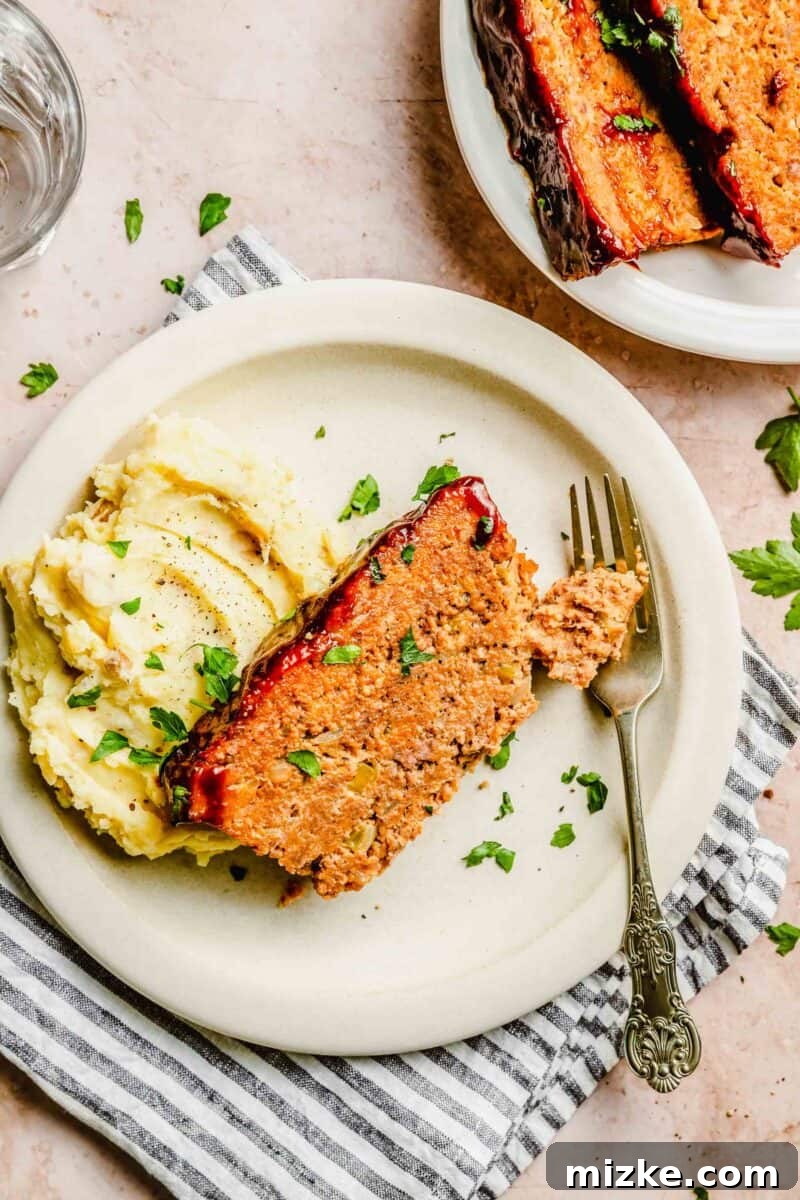
Perfect Pairings: What to Serve with Your Classic Meatloaf
This savory and comforting classic meatloaf is incredibly versatile, pairing beautifully with a wide range of side dishes. Whether you’re aiming for a hearty, traditional meal on a cold winter’s day or a lighter, fresher accompaniment, there’s a perfect match for every preference. Here are some fantastic ideas to complete your meal:
- Potatoes in Every Form: Potatoes are the quintessential meatloaf companion, and almost any preparation works wonderfully.
- Roasted Potatoes: An excellent choice because you can often roast them in the oven right alongside your meatloaf, saving time and energy. For an extra indulgent treat, try these Duck Fat Potatoes.
- Creamy Potatoes Au Gratin: For a richer, more decadent side, Simple Creamy Potatoes Au Gratin provide a wonderful contrast in texture and flavor.
- Potato Salad: On warmer evenings, a refreshing Red Potato and Dill Salad offers a lighter, herb-infused option.
- Garlic Mashed Potatoes: And of course, you can never go wrong with good old-fashioned Garlic Mashed Potatoes, perfect for soaking up any extra glaze or juices.
- Fresh and Vibrant Salads: A crisp salad can provide a refreshing counterpoint to the richness of the meatloaf.
- Lightened Up Kale Caesar: My Lightened Up Kale Caesar Salad offers a vibrant, savory complement that won’t overpower the main dish.
- Roasted Root Vegetable Salad: If you’re looking for something a bit more substantial but still fresh, this Roasted Root Vegetable Salad with Dijon Shallot Dressing is an excellent, hearty choice, blending earthy flavors with a zesty dressing.
- Hearty Roasted Vegetables: Roasting vegetables brings out their natural sweetness and creates a delicious, tender-crisp texture.
- Pistachio Pesto Brussels Sprouts: These Pistachio Pesto Brussels Sprouts offer a unique, nutty, and savory twist.
- Roasted Cauliflower: Simple yet delicious, Roasted Cauliflower makes a fantastic, easy meatloaf side dish that is both nutritious and satisfying.
Storing and Reheating Your Delicious Leftover Meatloaf
One of the many joys of this classic meatloaf recipe is how well it keeps, often tasting even better the next day. Proper storage and reheating techniques are key to maintaining its fantastic flavor and moist texture. Here’s how to ensure your leftovers are just as delightful as the first serving:
- Storing in the Refrigerator: Once your meatloaf has completely cooled to room temperature, transfer it to an airtight container. This prevents it from drying out and absorbing other refrigerator odors. It can be safely stored in the refrigerator for up to 3 days, making it perfect for meal prepping a few days in advance.
- Reheating for Optimal Flavor and Moisture:
- Oven Method (Recommended for Best Texture): For a more even reheat that helps retain moisture, place the desired portion of meatloaf in a shallow, oven-proof baking dish. Add 1-2 tablespoons of water or beef broth to the dish around the meatloaf – this creates steam and helps prevent the meatloaf from drying out. Cover loosely with foil and bake in a preheated oven at 250°F (120°C) for approximately 20-25 minutes, or until warmed through.
- Microwave Method (Quick and Convenient): If you’re in a hurry, a single serving of meatloaf can be reheated in the microwave. Place your slice on a microwave-safe plate. Cover it with a damp paper towel or microwave-safe lid to help retain moisture. Zap it on medium-high heat for about 1.5 to 2 minutes per slice, checking halfway through, until it is thoroughly warmed. Be careful not to overheat, as this can lead to dryness.
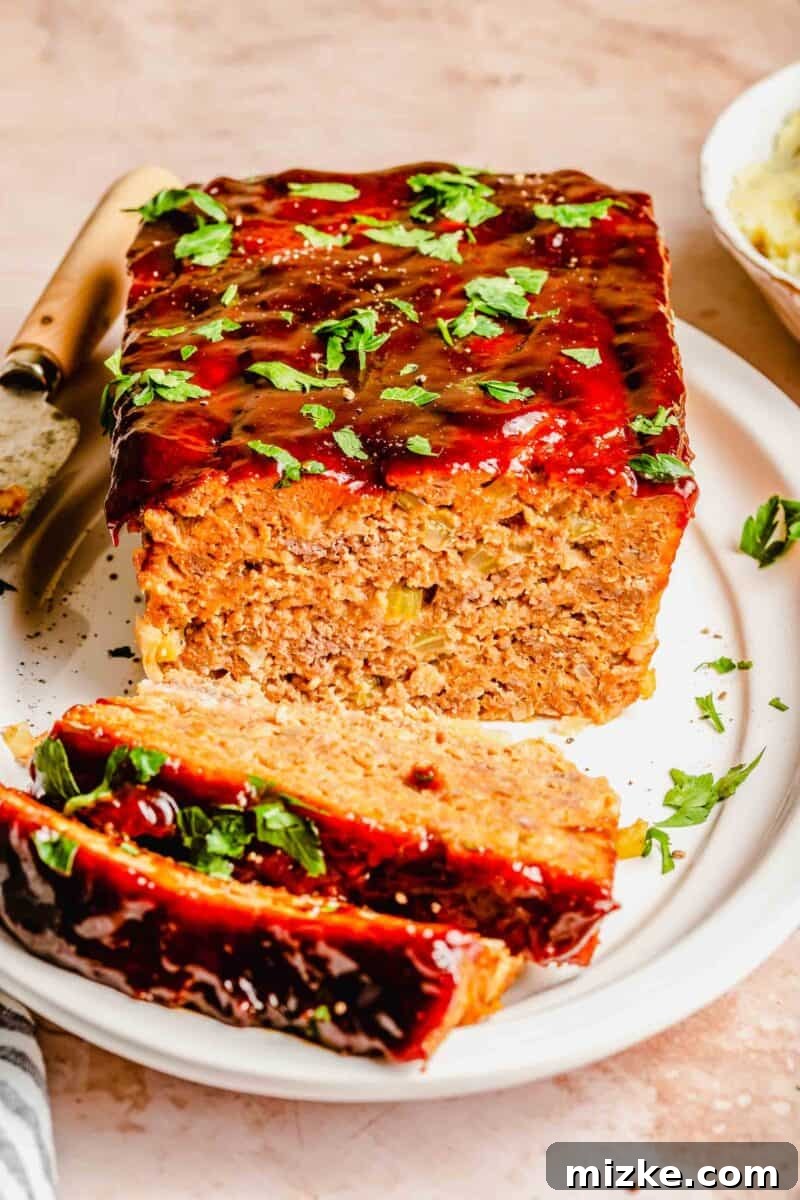
Can I Freeze Homemade Meatloaf for Later? Absolutely!
Yes, absolutely! Freezing homemade meatloaf is an excellent way to prepare meals in advance and ensure you always have a comforting dinner option ready to go. Meatloaf freezes beautifully, making it an ideal candidate for batch cooking and smart meal planning. Here’s how to do it effectively:
- Freezing Cooked Meatloaf: Allow the cooked meatloaf to cool completely to room temperature. This is crucial to prevent ice crystals from forming, which can affect texture. Once cool, you can freeze it whole or slice it into individual portions. Wrap the meatloaf tightly in plastic wrap, then an additional layer of aluminum foil. This double wrapping helps protect against freezer burn. Place the well-wrapped meatloaf in an airtight freezer-safe container or a heavy-duty freezer bag. It will happily keep in the freezer for up to 3 months.
- Thawing and Reheating Frozen Meatloaf: When you’re ready to enjoy your frozen meatloaf, transfer it from the freezer to the refrigerator and allow it to thaw completely overnight. This slow thawing process helps maintain its moist texture. Once thawed, follow the reheating instructions provided above for either the oven or microwave method. For best results, the oven method is typically preferred as it reheats more evenly and maintains a better texture.
Discover More Effortless & Delicious Dinner Recipes
Getting a delicious and wholesome dinner on the table doesn’t have to be a source of stress. Building a collection of quick, easy, and reliable recipes in your culinary toolkit can significantly alleviate weeknight pressures and save you valuable time. This classic meatloaf is a fantastic example of such a recipe – comforting, simple, and satisfying. But the options for effortless meals are endless! Here are some of my other favorite go-to recipes that promise ease without compromising on flavor:
- Zesty Orange Beef and Broccoli
- Irresistible Sweet Chili Glazed Grilled Chicken
- Flavorful Vegan Cauliflower Tacos
- Spicy Grilled Cumin Lime Shrimp Tacos
- Quick One-Pot Garlic Lemon Chicken Orzo
- Effortless Sheet Pan Salmon and Vegetables
Classic Meatloaf
By: Julie Chiou
This classic meatloaf recipe is so simple and delicious. Meat lovers proceed with enthusiasm!
10 minutes
1 hour
1 hour 10 minutes
6 servings
Equipment
- Loaf pan
Ingredients
- 1 large onion, diced
- 3 stalks of celery, diced
- 3 cloves garlic, minced
- 2 large eggs, beaten
- ¼ cup (59 ml) Worcestershire sauce
- ⅓ cup (79 ml) milk
- 2 pounds (907 g) ground beef or meatloaf mix (veal, pork, and beef)
- 1 ½ cups (162 g) plain bread crumbs
For the Glaze
- ¾ cup (180 g) ketchup
- ½ cup (110 g) dark brown sugar
- 2 tablespoons Worcestershire sauce
- 1 tablespoon distilled white vinegar
Instructions
- In a small bowl, combine the ingredients for the glaze and set aside.
- Preheat oven to 325°F (163°C). Line a loaf pan with aluminum foil, ensuring 2 flaps are hanging out on either side for easy removal. Set aside.
- In a small skillet on medium-high heat, sauté the onions, celery, and garlic until onions and celery are tender, about 5 minutes. Remove from heat and set aside to cool.
- In a medium mixing bowl, combine the wet ingredients: eggs, Worcestershire sauce, milk, and half of the pre-made glaze. Mix well.
- In a large mixing bowl, combine the ground beef, bread crumbs, the cooled onion mixture, and the wet ingredients. Use your hands to mix quickly and evenly distribute all the ingredients. Be careful not to overhandle the mixture, as this can lead to a dry, dense meatloaf.
- Put the meat mixture into the prepared loaf pan. Press on the loaf, gently getting into the corners, to ensure it’s a flat surface.
- Pour the rest of the glaze on top of the meatloaf, spreading evenly.
- Bake in the preheated oven for one hour, or until the internal temperature reaches 155-160°F (68-71°C).
- (Optional tip: Maximize your oven usage by roasting potatoes alongside the meatloaf!)
- When the meatloaf is done, use the two aluminum foil flaps to carefully pull out the meatloaf and place it on a cutting board. Allow it to rest for at least 10 minutes before slicing. Cut into sections and serve with a side of roasted potatoes or your chosen accompaniment.
Nutrition (Approximate)
Calories: 494 kcal,
Carbohydrates: 36 g,
Protein: 52 g,
Fat: 14 g,
Saturated Fat: 6 g,
Polyunsaturated Fat: 1 g,
Monounsaturated Fat: 6 g,
Trans Fat: 1 g,
Cholesterol: 225 mg,
Sodium: 534 mg,
Potassium: 1145 mg,
Fiber: 1 g,
Sugar: 32 g