
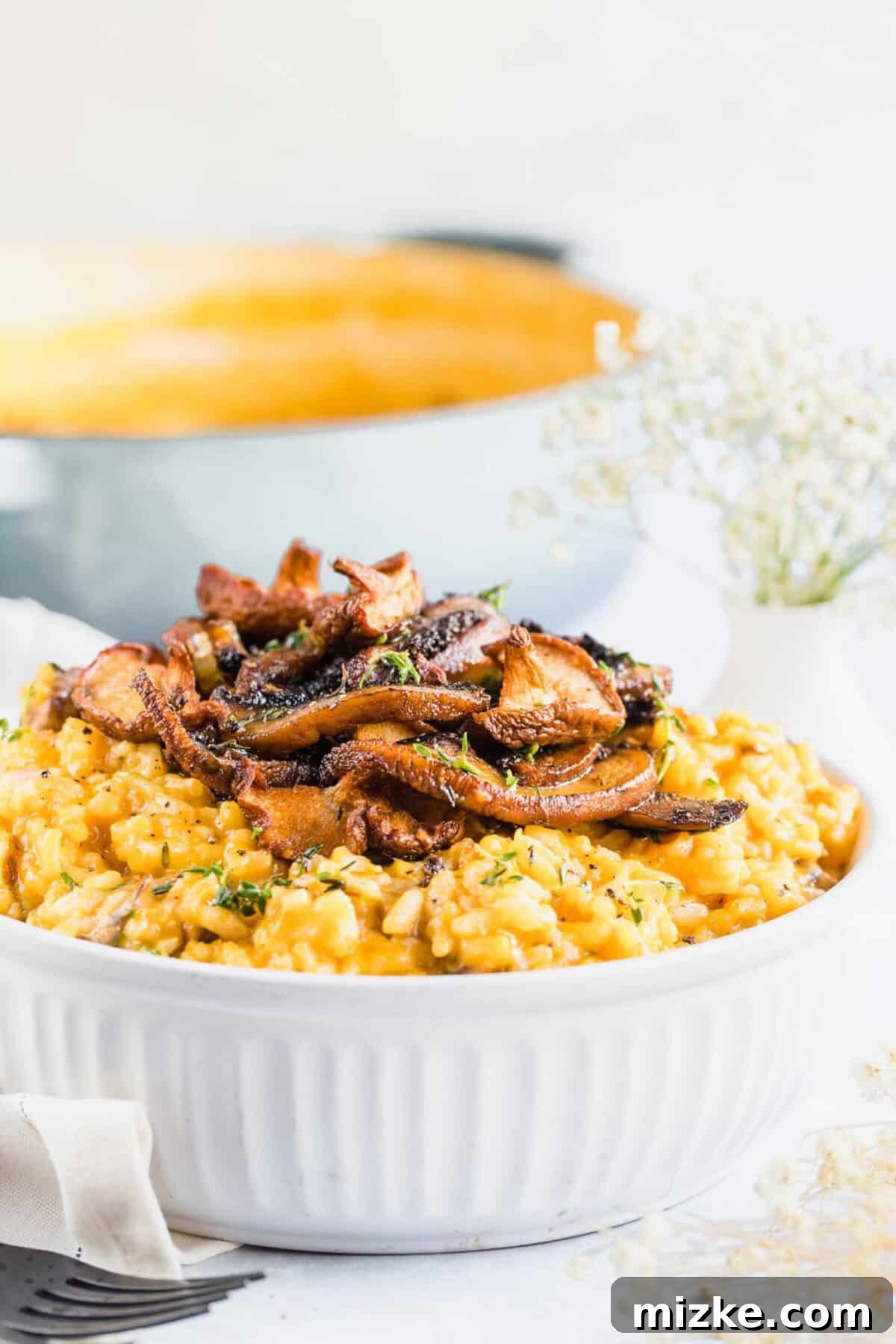
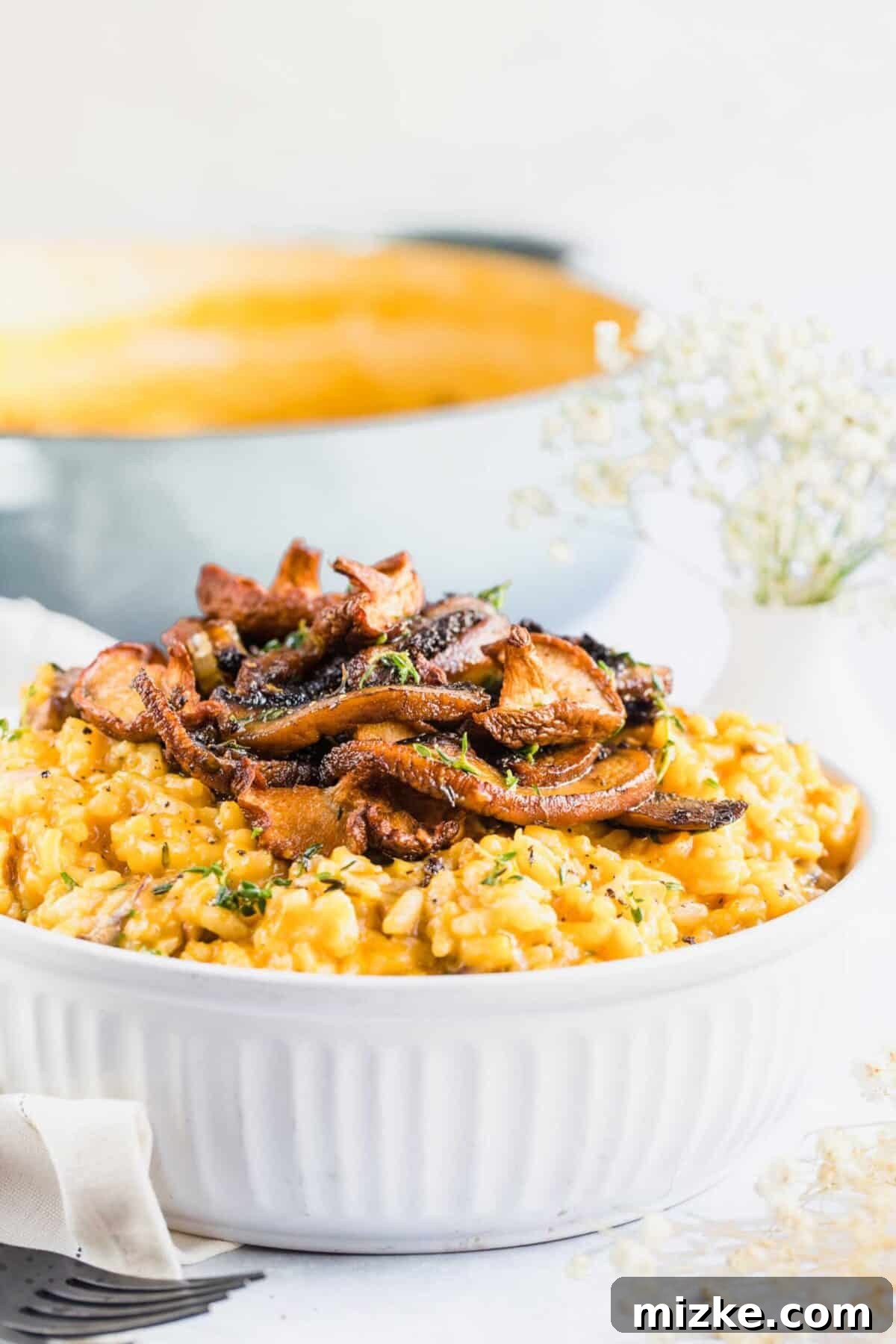
Indulge in the rich, earthy flavors of autumn with this incredibly creamy and satisfying **vegan mushroom risotto**. Crafted with a dynamic trio of mushrooms cooked in two distinct ways, this plant-based masterpiece delivers a profound umami experience that’s both comforting and elegantly simple. Perfect for a cozy fall evening, this healthy dish proves that luxurious dining can be entirely dairy-free.
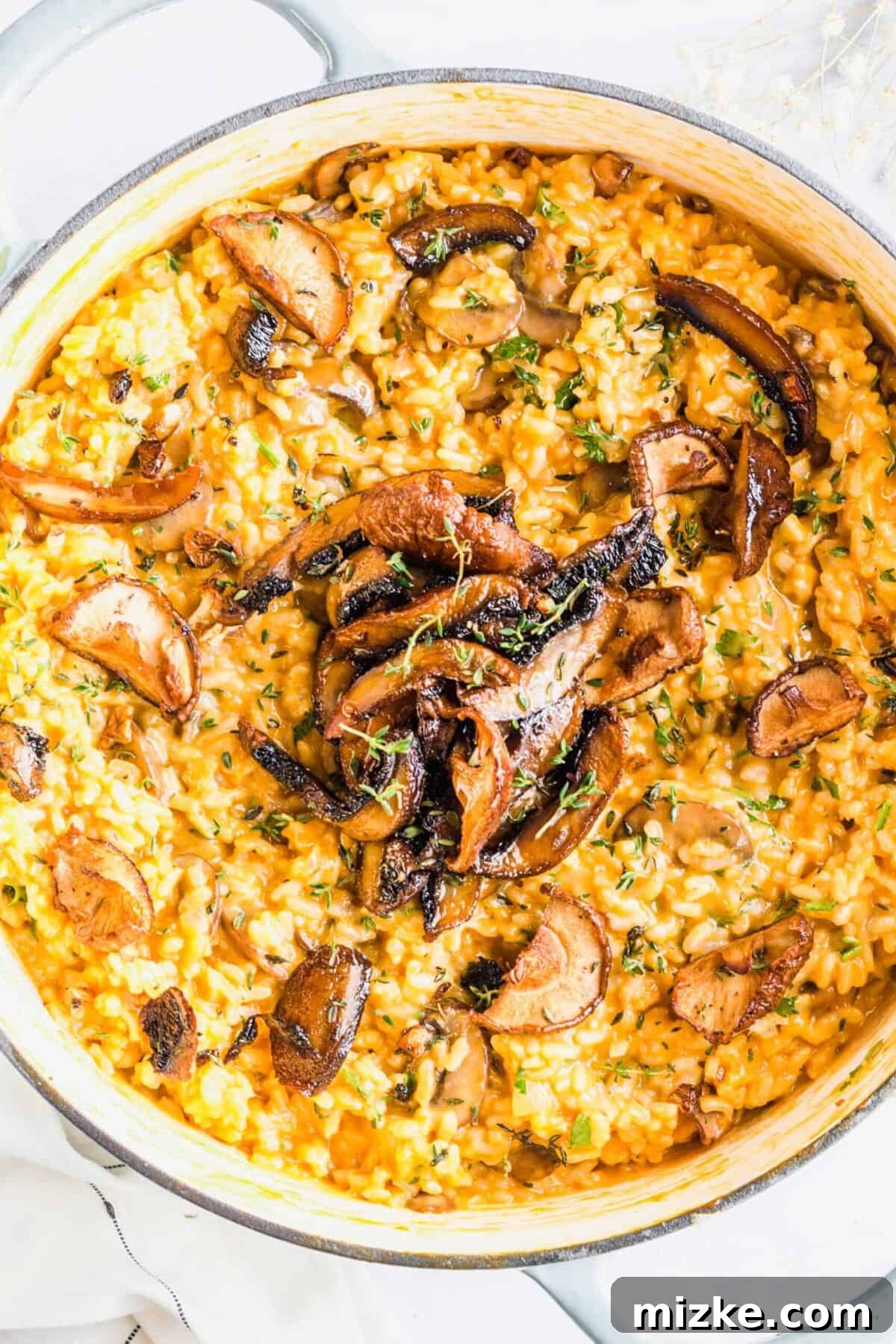
As the vibrant hues of summer fade into the warm embrace of autumn, my culinary inclinations naturally shift towards hearty, comforting dishes that celebrate the season’s bounty. This **vegan mushroom risotto** stands out as a quintessential fall favorite, a recipe I return to again and again. It masterfully combines the deep, earthy notes of various mushrooms and fragrant thyme with the bright, fresh zest of lemon, creating a balanced flavor profile that feels both substantial and refreshingly light. The star of the show, Arborio rice, transforms into a luxuriously warm and creamy base, infused with aromatic garlic – truly a cozy embrace on a chilly day.
Traditional risotto often relies heavily on butter and cheese for its signature creaminess. However, this innovative recipe offers an equally decadent experience without any dairy products, making it a fantastic choice for those adhering to a vegan lifestyle or simply looking for a healthier alternative. Its wholesome ingredients and incredible taste mean you can enjoy this gourmet-level dish guilt-free, any day of the week. For those who appreciate classic Italian cooking, you might also enjoy exploring a traditional mushroom risotto recipe, but for a plant-based sensation, you’ve found your new go-to for a truly satisfying and **creamy vegan mushroom risotto**.
Why This Easy Vegan Mushroom Risotto Will Become Your Favorite
This **easy vegan mushroom risotto recipe** ticks every box for what makes a truly exceptional meal: it’s straightforward to prepare, relatively quick, remarkably healthy, and bursting with complex flavors. The hallmark of an outstanding risotto is its texture, and this vegan rendition delivers an unparalleled, melt-in-your-mouth creaminess that will impress even the most discerning palates. Forget the myth that vegan dishes lack depth; this recipe is a testament to the power of plant-based ingredients to create truly gourmet experiences.
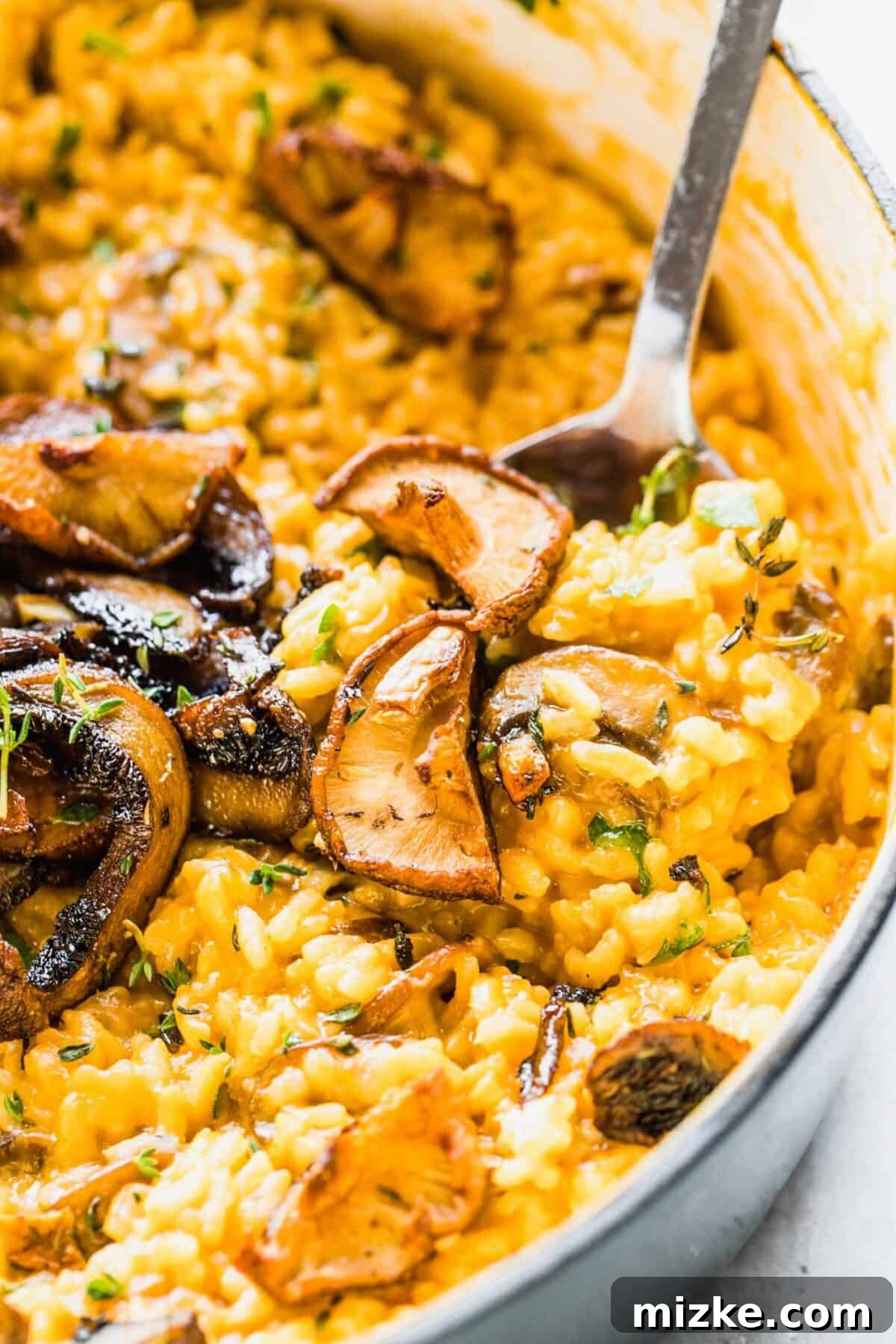
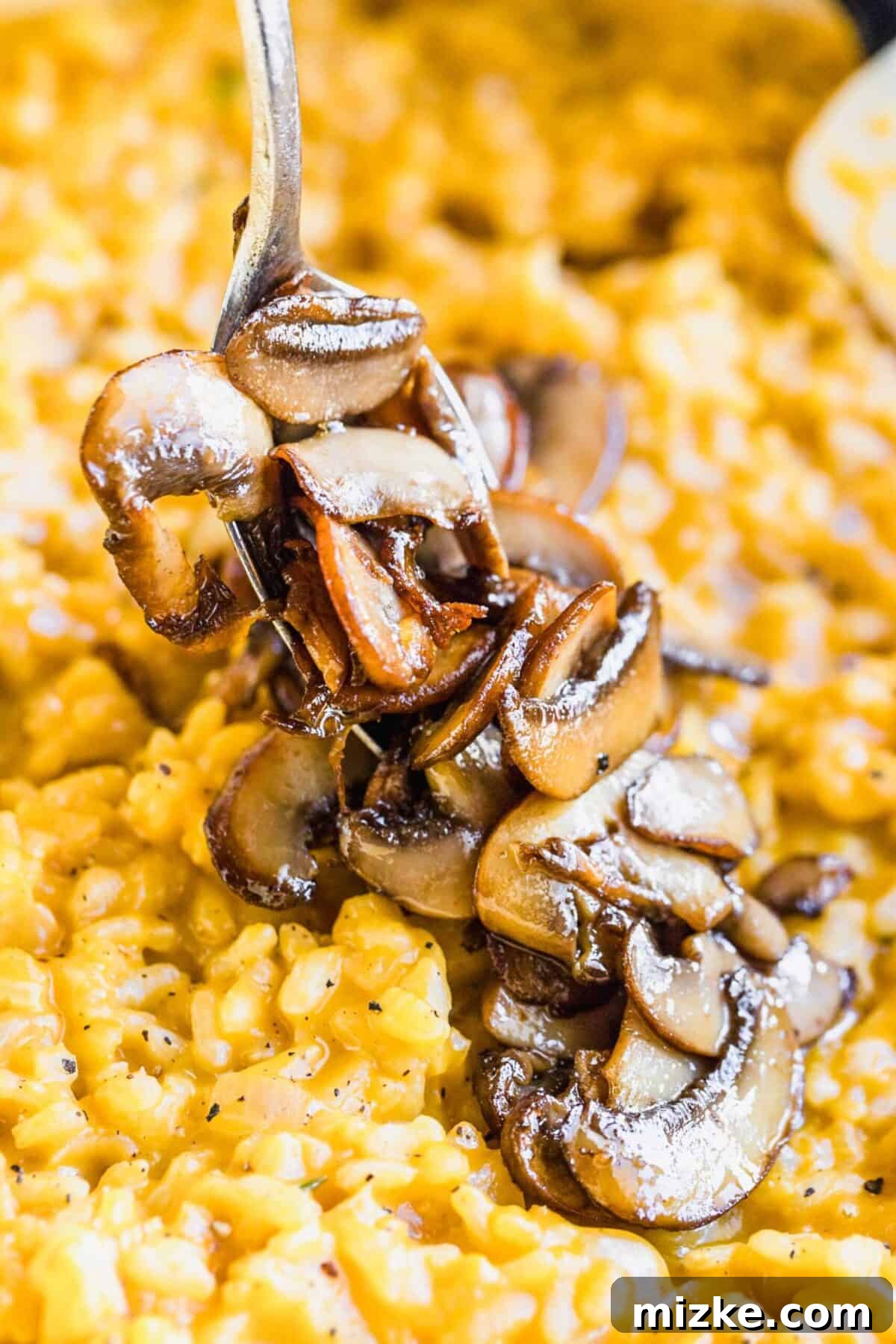
What truly elevates this dish is its ingenious approach to mushrooms. We don’t just use one type; we incorporate three distinct varieties – shiitake, portobello, and cremini – each contributing its unique character and flavor profile. Furthermore, these mushrooms are prepared using two different cooking methods: roasting and sautéing. Roasting intensifies the earthy notes and creates a slightly crisp exterior, while sautéing ensures tender, aromatic richness. This dual technique is key to maximizing their natural flavors, intensifying their umami richness, and adding layers of textural complexity that bring profound depth to every spoonful of this hearty risotto. This multi-faceted mushroom preparation ensures a vibrant, savory experience that is anything but ordinary, making this **creamy vegan mushroom risotto** a true standout.
Understanding Risotto: The Heart of Italian Comfort Food
At its core, risotto is a celebrated Italian rice dish, renowned for its distinctively creamy texture. Unlike other rice preparations where liquid is added all at once, risotto involves a patient, gradual cooking process. High-starch rice varieties, most commonly **Arborio rice**, are slowly simmered in a flavorful broth. As the rice grains gently absorb the liquid, they release their abundant starch, primarily amylopectin, which then thickens the broth, creating that iconic, luxurious, and velvety consistency. This methodical approach breaks down the outer layer of the rice while allowing the core to remain slightly firm, or “al dente,” offering a delightful chew.
The culinary journey of risotto dates back centuries in Northern Italy, where rice cultivation flourished. It evolved from simple peasant dishes into a sophisticated staple, with each region boasting its own variations. This slow absorption process is what gives risotto its unique charm and makes it a beloved staple in Italian cuisine and around the world. The result is a dish that, despite being rice-based, bears little resemblance to traditional steamed or baked rice. Instead, its texture is much closer to a savory, comforting porridge, rich with the flavors of its broth and accompanying ingredients, making it the ultimate comfort food for many.
Mastering the Art: Secrets to Making Perfect Vegan Risotto
While the idea of preparing risotto might seem intimidating, especially after watching intense cooking shows, crafting a truly exceptional risotto at home is surprisingly achievable. It requires attention and a bit of technique, but it’s far from daunting. Here are the essential tricks to elevate your **vegan mushroom risotto** from good to absolutely outstanding:
- Embrace Patience and Gradual Liquid Addition: The cardinal rule of risotto is to never rush the process. Unlike typical rice dishes where you might add all the liquid at once, risotto thrives on gradual additions. Pour in your hot vegetable broth in small increments, typically about half a cup at a time. Allow the rice to absorb almost all of the liquid before adding the next batch. This slow, steady absorption is crucial for coaxing the starch out of the Arborio rice grains, creating that signature creamy, luxurious texture. Rushing this step will result in a less creamy, often soupy, risotto.
- Always Use Hot Broth: This seemingly small detail makes a huge difference in the outcome of your risotto. Adding cold broth to your simmering rice will immediately lower the temperature of the entire pan, halting the cooking process and potentially leading to unevenly cooked or gummy rice. Always keep your vegetable broth warm or gently simmering in a separate pot nearby, ready to be ladled into the risotto. Maintain a consistent, mild simmer for your risotto itself; the goal is slow cooking, but don’t let it stop bubbling entirely.
- Stir Just the Right Amount: Risotto requires regular stirring, but it’s a delicate balance. Since there’s never a large volume of liquid in the pan, stirring frequently prevents the rice from sticking to the bottom and burning, and also helps to release the starch. However, over-stirring can break down the rice grains too much, releasing excessive starch and resulting in a gluey, rather than creamy, texture. Stir enough to keep things moving and prevent sticking – about every 30-60 seconds is a good rhythm – but don’t constantly agitate the rice.
- Cook to “Al Dente” Perfection: The ideal risotto rice should be tender but still possess a slight bite or firmness in its center – a characteristic known as “al dente.” You want to avoid mushy rice at all costs. Begin tasting the rice around the 15-minute mark of adding broth. The risotto should be flowing (known as “all’onda,” or wavy) and moist, not overly dry or soupy. Remove it from the heat when it reaches this perfect balance, as it will continue to cook slightly from residual heat.
- Choose the Right Pan: A wide, heavy-bottomed pan or Dutch oven is ideal for making risotto. Its wide surface area allows for even heat distribution, which is essential for consistent cooking, and encourages liquid evaporation at the proper rate, crucial for the risotto’s creamy consistency.
- Taste and Season Continuously: Risotto is a dish that benefits immensely from continuous tasting. The amount of salt needed can vary significantly based on the sodium content of your vegetable broth. Begin with a lightly seasoned broth, and then season the dish towards the very end of the cooking process, adjusting as you go to achieve perfect balance and highlight all the other wonderful flavors.
Essential Ingredients for Your Vegan Mushroom Risotto
Crafting this flavorful **vegan mushroom risotto** requires a careful selection of fresh, high-quality ingredients. Each component plays a vital role in achieving the dish’s signature depth and creamy texture. Below is a comprehensive list, with detailed notes to guide your preparation. For precise quantities, refer to the full recipe section at the bottom of this article.
For the Roasted Mushrooms: Enhancing Earthy Notes
Roasting brings out a deeper, more concentrated flavor and a delightful texture in your mushrooms, adding a crucial layer of umami to the risotto. This method also provides a lovely textural contrast to the creamy rice.
- Shiitake Mushrooms: Known for their distinct earthy and slightly smoky flavor, shiitakes add a wonderful richness and depth. Slice them in half for optimal roasting and a pleasing bite.
- Portobello Mushrooms: These large, meaty mushrooms contribute a robust, almost steak-like flavor and a satisfying, substantial texture. Cut them into 1/4-inch slices to ensure even cooking and distribution.
- Olive Oil: Essential for coating the mushrooms, promoting even roasting, achieving beautiful caramelization, and imparting a subtle fruity note.
- Garlic: Freshly grated garlic infuses the mushrooms with its pungent aroma and savory depth as they roast, creating an irresistible fragrance.
- Thyme: A classic herb pairing for mushrooms, thyme’s fragrant, peppery, and slightly floral notes complement their earthiness beautifully.
- Salt and Pepper: Basic seasonings, crucial for enhancing the natural flavors of the mushrooms and bringing them to their peak savory potential.
For the Sautéed Mushrooms: Aromatic and Tender
Sautéing provides another texture and allows the mushrooms to absorb other flavors, creating a tender, aromatic topping that melts into the creamy risotto base.
- Olive Oil or Dairy-Free Butter: Either option works perfectly for sautéing. Olive oil offers a clean, Mediterranean taste, while dairy-free butter can add a familiar, rich, and slightly nutty flavor, mimicking traditional risotto.
- Garlic: Crushed garlic adds an aromatic foundation, permeating the cremini mushrooms with its irresistible scent and savory kick.
- Cremini Mushrooms: Also known as baby bellas, these are mature versions of button mushrooms with a firmer texture and a more pronounced, nutty flavor than their younger counterparts. Slice them thinly for quick and even sautéing.
- Salt and Pepper: To season and bring out the best in the sautéed mushrooms, ensuring they are flavorful on their own before integrating into the risotto.
For the Risotto Base: Creamy Perfection
The foundation of any great risotto lies in its rich, creamy base. Each ingredient here is vital for building that signature texture and taste, transforming simple rice into a gourmet experience.
- Olive Oil or Dairy-Free Butter: Similar to the sautéed mushrooms, use your preference to start building the risotto’s flavor. This fat provides the initial sauté for the aromatics and rice.
- Onion: Minced onion provides a sweet, aromatic base that caramelizes slightly during cooking, adding crucial depth and a layer of sweetness to the savory dish.
- Garlic: Finely chopped garlic is stirred in after the onion to release its fragrant oils, flavoring the rice from the very beginning and enhancing the overall aroma.
- Arborio Rice: The undisputed star for its high starch content, which is key to risotto’s creamy texture while maintaining an al dente bite. This unique property allows it to absorb liquid slowly and release starch without becoming mushy.
- Vegetable Broth: The primary liquid component for cooking the rice. Choose a high-quality, flavorful broth, and always keep it warm throughout the cooking process to maintain a consistent cooking temperature.
- Dairy-Free Milk: This is where the vegan magic happens! Full-fat coconut milk (unsweetened, unflavored) yields the creamiest, most luxurious result, though it will impart a subtle coconut note. Alternatively, use any unsweetened, unflavored dairy-free milk like cashew, almond, or oat milk for a more neutral taste.
- Thyme Sprigs and Leaves: Whole thyme sprigs are added to infuse the broth during cooking, imparting a deep, herbaceous aroma. Fresh thyme leaves are stirred in at the end for a burst of aromatic freshness and visual appeal.
- Lemon Juice: A splash of fresh lemon juice at the very end of cooking is a critical finishing touch. It brightens the entire dish, cutting through the richness and enhancing all the other flavors, making the risotto taste vibrant and fresh.
- Black Pepper: Freshly ground black pepper adds a subtle spice, warmth, and aromatic kick that beautifully complements the earthy mushrooms and creamy rice.
- Parsley: Freshly chopped parsley offers a vibrant green color and a fresh, clean, herbaceous finish that lifts the dish and adds a touch of elegance.
- Salt: Season to taste, adjusting based on the sodium content of your vegetable broth and your personal preference. It’s best to add salt incrementally at the end.
Arborio Rice: The Secret to Silky Risotto
**Arborio rice** is not just any rice; it’s the traditional and most common choice for authentic risotto, originating from the town of Arborio in Italy’s Po Valley. This short-grain rice variety is distinguished by its incredibly high starch content, primarily amylopectin. It’s this high starch that, when slowly released during the deliberate, gradual cooking process, creates the characteristic creamy, velvety texture of risotto, while paradoxically allowing the individual grains to retain a firm, slightly chewy “al dente” core. This unique balance of creaminess and structure is what sets risotto apart from other rice dishes and is essential for achieving the perfect mouthfeel.
You can typically find Arborio rice in most well-stocked supermarkets, often located in the specialty rice section or sometimes surprisingly, near the pasta aisle. Ensuring you have genuine Arborio rice is a crucial step toward achieving the perfect, authentic-tasting **vegan mushroom risotto**.
Step-by-Step Guide: Crafting Your Creamy Vegan Mushroom Risotto
Follow these detailed steps to create a show-stopping **vegan mushroom risotto** that’s bursting with flavor and boasts an irresistibly creamy texture. Preparation is key, so have all your ingredients measured, chopped, and ready before you begin, as the cooking process moves fluidly.
- Prepare Your Mushrooms: Begin by gently cleaning all your mushrooms (shiitake, portobello, and cremini). Use a dry pastry brush or a slightly damp paper towel to wipe away any dirt or debris. Remember, avoid rinsing mushrooms under water, as they absorb liquid quickly and this can make them soggy.
- Roast the Shiitake and Portobello Mushrooms: In a medium bowl, combine the sliced shiitake and portobello mushrooms with 2 tablespoons of olive oil, grated garlic, the two thyme sprigs, and a generous pinch of salt and black pepper. Toss gently to ensure all mushrooms are evenly coated. Spread them in a single layer on a baking sheet or in your air fryer basket. Roast in a preheated oven at 400°F (204°C) for 15-20 minutes, or air fry at 375°F (191°C) for 10-12 minutes. Cook until they are beautifully crispy and slightly browned on the edges, yet tender on the inside. Set these aside; they will be used for garnish, providing textural contrast.
- Sauté the Cremini Mushrooms: In a large, heavy-bottomed pan or Dutch oven (the same one you’ll use for the risotto, if possible, to build flavor), heat 1-2 tablespoons of olive oil or dairy-free butter over medium-high heat. Add the crushed garlic and sauté for about 30 seconds until it becomes wonderfully fragrant. Stir in the sliced cremini mushrooms and cook for 5-7 minutes. Continue sautéing until the mushrooms are significantly softened and any liquid they release has completely evaporated. This concentration of flavor is important. Season generously with salt and pepper. Remove the sautéed cremini mushrooms from the pan and set them aside.
- Toast the Arborio Rice: Reduce the heat in the same pan to medium. Add another 1-2 tablespoons of olive oil or dairy-free butter. Add the minced onion and sauté for about 5 minutes, stirring occasionally, until the onion softens and becomes translucent, not browned. Stir in the chopped garlic and cook for another minute until fragrant. Now, add the Arborio rice to the pan. Toast the rice for approximately 1 minute, stirring constantly with a wooden spoon or heat-resistant spatula. This step, known as “tostatura,” is crucial for developing a nutty flavor and helping the grains maintain their structure.
- Begin the Risotto Process: Lower the heat to medium-low. Add the remaining single thyme sprig to the rice. Pour in about ½ cup of the warm vegetable broth. Begin to stir the rice gently but frequently. As the broth is absorbed and the rice starts to stick slightly to the bottom of the pan, add another ½ to 1 cup of broth. Continue this process, adding broth incrementally (½ to 1 cup at a time) and stirring, allowing each addition to be mostly absorbed before adding the next. Ensure your broth remains warm throughout. This crucial, patient step will take approximately 15-20 minutes, slowly building the risotto’s signature creamy texture as the starch is released.
- Achieve Creamy Perfection and Finish: Once the rice is tender with a slight al dente bite and most of the broth has been incorporated (you might not use all 5 cups, or you might need a little more, depending on your rice and heat), remove and discard the thyme sprig. Stir in the fresh lemon juice, fresh thyme leaves, and ½ cup of your chosen dairy-free milk. Continue stirring until the milk is absorbed into the creamy rice. Add the remaining ½ cup of dairy-free milk and stir until the risotto reaches your desired creamy consistency, which should be loose and flowing (“all’onda”). Taste and adjust seasoning with salt and black pepper as needed. Finally, gently fold in the sautéed cremini mushrooms and the chopped fresh parsley.
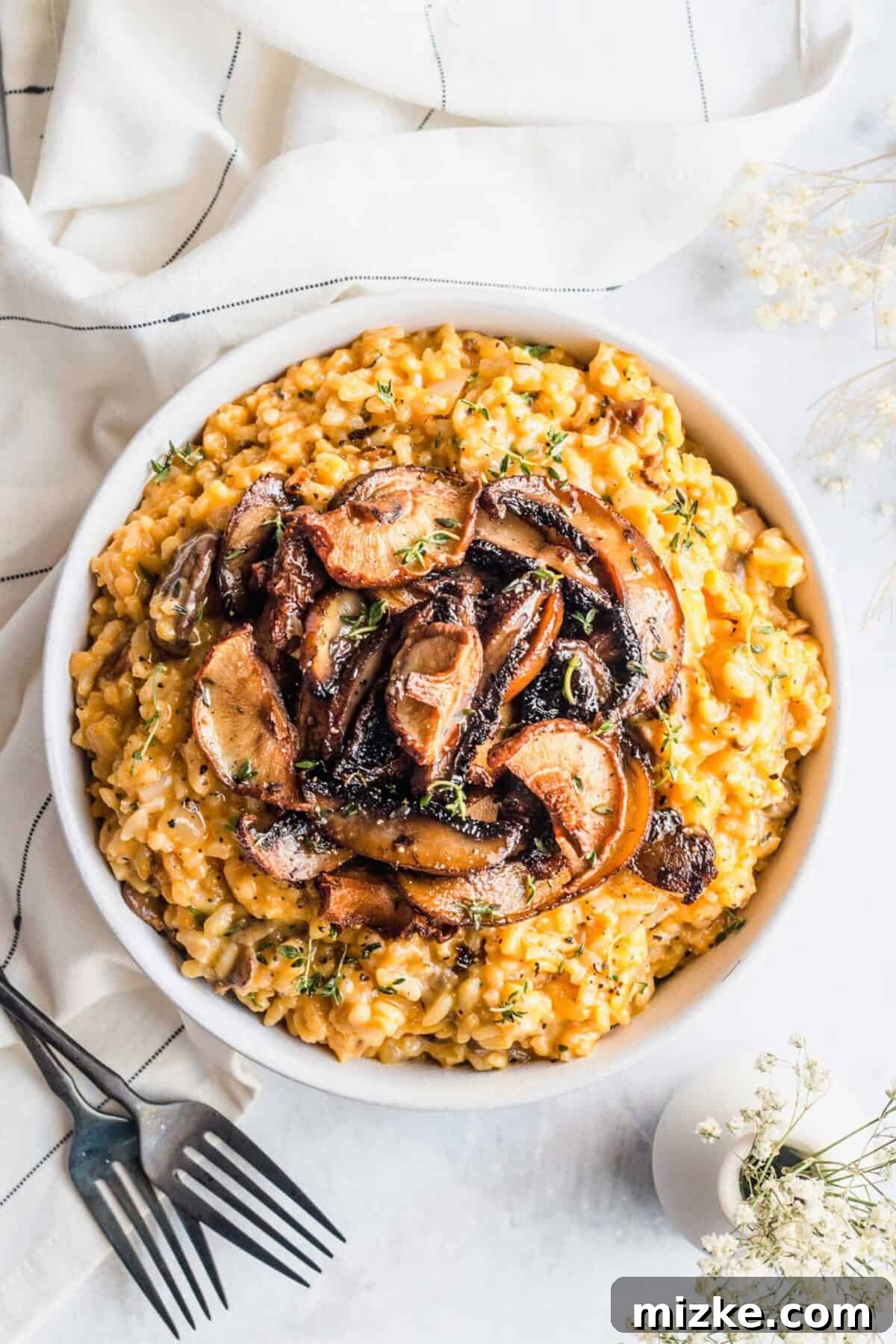
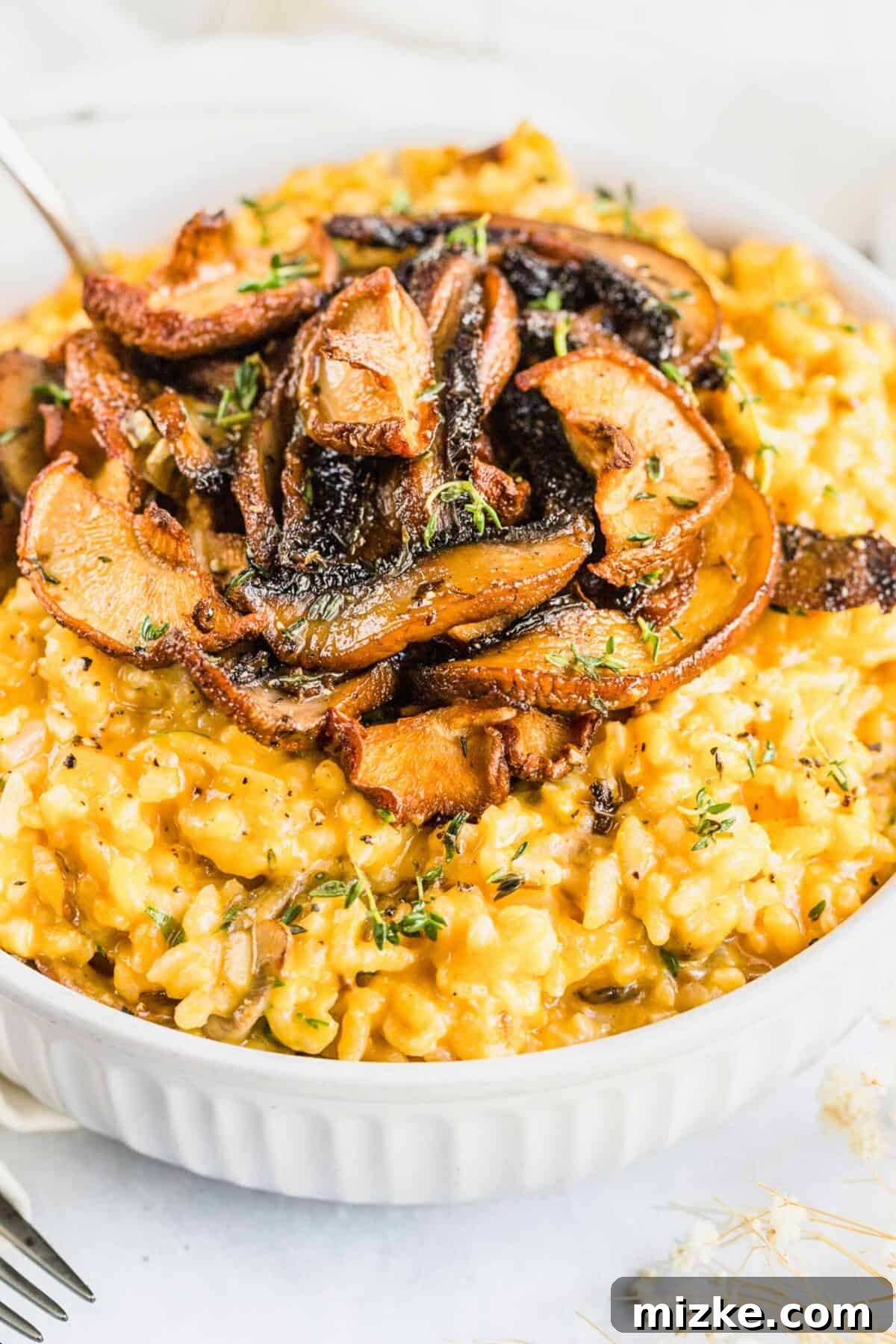
- Serve Immediately: Transfer the creamy **vegan mushroom risotto** to warm serving bowls. Garnish generously with the roasted shiitake and portobello mushrooms, a sprinkle of fresh thyme leaves, and a dash of freshly ground black pepper for an extra aromatic touch. Serve hot and savor this comforting, flavorful meal without delay, as risotto is best enjoyed fresh!

Expert Tips for the Best Vegan Mushroom Risotto
While the steps are clear, a few expert tips can make all the difference, transforming a good risotto into a truly unforgettable culinary experience. Pay attention to these nuances for optimal results with your **vegan mushroom risotto**.
- Season Thoughtfully and to Taste: The precise amount of salt required for this recipe can vary significantly based on the sodium content of your chosen vegetable broth. Some broths are naturally saltier than others. Therefore, it’s always best to season the dish towards the very end of the cooking process. Start with a conservative amount and then taste frequently, adjusting the salt levels until they are perfectly balanced and highlight all the other wonderful flavors. This ensures your risotto is never under or over-salted.
- Clean Mushrooms Carefully, Avoid Water: It’s a common instinct to wash vegetables under running water, but this is a critical mistake with mushrooms. Mushrooms are highly porous and will quickly absorb water like sponges, leading to a waterlogged texture that can compromise the dish’s integrity and dilute their natural flavors. Instead, use a dry pastry brush or a slightly damp paper towel to gently wipe away any dirt or debris from the mushroom caps and stems. This method ensures your mushrooms retain their ideal texture and flavor for the **creamy vegan mushroom risotto**.
- Opt for Full-Fat Dairy-Free Milk: To achieve the creamiest, richest, and most luxurious consistency in your vegan mushroom risotto, select a full-fat dairy-free milk. Full-fat coconut milk (unsweetened and unflavored) is often recommended for its higher fat content, which mimics dairy cream well, although it may impart a subtle coconut note. For a more neutral flavor, consider full-fat cashew milk or oat milk, which are also excellent for creating a velvety texture. For an even richer, healthier option, you might consider making your own homemade cashew milk, which blends beautifully into the risotto.
- Experiment with Mushroom Varieties: The recipe thoughtfully utilizes readily available shiitake, portobello, and cremini mushrooms, ensuring accessibility for most home cooks. However, don’t hesitate to get creative and explore other mushroom types! If you have access to a local farmer’s market or a specialty grocery store, incorporating wild mushrooms such as oyster, chanterelle, porcini, or even more exotic varieties can introduce even more complex and unique flavors, taking your risotto to an entirely new gourmet level. Each variety offers a different texture and taste profile, making the dish endlessly customizable.
- Don’t Skip the Lemon Juice: Adding a squeeze of fresh lemon juice at the end might seem like a small step, but it’s a game-changer for this **vegan mushroom risotto**. The acidity brightens the heavy, creamy flavors, making the whole dish taste fresher and more vibrant without overpowering the delicate mushroom and herb notes. It’s a crucial component for balancing the richness.
- Keep Broth Hot: As emphasized in the “Tricks” section, consistently using hot broth throughout the cooking process prevents temperature fluctuations that can shock the rice, disrupt the even release of starch, and ultimately lead to unevenly cooked grains or a longer cooking time.
Frequently Asked Questions About Vegan Mushroom Risotto
Here are answers to some common questions about preparing and enjoying this delightful **vegan mushroom risotto** dish, helping you troubleshoot and expand your culinary knowledge:
What do shiitake mushrooms taste like?
Shiitake mushrooms are renowned for their intensely earthy, woody, and slightly smoky flavor profile. They also possess a rich, savory quality often described as almost buttery, adding a deep umami foundation to any dish. Their unique taste is a key contributor to the complex flavors in this risotto, especially when roasted to bring out their deepest notes.
What do cremini mushrooms taste like?
Cremini mushrooms, often referred to as “baby bellas,” are a more mature version of the common white button mushroom. They offer a more robust and earthier flavor than their younger counterparts, with a pleasant, slightly nutty undertone. Their mild yet distinct taste makes them incredibly versatile and excellent at absorbing other flavors, such as the garlic and thyme in this recipe, making them perfect for sautéing.
What do portobello mushrooms taste like?
Portobello mushrooms are the fully mature stage of the cremini. They are characterized by their large caps and incredibly meaty texture and flavor. They are packed with umami, delivering a rich, savory taste that often draws comparisons to red meat like steak or venison. In this risotto, they provide a satisfyingly hearty bite and deep, savory notes, especially when roasted to concentrate their flavors.
Can I use another type of rice if I don’t have Arborio?
While Arborio rice is highly recommended for its specific starch content that creates the classic creamy texture, you can experiment with other short-grain, high-starch rice varieties like Carnaroli or Vialone Nano, which are also excellent for risotto due to their similar properties. Long-grain rice varieties like basmati or jasmine are not suitable, as they won’t release enough starch to achieve the desired creamy consistency and will result in a more separated, less cohesive dish.
Why use dairy-free milk instead of just more broth?
Dairy-free milk (especially full-fat versions like coconut or cashew milk) adds an extra layer of richness and creaminess that vegetable broth alone cannot provide. It helps create that luscious, velvety, and luxurious texture without adding any dairy, significantly enhancing the overall mouthfeel and decadent nature of the **vegan mushroom risotto**.
Can I add wine to vegan risotto?
Absolutely! A splash of dry white wine (like Pinot Grigio or Sauvignon Blanc) can be added after toasting the rice and before adding the broth. Allow it to fully evaporate and be absorbed by the rice, stirring constantly. This “sfumare” (to evaporate) step adds another layer of complexity, acidity, and aromatic depth to the dish, enhancing the overall flavor profile. Just ensure the wine you choose is vegan-friendly, as some wines use animal products in their fining processes.
Perfect Pairings: What to Serve with Vegan Mushroom Risotto
Given the richness and heartiness of this **vegan mushroom risotto**, it pairs beautifully with lighter, vegetable-focused side dishes that provide a fresh contrast and balance. As a quintessential Italian staple, it also complements other Italian-inspired accompaniments, particularly crusty bread for soaking up every last bit of creamy goodness. Here are some of my favorite suggestions to create a perfectly balanced and delightful meal:
- Pistachio Pesto Brussels Sprouts: The bright, nutty, and slightly bitter notes of roasted brussels sprouts, tossed in a vibrant pistachio pesto, offer a fantastic counterpoint to the risotto’s richness, adding freshness and crunch.
- Crisp Vegan Caesar Salad: A fresh, zesty Caesar salad, complete with a creamy plant-based dressing, crunchy croutons, and crisp romaine, provides a refreshing and tangy element that cuts through the savory richness of the risotto.
- Garlic Herb Roasted Carrots: Sweet, tender roasted carrots, infused with garlic and herbs (perhaps a sprinkle of vegan parmesan for extra flavor), add a touch of natural sweetness, vibrant color, and an appealing caramelized texture.
- Simple Summer Tomato Salad: If seasonal, a light tomato salad with juicy heirloom tomatoes, fresh basil, and a simple vinaigrette dressing offers a burst of acidity and freshness, especially lovely when the risotto is enjoyed outside of strict fall temperatures.
- Warm, Crusty Garlic Bread: You can’t go wrong with classic garlic bread! Use a good quality crusty loaf, slathered with a rich garlic and dairy-free butter spread (and optionally, vegan cheese) for the ultimate comforting accompaniment. It’s perfect for scooping up any lingering creamy sauce.
Storing and Reheating Your Vegan Mushroom Risotto
One of the great things about this **vegan mushroom risotto** is that it makes for fantastic leftovers, ensuring you can enjoy its comforting flavors for days to come. Proper storage and reheating techniques are essential to maintain its quality and creamy texture.
For refrigeration, allow the risotto to cool completely before transferring it to an airtight container. Stored this way, it will remain fresh and delicious in the fridge for up to 5 days. When you’re ready to reheat, the key is to restore its creamy texture. Risotto tends to thicken significantly in the fridge as the starch sets. To bring it back to life, add a generous splash of vegetable broth or dairy-free milk (about ¼ to ½ cup per serving, or more as needed) before gently warming it on the stovetop over low to medium-low heat, stirring frequently, or in the microwave. Stir continuously until it regains its desired loose, creamy consistency, adding more liquid if needed. Be careful not to overheat, which can make the rice mushy.
You can also freeze this recipe for longer storage, up to 3 months, in an airtight, freezer-safe container. However, it’s important to note that the texture of rice can become somewhat compromised during the freezing and thawing process. While it will still be flavorful, the risotto may not be as smooth and perfectly creamy as it was when freshly made; it might be slightly softer and less cohesive. To reheat from frozen, thaw in the refrigerator overnight, then follow the stovetop or microwave reheating instructions as for refrigerated leftovers, adding liquid as needed to restore creaminess.
More Irresistible Rice Recipes to Explore
If you’ve enjoyed the delightful experience of this **creamy vegan mushroom risotto**, you’ll surely love exploring other comforting and flavorful rice-based dishes. Rice is an incredibly versatile staple, capable of transforming into a myriad of culinary creations suitable for any meal or occasion. Here are some more of my favorite rice recipes that you might want to try next, offering a diverse range of flavors and preparations:
- Hearty Tex-Mex Chicken and Rice Casserole: A flavorful and filling baked casserole packed with vibrant Tex-Mex spices, tender chicken, and fluffy rice – perfect for a satisfying family meal with minimal fuss.
- Nourishing Vegan Pumpkin Wild Rice Soup: A warm and wholesome soup featuring the comforting autumnal flavors of pumpkin and the hearty, chewy texture of wild rice, entirely plant-based and incredibly satisfying.
- Spicy and Savory Kimchi Fried Rice: A quick and incredibly flavorful Korean-inspired dish that combines tangy, fermented kimchi with leftover rice, savory additions, and a kick of spice – ideal for a speedy weeknight dinner.
- Effortless Salmon Rice Bowls: Simple, healthy, and endlessly customizable bowls featuring perfectly cooked, flaky salmon over a bed of steamed rice, complemented by your favorite fresh vegetables and a delicious sauce.
- Classic Broccoli, Rice, and Chicken Casserole: A timeless American comfort food dish that combines tender pieces of chicken, fresh broccoli florets, and creamy rice in a comforting, cheesy (or vegan cheesy) baked casserole.
Print Recipe
3 from 1 vote
Creamy Vegan Mushroom Risotto
Julie Chiou
Ingredients
For the roasted mushrooms
- 8 ounces (227 g) shiitake mushrooms, sliced in half
- 8 ounces (227 g) portobello mushrooms, cut into 1/4″ slices
- 2 tablespoons olive oil
- 4 cloves grated garlic
- 2 sprigs thyme
- Salt and pepper, to taste
For the sautéed mushrooms
- 1-2 tablespoons olive oil, or dairy-free butter
- 2 cloves garlic, crushed
- 8 ounces (227 g) cremini mushrooms, sliced
- Salt and pepper, to taste
For the risotto
- 1-2 tablespoons olive oil, or dairy-free butter
- 1 medium onion, minced
- 4 cloves garlic, chopped
- 1 ½ cups (300 g) arborio rice
- 5 cups (1183 ml) vegetable broth
- 1 sprig thyme
- 1 cup (236 ml) dairy-free milk (unsweetened, unflavored)
- 2 teaspoons lemon juice
- ½ teaspoon black pepper
- 1 teaspoon fresh thyme leaves
- ¼ cup (15 g) chopped parsley
- Salt, to taste
Instructions
- Rub all of your mushrooms down with a damp towel to remove any dirt.
- Toss your shiitake and portobello mushrooms with the olive oil, grated garlic, thyme, and a pinch of salt and pepper. Lay them out on a sheet pan or in an air fryer insert. Roast at 400°F (204°C) for 15-20 minutes or air fry at 375°F (191°C) for 10-12 minutes, or until they are crispy on the outside and tender on the inside.
- Sauté the cremini mushrooms by heating the oil or butter in a heavy flat-bottomed pan over medium heat. Add the garlic and stir until fragrant. Add the sliced cremini mushrooms and sauté for 5-7 minutes, or until they are soft and any liquid released from them while cooking has evaporated. Season with salt and pepper. Remove the mushrooms from the pan and set aside.
- In the same pan, heat 1-2 tablespoons of oil or butter over medium heat. Once hot, add the onion and sauté for 5 minutes, or until the onion is fairly soft. Add the garlic and stir. Add the arborio rice and stir with a wooden or silicone spoon and toast the rice for about a minute. Lower the heat to medium-low, and continue stirring as you add in about ½ cup of the warm vegetable broth and the sprigs of thyme. Stir frequently and once the broth begins reducing, add another ½-1 cup of broth. Continue adding ½-1 cup of broth at a time, adding more broth once the rice has absorbed it and the rice just starts to stick to the bottom of the pan. This will take about 15-20 minutes total.
- Once you’ve used up your broth and the rice is al dente, remove the sprig of thyme and add the lemon juice, black pepper, thyme leaves, and ½ cup of the dairy-free milk. Stir and once the rice has absorbed most of the milk, add the remaining milk. Season with salt and stir in the sautéed cremini mushrooms and chopped parsley.
- Top your risotto with the roasted mushrooms, more black pepper, and fresh thyme, and enjoy immediately!
Nutrition
- Serving: 1 serving
- Calories: 454 kcal
- Carbohydrates: 76 g
- Protein: 10 g
- Fat: 13 g
- Saturated Fat: 2 g
- Polyunsaturated Fat: 2 g
- Monounsaturated Fat: 8 g
- Trans Fat: 0.003 g
- Sodium: 1220 mg
- Potassium: 606 mg
- Fiber: 5 g
- Sugar: 8 g
Disclaimers
This website provides approximate nutrition information for convenience and as a courtesy only. Nutrition information can vary for a variety of reasons. For the most precise nutritional data, use your preferred nutrition calculator based on the actual ingredients you used in the recipe.
The default measuring system for this website is US Customary. Unit conversions are provided for convenience and as a courtesy only. While we strive to provide accurate unit conversions, please be aware that there may be some discrepancies.