
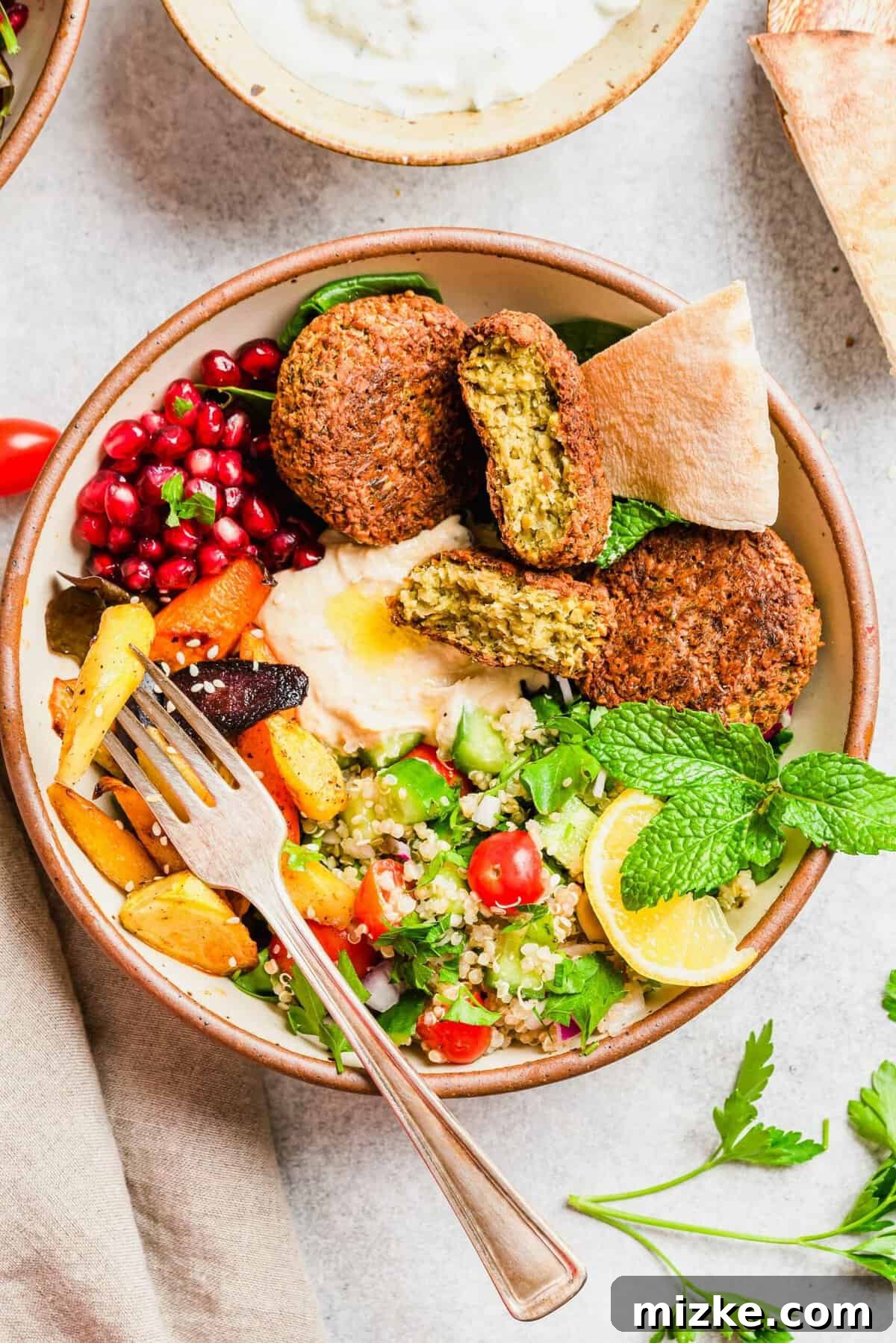
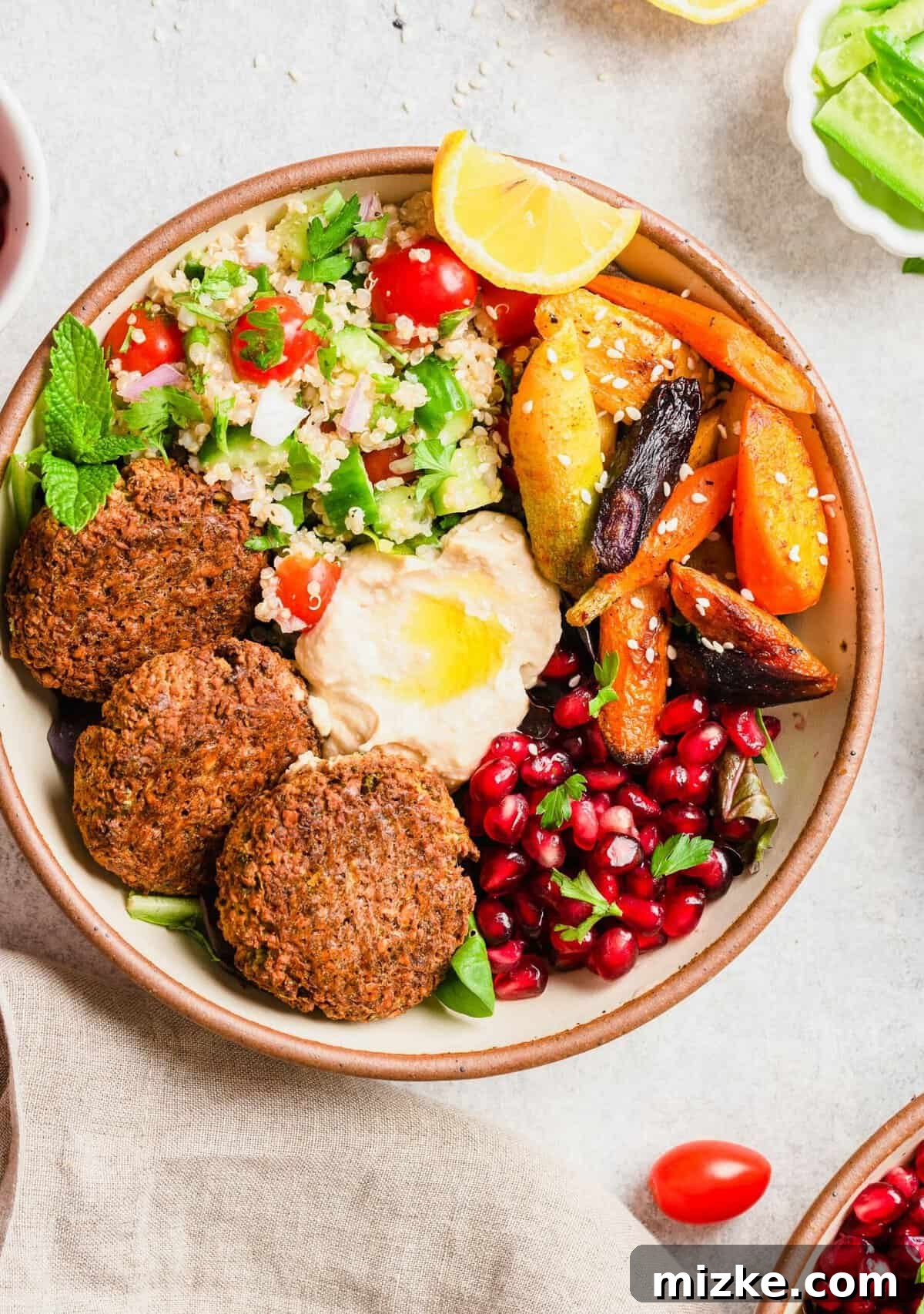
This Falafel Buddha Bowl is the epitome of a healthy, vibrant, and utterly delicious dinner, offering endless customization possibilities with your favorite Mediterranean ingredients. Featuring savory baked falafel and a refreshing quinoa tabbouleh, it delivers a satisfying burst of plant-based protein and fiber, making it an ideal choice for anyone seeking nutritious and flavorful meals.
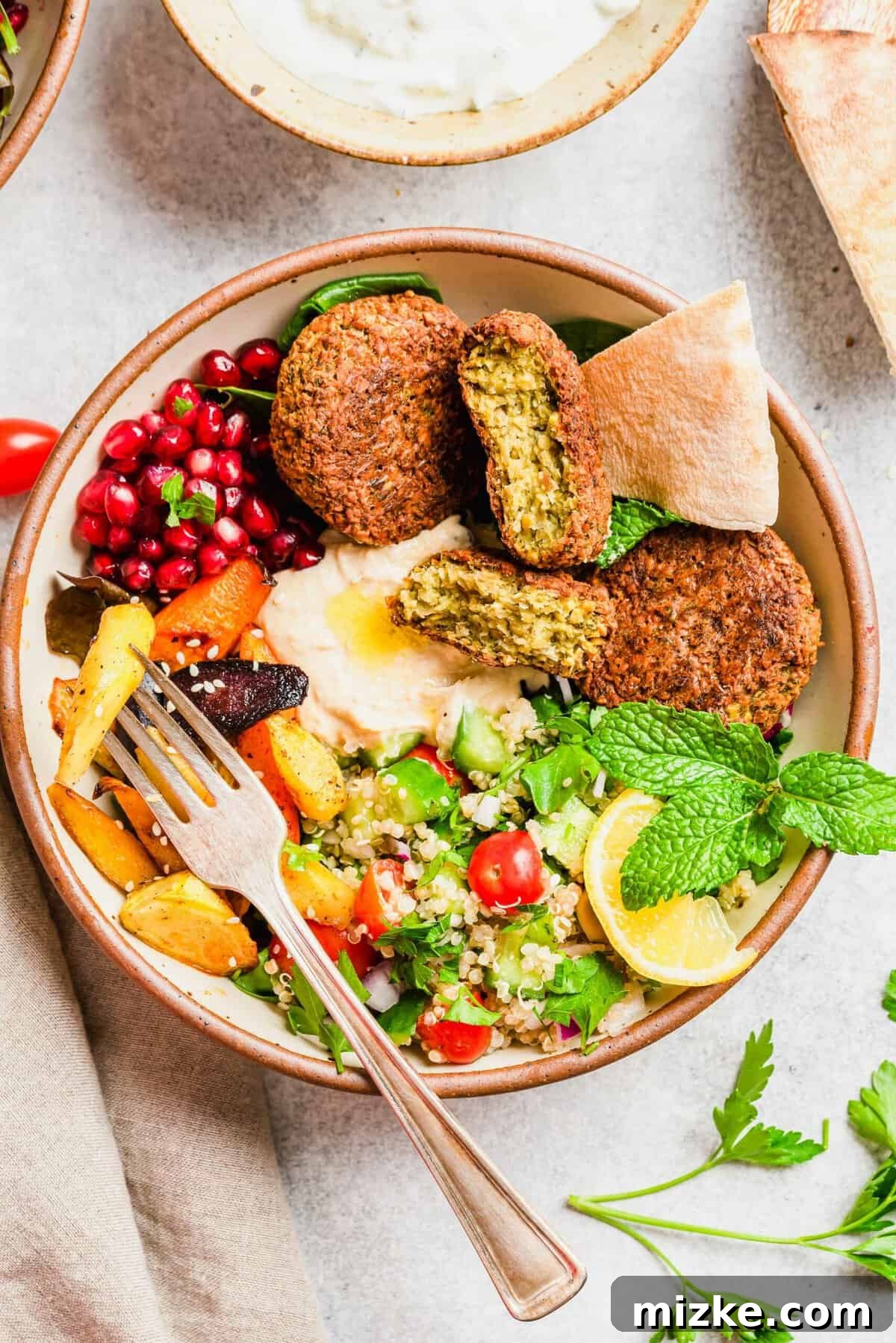
The Ultimate Falafel Buddha Bowl Experience
In today’s culinary landscape, customizable bowls have taken the world by storm. From popular build-your-own establishments to specialty Middle Eastern eateries, the concept of a balanced, personalized meal in a bowl resonates with many. This Falafel Buddha Bowl captures that essence, allowing you to create a restaurant-quality meal right in your own kitchen.
What sets our Falafel Buddha Bowl apart? Firstly, our falafel is baked, not fried, making it a significantly healthier option without sacrificing that authentic crispiness and rich flavor. This simple swap reduces oil content, offering a guilt-free indulgence. Secondly, it’s incredibly easy to prepare a large batch, transforming it into a fantastic solution for meal prepping throughout the week. Imagine having a wholesome, ready-to-eat lunch or dinner waiting for you, saving precious time and effort.
Beyond convenience, crafting this bowl at home is significantly more economical than dining out. You gain control over ingredient quality, portion sizes, and flavor profiles, ensuring every component meets your standards. This recipe is designed to be a versatile canvas; while we provide a blueprint with key ingredients like our protein-packed baked falafel and a vibrant quinoa tabbouleh, the beauty lies in making it uniquely yours with additional roasted vegetables, dips, and toppings.
Components That Make This Bowl Extraordinary
At the heart of these incredibly filling bowls are two stellar plant-based protein sources: the baked falafel and the quinoa tabbouleh. The falafel, traditionally a deep-fried chickpea fritter, gets a lighter, equally delicious transformation in the oven. The quinoa tabbouleh, a refreshing twist on the classic bulgur-based salad, adds not just protein but also a wealth of fresh herbs and vegetables for a burst of flavor and texture.
To further enhance the nutritional value and appeal, we incorporate spiced roasted carrots. These tender, caramelized carrots add a touch of sweetness and earthy notes that complement the robust flavors of the falafel and tabbouleh. However, the versatility of a Buddha bowl truly shines here. Feel free to substitute the carrots with other roasted vegetables you adore. Imagine the possibilities with roasted koginut squash for a creamy texture or roasted cauliflower for a nutty, savory bite. The goal is to build a bowl that excites your palate and nourishes your body.
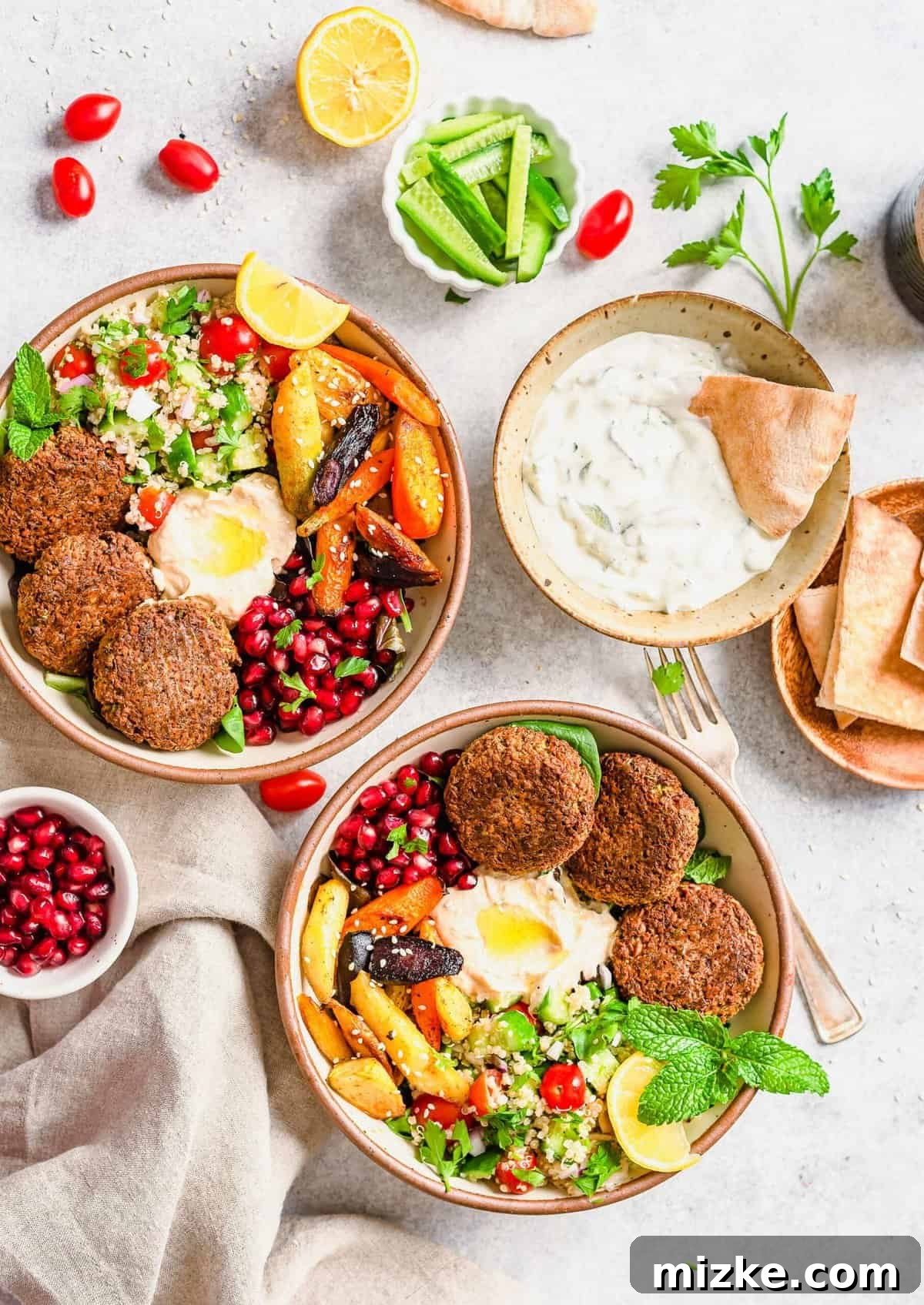
Finally, the “Buddha bowl” concept encourages layering various textures and flavors. After the main components, you’re invited to complete your masterpiece with an array of your favorite Mediterranean mix-ins. This could range from creamy hummus and cooling tzatziki to tangy pickled onions and crunchy pita chips. Each addition contributes to a dynamic and satisfying meal experience.
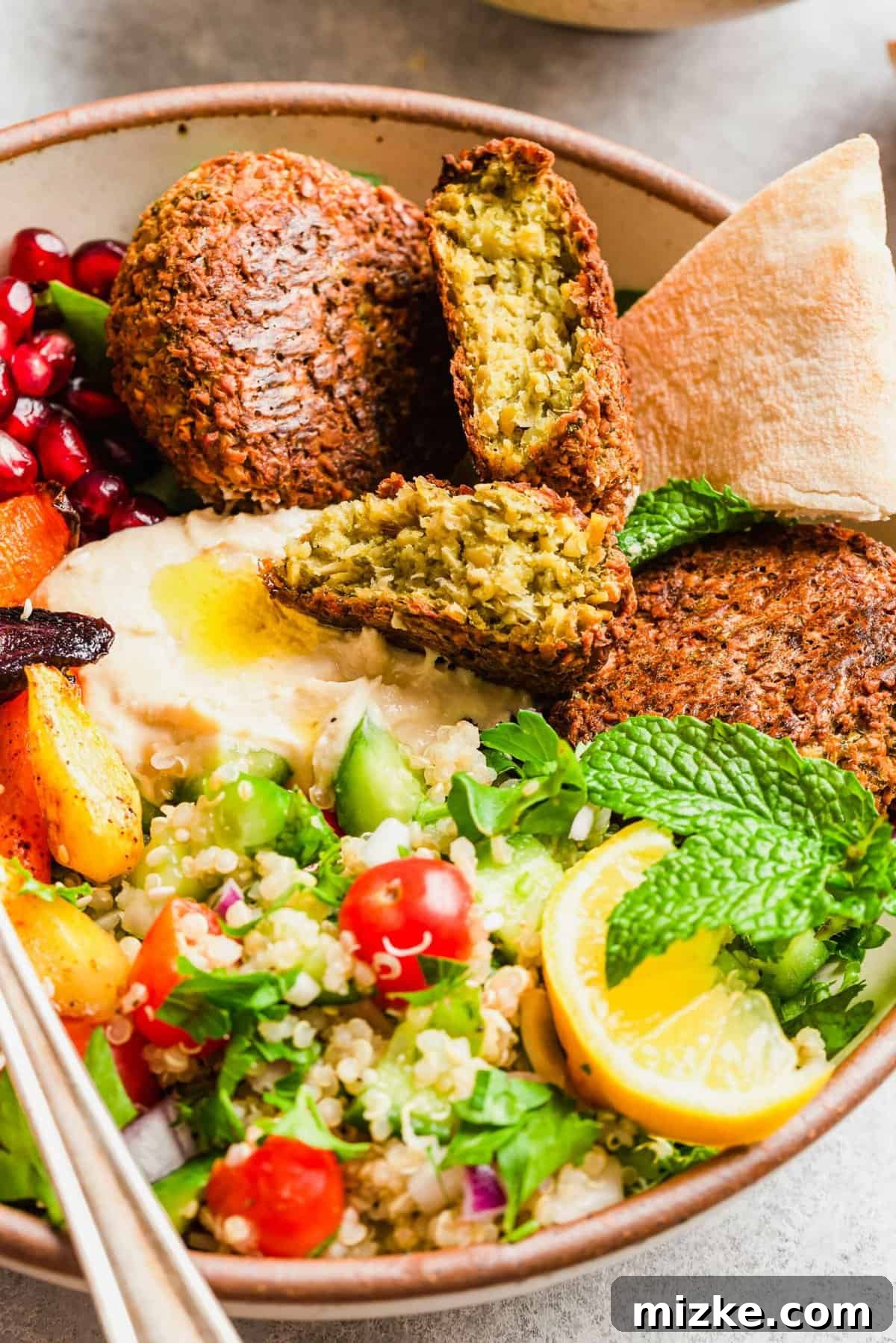
What You’ll Need for Your Mediterranean Masterpiece
Crafting this vibrant Falafel Buddha Bowl requires a selection of fresh, wholesome ingredients. Below, you’ll find a detailed list for each component, ensuring you have everything on hand to bring this delicious meal to life. Remember, ingredient quality significantly impacts the final taste, so opt for the freshest produce possible.
For the Healthier Baked Falafel:
- Dry Chickpeas: Absolutely essential. These must be soaked overnight in water. Do not substitute with canned chickpeas; dry chickpeas are the secret to achieving that perfect falafel texture and preventing a mushy result.
- Red Onion: Adds a pungent, sweet kick.
- Garlic: For an aromatic depth of flavor.
- Ground Cumin: A cornerstone spice, providing warmth and an authentic Middle Eastern taste.
- Paprika: Offers a mild, sweet peppery note and a beautiful color.
- Ground Coriander: Earthy and citrusy, a perfect complement to cumin.
- Cilantro: Fresh herbs are vital for falafel’s signature flavor.
- Parsley: Balances the cilantro with its clean, slightly peppery taste.
- Salt: To season and enhance all the flavors.
- Olive Oil: Used for drizzling the falafel before baking to ensure crispiness.
For the Zesty Quinoa Tabbouleh:
- Quinoa: You’ll need to cook this first. It’s a gluten-free grain, rich in protein, offering a fantastic texture to the tabbouleh.
- Garlic: Finely minced for a subtle zing in the dressing.
- Lemon Juice: Freshly squeezed for brightness and acidity, essential for tabbouleh.
- Extra-Virgin Olive Oil: The base for a simple yet flavorful dressing.
- Persian Cucumbers: Known for their crisp texture and mild flavor. If unavailable, English cucumbers make a good substitute.
- Red Onion: Finely chopped for a slight bite and color.
- Cherry Tomatoes: Halved for bursts of juicy sweetness.
- Parsley: A generous amount for the traditional herbaceous flavor of tabbouleh.
- Mint: Fresh mint leaves are crucial for that signature cooling, refreshing note.
- Salt and Black Pepper: To taste, balancing the fresh ingredients.
For the Spiced Roasted Carrots:
- Rainbow Carrots: While orange carrots work perfectly fine, rainbow carrots add an appealing visual element to your bowl.
- Olive Oil: To help them caramelize and absorb the spices.
- Salt: Enhances the natural sweetness of the carrots.
- Paprika: For a touch of color and a warm, mild spice.
- Black Pepper: A classic seasoning to round out the flavors.
For Buddha Bowl Assembly & Optional Toppings (Choose Any or All to Customize):
- Hummus: Store-bought for convenience, or elevate your bowl with a homemade option like this vibrant beet hummus.
- Tzatziki: A cooling, creamy yogurt-cucumber sauce. Pick up a good quality store-bought version, or try your hand at homemade tzatziki.
- Greens: A bed of fresh greens like baby arugula, tender kale, or a spring mix adds essential vitamins and a fresh base.
- Pomegranate Seeds: For a delightful pop of juicy, tart sweetness and jewel-like color.
- Avocado: Creamy, healthy fats to add richness and texture.
- Pita Chips: For an irresistible crunch. Consider homemade seasoned pita chips.
- Pickled Onions: Adds a tangy, bright counterpoint to the savory elements. Easily made at home or found in specialty stores.
How to Master Cooking Quinoa
If quinoa seems intimidating, fear not! It’s an incredibly simple grain to prepare, and mastering it opens up a world of healthy meal possibilities. Here’s a straightforward guide:
- Rinse Thoroughly: The first crucial step is to rinse your quinoa. Place the dry quinoa in a fine-mesh strainer and rinse it thoroughly under cold running water for about 30 seconds to a minute. Quinoa has a natural coating called saponin, which can impart a bitter, soapy taste if not rinsed off.
- Cook to Perfection: Transfer the rinsed quinoa to a pot. For every one part quinoa, add two parts water (or vegetable broth for extra flavor). Bring the mixture to a boil over medium-high heat. Once boiling, reduce the heat to the lowest setting, cover the pot tightly, and let it simmer gently for approximately 15 minutes, or until all the water has been absorbed.
- Fluff and Rest: Once the cooking time is up, remove the pot from the heat but keep the lid on. Let the quinoa rest, undisturbed, for another 5 minutes. This crucial resting period allows the quinoa to steam in its own heat, absorbing any remaining moisture and resulting in perfectly fluffy, separate grains. After resting, remove the lid and gently fluff the quinoa with a fork before serving.
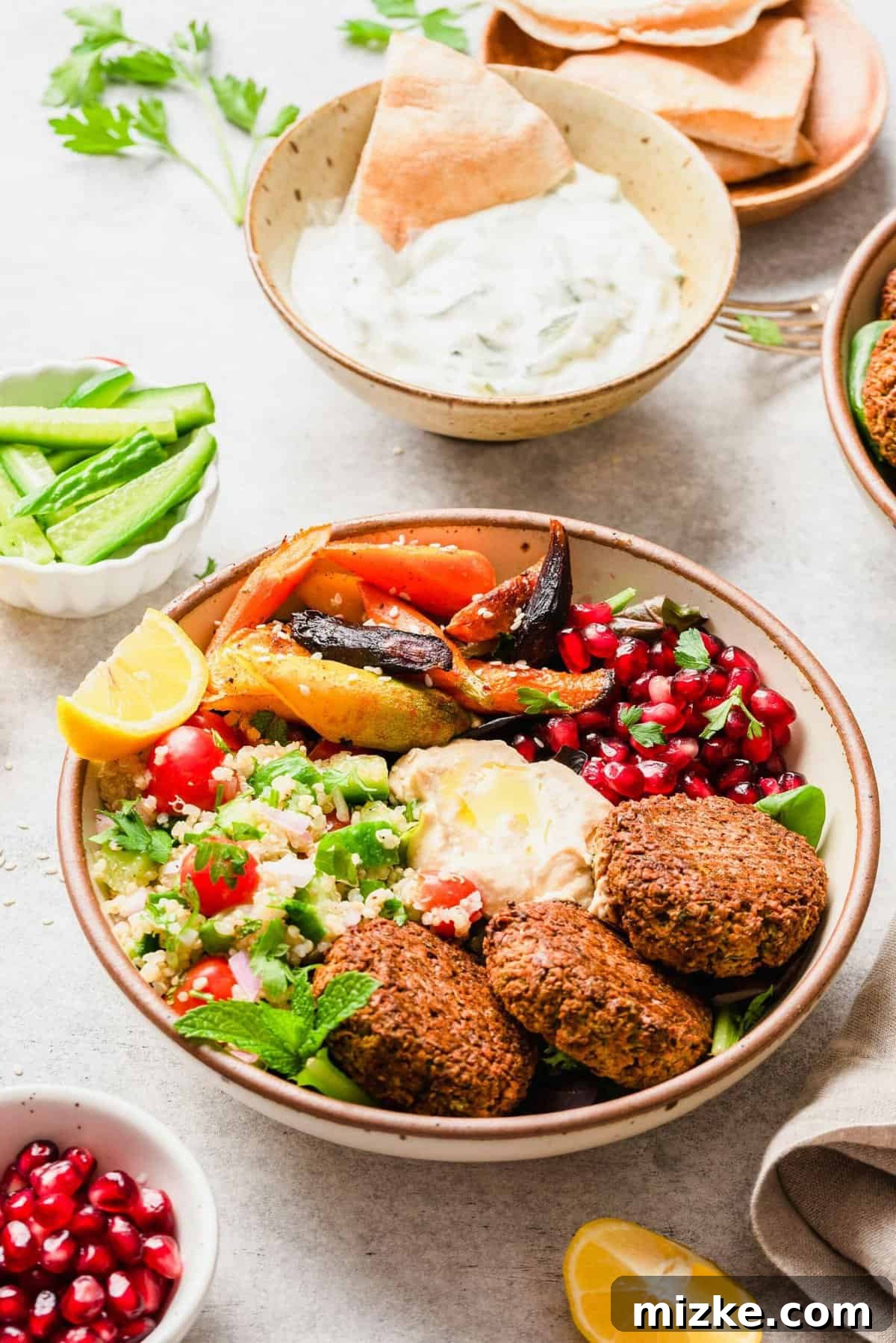
How to Make Falafel Buddha Bowls: Step-by-Step Guide
One of the many advantages of this recipe is its meal-prep friendliness. You can prepare the falafel, roasted carrots, and quinoa tabbouleh up to 3 days in advance, storing them separately in the fridge. This makes assembly quick and easy on busy weeknights.
Preparing the Healthier Baked Falafel:
- Preheat Oven & Prepare Baking Sheet: Begin by preheating your oven to 400ºF (200ºC). Line a large rimmed baking sheet with parchment paper to prevent sticking and ensure easy cleanup.
- Create the Falafel Mixture: In a food processor, combine the soaked and drained dry chickpeas, red onion, garlic, ground cumin, paprika, ground coriander, fresh cilantro, fresh parsley, and a pinch of salt. Pulse the ingredients until a coarse mixture forms. It’s important not to over-process; you want a texture that holds together but isn’t a fine paste. The slight coarseness gives the falafel its characteristic bite.
- Shape the Falafel: Using about 2 tablespoons of the mixture for each, roll and gently flatten into small balls or disc-shaped patties. Place them in a single layer on the prepared baking sheet.
- Bake to Perfection: Drizzle the shaped falafel generously with olive oil. Bake for 25 to 30 minutes, ensuring to flip each falafel halfway through the cooking time. This ensures even browning and a crispy exterior on all sides. The falafel should be golden brown and firm to the touch when done.
Assembling the Vibrant Quinoa Tabbouleh:
- Combine Tabbouleh Ingredients: In a large mixing bowl, gently combine the cooked and cooled quinoa, halved cherry tomatoes, finely chopped red onion, diced Persian cucumbers, a generous amount of chopped fresh parsley, and chopped fresh mint.
- Whisk the Dressing: In a separate small bowl, whisk together the extra-virgin olive oil, freshly minced garlic, fresh lemon juice, salt, and black pepper. Taste and adjust seasonings as needed.
- Dress and Mix: Pour the prepared dressing over the quinoa and vegetable mixture. Toss gently to ensure all ingredients are well coated. Set aside to allow the flavors to meld.
Roasting the Flavorful Carrots:
- Season the Carrots: Place the rainbow carrots (cut into chunks) on a separate baking sheet. Drizzle generously with olive oil. Season with salt, paprika, and black pepper, tossing to ensure the carrots are evenly coated.
- Roast Until Tender: Place the carrots in the preheated oven alongside the falafel. Roast for approximately 20 minutes, or until they are beautifully browned, tender-crisp, and slightly caramelized. Their natural sweetness will intensify with roasting.
Building Your Ultimate Buddha Bowl:
Once all your components are prepared, it’s time for the creative part – assembly! This is where your Buddha bowl truly comes to life:
- Start with a Base: Begin by filling the bottom of your bowls with a generous bed of fresh greens (baby arugula, kale, or spring mix).
- Add Core Components: Next, add a portion of the quinoa tabbouleh, followed by a few pieces of your perfectly baked falafel and the spiced roasted carrots.
- Layer with Toppings: Now, get creative with your chosen optional toppings! Swirl in some hummus and tzatziki, sprinkle with bright pomegranate seeds, add creamy avocado slices, and finish with a handful of crunchy pita chips or tangy pickled onions.
- Serve Immediately: Serve your beautifully assembled Falafel Buddha Bowls and enjoy the harmonious blend of flavors and textures!
Pro Tips for Falafel Buddha Bowl Perfection
Enhance your Falafel Buddha Bowl experience with these insightful tips and tricks, designed to make your cooking smoother and your meals even more enjoyable.
Mastering Meal Prep for a Week of Deliciousness:
- Component-Based Prep: The key to successful Buddha bowl meal prep is to prepare and cook all individual components (falafel, quinoa, tabbouleh vegetables, roasted carrots) separately.
- Smart Storage: Store each cooked component in airtight containers in the refrigerator. This method helps maintain freshness and texture. For example, keep the falafel separate to prevent it from getting soggy, and store the tabbouleh dressing separately until just before serving to keep the vegetables crisp.
- Assemble Just Before Serving: To ensure the freshest and most appealing bowl, assemble your Falafel Buddha Bowl right before you’re ready to eat. This prevents greens from wilting, falafel from softening, and tabbouleh from becoming watery.
Embracing Smart Shortcuts When Time is Tight:
- Store-Bought Falafel: If you’re short on time, don’t hesitate to use high-quality store-bought falafel. Look for brands in the refrigerated or frozen section of your grocery store that offer baked or pan-fried options. A quick oven reheat will make them ready for your bowl.
- Pre-Made Tabbouleh: Many larger grocery stores or Middle Eastern delis now offer fresh tabbouleh. While homemade is always a treat, a good quality pre-made tabbouleh can be a great time-saver. Just ensure it has a vibrant, fresh appearance.
- Pre-Chopped Vegetables: For ultimate convenience, grab pre-chopped onions, carrots, or even pre-cooked quinoa from the produce section of your market.
Quick & Easy Pickled Onions: A Zesty Addition:
- Instant Flavor Boost: Pickled onions add a fantastic tangy crunch that cuts through the richness of the falafel and hummus. You can buy them, or make them quickly at home.
- Simple Method: Thinly slice half a red onion. Place the slices in a small bowl. Squeeze the juice of one lemon over the onions, ensuring they are mostly submerged. Season with a pinch of salt and black pepper. Stir well and let them sit for at least 5-10 minutes. The acidity of the lemon juice will soften the onions and imbue them with a delightful tang. They will turn a beautiful pink hue, ready to adorn your bowl.
Customizing Your Bowl Beyond Imagination:
- Vary Your Grains: While quinoa is fantastic, feel free to swap it for couscous, bulgur, brown rice, or even farro for different textures and nutritional profiles.
- Explore More Roasted Veggies: Don’t limit yourself to carrots! Bell peppers, zucchini, eggplant, sweet potatoes, or broccoli florets all roast beautifully and add variety. Toss them with similar spices (paprika, cumin, salt, pepper) and olive oil before roasting.
- Diverse Dressings: Beyond the simple lemon-olive oil dressing for the tabbouleh, consider a tahini-based dressing, a spicy sriracha-tahini, or even a creamy avocado-lime dressing to drizzle over your entire bowl.
- Additional Protein Boosts: For those who desire more protein, crumbled feta cheese, grilled halloumi, or even a fried egg can be delicious additions.
How to Store and Reheat Leftovers
Proper storage is crucial for enjoying your Falafel Buddha Bowls throughout the week. To maintain maximum freshness and prevent sogginess, we highly recommend storing each component separately in airtight containers in the refrigerator. When stored this way, leftovers will remain delicious for up to 3 days.
When you’re ready to enjoy your meal:
- Falafel: For the best texture, reheat falafel in the microwave for a minute or two until warmed through, or for a crispier result, warm them in a 350ºF (175ºC) oven for about 5-7 minutes.
- Roasted Carrots: The roasted carrots are versatile! They can be enjoyed chilled straight from the fridge, at room temperature, or gently reheated in the microwave for a minute or two.
- Quinoa Tabbouleh: The tabbouleh is best served chilled or at room temperature. Avoid reheating it as this can compromise the freshness of the herbs and vegetables.
- Greens and Toppings: Keep fresh greens and delicate toppings like avocado separate until just before serving to maintain their freshness and crispness.
Can This Recipe Be Frozen?
Yes, some components of this Falafel Buddha Bowl are freezer-friendly, allowing you to extend their shelf life and prepare even further in advance. You can freeze both the baked falafel and the roasted carrots for up to 3 months. Store them in airtight, freezer-safe containers or bags, ensuring they are completely cooled before freezing to prevent ice crystal formation.
However, the quinoa tabbouleh, with its fresh herbs and vegetables, will not freeze well. The freezing and thawing process can cause the vegetables to become mushy and the herbs to lose their vibrant texture and flavor. It’s best to prepare the tabbouleh fresh or only store it in the refrigerator for the recommended 3 days.
To reheat frozen components:
- Falafel and Carrots: Thaw the frozen falafel and roasted carrots overnight in the refrigerator. Once thawed, you can reheat them using the methods described above – microwave for quick warming or oven for restored crispiness.
Falafel Buddha Bowl
Julie Chiou
These Falafel Buddha Bowls are a satisfying dinner full of plant-based protein, customizable, and perfect for meal prep.
20 minutes
30 minutes
50 minutes
4 servings
Equipment
- Food processor
- Large rimmed baking sheet
Ingredients
For the baked falafel:
- 1 cup (164 g) chickpeas, uncooked, soaked overnight in water
- ½ red onion
- 3 cloves garlic
- 1 teaspoon cumin powder
- 1 teaspoon paprika
- 1 teaspoon ground coriander
- 1 cup (16 g) chopped cilantro
- 1 cup (60 g) chopped parsley
- Salt to taste
- 2 tablespoons olive oil
For the quinoa tabbouleh:
- 1 cup (185 g) cooked quinoa
- 1 cup (149 g) cherry tomatoes, halved
- ¼ cup (40 g) red onion, chopped
- 2 Persian cucumbers, diced
- ½ cup (30 g) chopped parsley
- ¼ cup (11 g) chopped mint
- 2 tablespoons extra virgin olive oil
- Salt and black pepper, to taste
- 1 clove garlic, minced
- 2 tablespoons lemon juice
For the roasted carrots:
- 1 pound (454 g) rainbow carrots, cut into chunks
- 1 tablespoon olive oil
- Salt, to taste
- ¼ teaspoon black pepper
- ½ teaspoon paprika
Optional toppings:
- Hummus of your choice
- Tzatziki
- Greens, baby arugula, kale, spring mix, etc.
- Pomegranate seeds
- Avocado
- Pita chips
- Pickled onions
Instructions
- Preheat the oven to 400°F (204°C).
- To make the falafel, add soaked chickpeas, ½ red onion, 3 cloves garlic, 1 tsp cumin powder, 1 tsp paprika, 1 tsp ground coriander, 1 cup chopped cilantro, 1 cup chopped parsley, and salt to taste into a food processor. Pulse until well combined into a coarse mixture (avoid a fine paste).
- Take 2 tablespoons of the mixture at a time and shape it into patties or balls. Place them on a parchment-lined baking tray and drizzle with 2 tablespoons olive oil.
- Bake the falafel at 400°F (204°C) for 25 to 30 minutes, flipping halfway through, until golden brown and crispy.
- While the falafel bakes, prepare the quinoa tabbouleh. In a bowl, combine 1 cup cooked quinoa, 1 cup halved cherry tomatoes, ¼ cup chopped red onion, 2 diced Persian cucumbers, ½ cup chopped parsley, and ¼ cup chopped mint.
- Make the dressing by whisking together 2 tbsp extra virgin olive oil, salt and black pepper to taste, 1 minced clove garlic, and 2 tbsp lemon juice.
- Pour the dressing over the quinoa tabbouleh mixture and stir to combine. Set aside.
- For the roasted carrots, place 1 pound of chunked rainbow carrots on a baking tray. Drizzle with 1 tbsp olive oil, then season with salt, ½ tsp paprika, and ¼ tsp black pepper.
- Roast the carrots in the oven (you can place them alongside the falafel) at 400°F (204°C) for about 20 minutes, or until browned and tender. Set aside.
- To assemble the Buddha bowl: Fill your bowl with a generous portion of greens of your choice.
- Layer in the quinoa tabbouleh, baked falafels, roasted carrots, and any desired optional toppings like hummus, tzatziki, pomegranate seeds, avocado, pita chips, or pickled onions. Serve immediately.
Notes
Leftover Falafel Buddha Bowls can be stored in the fridge for up to 3 days. For best results and freshness, it is highly recommended to store each component separately and assemble just before serving.
Nutrition
Calories: 448kcal,
Carbohydrates: 60g,
Protein: 15g,
Fat: 19g,
Saturated Fat: 2g,
Polyunsaturated Fat: 4g,
Monounsaturated Fat: 11g,
Sodium: 116mg,
Potassium: 1236mg,
Fiber: 15g,
Sugar: 14g
This website provides approximate nutrition information for convenience and as a courtesy only. Nutrition information can vary for a variety of reasons. For the most precise nutritional data use your preferred nutrition calculator based on the actual ingredients you used in the recipe.
The default measuring system for this website is US Customary. Unit conversions are provided for convenience and as a courtesy only. While we strive to provide accurate unit conversions, please be aware that there may be some discrepancies.
Enjoy crafting and savoring your delicious, healthy, and entirely customizable Falafel Buddha Bowls! They are a testament to how flavorful and satisfying plant-based meals can be, offering endless possibilities for a truly personalized dining experience.