
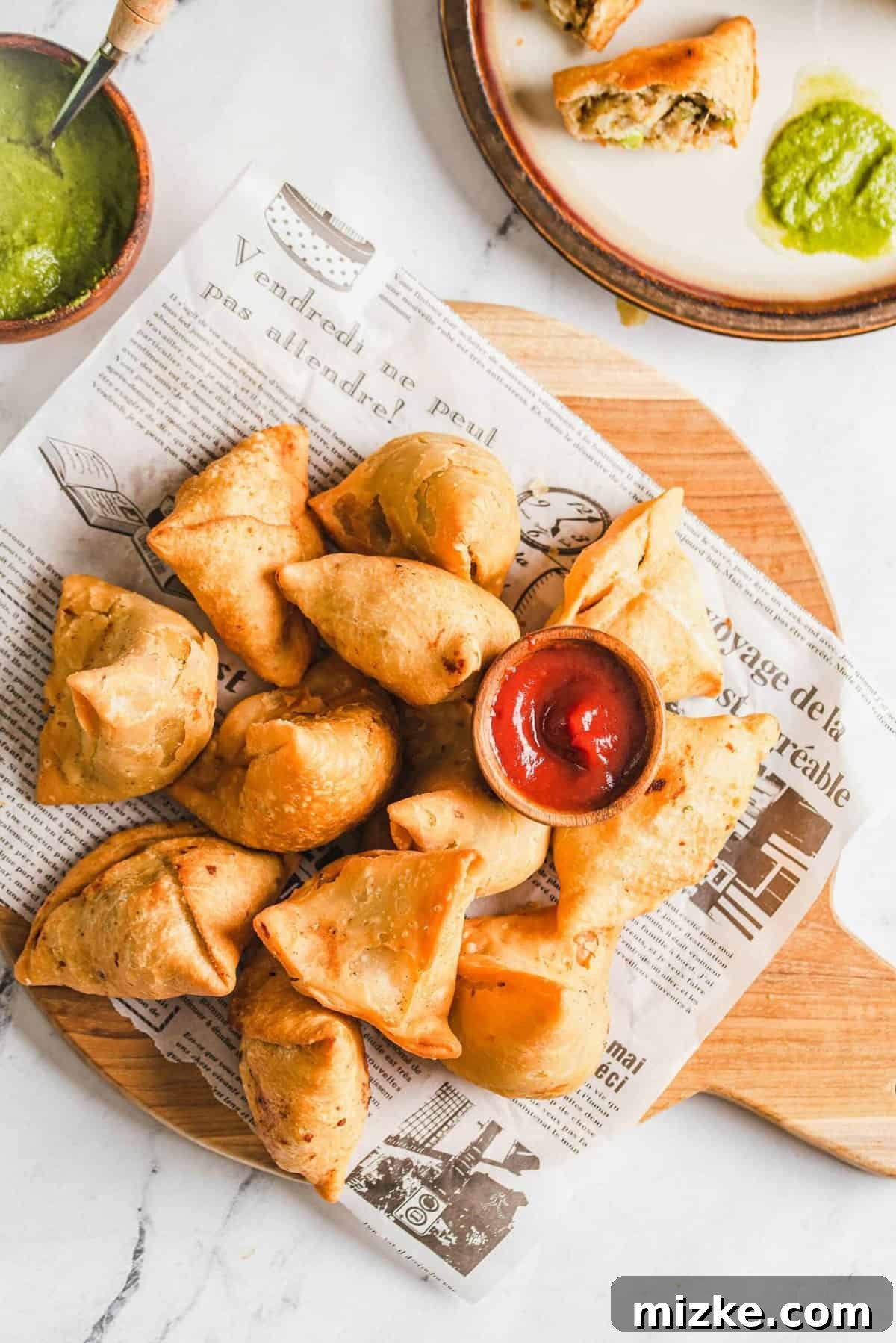
Authentic Homemade Vegetable Samosas: Your Guide to Perfect Indian Appetizers
There’s an undeniable charm to Indian cuisine, a symphony of aromas and flavors that beckons you to explore. From the rich, fragrant curries and aromatic biryani to the soft, chewy naan and refreshing lassi, every dish offers a unique experience. Yet, for many, the appetizers are often the true stars of any Indian meal. Among this delightful array, the humble samosa stands out—a golden, crispy pastry parcel concealing a warmly spiced filling. These authentic vegetable samosas capture that irresistible essence, bringing the magic of your favorite Indian restaurant right into your kitchen.
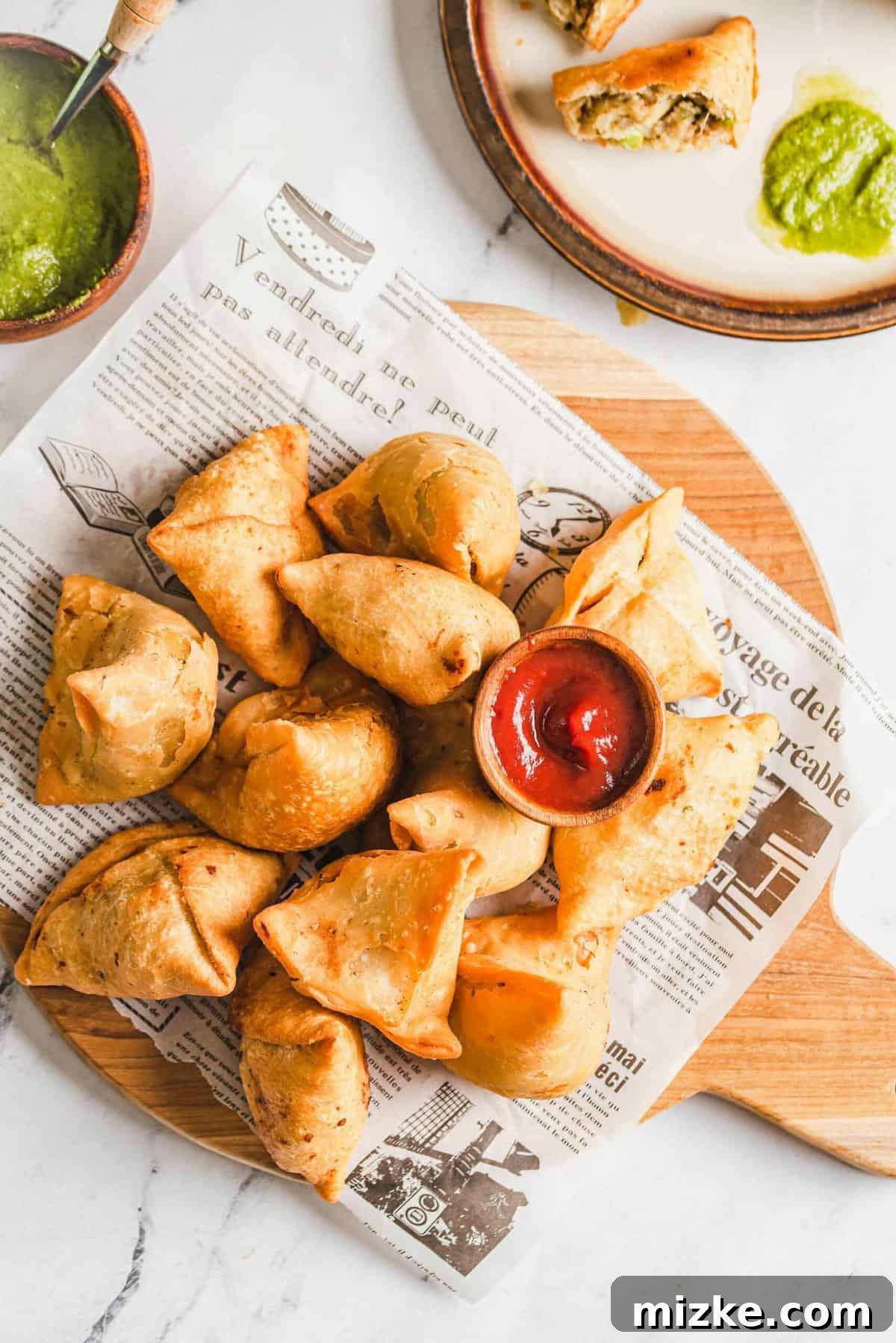
Embarking on the journey of making samosas from scratch might seem like a culinary adventure, akin to baking your own bread or crafting flour tortillas. It demands a bit of time and patience, but the reward is immense: a profound sense of accomplishment and, of course, a batch of incredibly delicious homemade samosas. The satisfaction derived from creating these flaky, savory pastries by hand is truly unparalleled. While you’ll need to source a few specialty ingredients from your local Indian grocery store or online retailers like Amazon, these staples will enable you to whip up these incredible vegetable samosas time and again.
And trust us, you’ll want to make them often! The combination of a fluffy potato and pea filling, infused with a medley of aromatic Indian spices, encased in that signature crispy, flaky samosa exterior, is simply divine. Each bite offers a harmonious blend of textures and tastes, making them so addictive that you might just consider serving them as a main course.
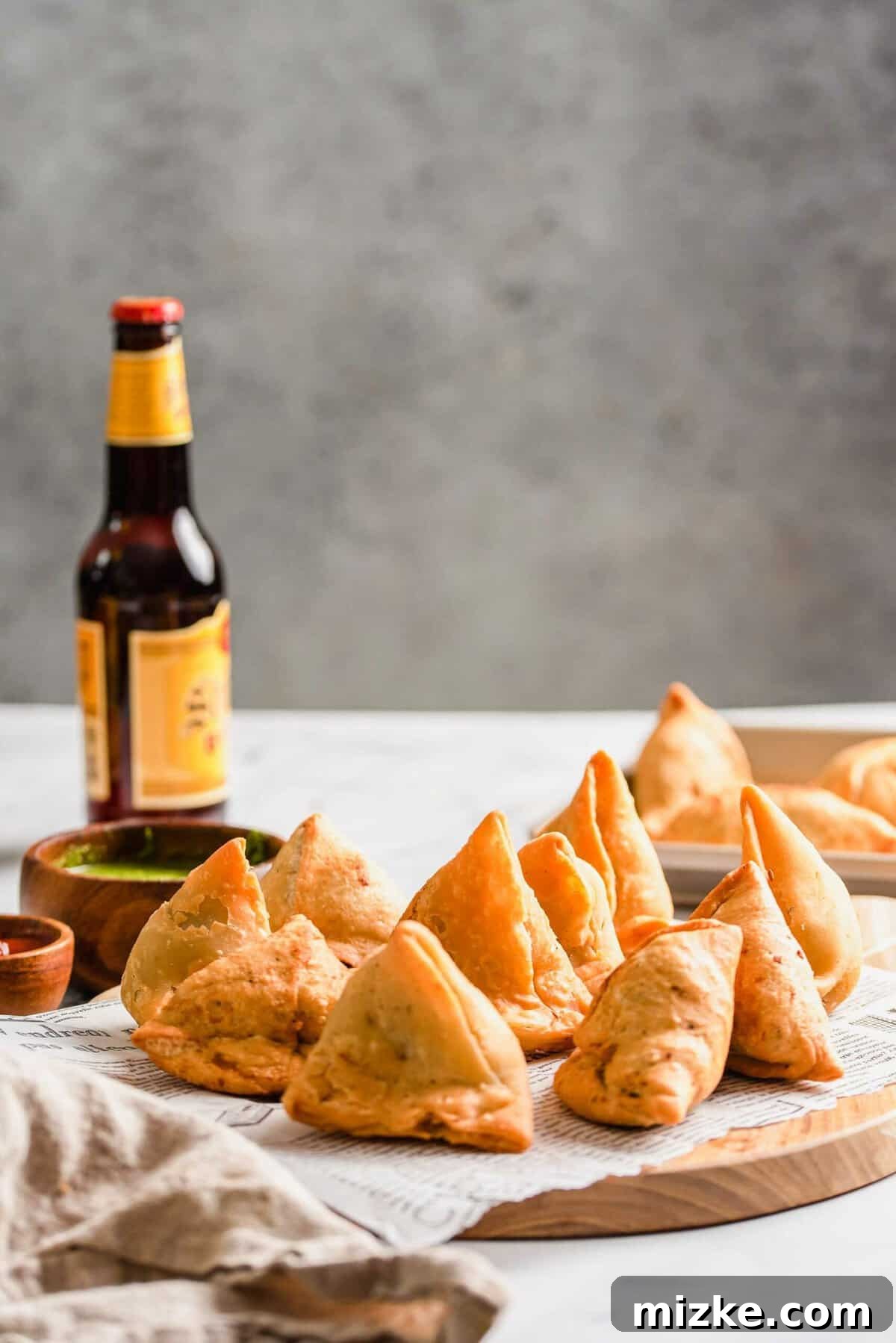
Key Ingredients for Authentic Samosas
Crafting these delectable vegetable samosas requires a harmonious blend of common pantry items and a few distinct Indian spices. A trip to an Indian grocery store will elevate your samosas from good to truly exceptional. Here’s a breakdown of the essential components:
For the Flaky Samosa Dough:
- All-Purpose Flour: The foundation of our dough, providing structure and a tender crumb.
- Carom Seeds (Ajwain): These tiny seeds boast a pungent, unique flavor often described as a cross between oregano and anise. They impart a distinctive aroma and aid in digestion, making them crucial for authentic samosa dough.
- Salt: Enhances the flavor of the dough.
- Oil or Ghee: Ghee (clarified butter) lends a more authentic and richer flavor, contributing to the dough’s flakiness. However, a neutral-flavored oil works perfectly well as a substitute, especially for a vegan option.
- Water: To bind the ingredients and form a stiff dough.
For the Aromatic Potato and Pea Filling:
- Potatoes: Russet potatoes are ideal due to their starchy texture, which becomes fluffy when boiled and holds the spices beautifully.
- Green Peas: Frozen green peas are recommended for their vibrant color and fresh taste, though canned peas can be used in a pinch.
- Cumin Seeds: A fundamental spice in Indian cooking, offering warm, earthy notes.
- Fennel Seeds: Provides a slightly sweet, aniselike flavor that complements the other spices.
- Coriander Seeds: When crushed, these release a citrusy, slightly sweet, and earthy aroma.
- Kasuri Methi (Dried Fenugreek Leaves): Also known as kasoori methi, these dried leaves have a slightly bitter yet incredibly aromatic quality, adding depth and a signature flavor to the filling.
- Fresh Ginger: Minced ginger provides a fresh, pungent kick.
- Green Chilies: Adjust the quantity based on your preferred spice level. Authentic Indian chilies like Hari Mirch (e.g., Kashmiri, Guntur) are traditional, but a jalapeño pepper can be a suitable alternative.
- Black Pepper Powder: Adds a subtle heat and pungent aroma.
- Chaat Masala: A tangy, savory spice blend typically featuring dried mango powder (amchur), dried pomegranate seeds, and black salt. If unavailable, amchur can be used as a direct substitute.
- Cilantro Leaves: Freshly chopped cilantro brightens the filling with its refreshing, herbaceous notes.
- Oil: For sautéing the filling ingredients.
- Salt: To season the filling to perfection.
- Vegetable or Canola Oil: Essential for deep-frying the samosas to achieve that coveted golden, crispy exterior.
Are These Samosas Vegan and Dairy-Free?
Yes! This vegetable samosa recipe can be easily adapted to be completely vegan and dairy-free. Simply ensure you use a neutral-flavored oil (like vegetable or canola oil) instead of ghee in both the dough and the filling. This makes them a perfect, flavorful option for anyone following a plant-based diet, allowing everyone to enjoy these delightful Indian appetizers.
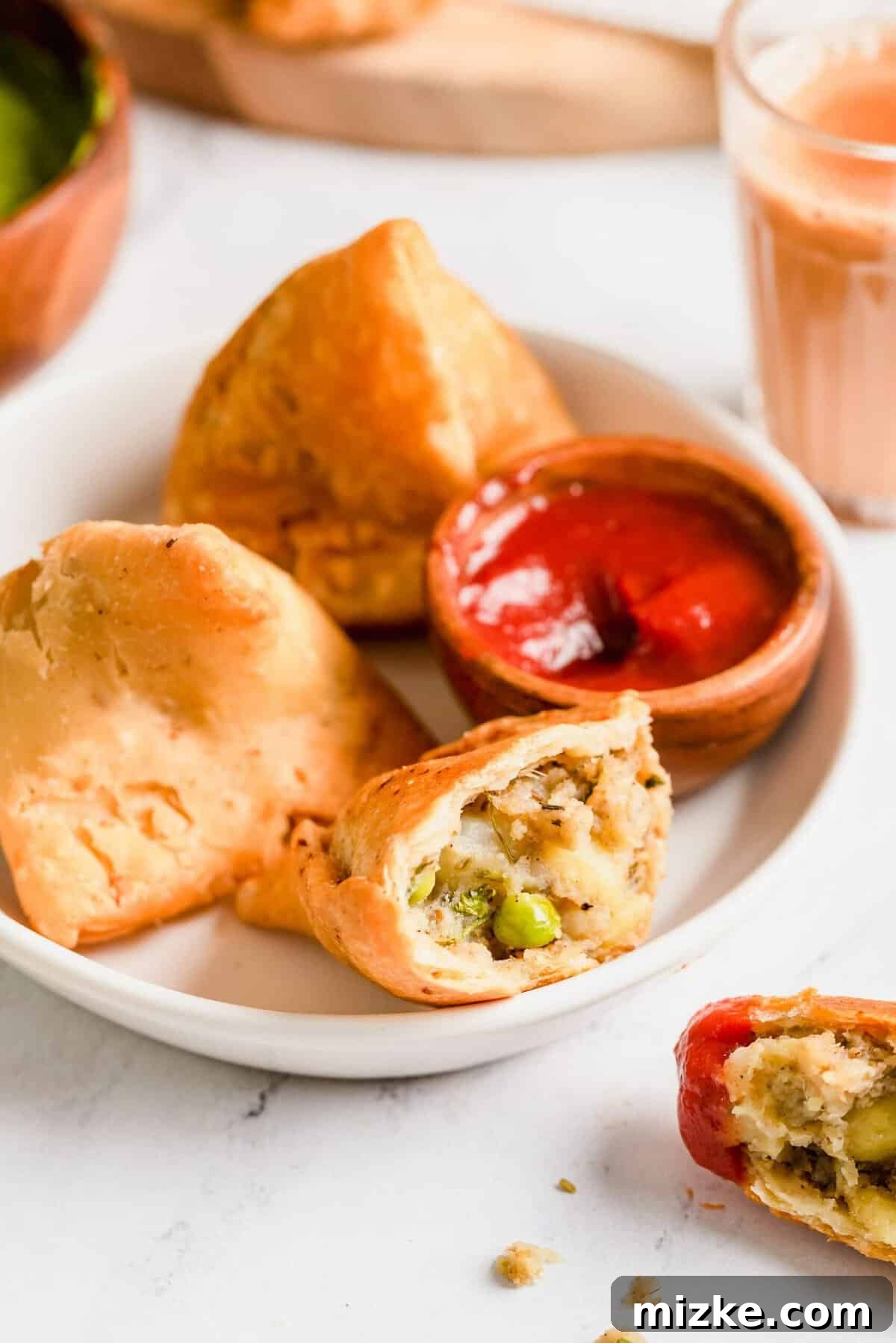
Crafting Your Own Vegetable Samosas: A Step-by-Step Guide
Ready to immerse yourself in the art of samosa making? Let’s break down the process into manageable steps, ensuring a satisfying and delicious outcome.
1. Preparing the Flaky Samosa Dough:
- Combine Dry Ingredients: In a large mixing bowl, whisk together the 2 cups (250 g) of all-purpose flour, 1 teaspoon of salt, and 1 teaspoon of carom seeds until well combined.
- Incorporate Fat: Add 4 tablespoons of oil or ghee to the flour mixture. Using your fingertips, rub the fat into the flour until the mixture resembles coarse breadcrumbs and can hold its shape when squeezed. This step is crucial for achieving a flaky texture.
- Form a Stiff Dough: Gradually add water, a little at a time, mixing until a stiff, firm dough forms. Avoid adding too much water, as a soft dough will result in less crispy samosas.
- Rest the Dough: Cover the bowl with a damp cloth or plastic wrap and let the dough rest for at least 30 minutes. This allows the gluten to relax, making the dough easier to roll and more tender.
2. Creating the Flavorful Potato and Pea Filling:
- Cook Potatoes: Boil 4 medium-sized Russet potatoes until they are fork-tender. You can use a pressure cooker, Instant Pot, or a saucepan. Once cooked, peel them if necessary, and roughly chop them into small cubes. Set aside.
- Prepare Whole Spices: In a mortar and pestle or a spice grinder, coarsely crush 1 teaspoon of cumin seeds, 2 teaspoons of coriander seeds, and 1 teaspoon of fennel seeds. You want a coarse powder, not a fine one, for texture and intense flavor. Set aside.
- Sauté Aromatics: Heat 1 ½ tablespoons of oil in a large skillet over medium-low heat. Add 1 ½ teaspoons of finely minced ginger and 1-2 minced green chilies (adjust to your spice preference). Sauté for about a minute until fragrant, being careful not to burn them.
- Toast Spices: Add the crushed cumin, coriander, and fennel seeds to the skillet. Sauté for another minute over low-medium heat, allowing the spices to become aromatic without burning.
- Combine Filling Ingredients: Quickly add the cubed potatoes, ½ cup (73 g) of green peas, and salt to taste. Mix everything thoroughly, ensuring the spices coat the potatoes and peas.
- Season and Finish: Stir in ½ teaspoon of black pepper powder, 1 teaspoon of chaat masala, 1 teaspoon of crushed kasuri methi, and 1 tablespoon of chopped cilantro leaves. Continue to cook and stir for a few minutes. As the filling cooks, gently mash some of the potatoes, but leave plenty of chunks for a satisfying bite. Cook until the potatoes are slightly toasted and the peas are softened.
- Cool the Filling: Remove the skillet from the heat and let the filling cool down completely. It should be cool enough to handle comfortably before you start filling the samosas.
3. Assembling and Frying the Samosas:
- Divide the Dough: Take a small portion of the rested dough and roll it into a smooth ball.
- Roll into an Oval: On a lightly floured surface, roll the dough ball into an oval shape, about 6-7 inches long and 3-4 inches wide.
- Cut in Half: Using a knife, cut the oval in half lengthwise, creating two semi-circles.
- Form the Cone: Take one semi-circle. Lightly moisten the straight edge with a little water. Bring the two straight ends together, overlapping them slightly, and press firmly to seal, forming a cone shape. Ensure the pointed tip is well-sealed to prevent the filling from leaking.
- Fill the Samosa: Spoon approximately 1 ½ tablespoons of the cooled potato and pea filling into the dough cone. Adjust the amount based on the size of your cone.
- Seal the Samosa: Bring the open edges of the cone together. Create a small pleat on one side of the seam (this helps create the classic samosa triangle shape and allows for more filling), then press the edges firmly to seal completely, forming a neat triangular parcel. Use a little water if needed to help the dough stick.
- Repeat: Continue this process with the remaining dough and filling until all samosas are assembled.
- Heat the Oil for Frying: Pour enough neutral-tasting oil (like vegetable or canola oil) into a large, deep pan or Dutch oven to reach about 2-3 inches in depth. Heat the oil over medium-low heat. The key is to keep the oil at a moderate temperature. To test, drop a tiny piece of dough into the oil; it should slowly sizzle and float to the surface, indicating the oil is ready. If it browns too quickly, the oil is too hot.
- Fry the Samosas: Carefully lower a few samosas into the warm oil, ensuring you don’t overcrowd the pan. Cook them over medium-low heat, turning occasionally, until they turn a beautiful golden brown and are visibly crispy, typically 10-15 minutes per batch. Lower the heat if they start browning too quickly.
- Drain and Serve: Once golden and crispy, remove the samosas from the oil with a slotted spoon and place them on a plate lined with paper towels to drain excess oil.
- Enjoy: Serve your homemade vegetable samosas hot with green chutney, tamarind chutney, or your favorite dipping sauce.

Tips for Samosa Success: Achieving Perfection Every Time
Making perfect samosas is a rewarding skill. Here are some invaluable tips and tricks to ensure your homemade vegetable samosas turn out perfectly:
- Dough Consistency is Key: A stiff dough is essential for crispy samosas. If your dough is too soft, it will absorb too much oil and become soggy. If it’s too hard, it will be difficult to roll. Aim for a firm, yet pliable texture. The resting period is also crucial for a tender, flaky crust.
- Flaky Dough Shortcuts: For those short on time or seeking an easier route, many Indian grocery stores sell ready-made samosa pastry sheets. Alternatively, for a less authentic but still delicious version, you can use puff pastry sheets or even spring roll wrappers. These won’t give the traditional texture but offer a quick and tasty alternative.
- Prepare Ahead: The potato and pea filling can be made a day or two in advance and stored in the refrigerator. This significantly cuts down on prep time when you’re ready to assemble and fry your samosas. Ensure the filling is completely cooled before use.
- The Art of Sealing: Proper sealing of the samosa is paramount to prevent the filling from escaping during frying. Use water generously on the edges to create a strong seal. Practice makes perfect when it comes to folding the classic triangular shape.
- Oil Temperature Control for Frying: This is arguably the most critical step. Frying samosas over medium-low heat is vital. If the oil is too hot, the exterior will brown too quickly while the interior remains doughy. If the oil is too cool, the samosas will absorb excess oil and become greasy. A gradual rise in temperature as they cook ensures a perfectly crispy, golden-brown crust and a thoroughly cooked interior.
- Baking as an Alternative: If you prefer to avoid deep-frying, baking is a healthier option. Preheat your oven to 400ºF (200ºC). Lightly grease a baking sheet and brush the assembled samosas with a little oil for crispiness. Bake for approximately 15 minutes, then flip them over and bake for another 10-15 minutes, or until golden brown and crispy. Place them on a wire rack or paper-towel-lined plate to cool slightly before serving.
What Are the Best Sauces to Serve with Samosas?
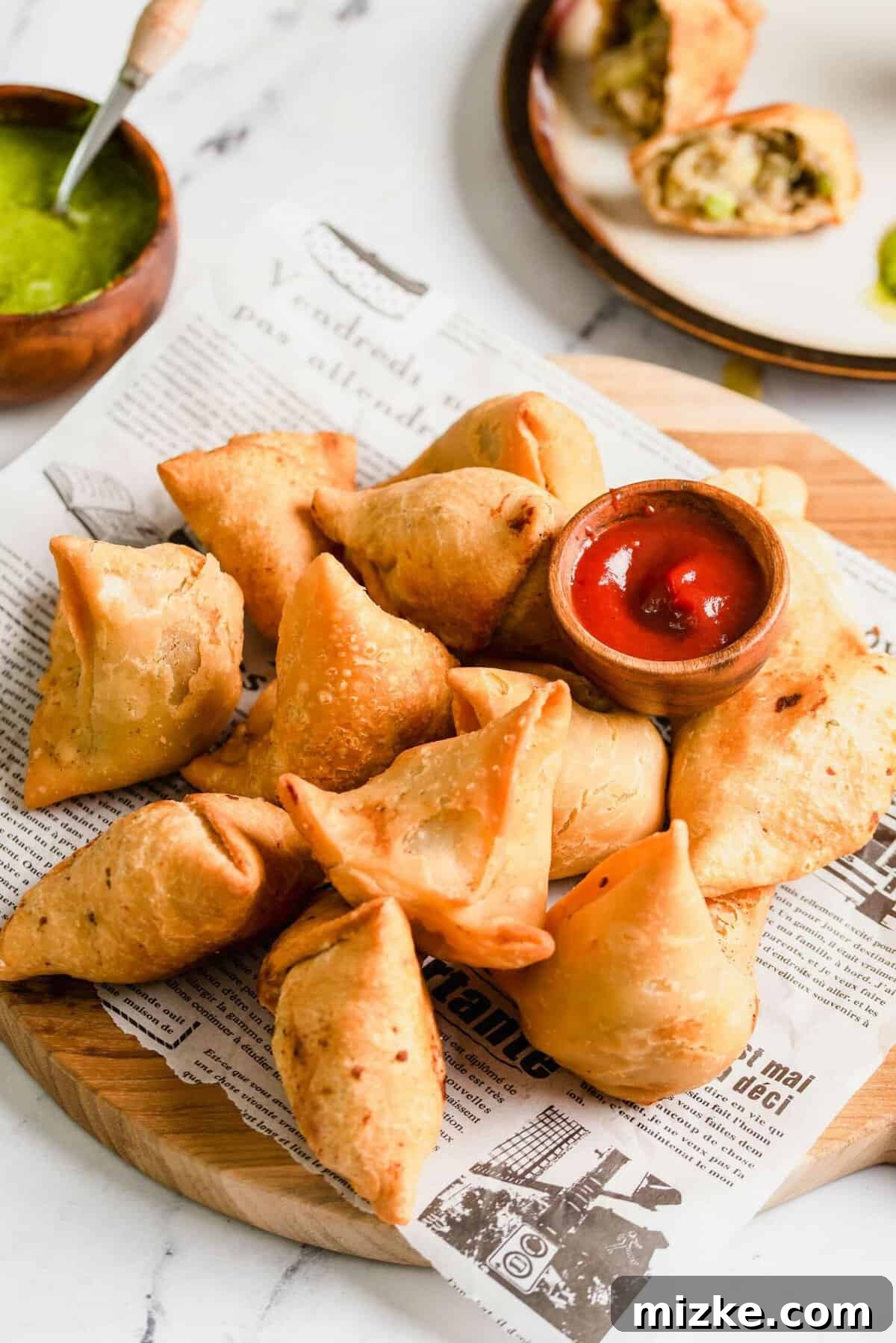
Samosas are excellent on their own, but they truly shine when paired with the right dipping sauce. The most traditional accompaniment is a vibrant green chutney, typically made from a refreshing blend of cilantro and mint, often with a hint of green chili and lemon. Other popular and delicious options include:
- Mango Chutney: A sweet and tangy condiment, perfect for balancing the savory samosa.
- Tamarind Chutney (Imli Chutney): Sweet, sour, and spicy, this dark chutney offers a complex flavor profile that beautifully complements the filling.
- Tomato Chutney: A savory and slightly spicy option, often with a robust tomato flavor.
- Raita: A cooling yogurt-based sauce, often seasoned with cumin and mint, which provides a refreshing contrast to the warm spices of the samosa.
Don’t hesitate to experiment with your favorite sauces or even serve a variety for guests to choose from!
Storing and Reheating Your Homemade Samosas
If you happen to have any leftover samosas (a rare occurrence!), they can be easily stored and reheated to maintain their deliciousness:
- Storage: Store cooked and cooled samosas in an airtight container in the refrigerator for up to 4 to 5 days.
- Reheating: For best results, reheat samosas in an air fryer at 350ºF (175ºC) for 5-7 minutes, or in a preheated oven at 400ºF (200ºC) for 10-15 minutes, or until thoroughly warmed through and crispy. The microwave can warm them, but they might lose some of their crispiness.
Can Homemade Samosas Be Frozen?
Absolutely! Samosas are an excellent make-ahead item. You can freeze them both before and after frying. Here’s how:
- Freezing Unfried Samosas: Arrange the raw, assembled samosas in a single layer on a baking sheet and freeze until solid (about 1-2 hours). Once firm, transfer them to a freezer-safe airtight container or freezer bag. They can be stored for up to 2-3 months. To cook, simply fry or bake them directly from frozen, adding a few extra minutes to the cooking time.
- Freezing Fried Samosas: Allow cooked samosas to cool completely. Arrange them in a single layer on a baking sheet and freeze until solid. Then transfer them to an airtight container or freezer bag for up to 3 months.
- Reheating Frozen Samosas: Reheat frozen, pre-fried samosas in a preheated oven at 400ºF (200ºC) for 15 to 20 minutes (depending on their size), or until they are warmed through and crispy. An air fryer can also achieve excellent results.
Vegetable Samosas Recipe
These authentic vegetable samosas are just like what you’ll find at your favorite Indian restaurant! A flaky dough is wrapped around a perfectly spiced potato and pea filling for an irresistible appetizer.

- Author: Julie Chiou
- Prep Time: 45 minutes
- Cook Time: 30 minutes
- Total Time: 1 hour 15 minutes
- Servings: 12 samosas
Ingredients
For the Dough:
- 2 cups (250 g) all-purpose flour
- 1 teaspoon salt
- 1 teaspoon carom seeds (ajwain)
- 4 tablespoons oil or ghee
- Water for kneading the dough (approximately ½ to ¾ cup, added gradually)
For the Filling:
- 4 medium-sized potatoes (preferably Russet)
- 1 teaspoon cumin seeds
- 2 teaspoons coriander seeds
- 1 teaspoon fennel seeds
- 1 ½ tablespoons oil
- 1 ½ teaspoon finely minced fresh ginger
- 1-2 green chilies, minced (adjust to spice level)
- ½ cup (73 g) green peas (frozen is best)
- Salt to taste
- ½ teaspoon black pepper powder
- 1 teaspoon chaat masala (or amchur/dried mango powder)
- 1 teaspoon crushed kasuri methi (dried fenugreek leaves)
- 1 tablespoon chopped fresh cilantro leaves
- Neutral tasting oil like vegetable or canola oil for frying the samosas (about 2-3 cups)
Instructions
Make the Samosa Dough:
- In a large bowl, combine the flour, salt, and carom seeds. Mix well.
- Add the oil or ghee to the flour mixture. Rub the fat into the flour with your fingertips until the mixture resembles coarse breadcrumbs and holds together when squeezed.
- Gradually add water, a little at a time, to form a stiff dough.
- Cover the dough and let it rest for at least 30 minutes.
Make the Filling:
- Boil the potatoes until soft. Peel and roughly chop them into cubes. Set aside.
- In a mortar and pestle or spice grinder, crush the cumin seeds, coriander seeds, and fennel seeds into a coarse powder. Set aside.
- Heat 1 ½ tablespoons of oil in a large skillet over medium-low heat. Add the minced ginger and green chilies, and sauté for about a minute until fragrant.
- Add the crushed cumin, coriander, and fennel seeds. Sauté for another minute, ensuring the spices do not burn.
- Add the cubed potatoes, green peas, and salt to taste. Mix everything well with the spices.
- Stir in the black pepper powder, chaat masala, kasuri methi, and chopped cilantro leaves. Continue to cook and stir until the potatoes are slightly toasted and the peas are soft. Mash some of the potatoes roughly while cooking, leaving some chunks for texture.
- Remove the filling from heat and let it cool completely before proceeding.
Assemble and Fry the Samosas:
- Take a small portion of the dough and roll it into a ball.
- Roll the dough into an oval shape, about 6-7 inches long.
- Cut the oval in half lengthwise with a knife, creating two semi-circles.
- Take one semi-circle and moisten the straight edge with a little water. Bring the two straight ends together, overlapping them slightly, and press firmly to seal, forming a cone shape. Ensure the pointed tip is well-sealed.
- Add about 1 ½ tablespoons of the cooled filling into the cone.
- Bring the open edges of the cone together and seal them securely, using a little water if needed. Pinch a small pleat on one side to help form the triangular shape. The filling should be completely enclosed.
- Repeat with the remaining dough and filling.
- Heat neutral-tasting oil (vegetable or canola) in a large, deep pan over medium-low heat. The oil is ready when a small piece of dough dropped in slowly floats to the surface.
- Carefully place a few samosas into the warm oil, without overcrowding. Fry over medium-low heat, turning occasionally, until they are golden brown and crispy. Adjust the heat if they brown too quickly.
- Once cooked, remove the samosas with a slotted spoon and drain on a plate lined with paper towels.
- Serve hot with green chutney or your favorite dipping sauce.
Recipe Notes
- For a shortcut, you can purchase ready-made samosa pastry sheets from Indian grocery stores.
- If you’re not concerned about strict authenticity, puff pastry sheets or spring roll wrappers can be used as a convenient alternative for the dough, offering a delicious albeit different texture.
- Chaat masala can be substituted with amchur (dried mango powder), both of which are commonly found in Indian stores or online.
- To store leftovers: Place cooked and cooled samosas in an airtight container and refrigerate for 4 to 5 days. Reheat in an air fryer, oven (400ºF/200ºC), or microwave until warmed through.
- To freeze: Unfried samosas can be frozen individually on a tray until solid, then transferred to a freezer bag for up to 3 months. Cook from frozen, adding extra time. Fried samosas can also be frozen in an airtight container for up to 3 months and reheated in a 400ºF (200ºC) oven for 15-20 minutes.
Nutrition Information (Approximate)
This information is provided for convenience and as a courtesy. Nutritional data can vary based on ingredients and preparation methods. For precise data, please use a nutrition calculator with the actual ingredients used.
- Serving: 1 samosa
- Calories: 224 kcal
- Carbohydrates: 34g
- Protein: 6g
- Fat: 7g
- Saturated Fat: 3g
- Polyunsaturated Fat: 1g
- Monounsaturated Fat: 3g
- Trans Fat: 0.01g
- Cholesterol: 13mg
- Sodium: 213mg
- Potassium: 412mg
- Fiber: 5g
- Sugar: 1g
The default measuring system for this recipe is US Customary. Unit conversions are provided for convenience and as a courtesy only, and some discrepancies may occur.