
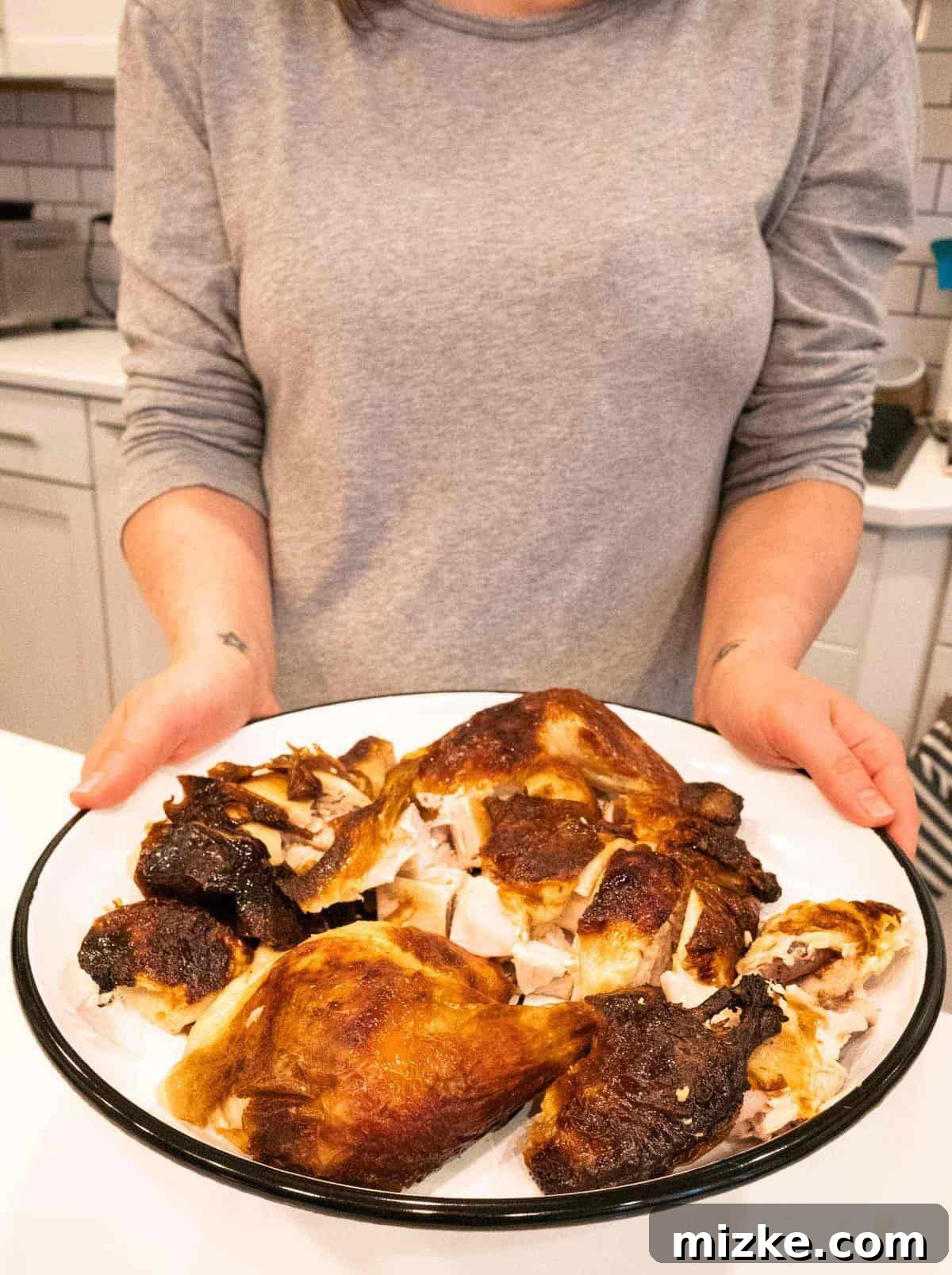
The Ultimate Buttermilk Roast Chicken: Juicy, Tender & Flavorful – An Effortless Recipe
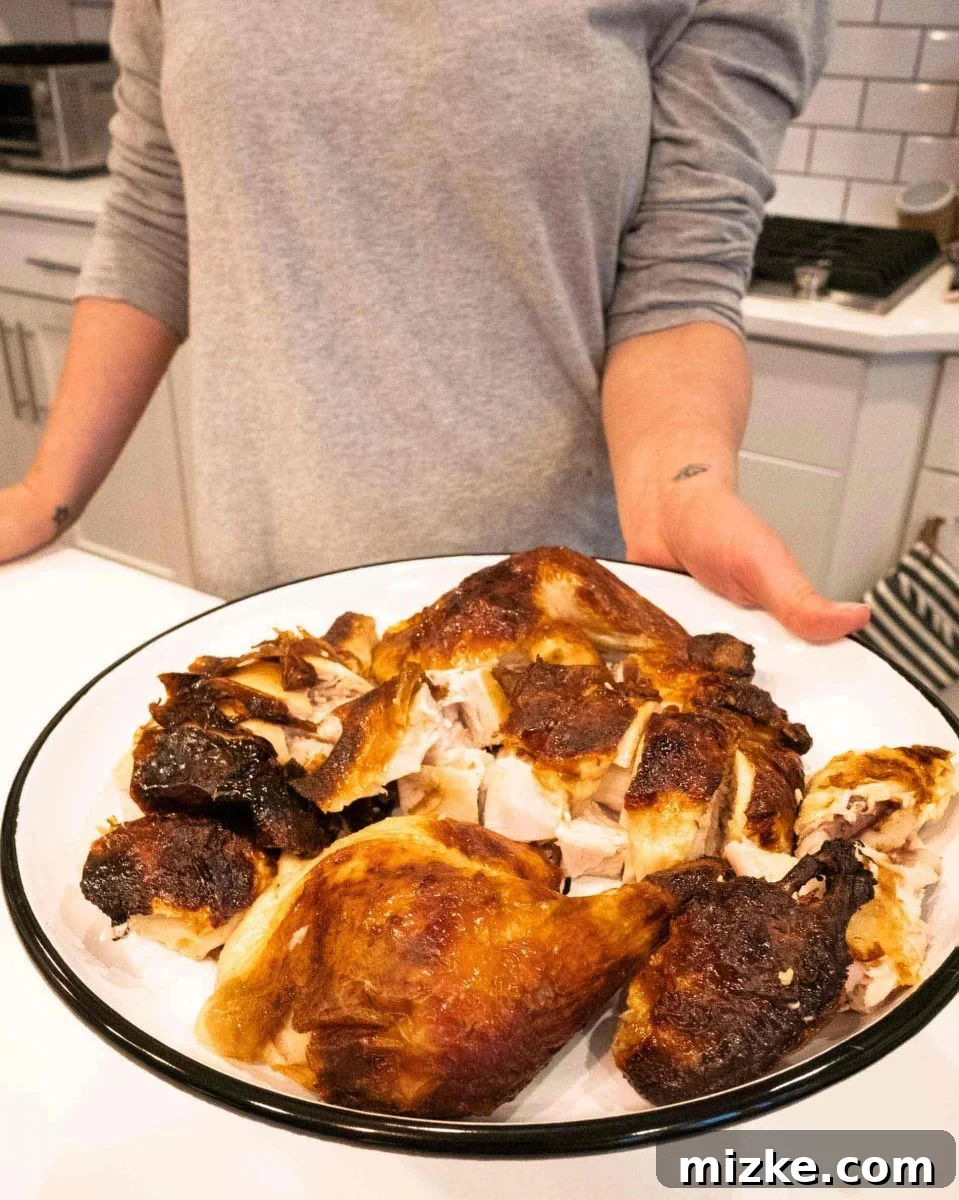
Sometimes, the simplest recipes yield the most extraordinary results. This buttermilk roast chicken is a testament to that timeless culinary truth. What might seem like an unbelievably easy approach to roasting a whole chicken quickly turns into a revelation for your taste buds.
We initially approached this recipe with low expectations. It comes from the renowned chef and food writer, Samin Nosrat, whose brilliance was showcased in the captivating Netflix series, “Salt, Fat, Acid, Heat.” If you haven’t seen it, add it to your must-watch list immediately! Watching her effortlessly prepare and then carve into this chicken, describing its incredible succulence, was enough to make anyone drool. Yet, the recipe itself seemed almost too straightforward.
Could a buttermilk-marinated roast chicken truly be as good as she claimed, with so few ingredients and minimal effort? We stand corrected. This buttermilk roast chicken was nothing short of **incredible**. It delivered unparalleled juiciness, tenderness, and a depth of flavor that defied its simple origins. And the best part? It only requires three core ingredients and remarkably little hands-on time.
The process is almost magically simple: you marinate a whole chicken overnight in a buttermilk and salt mixture, then transfer it directly to the oven. Approximately 1.5 hours later, you’re rewarded with the most succulent and perfectly cooked buttermilk roast chicken imaginable. This recipe proves that you don’t need a complex list of spices or an intricate technique to achieve a show-stopping meal.
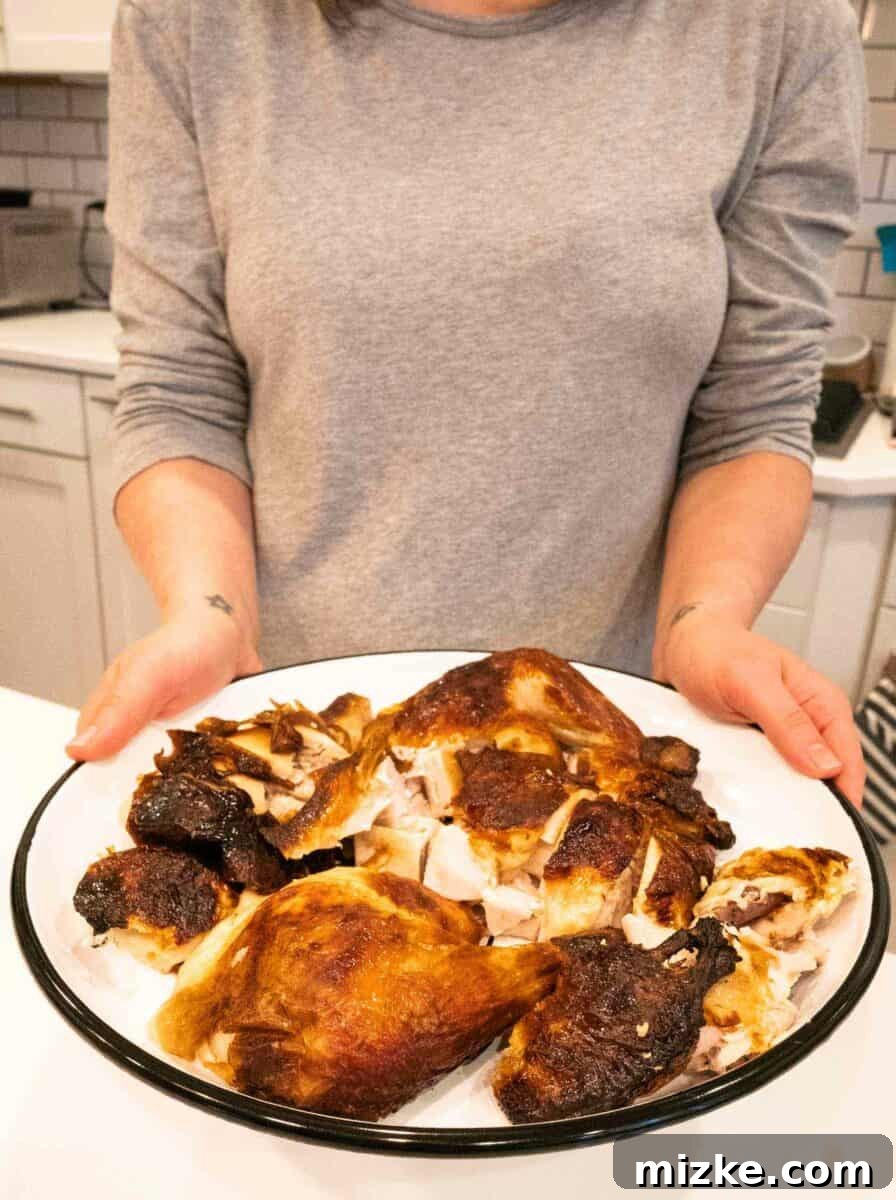
The Magic Behind Buttermilk: Why It’s Your Secret Weapon for Roast Chicken
Many home cooks might wonder, “What exactly does buttermilk do to chicken?” The answer lies in its unique composition, specifically the presence of lactic acid. This mild acid works wonders on poultry, performing a few crucial tasks:
- Tenderization: Unlike harsher acids like lemon juice or vinegar, the lactic acid in buttermilk gently breaks down the tough protein fibers in the chicken. This process doesn’t “cook” the meat but rather relaxes it, resulting in an exceptionally tender texture that practically melts in your mouth.
- Moisture Retention: Buttermilk creates a delicate barrier around the chicken, helping it retain moisture during the high-heat roasting process. This prevents the meat from drying out, ensuring every bite is wonderfully juicy from the first slice to the last.
- Flavor Infusion: The gentle tenderizing action of buttermilk also allows for flavors to penetrate the meat more easily. While this recipe keeps it simple with just salt, the buttermilk itself imparts a subtle tang and richness that enhances the chicken’s natural taste, creating a remarkably savory profile without the need for a complex spice rub.
It’s this trifecta of benefits – tenderization, moisture, and subtle flavor – that elevates a simple roast chicken into something truly spectacular with minimal effort.
Simplified Seasoning: The Power of Buttermilk and Salt
No Extra Seasoning on the Buttermilk Roast Chicken? It’s True!
One of the most surprising aspects of this recipe is the minimal seasoning. You might be accustomed to elaborate rubs or marinades packed with herbs and spices, but for this buttermilk roast chicken, the buttermilk and salt do all the heavy lifting. The salt seasons the meat from within, while the buttermilk adds its unique flavor profile and tenderizing properties. The result is a chicken that is perfectly seasoned for many palates, allowing the pure, delicious flavor of the chicken itself to shine through.
Of course, taste is personal. If you find, after trying it as is, that you prefer more seasoning, feel free to add black pepper, a sprinkle of garlic powder, or your favorite herbs like thyme or rosemary during the last 30 minutes of roasting. However, we encourage you to try it unadorned first to truly appreciate the exquisite simplicity and effectiveness of the buttermilk marinade.
Buttermilk FAQs: Your Essential Questions Answered
What if I don’t have buttermilk? Can I use a substitute?
For this specific recipe, we strongly recommend using store-bought, cultured buttermilk. While many recipes suggest creating a homemade buttermilk substitute by adding vinegar or lemon juice to milk, that acidified milk is not the same as true cultured buttermilk. Cultured buttermilk has a different consistency and, more importantly, a unique bacterial culture that produces the lactic acid responsible for the tenderizing and moisturizing effects crucial to this recipe’s success. Acidified milk just won’t cut it for the phenomenal results you’re aiming for here.
However, if buttermilk is truly unavailable in your area, plain yogurt can be used as a last resort. It also contains lactic acid and can provide some similar benefits, though the texture and flavor may vary slightly from using genuine buttermilk. But seriously, go get some real buttermilk if you can!
Can I marinate the chicken longer than 24 hours?
For optimal results, aim for a 24-hour marinade. You can extend the marination time up to 48 hours, but we advise against going any longer. Beyond 48 hours, the buttermilk’s lactic acid can start to break down the chicken’s proteins too much, potentially leading to a mushy texture rather than the desired tenderness.
Can I marinate the chicken for less than 24 hours?
While a shorter marinade (e.g., 8-12 hours) will still impart some flavor and tenderness, we highly recommend allowing the chicken a full 24 hours in the buttermilk bath. This extended time allows the lactic acid and salt to fully penetrate the meat, ensuring maximum tenderness, juiciness, and flavor throughout the entire bird. Patience truly pays off with this recipe!
Can you freeze the buttermilk and chicken mixture?
No, it’s not recommended to freeze the chicken while it’s marinating in buttermilk. Freezing and thawing can alter the texture of both the buttermilk and the chicken, potentially leading to a less desirable outcome when roasted. It’s best to marinate fresh and roast immediately after the marination period.
Do you have to mix or massage the chicken throughout the 24 hours?
You can if you’re inclined, but it’s not strictly necessary. If you remember, a gentle massage or flip of the chicken in the bag a few times during the 24-hour period can help ensure even distribution of the marinade, especially if the chicken isn’t fully submerged. However, the buttermilk’s properties are quite effective, so don’t stress if you can’t get to it.
The liquid doesn’t completely cover the chicken when it sits in the fridge. Is that okay?
Yes, it’s perfectly fine. Don’t worry if the buttermilk doesn’t fully immerse the chicken. The lactic acid and salt in the buttermilk are highly effective at penetrating the meat. As long as the chicken is in contact with the marinade, it will work its magic. Flipping it once or twice can help, but even without it, you’ll still achieve fantastic results.
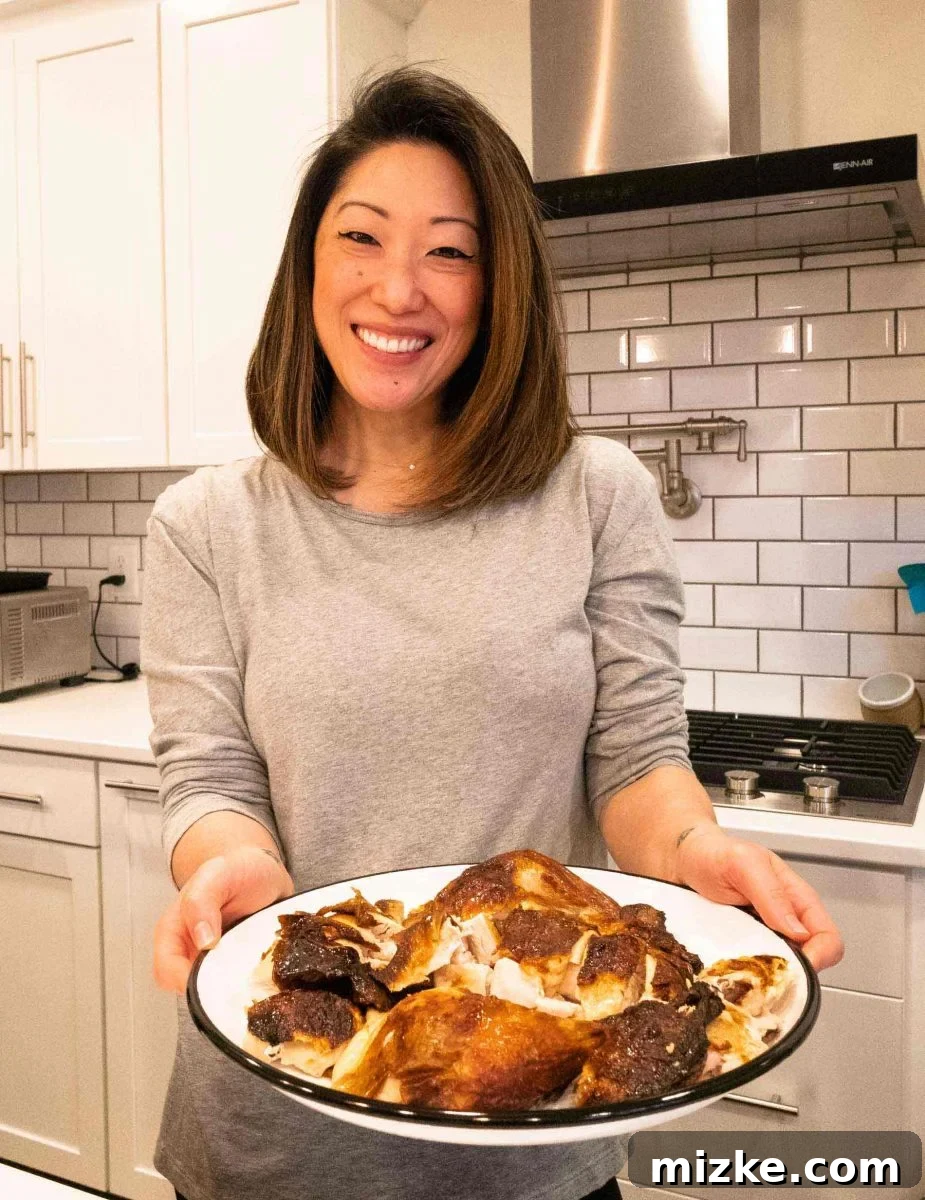
Mastering the Roast: Techniques for a Flawless Chicken
Do you have to tie the legs of the chicken?
While not strictly mandatory for flavor, tying the legs (also known as trussing) is highly recommended. Trussing helps the chicken cook more evenly by keeping the legs and wings tucked in close to the body. This prevents the thinner parts from overcooking and drying out before the thicker parts, like the breast and thighs, are done. It also helps the chicken maintain a compact, attractive shape for presentation.
Do you have to use a roasting pan?
You don’t necessarily need a dedicated roasting pan. For this recipe, a simple yet effective setup involves placing a wire cooling rack on top of a large, rimmed baking sheet. We also recommend lining your baking sheet with foil for easier cleanup. This elevated setup allows for excellent air circulation around the entire chicken, promoting even cooking and ensuring a beautifully crispy skin all around, rather than a soggy bottom that can result from direct contact with a pan.
“Omg, the temperature is so high!” Is 425°F safe for roasting?
Yes, absolutely! The initial high temperature of 425°F (218°C) is a crucial part of this recipe’s success. This blast of high heat at the beginning helps to render the fat under the skin, crisping it up beautifully and locking in juices. After 20 minutes, the temperature is reduced to 400°F (204°C) to allow the chicken to cook through more gently without burning the exterior. Trust the process; this method yields fantastic results.
Do you have to put the chicken in on a diagonal? And why are the legs pointed towards the back?
Yes, following Samin Nosrat’s advice to place the chicken diagonally and rotate it is a clever technique for achieving perfectly cooked poultry. As Samin explains, “the back corners tend to be the hottest spots in the oven, so this orientation protects the breast from overcooking before the legs are done.”
The reasoning is simple: chicken breasts cook faster and are more prone to drying out than the denser leg and thigh meat. By positioning the legs towards the hotter back of the oven, they receive more direct heat and cook more efficiently, while the breasts, which are angled towards the cooler front, are protected from premature overcooking. The rotation during cooking further ensures that all parts of the chicken are exposed to the optimal heat zones, leading to a uniformly cooked bird with tender breast meat and perfectly done dark meat.
The exterior of my buttermilk roast chicken is getting awfully brown! What should I do?
If you notice the chicken skin browning too quickly to your liking, don’t worry. Simply tent the chicken loosely with a piece of aluminum foil for the remainder of the cooking process. This will shield the skin from direct heat, preventing it from burning while still allowing the internal meat to reach its perfect temperature.
The Buttermilk Roast Chicken Recipe
Ready to make the most delicious, tender, and juicy roast chicken you’ve ever had? Here’s the simplified recipe for Samin Nosrat’s buttermilk roast chicken.
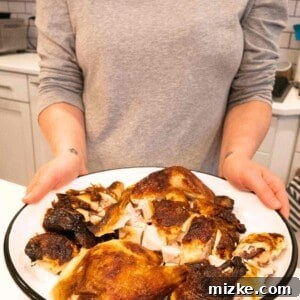
Buttermilk Roast Chicken
By: Julie Chiou
This buttermilk roast chicken is the easiest chicken to make and yields the most flavorful, tender, moist, and juicy chicken you’ll ever have!
Prep Time: 30 minutes
Cook Time: 1 hour 30 minutes
Marinading Time: 1 day (24 hours)
Total Time: 1 day, 2 hours
Servings: 8
Equipment
- Large rimmed baking sheet
- Wire rack
- Gallon-sized plastic bag
- Butcher’s twine (optional, for trussing)
Ingredients
- 1 whole chicken (3 ½ – 4 pounds / 1.6 – 1.8 kg)
- Kosher salt (approximately 2 tablespoons, plus more for initial seasoning)
- 2 cups (473 ml) buttermilk
Instructions
- The day before you plan to cook the chicken, prepare it by removing the wingtips (you can cut through the first wing joint with a sharp knife and discard them or save for stock). Season the chicken generously all over with Kosher salt. Let it sit at room temperature for 30 minutes.
- While the chicken is resting, prepare the buttermilk marinade. In a large bowl, mix 2 tablespoons of Kosher salt into the 2 cups of buttermilk. Stir until the salt is fully dissolved.
- After the 30-minute resting period, carefully place the salted chicken into a gallon-sized plastic bag. Pour the buttermilk mixture over the chicken, ensuring it’s well coated. Seal the bag, pressing out as much air as possible. You can gently massage the bag a bit to distribute the marinade. Place the chicken in the fridge to marinate for a full 24 hours.
- One hour before you intend to cook, remove the chicken from the fridge and let it come to room temperature. This crucial step ensures more even cooking.
- Preheat your oven to 425°F (218°C). Line a large, rimmed baking sheet with aluminum foil for easy cleanup, then place a wire rack on top of the foil-lined sheet.
- Take the chicken out of the marinade bag. Gently wipe off as much of the excess buttermilk from the chicken’s surface as you can. You don’t need to be obsessive, just a quick wipe to remove significant drips.
- Place the chicken on top of the wire rack on your prepared baking sheet. If you have butcher’s twine, use it to tie the legs together for more even cooking and a neater presentation.
- Carefully place the baking sheet diagonally on the center rack in the preheated oven. Rotate the pan so that the chicken’s legs are pointed towards the rear left back of the oven (or whichever side is hotter in your oven).
- Cook for 20 minutes at 425°F (218°C). After 20 minutes, reduce the oven temperature to 400°F (204°C). Rotate the pan so that the chicken’s legs are now pointed towards the rear right back of the oven (or the opposite hot spot).
- Continue cooking for another 30 minutes to 1 hour, or until the chicken is cooked through. The internal temperature should reach 165°F (74°C) when measured with an instant-read thermometer inserted into the thickest part of the thigh without touching bone. If the skin is browning too quickly, tent loosely with foil.
- Once cooked, remove the chicken from the oven. Let it rest for at least 10 minutes before carving and serving. This resting period allows the juices to redistribute, ensuring a truly moist and flavorful chicken.
Notes
This phenomenal recipe is inspired by the culinary wisdom of Samin Nosrat.
Nutrition Information (Approximate)
- Serving: 1 Serving
- Calories: 305 kcal
- Carbohydrates: 25g
- Protein: 46g
- Fat: 15g
- Fiber: 1g
- Sugar: 3g
This website provides approximate nutrition information for convenience and as a courtesy only. Nutrition information can vary for a variety of reasons. For the most precise nutritional data, use your preferred nutrition calculator based on the actual ingredients you used in the recipe.
The default measuring system for this website is US Customary. Unit conversions are provided for convenience and as a courtesy only. While we strive to provide accurate unit conversions, please be aware that there may be some discrepancies.
Beyond the Roast: Creative Ways to Enjoy Leftover Buttermilk Chicken
Once you’ve enjoyed your initial meal of succulent buttermilk roast chicken, don’t let any leftovers go to waste! This incredibly flavorful and tender chicken is perfect for shredding and incorporating into a variety of other delicious dishes. Here are some fantastic ideas to give your leftover chicken a second life:
- Homemade Chicken Enchiladas: Shred the chicken and mix it with cheese and your favorite enchilada sauce for a hearty and comforting Mexican-inspired meal.
- Stovetop Chicken Tortilla Soup: Add shredded chicken to a vibrant, zesty tortilla soup for an easy and warming weeknight dinner.
- Shredded Chicken Kale Caesar Salad with Parmesan Crisps: Transform your leftovers into a fresh, crisp, and protein-packed salad, perfect for a light lunch.
- Instant Pot Jalapeño Lime Chicken Soup: For a quick and flavorful option, stir the shredded chicken into a zesty and spicy soup.
- Chicken Sandwiches or Wraps: Mix shredded chicken with a touch of mayonnaise, herbs, and celery for a classic chicken salad, or simply layer it into sandwiches and wraps with fresh veggies.
- Chicken Pasta Dishes: Toss the shredded chicken with your favorite pasta, a creamy sauce, and some steamed vegetables for a complete meal.
- Quesadillas or Tacos: Use the flavorful chicken as a filling for quick quesadillas or tacos, adding cheese, salsa, and any other desired toppings.
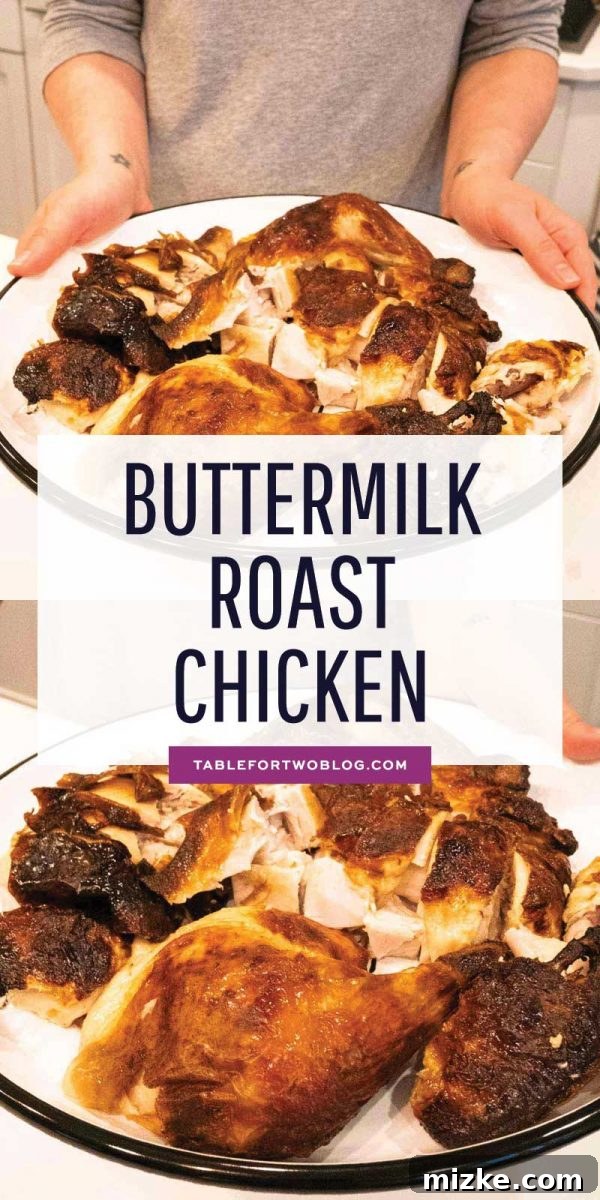
This buttermilk roast chicken is truly a culinary revelation. It demonstrates that sometimes the greatest flavors and most tender textures come from the simplest methods. With just three ingredients and a little patience for marination, you can create a centerpiece meal that will impress everyone at your table. Give it a try, and prepare to be amazed by the incredible juiciness and depth of flavor!