
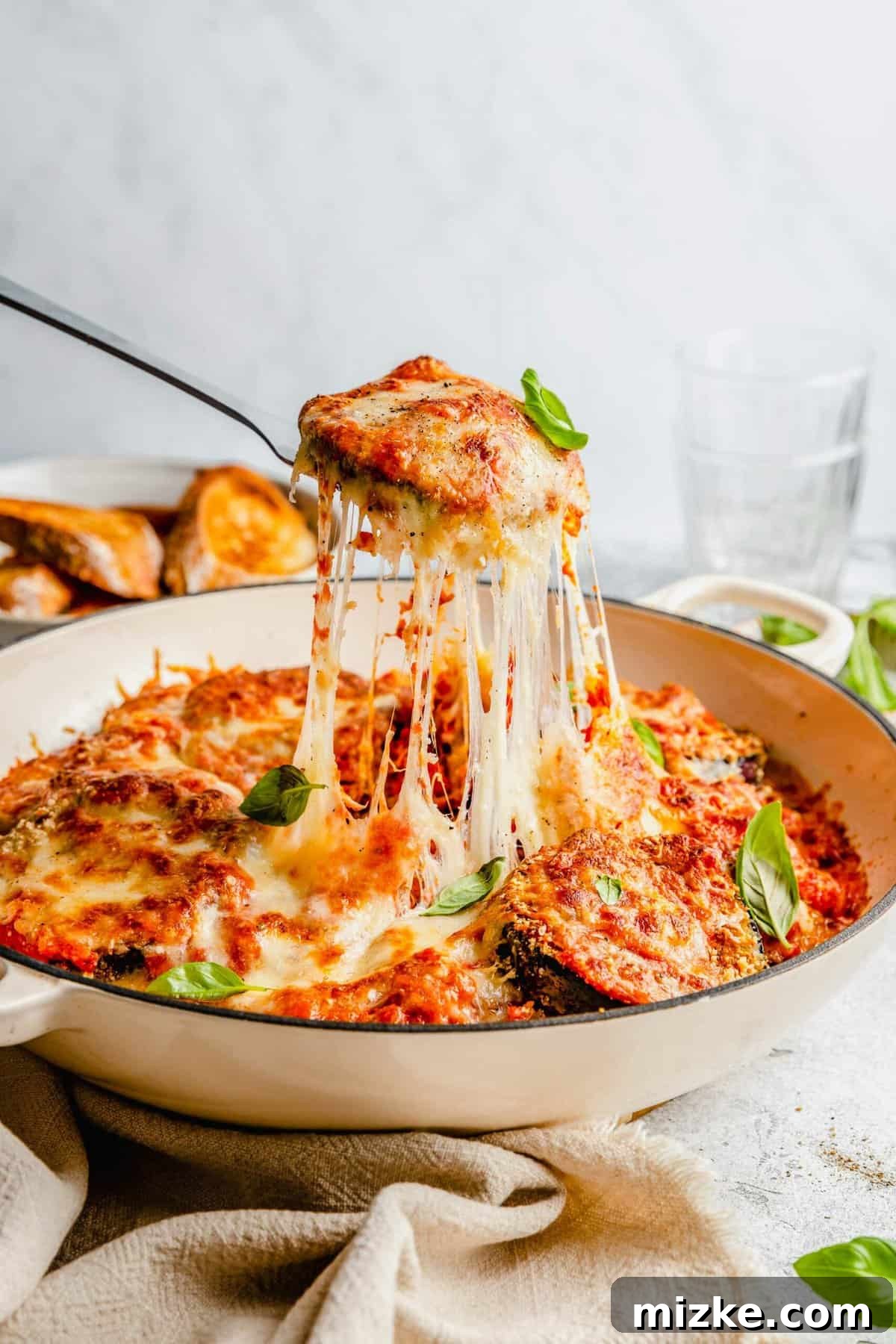
Welcome to your new favorite way to make Crispy Eggplant Parmesan! This isn’t just another recipe; it’s a game-changer that guarantees a delightful crunch and rich flavor with every bite. The secret lies in a simple, yet often overlooked, preparation step that makes an enormous difference. Trust us, once you try it this way, you’ll never go back! Countless home cooks have adopted this method and rave about its results – perfectly golden, never soggy eggplant that forms the backbone of an exquisite parmesan.
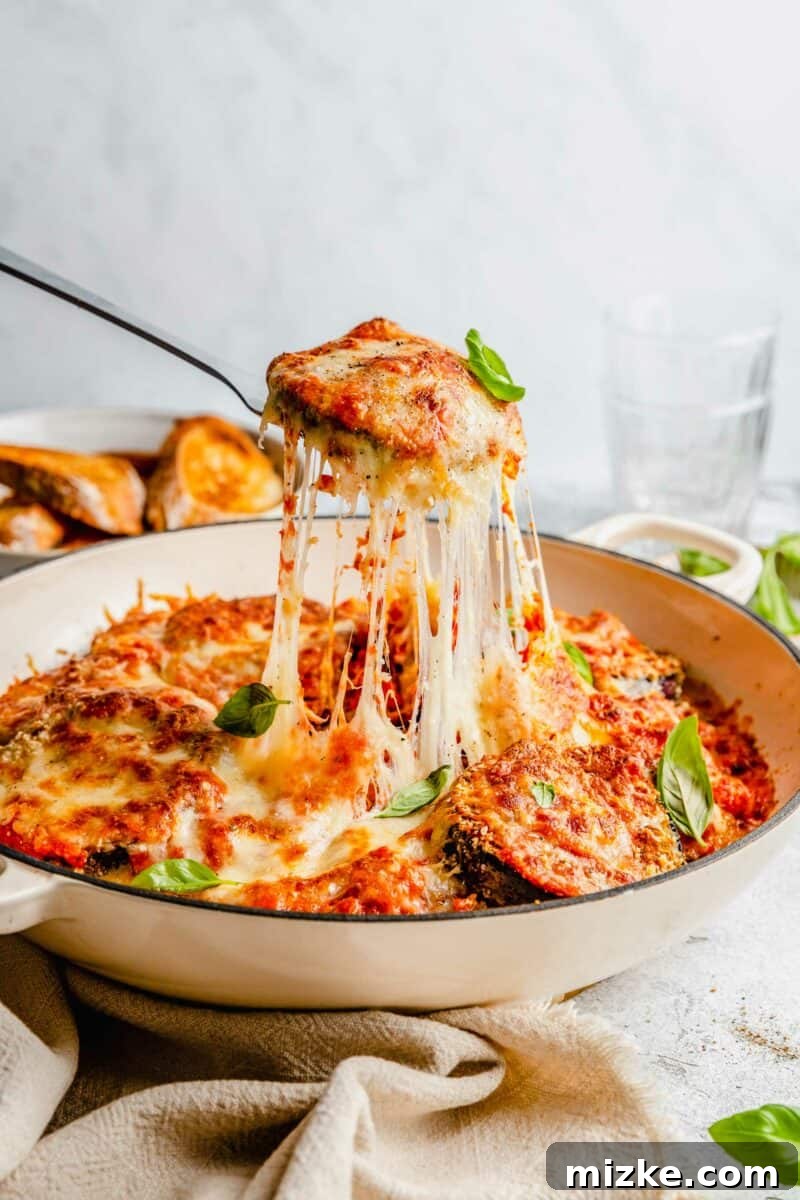
The Ultimate Crispy Eggplant Parmesan: A Culinary Revelation
Eggplant Parmesan holds a special place in the pantheon of comfort foods. There’s an undeniable warmth and richness to this dish that feels like a giant, cheesy hug. For many, it’s a nostalgic taste of home, a hearty vegetarian alternative that doesn’t compromise on flavor or satisfaction. This beloved Italian classic, layers of tender eggplant, tangy marinara, and gooey melted cheese, truly embodies soulful cooking.
My own journey with eggplant wasn’t always a love story. Growing up, I wasn’t a fan of its typical texture – often soggy, sometimes even a bit slimy. The only times I’d willingly eat it were when my mom expertly deep-fried it to a crisp perfection, or in a specific Taiwanese eggplant dish bathed in an incredible garlicky sauce. Any other preparation, and I’d politely decline. That is, until I discovered the glorious, cheesy layers of a properly made Eggplant Parmesan.
This dish transformed my perception of eggplant entirely. It proved that eggplant, when prepared correctly, could be incredibly flavorful and satisfying, even acting as a substantial “meat” substitute. It’s an ideal choice for a “Meatless Monday” or for anyone seeking a hearty, plant-based meal. Its robust texture and ability to absorb flavors make it a natural fit for this role, providing a vegetarian answer to its popular cousin, Chicken Parmesan.
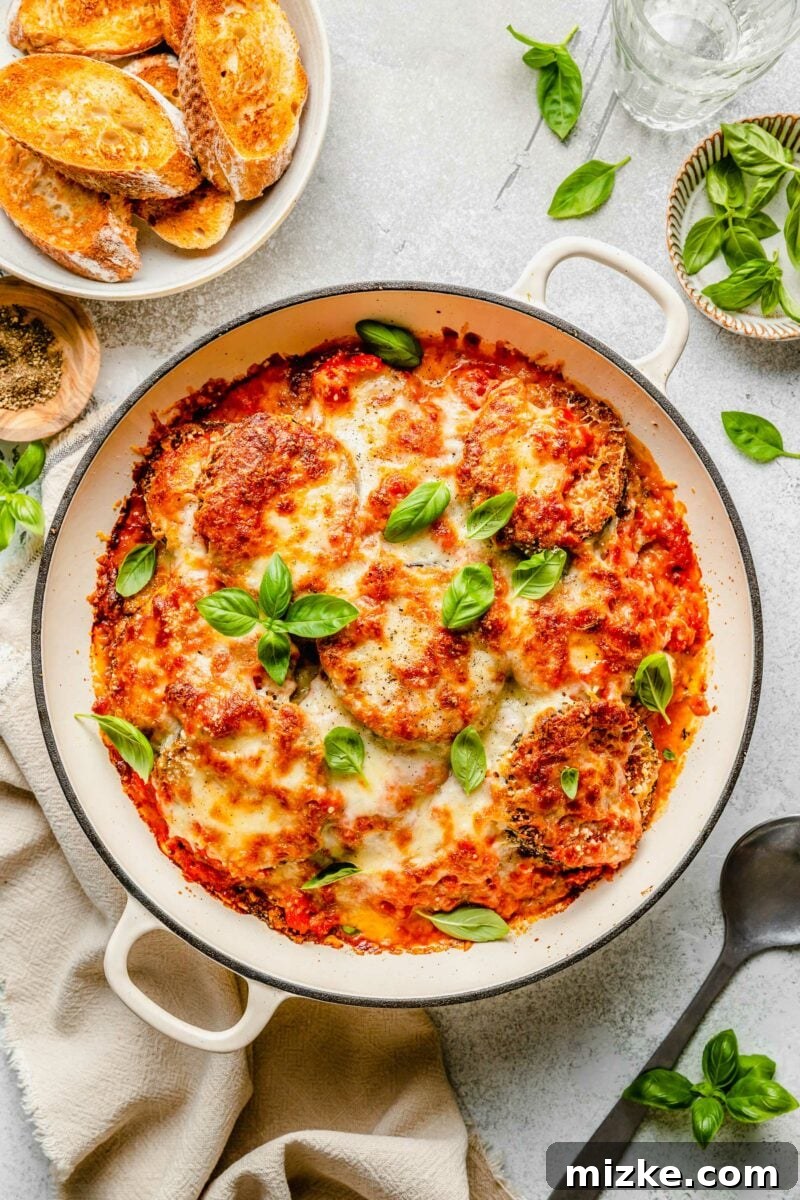
The Essential Method for the Best Crispy Eggplant Parmesan
Consider this a fair warning: once you experience Eggplant Parmesan prepared using this technique, it will become your definitive method. This specific approach guarantees unparalleled crispiness and flavor, ensuring your eggplant isn’t just cooked, but truly shines. Countless home cooks have already embraced this prep step, confirming that it’s absolutely essential for a superior result.
So, what’s the secret to achieving the best eggplant parmesan? It all boils down to one crucial step: **extracting excess moisture from the eggplant slices before frying.** This simple act is the cornerstone of preventing a soggy dish and is the key to that coveted crisp texture. Many traditional recipes skip this, leading to disappointingly soft or watery eggplant.
Why Salting Eggplant is a Game-Changer
The technique involves lightly salting your eggplant slices. Here’s why it works so brilliantly:
- **Draws Out Moisture:** Salt is a natural dehydrating agent. When sprinkled on eggplant, it triggers osmosis, pulling out a significant amount of the vegetable’s inherent water content. Eggplant, like a sponge, holds a lot of water, which is often the culprit behind a soggy final product.
- **Concentrates Flavor:** By removing excess water, the eggplant’s natural flavors become more concentrated and intense. This results in a more robust and delicious foundation for your parmesan.
- **Improved Texture:** Less moisture means a firmer eggplant. When you then bread and fry these slices, the breading becomes wonderfully crispy and maintains its integrity, rather than becoming a damp, unappetizing layer. This firm texture also prevents the eggplant from turning mushy during baking.
- **Reduces Oil Absorption:** Contrary to popular belief, a drier eggplant absorbs less oil during frying. This means your eggplant parmesan will be less greasy and lighter, allowing the true flavors to shine through.
Exhibit A: See how that moisture beads up on top of the eggplant in the image below? That’s the salt working its magic, drawing out the unwanted liquid!
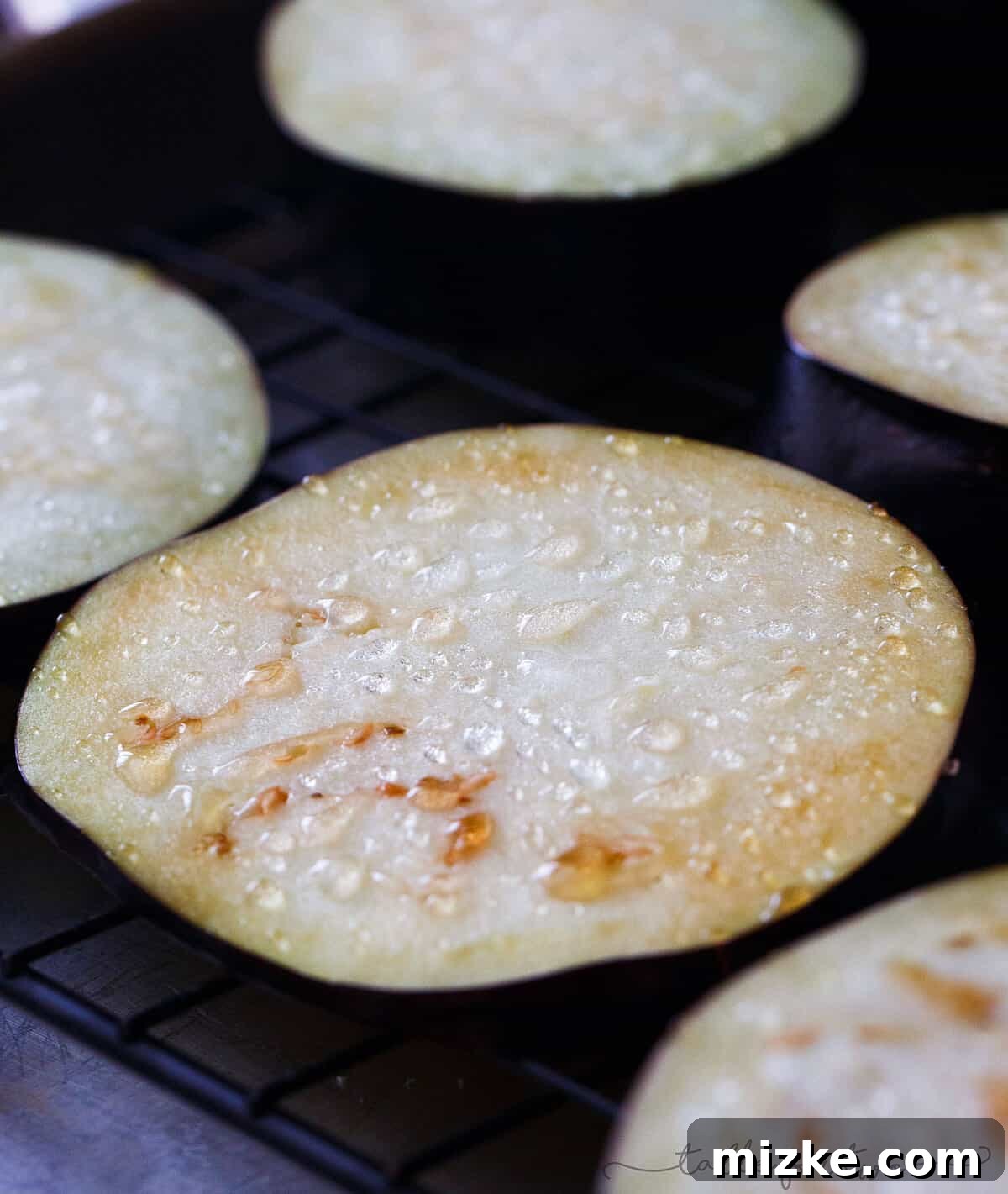
Once the eggplant has released its moisture, simply pat the slices thoroughly dry with paper towels and gently dust off any excess salt. You want to remove the salty residue, but not rinse away the concentrated flavor. After this vital step, your eggplant is perfectly primed and ready to transform into the crispiest, most flavorful Eggplant Parmesan you’ve ever tasted!
Tips for Choosing the Best Eggplant
For the best results, start with fresh, quality eggplant. Look for eggplants that are:
- Firm and Shiny: The skin should be taut, glossy, and free of blemishes, soft spots, or wrinkles.
- Heavy for their Size: This indicates a good moisture content (before salting) and fresh pulp.
- Green Stem: A fresh, green stem is another sign of recent harvest.
- Smaller is Often Better: While a large eggplant works, smaller to medium-sized eggplants tend to have fewer seeds and can be less bitter.
Can You Make Eggplant Parmesan Ahead of Time?
Yes, Eggplant Parmesan can certainly be prepped in advance, but there are a few considerations to ensure the best possible texture. The goal is always to maintain that delightful crispiness achieved through the initial salting process.
I highly recommend performing the moisture-extraction step (salting) on your eggplant slices as a crucial prep step. If you plan to bread the eggplant, it’s best to fry it immediately after patting it dry. This prevents the breadcrumbs from absorbing residual moisture and becoming soggy before cooking. Even after salting, a small amount of moisture can still be present, so frying promptly is key to crispiness.
After pan-frying the breaded eggplant slices, transfer them to a wire cooling rack. This allows air to circulate around both sides, preventing condensation from forming and steaming the breading, which would inevitably lead to sogginess. Once the slices have completely cooled, you can store them in an airtight container or plastic bag in the refrigerator for up to 2-3 days.
However, I generally advise against fully assembling the casserole dish too far in advance, especially if you prioritize a crispy breading. The marinara sauce will inevitably soften the breading over time, leading to a mealier texture. If you don’t mind a slightly softer breading, you can assemble the entire casserole, cover it tightly, and refrigerate it. When ready to bake, allow the dish to come closer to room temperature while your oven preheats. Transferring a cold ceramic or glass dish directly into a hot oven can sometimes cause it to crack.
What to Serve with Eggplant Parmesan?
Eggplant Parmesan is a satisfying meal on its own, but pairing it with complementary side dishes can elevate the dining experience. While pasta is a classic choice, here are some excellent alternatives that truly enhance this hearty Italian dish:
- Roasted Garlic Brussels Sprouts: Their slight bitterness and savory garlic notes provide a wonderful contrast to the rich parmesan.
- Quick Basic Chopped Salad: A fresh, vibrant salad with a light vinaigrette offers a refreshing counterpoint to the warm, cheesy layers.
- Roasted Delicata Squash: Sweet and earthy, roasted squash can add another layer of comforting flavor and texture.
- Garlic Bread or Focaccia: Perfect for soaking up any extra marinara sauce.
- Light White Wine: A crisp Pinot Grigio or Sauvignon Blanc pairs beautifully with the tomato and cheese flavors.
Can I Freeze Eggplant Parmesan?
Yes, Eggplant Parmesan freezes well, making it an excellent option for meal prepping or enjoying later. To ensure the best results when freezing, consider these tips:
- **Use Disposable Trays:** If you intend to freeze the entire dish, assembling it in a disposable aluminum tray is highly recommended. This allows you to transfer it directly from the freezer to the oven without the risk of cracking a ceramic or glass casserole dish due to extreme temperature changes.
- **Freezing in Glass/Ceramic:** If you must freeze it in a glass or ceramic dish, it’s crucial to let the dish thaw completely at room temperature (or in the refrigerator overnight) before placing it in a preheated oven. Skipping this step can lead to the dish cracking. However, be aware that longer thawing times can result in a softer, less crispy breading as the sauce and eggplant release moisture.
- **Individual Portions:** For convenience, consider freezing individual portions in airtight containers. This allows you to reheat only what you need.
- **Best Freezing Method (for texture):** For optimal crispiness, you can freeze the cooked, breaded eggplant slices separately before assembling. Once thawed, you can quickly re-crisp them in a pan or oven before layering and baking with fresh sauce and cheese.
Properly frozen and reheated, Eggplant Parmesan can be a delicious and convenient meal option for busy days.
If You Love This Crispy Eggplant Parmesan Recipe, Then You’ll Love These:
- Pumpkin Eggplant Parmesan Casserole with Burrata
- Eggplant Parmesan Sandwich
- Great Grandma’s Pasta Sauce
- Roasted Eggplant Fennel Pizza
Watch Me Make This Eggplant Parmesan Recipe:
Print Recipe
Crispy Eggplant Parmesan
Julie Chiou
1 hour 15 minutes
20 minutes
1 hour 35 minutes
4 servings
Equipment
-
Large rimmed baking sheet
-
Baking dish
Ingredients
- 1 large eggplant, sliced into 1/2″ thick slices
- 2 tablespoons kosher salt (DO NOT USE TABLE SALT)
- 1 ½ cup (180 g) Italian seasoned breadcrumbs
- 2 eggs
- ½ cup (118 ml) milk
- 4 tablespoons vegetable oil, for lightly pan-frying
- 3 cups (735 g) marinara sauce, homemade or store-bought
- 2 cups (224 g) whole milk mozzarella, shredded
- 1 cup (100 g) parmesan cheese, shredded
- Handful of fresh basil leaves, chopped, for garnish (optional)
Instructions
-
Lightly salt one side of your eggplant slices and arrange them on a wire rack set over a large rimmed baking sheet. Allow the liquid to draw out for 45 minutes to 1 hour. This crucial step prevents soggy eggplant!
-
Once the eggplant slices have released their liquid, gently brush off the excess salt using a damp paper towel. You want to remove the salty residue without rinsing, ensuring the eggplant isn’t overly salty.
-
In two shallow plates, prepare your breading station. Add the Italian seasoned breadcrumbs to one plate. In the second plate, whisk together the eggs and milk until well combined. Dip each eggplant slice into the egg/milk mixture, ensuring both sides are coated, then transfer to the breadcrumbs, pressing gently to adhere. Shake off any excess breadcrumbs. Place the coated slices on a clean plate or a large baking sheet and repeat until all eggplant slices are breaded.
-
Preheat your oven to 375 °F (191 °C).
-
Heat a large skillet over medium-high heat and add 1 tablespoon of vegetable oil. Once the oil is hot, add two eggplant slices to the skillet. Cook on each side until golden brown and crispy, about 2-3 minutes per side. Remove the cooked slices and place them on a large plate lined with paper towels to absorb any excess oil. Repeat this process, adding more oil as needed, until all eggplant slices are pan-fried.
-
In a large casserole dish, spread 1 cup of marinara sauce evenly on the bottom. Arrange a single layer of pan-fried eggplant slices over the sauce (you’ll likely fit about 3 slices per layer). Using a 1/4 cup measure, dollop marinara sauce sparingly over the eggplant slices; the goal is not to smother them, but to provide a light coating. Sprinkle a generous amount of shredded mozzarella and parmesan cheese over the sauce and eggplant. Repeat these layers until you’ve used all the eggplant slices. Finish the top layer with a generous amount of both mozzarella and parmesan cheese before baking.
-
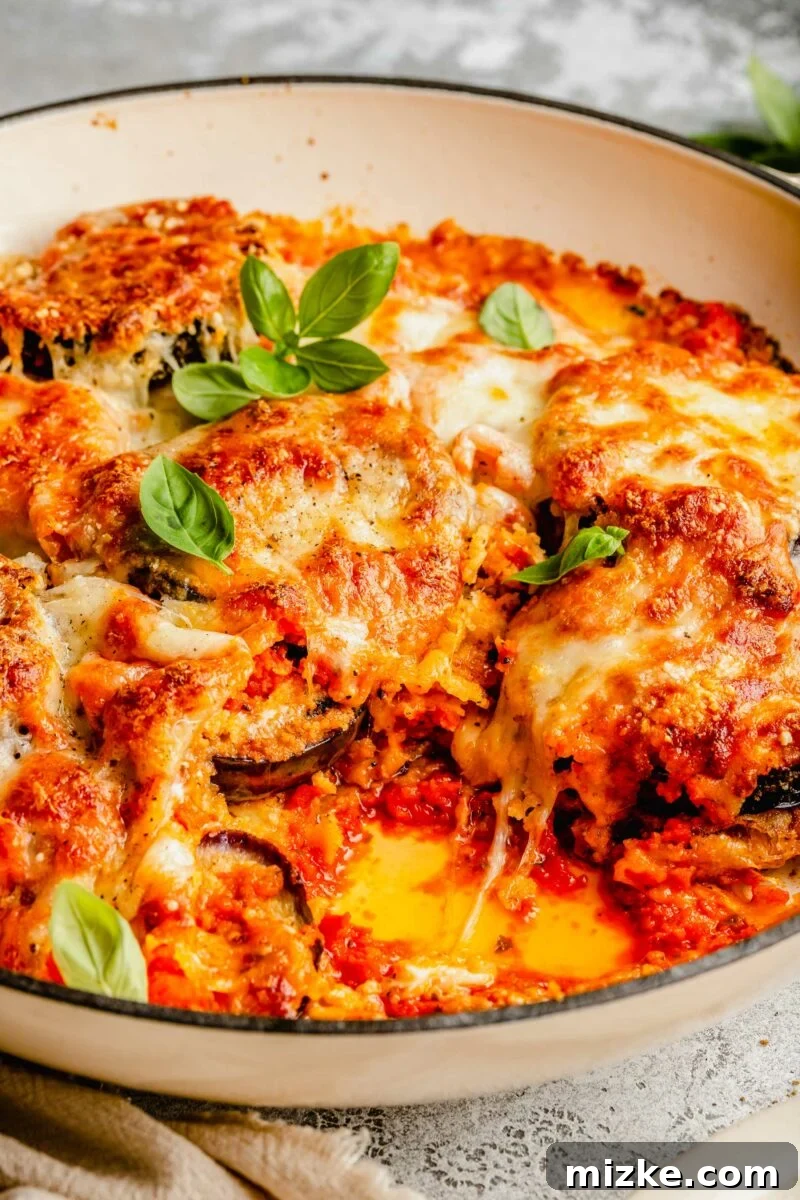
Bake for 20-25 minutes, or until the cheese is beautifully bubbly and golden brown. For an extra browned and irresistible top, you can briefly use the broiler for about 5 minutes, but watch it very carefully to prevent burning!
-
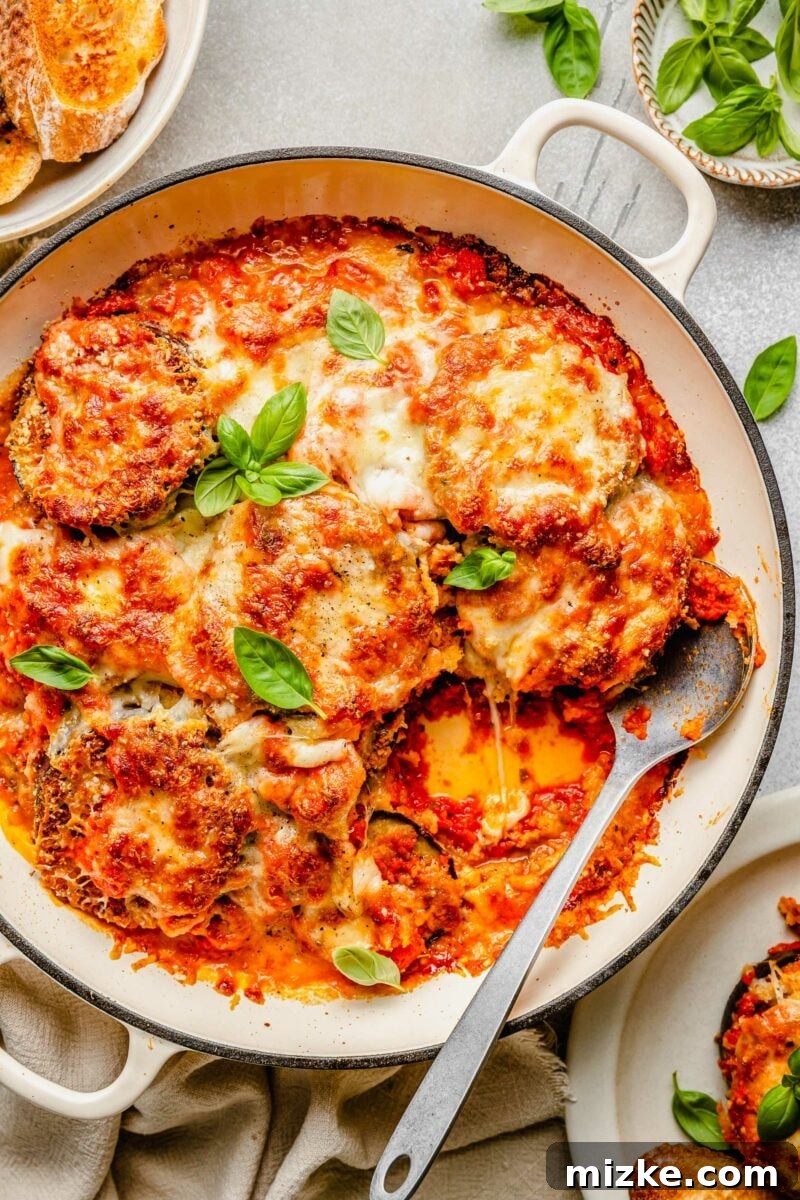
Serve your crispy Eggplant Parmesan hot, garnished with freshly chopped basil leaves, if desired. Enjoy!
Video
Nutrition Information (Approximate)
Serving: 1 serving, Calories: 723kcal, Carbohydrates: 47g, Protein: 39g, Fat: 44g, Fiber: 6g, Sugar: 9g
This website provides approximate nutrition information for convenience and as a courtesy only. Nutrition information can vary for a variety of reasons. For the most precise nutritional data use your preferred nutrition calculator based on the actual ingredients you used in the recipe.
The default measuring system for this website is US Customary. Unit conversions are provided for convenience and as a courtesy only. While we strive to provide accurate unit conversions, please be aware that there may be some discrepancies.
Photography by Eat Love Eats