
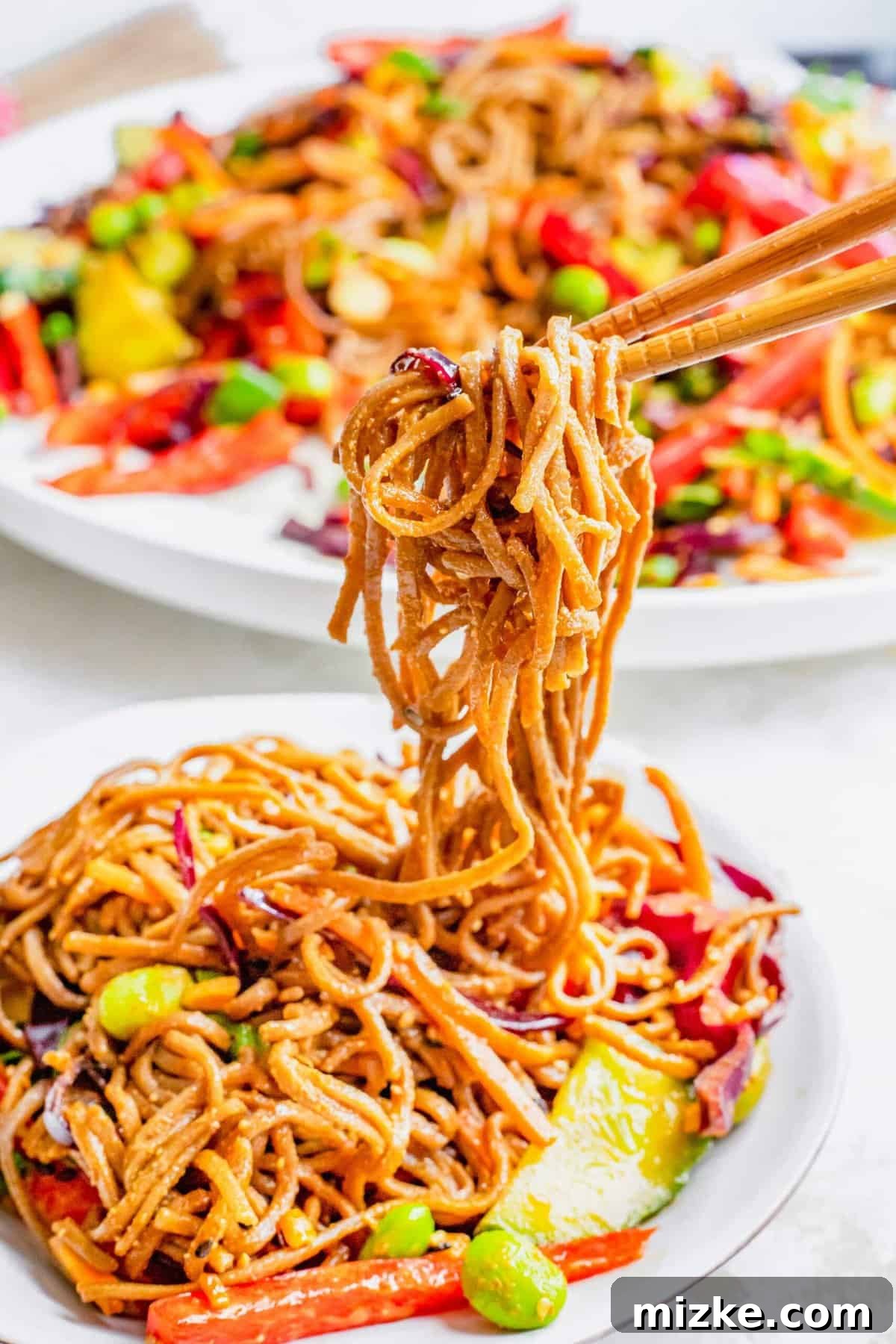
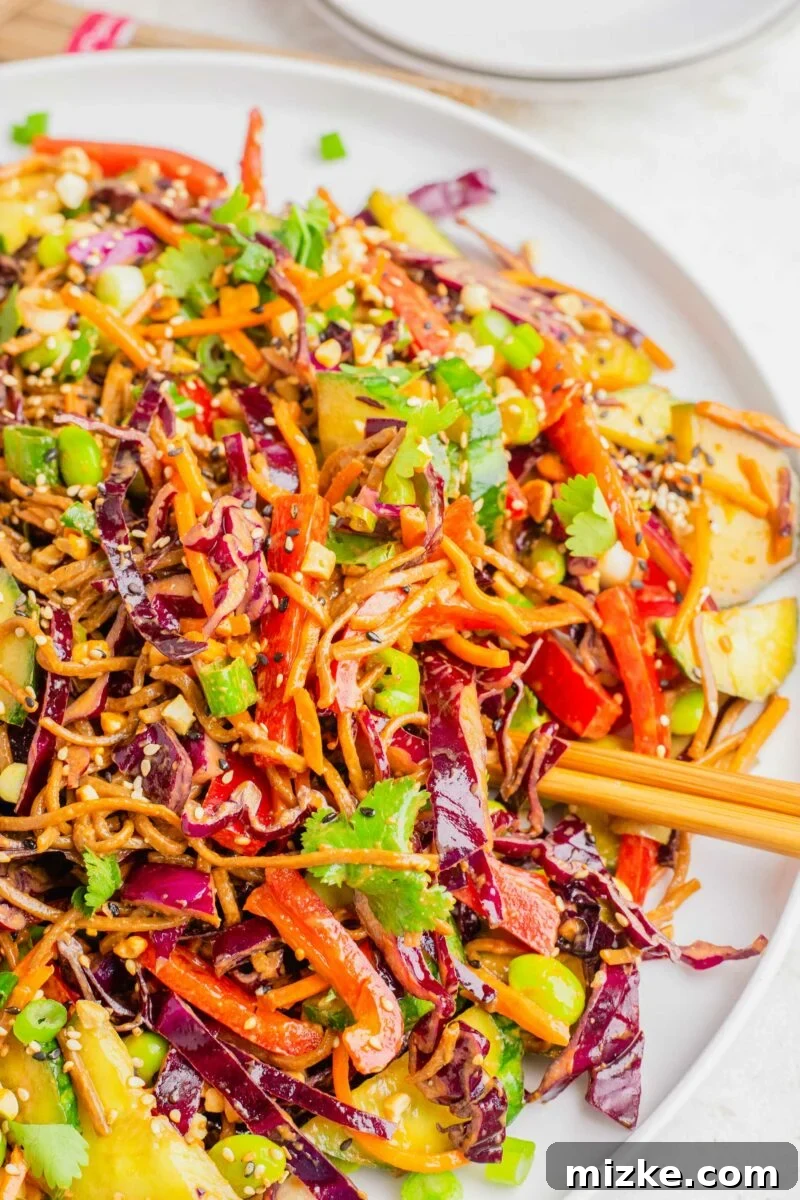
Imagine a symphony of textures and flavors dancing on your palate: tender soba noodles, crisp, colorful vegetables, and a rich, velvety peanut dressing that ties it all together. This Soba Noodle Salad with Creamy Peanut Dressing isn’t just a meal; it’s an experience. It’s an easy, healthy, and incredibly satisfying dish that you’ll find yourself craving time and time again, making it a staple in your culinary repertoire.
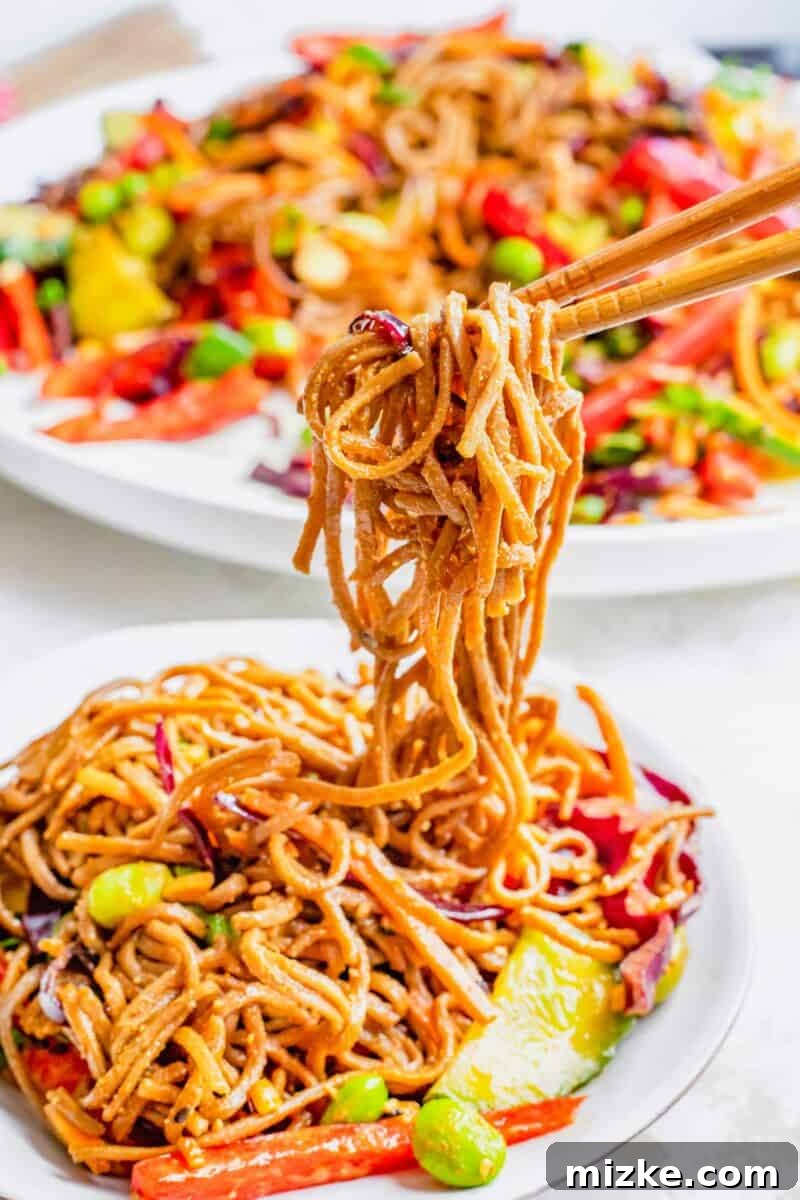
As a firm advocate for incorporating more vegetables into our diets, I wholeheartedly believe that the best way to do so is to make them utterly delicious. This soba noodle salad achieves just that, by marrying a generous array of fresh, vibrant produce with hearty soba noodles, all enrobed in a homemade creamy peanut dressing that is simply irresistible. Whether you’re looking for a light lunch to power you through the afternoon or a substantial dinner after a long day, this salad delivers complete satisfaction every single time.
What sets this particular dish apart is undoubtedly its dressing. Often, the words “salad” and “delectable” don’t find themselves in the same sentence, but this recipe is a glorious exception. The dressing transforms ordinary ingredients into an extraordinary culinary delight, elevating every forkful of this Asian-inspired creation. Its profound depth of flavor is what makes it truly unforgettable.
The secret to this dressing’s remarkable appeal lies in its thoughtfully selected ingredients. Smooth, natural peanut butter forms a creamy base, while freshly grated ginger adds a warm, zesty kick. Soy sauce (or tamari for a gluten-free option) provides that essential umami depth, perfectly balanced by the tang of rice vinegar and a subtle hint of sweetness from honey. The combination creates a rich, complex, and utterly addictive sauce that clings beautifully to every strand of noodle and every piece of vegetable, ensuring a burst of flavor in each bite.
Beyond its incredible taste, this Soba Noodle Salad boasts impressive versatility. It’s a “choose your own adventure” meal that can be easily customized to fit your preferences or whatever fresh ingredients you have on hand. Don’t fancy one of the suggested vegetables? Simply swap it out for another! Thinking of adding a different protein or a unique veggie? Toss it right in! This flexible recipe is designed to adapt to your needs and creativity. However, for your first encounter with this culinary gem, I highly recommend trying it exactly as prescribed – it’s truly a perfect composition, if I do say so myself.
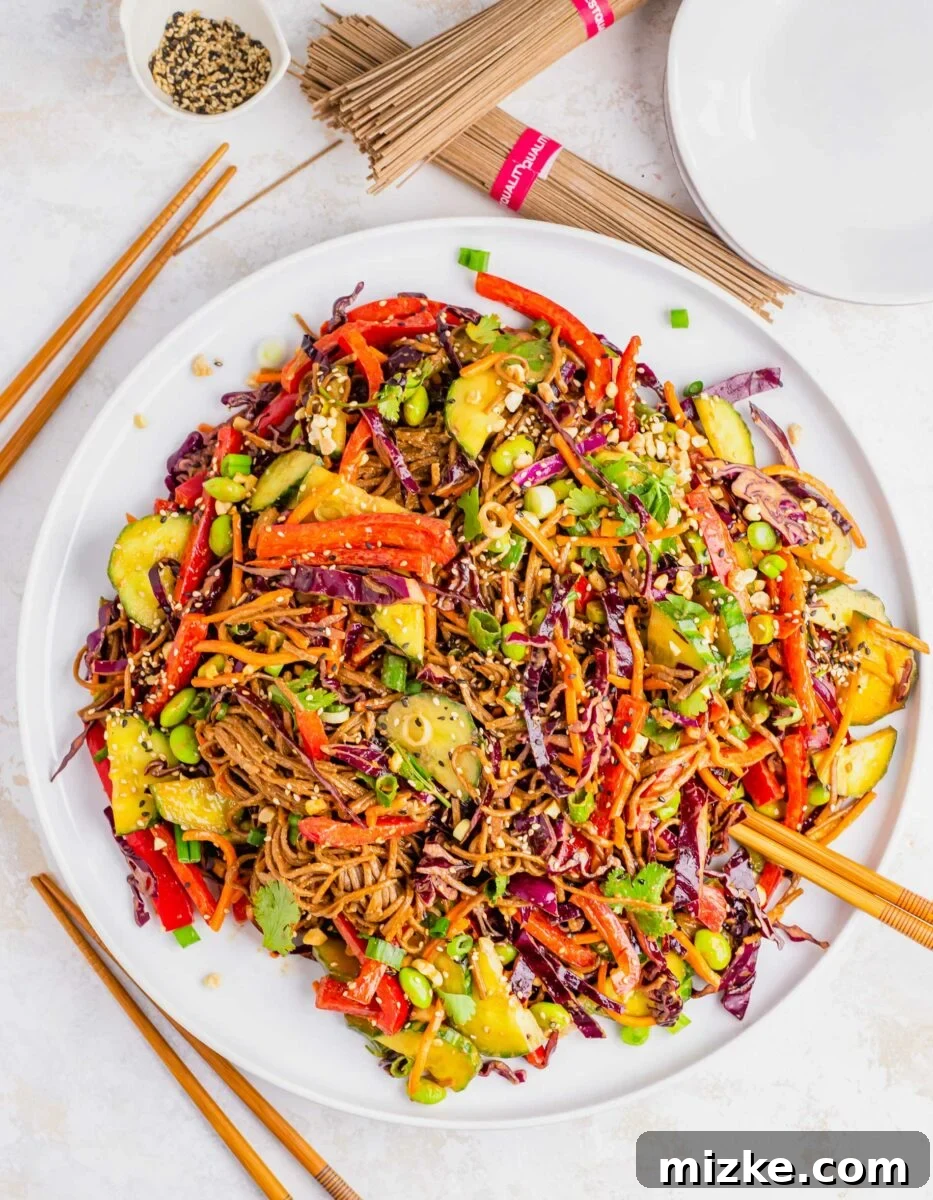
Key Ingredients for Your Perfect Soba Noodle Salad
Crafting this vibrant Soba Noodle Salad begins with selecting fresh, high-quality ingredients. Each component plays a crucial role in building the layered flavors and varied textures that make this dish so special. Here’s a breakdown of what you’ll need for both the salad base and the irresistible creamy peanut dressing:
For the Refreshing Salad Base:
- Soba Noodles: These thin, Japanese buckwheat noodles are the heart of this salad. Known for their unique nutty flavor and satisfying chewiness, they provide a wholesome, gluten-free friendly foundation (ensure 100% buckwheat if strictly gluten-free). Their quick cooking time makes them ideal for a speedy meal.
- Red Pepper: Adds a beautiful pop of color, a delightful crunch, and a subtle sweetness. Feel free to substitute with yellow or orange bell peppers for a slightly different flavor profile and visual appeal.
- Purple Cabbage: Not only does purple cabbage contribute a fantastic vibrant hue, but it also offers a satisfying crispness and a wealth of nutrients. It’s low in calories and packed with antioxidants, making it a healthy addition you can generously include.
- Edamame Beans: These vibrant green soybeans bring a tender texture, a touch of sweetness, and a boost of plant-based protein, making the salad more filling and nutritious. If using frozen, remember to thaw them to room temperature before incorporating them into the salad.
- Carrots: Julienne them into thin sticks to add a sweet, earthy flavor and another layer of pleasant crunch. Carrots are rich in beta-carotene and add a lovely brightness.
- Cucumber: Thinly sliced cucumbers provide a refreshing, cool element that contrasts beautifully with the richness of the dressing. Their high water content also adds a delightful juiciness to the salad.
- Roasted Peanuts: Roughly chop these for an extra layer of nutty flavor and a crucial textural component. They add a satisfying crunch that complements the softer noodles and veggies.
- Green Onions: Both the white and light green parts are thinly sliced and used within the salad for a mild, pungent freshness. A portion is also reserved as a garnish for an extra burst of flavor and visual appeal.
- Cilantro: This fresh herb provides a bright, citrusy, and slightly peppery flavor that is quintessential to many Asian-inspired dishes. I personally love to add a little extra both mixed into the salad and sprinkled on top as a garnish.
For the Luscious Creamy Peanut Dressing:
- Peanut Butter: Opt for smooth peanut butter, ideally one with no added sugar, to ensure a clean, rich peanut flavor. The creamy texture is key to the dressing’s luxurious consistency.
- Fresh Ginger: Grated fresh ginger is non-negotiable here. Its bright, spicy, and aromatic notes provide an invigorating kick that artificial ginger simply cannot replicate.
- Sesame Oil: This fragrant oil adds a distinctive nutty aroma and depth of flavor. For an even warmer, deeper, and more intense flavor, consider using toasted sesame oil.
- Soy Sauce: The cornerstone of umami in this dressing. Use regular soy sauce, or opt for tamari if you need a gluten-free alternative. Low-sodium varieties are also a great choice for managing salt intake without sacrificing flavor.
- Rice Vinegar: Provides the essential acidity that balances the richness of the peanut butter and the saltiness of the soy sauce. In a pinch, white wine vinegar or apple cider vinegar can be used as a substitute.
- Honey (Optional): A small amount of honey adds a wonderful hint of sweetness that rounds out the flavors and balances the savory, spicy, and tangy notes. For a completely vegan version, maple syrup makes an excellent alternative.
- Water: Room temperature water is used to thin the dressing to a pourable consistency, ensuring it coats the noodles and vegetables evenly without being too thick or watery.
Optional Garnishes to Elevate Your Plate:
Once assembled, a final touch of fresh garnishes will not only enhance the presentation but also provide additional bursts of flavor and texture.
- Fresh Cilantro: A sprinkle of extra chopped or torn cilantro.
- Green Onions: Thinly sliced green onions for a fresh, mild oniony bite.
- Sesame Seeds: A dash of white or black sesame seeds adds a beautiful finish and a delicate nutty flavor.
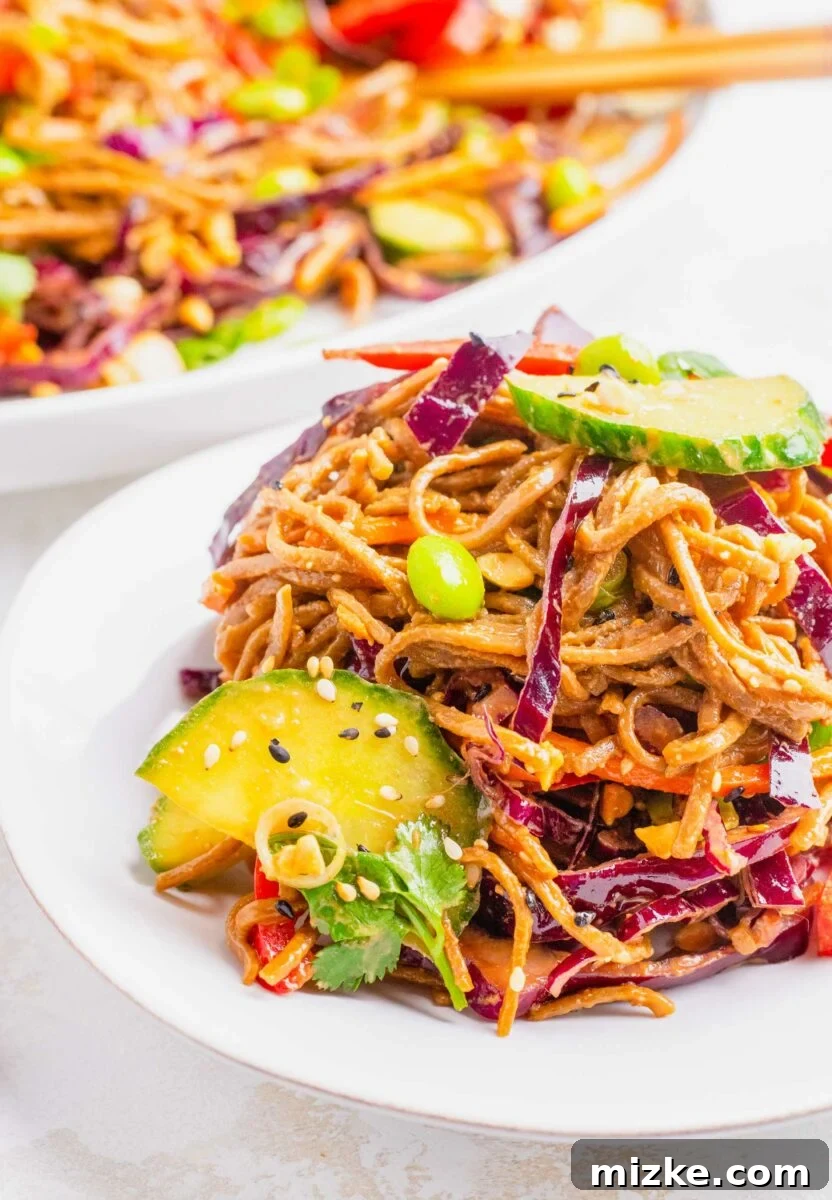
What if I Can’t Find Soba Noodles?
While soba noodles are generally easy to find these days, especially in the international or Asian food aisle of most large grocery stores, don’t let their absence deter you from making this incredible salad. If soba noodles aren’t available, or if you simply prefer an alternative, there are several great substitutes that will still yield a delicious result.
You can readily use regular spaghetti or even cooked ramen noodles (discarding the seasoning packet, of course). Other excellent options include rice vermicelli noodles for a lighter texture, or even whole wheat spaghetti if you’re looking for a higher fiber content. For a low-carb twist, spiralized zucchini noodles (zoodles) can be used, though they will require less cooking time and should be tossed gently. The key is to choose a noodle that holds up well to a rich dressing and complements the fresh vegetables.
How Long Will Soba Noodle Salad with Creamy Peanut Dressing Stay Fresh?
One of the many advantages of this Soba Noodle Salad is its fantastic meal prep potential. Stored properly in an airtight container in the refrigerator, this vibrant salad will remain fresh and delicious for up to 3 days. This makes it an ideal option for preparing a batch at the beginning of the week, ensuring you have a healthy, satisfying, and flavorful lunch or dinner ready to go.
Imagine the convenience of grabbing a container of this scrumptious salad from the fridge and bringing it into the office, effortlessly making all your coworkers envious with its enticing aromas and colorful presentation. For optimal enjoyment, allow the salad to come to room temperature for about 15-20 minutes before serving, or enjoy it chilled, depending on your preference. The flavors tend to meld and deepen beautifully after a few hours or overnight in the fridge, making it even more delicious the next day.
What Else Can I Add to the Soba Noodle Salad?
While this Soba Noodle Salad is undoubtedly robust and flavorful on its own, it also serves as a perfect canvas for culinary creativity. It already has a wonderful array of ingredients, but if you’re looking to personalize it further, add more bulk, or enhance its nutritional profile, there are numerous delicious additions you can consider:
Boost Your Protein:
- Chicken: Shredded or diced grilled chicken breast adds lean protein and makes the salad more substantial.
- Steak: Thinly sliced marinated steak (e.g., flank or skirt steak) offers a rich, savory element.
- Shrimp: Cooked and chilled shrimp provides a delightful seafood option that pairs wonderfully with the peanut dressing.
- Tofu or Tempeh: For a plant-based protein boost, pan-fried or baked tofu cubes, or crumbled tempeh, are excellent choices. They absorb the dressing beautifully.
Expand Your Veggie Horizon:
- Bean Sprouts: For an extra layer of fresh crunch and a slightly earthy flavor.
- Broccoli Slaw: A convenient way to add more texture and nutrients.
- White Cabbage: A milder alternative or addition to purple cabbage, offering a different visual dynamic.
- Radish: Thinly sliced radishes introduce a peppery bite and a refreshing crispness.
- Bell Peppers: Incorporate yellow or orange bell peppers for a sweeter note and varied color.
- Snap Peas or Snow Peas: Offer a sweet crunch and vibrant green color.
- Avocado: Diced avocado adds a creamy texture and healthy fats, though best added just before serving.
Make it Vegan:
To ensure this delightful salad is entirely vegan, simply swap the honey in the dressing for an equal amount of maple syrup. This maintains the essential sweetness that balances the other bold flavors without using animal products.
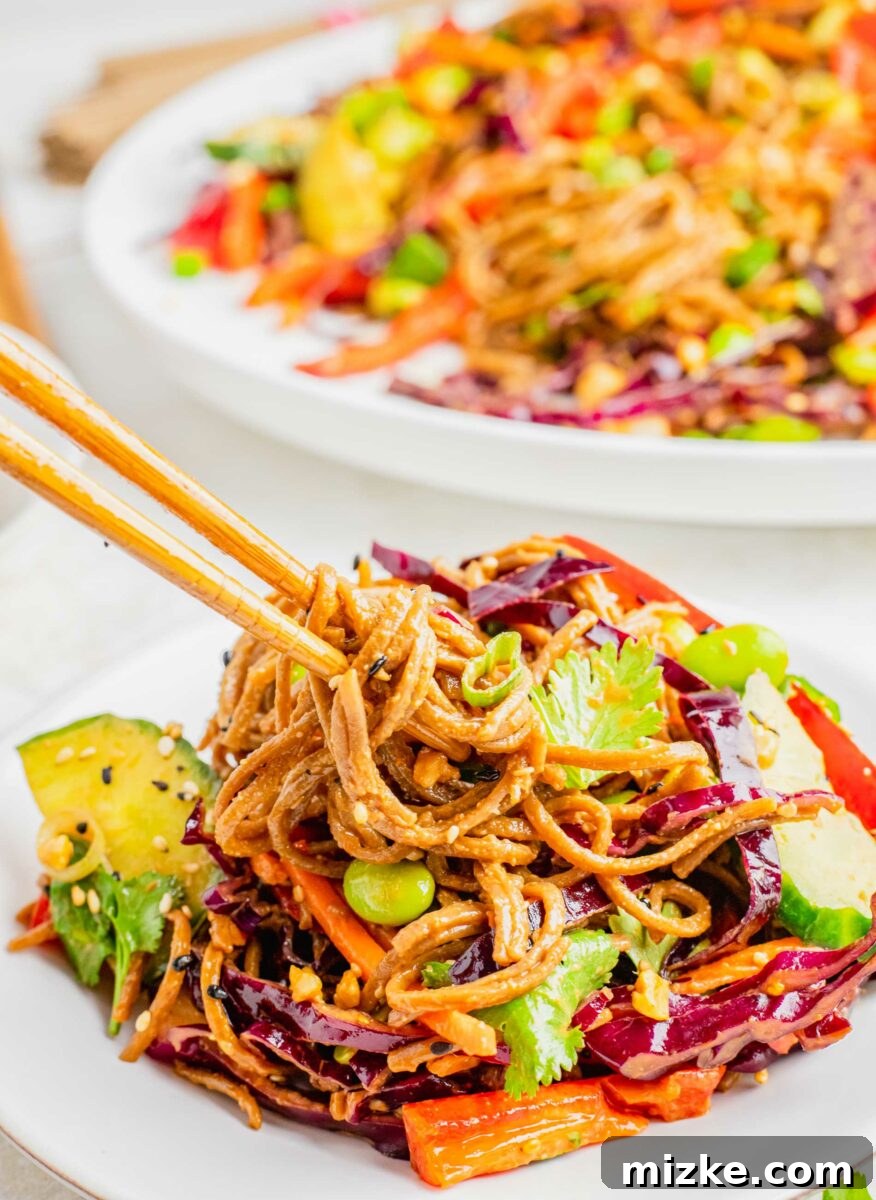
Preparation: Crafting Your Soba Noodle Masterpiece
Creating this Soba Noodle Salad is a straightforward process, making it perfect for both novice and experienced cooks. Follow these simple steps to bring your delicious meal to life:
Step-by-Step Instructions:
- Prepare Your Vegetables: Begin by washing and preparing all your chosen vegetables. Julienne the red pepper and carrots into thin sticks. Thinly slice the purple cabbage and cucumber (halving it first for easier slicing). If using frozen edamame, ensure they are thawed to room temperature. Chop the roasted peanuts and finely slice the green onions (reserving ¼ cup for garnish). Coarsely tear or chop the fresh cilantro (reserving ¼ cup for garnish). Having all your vegetables prepped and ready will streamline the assembly process.
- Cook the Soba Noodles: Bring a pot of water to a rolling boil. Add the soba noodles and cook according to the package instructions, usually 4-7 minutes, until al dente. Overcooked soba noodles can become mushy, so keep an eye on them. Once cooked, drain them thoroughly and rinse under cold water to stop the cooking process and prevent sticking. Drizzle the cooled noodles with a teaspoon of sesame oil and toss gently to ensure they are lightly coated, which further prevents clumping. Set aside.
- Whip Up the Creamy Peanut Dressing: In a small mixing bowl, combine the smooth peanut butter, grated fresh ginger, sesame oil, soy sauce, and rice vinegar. If you are using honey (or maple syrup for a vegan version), add it now. Mix these ingredients vigorously until they form a thick, cohesive paste. Gradually add the room temperature water, about a tablespoon at a time, continuously whisking until the dressing achieves a smooth, pourable consistency. It should be thick enough to cling to the noodles and vegetables but still easy to mix. Adjust water to your desired thickness.
- Assemble the Salad: In a large salad bowl, place the prepared soba noodles at the bottom. Arrange all the chopped and sliced vegetables over the noodles. This layering ensures all ingredients are ready to be evenly coated.
- Dress and Toss: Pour the freshly made creamy peanut dressing over the noodles and vegetables. Using tongs or your hands (if you prefer), thoroughly mix and toss the salad until every noodle and vegetable piece is evenly coated with the luscious dressing. This is crucial for distributing the incredible flavors throughout the entire dish.
- Garnish and Serve: Transfer the salad to individual plates or a serving platter. Garnish generously with the reserved chopped green onions, fresh cilantro, and a sprinkle of sesame seeds, if using. Serve immediately at room temperature or chilled for a refreshing twist.
Soba Noodle Salad with Creamy Peanut Dressing Recipe
Print Recipe
Soba Noodle Salad with Creamy Peanut Dressing
Ingredients
For Salad:
- 1 red pepper, julienned / sliced into sticks
- 1 ½ cup (134 g) purple cabbage, thinly sliced
- 1 cup (237 g) edamame beans, thawed if frozen
- 1 cup (128 g) julienned carrots
- 1 cup (133 g) cucumber, halved and thinly sliced
- ¼ cup (37 g) chopped roasted peanuts
- 2 stalks of green onions, white and light green parts only, thinly sliced and divided. Reserve ¼ cup for garnish.
- 1 cup (16 g) fresh cilantro, coarsely torn / chopped. Reserve ¼ cup for garnish.
- 180 grams of soba noodles
For Dressing:
- ¼ cup (65 g) smooth peanut butter, no added sugar preferred
- 1 teaspoon grated fresh ginger
- 1 ½ tablespoon sesame oil
- 2 tablespoons soy sauce, *use gluten free soy sauce if necessary
- 1 tablespoon rice vinegar
- 1 teaspoon honey, optional (*use 1 tsp of maple syrup for a vegan version)
- ¾ cup (177 ml) of water, room temperature
For Garnish:
- ¼ cup (25 g) of green onions, chopped
- ¼ cup (4 g) of fresh cilantro, chopped/coarsely torn
- Sesame seeds, optional
Instructions
-
Prepare and cut/slice all the vegetables, then set aside.
-
Cook soba noodles according to the instructions on the package. Once noodles are cooked, drain and drizzle with sesame oil, ensuring noodles are coated to prevent sticking together. Set aside.
-
In a small bowl, mix all ingredients for the dressing (except water) until it forms a thick paste. Add water a little at a time until the dressing is still thick but has reached a pourable consistency.
-
In a large salad or mixing bowl, place noodles on the bottom and add all the prepared vegetables.
-
Pour in the dressing, mix thoroughly until the noodles and vegetables are evenly coated.
-
Garnish with green onions, cilantro, and sesame seeds if using.
Notes
This salad is best served at room temperature or cold. For a cold salad, place it in the refrigerator for 30 minutes prior to serving.
Leftovers can be stored in sealed containers in the refrigerator for up to 3 days.
The vegetables listed in the ingredients, along with their quantities, are guidelines. Feel free to add more of the vegetables you like best, or substitute with other types of veggies.
Bean sprouts, broccoli slaw, white cabbage, and radish make wonderful additions or substitutions and give a nice crunch to the salad.
For a sweeter dressing, add ½ tsp of extra honey (or maple syrup, if vegan), though this may not be necessary if the peanut butter used already contains sugar.
Rice vinegar (if not available in your pantry) can be substituted with apple cider vinegar or white wine vinegar.
Nutrition
This website provides approximate nutrition information for convenience and as a courtesy only. Nutrition information can vary for a variety of reasons. For the most precise nutritional data use your preferred nutrition calculator based on the actual ingredients you used in the recipe.
The default measuring system for this website is US Customary. Unit conversions are provided for convenience and as a courtesy only. While we strive to provide accurate unit conversions, please be aware that there may be some discrepancies.
Want More Delicious & Satisfying Salad Recipes?
If you’ve fallen in love with the vibrant flavors and wholesome goodness of this Soba Noodle Salad, you’re in luck! There’s a whole world of exciting and satisfying salad recipes waiting to be explored. From hearty main courses to refreshing sides, salads can be incredibly versatile and delicious. Here are some other fantastic recipes that are sure to hit the spot and add variety to your meal plan:
- Grilled Rosemary Chicken Salad
- Mediterranean Pasta Salad
- Shredded Chicken Kale Caesar Salad with Parmesan Crisps
- Warm Roasted Brussels Sprouts Salad with Farro
Whether you’re seeking a quick lunch, a delightful dinner, or a meal prep solution that keeps you excited about healthy eating, this Soba Noodle Salad with Creamy Peanut Dressing is an absolute winner. Its combination of fresh ingredients, satisfying textures, and an unforgettable dressing makes it a dish you’ll return to again and again. Don’t hesitate to experiment with your favorite additions and make it truly your own. Enjoy the vibrant flavors!