
Embarking on the journey of preparing authentic and delicious Chinese or Taiwanese dishes at home can be incredibly rewarding. However, a common hurdle many home cooks face is the perceived complexity of stocking an Asian pantry. Often, people hesitate to purchase unique sauces or spices, fearing they’ll only use them once or won’t know how to incorporate them into other recipes.
We completely understand this frustration! It’s an issue of both budget and minimizing waste. That’s why we’ve meticulously curated this comprehensive guide to the essential sauces and ingredients we consistently keep in our kitchen. More importantly, we’ll demonstrate how these versatile staples can be combined to create an array of flavorful sauces, perfect for elevating your stir-fries, noodle dishes, and much more.
Please note that this guide reflects the staples I personally rely on, drawing from years of home cooking and the culinary traditions passed down by my mother. While preferences may vary among Chinese or Taiwanese families, these are the ingredients I find most useful and foundational for creating truly authentic flavors.
Before we dive into the ingredients, let’s touch upon the importance of cultural appreciation in cooking. When attempting a culturally significant recipe, using the correct ingredients is paramount to creating a truly traditional dish. Substituting key components often fundamentally alters the flavor profile, deviating significantly from the authentic experience. There’s a distinction between trying to recreate a beloved dish at home, knowing it might not be 100% precise, and (especially for those sharing online) completely altering a recipe with substitutions without understanding its original essence. To truly honor a cuisine, embracing its foundational ingredients is essential.
This perspective might not resonate with everyone, and that’s perfectly fine. We all have our culinary philosophies, and mine emphasizes respect for the authentic flavors and traditions that define these incredible cuisines.
Unlocking Flavor: A Deep Dive into Soy Sauces
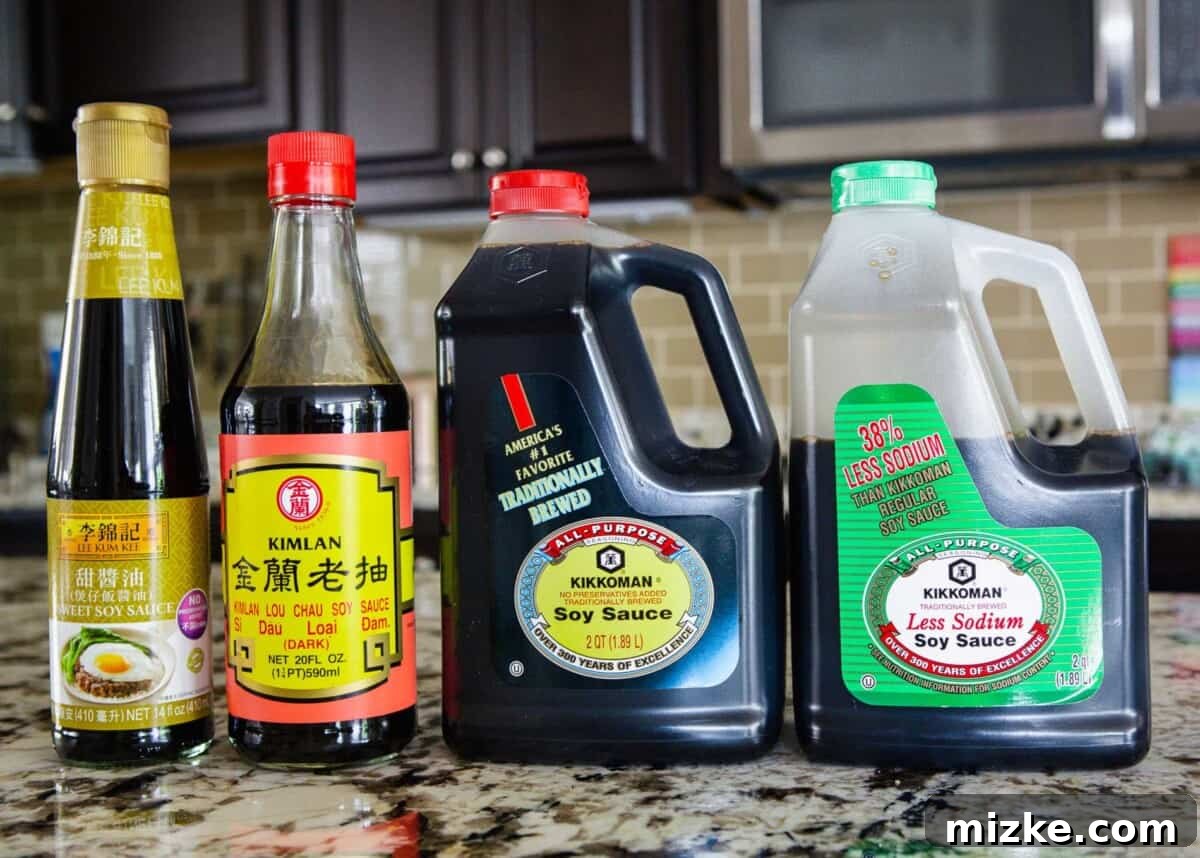
Many assume “soy sauce” is a singular ingredient, but the world of soy sauces is incredibly diverse, offering a spectrum of flavors, colors, and textures. Just like fine wines or hot sauces, each type plays a distinct role in Asian cooking.
Regular Soy Sauce (Light Soy Sauce)
This is the ubiquitous soy sauce found in most grocery stores, often labeled simply “soy sauce” or “light soy sauce” in Asian markets. However, not all brands are created equal.
For convenience and accessibility, brands like Kikkoman are excellent choices, often available in larger, economical sizes at stores like Costco. They offer a good, balanced flavor profile suitable for everyday Asian cooking. However, for a richer, more authentic taste, I highly recommend exploring Chinese or Japanese brands available at Asian supermarkets. These often provide a deeper umami, more complex notes, and a foundational flavor that elevates your dishes. Personally, I steer clear of generic “store brand” soy sauces, finding them often lacking the true depth essential for authentic Asian flavors.
When shopping at an Asian market, look for labels that simply say “soy sauce” if you want the standard variety. Unless explicitly stated as “low sodium,” you can generally assume it’s regular or “light” soy sauce, referring to its color, not its sodium content.
Low Sodium Soy Sauce
As the name suggests, this version contains less sodium. It’s a staple in my kitchen because it allows me greater control over the salt content of my dishes. Often, the robust flavor of regular soy sauce is sufficient without its full sodium impact, enabling you to build complex flavors without over-salting. In Asian markets, you’ll specifically find it labeled as “low sodium soy sauce” or sometimes synonymously as “light soy sauce” (referring to its reduced salt, not just color, in this context). If a bottle isn’t specifically marked, it’s safe to assume it’s the regular variety.
Dark Soy Sauce
A true game-changer in Asian cuisine, dark soy sauce is a favorite for its distinctive qualities. It boasts a beautiful, rich, dark brown color and a slightly thicker consistency. Counterintuitively, it is actually less salty than regular soy sauce. Its primary role is to impart a gorgeous, deep caramel color to dishes, reminiscent of the vibrant hues seen in restaurant-quality noodles and rice. My mother frequently used it for marinating, and I love combining it with low sodium soy sauce to build complex, visually appealing sauces.
Sweet Soy Sauce
This delightful variant is another personal favorite, though it can be a bit more elusive to find, even in some Asian markets. Sweet soy sauce offers a wonderful balance of sweet and savory notes, enhancing the depth of any sauce it’s added to. If you struggle to find it, a clever hack is to whisk a small amount of dark brown sugar into your regular soy sauce mixture, replicating a similar sweetness and richness. However, if you’re already incorporating other sweeteners like honey, you might want to adjust or omit sweet soy sauce to maintain balance.
Essential Oils & Flavorful Sauces Beyond Soy
Sesame Oil
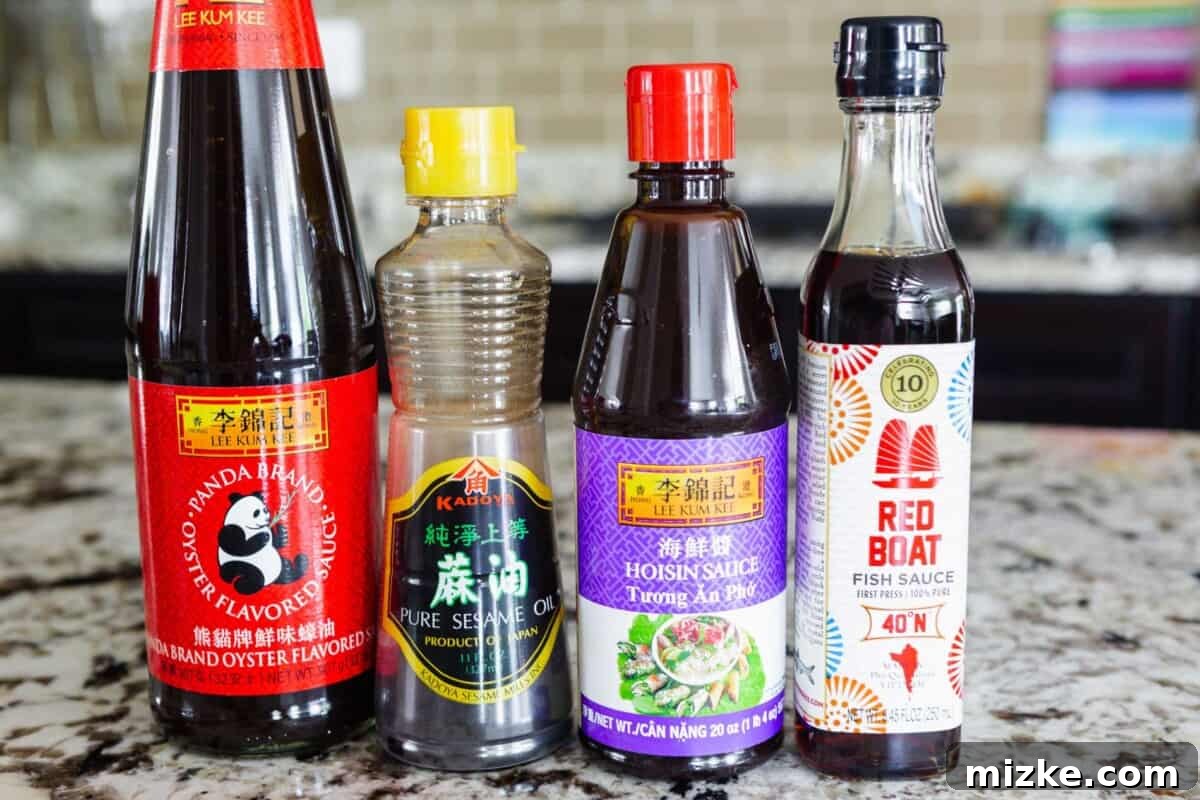
Sesame oil is an incredibly aromatic and flavorful oil, a true cornerstone in most Asian pantries. The Kadoya brand, pictured, is a classic choice, and the rich amber or brown color signifies it’s toasted sesame oil, offering a much deeper, nuttier flavor compared to untoasted varieties. Some specialty stores also carry black sesame oil, which is even richer and darker, though toasted sesame oil is perfectly suitable for daily cooking and widely versatile.
When cooking with sesame oil, a little goes a long way. Its potent flavor can easily overpower a dish if used excessively. Furthermore, it has a relatively low smoke point, making it unsuitable for direct high-heat cooking in a hot skillet. Instead, sesame oil is best incorporated into sauces, drizzled as a finishing oil, or used to add a final aromatic flourish just before serving, allowing its delicate nutty aroma to truly shine.
Hoisin Sauce
Often recognized as the sweet, savory sauce accompanying Peking duck or as a condiment at Pho restaurants, hoisin sauce is a thick, reddish-brown sauce made from fermented soybeans. Its flavor profile is complex, offering notes of semi-sweetness, savory depth, and a subtle nuttiness. While it’s challenging to pinpoint its exact taste, it’s undeniably unique and adds significant character to various dishes. I frequently incorporate hoisin sauce into my homemade sauces, where it contributes an extra layer of savory-sweet richness, deepening the overall flavor profile of stir-fries and marinades.
Fish Sauce
Fish sauce is a polarizing ingredient – you either love its potent aroma and incredible umami or you steer clear. Much like anchovies, its strong presence might deter some, but its ability to transform dishes is undeniable. For years, I adored the complex flavor of Tom Yum soup without realizing fish sauce was the secret ingredient I loved so much. Once I discovered its role, I became a true convert!
Even if you’re not a fan of fish, don’t dismiss fish sauce entirely. Used sparingly, often just a teaspoon, it provides an unparalleled umami boost, adding depth and complexity to sauces and broths without imparting an overtly “fishy” taste. It truly elevates a dish, creating that elusive savory richness. The brand pictured is a personal favorite for its flavor profile and is increasingly available in mainstream grocery stores, making it easier than ever to add this powerful flavor enhancer to your pantry.
Oyster Sauce
Another love-it-or-hate-it condiment, oyster sauce holds a special place in my heart – I’ve adored its flavor since childhood, often dipping meats directly into it! Despite its name, oyster sauce doesn’t taste like oysters at all. It’s a thick, rich, savory sauce with a hint of sweetness, packed with a phenomenal umami punch. Its consistency can sometimes make it a challenge to dispense from the traditional glass bottles (much like a Heinz ketchup bottle needing a good whack!). The panda-labeled brand, a ubiquitous sight in Asian kitchens and my own, is a popular and reliable choice.
Oyster sauce is a potent flavor enhancer; a small amount can significantly amplify the savory depth of your sauces, stir-fries, and marinades. When in doubt, a dash of oyster sauce often provides that missing layer of deliciousness. For those seeking a plant-based alternative, vegetarian oyster sauce (often mushroom-based) is now widely available. While I haven’t personally used it extensively, it aims to replicate the umami and texture of its traditional counterpart.
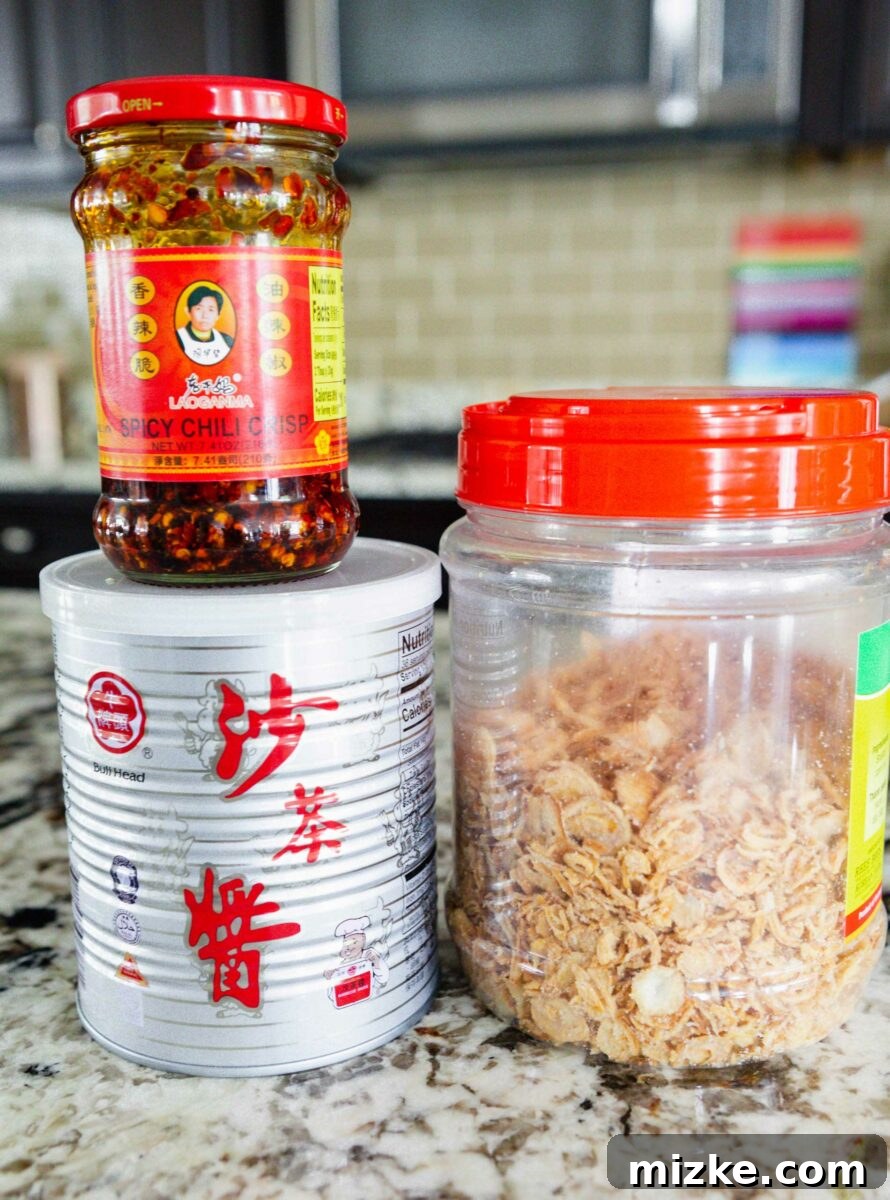
Sacha Sauce (Chinese BBQ Sauce)
Known as Chinese BBQ sauce, sacha sauce bears little resemblance to the sweet, smoky BBQ sauces common in Western cuisine. The iconic Bullhead brand, with its distinctive can, is a staple in virtually every Chinese household – almost a rite of passage! We always had a can of it in our fridge growing up, and its versatility is unmatched.
Sacha sauce is a flavor powerhouse, featuring a complex blend of dried fish, garlic, shallots, chili, sesame, and spices suspended in oil. It’s most commonly used in hot pot as a dipping sauce, but its rich, savory, slightly spicy, and nutty profile makes it incredible for marinating meats, enhancing noodle dishes, or even serving as a standalone sauce with rice. A single spoonful can transform a simple dish. Due to its texture and oil separation, remember to give it a good stir before each use, much like natural peanut butter. It can be a bit messy, so a paper towel under the can in the fridge is a common practice!
Sambal Oelek and Chili Garlic Sauce
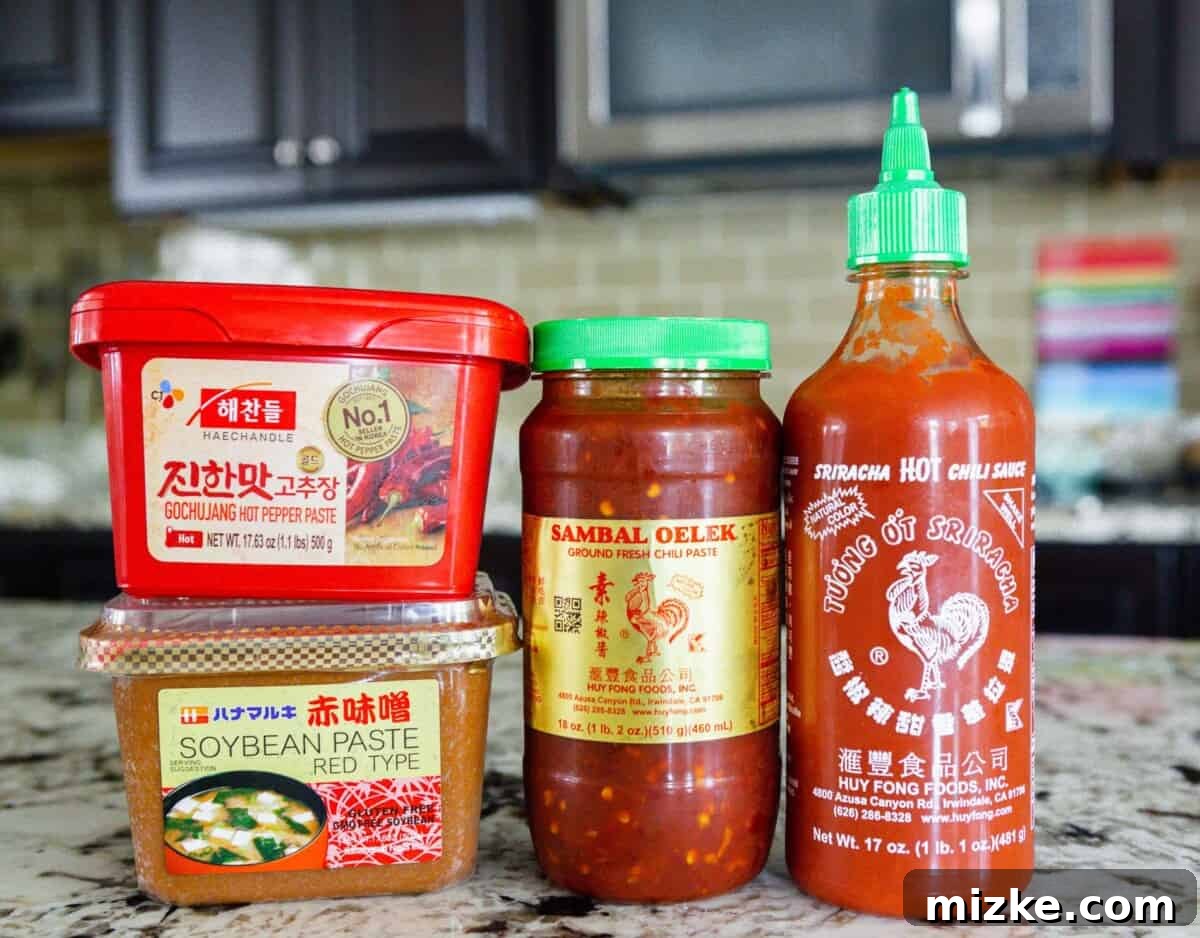
The green-topped jar of Huy Fong Foods’ Sambal Oelek is an instantly recognizable and readily available condiment in many kitchens. This all-purpose chili paste is a simple yet potent blend of ground fresh chilies, offering a clean, fiery kick and vibrant flavor to any sauce or dish. I always keep a large jar in my fridge for its ability to add instant spice.
From the same brand, you’ll also find Chili Garlic Sauce. While similar, it includes finely minced garlic and other seasonings, offering a more complex flavor profile and often a slightly milder heat level than plain Sambal Oelek. Both are excellent for adding a spicy, aromatic boost, but their distinct characteristics allow for nuanced application depending on your desired flavor.
Sriracha
Sriracha, particularly the iconic Huy Fong rooster sauce, has achieved global recognition. However, it’s crucial to understand that sriracha is a distinct condiment with its own unique sweet, tangy, and spicy profile. It should not be treated as a generic “hot sauce” replacement for other chili products like chili garlic sauce or chili oil.
Its flavor is unique, just as ketchup cannot replace marinara sauce. While sriracha has become incredibly popular across diverse culinary landscapes, understanding its flavor root prevents misapplication. I personally love sriracha as a vibrant topping for noodle dishes or stirred into sauces for a touch of its signature heat and tang – its use truly depends on the desired flavor outcome.
Chili Crisp
When we talk about chili crisp, we’re talking about the legend: Lao Gan Ma chili crisp. Often imitated but rarely duplicated, the OG Lao Gan Ma is *the* benchmark. While other brands (and even popular grocery chains) offer their versions, none quite capture the unique magic of Lao Gan Ma.
LGA chili crisp is a textural and flavor marvel. It delivers a subtle, pleasant warmth rather than an overpowering burn, combined with a captivating mix of salty, savory, anise, and a distinct “beany” depth, thanks to ingredients like fermented soybeans. It’s incredibly addictive and versatile. I literally put this on everything – ramen, eggs, fried rice, avocado toast, you name it. It’s a crunchy, aromatic condiment that elevates almost any dish.
Gochujang (Korean Chili Paste)
For dishes leaning into Korean flavors, a small addition of gochujang is often key. This thick, reddish-brown fermented chili paste is a cornerstone of Korean cuisine, offering a complex profile of sweet, savory, and spicy notes. It typically comes in tubs, as pictured, and walking down the gochujang aisle in a Korean grocery store reveals a staggering variety, each with differing heat levels and fermentation characteristics.
It’s important to clarify a common misconception: gochujang is *not* a direct substitute for Korean red chili powder (gochugaru) in recipes like kimchi. Gochujang adds both heat and a unique fermented sweetness and depth that gochugaru does not. When purchasing, pay close attention to the heat levels – I’ve learned this the hard way! A “hot” variety can be significantly spicier than a “mild,” requiring adjustments in quantity to prevent overwhelming your dish.
Miso Paste (Japanese Fermented Soybean Paste)
If you’re aiming to infuse an elusive umami depth that leaves guests wondering about your secret ingredient, miso paste is your answer. This traditional Japanese seasoning is made from fermented soybeans (and often rice or barley), forming a thick, rich paste. While most commonly known as the base for miso soup, incorporating a small amount into your sauces dramatically amplifies their savory complexity. Be mindful of its inherent saltiness; a little truly goes a long way. When using miso, I often adjust the liquid content of my sauce to prevent it from becoming overly salty.
The world of miso is vast and can be daunting. Varieties include white (shiro), red (aka), and yellow (awase), each differing in fermentation time and resulting flavor – from sweet and mild to rich and pungent. There are also different grains used (rice, barley, soybean only) and regional variations. For an excellent deep dive, Nami’s miso post here is highly recommended. My go-to is typically red miso, which tends to be soybean-based and offers a robust, salty flavor.
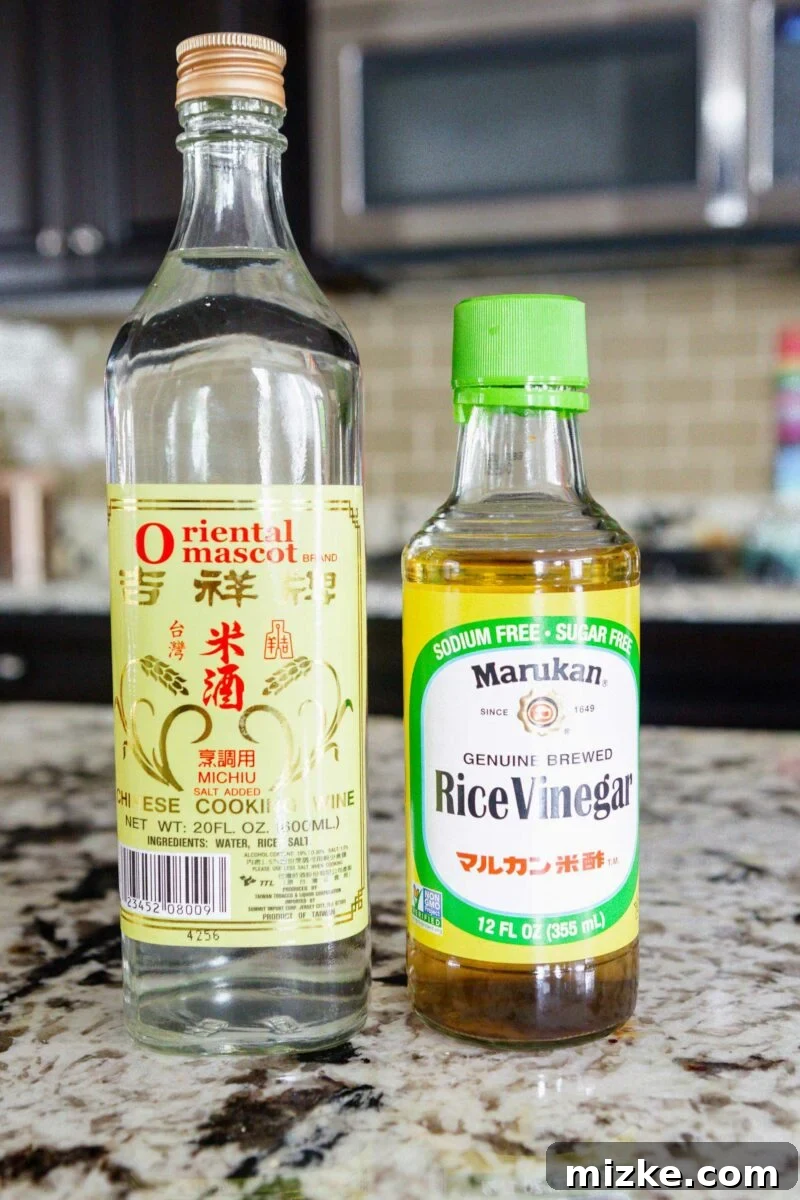
The Role of Wines and Vinegars in Asian Cuisine
Shaoxing, Mijiu (Rice Wine)
Navigating the terminology for Chinese cooking wines can be a bit confusing, but Shaoxing and Mijiu (also sometimes spelled Michiu) are both types of rice wine. These are indispensable in Chinese and Taiwanese cooking, primarily used for marinating meats to tenderize them and to neutralize any gamey or undesirable aromas. My mother often employed a classic marinade blend of cornstarch, soy sauce, and mijiu.
Shaoxing wine is typically darker, offering a more complex and deeper flavor profile. While I don’t always have it on hand, it’s a common sight in Asian markets. My everyday staple is the clear white rice wine, Mijiu, often found in bottles similar to the one pictured. It lasts for an extended period and is the workhorse of my kitchen.
Unlike Western cooking, where the adage “cook with a wine you’d drink” applies, Chinese rice wines are formulated specifically for cooking and are not meant for consumption as a beverage – a taste test will quickly confirm why! While some seek substitutes for rice wine due to dietary restrictions or availability, finding a true equivalent is challenging. Dry sherry is sometimes suggested, but it simply cannot replicate the unique, complex flavor profile that rice wine brings to a dish. This isn’t culinary snobbery; it’s a testament to rice wine’s singular contribution to authentic Asian flavors. Moreover, it’s crucial not to confuse Chinese rice wine with Japanese Mirin; Mirin is distinctly sweet and should be reserved for Japanese dishes, as its flavor differs significantly.
Rice Vinegar (Rice Wine Vinegar)
Rice vinegar, often interchangeably called rice wine vinegar, serves a similar function to white vinegar in Western cooking: it introduces a pleasant acidity and a characteristic tangy flavor. However, rice vinegar is generally milder and slightly sweeter than distilled white vinegar, offering a softer, more nuanced tartness that is perfect for Asian sauces, dressings, and marinades.
You’ll find both seasoned and unseasoned varieties. Seasoned rice vinegar contains added sugar and salt, making it ideal for sushi rice or quick pickles, while the unseasoned version provides pure acidity, allowing you to control the other flavor components. I typically opt for the seasoned variety for its convenience and balanced profile.
Essential Spices, Herbs, Powders & Flavor Enhancers
Five-Spice Powder
This aromatic blend is truly a quintessential ingredient in Taiwanese and Chinese kitchens, forming the backbone of many braises and stews, such as traditional braised minced pork. Five-spice powder is typically a harmonious combination of star anise, fennel seed, cinnamon, cloves, and Sichuan peppercorns, though variations exist. Its fragrance is intoxicating, imparting a unique warmth, depth, and exotic complexity that is instantly recognizable and deeply comforting in Asian cuisine.
Fried Shallots
While not a sauce, crispy fried shallots are an invaluable addition to stir-fries, noodle dishes, and even as a garnish for soups. They offer an incredible depth of savory, caramelized flavor and a delightful textural crunch that elevates any dish. Their aromatic quality is highly prized in many Southeast Asian and Chinese cuisines, contributing a gourmet touch with minimal effort.
Honey
A classic and natural sweetener, honey is frequently used in Asian sauces. Beyond providing sweetness, it helps to thicken and caramelize sauces, adding a beautiful sheen and a deeper, more complex flavor compared to refined sugars. Its natural viscosity also contributes to desirable sauce textures, making it a versatile ingredient for both flavor and body.
Brown Sugar or Granulated/White Sugar
Sugar plays a crucial role in balancing flavors in Asian cooking, particularly to counteract saltiness or acidity. As mentioned, dark brown sugar is an excellent substitute for sweet soy sauce if you can’t find it, offering a similar depth due to its molasses content. I often prefer brown sugar over honey in certain sauces for its rich, caramelized notes, depending on the desired flavor profile of the dish.
Taiwanese households also commonly keep “rock sugar” (bing tang) in their pantries. These clear, irregular crystals provide a more subtle and sustained sweetness than granulated sugar, ideal for teas, desserts, and certain savory dishes where an overpowering sweetness is not desired. My mother often uses them in cooking when a delicate sweetness is preferred over the sharp sweetness of white sugar.
Ginger
Fresh ginger root is an indispensable aromatic in Taiwanese and Chinese cooking. Its pungent, spicy, and fragrant qualities are beloved for adding freshness, warmth, and a zesty “bite” to dishes. Whether grated, sliced, or minced, ginger forms the aromatic base for countless stir-fries, marinades, soups, and braises, infusing them with its distinct invigorating flavor.
Fresh Thai Basil
Though originating from Thailand, fresh Thai basil is a beloved herb in both Taiwanese and Chinese kitchens. Its unique flavor profile, often described as having notes of anise, licorice, and a peppery zest, makes it a powerful aromatic. It’s typically added at the very end of cooking to preserve its delicate fragrance and vibrant flavor, instantly elevating dishes like the famous Three Cup Chicken with its distinctive aromatic “oomph.”
Cilantro
Cilantro is one of those herbs that truly divides opinion, famously tasting like soap to some due to a genetic predisposition. Despite my personal aversion, I can attest to its ubiquitous presence and immense popularity in Taiwanese and Chinese cuisine. My entire family, along with most Taiwanese and Chinese individuals, cherishes cilantro’s fresh, herbaceous notes, often using it generously as a garnish to finish dishes. Its refreshing quality adds a bright contrast to rich, savory flavors, making it a staple despite my struggles to avoid it!
Cornstarch
Cornstarch is a secret weapon in Asian cooking, valued for its dual functionality. It’s an unparalleled thickener for sauces, creating that glossy, rich consistency found in many stir-fries. I often create a cornstarch slurry (a 1:1 mixture of cornstarch and cold water) before adding it to hot sauces, or sometimes whisk it directly into cold sauces to prevent lumps.
Beyond thickening, cornstarch is crucial for a technique called “velveting meat.” By coating strips of meat (often beef, chicken, or pork) in a mixture of cornstarch, cooking wine, and soy sauce, home cooks and professional chefs alike achieve that incredibly tender, silky-smooth texture commonly found in Chinese restaurant dishes. This coating protects the meat from overcooking and locks in moisture, resulting in a delightfully succulent bite.
Dried Shiitake Mushrooms
Dried shiitake mushrooms are a powerhouse of umami flavor and a constant presence in my parents’ pantry, often brought back in large quantities from Taiwan. They’re incredibly versatile, space-saving when dried, and impart a deep, earthy, savory richness to any dish. To use them, simply rehydrate them by soaking in hot water until soft and pliable. The resulting mushrooms can be chopped and added to soups, stir-fries, or braises, and the flavorful soaking liquid itself can be strained and used as a rich stock, adding another layer of depth to your cooking.
White Pepper
While black pepper is present, white pepper is far more popular in Taiwanese and Chinese kitchens. It’s favored for its distinct, pungent, and slightly spicier flavor profile, which differs noticeably (in a good way!) from black pepper. Additionally, its light color prevents it from adding dark specks to lighter-colored dishes, maintaining their aesthetic appeal while still delivering a peppery kick.
Mastering the Art of Sauce Creation
Crafting delicious sauces for your Asian dishes is simpler than you might think, especially with these essential ingredients at your fingertips. Generally, a balanced Asian sauce often starts with a base of soy sauce, incorporates a touch of sweetness (from sugar or honey), a hint of acidity (from rice vinegar), and layers in aromatic elements and sometimes a spicy kick.
Experimentation is key, but here are some popular homemade sauces that can be easily created using the staples outlined in this guide:
- Pan-Fried Sesame Tofu Sauce: A simple yet flavorful sauce perfect for tofu, chicken, or vegetables.
- Teriyaki Sauce: A classic sweet and savory Japanese-inspired sauce that’s incredibly versatile.
- Spicy Chili ‘Lava’ Sauce: A fiery and addictive sauce, often a personal favorite for adding a bold kick.
- Sugared Soy Sauce: A basic yet effective blend, highlighting the beautiful balance of sweet and savory.
- Bulgogi Kimchi Burger Sauce: A creative and flavorful sauce, perfect for Korean-inspired dishes or marinades.
We hope this comprehensive guide empowers you to confidently stock your pantry and unleash your inner Asian chef. With these essential ingredients, you’re well-equipped to create a vast array of authentic and delicious dishes at home. Stay tuned for our upcoming deep dive into the wonderful world of noodles!