
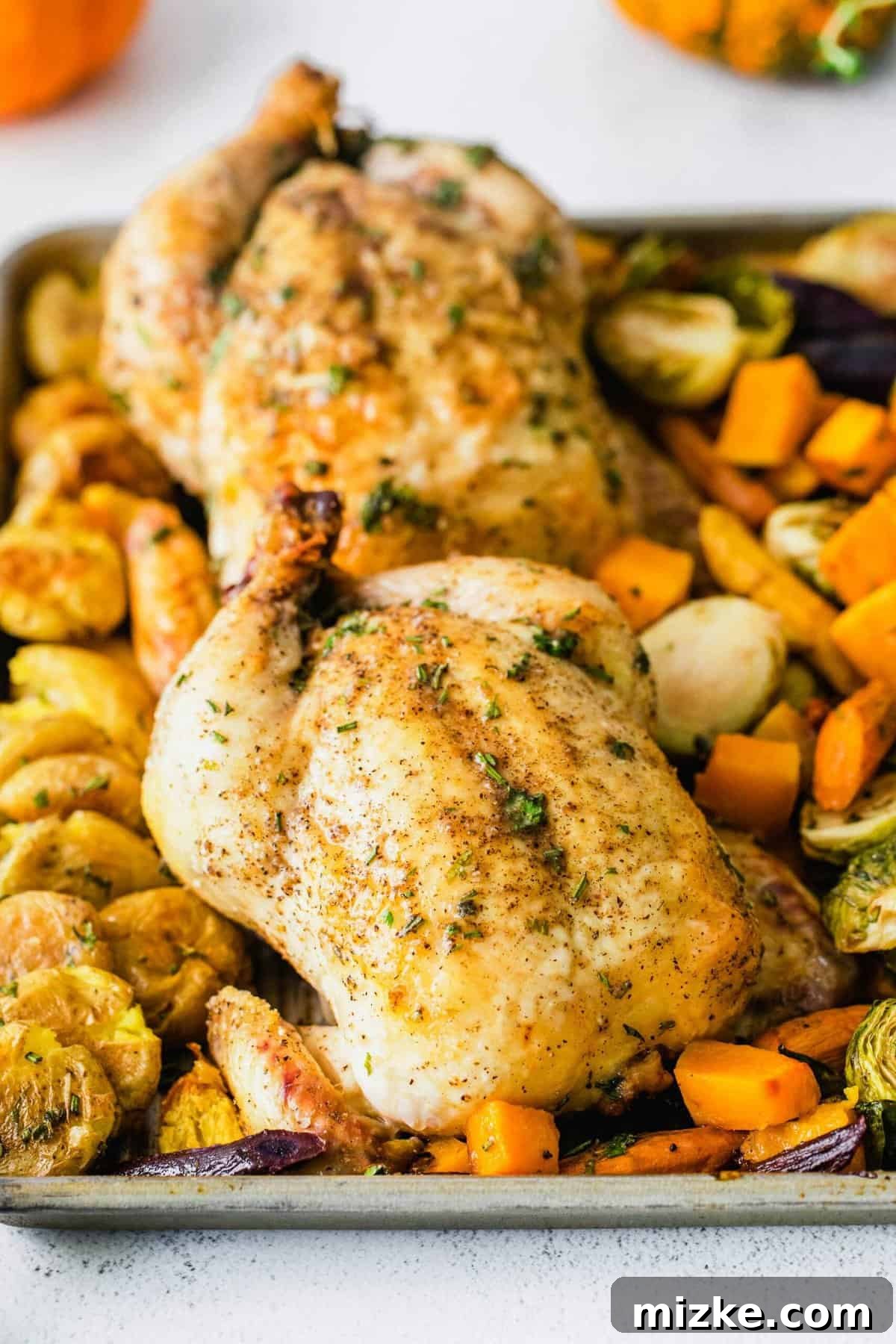
Simple, incredibly delicious, and entirely prepared on one easy-to-clean baking sheet—this **Sheet Pan Thanksgiving dinner** is truly something to be thankful for! Reclaim your holiday with this streamlined approach to a festive meal.
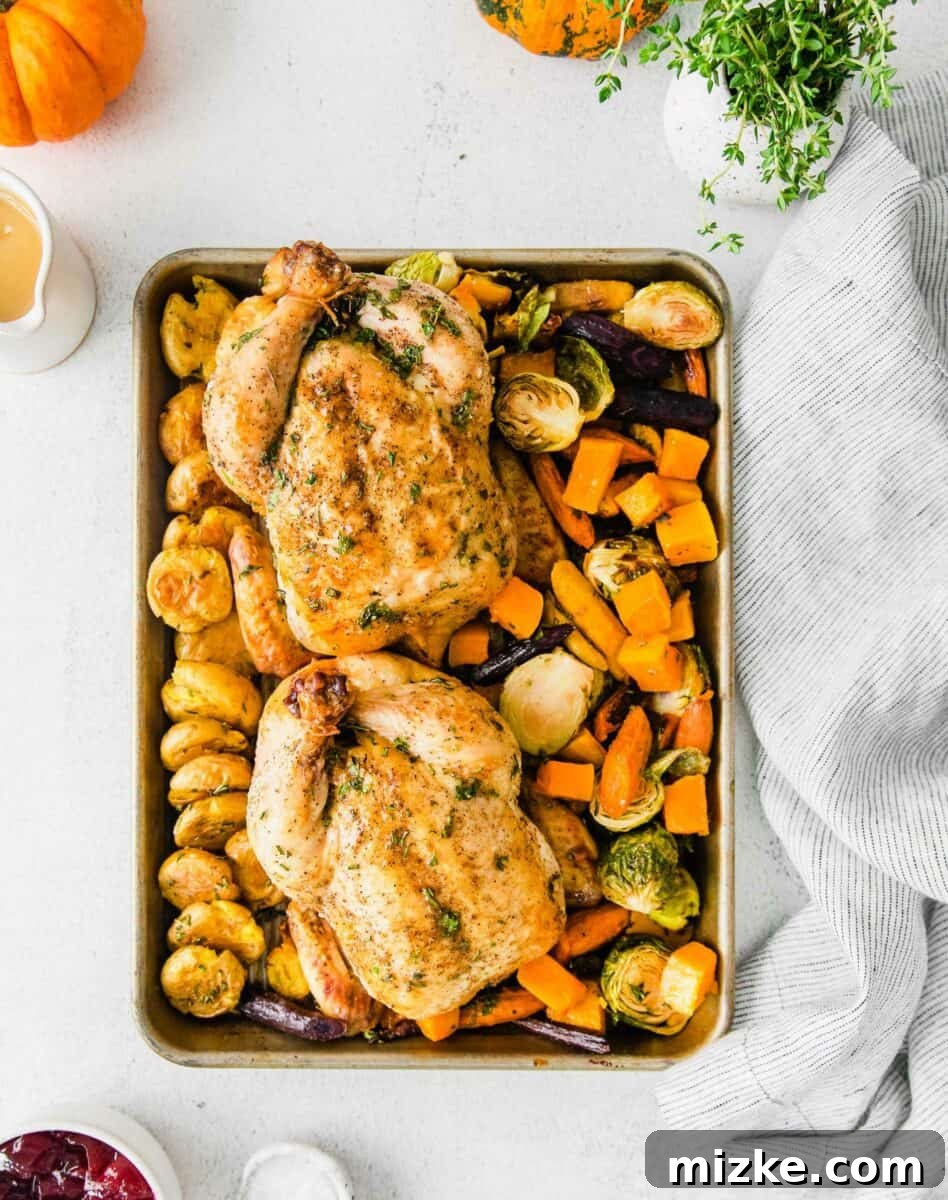
Are you ready to revolutionize your holiday traditions? This **easy sheet pan dinner** offers a refreshing alternative to traditional, elaborate Thanksgiving feasts. And for those who cherish their classic holiday customs, rest assured, this delectable meal is equally perfect for a cozy weeknight dinner any time of year.
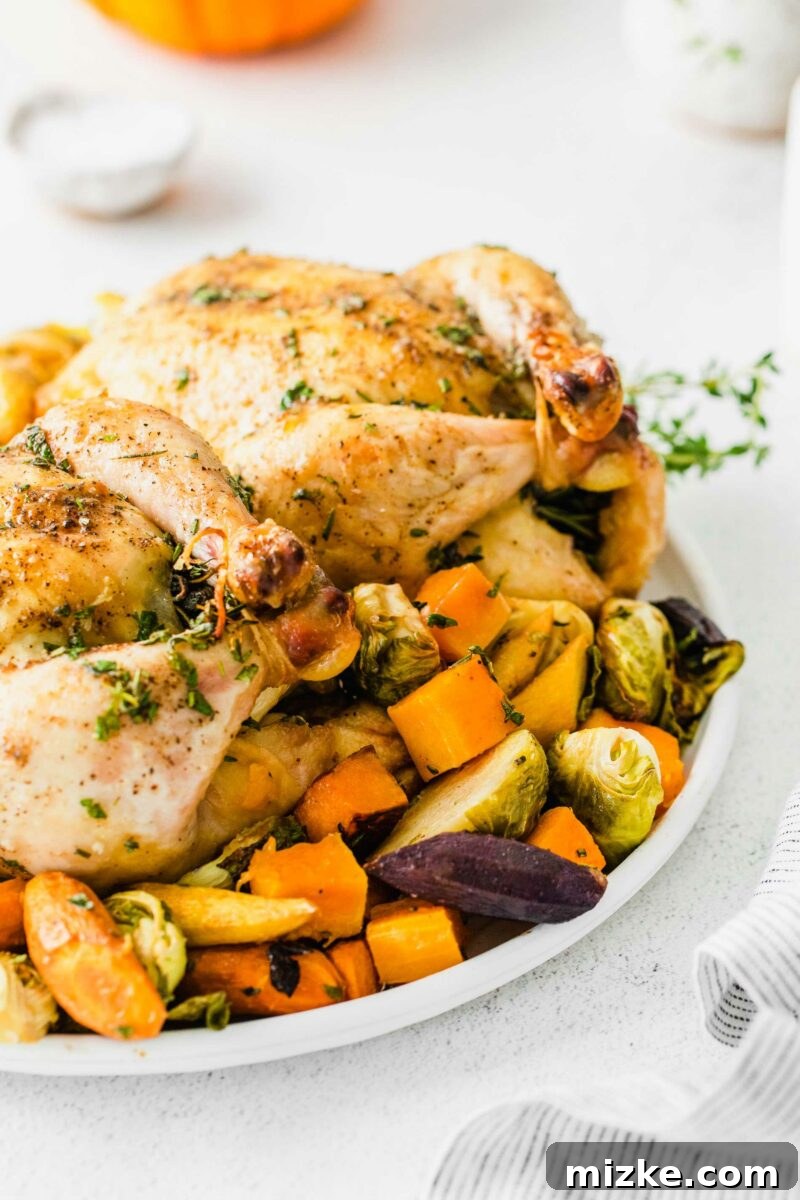
Imagine tender, perfectly cooked Cornish hens, nestled amongst beautifully roasted root vegetables and irresistibly salty smashed potatoes. As if that weren’t enough, a fragrant medley of fresh herbs and rich butter generously infuses every component, creating a symphony of mouthwatering flavors. When it comes to **one-pan dinners** that effortlessly impress while keeping preparation simple, this recipe truly stands out as a game-changer.
Whether you choose to make this sheet pan masterpiece for your Thanksgiving celebration or simply enjoy it on a delightful Monday evening, you’ll undoubtedly be thrilled with the results. It’s a remarkably filling, nutritious, and undeniably scrumptious meal. Plus, the magic of a single sheet pan means significantly less cleanup afterward, which is always a welcome victory in any kitchen!
Why This Sheet Pan Thanksgiving is a Culinary Triumph
As someone who often plans meals for a smaller household, I’ve consistently found it challenging to scale down traditional Thanksgiving recipes, which are predominantly designed for large gatherings. While the holiday is classically associated with grand feasts, modern lifestyles and recent global events have increasingly shifted towards more intimate, smaller-scale celebrations.
This innovative **sheet pan Thanksgiving meal** is the ideal solution for compact gatherings. It comfortably serves 2-4 people as a complete, hearty meal, or 4-6 if you choose to supplement it with a couple of additional Thanksgiving sides like cranberry sauce or a simple green salad. It eliminates the need for a massive turkey, countless side dishes, and the daunting mountain of pots and pans that typically follows. You get all the festive flavors without any of the overwhelming fuss.
Beyond its practicality for small groups, this recipe offers unparalleled convenience. It consolidates cooking into a single piece of equipment, transforming what can often be a stressful, multi-hour cooking endeavor into a relaxed and enjoyable experience. Imagine spending more quality time with loved ones and less time in the kitchen or scrubbing dishes. This **easy Thanksgiving dinner** ensures that even a duo can enjoy a complete and satisfying holiday spread without feeling like they’re preparing for an army.
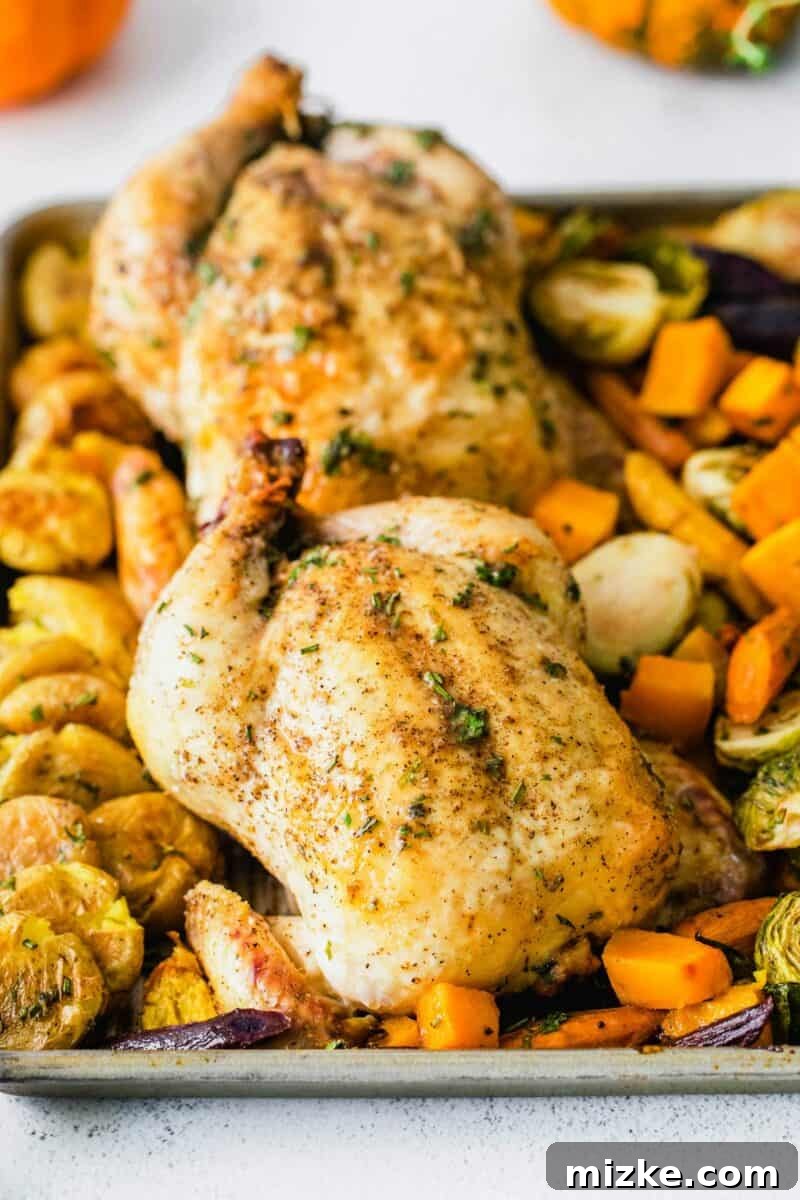
Key Ingredients for Your Ultimate Sheet Pan Thanksgiving
Crafting this simple yet elegant **one-pan holiday meal** requires a selection of fresh, high-quality ingredients. Here’s a detailed breakdown of everything you’ll need to bring this delightful dish to life:
For the Flavorful Cornish Hens:
- Cornish Hens: Two hens, approximately 1.5 pounds (around 3 pounds total) each, are ideal. These smaller birds cook quickly and evenly, providing a perfectly portioned main course. Look for them in the frozen poultry section of your grocery store, especially during holiday seasons.
- Aromatics: A small yellow or white onion, quartered, and plenty of fresh garlic cloves, smashed and peeled, will infuse the hens with incredible depth of flavor from the inside out.
- Fresh Herbs: Essential for that authentic holiday aroma and taste. Gather fresh sprigs of thyme, rosemary, and sage. These classic poultry herbs complement the Cornish hens beautifully.
- Olive Oil: Extra virgin olive oil is recommended for its superior flavor profile. It helps achieve crispy skin and allows seasonings to adhere effectively.
- Seasonings: Simple yet effective—kosher salt and freshly cracked black pepper. Season generously for the best taste.
For the Irresistible Smashed Potatoes:
- Potatoes: Approximately ½ pound of small, steam-in-bag potatoes or baby boiling potatoes. The key is small, tender potatoes that are easy to smash and crisp up. Using steam-in-bag varieties significantly reduces prep time.
- Olive Oil: For crisping the potatoes in the oven.
- Salt: Kosher salt will enhance their natural flavor and aid in caramelization.
For the Hearty Roasted Vegetables:
- Carrots: Four large carrots, peeled and sliced into uniform 1-inch pieces. Multi-colored carrots can add visual appeal.
- Brussels Sprouts: Approximately ½ pound, halved. Halving them ensures they cook evenly and develop a delicious caramelized edge.
- Butternut Squash: About 1½ cups (or ½ a medium squash), peeled, seeded, and cut into 1-inch pieces. Its sweet, nutty flavor is a quintessential taste of autumn.
- Olive Oil: To coat the vegetables for even roasting and browning.
- Salt: Kosher salt helps draw out moisture and concentrates flavors.
Additional Flavor Boosters:
- Butter: Six tablespoons of melted butter (salted or unsalted, based on preference) will be brushed over the hens and drizzled over the vegetables, adding richness and promoting beautiful browning.
- Garlic: Two cloves of garlic, grated finely using a microplane zester. Grating prevents burning and allows the garlic to melt seamlessly into the butter mixture, distributing its flavor evenly.
- Fresh Herb Medley: One tablespoon of fresh minced parsley, two teaspoons of fresh minced rosemary, one teaspoon of fresh minced thyme, and one teaspoon of fresh minced sage. This blend will create an aromatic finish that ties all the elements together.
Smart Substitutions & Creative Variations
One of the beauties of a sheet pan dinner is its adaptability. Feel free to customize this recipe to your preferences or what you have on hand. Here are some smart substitutions and variations:
- Roasted Vegetable Alternatives: While root vegetables and Brussels sprouts offer fantastic texture and flavor, you can easily swap them out. Great alternatives include broccoli florets, green beans, cauliflower florets, parsnips, or sweet potatoes. The key is to select heartier vegetables that can withstand longer roasting times. Avoid overly watery vegetables like tomatoes or mushrooms on the same pan, as they release too much liquid and can steam your other veggies instead of roasting them. If you insist on including them, consider using a separate smaller sheet pan.
- Dried Herbs vs. Fresh: If fresh herbs are not available, dried herbs can be used. As a general rule, use about one-third the amount of dried herbs compared to fresh, as dried herbs are often more potent. Start with less and add more to taste.
- Potato Choices: Beyond steam-in-bag or baby potatoes, small red or Yukon gold potatoes can also be used for smashing. Ensure they are par-cooked until fork-tender before smashing.
- Spice it Up: For an extra kick, a pinch of red pepper flakes or a dash of smoked paprika can be added to the vegetable mix or the butter baste.
- Citrus Brightness: A squeeze of fresh lemon juice over the finished dish, or even a few lemon slices roasted alongside the hens, can add a wonderful bright note.
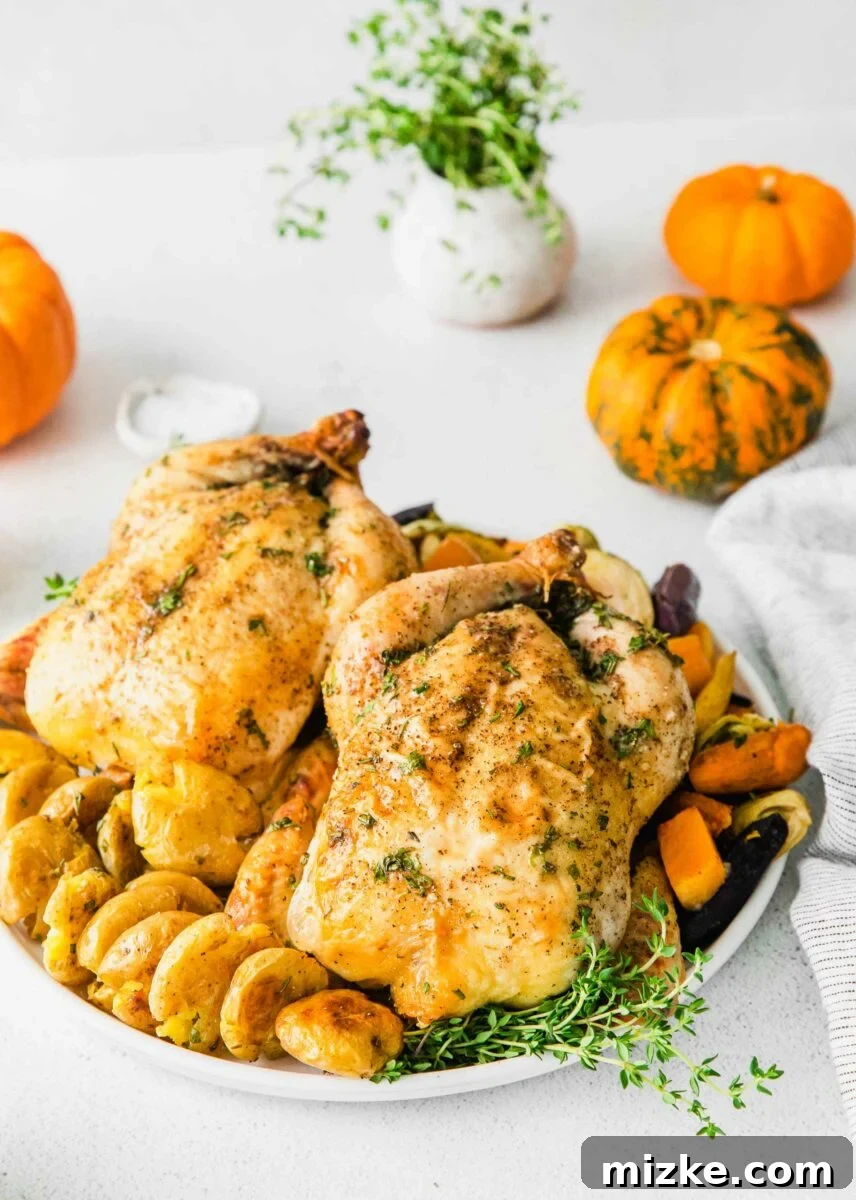
Mastering Your Sheet Pan Thanksgiving: Essential Tips & Techniques
Achieving a perfectly roasted **sheet pan Thanksgiving dinner** is simple when you know a few key tricks. Follow these detailed tips for each component to ensure a delicious and successful meal:
Cornish Hens:
- Thawing and Preparation: Cornish hens boast fantastic flavor and cook remarkably easily. Before you begin, ensure your hens are fully thawed. Crucially, remove any giblets from the cavity. For extra crispy skin, thoroughly pat the hens dry with paper towels before applying any olive oil or seasonings. This step is vital for rendering fat and achieving that desired golden crispness.
- Internal Flavoring: Stuffing the cavity of each hen with quartered onion, smashed garlic cloves, and fresh herb sprigs (thyme, rosemary, sage) is a simple yet effective way to infuse flavor from the inside out. This also helps the hen maintain its shape during roasting. Don’t hesitate to use other aromatics you might have on hand, such as leeks, carrots, celery, parsley, or shallots, all of which will add delicious notes.
- Olive Oil Application: Drizzling and rubbing olive oil over the hen’s skin not only aids in browning but also ensures that the salt and pepper adhere evenly, leading to a uniformly seasoned and crispy exterior.
- Generous Seasoning: Don’t shy away from seasoning! Sprinkle kosher salt and freshly cracked black pepper liberally over the entire surface of the hens. This foundational seasoning is key to a flavorful result.
- Presentation and Even Cooking: Tucking the wing tips under the hen creates a more compact shape that prevents them from burning and contributes to a neater presentation. Securing the legs with kitchen twine also helps the hens cook more evenly and hold their form.
Smashed Potatoes:
- Pre-Cooking for Tenderness: The goal here is fork-tender potatoes that are easy to smash. Using steam-in-bag potatoes or boiling baby potatoes until soft ensures they burst open beautifully when gently crushed.
- Gentle Smashing: After cooking, allow the potatoes to cool slightly so they are safe to handle. Wrap them in a clean kitchen towel and gently press down with the palm of your hand or the bottom of a glass. You want them to burst open and flatten, but still remain mostly intact. This maximizes surface area for crisping.
- Olive Oil & Salt: A drizzle of olive oil before roasting helps achieve that desirable golden-brown, crispy exterior. A sprinkle of kosher salt enhances their natural flavor. Season to taste.
Roasted Root Vegetables:
- Variety and Uniformity: This recipe features carrots, butternut squash, and Brussels sprouts, but parsnips, beets, or sweet potatoes are equally delicious. The crucial tip is to cut all vegetables into roughly 1-inch pieces. This ensures they cook evenly and are tender-crisp at the same time.
- Optimal Roasting: Just like with the potatoes, olive oil helps the root vegetables achieve beautiful caramelization without burning. Feel free to use your preferred neutral cooking oil if olive oil isn’t available.
- Enhancing Flavor: Salt plays a dual role here: it helps draw out excess moisture, which encourages caramelization, and it significantly enhances the natural sweetness and earthy flavors of the vegetables.
Additional Flavor Components:
- Butter’s Role: Melted butter is a hero in this dish. It adds a rich, luxurious flavor to the hens, vegetables, and potatoes. As the butter solids brown in the oven, they contribute to a gorgeous caramelized crust on all elements.
- Garlic Preparation: Grating garlic on a microplane zester is highly recommended. This ensures the garlic melts seamlessly into the butter, distributing its flavor without burning. Minced garlic, especially when roasted for extended periods, has a tendency to burn and become bitter. If you don’t have a microplane, a teaspoon of garlic powder can be an acceptable substitute.
- Fresh Herb Blend: The combination of fresh parsley, rosemary, thyme, and sage is the essence of a traditional Thanksgiving flavor profile. This herbaceous medley adds brightness, depth, and an irresistible aroma that truly elevates the entire meal.
Essential Equipment for Success:
The secret to any successful sheet pan dinner lies in avoiding overcrowding the pan. For this recipe, we aim for roasting, not steaming, of the vegetables.
- Large Rimmed Baking Sheet: I highly recommend a high-quality half-sheet pan, such as a USA PAN, which provides ample space. If your baking sheets are smaller, it’s always better to divide the vegetables between two sheets to prevent them from becoming overcrowded. Overcrowding leads to steaming rather than roasting, resulting in soggy vegetables.
- Rimmed Edges are Key: Always use a baking sheet with raised rims. A flat, rimless pan will inevitably lead to juices and oils running off into your oven, causing smoke and a messy cleanup.
- Consider Baking Sheet Color: Darker baking sheets absorb more heat and can cause food to cook faster and brown more quickly. If you are using a dark sheet, keep a closer eye on your Cornish hens and vegetables to prevent over-browning or burning. Lighter-colored sheets offer more forgiving cooking times.
Frequently Asked Questions (FAQs)
How Can I Achieve Perfectly Crispy Skin on My Cornish Hens?
Crispy skin is undoubtedly one of the most coveted parts of any roasted poultry! The primary secret to achieving gorgeously crispy skin on your Cornish hens is surprisingly simple: thorough drying. Right at the beginning of the preparation process, use paper towels to pat the entire surface of the hens as dry as possible. This removes surface moisture, allowing the skin to crisp up beautifully in the oven.
For an even crispier, golden-brown finish, you can utilize your oven’s broiler setting. Towards the very end of the cooking time, once the hens are almost done, carefully remove the roasted vegetables from the pan (to prevent them from overcooking or burning). Then, place the pan with the hens back under the broiler for a few minutes, watching them continuously to prevent burning. This will rapidly crisp and brown the skin to perfection.
Can I Omit Salt from the Roasted Root Vegetables?
If you’re aiming to keep this recipe lower in sodium, you can certainly omit or significantly reduce the salt added to the roasted root vegetables. However, it’s important to understand salt’s role in the roasting process.
Salt helps to draw out moisture from the vegetables, which in turn facilitates their caramelization in the oven, leading to richer flavors and a more tender-crisp texture. Without salt, the vegetables might release more moisture, potentially steaming rather than roasting, and may not achieve the same depth of flavor. If you’re concerned about sodium, consider adding just a small sprinkle of salt—even a little can significantly aid in the caramelization process without contributing a high amount of sodium.
How Can I Be Sure My Cornish Hens Are Fully Cooked?
The most reliable way to ensure your Cornish hens are cooked to a safe internal temperature, while also preventing them from drying out, is to use a meat thermometer. I highly recommend investing in a good quality instant-read thermometer, such as a Thermapen, known for its accuracy and rapid temperature readings.
To check for doneness, insert the thermometer into the thickest part of the thigh, avoiding the bone, between the drumstick and the breast area. This section typically takes the longest to cook. The safe internal temperature for poultry is 165°F (74°C). Once your thermometer reads 160°F (71°C), you can generally remove the baking sheet from the oven. The hens will continue to cook slightly (known as carryover cooking) as they rest, bringing them up to the safe 165°F mark. This resting period is crucial for juicy, tender meat.
While 165°F is the standard, some experienced cooks might pull their hens out around 150°F (66°C), accounting for a more significant carryover cook to ensure extremely juicy meat. However, for food safety, especially for less experienced cooks, it is always safest to wait until at least 160°F before removing from the oven, allowing carryover to reach 165°F. Prioritize comfort and safety in your kitchen practices.
More Easy Sheet Pan Dinners to Love
Once you experience the sheer convenience and delicious results of this **one-pan Thanksgiving**, you’ll be eager to incorporate more sheet pan recipes into your cooking repertoire. Here are some other fantastic sheet pan ideas to keep that single baking sheet working hard for you:
- Sheet Pan Beef and Cheese Quesadillas
- Sheet Pan Chipotle Chicken Enchiladas
- Sheet Pan Salmon and Vegetables
- Sheet Pan Greek Chicken
Ultimate Sheet Pan Thanksgiving
The ultimate Thanksgiving recipe for small gatherings! Made all on one sheet pan, you will be so thankful for hardly any dishes!
By: Julie Chiou
Prep Time: 30 minutes
Cook Time: 1 hour 30 minutes
Total Time: 2 hours
Servings: 4
Equipment
- Large rimmed baking sheet
Ingredients
For the Cornish Hens:
- 3 pounds Cornish Hens
- 1 small onion, quartered
- 4 cloves garlic, smashed and peeled
- 2 sprigs thyme
- 2 sprigs rosemary
- 2 sprigs sage
- 2 tablespoons olive oil
- 2 teaspoons kosher salt
- 1 teaspoon black pepper
For the Smashed Potatoes:
- ½ pound steam-in-bag potatoes (see ingredient notes)
- 1 tablespoon olive oil (for roasting)
- ½ teaspoon kosher salt (for roasting)
For the Roasted Root Vegetables:
- 4 large carrots, peeled and sliced into 1” pieces
- ½ pound brussels sprouts, halved
- 1 ½ cups butternut squash, cut into 1” pieces
- 1 tablespoon olive oil
- 1 teaspoon kosher salt
Additional Ingredients:
- 6 tablespoons butter, melted
- 2 cloves garlic, grated (see ingredient notes)
- 1 tablespoon fresh parsley, minced
- 2 teaspoons fresh rosemary, minced
- 1 teaspoon fresh thyme, minced
- 1 teaspoon fresh sage, minced
Instructions
For the Cornish Hens (Begin 75 minutes before serving):
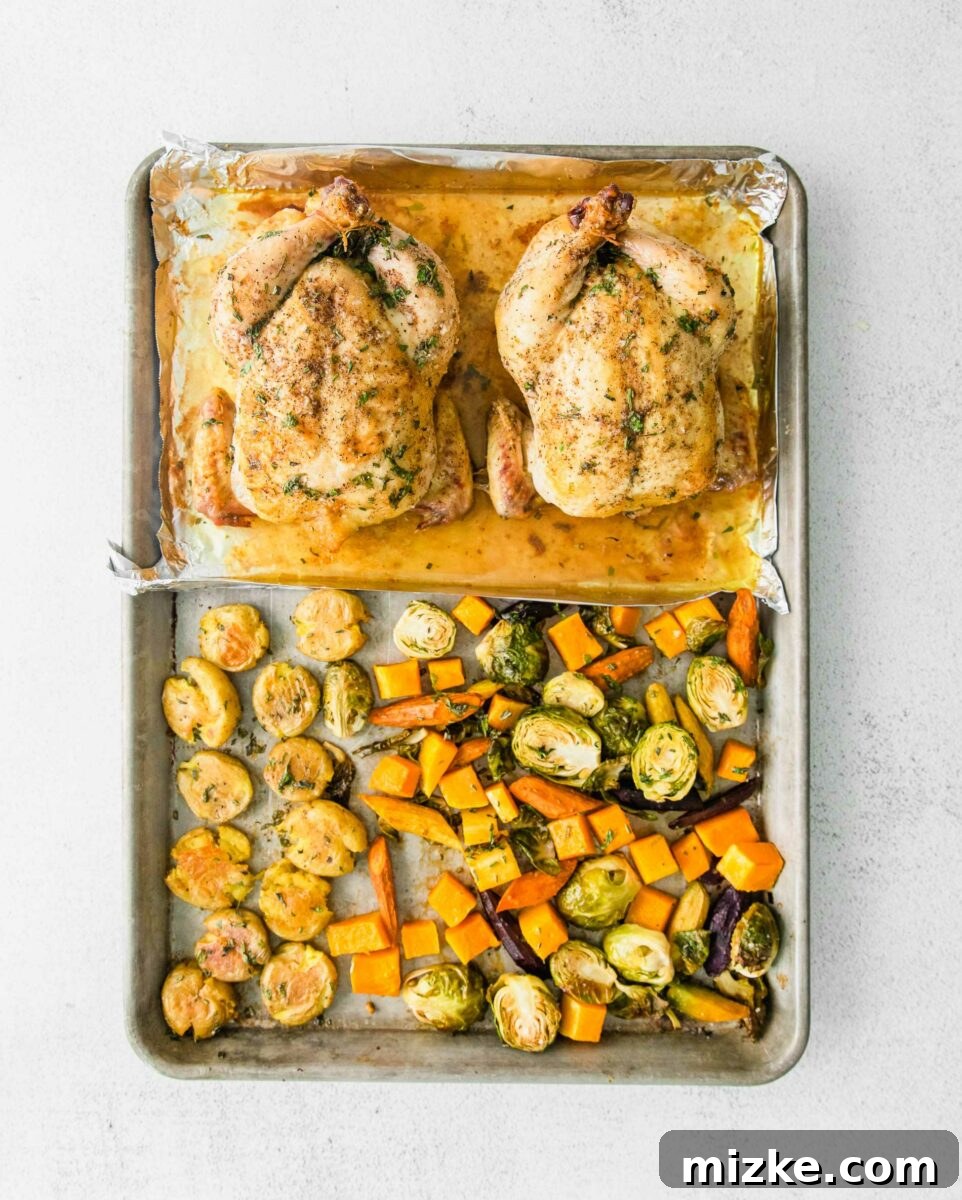
- Preheat your oven to 400°F (204°C). Create a foil bowl on one-third of your sheet pan, ensuring it is large enough to comfortably hold the Cornish hens.
- Remove any giblets from the Cornish hens and thoroughly pat them dry with paper towels to ensure crispy skin.
- Stuff the cavity of each hen with half of the quartered onion, two smashed garlic cloves, and one sprig each of thyme, rosemary, and sage.
- Drizzle the olive oil over the skin of each hen and rub it evenly to coat.
- Sprinkle the salt and black pepper generously over the entire surface of the hens, ensuring an even coating.
- Tuck the wings under the hens and secure the legs with kitchen twine. Place the hens, breast-side up, in the foil bowl on the baking sheet.
- Bake for 15 minutes while you prepare the side dishes.
For the Smashed Potatoes (Prepare while hens roast):
- Microwave the steam-in-bag potatoes according to package directions, or boil baby potatoes, just until they are fork-tender.
- Allow the potatoes to cool enough to handle. Wrap them in a clean towel and gently smash them—just until they’ve burst open and flattened, striving to keep them as intact as possible.
- Set the smashed potatoes aside until ready for final roasting.
For the Roasted Root Vegetables (Prepare while hens roast):
- In a large bowl, combine the chopped carrots, halved Brussels sprouts, butternut squash pieces, 1 tablespoon of olive oil, and 1 teaspoon of kosher salt. Toss to coat evenly.
- Set the seasoned vegetables aside until ready for final roasting.
Final Roast (Begin 60 minutes before serving):
- Carefully remove the sheet pan with the hens from the oven. Arrange the smashed potatoes and seasoned root vegetables around the hens on the sheet pan, making sure to spread them out in a single layer to ensure they roast rather than steam. Drizzle the smashed potatoes with additional olive oil (if desired) and sprinkle with a little extra salt.
- Return the sheet pan to the oven and roast for an additional 15 minutes.
- Remove the pan from the oven. Gently flip the smashed potatoes and roasted vegetables to ensure even browning.
- In a small bowl, combine the melted butter, grated garlic, minced parsley, rosemary, thyme, and sage. Brush one-third of this aromatic butter mixture over the Cornish hens. Drizzle the remaining butter over the roasted root vegetables and smashed potatoes.
- Continue cooking for another 15-20 minutes, or until the vegetables are golden brown and tender, and the internal temperature of the hens reaches 165°F (74°C) when measured with an instant-read thermometer inserted into the thickest part of the thigh, avoiding the bone.
- Remove the pan from the oven. Baste the hens generously with the pan juices. Allow the hens to rest for 10 minutes before carving or serving. This resting period is crucial for juicy meat.
- This sheet pan dinner can be kept warm in a 200°F (93°C) oven for up to 30 minutes before serving, if needed.
Notes
Ingredient Notes – Cornish Hens:
Cornish hens have great flavor and cook very easily! Before cooking, make sure to fully thaw the hens and remove any giblets. It also helps the skin become extra crispy if you pat the hens dry with a paper towel before adding the olive oil.
Stuffing the cavity of the hen with onion, garlic, and herbs helps flavor the hen from the inside out. It also helps the hen keep its shape while roasting. Feel free to swap out whatever herbs or vegetables you have on hand – leeks, carrots, celery, parsley, or shallots are all delicious.
Olive oil helps the skin brown, but also helps the salt and pepper stick to the hen.
Make sure to season the hens all over with salt and pepper – I highly recommend kosher salt and freshly cracked black pepper.
Ingredient Notes – Smashed Potatoes:
I’m using steam-in-bag potatoes but you could also boil baby potatoes. The goal is to cook the potatoes until they’re fork tender so they smash easily.
Olive oil helps the potatoes brown and crisp in the oven.
Kosher salt seasons the potatoes and enhances their flavor. Feel free to season to taste.
Ingredient Notes – Roasted Root Vegetables:
I’m using multi-colored carrots, butternut squash, and Brussels sprouts for this sheet pan dinner but you could use any root vegetables you like – parsnips, beets, or sweet potatoes would also be delicious. The key is to cut all the vegetables into one-inch pieces so they cook evenly.
Just like the potatoes, the olive oil helps the root vegetables brown without burning. Feel free to substitute your favorite neutral cooking oil.
Salt helps bring out extra moisture in the vegetables so they caramelize in the oven. It also helps enhance their natural flavors!
Ingredient Notes – Additional Ingredients:
Butter adds great flavor to the hens, vegetables, and potatoes. It also helps all of the elements caramelize as the butter solids brown in the oven.
I grate the garlic on a microplane zester – this helps the garlic melt into the butter. Minced garlic tends to burn in the oven. If you don’t have a microplane, I recommend substituting the grated garlic for one teaspoon of garlic powder.
Fresh herbs are the key to a delicious Thanksgiving! I’m using a combination of my favorite poultry herbs (parsley, rosemary, thyme, sage) but feel free to use what you have on hand!
Equipment Notes:
The key to this sheet pan dinner is to not overcrowd the pan! We want the vegetables to roast, not steam. I’m using a half sheet USA PAN and everything fits perfectly. If you have smaller baking sheets, you may need to divide the vegetables between two sheets so they don’t get overcrowded.