
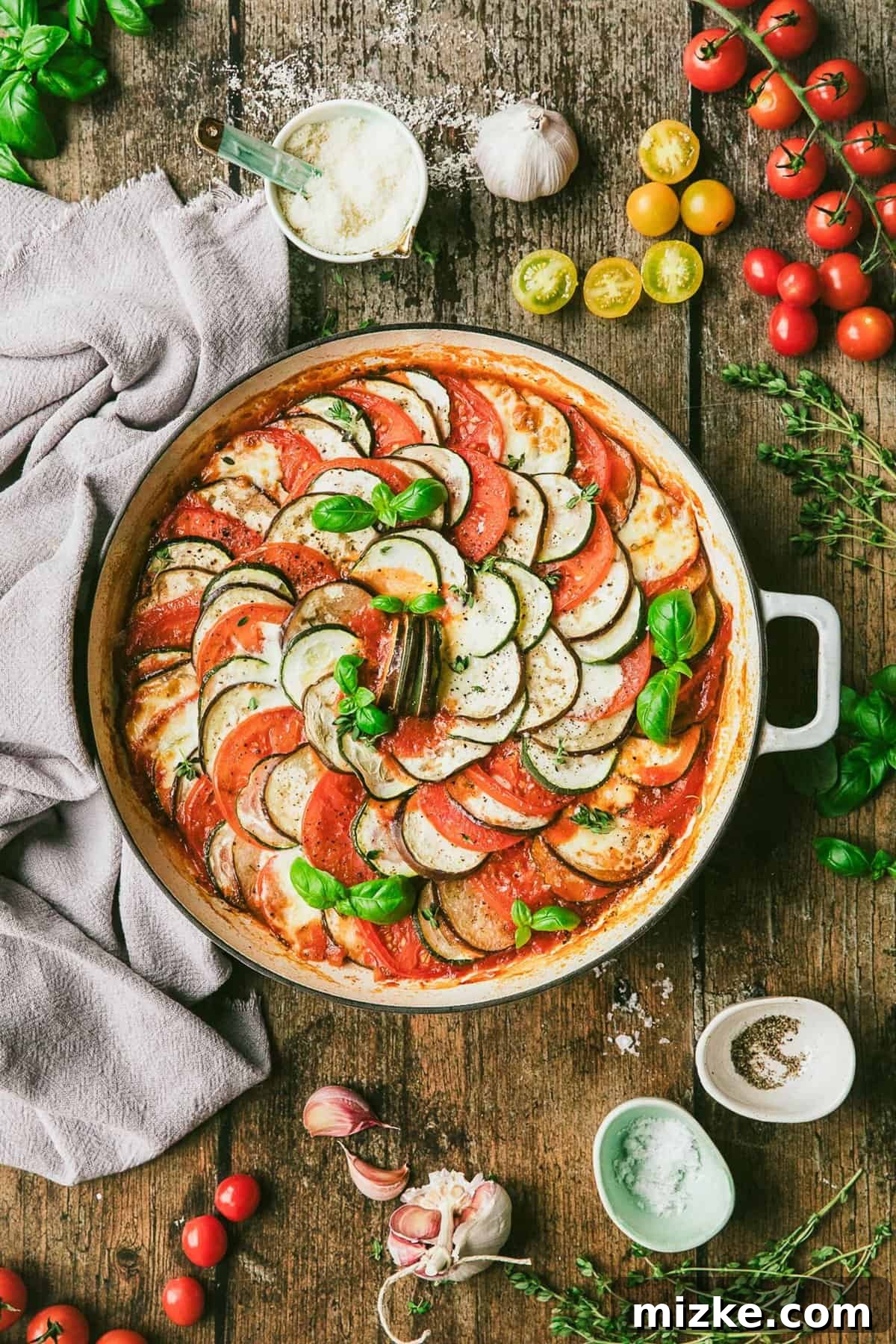
This exceptional oven-baked ratatouille offers a symphony of flavors and textures, combining tender, perfectly roasted eggplant, succulent tomatoes, and crisp zucchini, all bathed in a robust, herbaceous tomato sauce bursting with fresh garden goodness. The crowning glory? A luscious layer of melted cheese, providing an irresistible finishing touch that elevates this classic dish to new heights.
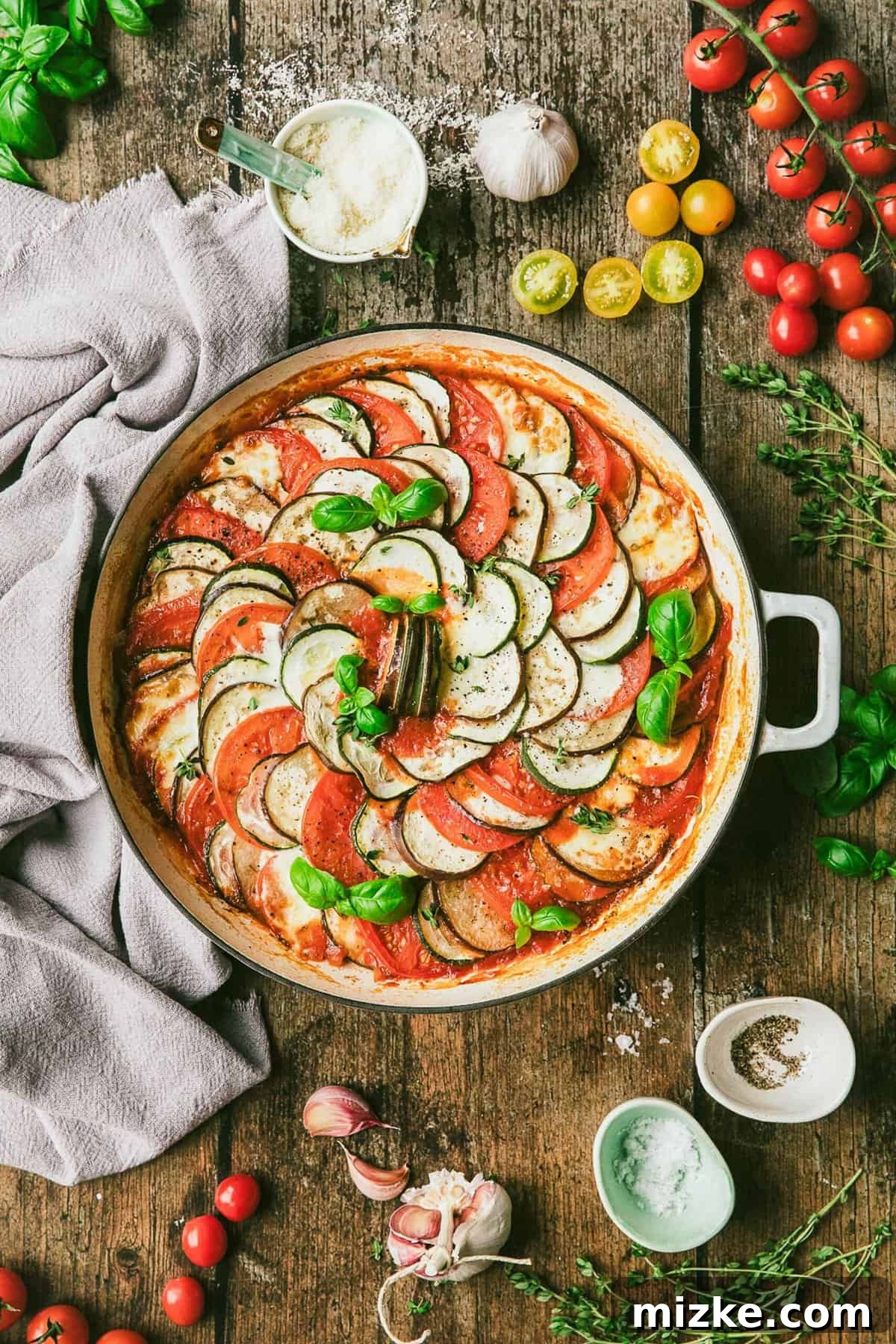
When you think of traditional ratatouille, you might imagine a time-consuming process where each vegetable is meticulously cooked separately before being united in a grand finale. While this “confit byaldi” method, famously depicted in the Disney movie Ratatouille, certainly has its merits for achieving individual textures, it also demands a significant amount of time and an impressive stack of pots and pans to wash. Let’s be honest, who has the time or desire for that on a busy weeknight?
Over the years, many home cooks have adapted, opting for a more streamlined approach by combining all the key ingredients – tomatoes, garlic, peppers, zucchini, and eggplant – and cooking them together on the stovetop. This method is undeniably delicious and far more practical for everyday cooking. However, we believe our oven-baked ratatouille recipe offers an even more superior experience, blending the best aspects of both traditional and simplified techniques.
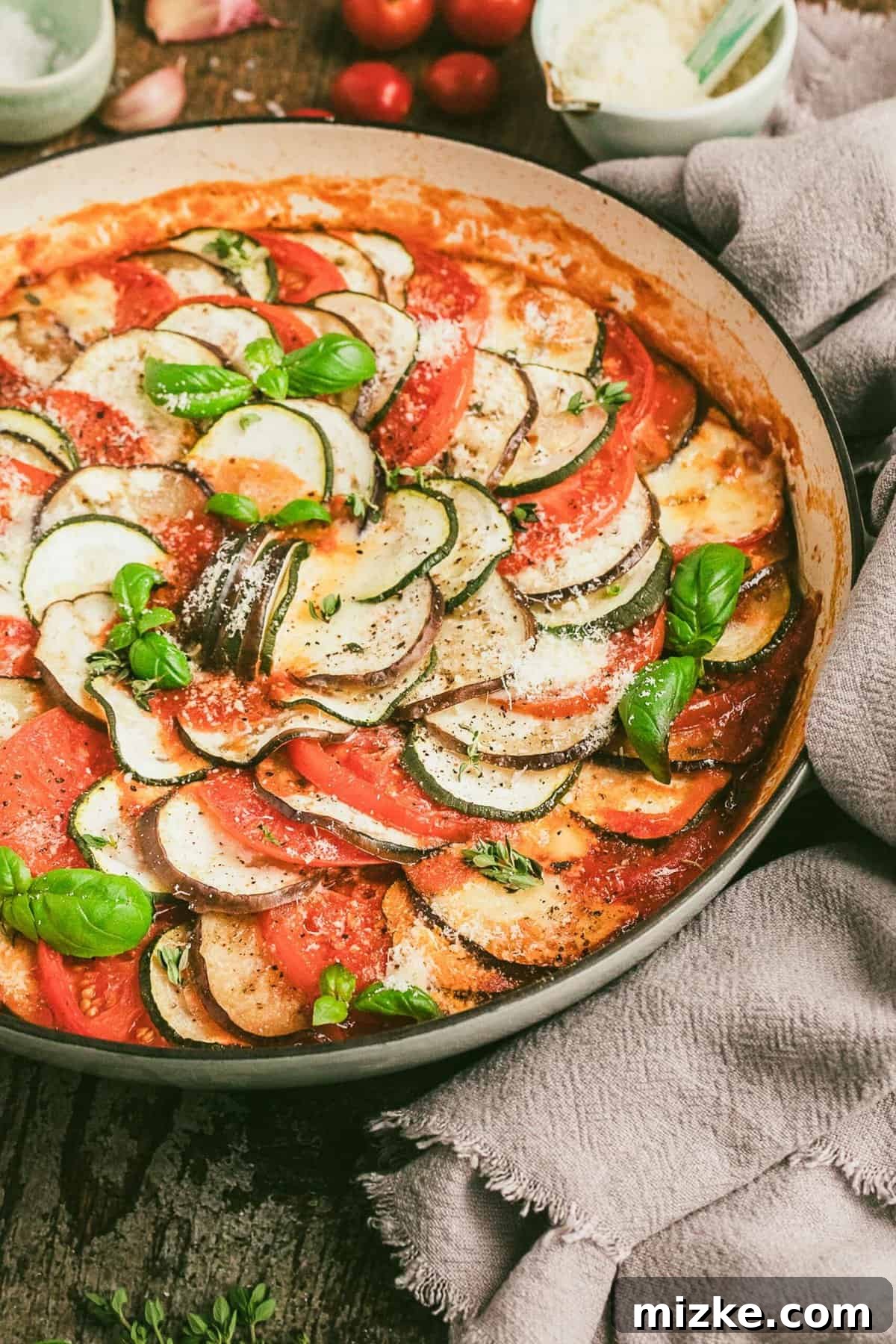
Our recipe ingeniously marries two distinct cooking methods to deliver unparalleled depth of flavor and a visually stunning presentation. You’ll begin by simmering a rich, chunky, and intensely flavorful sauce on the stovetop, building its foundation with sautéed onions, bell peppers, garlic, and ripe tomatoes, infused with fragrant herbs. This initial step ensures a concentrated base that will permeate every bite. Subsequently, thinly sliced eggplant, zucchini, and tomatoes are artfully layered over this savory sauce. These vibrant vegetables are then roasted to perfection in the oven, allowing them to gently soften and caramelize, developing their natural sweetness while maintaining a pleasing texture.
This dish is truly impressive, sophisticated enough to grace any dinner party table and earn you accolades from your guests. Yet, its preparation is surprisingly straightforward, making it an entirely feasible and stress-free option for a weeknight family dinner. For ultimate convenience, you can even prepare the sauce and assemble the entire dish the day before, leaving only the baking for when you’re ready to serve. This flexibility makes it a versatile addition to any home cook’s repertoire, whether you’re planning ahead or need a quick culinary win.
Ratatouille vs. Tian: Understanding the Distinction
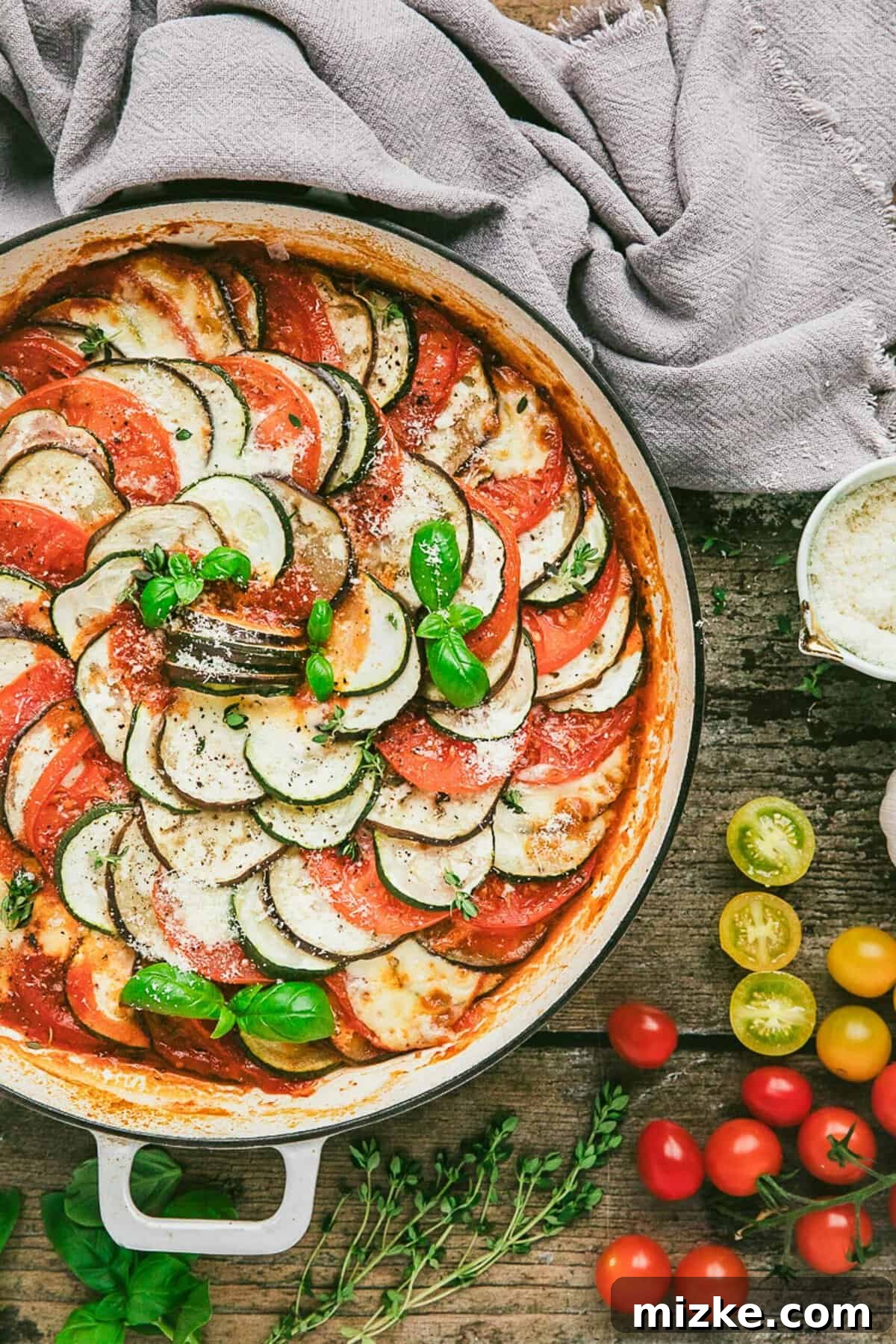
If you’re familiar with the French dish known as “tian,” this recipe’s appearance might strike you as quite familiar. Technically speaking, what many now commonly refer to as the “Disney Ratatouille” is, in fact, a tian. Both ratatouille and tian celebrate the bountiful flavors of Mediterranean vegetables, typically featuring eggplant, zucchini, and tomatoes, along with aromatic herbs and garlic. However, their defining difference lies in their preparation methods and ultimate presentation.
Traditional ratatouille, originating from Nice, France, is fundamentally a stovetop stew. The vegetables are typically diced or roughly chopped and cooked down together, often with bell peppers and onions, until they form a soft, rustic, and wonderfully flavorful stew. The focus is on a rich, melded flavor profile and a somewhat less structured appearance.
A tian, on the other hand, is a baked Provençal gratin. It involves artfully layering thinly sliced vegetables (like eggplant, zucchini, and tomatoes) in a shallow, round baking dish, usually over a bed of sauce or rice, and then baking them in the oven until tender and beautifully caramelized. The distinct layering creates an elegant, fanned pattern, making it a feast for the eyes as much as the palate.
The popular confusion between the two dishes largely stems from the beloved Disney-Pixar film Ratatouille. In its iconic climactic scene, the film features a beautifully arranged, layered vegetable dish, which is undeniably a tian, yet it was referred to as “ratatouille.” This cinematic portrayal popularized the layered, baked style under the name ratatouille, leading many to conflate the two. While we embrace the modern interpretation for its aesthetic appeal and ease, it’s worth appreciating the subtle culinary nuances that distinguish these two wonderful French preparations.
Essential Ingredients for Your Perfect Ratatouille
Embarking on this ratatouille adventure is the perfect excuse for a delightful trip to your local farmer’s market! The fresher the produce, the more vibrant and delicious your dish will be. Here’s a comprehensive list of the key ingredients you’ll need to gather to create this healthy and satisfying meal:
- Olive Oil: The foundation for sautéing and adding a rich, Mediterranean flavor. Choose a good quality extra virgin olive oil.
- Red Onions: Diced finely, they provide a sweet and pungent base for the sauce.
- Yellow Bell Pepper: Adds sweetness and a bright color to the sauce.
- Red Bell Pepper: Offers another layer of sweetness and a deeper hue. Feel free to substitute an orange bell pepper for either the yellow or red, or even combine all three for a truly colorful sauce.
- Garlic: Freshly minced or thinly sliced garlic is indispensable for that authentic Mediterranean aroma and flavor.
- Crushed Tomatoes: The heart of our flavorful sauce. Opt for good quality canned crushed tomatoes, or if fresh ripe tomatoes are abundant, you can prepare your own.
- Balsamic Vinegar: A crucial ingredient for adding a touch of tangy sweetness and depth to the tomato sauce. Look for a thick, syrupy, aged variety for the best and most complex flavor profile.
- Fresh Basil: Chopped fresh basil adds a distinctive aromatic sweetness. You’ll need extra for garnishing, as it truly brightens the finished dish.
- Fresh Thyme: Earthy and fragrant, fresh thyme leaves removed from their stems are essential for the herb blend. Reserve some sprigs for a final flourish.
- Herbes de Provence: This classic French herb blend, typically including savory, marjoram, rosemary, thyme, and oregano, brings an authentic Provençal essence. If unavailable, a good quality Italian seasoning blend can be used as a suitable substitute.
- Salt: To season the sauce and enhance the natural flavors of the vegetables. Adjust to your taste preferences.
- Pepper: Freshly ground black pepper will add a subtle kick and complement the other spices.
- Eggplant: One medium eggplant, thinly sliced, forms a key layer of the roasted vegetables. Choose firm, shiny eggplants without blemishes.
- Zucchini: Two medium zucchini, thinly sliced, contribute a delicate flavor and tender texture. Yellow summer squash can be used interchangeably or added alongside for more color variation.
- Tomatoes: About six large, firm tomatoes, thinly sliced, are perfect for layering. Heirloom varieties are particularly stunning in this dish, adding a beautiful array of colors and rich flavor.
- Mozzarella: Shredded mozzarella cheese, melted over the top, provides a creamy, savory layer that beautifully complements the vegetables.
- Parmesan: A final sprinkle of grated Parmesan cheese adds a salty, umami depth just before serving.
What Can I Substitute for Eggplant in Ratatouille?
While eggplant is a cornerstone of this recipe, if you or your guests aren’t keen on it, don’t let that deter you from making this delicious dish! You can easily adjust the recipe. Simply increase the quantity of zucchini or swap the eggplant entirely for other summer squash varieties like pattypan squash or additional yellow summer squash. These alternatives will maintain the desirable texture and beautiful appearance without compromising on flavor.
Step-by-Step Guide: Crafting Your Perfect Ratatouille
One of the great advantages of this oven-baked ratatouille is its flexibility. As mentioned earlier, you have the option to prepare the rich sauce and assemble the layered vegetables a day in advance, storing it covered in the refrigerator until you’re ready to bake. This makes it an ideal choice for entertaining or busy schedules. However, a significant portion of the cooking time is hands-off, meaning it’s equally straightforward and convenient to prepare and bake all in one go.
- Preheat Your Oven: Begin by preheating your oven to 375ºF (190°C). This ensures the oven is at the optimal temperature for even roasting once your dish is ready.
- Sauté the Sauce Base: Heat two tablespoons of olive oil in a large, ovenproof casserole dish (the same one you’ll bake in to minimize cleanup) over medium heat. Add the diced red onion, yellow bell pepper, red bell pepper, and finely sliced garlic. Sauté these vegetables, stirring occasionally, for 8-10 minutes, or until they are tender and translucent but not browned. This step builds the foundational flavors of your sauce.
- Simmer the Flavorful Sauce: Pour in the 30 ounces (851 g) of crushed tomatoes, two tablespoons of balsamic vinegar, two tablespoons of chopped fresh basil, one tablespoon of fresh thyme leaves, and one teaspoon of Herbes de Provence. Stir everything together to combine. Season generously with salt and pepper to taste. Bring the mixture to a gentle simmer, then reduce the heat to low, cover partially, and allow it to cook for 15 to 20 minutes. During this time, the sauce will thicken and the flavors will meld beautifully, creating a rich, aromatic base for your layered vegetables.
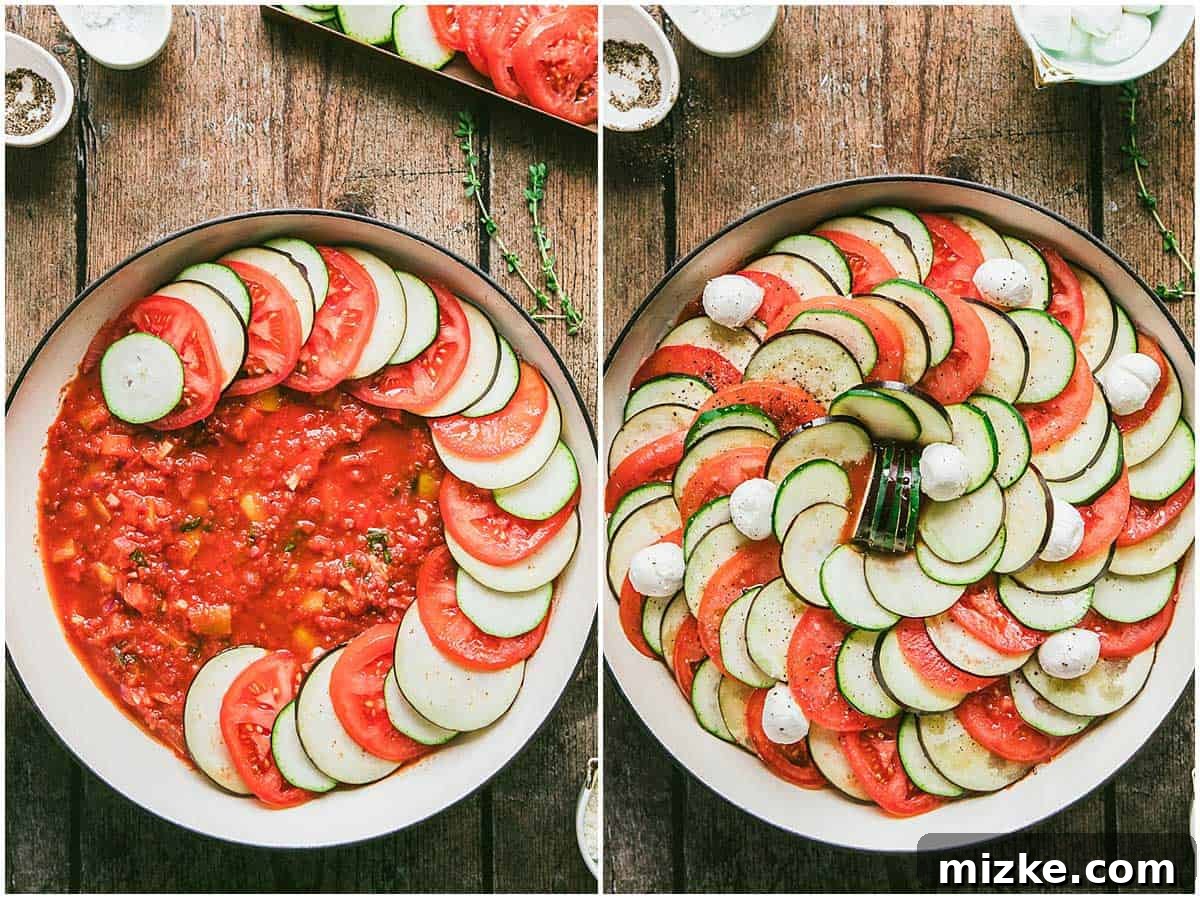
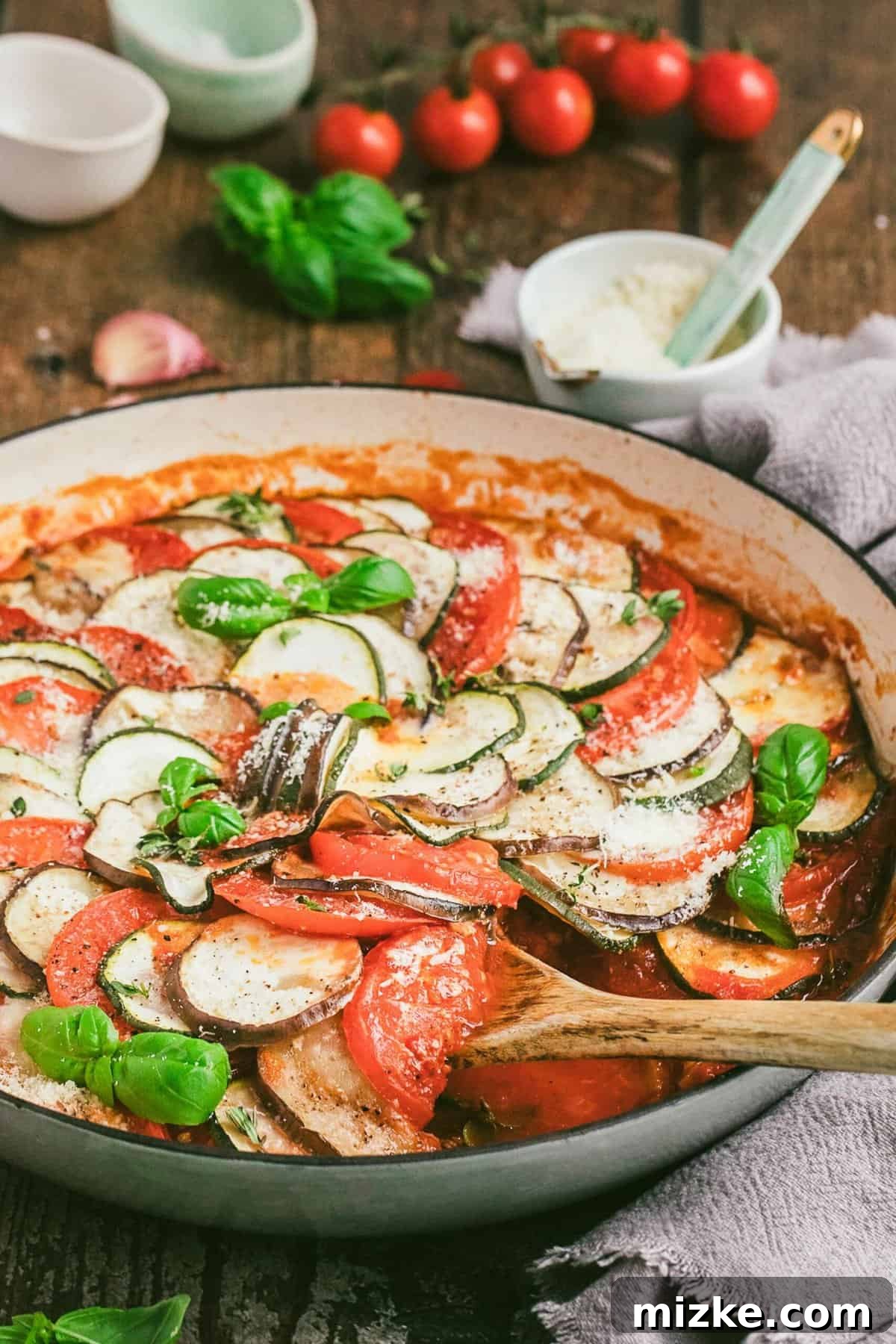
- Artfully Assemble the Vegetables: Once the sauce has simmered and thickened slightly, remove the dish from the heat. Carefully arrange the thinly sliced eggplant, zucchini, and tomatoes over the tomato sauce. Start from the outside edge of the dish and work your way inward, alternating the vegetables as you create a beautiful, spiral pattern. Aim for consistent layering for even cooking and a striking visual appeal. Once your vegetable layers are complete, scatter the 8 ounces (227 g) of shredded mozzarella evenly over the top.
- Bake to Perfection: Cover the casserole dish tightly with its lid or aluminum foil. Transfer it to the preheated oven and bake for 30 minutes. This initial covered baking period allows the vegetables to steam and soften without drying out. After 30 minutes, carefully remove the lid or foil. Return the dish to the oven and continue baking for an additional 10 minutes, or until the vegetables are tender, the cheese is bubbly and golden, and the edges show a slight caramelization.
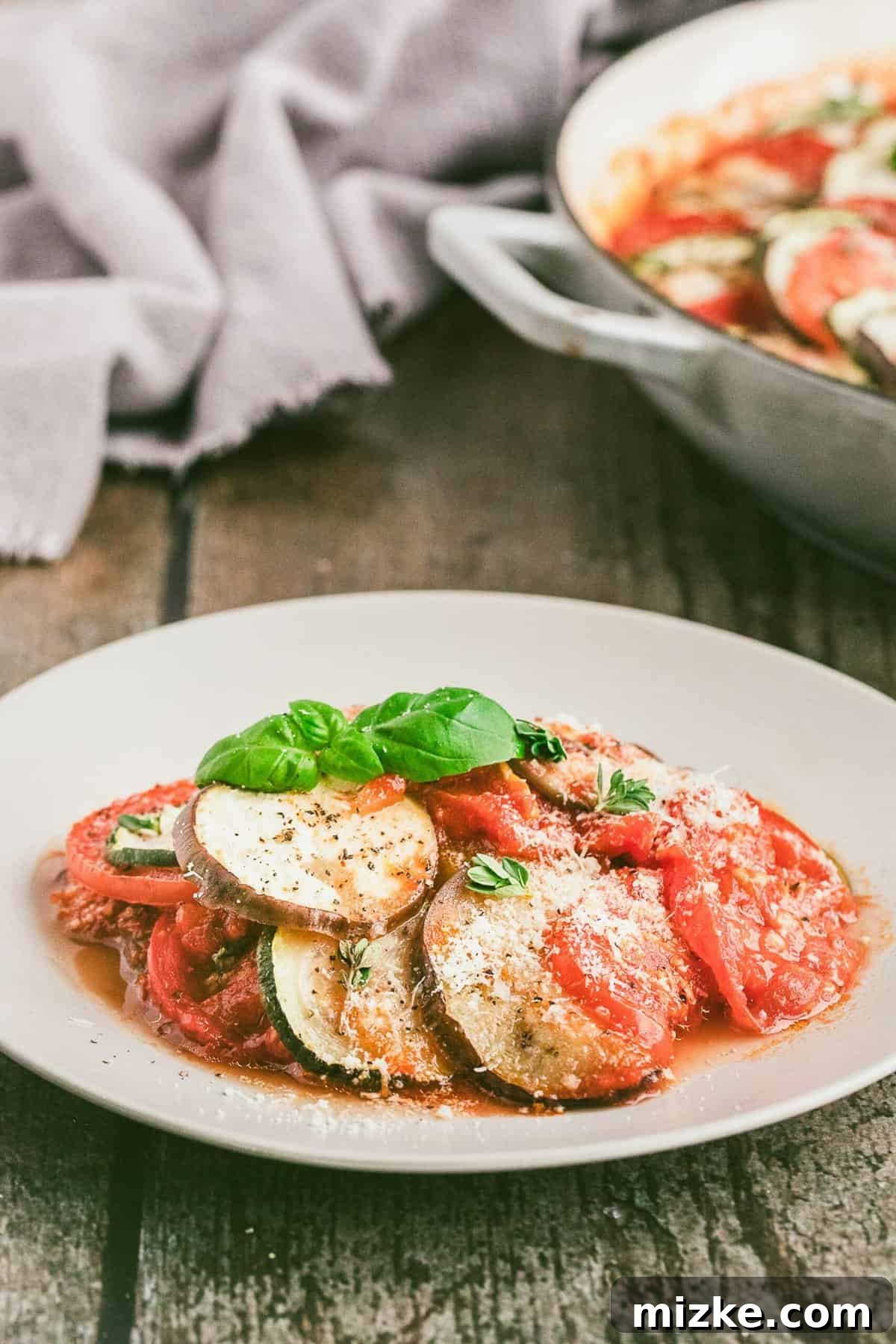
- Garnish and Serve: Carefully remove the hot ratatouille from the oven. Immediately sprinkle the ¼ cup (25 g) of grated Parmesan cheese over the melted mozzarella. Scatter any reserved fresh basil leaves and thyme sprigs over the top for a burst of fresh flavor and vibrant color.
- Serve immediately, allowing everyone to savor the warm, fragrant, and beautifully presented dish.
Expert Tips for a Flawless Ratatouille
Achieving a truly spectacular ratatouille is within reach with a few expert insights. Follow these hints and tips to ensure your dish turns out perfectly every time, from texture to taste:
- Mastering the Thin Slice: The secret to evenly cooked and visually appealing layered vegetables lies in precise, thin slicing. If you own a mandoline slicer, this is undoubtedly your best tool for achieving uniform, wafer-thin slices quickly and efficiently. If you’re using a sharp chef’s knife, take your time and exercise patience when cutting the eggplant, zucchini, and tomatoes. Inconsistent slice thickness will lead to uneven cooking, with some pieces turning mushy while others remain firm. Aim for slices roughly 1/8 to 1/4 inch thick.
- Taste-Test Your Tomato Sauce: Before layering your vegetables, take a moment to taste the simmered tomato sauce. Tomatoes can vary in acidity, and sometimes the sauce might taste a little too sharp. If this is the case, simply stir in a small pinch of sugar (a quarter to half a teaspoon usually suffices). This small addition won’t make the sauce sweet, but it will help balance the acidity, making the flavors rounder and more harmonious.
- Inject Some Heat: For those who appreciate a touch of warmth and spice in their dishes, feel free to adapt this recipe. Many traditional ratatouille variations incorporate a pinch of red pepper flakes into the sauce. If you enjoy a subtle heat, add about a quarter to half a teaspoon of red pepper flakes along with the other herbs and spices during the sauce’s simmering phase. This will add a pleasant kick that complements the rich vegetable flavors.
- Don’t Overcrowd the Dish: While it might be tempting to squeeze in extra vegetables, overcrowding your baking dish can lead to uneven cooking and a steamy, rather than roasted, texture. Ensure there’s enough space for the hot air to circulate around the vegetable slices, promoting proper roasting and a beautiful caramelization.
- Choose Fresh, Ripe Produce: The quality of your vegetables truly shines in a dish like ratatouille. Select firm, brightly colored eggplant, zucchini, and tomatoes. Fresh, fragrant herbs will also make a significant difference to the overall aroma and taste.
Serving Suggestions: What Pairs Best with Ratatouille?
Ratatouille is an incredibly versatile dish that can be enjoyed in numerous ways. Its rich, savory, and herbaceous profile makes it a fantastic accompaniment or a satisfying main course:
- As a Side Dish: It serves as an excellent, vibrant side dish to a variety of proteins. It pairs beautifully with roasted or grilled meats such as chicken (try it with Spinach and Sun-Dried Tomato Stuffed Chicken Breasts or Lemon Basil Chicken), lamb chops, or even a simple pan-seared white fish. The freshness of the vegetables provides a lovely contrast to richer main courses.
- A Hearty Vegetarian Main: When you’re looking for a fulfilling meatless meal, ratatouille stands proudly on its own. To make it a more complete and satisfying vegetarian main dish, serve it alongside:
- Crusty Bread: A good quality baguette or artisan bread is perfect for soaking up every last drop of the delicious sauce.
- Pasta: Toss it with your favorite pasta shape for a vibrant and flavorful pasta dish.
- Grains: Serve it over fluffy couscous, quinoa, brown rice, or polenta for a wholesome and nutritious meal.
- Goat Cheese or Feta: A crumble of goat cheese or feta over the warm ratatouille adds a delightful tangy creaminess.
- Brunch or Lunch Option: Enjoy it cold or at room temperature as part of a Mediterranean platter, spooned over toasted sourdough, or even as a flavorful filling for an omelet or savory crêpe.
Storing and Reheating Your Delicious Leftovers
One of the many charms of ratatouille is that it often tastes even better the next day, as the flavors have more time to meld and deepen. Storing and reheating your leftovers properly ensures you can enjoy its deliciousness for days to come:
- Refrigeration: Any leftover ratatouille should be transferred to an airtight container and stored in the refrigerator. It will maintain its quality and flavor for up to 2 days.
- Reheating Options:
- Microwave: For a quick reheat, portion individual servings into a microwave-safe dish and heat on high for 1-2 minutes, or until thoroughly warmed through. Stir halfway for even heating.
- Stovetop: For a more gentle reheat that preserves texture, place the ratatouille in a saucepan over medium heat. Stir occasionally until it’s heated through. You might add a tablespoon of water or vegetable broth if the sauce seems too thick.
- Oven: If you have a larger quantity or prefer to warm it back to its original baked glory, place the leftovers in an oven-safe dish, cover loosely with foil, and reheat in a 300°F (150°C) oven for about 15-20 minutes, or until hot.
Can This Oven-Baked Ratatouille Be Frozen?
Yes, this oven-baked ratatouille freezes beautifully, making it an excellent candidate for meal prep or for saving portions for a busy day. Freezing allows you to enjoy the taste of summer vegetables long after the season has passed.
- Freezing Instructions: After the ratatouille has been fully baked and allowed to cool completely to room temperature, you can prepare it for freezing. For best results, divide the ratatouille into individual or family-sized portions. Transfer it to freezer-safe containers, ensuring there’s minimal air space at the top, or wrap it tightly in aluminum foil and then place it in a freezer-safe bag. Label with the date. It can be stored in the freezer for up to 2 months.
- Thawing and Reheating:
- Thawing: The ideal way to thaw frozen ratatouille is to transfer it from the freezer to the refrigerator and let it thaw overnight.
- Reheating from Thawed: Once thawed, you can reheat it using any of the methods described above for refrigerated leftovers: microwave, stovetop, or oven. For oven reheating, a 350ºF (175°C) oven for 15 to 20 minutes (covered with foil until the last few minutes) usually works well, or until warmed through and bubbly.
- Reheating from Frozen (Directly): If reheating directly from frozen, this will take longer. You might need to cover it with foil and bake in a 350ºF (175°C) oven for 45-60 minutes, or until hot and bubbly throughout. Stirring occasionally is helpful for even heating.
Oven-Baked Ratatouille
Julie Chiou
25 minutes
40 minutes
1 hour
5 minutes
6
people
Equipment
-
Ovenproof Casserole or Baking Dish
-
Mandoline Slicer (Optional, for thin slicing)
-
Sharp Chef’s Knife
Ingredients
- 2 tablespoons olive oil
- 2 red onions, diced
- 1 yellow bell pepper, diced
- 1 red bell pepper, diced
- 3 cloves garlic, finely sliced or minced
- 30 ounces (851 g) crushed tomatoes
- 2 tablespoons balsamic vinegar (thick, syrupy variety recommended)
- 2 tablespoons fresh basil, chopped (plus extra leaves for serving)
- 1 tablespoon fresh thyme, leaves removed from stems (plus extra leaves for serving)
- 1 teaspoon herbes de Provence (or Italian seasoning)
- Salt, to taste
- Pepper, to taste
- 1 eggplant, medium-sized, thinly sliced
- 2 zucchini, medium-sized, thinly sliced
- 6 large tomatoes, firm, thinly sliced (heirloom varieties are excellent)
- 8 ounces (227 g) mozzarella, shredded into bite-sized pieces
- ¼ cup (25 g) Parmesan cheese, freshly grated
Instructions
-
Preheat the oven to 375°F (190°C).
-
Heat the 2 tablespoons of olive oil in an ovenproof casserole dish over medium heat. Add the 2 diced red onions, 1 diced yellow pepper, 1 diced red pepper, and 3 finely sliced garlic cloves. Cook, stirring occasionally, for 8-10 minutes until the vegetables are softened and translucent.
-
Stir in the 30 ounces (851 g) of crushed tomatoes, 2 tablespoons of balsamic vinegar, 2 tablespoons of chopped fresh basil, 1 tablespoon of fresh thyme leaves, and 1 teaspoon of herbes de Provence. Season with salt and pepper to taste. Bring to a gentle simmer, then reduce heat and cook for 15-20 minutes, stirring occasionally, until the sauce has reduced and thickened slightly.
-
Carefully arrange the 1 thinly sliced eggplant, 2 thinly sliced zucchini, and 6 thinly sliced large tomatoes over the tomato sauce in a spiral pattern, starting from the outside edge of the dish. Alternate the vegetables for a beautiful presentation. Sprinkle the 8 ounces (227 g) of shredded mozzarella over the top of the layered vegetables.
-
Cover the dish tightly with a lid or aluminum foil and bake in the preheated oven for 30 minutes. Then, remove the lid or foil and continue baking for a further 10 minutes, or until the vegetables are tender, and the cheese is melted and lightly golden.
-
Once cooked, remove the ratatouille from the oven. Sprinkle the ¼ cup (25 g) of grated Parmesan cheese over the top and garnish with any leftover fresh basil leaves and thyme sprigs.
-
Serve immediately and enjoy!
Notes
- For the Herbes de Provence, feel free to substitute with an equal amount of oregano or a good quality Italian seasoning blend if you prefer or don’t have the specific blend on hand.
- Thinly slicing the eggplant, zucchini, and tomatoes is a critical step for the success and visual appeal of this dish. Ensuring all slices are of similar thickness (ideally 1/8 to 1/4 inch) is key to uniform cooking and a visually stunning result. You can achieve this with precision using a sharp chef’s knife or, for effortless uniformity, a kitchen mandoline.
- Storage Guidelines: Leftover ratatouille should be stored in an airtight container and refrigerated for up to 2 days. Always ensure it is thoroughly reheated until piping hot before consuming.
- Make Ahead Option: You can prepare the sauce and layer the vegetables in the baking dish a day in advance. Cover tightly and refrigerate. When ready to bake, let it come closer to room temperature for about 30 minutes before baking as per instructions.
Nutrition Information (Approximate)
Serving: 1 serving, Calories: 302 kcal, Carbohydrates: 30g, Protein: 16g, Fat: 15g, Saturated Fat: 7g, Polyunsaturated Fat: 1g, Monounsaturated Fat: 6g, Cholesterol: 33mg, Sodium: 508mg, Potassium: 1243mg, Fiber: 9g, Sugar: 17g
This website provides approximate nutrition information for convenience and as a courtesy only. Nutritional values can vary significantly based on ingredient brands, preparation methods, and exact quantities used. For the most precise nutritional data, we recommend using your preferred nutrition calculator based on the actual ingredients you use in your recipe.
The default measuring system for this website is US Customary. Unit conversions are provided for convenience and as a courtesy only. While we strive to provide accurate unit conversions, please be aware that there may be some slight discrepancies due to rounding or variations in measurement standards.