
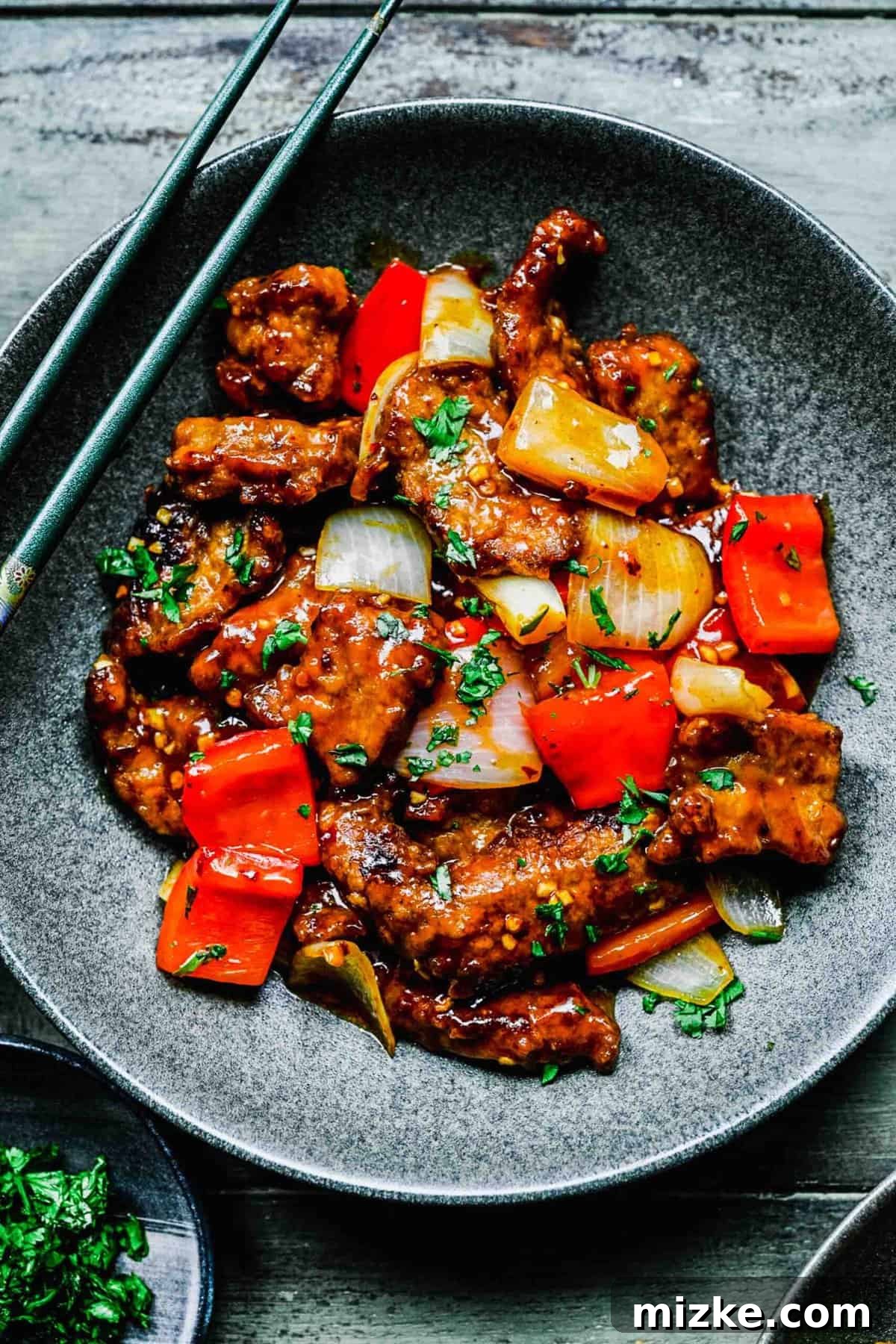
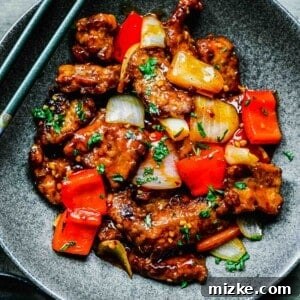
This Beijing beef recipe is truly something special, bringing the vibrant flavors of your favorite Chinese-American takeout right into your kitchen. Imagine perfectly crispy bites of beef, tender on the inside, coated in an irresistible sticky, sweet, and tangy sauce with just the right amount of spice. This culinary delight is then married with sautéed bell peppers and onions, creating a symphony of textures and tastes. If you’re constantly craving Panda Express’s iconic Beijing Beef, prepare to be amazed because this homemade version not only rivals the original but often surpasses it!
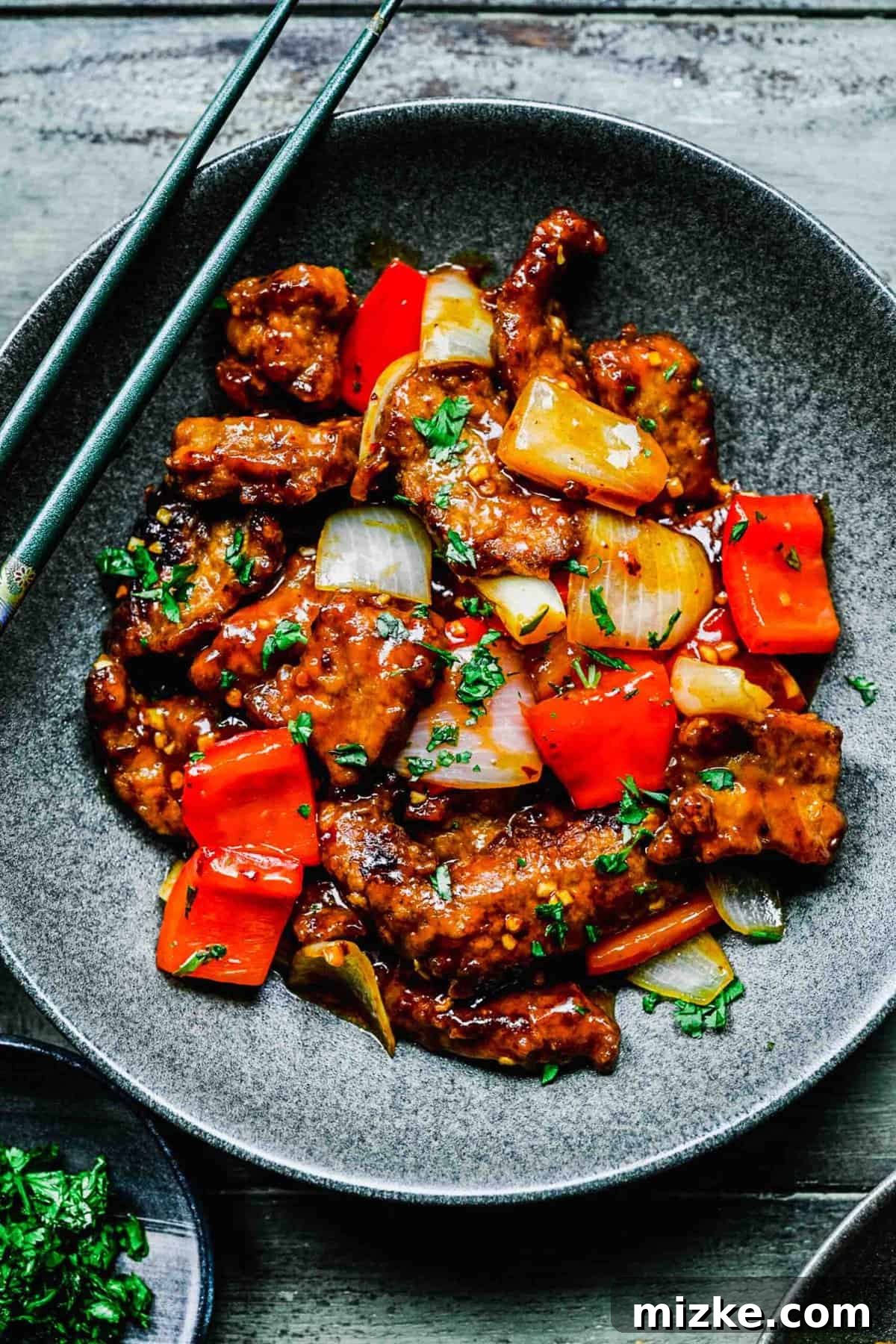
Panda Express has carved out a special place in the hearts of many, offering its unique take on delectable Chinese classics. Among their highly sought-after entrées, Beijing Beef stands out for its distinctive flavor profile and satisfying crunch. For years, I’ve dedicated myself to perfecting a homemade recreation of this beloved dish, and I’m thrilled to share that I’ve finally cracked the code to achieve that authentic taste and texture.
Whether you’re a devoted fan of Panda Express or simply new to the magic of Beijing Beef, this recipe promises to transport your taste buds to a whole new world of flavor. Each thinly sliced piece of beef is lightly coated and fried to delightful crispiness, then generously enveloped in a slightly spicy, sweet, and tangy sauce that clings to every morsel. This isn’t just another dinner recipe; it’s an experience that will likely earn a permanent spot on your list of favorite homemade meals. And the best part? You can enjoy this incredible dish in just about an hour from start to finish, making it a perfect solution for those weeknight cravings.
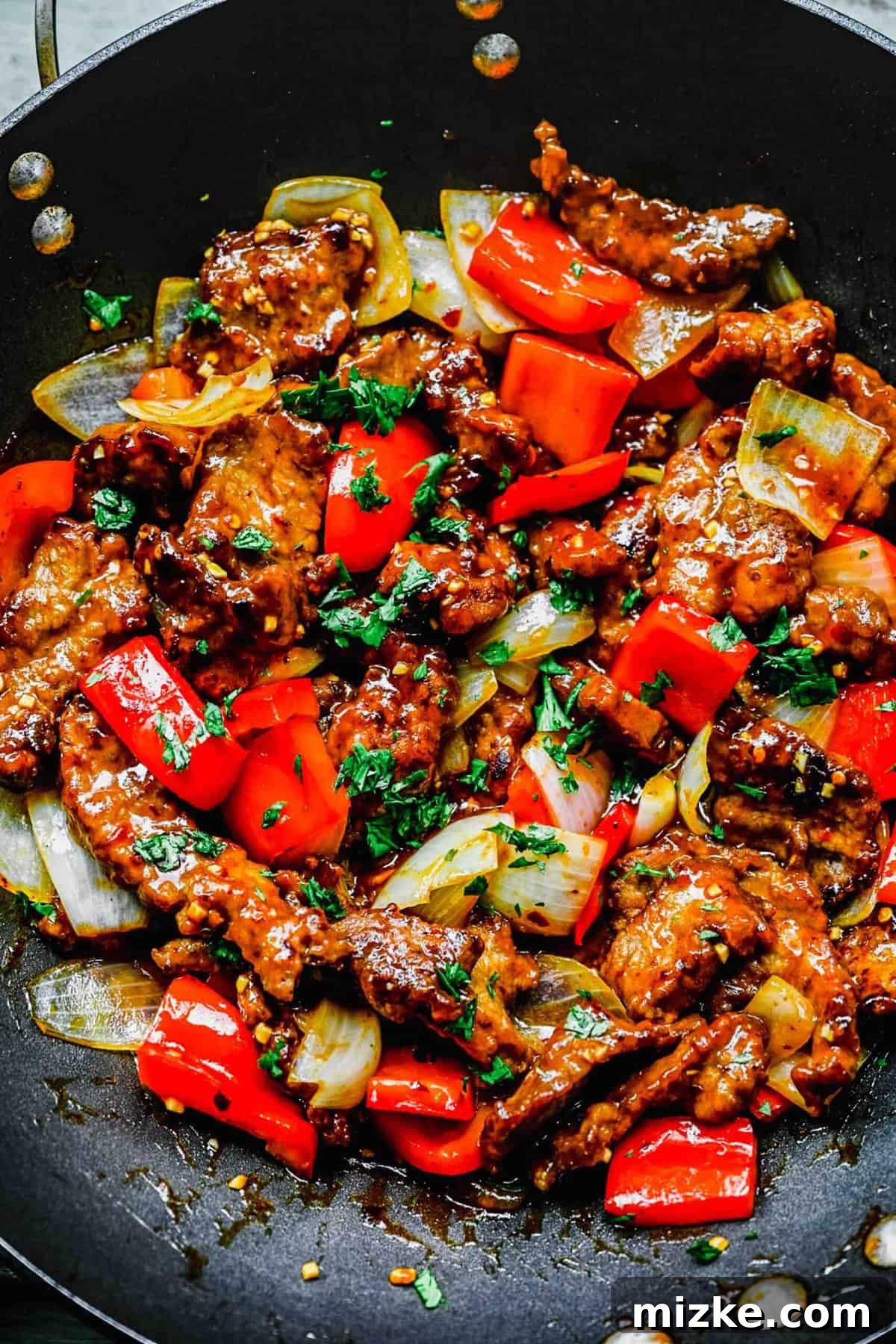
Why You’ll Adore This Homemade Beijing Beef (Panda Express Copycat)
What makes this particular Beijing Beef recipe so exceptional? Let’s explore the many reasons why it’s destined to become a household favorite:
- Unrivaled Crispy Beef: There’s nothing quite like the satisfying sizzle and crunch of perfectly fried savory beef. Our method utilizes cornstarch to create a light yet incredibly crispy coating on each slice of beef before it hits the hot oil. The result is a heavenly texture that beautifully contrasts with the tender interior of the meat, making every bite an absolute pleasure.
- Explosion of Flavor in Every Bite: The sauce is the heart and soul of this dish, offering a masterfully balanced combination of sweet, tangy, and spicy notes. It’s crafted to be thick enough to generously coat every piece of crispy beef and sautéed vegetable, ensuring that your mouth is flooded with an unforgettable burst of flavor from the very first taste.
- Authenticity, Elevated: You might wonder if a homemade version can truly compare to the restaurant original. I’m here to tell you it’s not just like the original—it’s even better! In about an hour, you can recreate this renowned Panda Express entrée in your own kitchen, enjoying all the familiar flavors without any of the artificial additives often found in fast food. Plus, the freshness of homemade ingredients truly shines through.
- Quick & Easy Weeknight Meal: Despite its gourmet taste, this Beijing Beef recipe is surprisingly straightforward to prepare. With a total time of just 60 minutes, including marinating, it’s an ideal choice for busy weeknights when you crave something extraordinary without spending hours in the kitchen.
- Customizable to Your Taste: Love a bit more heat? Add extra red pepper flakes. Prefer it sweeter? Adjust the honey or sugar to your liking. Making it at home gives you complete control over the flavor profile, allowing you to tailor the dish perfectly to your family’s preferences.
What Exactly Is Beijing Beef? Understanding This Popular Dish
Beijing Beef is a highly popular, Americanized Chinese recipe that holds a top spot on the menu at Panda Express, a well-known fast food chain. While its name suggests a traditional Chinese origin from Beijing, this dish is largely a creation of American Chinese cuisine, designed to appeal to Western palates with its vibrant flavors and satisfying textures. At its core, Beijing Beef features thinly sliced, crispy strips of beef, typically flank steak, stir-fried to a golden perfection. These delightful beef pieces are then combined with colorful sautéed bell peppers and onions, all generously coated in an irresistible sauce that balances sweetness, tanginess, and a subtle spicy kick. It’s a harmonious blend that stands apart from many other beef stir-fries, offering a unique profile that keeps diners coming back for more.
Unlike some traditional Chinese dishes that might emphasize more nuanced or savory profiles, Beijing Beef leans into bold, approachable flavors. The crispiness of the beef is paramount, achieved through a specific coating and frying technique. This texture provides a wonderful counterpoint to the softer, sautéed vegetables and the rich, glossy sauce. The sauce itself is a complex mix of ingredients like honey, ketchup, hoisin, soy, and chili sauce, creating that signature sweet-and-sour-spicy profile that defines the dish. It’s this combination of crispy texture, sweet-tangy-spicy glaze, and fresh vegetables that makes Beijing Beef a standout and a testament to the innovative spirit of American Chinese cuisine.
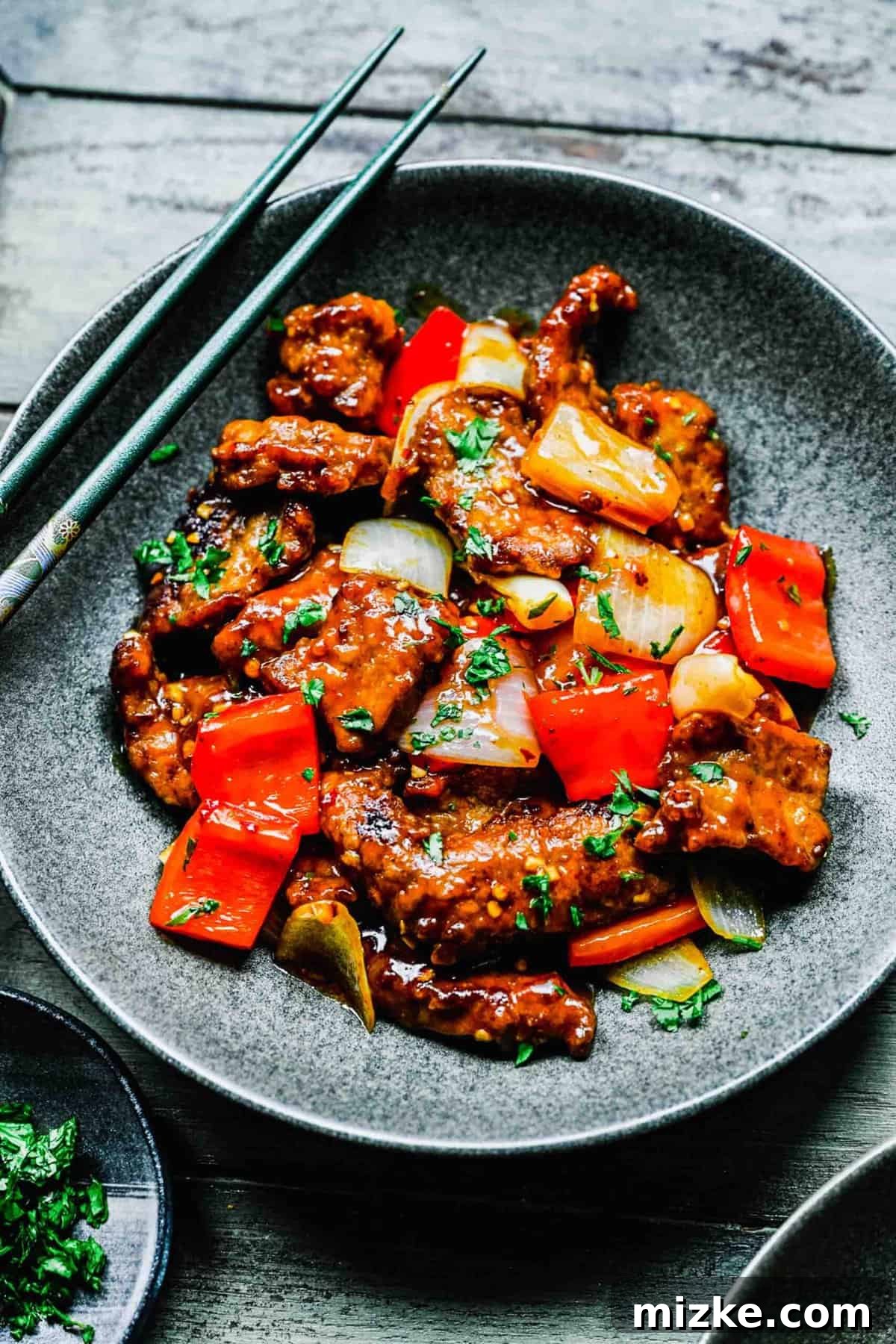
Essential Ingredients for Your Beijing Beef Copycat
To create this phenomenal Beijing Beef at home, you’ll need a selection of fresh produce, pantry staples, and a few key Asian sauces. Don’t be intimidated by the list; each ingredient plays a vital role in building the layered flavors of this dish. For exact measurements and detailed instructions, please refer to the full recipe card further down this page.
- Flank Steak: This cut is ideal for stir-frying as it’s lean and becomes tender when sliced against the grain. You’ll want to slice it thinly, about 1/4-inch thick, to ensure crispiness and quick cooking.
- Vegetable Oil: Used for frying the beef and sautéing the vegetables. Choose a neutral oil with a high smoke point.
- Red Bell Pepper: Adds a touch of sweetness, vibrant color, and a pleasant crunch.
- Yellow Onion: Provides aromatic depth and a subtle sweetness when sautéed.
- Garlic: An essential aromatic that forms the base of many delicious stir-fries. Minced fresh garlic offers the best flavor.
- Cornstarch: The secret weapon for achieving that signature crispy coating on the beef and for thickening the sauce to a perfect sticky consistency.
For the Beef Marinade:
The marinade tenderizes the beef and helps the cornstarch adhere, ensuring an even crispier result.
- Egg: Acts as a binder and helps create a delicate crust.
- Cornstarch: Further coats the beef, contributing to its tenderness and crispiness during frying.
- Salt: Enhances the beef’s natural flavor.
- Cold Water: Helps to hydrate the cornstarch and evenly distribute the marinade.
For the Signature Sauce:
This is where the magic happens! The sauce is a balance of sweet, tangy, and spicy that makes Beijing Beef so addictive.
- Water: The liquid base for the sauce.
- Honey: Provides natural sweetness and helps create a glossy, sticky finish. You can substitute with granulated sugar if preferred.
- Ketchup: Adds tanginess, a hint of sweetness, and a lovely red hue.
- Hoisin Sauce: A thick, fragrant sauce commonly used in Cantonese cuisine, offering savory, sweet, and slightly spicy notes.
- Soy Sauce: Contributes umami and saltiness. For a gluten-free option, use coconut aminos or tamari.
- Oyster Sauce: Adds a savory, slightly sweet, and complex umami flavor that is characteristic of many Asian dishes.
- Sweet Chili Sauce: Delivers a balanced sweet and mild chili heat, crucial for the “slightly spicy” element.
- Rice Wine Vinegar: Provides the essential tanginess to cut through the richness and sweetness.
- Red Pepper Flakes: Allows you to control the level of spice. Add more for a bolder kick.
- Cornstarch: Used at the end to thicken the sauce to that perfect sticky consistency, ensuring it coats every piece of beef and vegetable.
Step-by-Step Guide: Crafting Your Crispy Beijing Beef
Don’t let the ingredient list intimidate you; making this Beijing Beef is surprisingly straightforward and incredibly rewarding. We’ll break it down into simple, manageable steps. Remember to scroll down to the full recipe card for precise measurements and comprehensive details. For now, here’s an overview of the process:
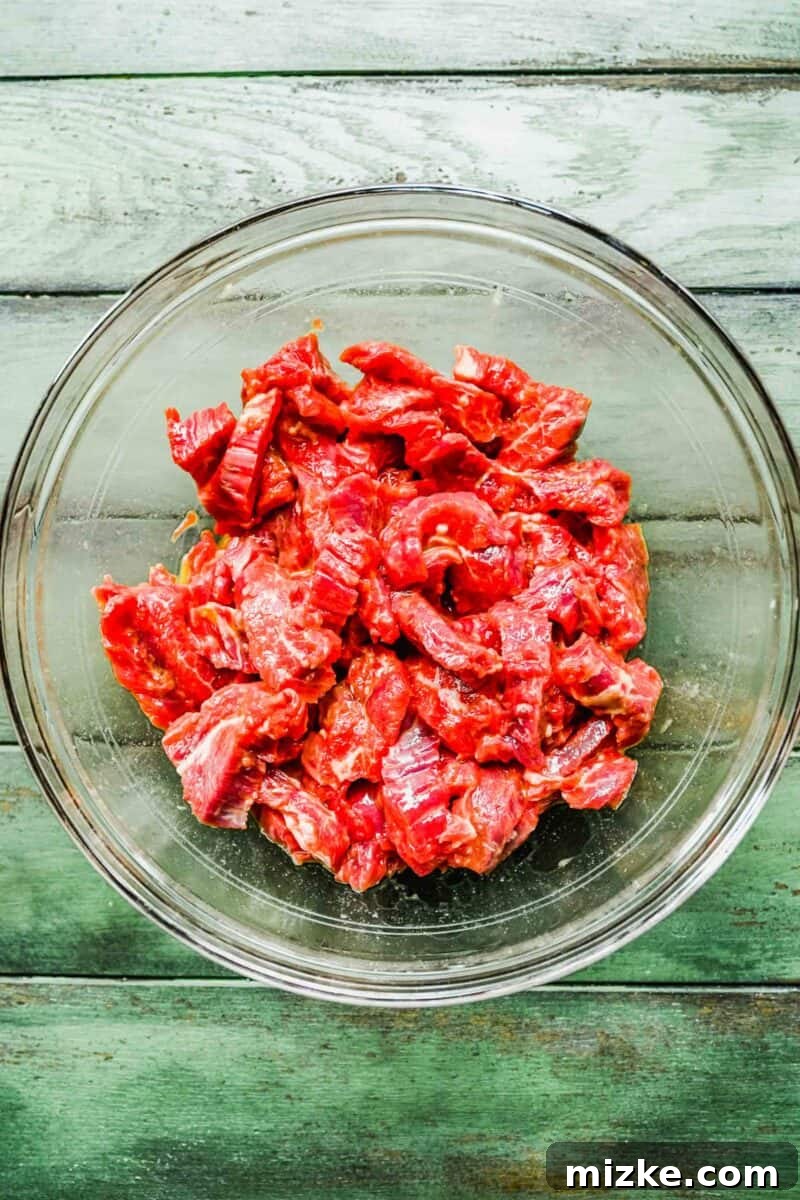
- Prepare the Beef Marinade: In a medium bowl, whisk together the egg, cornstarch, salt, and cold water until well combined. Add your thinly sliced flank steak to this mixture, ensuring each piece is thoroughly coated. This marinade not only flavors the beef but also helps tenderize it and prepare it for optimal crispiness. Cover the bowl and refrigerate for at least 30 minutes, allowing the flavors to meld and the beef to absorb the marinade.
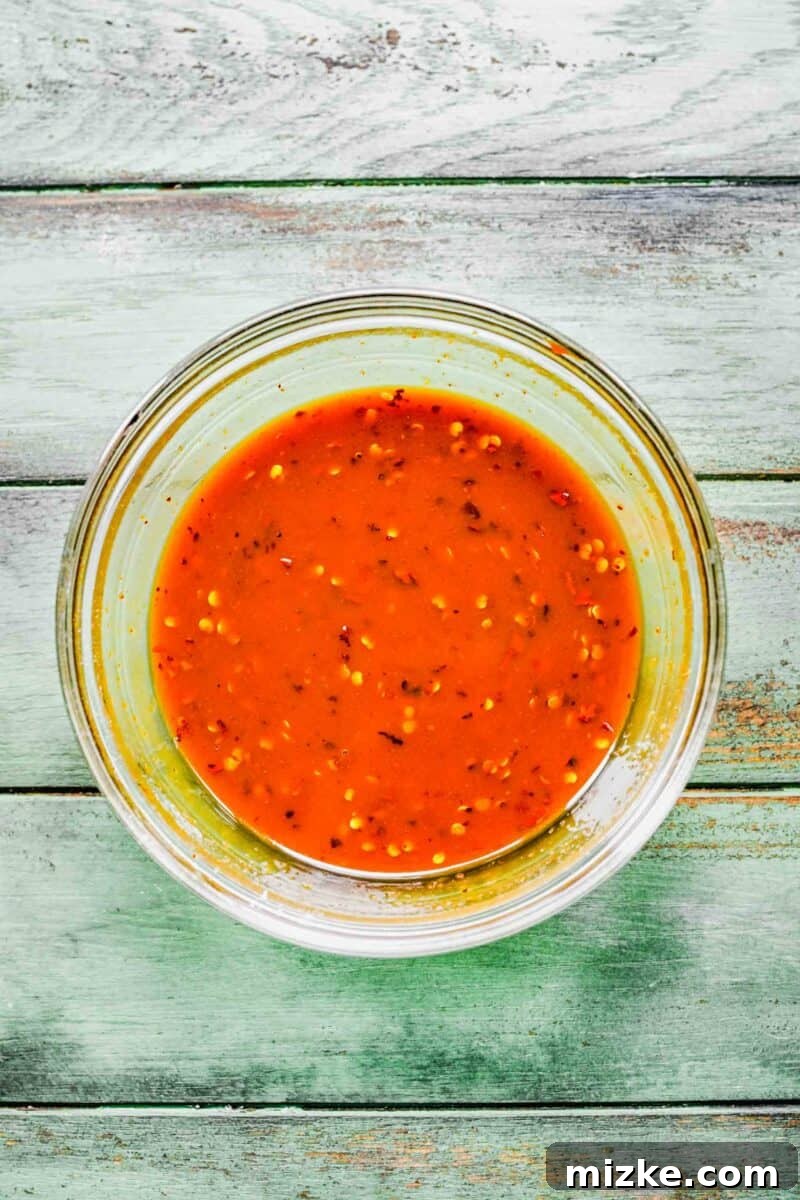
- Whisk Together the Signature Sauce: While the beef marinates, take this time to prepare the star of the show – the sauce! In a separate small bowl, combine all the sauce ingredients: water, honey (or sugar), ketchup, hoisin sauce, soy sauce, oyster sauce, sweet chili sauce, rice wine vinegar, red pepper flakes, and cornstarch. Whisk vigorously until all ingredients are smoothly blended and the cornstarch has dissolved without lumps. Set this aside; it will be added at the end.
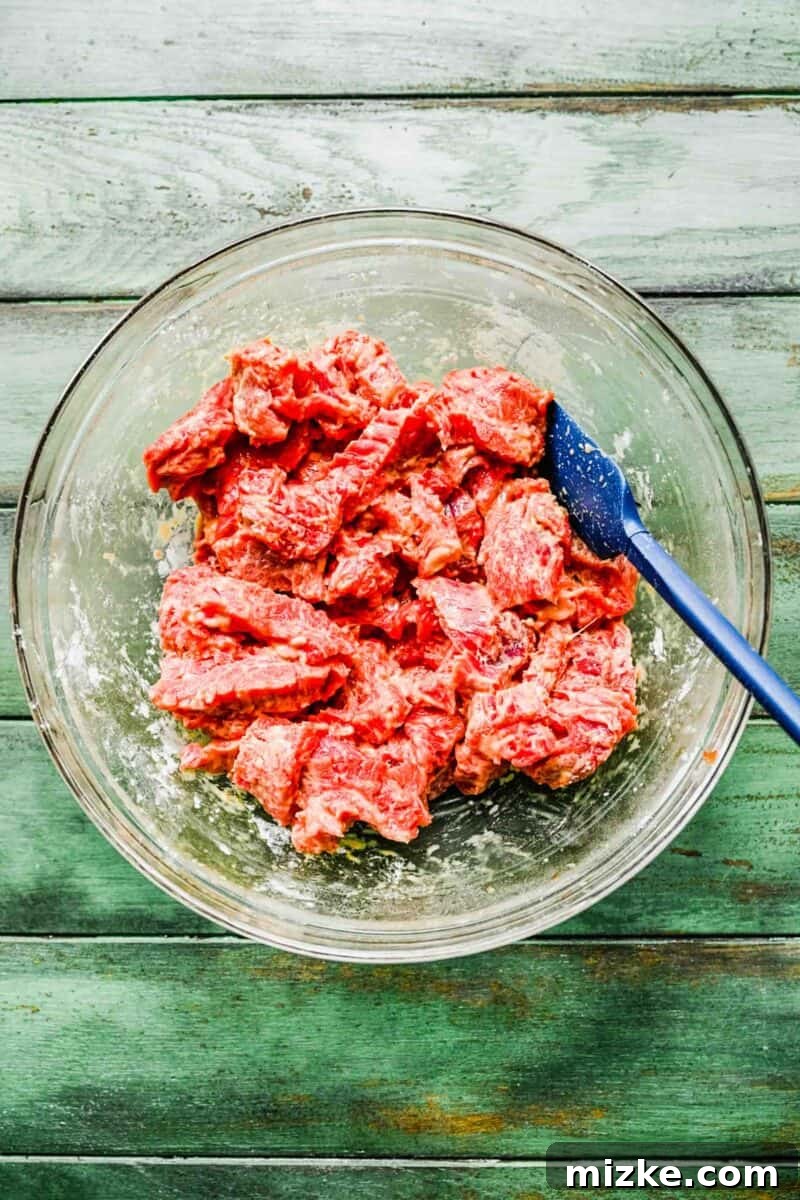
- Coat the Beef for Ultimate Crispiness: After the marinating time, remove the beef from the refrigerator. Now for the crucial step that creates that delightful crunch: generously coat the marinated beef slices in additional cornstarch. You’ll want to ensure every piece is thoroughly covered, almost like a dry batter. Don’t be shy; this coating is key to achieving a truly crispy texture when fried. You might need to add more than the initial 4 tablespoons specified in the recipe card, up to 6 tablespoons, to ensure all beef is well-dusted.
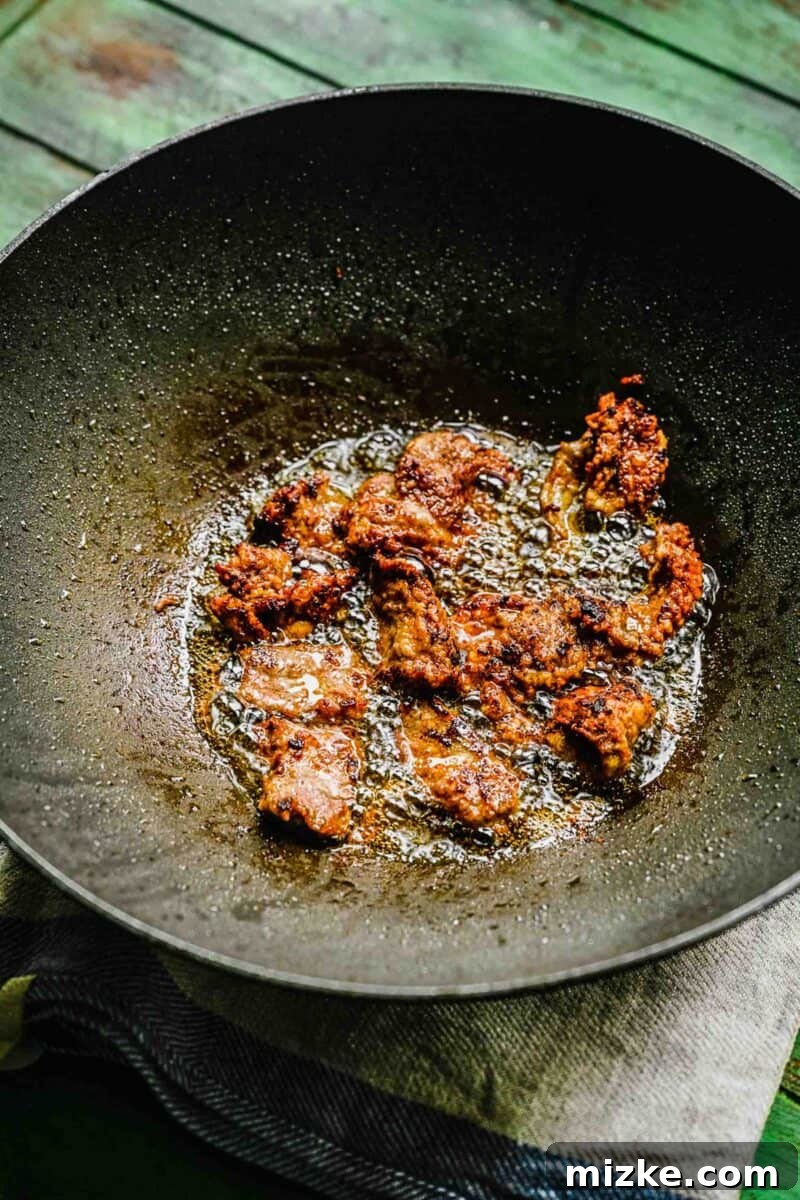
- Fry the Steak to Golden Perfection: Heat a generous amount of vegetable oil in a large wok or a deep, heavy-bottomed skillet over medium-high heat. Once the oil is shimmering and hot (you can test it with a tiny piece of beef; it should sizzle immediately), carefully add the coated steak in small batches. Avoid overcrowding the pan, as this can lower the oil temperature and prevent the beef from getting crispy. Fry each batch until it’s beautifully golden brown and crispy on both sides, typically just a few minutes per batch. Remove the cooked beef with a slotted spoon and place it on a wire rack or paper towels to drain excess oil, keeping it crispy while you cook the remaining batches.
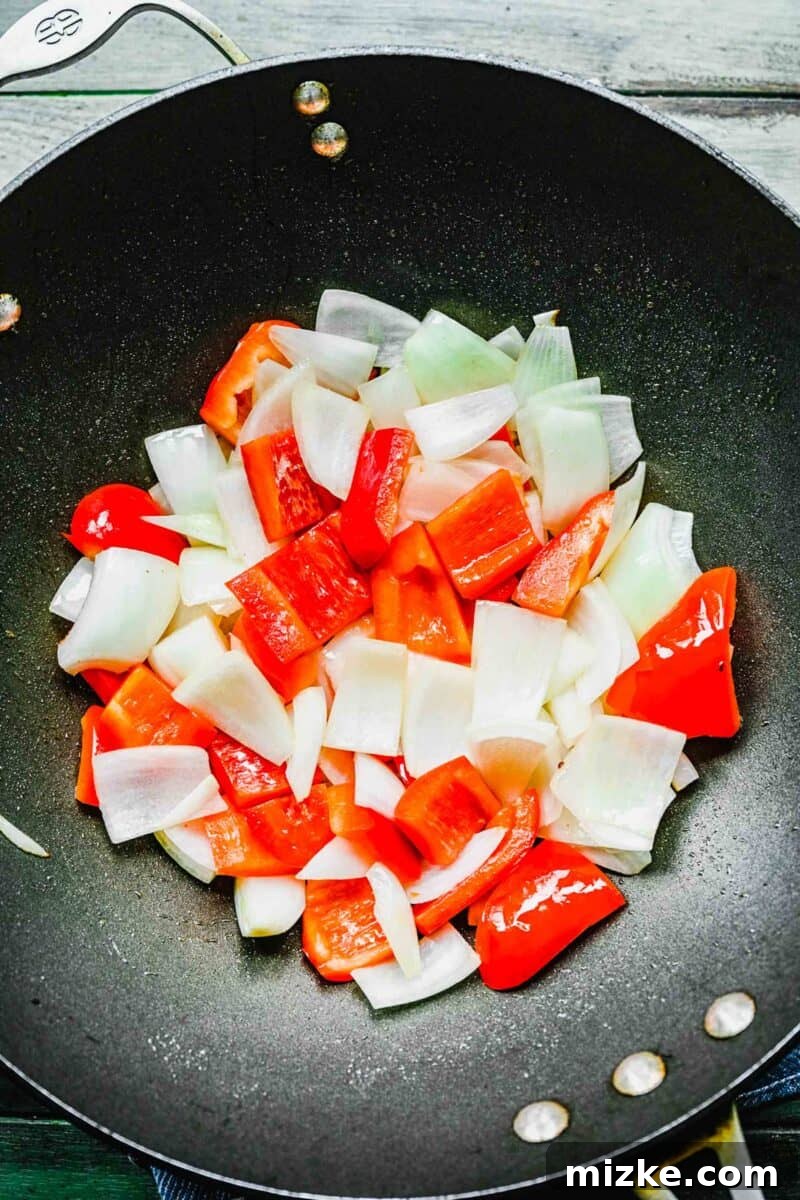
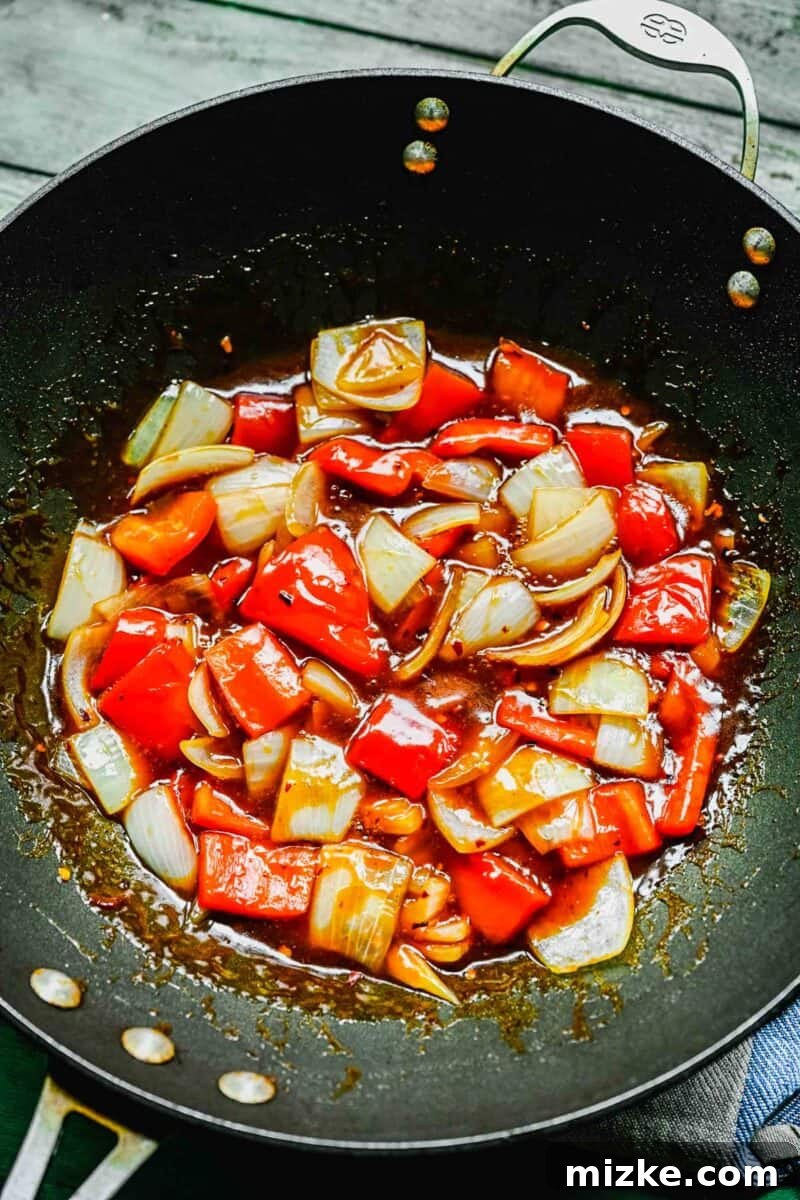
- Sauté the Vibrant Veggies: After frying all the beef, carefully drain almost all of the oil from the wok, leaving just a tablespoon or two. Return the wok to medium heat. Add the sliced onions, bell peppers, and minced garlic. Sauté these vibrant vegetables for about 3-4 minutes, or until they have softened slightly but still retain a pleasant crunch. You don’t want them to be mushy; a little crispness adds to the overall texture of the dish.
- Bring It All Together with the Sauce: Once the vegetables are perfectly sautéed, pour the whisked sauce directly into the wok. Stir continuously, bringing the sauce to a gentle simmer. Cook for just a couple of minutes, allowing the cornstarch in the sauce to work its magic and thicken it to a beautiful, glossy, and sticky consistency. Finally, return all the crispy fried beef to the wok with the thickened sauce and sautéed vegetables. Toss everything together vigorously, ensuring every piece of beef and every vegetable is generously coated in that luscious, flavorful sauce. Remove from heat immediately and serve hot to preserve the beef’s crispiness.
Chef’s Secrets: Tips & Tricks for the Best Beijing Beef
Achieving restaurant-quality Beijing Beef at home is easier than you think, especially with a few insider tips. Follow these suggestions to ensure your homemade version not only rivals but truly outshines your favorite takeout:
- Don’t Be Shy with the Cornstarch: This is arguably the most critical tip for perfectly crispy beef. Cornstarch creates that magical, light, and airy crust. After marinating, ensure each slice of beef is thoroughly coated in cornstarch. Think of it as a dry batter – every surface should be dusted. If you find you need a little more than the recipe calls for, don’t hesitate to add it; up to 6 tablespoons in total is perfectly acceptable to ensure maximum crispiness. This coating also helps seal in the juices, keeping the beef tender.
- Master Your Wok Heat: The temperature of your cooking oil is crucial for crispy beef. If the wok isn’t hot enough, the beef will absorb too much oil and turn soggy instead of crisp. Test the heat by flicking a few drops of water into the hot oil; if it sizzles and evaporates immediately, you’re ready to go. Conversely, if the oil starts to smoke heavily, it’s too hot. Reduce the heat, add a little more fresh oil, and let it cool slightly before proceeding. Medium-high heat is generally ideal for rapid frying.
- Fry in Batches for Optimal Crispiness: Overcrowding the wok is a common mistake that leads to steamed, rather than fried, beef. Fry the beef in small, manageable batches. This allows the oil temperature to remain consistently high, ensuring each piece gets beautifully golden and crispy. Patience here pays off immensely in the final texture.
- Drain Excess Oil Thoughtfully: After frying all the beef, it’s essential to drain most of the oil from the wok before sautéing the vegetables. Leaving too much oil will result in an overly greasy dish, detracting from the fresh flavors and the sauce’s clinginess. A tablespoon or two is usually sufficient to sauté the aromatics and vegetables.
- Allow the Sauce to Thicken Properly: The glorious sauce is what pulls this entire dish together, creating that signature sticky, glossy coating. Once you add the sauce to the wok with the vegetables, allow it sufficient time to bubble gently and thicken. This process usually takes only a couple of minutes, but it’s important not to rush it. A properly thickened sauce will cling beautifully to every piece of beef and vegetable, ensuring a burst of flavor in every bite.
- Slice Against the Grain: For the most tender beef, always slice the flank steak against the grain. This shortens the muscle fibers, making the beef easier to chew and more tender, even with quick cooking.
- Prep All Ingredients Ahead (Mise en Place): With stir-fries, speed is key once cooking begins. Have all your ingredients – sliced beef, mixed marinade, prepared sauce, chopped vegetables – ready and organized before you turn on the heat. This ensures a smooth cooking process and prevents anything from burning while you’re scrambling for the next ingredient.
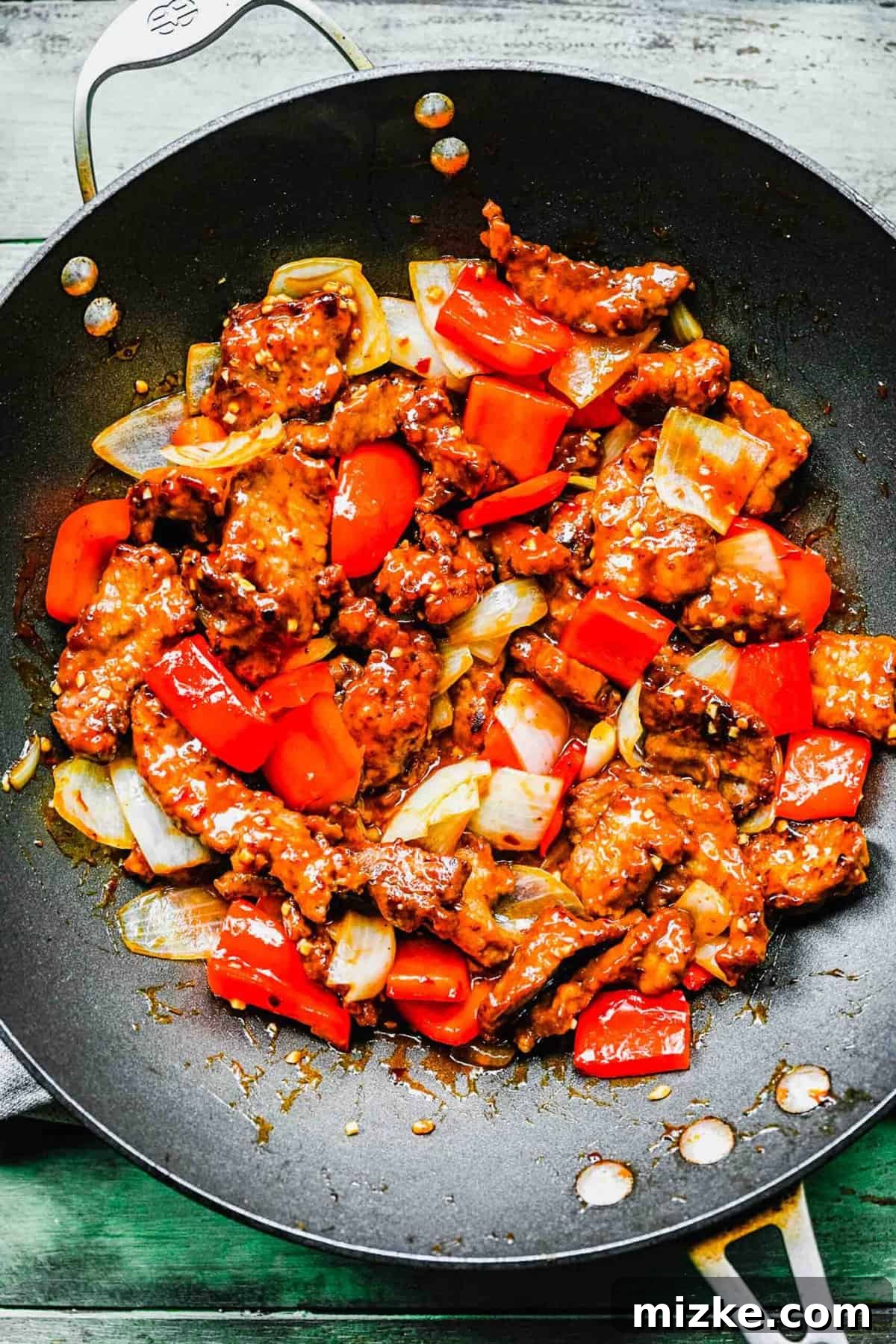
Perfect Pairings: What to Serve with Beijing Beef
While Beijing Beef is incredibly flavorful and satisfying on its own, pairing it with a complementary side dish or two can transform it into a complete and balanced meal. Here are some fantastic options:
- Rice: The classic accompaniment! Simple steamed white or brown rice is perfect for soaking up every last drop of that delicious sauce. For more flavor, consider Fried Rice with its savory additions, or even Kimchi Fried Rice for a tangy, spicy twist.
- Vegetable Sides: Balance the richness of the beef with fresh, crisp vegetables. Options like Chinese Cabbage Stir Fry offer a light, earthy counterpoint. Garlic Roasted Green Beans provide a simple, savory crunch. For something refreshing and zesty, a Spicy Chinese Cucumber Salad is an excellent choice, offering a cool contrast to the warm, spicy beef.
- Scallion Pancakes: These savory, flaky pancakes are perfect for scooping up the beef and sauce, adding another layer of texture and flavor to your meal.
- Rainbow Summer Rolls: For a lighter, fresh element, these vibrant, uncooked rolls filled with fresh vegetables and sometimes protein offer a beautiful textural and temperature contrast.
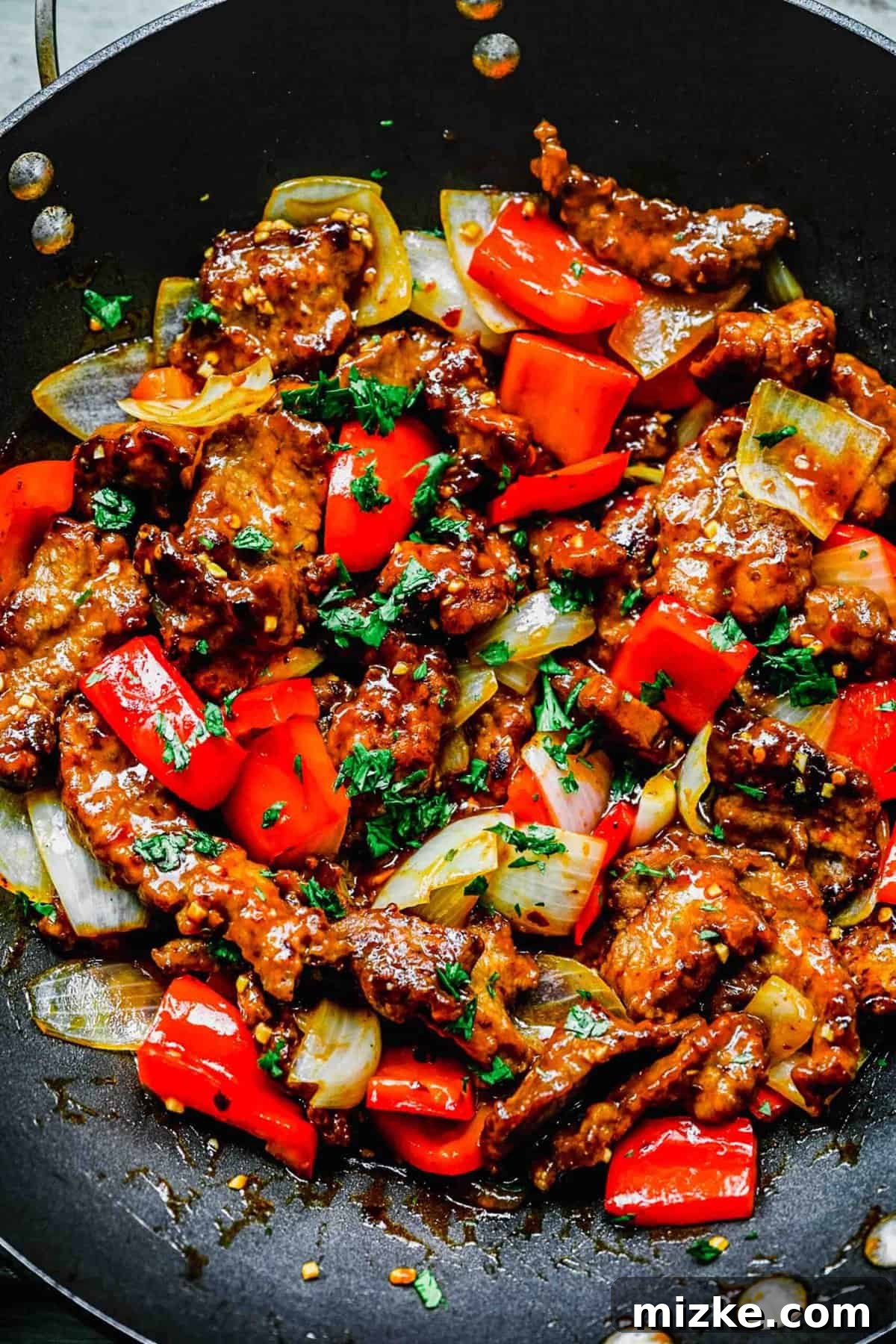
Storing & Reheating Your Beijing Beef Leftovers
While this dish is best enjoyed fresh, you can certainly save leftovers for another delicious meal. Proper storage and reheating will help maintain its quality:
- Storing in the Refrigerator: Allow your Beijing Beef to cool completely to room temperature before transferring it to an airtight container. Store it in the refrigerator for up to 3 days. Be aware that the beef will naturally lose some of its initial crispiness as it sits in the sauce, but the flavors will remain fantastic.
- Reheating for Best Results: To best revive your leftovers, I recommend reheating them in a wok or large skillet. Heat a tablespoon of vegetable oil over medium-high heat, then add the desired portion of Beijing Beef. Sauté for approximately 5-7 minutes, stirring occasionally, until it is thoroughly heated through and the sauce is bubbling. This method helps to crisp up the beef slightly again and prevents it from becoming soggy. If you’re short on time, the microwave is an option, though it won’t restore the crispiness. Heat in 30-second intervals, stirring in between, until warm.
Explore More Delicious & Easy Beef Recipes
Beef is a fantastic and versatile protein source, renowned for being packed with essential iron, vitamins, and minerals. While this Beijing Beef recipe is an absolute must-try, the culinary possibilities with beef are endless. If you’re looking to diversify your weeknight menu or simply explore more ways to enjoy this super protein, here are some of my other favorite, easy-to-make beef recipes that promise flavor and satisfaction:
- Ground Beef Fajitas: A sizzling, flavorful skillet meal perfect for taco night, loaded with seasoned beef and vibrant peppers.
- Middle Eastern Inspired Ground Beef Bowls: Healthy and hearty bowls featuring spiced ground beef, fresh veggies, and a delicious sauce.
- Beef Ramen Noodle Soup: A comforting and quick soup, ideal for chilly evenings, with tender beef and slurpy noodles.
- Teriyaki Beef and Broccoli: A classic, healthy, and incredibly easy stir-fry that comes together faster than takeout.
- Sheet Pan Beef and Cheese Quesadillas: An ingenious way to make multiple crispy, cheesy quesadillas at once, perfect for family dinners or entertaining.
We hope you’ll dive into the delightful world of homemade Beijing Beef and discover just how easy and satisfying it is to recreate your favorite takeout dishes at home. Enjoy the crisp, the tang, the sweet, and the spice!
Print Recipe
Homemade Beijing Beef (Panda Express Copycat)
Julie Chiou
In this perfected copycat version of Panda Express’s famous Beijing Beef, a slightly spicy, sweet, and tangy sauce beautifully coats crispy fried beef and tender sautéed vegetables. Forget ordering takeout – this homemade recipe is guaranteed to impress!
30 minutes
30 minutes
1 hour
4 people
Ingredients
- 1 pound (454 g) flank steak, sliced into ¼” slices (against the grain)
- 1 cup (237 ml) vegetable oil
- 1 red bell pepper, cut into ½“ pieces
- 1 yellow onion, cut into ½” pieces
- 4 cloves minced garlic
- 4-6 tablespoons cornstarch (for coating beef)
For the Beef Marinade:
- 1 large egg, beaten
- 2 teaspoons cornstarch
- ¼ teaspoon salt
- 1 tablespoon cold water
For the Signature Sauce:
- ¼ cup (59 ml) water
- 2 tablespoons honey (or sugar)
- 3 tablespoons ketchup
- ¼ cup (69 g) hoisin sauce
- 1 tablespoon soy sauce (or coconut aminos for GF)
- 1 teaspoon oyster sauce
- 1 ½ tablespoons sweet chili sauce
- 2 tablespoons rice wine vinegar
- 1 ½ teaspoons red pepper flakes
- 2 teaspoons cornstarch (for thickening sauce)
Instructions
-
Marinate the Beef: In a large bowl, whisk together the ingredients for the beef marinade (egg, 2 tsp cornstarch, salt, and 1 tbsp cold water). Add the thinly sliced flank steak and stir well to ensure every piece is coated. Cover the bowl and refrigerate for 30 minutes to allow the flavors to infuse and the beef to tenderize.
-
Prepare the Sauce: While the beef marinates, combine all the sauce ingredients (¼ cup water, honey, ketchup, hoisin sauce, soy sauce, oyster sauce, sweet chili sauce, rice wine vinegar, red pepper flakes, and 2 tsp cornstarch) in a small bowl. Whisk thoroughly until smooth and set aside.
-
Coat for Crispiness: After 30 minutes of marinating, remove the beef. In a separate, dry bowl, add 4 tablespoons of cornstarch (or up to 6 tablespoons if needed). Toss the marinated steak in the cornstarch until each piece is evenly and generously coated. This step is crucial for achieving that signature crisp exterior.
-
Fry the Beef: Heat 1 cup of vegetable oil in a large wok or a deep, heavy-bottomed pan over medium-high heat. Once the oil is hot and shimmering, carefully add the coated steak in small batches. Fry each batch until golden brown and crispy on all sides (usually 2-3 minutes per batch). Remove the fried beef with a slotted spoon and place it on a wire rack or paper towels to drain excess oil. Repeat until all the steak is cooked.
-
Sauté Veggies & Thicken Sauce: Carefully drain almost all of the oil from the wok, leaving just 1-2 tablespoons. Return the wok to medium heat. Add the chopped red bell pepper, yellow onion, and minced garlic. Sauté for about 3-4 minutes until the vegetables begin to soften but still retain some crunch. Pour the prepared sauce into the wok with the vegetables. Stir well and bring to a gentle simmer, cooking for a few minutes until the sauce visibly thickens to a glossy, sticky consistency.
-
Combine & Serve: Return the crispy fried beef to the wok with the thickened sauce and sautéed vegetables. Toss everything together until the beef and veggies are thoroughly coated in the luscious sauce. Remove from heat immediately to maintain crispiness and serve hot. This dish is excellent with steamed rice or noodles.
Nutrition Information (Approximate)
Serving: 1 serving, Calories: 329kcal, Carbohydrates: 37g, Protein: 28g, Fat: 8g, Saturated Fat: 3g, Polyunsaturated Fat: 1g, Monounsaturated Fat: 3g, Trans Fat: 0.01g, Cholesterol: 109mg, Sodium: 975mg, Potassium: 588mg, Fiber: 2g, Sugar: 21g
This website provides approximate nutrition information for convenience and as a courtesy only. Nutrition information can vary for a variety of reasons. For the most precise nutritional data use your preferred nutrition calculator based on the actual ingredients you used in the recipe.
The default measuring system for this website is US Customary. Unit conversions are provided for convenience and as a courtesy only. While we strive to provide accurate unit conversions, please be aware that there may be some discrepancies.