
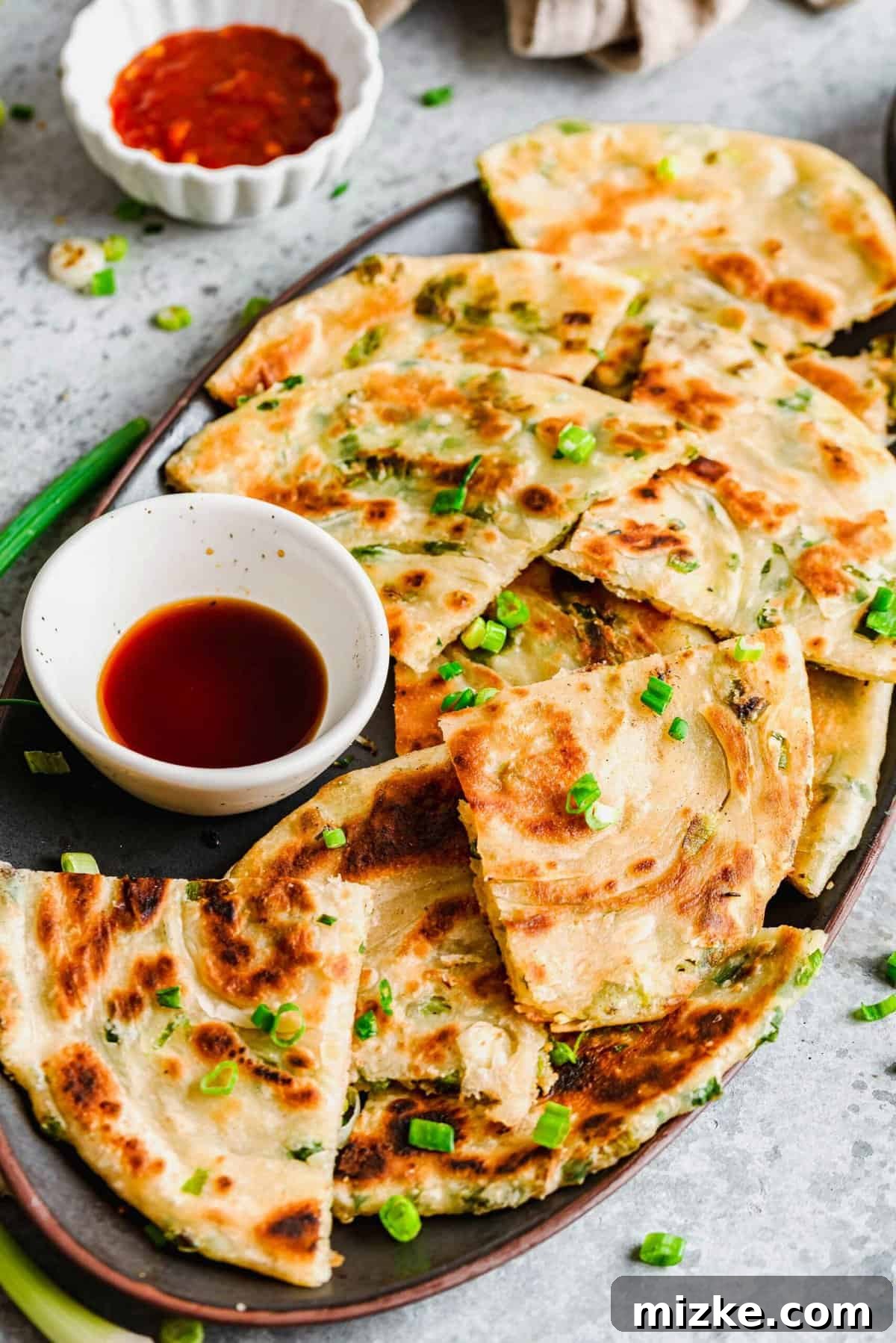
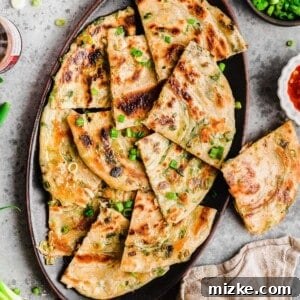
Who knew transforming a takeout favorite into a homemade masterpiece could be so simple? These scallion pancakes, also known as green onion pancakes or 蔥油餅 (cōngyóubǐng), offer a delightful culinary experience with their exquisitely crisp exterior and wonderfully chewy interior. Prepare to be amazed by how easily you can craft these irresistible Asian appetizers right in your own kitchen!
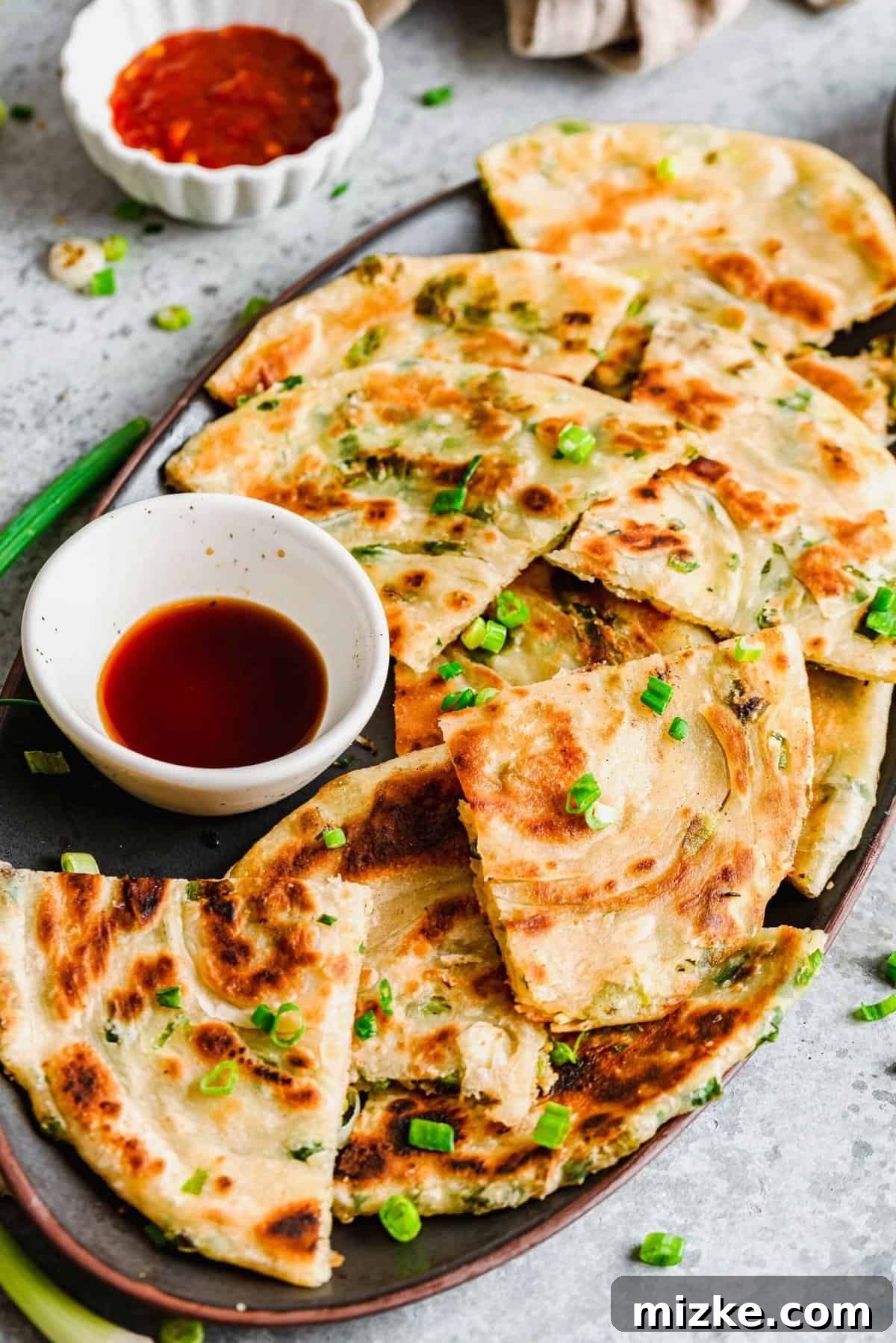
For many, scallion pancakes hold a special place among their favorite Taiwanese or Chinese appetizers. The allure of their unique texture and savory flavor makes it incredibly hard to resist ordering multiple plates whenever dining out. Yet, for years, the idea of making them at home seemed daunting, a secret only mastered by seasoned chefs. If you’ve shared this misconception, prepare to have your mind changed! This comprehensive scallion pancake recipe is designed to demystify the process, revealing just how accessible and enjoyable homemade versions can be. Once you discover the ease and deliciousness, you’ll want to make them all the time.
The secret to their signature flaky, crisp exterior and tender, chewy interior lies not in complex ingredients, but in a simple dough and clever technique. I once believed crafting such a unique texture required culinary magic. However, watching the straightforward method for homemade dough preparation, I was genuinely surprised. It’s truly just a blend of flour, water, and ample resting time, allowing the dough to develop its essential elasticity and structure.
The real artistry comes from the technique: preparing the pliable dough, dividing it into portions, skillfully rolling each piece thin, brushing it with oil, generously sprinkling fresh scallions and salt, rolling it into a tight log, coiling it like a snail shell, gently flattening it, and finally, pan-frying to golden perfection. While this might sound like a sequence of many steps, it’s an incredibly satisfying and fun process to master. The step-bystep photos provided below will guide you through each stage, making it clear and achievable for home cooks of all levels.
Why This Scallion Pancake Recipe is a Must-Try
Beyond their undeniable deliciousness, these homemade scallion pancakes offer several compelling reasons to become a staple in your culinary repertoire:
- Unforgettable Texture: This recipe delivers the quintessential scallion pancake experience. Each bite begins with a satisfying crunch from the golden, flaky crust, immediately followed by the comforting chewiness of the soft, pillowy interior. It’s a textural masterpiece that will tantalize your taste buds.
- Surprisingly Quick & Rewarding Process: From the initial mixing of the dough to the final sizzling fry, this entire recipe can be completed in just about an hour. The brief resting periods are crucial for dough development but allow for hands-off time, making the overall process highly efficient and rewarding for a busy weeknight or a relaxed weekend cooking project.
- Incredibly Versatile Serving Options: Scallion pancakes are wonderfully adaptable. They can serve as a delightful side dish to a more elaborate meal, a perfect standalone appetizer, a quick and satisfying snack, or even a savory breakfast option. Regardless of the time of day, a warm, crispy scallion pancake is always a welcome treat.
- Simple, Accessible Ingredients: You won’t need to hunt for exotic items. The core ingredients—flour, water, scallions, oil, and salt—are pantry staples, making this a convenient recipe to whip up whenever a craving strikes.
- A Taste of Authenticity at Home: Recreate the authentic flavors of your favorite Chinese or Taiwanese restaurant from the comfort of your kitchen. Impress your family and friends with these freshly made delights.
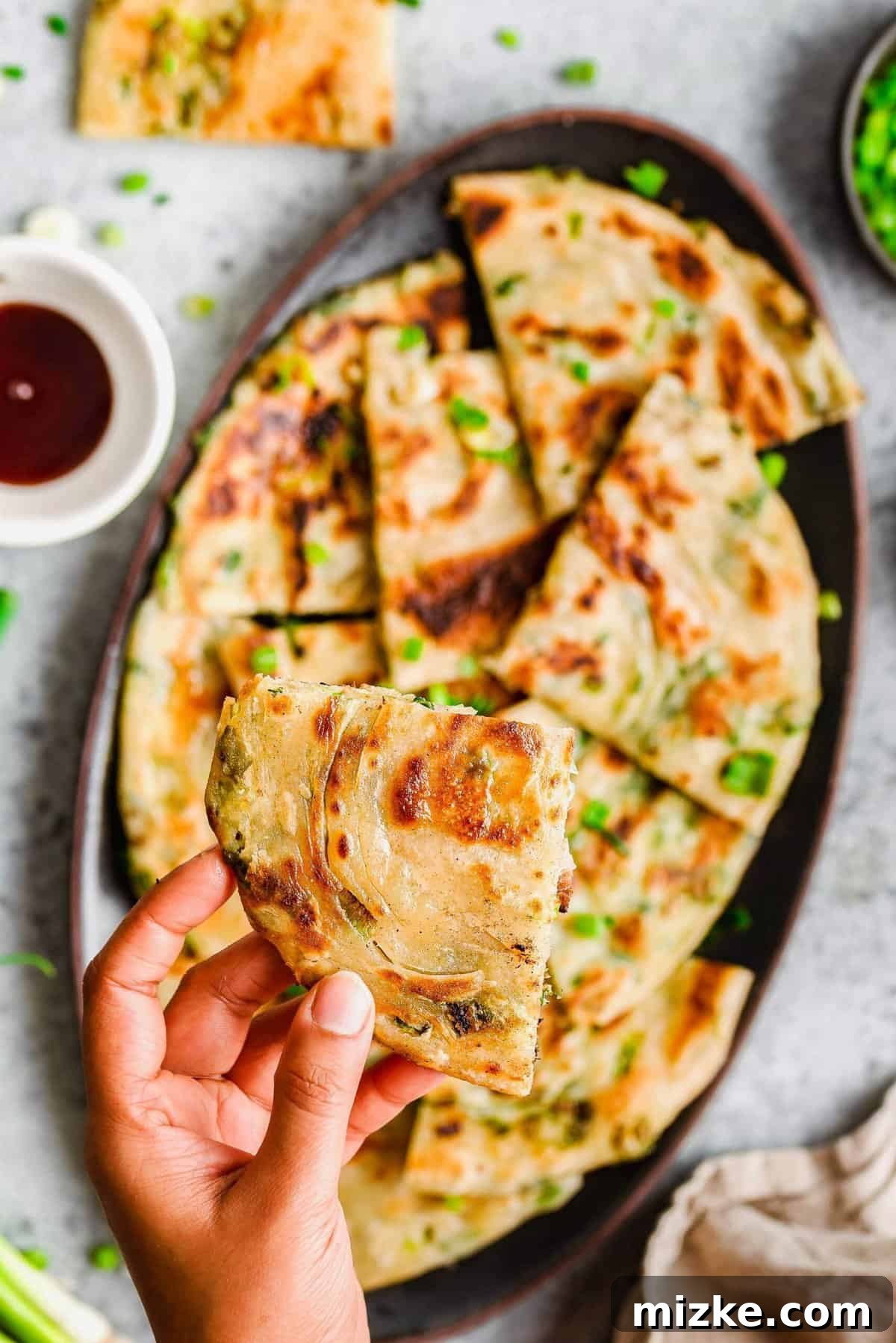
What Exactly Are Scallion Pancakes?
Scallion pancakes, often referred to as green onion pancakes, are a beloved savory, unleavened flatbread popular in Chinese cuisine, particularly in Taiwanese and Northern Chinese culinary traditions. They are primarily made from a simple dough of wheat flour, warm water, and oil, generously studded with fresh chopped scallions and seasoned with salt. They are distinctly different from the sweet, fluffy, batter-based pancakes commonly found in Western breakfasts.
Instead, these savory pancakes are fried until golden brown, developing a characteristic crispy, flaky exterior and a soft, chewy interior. This unique texture is achieved through a specific rolling and coiling technique that creates multiple thin layers within the dough, trapping oil and scallions to infuse flavor and produce that coveted flakiness. While a staple on Chinese takeout menus, their straightforward preparation makes them an ideal project for home cooks.
If you’re eager to explore more easy and flavorful Asian appetizers, consider trying a Chinese Cabbage Stir Fry! This quick dish, featuring crisp cabbage, savory soy sauce, and aromatic garlic, comes together in just about 15 minutes with minimal effort, making it another perfect addition to your homemade Asian feast.
Essential Scallion Pancake Ingredients
The beauty of this recipe lies in its simplicity. You likely have most of these essential ingredients already stocked in your pantry and refrigerator. The star of the show, fresh scallions, is easily found at any grocery store.
- All-Purpose Flour: This forms the foundation of our dough, providing the necessary structure. For a slightly healthier alternative, white whole-wheat flour can be substituted, though you might need to adjust the water quantity slightly as whole wheat flour can absorb more liquid.
- Warm Water: The temperature of the water is crucial. Using warm water, rather than cold, helps to relax the gluten in the flour, resulting in a more pliable, easier-to-work-with dough that won’t be overly springy or tough. Aim for water that is comfortably warm to the touch, around 110-120°F (43-49°C).
- Salt: A fundamental seasoning that enhances the overall flavor of the pancake. Feel free to experiment with additional seasonings such as a pinch of garlic powder or onion powder for extra depth, or even a tiny dash of five-spice powder for an authentic touch.
- Fresh Scallions (Green Onions): These are, of course, the namesake and key flavor component. The fresher, the better! Chop them finely to ensure they distribute evenly throughout the dough and prevent tearing when rolling. The white and light green parts offer a more pungent flavor, while the darker green tops are milder and add vibrant color.
- Vegetable Oil: Used both in the dough and for frying. A neutral-flavored oil like vegetable, canola, or grapeseed oil is ideal as it won’t overpower the delicate scallion flavor. It also plays a critical role in creating those desirable flaky layers when brushed onto the rolled-out dough.
How to Make Scallion Pancakes: Step-by-Step Guide
With simple ingredients, the technique becomes paramount for achieving the perfect crispy and chewy texture. Follow these steps carefully to create authentic scallion pancakes at home:
- 1. Prepare the Dough Base: Begin by sifting the all-purpose flour into a large mixing bowl. Sifting helps to aerate the flour and prevent lumps, ensuring a smoother dough. Create a well in the center of the flour, then gradually pour in the warm water. Using your hands, mix the flour and water, bringing them together. Continue to knead the mixture within the bowl until it forms a firm, cohesive ball of dough. It should be smooth and elastic, not sticky.
- 2. Allow the Dough to Rest: Once your dough ball is formed, wrap it tightly with plastic wrap to prevent it from drying out. Let it rest on your countertop at room temperature for a minimum of 30 minutes, or up to an hour. This resting period is crucial as it allows the gluten to relax, making the dough much easier to roll out thinly and contributing to the pancake’s final tender chewiness.
- 3. Divide the Dough: After the dough has rested sufficiently, unwrap it and place it on a lightly floured surface. Divide the large dough ball into 10 to 12 equal-sized smaller balls. Each ball will form one individual scallion pancake.
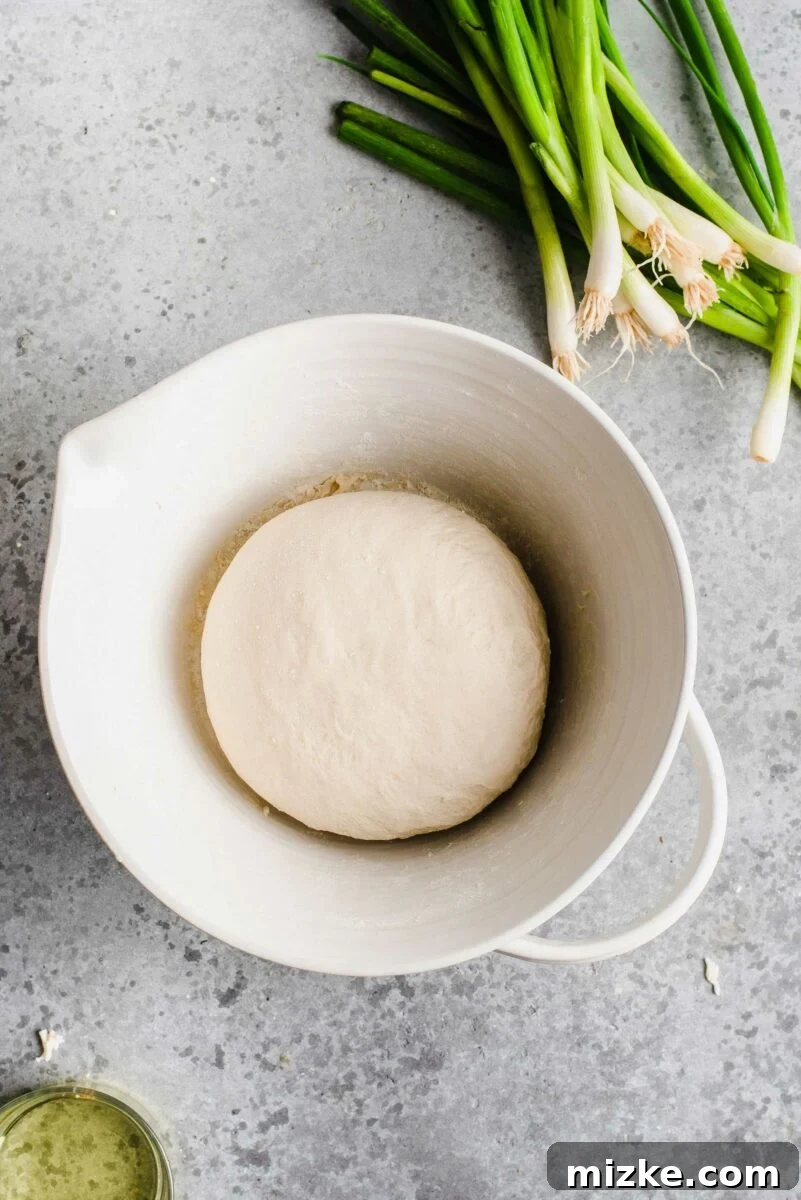
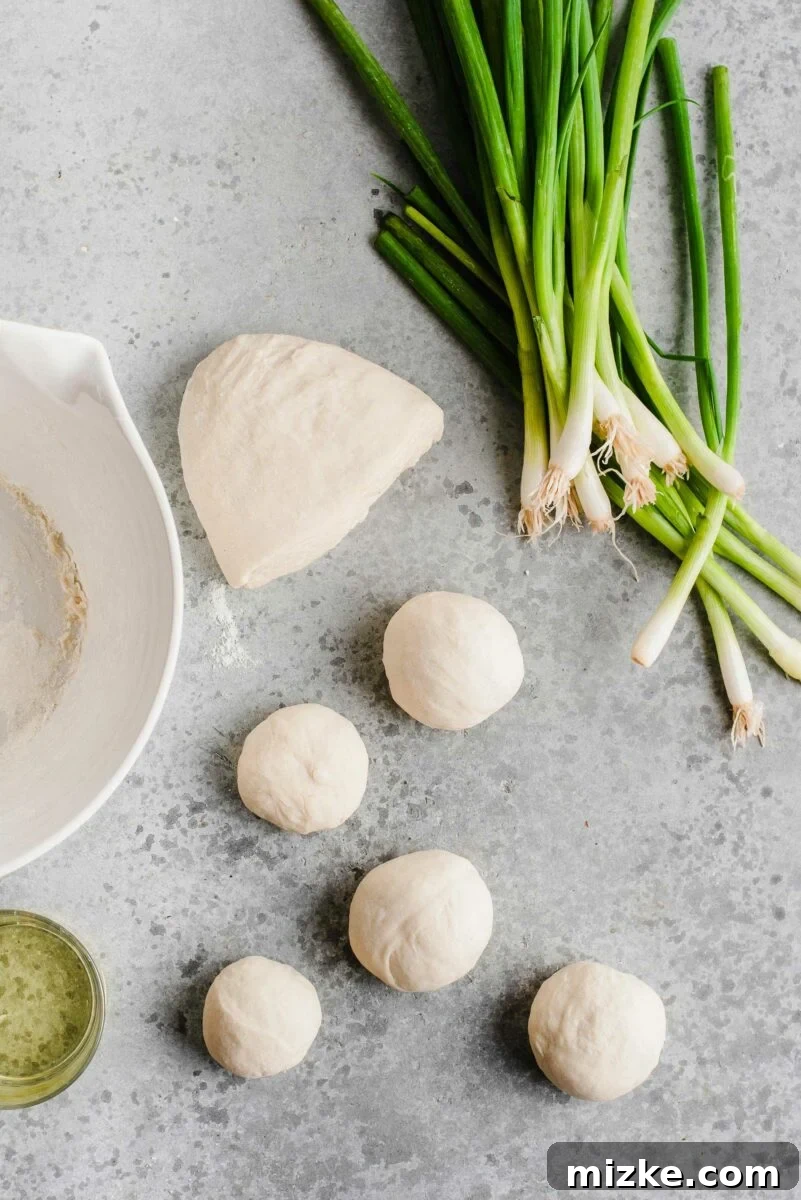
- 4. Roll Out and Season Each Pancake: Lightly dust your clean work surface and your rolling pin with a little flour to prevent sticking. Take one of the dough balls and roll it out into a thin circle, aiming for a diameter of about 6-8 inches (15-20 cm). The thinner you roll it, the flakier your pancake will be. Using a pastry brush, lightly coat the entire surface of the rolled-out dough with vegetable oil. This oil layer is crucial for creating the distinct flaky layers. Then, sprinkle a generous amount of salt evenly over the oiled surface, followed by a liberal scattering of chopped scallions. Don’t be shy with the scallions—the more, the better for maximum flavor and visual appeal!
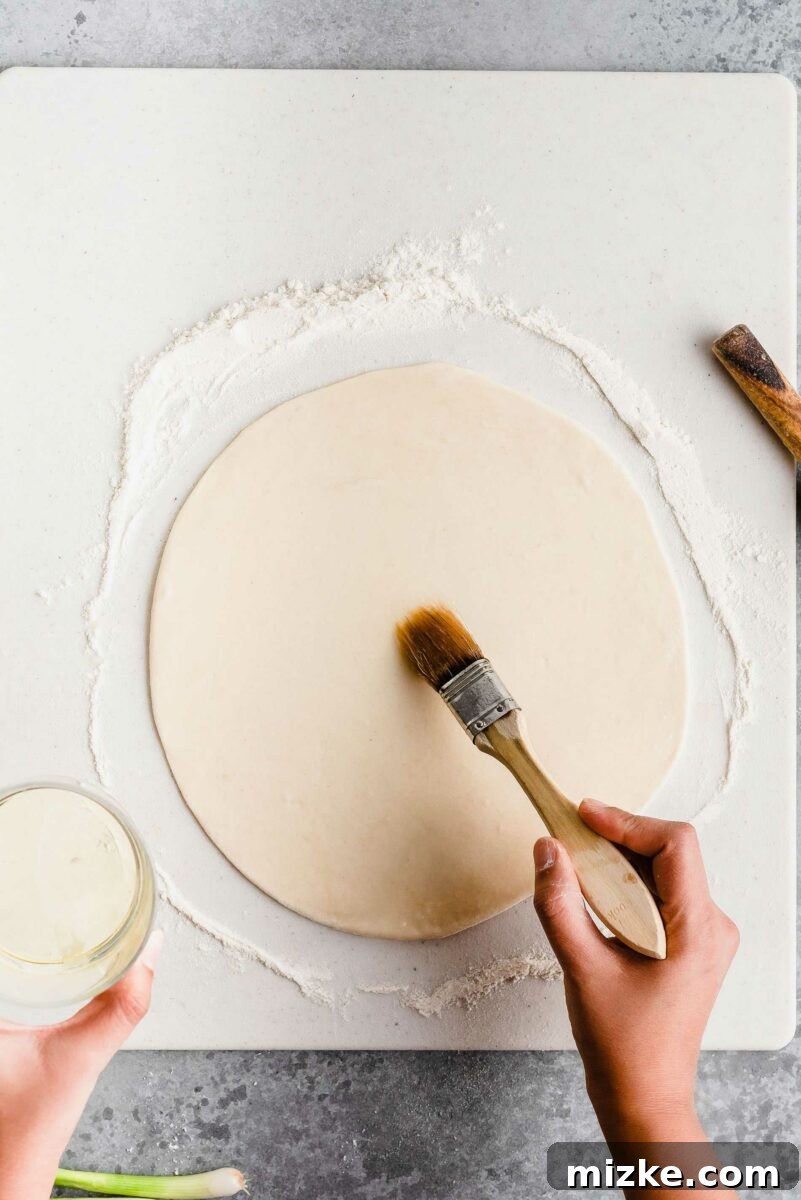
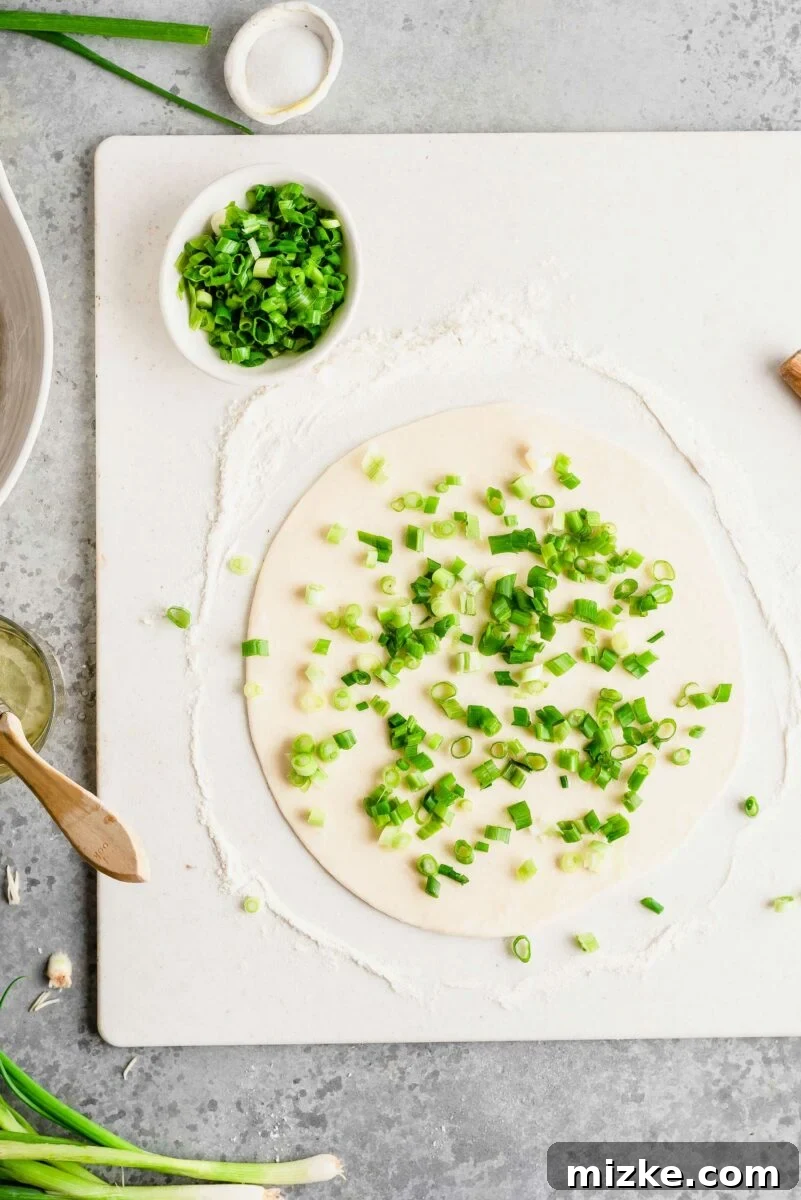
- 5. Create the Iconic Layers: This is where the magic happens for the signature texture! Carefully take one side of the oiled and seasoned dough circle and tightly roll it up towards the opposite side, forming a long, thin log or “snake.” Once you have a log, gently stretch it a little, then coil it into a spiral, resembling a snail shell. This coiling action traps the oil and scallions within the layers. Finally, take your rolling pin and gently press down on the coiled dough. Roll it out again into a flat circle, about 5-6 inches (12-15 cm) in diameter. This double rolling technique is the secret to achieving those irresistible, flaky layers on the outside and a wonderfully chewy texture in the center.
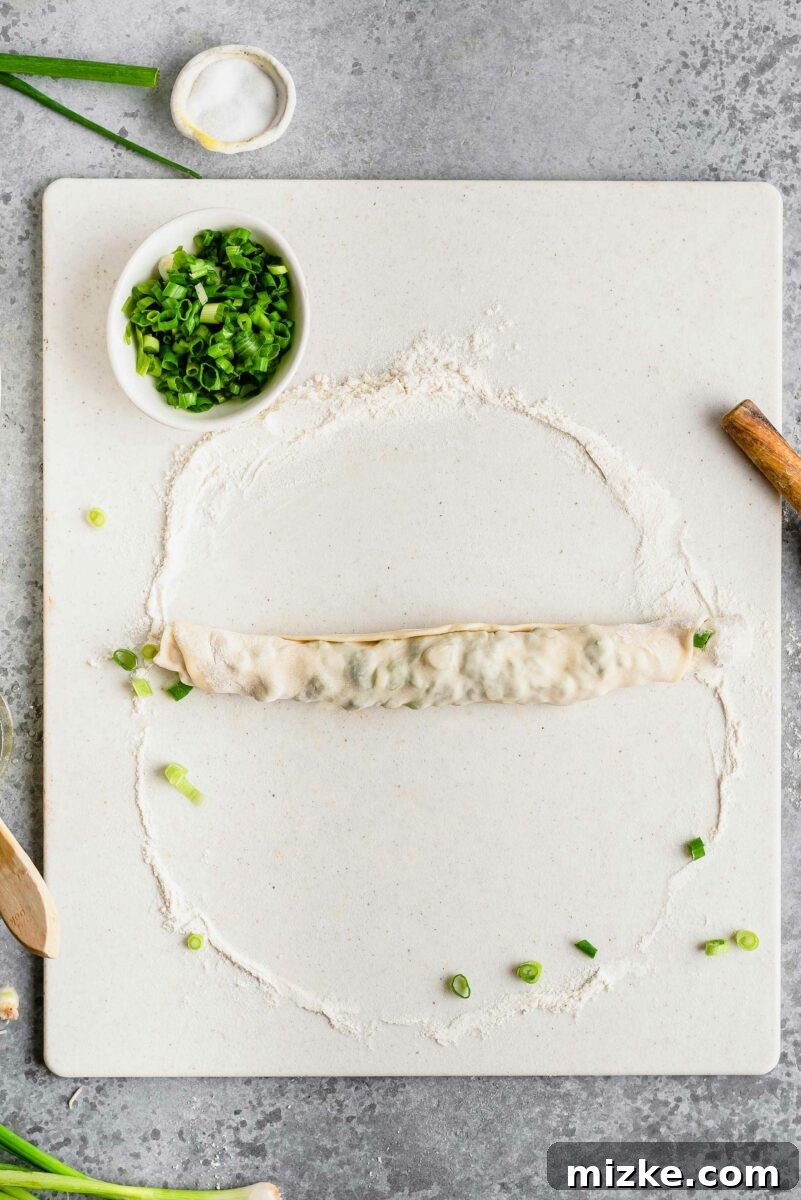
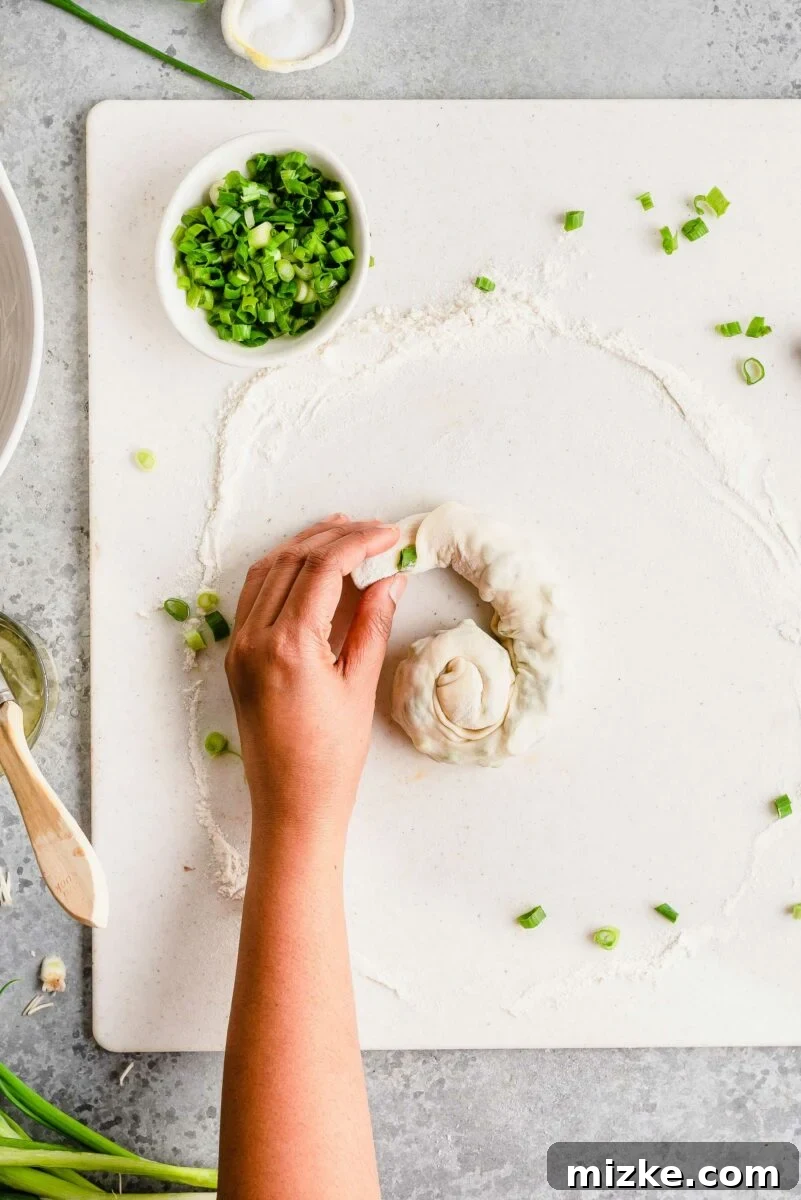
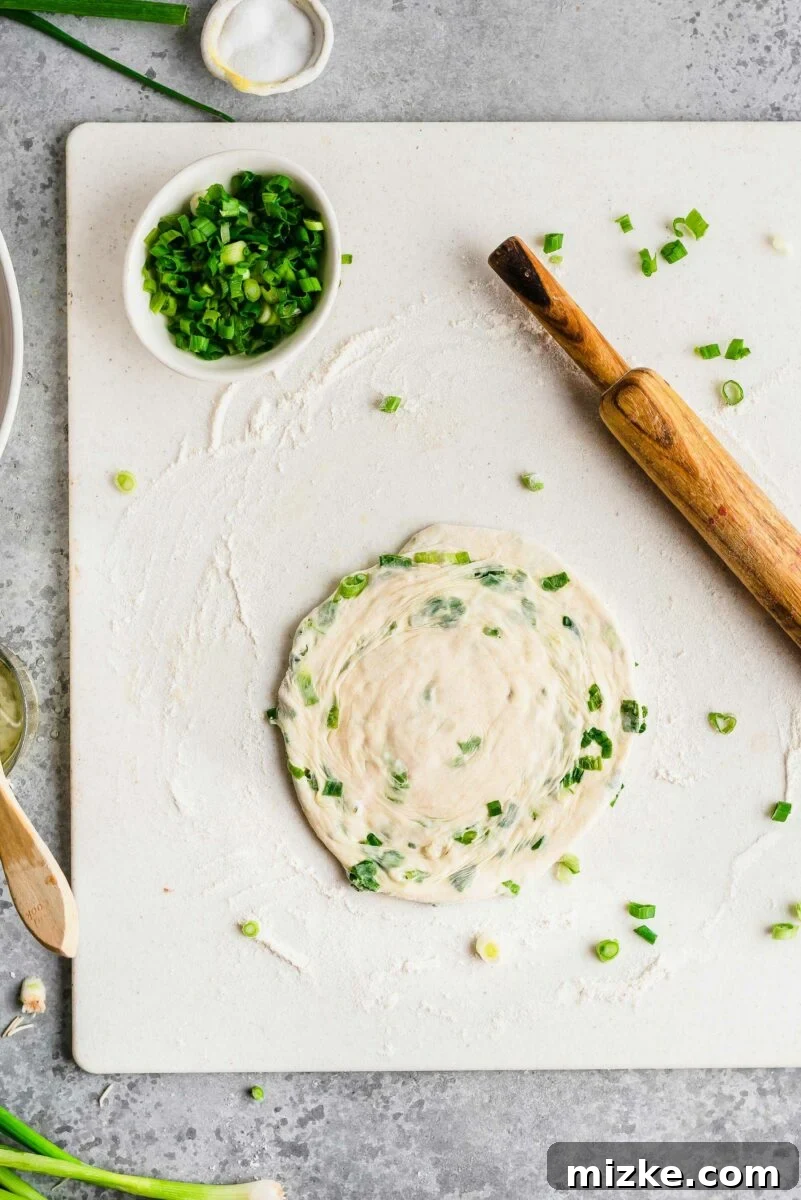
- 6. Cook to Golden Perfection: Heat a large skillet (a cast iron skillet works wonderfully for even heat) over medium-high heat. Add a thin layer of vegetable oil to the hot pan. Once the oil is shimmering, carefully place a formed pancake into the skillet. Fry for 2-4 minutes per side, or until both sides are beautifully golden brown and crispy, and the pancake is cooked through. Repeat with the remaining pancakes, adding more oil as needed. Serve immediately while hot!
Expert Tips for Scallion Pancake Success
Achieving perfectly crispy and chewy scallion pancakes is easier with a few insider tips:
- Maintain a Thin Layer of Oil for Frying: While you don’t need to deep-fry, a thin, even layer of oil (about 1-2 tablespoons) in the pan is essential for that coveted crispy exterior. If you use too little oil, the pancakes might be drier and less crispy. While you can make them with less oil, be aware the texture will differ.
- Ensure Your Oil is Adequately Hot: This is paramount for preventing greasy or soggy pancakes. Always preheat your skillet and oil thoroughly over medium-high heat before adding the dough. A simple test: drop a tiny bit of water into the pan. If it sizzles immediately, your oil is ready. If not, give it more time to heat up.
- Adjust Cooking Times Based on Thickness: The thickness of your rolled-out pancakes will directly impact cooking time. Thinner pancakes will cook faster, while thicker ones will require a little more time. Keep a close eye on the browning to prevent burning and ensure they are cooked through. Cooking the pancakes, at least initially, with a lid over the pan can help them cook more evenly and steam slightly before crisping up.
- Don’t Overcrowd the Pan: Cook pancakes in batches to avoid overcrowding the skillet. Too many pancakes at once can lower the oil temperature, leading to less crispy results. Give each pancake enough space to cook evenly.
- Roll Dough as Thin as Possible: For maximum flakiness, strive to roll your dough exceptionally thin at the initial stage. The thinner the dough, the more delicate and distinct your layers will be after coiling and re-rolling.
- Don’t Skip the Resting Time: The 30-minute dough rest is non-negotiable. It allows the gluten to relax, making the dough pliable and easy to work with. Rushing this step will result in a tough, elastic dough that is frustrating to roll.
- Experiment with Seasoning: While salt is traditional, don’t hesitate to add a pinch of white pepper, a dash of garlic powder, or even a tiny amount of five-spice powder to the scallion and salt mixture for an extra layer of flavor.
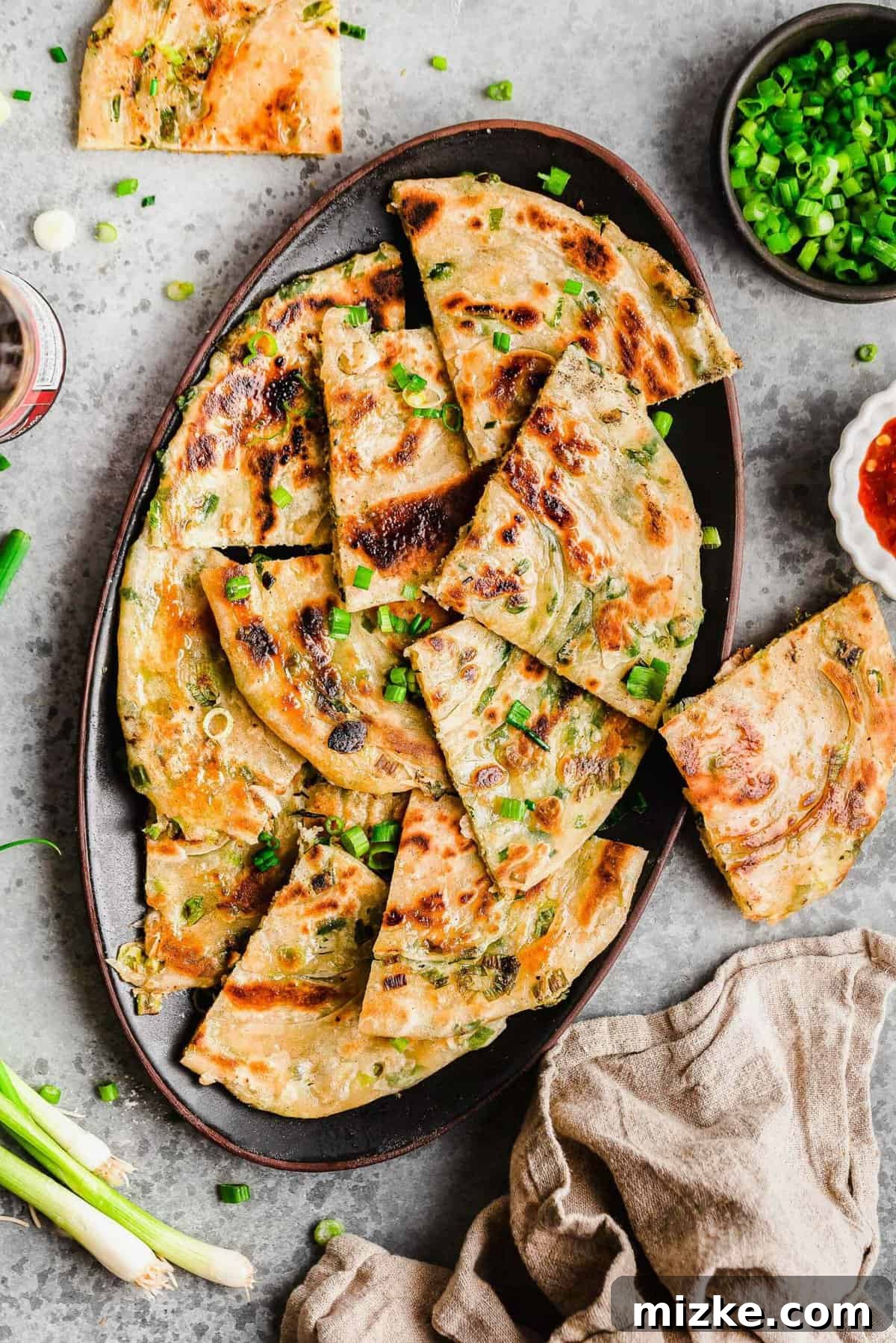
Perfect Serving Suggestions for Scallion Pancakes
Scallion pancakes are incredibly versatile and pair well with a wide array of dishes. Here are some of our favorite ways to enjoy them:
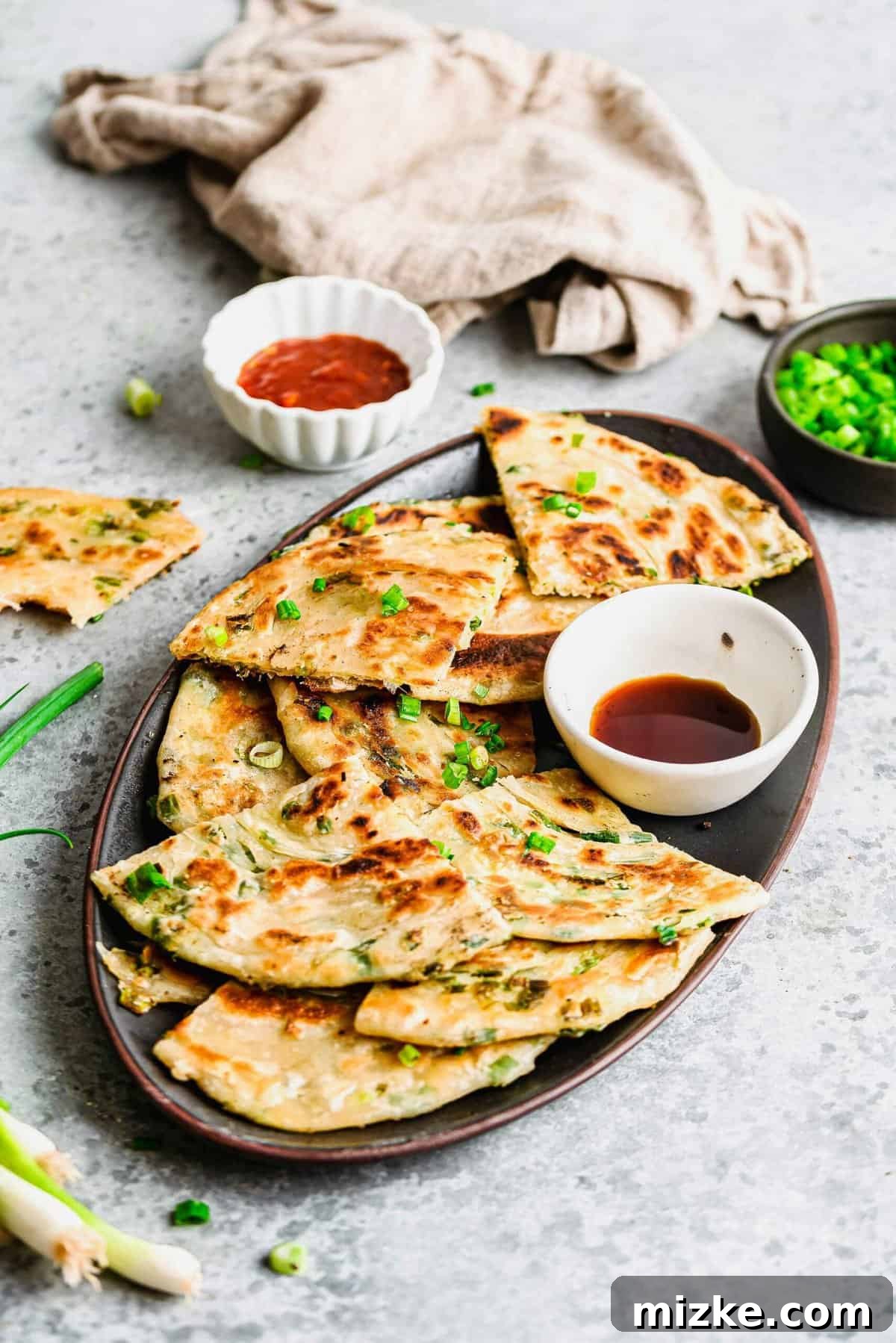
- Classic Dipping Sauce: The simplest and most popular accompaniment. Create an easy, flavorful sauce by combining 2 tablespoons of soy sauce, 1 tablespoon of rice wine vinegar, 1 teaspoon of sugar, and a generous pinch of freshly sliced scallions. For an extra kick, add a tiny bit of grated fresh ginger or a drop of sesame oil. Serve alongside the warm pancakes for dipping.
- Hearty Protein Pairings: These pancakes make an excellent side to rich and savory main courses. Try them with Ro Zao (Braised Minced Pork), a deliciously sweet and savory pork dish. They also complement the sweet and tangy notes of Orange Chicken or the umami-rich flavors of Three Cup Chicken beautifully.
- Light Soups: For a lighter meal, serve your scallion pancakes with a warm, comforting bowl of miso soup or a simple clear vegetable broth. The contrasting textures and flavors create a wonderfully balanced and satisfying meal.
- Spicy Enhancements: For those who enjoy a little heat, a drizzle of chili oil or a dab of Sriracha sauce can elevate the flavors.
- As a Snack: Enjoy them simply on their own, perhaps with just a sprinkling of sea salt, for a quick and satisfying snack anytime.
How to Store and Reheat Scallion Pancake Leftovers
Scallion pancakes are best enjoyed fresh, but they can be stored and reheated while maintaining much of their deliciousness:
- To Store Cooked Pancakes: Place any leftover cooked scallion pancakes in an airtight container once they have completely cooled to room temperature. Store them in the refrigerator for up to 3 days.
- To Reheat Cooked Pancakes: While you can warm them briefly in the microwave, for the best results and to restore their crispy exterior, I highly recommend reheating them in a dry skillet over medium heat. Cook for 1-2 minutes per side until heated through and crisp again. Alternatively, you can reheat them in a toaster oven or air fryer at 350°F (175°C) for a few minutes.
Can This Recipe Be Frozen?
Yes, scallion pancakes are excellent for freezing, either cooked or uncooked, making them perfect for meal prep:
- To Freeze Cooked Pancakes: Allow cooked pancakes to cool completely. Stack them with parchment paper in between to prevent sticking, then place them in an airtight freezer-safe container or bag. They can be frozen for up to 2 months. Thaw them in the refrigerator overnight before reheating as instructed above.
- To Freeze Uncooked Dough: This is often the preferred method for convenience. After you have rolled out and coiled the dough into its spiral shape (before the final roll-out and cooking), place each coiled pancake onto a baking sheet lined with parchment paper. Freeze until solid. Once frozen, transfer the individual pancake coils to a freezer bag with parchment paper between layers to prevent sticking. They will keep well for up to 3 months. When ready to cook, thaw them in the refrigerator for a few hours, then roll them out into a circle and cook according to the recipe instructions. This method yields the freshest-tasting results from frozen.
Frequently Asked Questions About Scallion Pancakes
- Why are my scallion pancakes not crispy?
Several factors can affect crispness. Ensure your cooking oil is hot enough before adding the pancakes; if the oil is too cool, the pancakes will absorb it and become greasy rather than crispy. Also, make sure you use enough oil (a thin layer, not just a few drops) and avoid overcrowding the pan, which can lower the temperature. Rolling the dough very thin also helps maximize crispiness.
- Can I make scallion pancakes without a rolling pin?
While a rolling pin makes it easiest to achieve evenly thin dough, you can improvise! A clean, heavy bottle (like a wine bottle) or even a sturdy, smooth glass can work in a pinch. Just ensure your surface and the “rolling pin” are well-floured to prevent sticking.
- What kind of flour is best for scallion pancakes?
All-purpose flour is standard and works perfectly. Some recipes suggest a mix of all-purpose and bread flour for extra chewiness, but all-purpose provides a great balance of crispness and chewiness. Avoid self-rising flour, as you don’t want the pancakes to rise.
- Can I add other fillings to my scallion pancakes?
Absolutely! While traditional scallion pancakes are simple, you can get creative. Some popular additions include finely minced garlic, a pinch of white pepper, sesame seeds, or even a thin layer of ground meat (like pork or beef) seasoned with soy sauce and ginger, though this will change the texture and cooking time slightly.
- What is the difference between scallion pancakes and paratha?
Both are flaky flatbreads, but they originate from different culinary traditions. Scallion pancakes are Chinese, typically made with wheat flour, water, and scallions, fried for a crispy exterior. Paratha is an Indian unleavened flatbread, often made with whole wheat flour (atta), and can be plain or stuffed with various fillings like potatoes (aloo paratha) or paneer. While both use a layering technique, their flavor profiles and traditional accompaniments differ significantly.
More Asian-Inspired Appetizers to Explore
If you’ve enjoyed making these delightful scallion pancakes, you’re sure to love these other easy and flavorful Asian appetizers:
- Chicken Lettuce Wraps: Light, fresh, and bursting with savory flavors.
- Chilled Silken Tofu: A refreshing and elegant appetizer, simple yet sophisticated.
- Slow Cooker Sweet and Sour Meatballs: Effortlessly delicious and a crowd-pleaser.
- One-Pot Sticky Asian Meatballs: A quick and easy dish for a flavorful bite.
Scallion Pancakes (蔥油餅) Recipe Card
These homemade scallion pancakes are crisp on the outside, delightfully chewy on the inside, and easier to make than you think!
By: Julie Chiou
Prep Time: 45 minutes
Cook Time: 15 minutes
Total Time: 1 hour
Servings: 10 servings
Equipment
- Rolling pin
- Cast iron skillet
Ingredients
- 6 cups (750 g) All-purpose flour
- 3 cups (710 ml) Warm water
- Vegetable oil (for brushing and frying)
- Kosher salt (to taste)
- 1 Bunch of scallions, chopped
Instructions
- In a large bowl, sift your flour. In the center of the flour, make a well. Slowly add the warm water and mix together with your hands.
- Keep kneading and mixing the dough until it all comes together in a nice, firm ball.
- Wrap the dough in plastic wrap and let sit for about 30 minutes at room temperature.
- After about 30 minutes, unwrap the dough and divide it into 10-12 medium-sized balls.
- Sprinkle your working area with some flour and with a rolling pin, roll out each dough ball to make a thin circle.
- Using a pastry brush, brush the top of the circle with vegetable oil.
- Sprinkle a generous amount of salt on top and then liberally add chopped scallions. The more, the better!
- Take one side of the circle and roll it tightly to the other side to form a log. Then, take this rolled dough log and coil it up like a snail shell.
- Take your rolling pin and gently smash the coiled dough, then roll it out into a circle again, about 5-6 inches in diameter. This creates the flaky layers.
- In a large skillet set over medium-high heat, add vegetable oil to create a thin layer. Pan fry the pancakes for 2-4 minutes per side, until both sides are golden brown and crispy.
Notes
- To Store: Keep any leftover scallion pancakes in an airtight container in the refrigerator for up to 3 days.
- To Reheat: They can be warmed up in the microwave, but for best crispness, heat them in a skillet over medium heat, a toaster oven, or an air fryer.
- To Freeze: You can freeze leftover cooked scallion pancakes in an airtight container for up to 2 months. Thaw in the refrigerator before reheating. Even better, freeze the dough after it’s been rolled into coils but before cooking. Place parchment paper between layers and freeze for up to 3 months. Thaw in the fridge, then roll out and cook as instructed.
Nutrition
Serving: 1 serving, Calories: 273kcal, Carbohydrates: 57g, Protein: 8g, Fat: 1g, Saturated Fat: 1g, Polyunsaturated Fat: 1g, Monounsaturated Fat: 1g, Sodium: 2mg, Potassium: 80mg, Fiber: 2g, Sugar: 1g
Disclaimers
This website provides approximate nutrition information for convenience and as a courtesy only. Nutrition information can vary for a variety of reasons. For the most precise nutritional data use your preferred nutrition calculator based on the actual ingredients you used in the recipe.
The default measuring system for this website is US Customary. Unit conversions are provided for convenience and as a courtesy only. While we strive to provide accurate unit conversions, please be aware that there may be some discrepancies.