
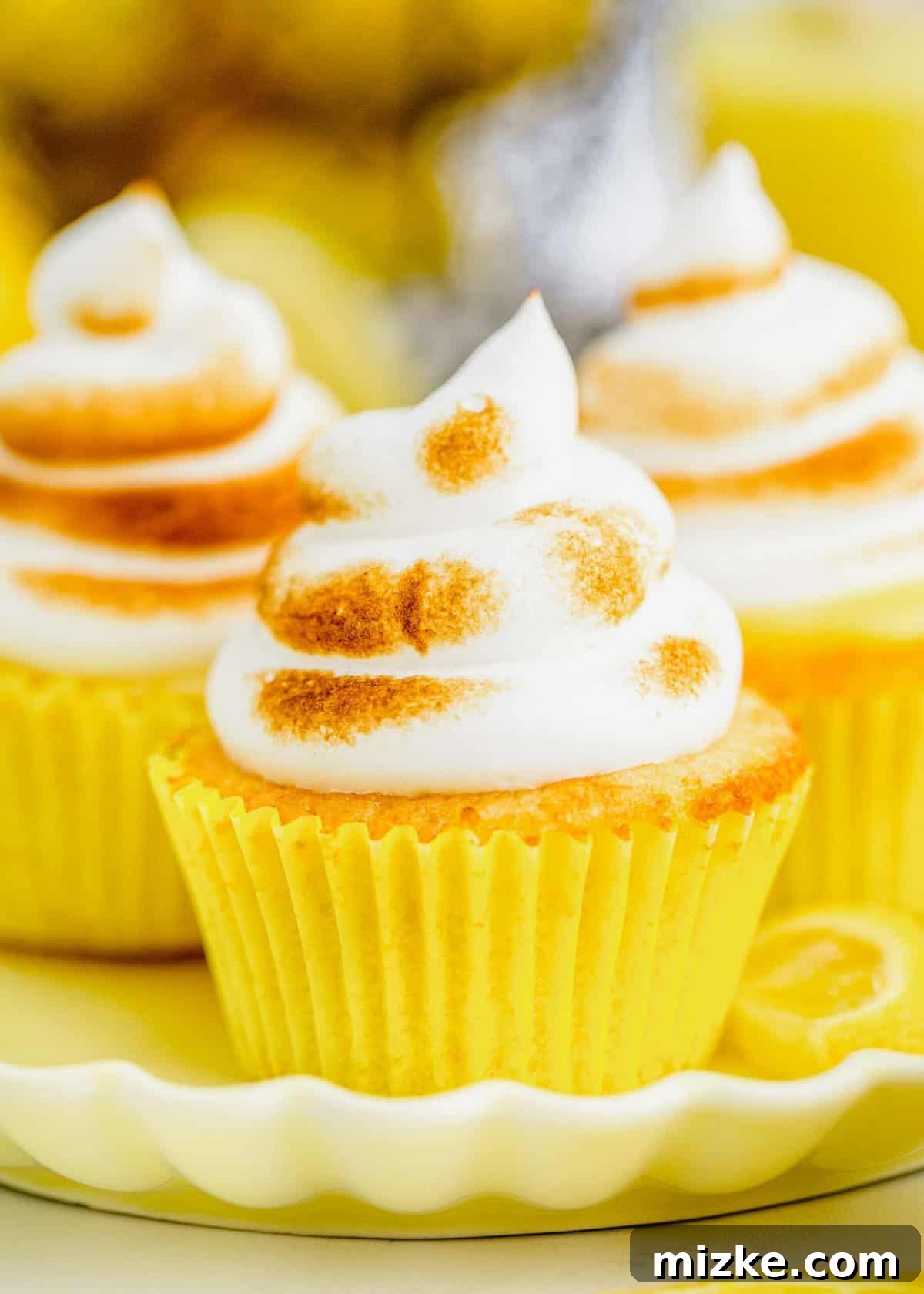
Indulge in Zesty Perfection: The Ultimate Lemon Meringue Cupcakes
Prepare to be delighted by these exquisite lemon meringue cupcakes! Imagine a delicate, moist lemon cake, secretly filled with a vibrant, tangy lemon curd, and crowned with a cloud of airy, toasted meringue. It’s essentially your favorite lemon meringue pie, reimagined into an adorable, handheld cupcake form that’s perfect for any gathering.
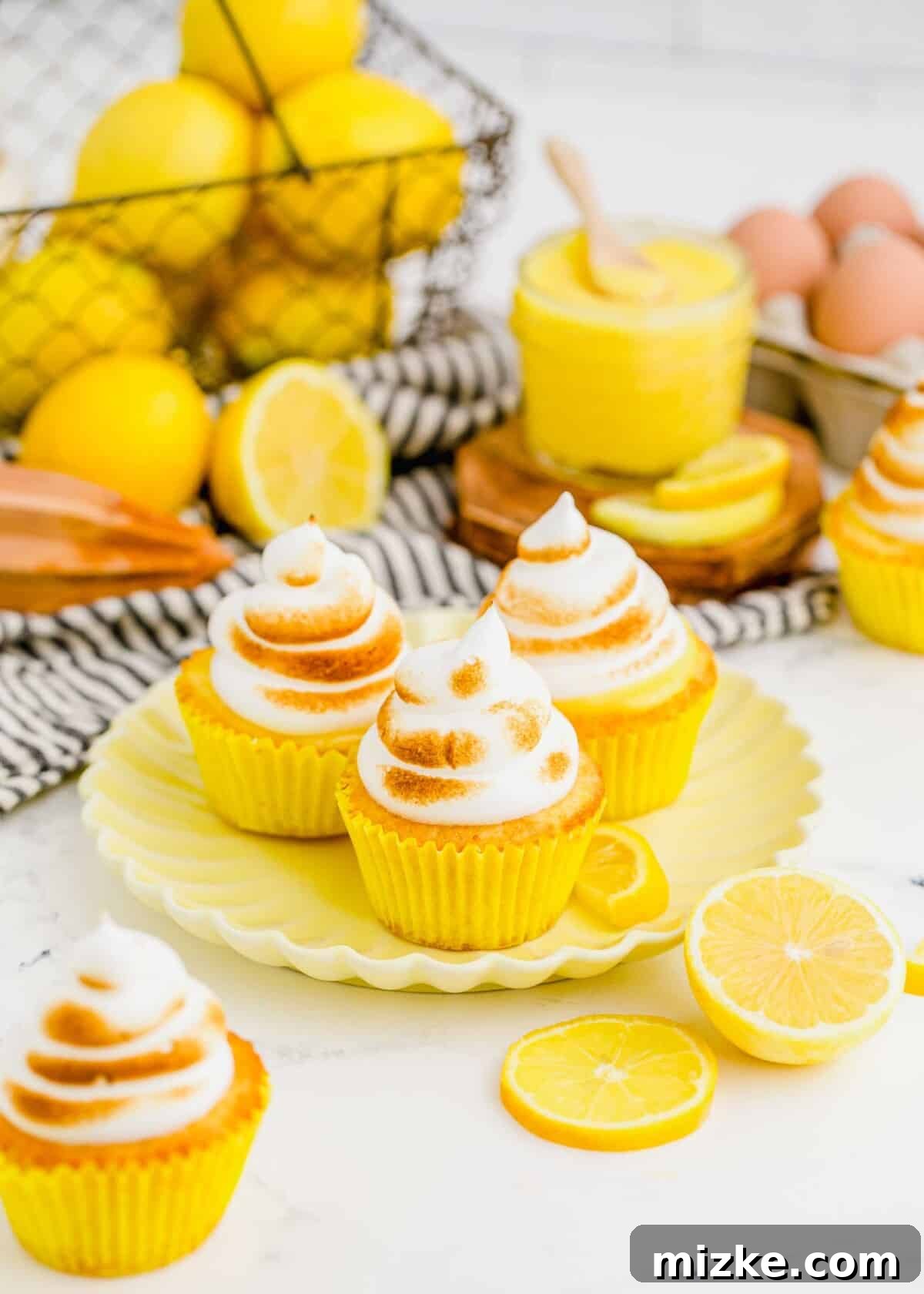
When you present these stunning lemon meringue cupcakes, your guests might assume they’ve been handcrafted by a professional baker. Their flawless appearance and irresistible charm truly make them look store-bought perfect. However, the delightful secret is that they are remarkably simple to create right in your own kitchen, even if you consider your cupcake decorating skills to be beginner-level.
The true magic of these cupcakes lies within their hidden treasure: a luscious lemon curd filling. Each bite offers a burst of tart and tangy lemon, providing an incredible surprise that elevates the entire dessert experience. If you’ve never ventured into making homemade lemon curd before, this is the perfect opportunity! It’s surprisingly straightforward to prepare and yields a far more robust and fresh lemon flavor than any store-bought alternative could offer. The depth of flavor from fresh lemons truly makes all the difference.
If your love for vibrant lemon desserts runs deep, don’t stop here! You might also enjoy exploring our other popular recipes like the refreshing Lemon Sheet Cake or the elegant Lemon Tart for more citrusy indulgence.
Baking Essentials: Mastering Egg Separation
Properly separating egg yolks from whites is a fundamental skill in many baking recipes, especially when making delicate meringues. The most efficient and mess-free method is to use a dedicated egg separator tool, which makes the process incredibly simple. However, if you don’t have one on hand, your clean hands are your best tool.
To separate by hand, simply crack the egg into the palm of your hand. Gently cup your fingers and allow the egg white to slip through them into a bowl below, while the yolk remains safely in your hand. This technique minimizes the risk of the yolk breaking, which can easily happen when attempting to pass it back and forth between two shell halves. A broken yolk can contaminate the whites, preventing them from whipping into a proper meringue, so handling them carefully is key.
Understanding Meringue Peaks: Soft vs. Stiff
Meringue consistency is crucial for many desserts, and recipes often call for either “soft peaks” or “stiff peaks.” Knowing the difference is vital for achieving the desired texture and stability in your meringue topping.
- When a recipe specifies soft peaks, it means that when you lift the beaters (from a hand or stand mixer) out of the whipped egg whites, the peaks that form will gently droop or curl over at their tips. They hold their shape but are not rigid.
- For stiff peaks, the egg whites are beaten further until, when you lift the beaters, the peaks stand straight up without falling over. These peaks are firm and hold their shape completely, indicating that the meringue is fully aerated and stable enough for piping or baking.
Achieving the correct peak consistency is a key step in creating that perfect, airy meringue topping for your lemon meringue cupcakes.
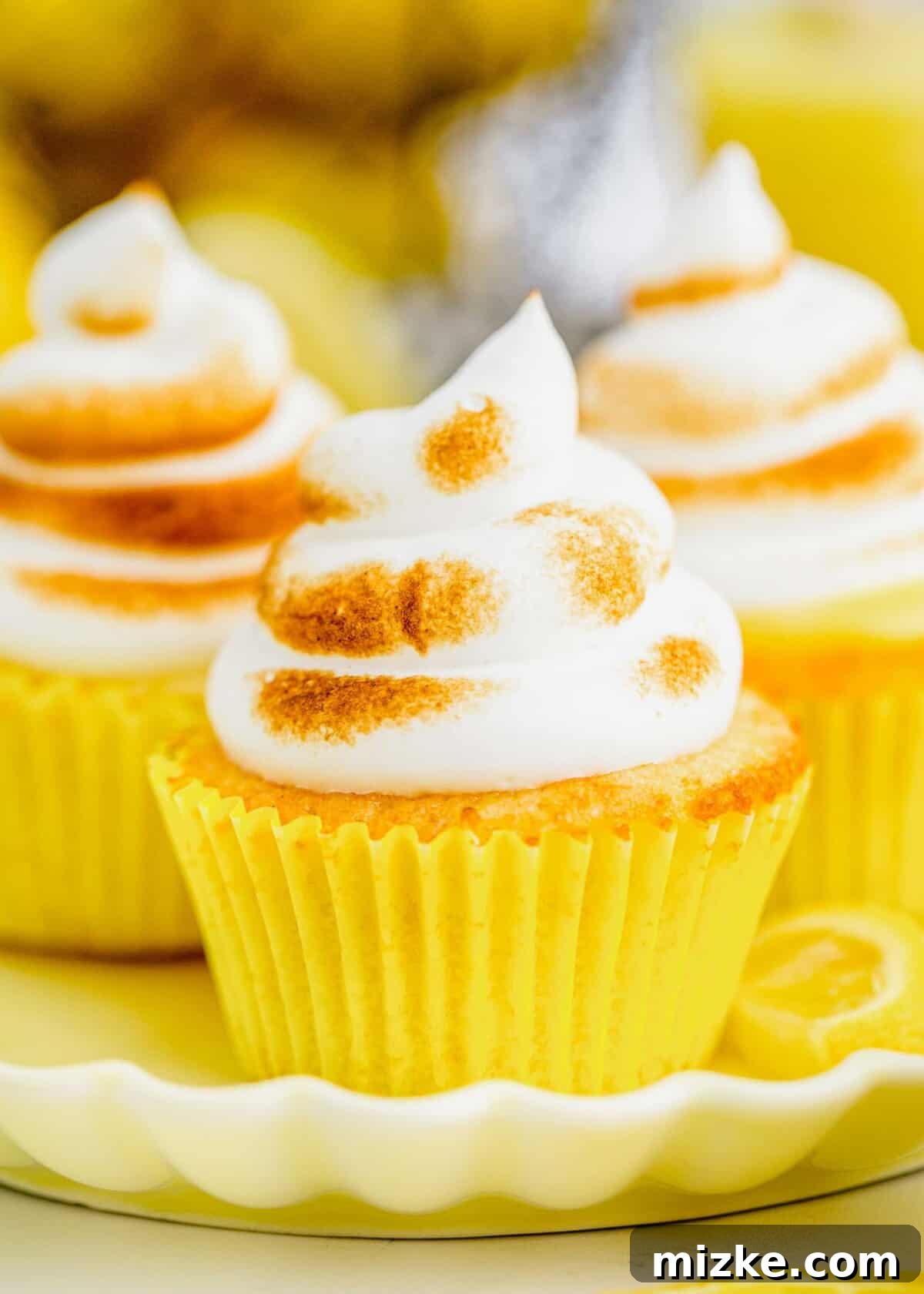
Expert Tips for Perfect Lemon Meringue Cupcakes
Crafting these bakery-worthy lemon meringue cupcakes is an enjoyable process, and a few simple tips can ensure your success:
- Maximizing Lemon Juice: To extract the most juice from your lemons, a little pre-treatment goes a long way. Pop your lemons into the microwave for about 20 seconds, then roll them firmly on your countertop before slicing and juicing. This technique softens the membranes inside, releasing more juice.
- Lemon Curd Preparation is Key: The rich lemon curd filling requires ample time to chill and thicken properly. For the best results, we highly recommend preparing the lemon curd at least one day in advance. This allows it to set perfectly, giving you that delightful, tangy surprise center in your cupcakes.
- Troubleshooting Meringue in Humid Climates: Humidity can be the enemy of perfectly stiff meringue peaks. If you’re baking in a humid environment and find your egg whites aren’t quite firming up, try adding 1 teaspoon of cornstarch to the meringue mixture. This small addition can help stabilize the proteins, allowing you to achieve those desired stiff peaks. Otherwise, simply continue beating at the highest speed until the meringue reaches its full potential.
- Room Temperature Ingredients: For the cupcake batter, ensure your butter and eggs are at room temperature. This allows them to emulsify better, creating a smoother, more uniform batter and a lighter, fluffier cake crumb.
- Avoid Overmixing: Once you add the dry ingredients to your wet mixture for the cupcakes, mix only until just combined. Overmixing develops gluten too much, leading to tough, dense cupcakes. A few lumps are perfectly fine!
- Cooling Completely: Before coring and filling your cupcakes with lemon curd and topping them with meringue, make sure they are completely cooled. Warm cupcakes will melt the curd and deflate the meringue, compromising the texture and appearance.
Storing Your Lemon Meringue Cupcakes
For optimal freshness and texture, these lemon meringue cupcakes are truly at their best when enjoyed on the same day they are made. However, if you have leftovers or are preparing them slightly ahead of time, proper storage is essential.
You can store them in an airtight container in the refrigerator for up to 3 days. To maintain the integrity of the delicate meringue topping, we suggest arranging them in a single layer or using a container tall enough to avoid crushing the meringue. For party preparation, consider storing the unfrosted cupcakes and preparing the meringue just before serving for the freshest look and taste.
Freezing instructions: If you wish to extend their shelf life, unfrosted lemon cupcakes can be wrapped individually in plastic wrap and then placed in an airtight freezer-safe bag or container. They can be frozen for up to 2 months. When ready to enjoy, simply thaw them at room temperature, then fill with lemon curd and top with freshly made meringue.

Save Recipe
Rate This Recipe
Print Recipe
Rating: 5 out of 5 stars (based on 8 votes)
Lemon Meringue Cupcakes
By: Julie Chiou
These lemon meringue cupcakes beautifully combine a light, moist lemon cake with a rich lemon curd filling and a generous, fluffy meringue topping. They offer a delightful blend of textures and an explosion of zesty lemon flavor, making them a true crowd-pleaser.
Prep Time: 30 minutes
Cook Time: 30 minutes
Cooling Time: 3 hours
Total Time: Approximately 4 hours (including cooling)
Yields: 15 cupcakes
Equipment
-
Muffin pan
-
Stand mixer
-
Hand mixer
-
Mixing bowls
-
Whisk
-
Cupcake liners
-
Piping bag with star tip (optional, for meringue)
-
Kitchen torch (optional, for toasting meringue)
Ingredients
For the Lemon Cupcakes:
- 1 ¼ cups (156 g) all-purpose flour
- 1 ¼ teaspoon baking powder
- ¼ teaspoon baking soda
- ½ cup (114 g) unsalted butter, softened to room temperature
- 1 cup (200 g) granulated sugar
- 2 large eggs, at room temperature
- ¼ cup (59 ml) vegetable oil (or other neutral oil)
- ¼ cup (59 ml) fresh lemon juice
- ¼ cup (59 ml) milk (whole or 2%)
- Zest of 2 large lemons (about 2 Tablespoons)
- Your favorite homemade lemon curd, chilled (enough for 15 cupcakes, typically 1.5 – 2 cups)
For the Meringue Frosting:
- 4 large egg whites, at room temperature
- ½ teaspoon cream of tartar
- ½ teaspoon vanilla extract
- 5 tablespoons granulated sugar
- Optional: 1 teaspoon cornstarch (for humid environments)
Instructions
-
Prepare the Lemon Curd: Begin by making your homemade lemon curd. This step is crucial, as the curd needs ample time to chill and set to achieve the perfect consistency for the filling. We recommend preparing it at least one day in advance. (Refer to our homemade lemon curd recipe for detailed instructions).
-
Preheat Oven and Prepare Pan: Preheat your oven to 350°F (177°C). Line a standard 12-cup muffin pan with cupcake liners. For extra non-stick insurance, lightly spray the inside of each liner with nonstick cooking spray.
-
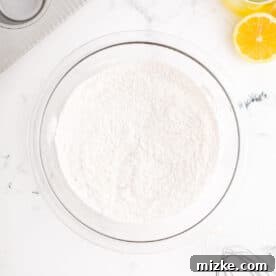
Combine Dry Ingredients: In a medium-sized mixing bowl, whisk together the flour, baking powder, and baking soda. Whisk thoroughly for about 30 seconds to ensure the leavening agents are evenly distributed throughout the flour. This will ensure your cupcakes rise beautifully.

Whisking together the flour, baking powder, and baking soda. -
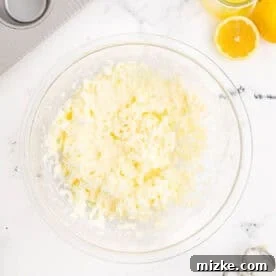
Cream Butter and Sugar: In the bowl of a stand mixer fitted with the paddle attachment (or using a hand mixer), cream together the softened butter and granulated sugar on medium-high speed. Beat until the mixture is visibly light in color, fluffy, and well combined, about 2-3 minutes. This process incorporates air, which is key for a tender cake.
Butter and sugar being creamed until light and fluffy. -
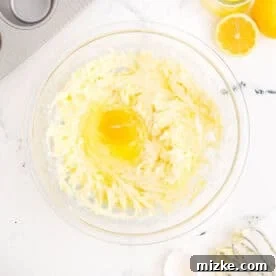
Add Eggs: Add the large eggs to the creamed butter and sugar, one at a time, beating well after each addition until fully incorporated. Scrape down the sides of the bowl as needed to ensure everything is mixed evenly. The mixture should become smooth and homogenous.
Incorporating eggs one at a time for a smooth batter. -
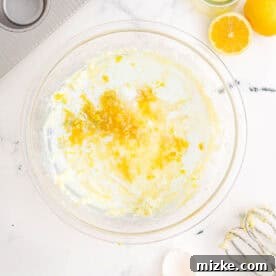
Mix Wet Ingredients: Reduce the mixer speed to low. Gradually mix in the vegetable oil, fresh lemon juice, milk, and lemon zest. Continue mixing until just combined. The batter might look slightly curdled at this stage, which is normal.
Adding lemon juice, milk, oil, and lemon zest to the batter. -
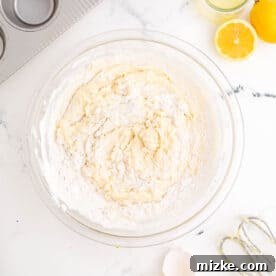
Combine Wet and Dry: With the mixer still on low speed, gradually add the whisked dry ingredients to the wet ingredients in three additions, mixing only until just combined after each addition. Be careful not to overmix; overmixing can lead to tough cupcakes. Stop mixing as soon as no dry streaks of flour are visible.
Gently folding dry ingredients into the wet batter until just combined. -
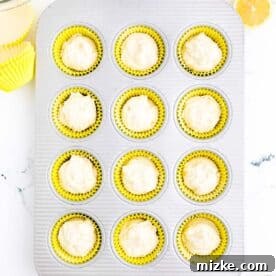
Fill Cupcake Liners: Divide the batter evenly among the prepared cupcake liners, filling each one just over halfway, approximately two-thirds full. This will allow the cupcakes to rise without overflowing.
Filling cupcake liners evenly for consistent baking. -
Bake the Cupcakes: Bake for 15 to 20 minutes, or until a wooden skewer inserted into the center of a cupcake comes out clean, and the tops spring back when lightly pressed. Once baked, remove the muffin pan from the oven and let the cupcakes cool in the pan for a few minutes before transferring them to a wire cooling rack to cool completely.
-
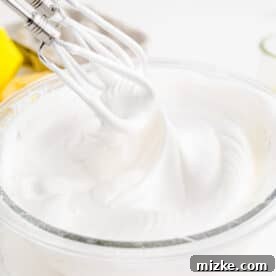
Prepare the Meringue Frosting: Once your cupcakes are cooled and you are ready to assemble, prepare the meringue frosting. In a clean, grease-free bowl of a stand mixer (or using a hand mixer), combine the egg whites and cream of tartar. Beat on medium-high speed until soft peaks begin to form. Add the vanilla extract, and if baking in a humid environment, consider adding 1 teaspoon of cornstarch here. Continue beating until you achieve stiff, glossy peaks. This process typically takes about 5 minutes in total. Gradually, slowly incorporate the granulated sugar, a tablespoon at a time, continuing to beat until the meringue is firm, glossy, and the sugar has completely dissolved.
Whipping egg whites and cream of tartar until stiff peaks form for the meringue. -
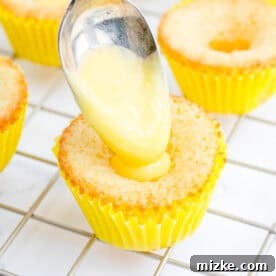
Assemble the Cupcakes: To assemble, use a cupcake corer, a small spoon, or a paring knife to carefully remove a small chunk from the center of each cooled cupcake, creating a cavity for the filling. Spoon or pipe a generous amount of the chilled lemon curd into each cavity. Finally, pipe the fluffy meringue frosting onto the top of each cupcake. For that classic lemon meringue pie look, you can use a kitchen torch to lightly toast the meringue until golden brown.
Filling the cored cupcakes with tangy lemon curd.
Nutrition Information
Per Serving (1 cupcake):
- Calories: 263 kcal
- Carbohydrates: 41 g
- Protein: 5 g
- Fat: 9 g
- Saturated Fat: 5 g
- Polyunsaturated Fat: 1 g
- Monounsaturated Fat: 3 g
- Trans Fat: 0.3 g
- Cholesterol: 124 mg
- Sodium: 149 mg
- Potassium: 102 mg
- Fiber: 0.4 g
- Sugar: 32 g
Disclaimer: This website provides approximate nutrition information for convenience and as a courtesy only. Nutrition information can vary for a variety of reasons based on specific ingredients and preparation methods. For the most precise nutritional data, we recommend using your preferred nutrition calculator based on the actual ingredients you used in the recipe.
The default measuring system for this website is US Customary. Unit conversions are provided for convenience and as a courtesy only. While we strive to provide accurate unit conversions, please be aware that there may be some discrepancies.
Troubleshooting Common Cupcake and Meringue Issues
Even experienced bakers can encounter hiccups. Here’s how to address some common problems when making lemon meringue cupcakes:
- Dense Cupcakes: If your cupcakes turn out heavy instead of light and fluffy, the most common culprits are overmixing the batter (developing too much gluten) or using cold ingredients. Ensure your butter and eggs are at room temperature and mix the dry ingredients into the wet only until just combined.
- Cracked Meringue: Meringue can crack if it’s baked too long or at too high a temperature, or if it cools too quickly. For torched meringue, avoid over-browning. For baked meringue, ensure even, gentle heat and allow it to cool gradually. Humidity can also contribute to a stickier, less stable meringue that might crack.
- Runny Meringue: If your meringue won’t hold its peaks, make sure your mixing bowl and beaters are absolutely grease-free. Even a tiny bit of fat can prevent egg whites from whipping properly. Also, ensure you beat the egg whites long enough to reach stiff peaks, incorporating the sugar slowly.
- Lemon Curd Not Thick Enough: If your homemade lemon curd is too thin, it likely wasn’t cooked long enough, or it didn’t chill sufficiently. Lemon curd thickens considerably as it cools. If it’s still too runny after chilling, you can gently reheat it over low heat, stirring constantly, until it thickens further (but avoid scrambling the eggs!).
- Cupcakes Sticking to Liners: This can happen if you overfill the liners or if the liners aren’t of good quality. Lightly spraying the liners with non-stick spray, as recommended, can help prevent sticking.
Serving Suggestions and Delightful Variations
These lemon meringue cupcakes are a show-stopping dessert on their own, but here are some ideas to make them even more special:
Serving Ideas:
- Elegant Parties: Arrange them on a tiered cake stand for a stunning display at bridal showers, baby showers, or dinner parties.
- Spring & Summer Celebrations: The bright, zesty flavor makes them perfect for warmer weather gatherings, garden parties, and outdoor events.
- Holiday Brunch: A lighter, fruit-forward alternative to heavier desserts for special brunches.
- Afternoon Tea: A sophisticated addition to an afternoon tea spread.
Creative Variations:
- Lime Meringue Cupcakes: Swap out lemon juice and zest for fresh lime to create an equally vibrant and tangy lime meringue version.
- Berry Burst: Before adding the meringue, gently press a few fresh raspberries or blueberries into the lemon curd filling for an added burst of fruitiness and color.
- Mini Meringue Cupcakes: Use a mini muffin pan for bite-sized delights. Adjust baking time accordingly (typically 10-12 minutes). These are perfect for dessert platters.
- No-Torch Meringue: If you don’t have a kitchen torch, you can still enjoy these! The meringue will be white and fluffy, still delicious. Alternatively, you can briefly place the frosted cupcakes under a broiler for a minute or two, watching them very carefully to prevent burning.
- Cream Cheese Frosting Alternative: While the meringue is classic, if you prefer, you can top the lemon cupcakes with a tangy cream cheese frosting instead, skipping the curd filling for a simpler lemon cupcake.