
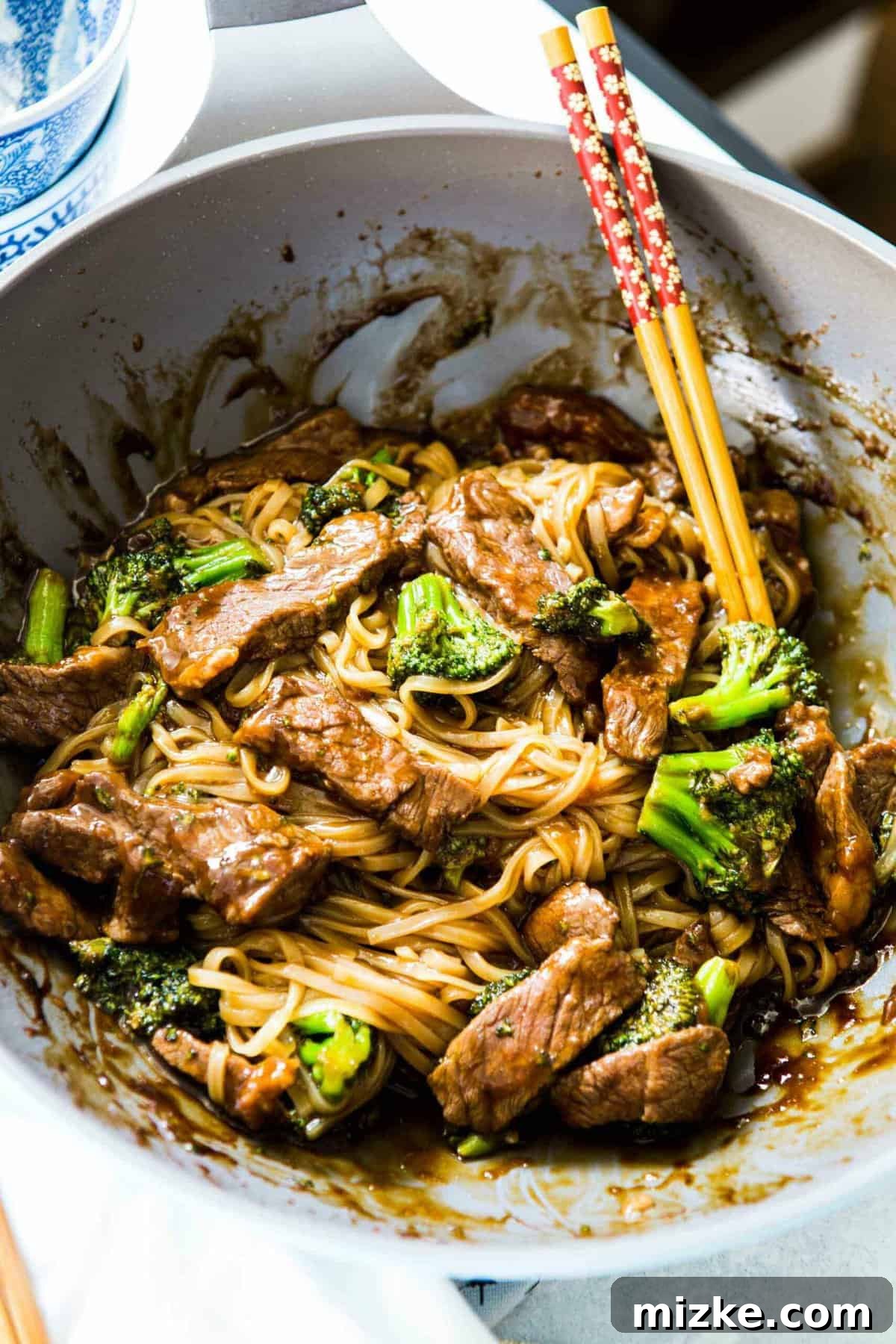
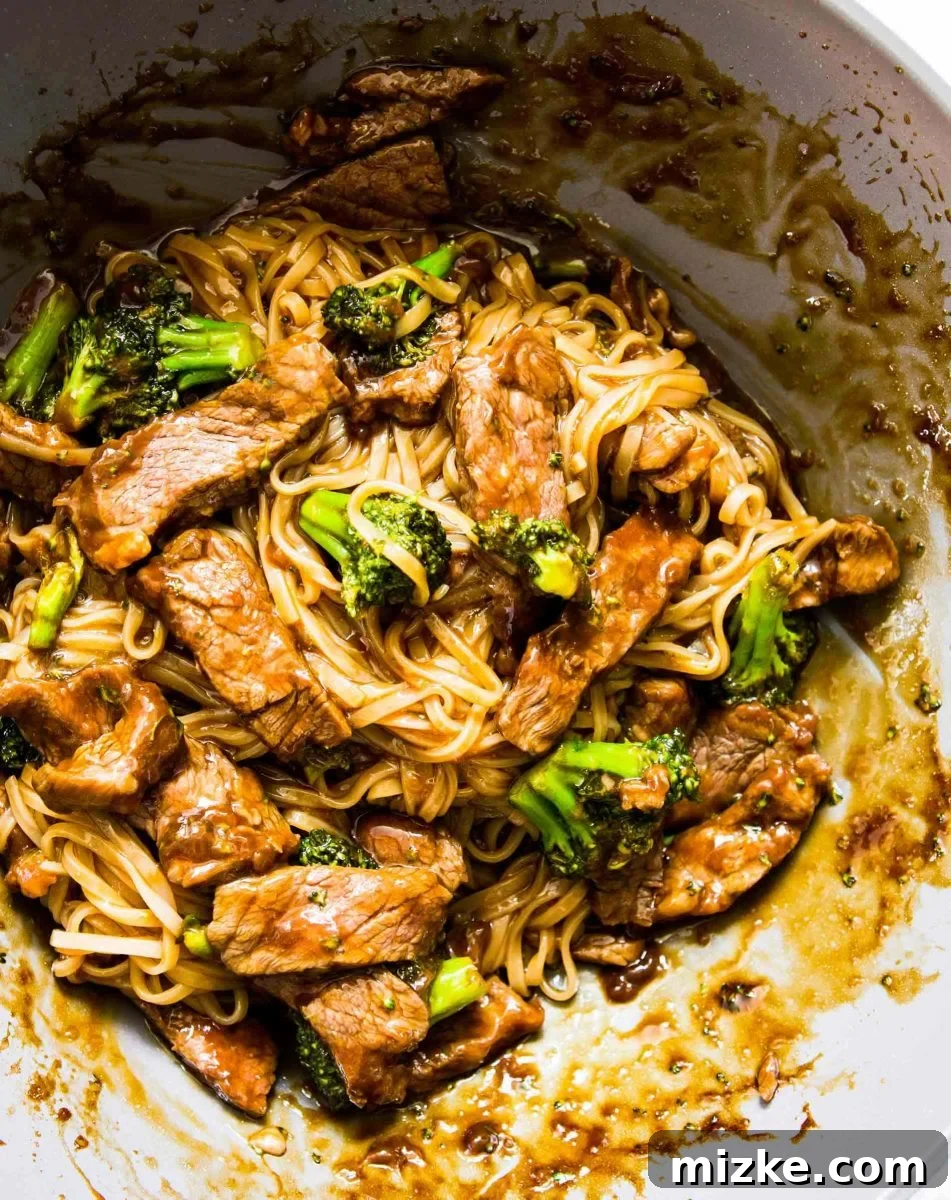
Quick & Flavorful Asian Beef and Broccoli Noodles: A Weeknight Takeout Alternative
Are you searching for an incredibly easy yet deeply satisfying dinner recipe that rivals your favorite Chinese takeout? Look no further! These Asian Beef and Broccoli Noodles are an absolute game-changer, delivering restaurant-quality flavor in the comfort of your own kitchen, all in under 30 minutes. Forget the waiting times and delivery fees – this homemade version brings instant gratification to your dinner table, perfect for those busy weeknights when you crave something comforting and delicious without spending hours cooking.
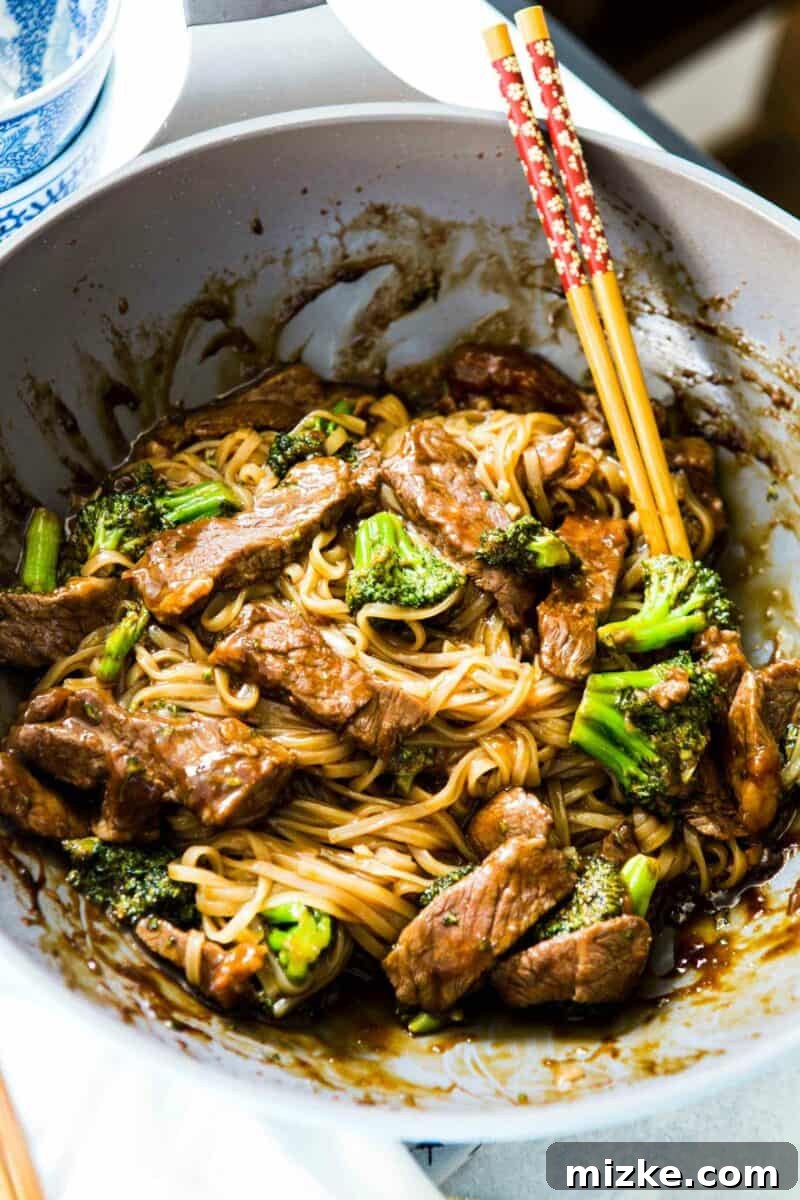
Inspired by the classic beef and broccoli dish, this recipe transforms those beloved flavors into a dynamic noodle bowl. It’s the ideal solution for those moments when you yearn for hearty, flavorful comfort food but want a quicker, fresher alternative to traditional takeout. The combination of tender beef, vibrant broccoli, and slurpable rice noodles, all bathed in a rich, savory sauce, creates an unforgettable culinary experience that your whole family will adore.
Frequently Asked Questions for Your Perfect Noodle Dish
Can I use frozen broccoli in this recipe?
Absolutely! Using frozen broccoli is a convenient shortcut that works beautifully in this Asian beef and broccoli noodle dish. If you opt for frozen florets, there’s no need for the initial blanching step. Simply add the frozen broccoli directly to the skillet after the beef has finished cooking. The residual heat from the beef and the sauce will gently cook the broccoli through, ensuring it retains a tender-crisp texture. This modification makes the recipe even faster and more accessible, especially when fresh produce isn’t readily available.
What are the best cuts of meat to use for tender beef noodles?
For the most tender and flavorful results in this Asian beef and broccoli noodle stir-fry, I highly recommend using boneless short ribs, as specified in the recipe. Their natural marbling contributes to incredible richness and a melt-in-your-mouth texture when sliced thinly and cooked quickly. Alternatively, chuck roast or flank steak are excellent substitutes. When using these cuts, be sure to slice them against the grain into very thin strips. This technique helps break down the muscle fibers, ensuring your beef remains wonderfully tender and easy to chew, even with a quick stir-fry method.
Are there any alternatives to rice noodles for this recipe?
While rice noodles are fantastic for their delicate texture and ability to soak up the savory sauce, you can certainly experiment with other long noodles. Plain ramen noodles (without the seasoning packet, of course!), soba noodles, or even classic Italian linguine can work in a pinch. The key is to choose a noodle that holds up well to stir-frying and can generously absorb the rich flavors of the sauce. Adjust cooking times according to package directions for your chosen noodle type to ensure they are perfectly al dente before adding them to the skillet.
What exactly is oyster sauce and why is it important?
Oyster sauce is a thick, rich, and savory condiment made from oyster extracts, soy sauce, and often thickened with cornstarch. It’s a cornerstone ingredient in many Chinese dishes, prized for its unique umami flavor that adds depth and complexity without tasting distinctly like oysters. It provides a slightly sweet, salty, and incredibly savory foundation to the sauce, enhancing the overall profile of the dish. Its glossy texture also contributes to the beautiful coating on the noodles and beef.
Can I omit oyster sauce from the recipe?
While you might be tempted to skip it, I strongly advise against omitting oyster sauce. It plays a crucial role in developing the signature flavor profile of these Asian beef and broccoli noodles. Its unique umami and savory notes are difficult to replicate with other ingredients. If you have dietary restrictions or simply prefer not to use it, you could try a vegetarian mushroom-based “oyster sauce” substitute, which offers a similar depth of umami flavor, though the exact taste will differ slightly.
What if I don’t have sweet soy sauce?
Sweet soy sauce, also known as Kecap Manis, is a rich, syrupy, and sweetened soy sauce commonly used in Indonesian cuisine, but it lends a lovely balance to many Asian dishes. If you don’t have sweet soy sauce on hand, you can easily create a suitable substitute. Simply add 1 teaspoon of granulated sugar to the soy sauce mixture for the sauce. This will provide a similar touch of sweetness, balancing out the savory and salty components and helping to achieve that desirable sticky glaze.
Are there good substitutes for Chinese rice wine?
Chinese rice wine, particularly Shaoxing wine, is a staple in Chinese cooking, used for marinating meats, deglazing pans, and adding an aromatic depth to sauces. Its distinct flavor is hard to perfectly mimic, but if you don’t have it, mirin (Japanese sweet rice wine) or dry sherry are the best alternatives. Mirin is sweeter, so you might want to slightly reduce any added sugar in the recipe. Dry sherry offers a similar savory, nutty profile. Avoid using cooking wines that often contain high salt content, as they can throw off the balance of your sauce.
Why is it important to let the beef marinate with Chinese rice wine and arrowroot powder?
This marinating step, often referred to as “velveting” in Chinese cooking, is a traditional technique passed down through generations. My mom always emphasized its importance, and for good reason! The Chinese rice wine adds a layer of flavor and helps to break down the meat fibers, while the arrowroot powder creates a protective coating around each slice of beef. This coating locks in moisture during cooking, resulting in incredibly tender, succulent beef that’s a hallmark of delicious stir-fries. Allowing it to sit for even 5-10 minutes makes a noticeable difference in the final texture of the meat.
Can I use cornstarch instead of arrowroot powder?
Yes, absolutely! Cornstarch is a widely available and effective substitute for arrowroot powder in this recipe. Both act as thickening agents and help create that desirable coating on the beef for tenderization. You can use cornstarch in the same quantities as arrowroot powder, and it will perform beautifully in achieving the desired texture for both the beef and the sauce.
What’s the difference between arrowroot powder and cornstarch? Why choose one over the other?
While both arrowroot powder and cornstarch are excellent thickening agents and are largely interchangeable in many recipes, they do have subtle differences. I’ve personally grown quite fond of arrowroot powder because I find it to be less distinguishable in flavor than cornstarch, particularly when used in larger quantities. Some people report a slight starchy aftertaste with cornstarch, which I personally don’t detect, but for those who do, arrowroot powder offers a cleaner finish. Additionally, arrowroot powder creates a more translucent and glossy sauce, which is visually appealing. However, functionally, they are both highly effective for tenderizing meat and thickening sauces, so feel free to use whichever you have on hand or prefer. The most important thing is that your beef will be tender and your sauce perfectly rich!
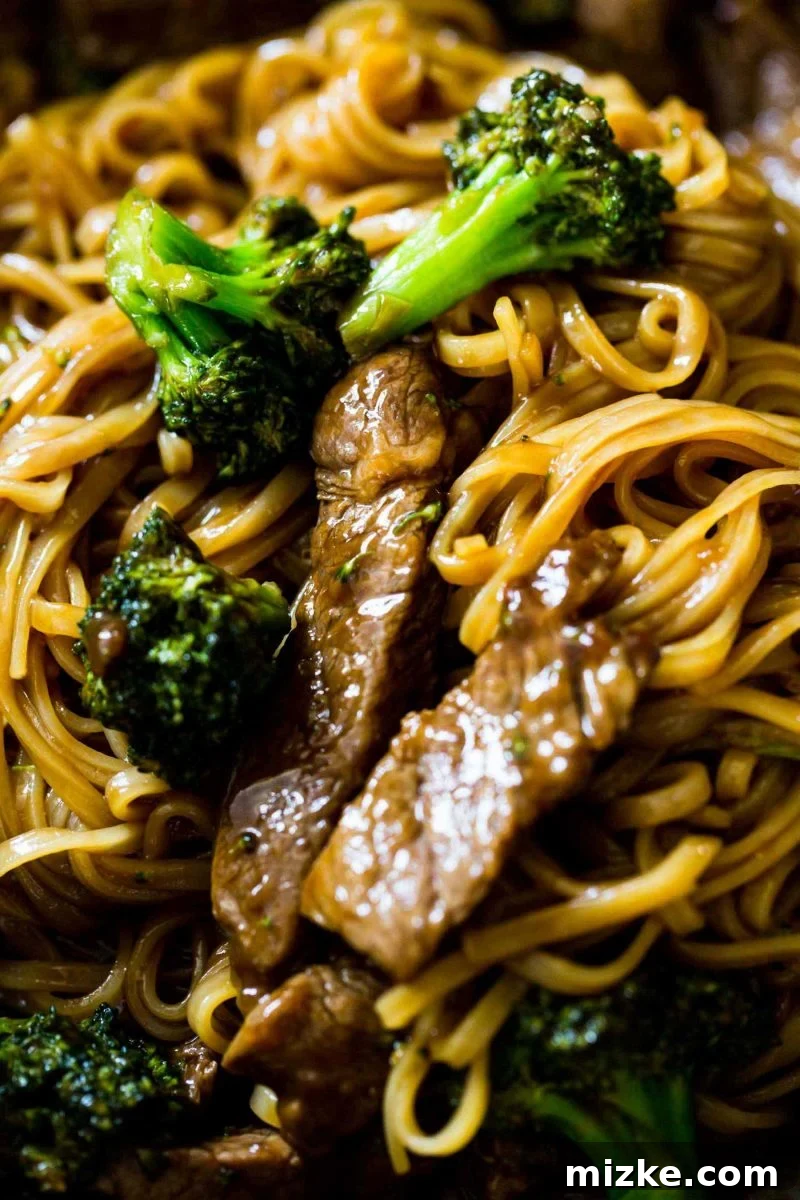
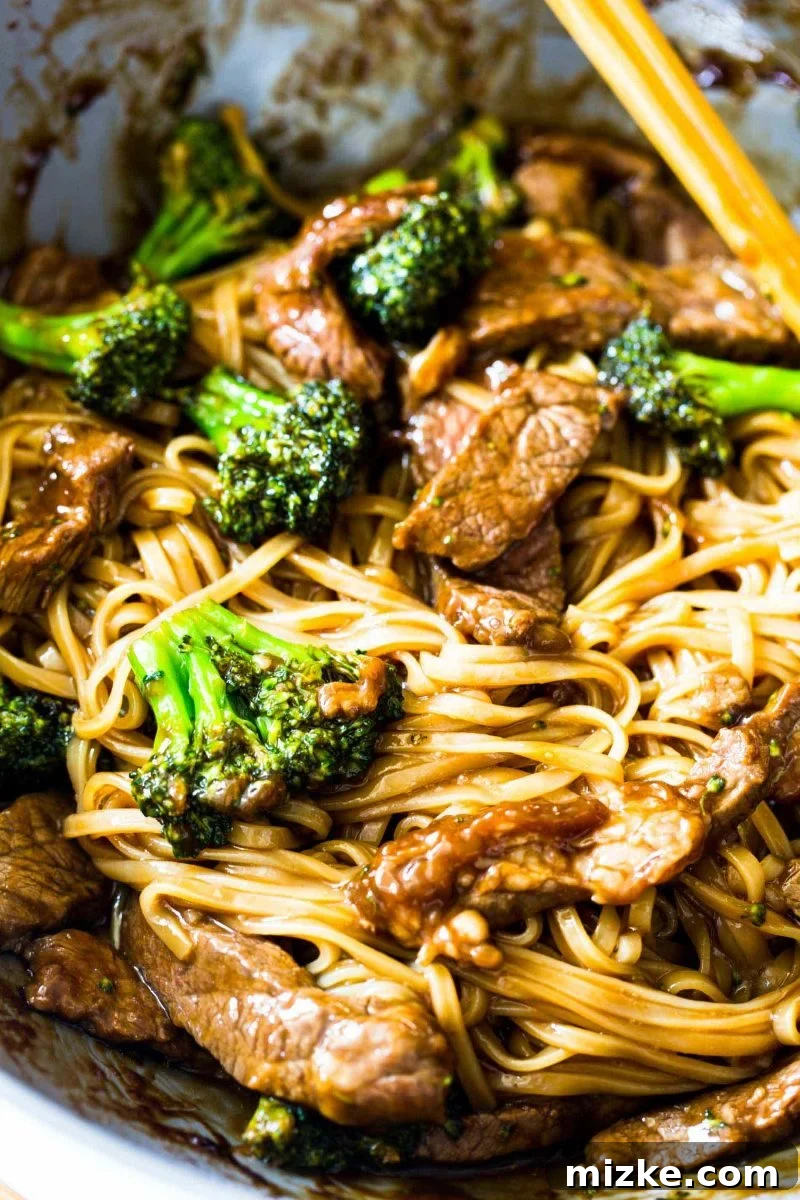
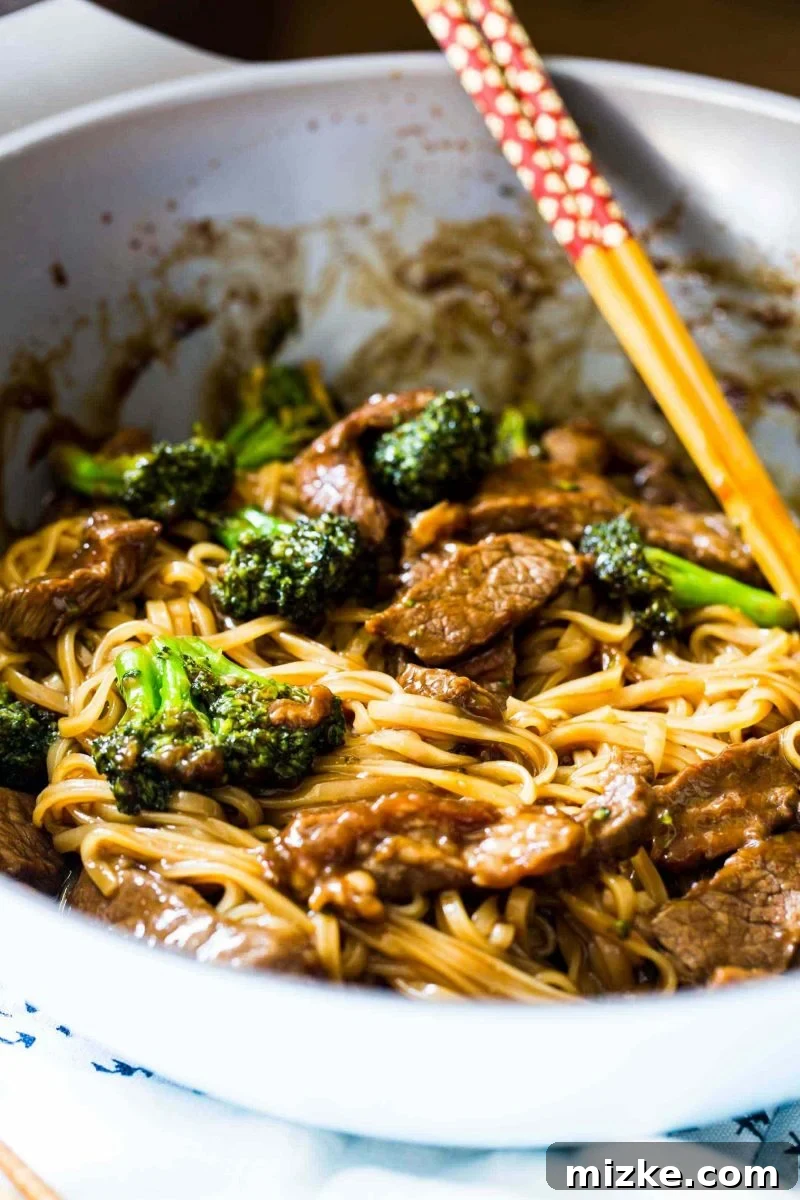
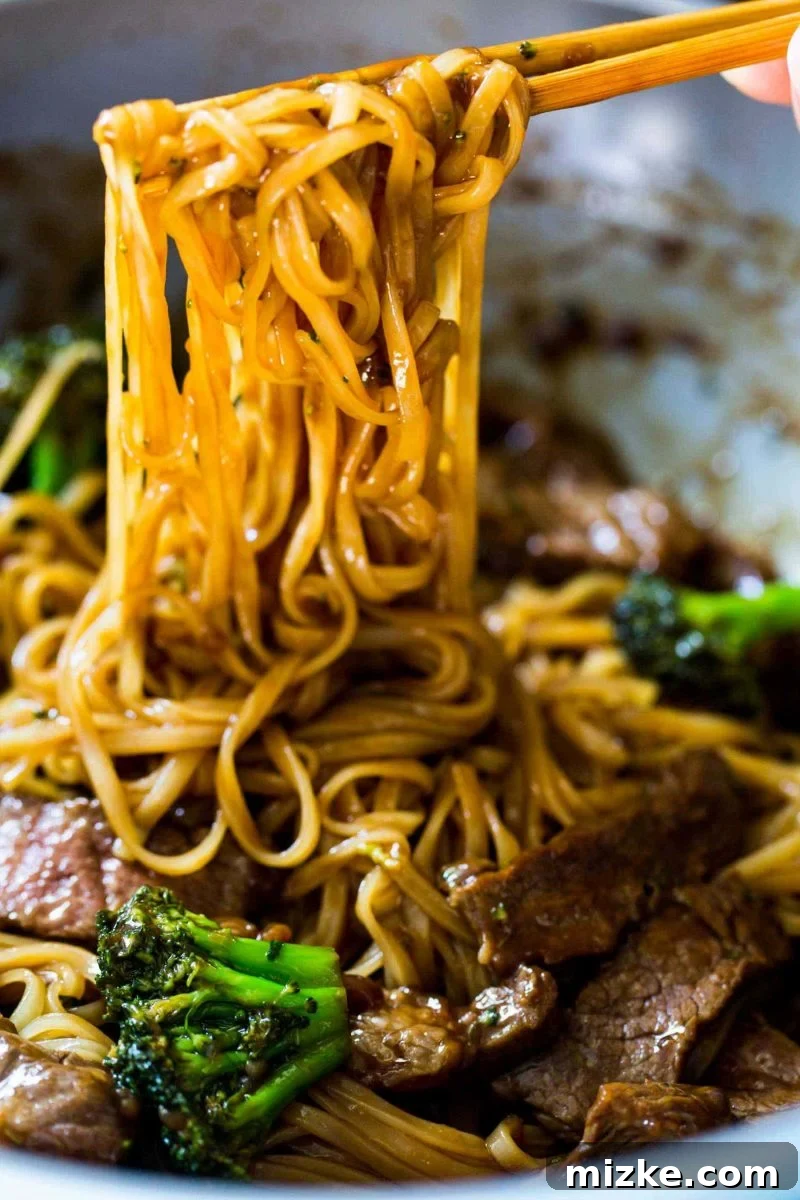
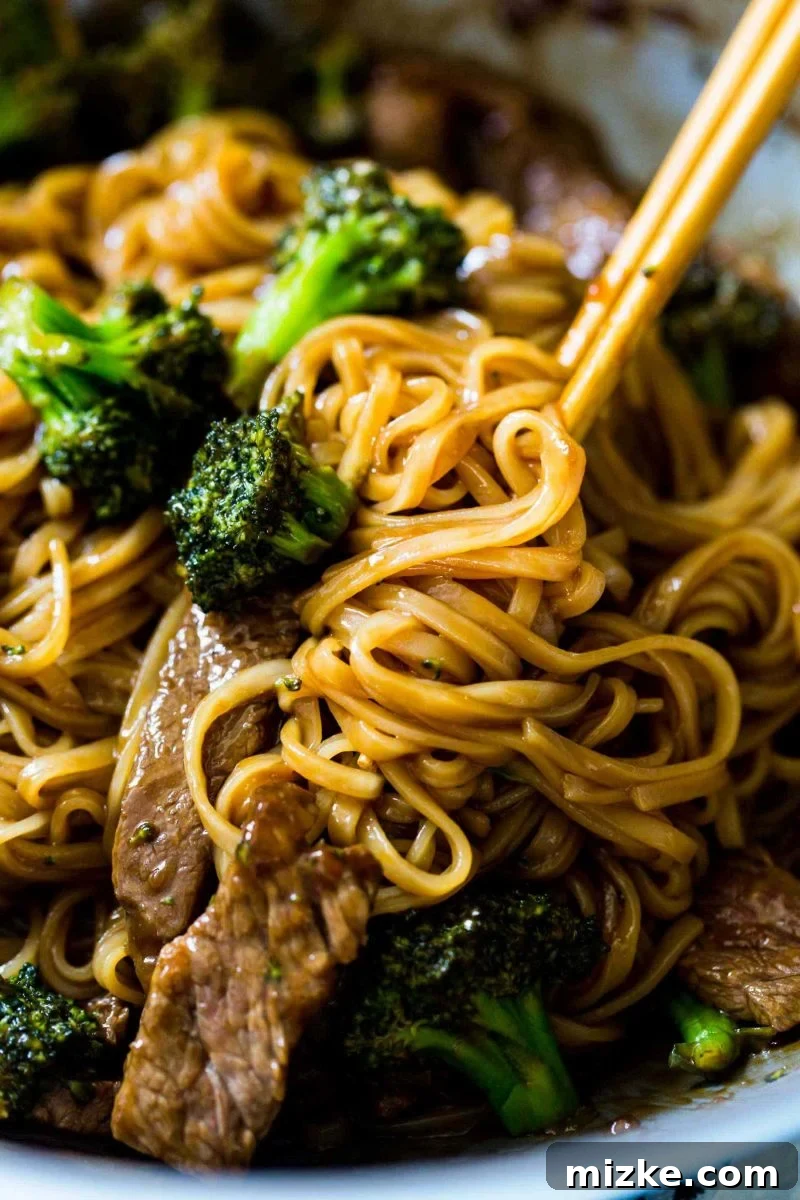
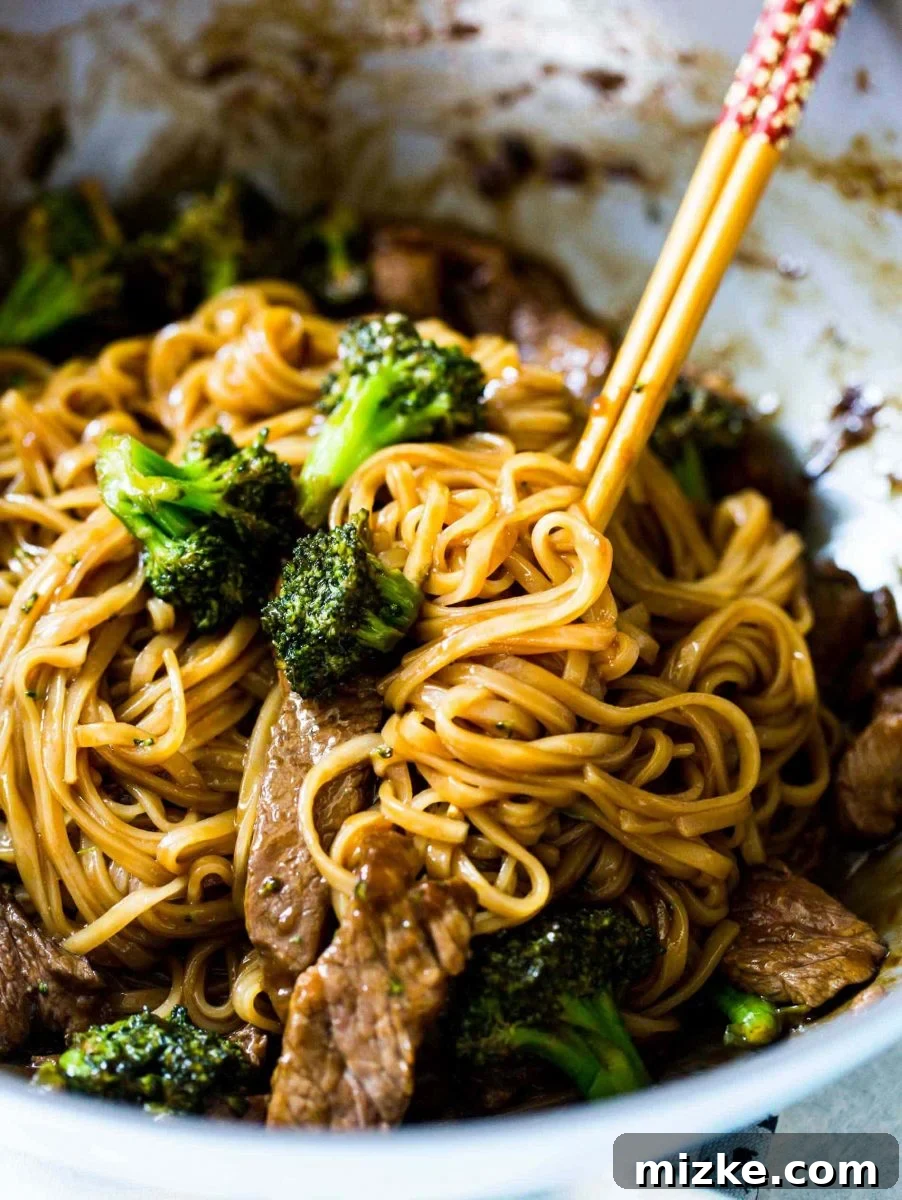
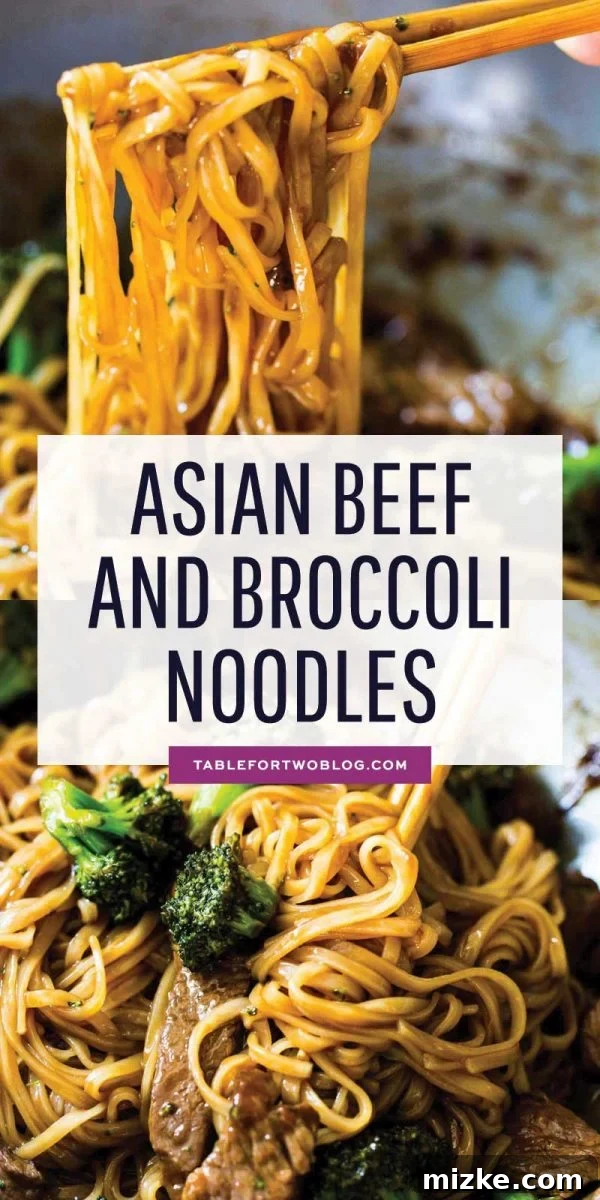
The beauty of this Asian Beef and Broccoli Noodle dish lies in its simplicity and the incredible depth of flavor delivered by the rich, thick sauce. This sauce clings perfectly to every strand of noodle, every tender slice of beef, and every crisp piece of broccoli, ensuring a harmonious bite every time. It’s a meal that truly satisfies and has become a staple in our home for a reason – it’s just THAT good!
This recipe is designed to be a lifesaver on busy weeknights, offering a delicious and nutritious option that comes together faster than you might think. The specified 7 ounces of rice noodles typically constitutes half of a standard packet, making it ideal for a smaller, two-serving meal. However, if you’re feeding a larger crowd or simply want more leftovers (and trust me, you will!), don’t hesitate to double the recipe and use the entire package of noodles. It scales up effortlessly, ensuring everyone gets a generous portion of this delightful meal.
Craving More Asian-Inspired Weeknight Meals?
If you loved the flavors and convenience of these Asian Beef and Broccoli Noodles, you’re in for a treat! We have a collection of equally delicious and easy recipes that will bring the vibrant tastes of Asia right into your kitchen. Explore these other fantastic options:
- Ginger Garlic Shrimp Noodle Stir Fry: A light yet incredibly flavorful stir-fry packed with succulent shrimp and aromatic ginger-garlic notes.
- Zucchini Noodle Cashew Stir Fry: A healthy, low-carb alternative that doesn’t compromise on taste, featuring crisp zucchini noodles and crunchy cashews.
- 20-Minute Teriyaki Chicken and Broccoli: Our go-to recipe for a speedy and satisfying meal, coated in a sweet and savory homemade teriyaki sauce.
- General Tso’s Chicken Ramen: A creative twist on classic General Tso’s chicken, combined with comforting ramen noodles for an ultimate fusion dish.
Asian Beef and Broccoli Noodles
Julie Chiou
10
20
10
30
2
Equipment
-
Wok or Large Skillet
Ingredients
For the Sauce:
- ¼ cup (59 ml) low sodium soy sauce
- 1 ½ tablespoons sweet soy sauce (or 1 tsp granulated sugar + regular soy sauce)
- 2 tablespoons oyster sauce
- 1 tablespoon rice vinegar
- 2 tablespoons water
For the Rest of the Dish:
- ¾ pounds (340 g) boneless short ribs, sliced thinly against the grain
- 2 tablespoons arrowroot powder (or cornstarch)
- Splash Chinese rice wine (Shaoxing wine, or dry sherry/mirin)
- 1 ½ cups (137 g) broccoli florets
- 7 ounces (199 g) rice noodles (or other long noodle type)
- 1 tablespoon vegetable oil (or other high smoke point oil)
Instructions
-
In a medium bowl, whisk together all the ingredients for the sauce: low sodium soy sauce, sweet soy sauce (or sugar substitute), oyster sauce, rice vinegar, and water. Set this flavorful mixture aside.
-
Prepare the beef: Place the thinly sliced boneless short ribs into a separate medium bowl. Sprinkle the arrowroot powder evenly over the beef. Gently toss to coat the beef lightly. Then, add a splash of Chinese rice wine and mix again until well combined. Allow the beef to marinate and tenderize for about 5-10 minutes. This velveting step is key for succulent beef.
-
While the beef marinates, prepare the broccoli: Bring a medium pot of water to a rolling boil. In the meantime, prepare a large bowl filled with ice water and set it aside. Once the pot of water has boiled, add the broccoli florets and blanch them for 3-4 minutes. This process helps to retain their vibrant green color and tender-crisp texture. Using a slotted spoon or strainer, quickly transfer the blanched broccoli into the bowl of iced water to stop the cooking process. Drain and set aside.
-
Keep the pot of water you used for blanching the broccoli on a low boil; this will be used for the noodles shortly.
-
Cook the beef: Heat 1 tablespoon of vegetable oil in a large skillet or wok over medium-high heat. Once the oil is shimmering, add the marinated beef slices to the skillet in a single layer if possible, cooking in batches if necessary to avoid overcrowding. Cook for 2-3 minutes per side, or until browned and cooked through. While the beef is cooking, add the rice noodles to the simmering water in the pot and cook according to package directions, typically 3-4 minutes. Rice noodles cook very quickly.
-
Combine the dish: Once the beef is fully cooked, add the blanched broccoli back into the skillet with the beef. Pour the prepared sauce mixture over everything. Toss gently to ensure all ingredients are thoroughly coated in the rich, glossy sauce. Immediately transfer the cooked rice noodles directly from the pot of water to the skillet. It’s perfectly fine if some water clings to the noodles; this moisture helps prevent them from sticking together and can contribute to the sauce’s consistency.
-
Continue to toss all ingredients together in the skillet until the noodles, beef, and broccoli are evenly distributed and glistening with the sauce. Cook for another minute or two, allowing the sauce to thicken slightly and coat everything beautifully. Remove from heat and serve immediately for the best flavor and texture. Garnish with sesame seeds or chopped green onions if desired. Enjoy your homemade Asian Beef and Broccoli Noodles!
Video
A video tutorial for this recipe would go here, providing visual guidance for each step.
Nutrition
Calories: 689kcal,
Carbohydrates: 63g,
Protein: 33g,
Fat: 32g,
Fiber: 2g,
Sugar: 16g
This website provides approximate nutrition information for convenience and as a courtesy only. Nutrition information can vary for a variety of reasons. For the most precise nutritional data use your preferred nutrition calculator based on the actual ingredients you used in the recipe.
The default measuring system for this website is US Customary. Unit conversions are provided for convenience and as a courtesy only. While we strive to provide accurate unit conversions, please be aware that there may be some discrepancies.