
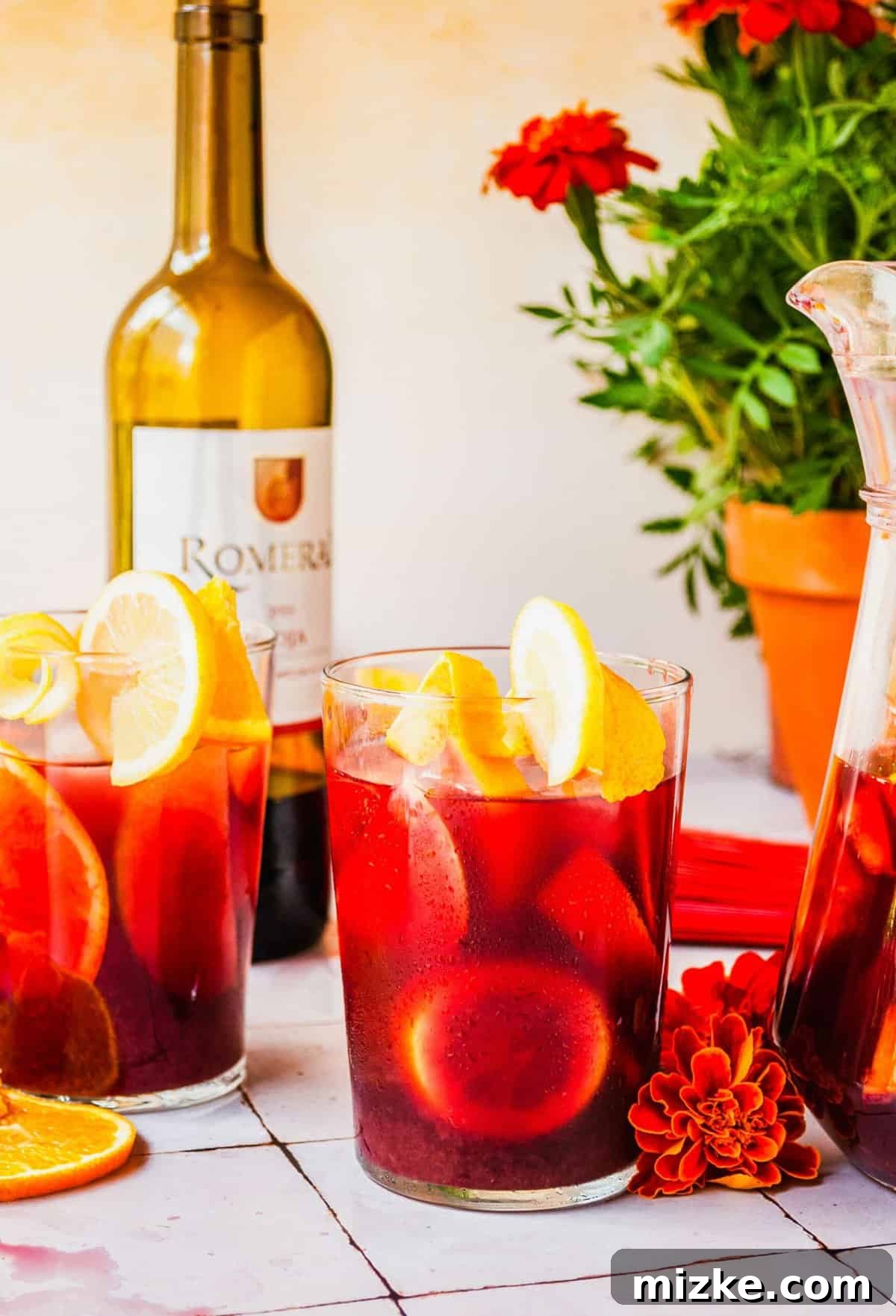
A delightful blend of red wine, succulent oranges, zesty lemons, ripe peaches, crisp apples, and more, Spanish Sangria is a refreshing medley of flavors that encapsulates the spirit of Spain. Treat yourself to this widely popular and festive Spanish cocktail today, and bring a taste of Mediterranean summer to your home!
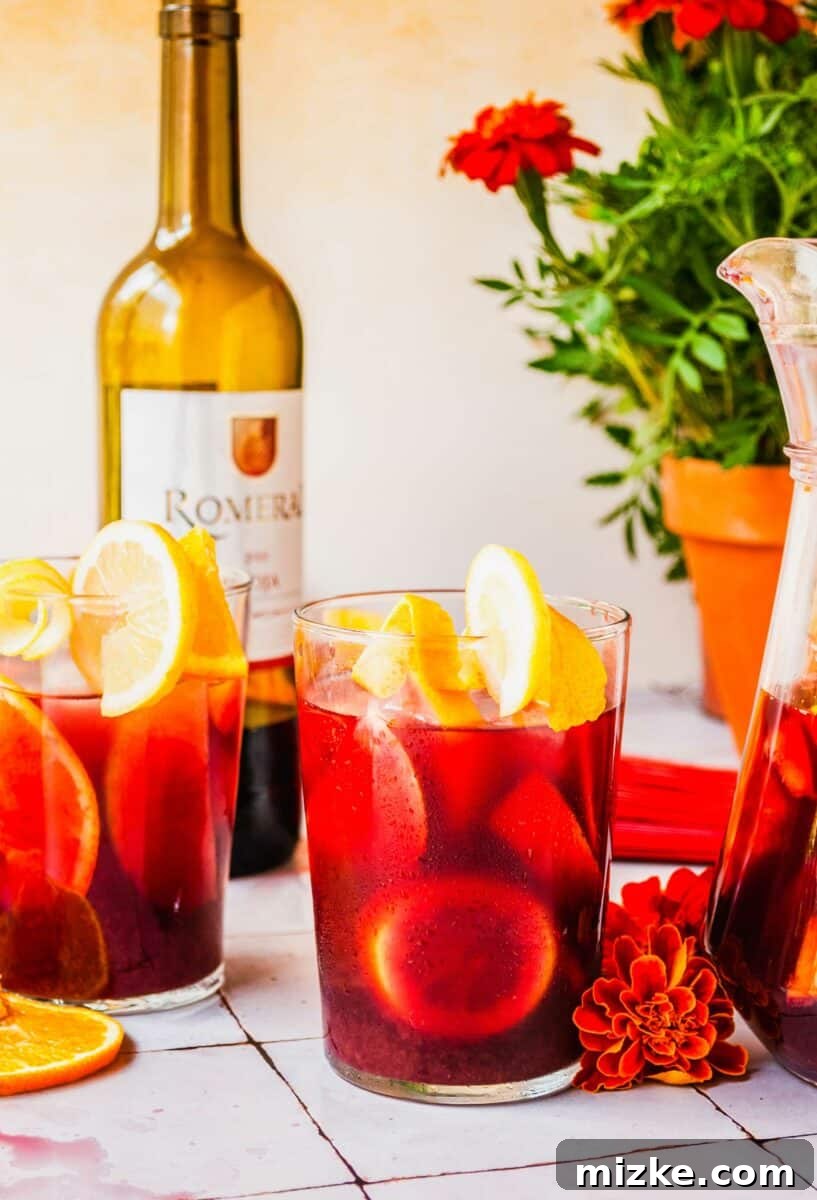
The Vibrant History and Cultural Significance of Spanish Sangria
Few beverages evoke a sense of festive refreshment quite like traditional Spanish Sangria. This iconic drink is enjoyed across Spain in generous quantities, especially during the sun-drenched summer months, making it a quintessential part of Spanish culture and celebrations.
Sangria’s roots can be traced back to the Romans, who would mix wine with water, herbs, and spices to improve its taste and make it safer to drink. As Roman influence spread across the Iberian Peninsula, so too did this practice. The modern form of Sangria, however, is thought to have emerged much later, truly blossoming in the 18th and 19th centuries as an accessible and enjoyable way to consume wine, particularly among the working classes.
Today, every bar and restaurant in Spain prides itself on its unique version of Sangria, and nearly every family has its own cherished recipe. It’s typically prepared in large pitchers or bowls, designed to quench the thirst of many during lively summer family gatherings, barbecues with friends, and bustling fiestas. More than just a drink, Sangria is a symbol of hospitality, shared joy, and the relaxed, vibrant lifestyle synonymous with Spain.
While numerous variations exist globally, utilizing different wines, fruits, and spirits, only the red wine version is considered authentic Spanish Sangria. This original form, with its rich ruby hue and complex fruity notes, laid the foundation for all other interpretations and remains the most beloved and recognized.
What is Traditional Spanish Sangria? Unpacking its Core Components
Have you ever wondered about the origin of the name “Sangria”? It comes directly from the Spanish word “sangre,” meaning “blood,” a direct reference to the vibrant, deep red color of the wine used. Rest assured, there are no unusual ingredients involved – just the beautiful crimson of a good red wine!
At its heart, Sangria is a kind of fruit punch crafted with red wine, fresh citrus fruits (both whole slices and freshly squeezed juice), and an assortment of other seasonal fruits like peaches, strawberries, apricots, or apples. For an added layer of flavor and depth, a dash of other liquors – such as citrus liqueur, vermouth, or brandy – is sometimes included. The final touch, often added just before serving, is a splash of sparkling soda like club soda, which provides a pleasant fizz. This effervescent addition is entirely optional and can be omitted if you prefer a less bubbly drink.
One of the most appealing aspects of Sangria is its ease and speed of preparation. It’s incredibly make-ahead friendly, making it the perfect beverage for potlucks, garden parties, barbecues, and all manner of summer gatherings. The convenience of preparing a large batch means there’s no need to mix individual cocktails for each guest, allowing hosts to relax and enjoy the festivities alongside their company. This makes Sangria a true crowd-pleaser and an invaluable addition to any celebratory menu.
Crafting the Perfect Pitcher: Essential Ingredients for Authentic Sangria
The secret to an exceptional Spanish Sangria lies in selecting the right ingredients. While flexible, certain choices can elevate your drink from good to truly unforgettable. Here’s a detailed guide on the components that make up this beloved cocktail:
Choosing the Right Red Wine for Sangria
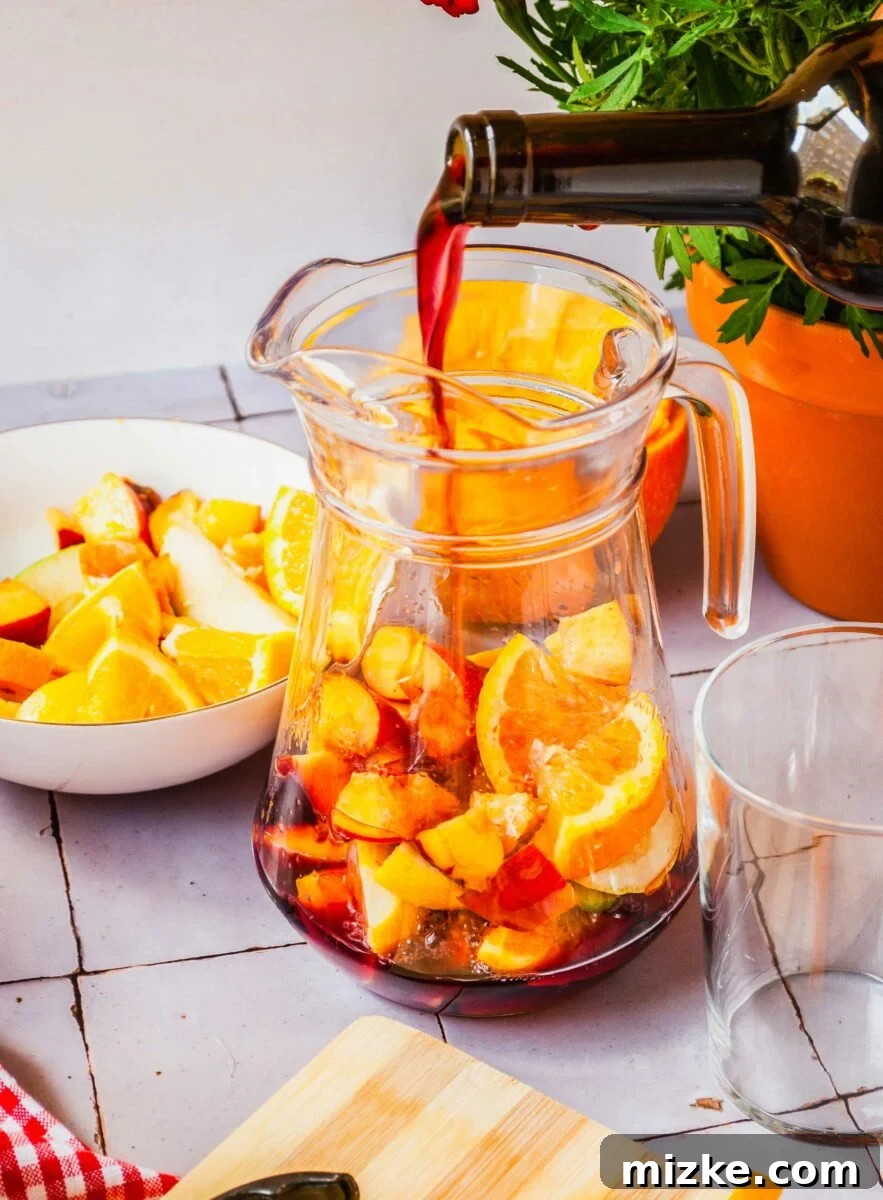
- Red Wine: The foundation of any good Sangria. While you can use almost any kind of red wine, remember that the quality of your wine will directly impact the final taste of your Sangria. Opt for a good medium-quality, young, fruit-forward red wine. Avoid overly aged or expensive wines, as their nuanced flavors can be lost or overshadowed by the fruit and other additions. Spanish Rioja is a superb choice, offering the ideal balance of fruitiness and body. Other excellent options include Garnacha, Tempranillo, or even an Italian Chianti, known for its approachable character. The goal is a wine that complements, rather than competes with, the fresh fruit flavors.
The Role of Liquor: Enhancing Flavor (Optional but Recommended)
- Liquor: Adding a dash of liquor is entirely optional, but I highly recommend it for introducing depth and complexity to your Sangria. Just a small quantity can significantly enhance the overall flavor profile. My top recommendations include vermouth liquor, such as the Italian Martini Rosso (which is essentially a spiced wine that pairs beautifully), or any high-quality citrus liqueur like Cointreau. Brandy is another traditional option, offering a subtle warmth. Experiment to find your preferred spirit, but for a truly authentic taste, vermouth or citrus liqueur often works best.
Fresh Fruits: The Heart of Sangria
- Fruits: Citrus fruits are non-negotiable for authentic Sangria – lemons and oranges are absolute musts. Their bright acidity and sweet tang are crucial for balancing the wine. Beyond citrus, peaches, strawberries, plums, and crisp apples (like Granny Smith for a nice tart contrast) are wonderful additions. Apricots also work well.
A word of caution: Avoid mushy fruits like bananas, as they can thicken the Sangria and alter its texture unpleasantly. Pineapple, while delicious on its own, has a flavor profile that tends to clash with red wine and is best avoided in traditional Sangria.
The Importance of Freshly Squeezed Juices
- Fruit Juice: Always use freshly squeezed orange juice or lemon juice. The vibrancy and natural sweetness of fresh juice are irreplaceable. Bottled juices, especially those with added sugars or preservatives, will not yield the same fresh, authentic taste and should be avoided. Only use citrus juices to maintain the traditional flavor profile.
Adding Sparkle: The Optional Fizzy Touch
- Sparkling Component (Optional): For a delightful effervescence, a sparkling component can be added just before serving. My personal recommendation is club soda, as it’s unsweetened and won’t add any extra sugar, allowing the natural fruit and wine flavors to shine. Alternatively, you can use an orange or lemon soda if you prefer a sweeter, more pronounced citrus fizz. Remember to leave some room at the top of each glass for this addition.
Sweetness to Taste: Balancing Your Sangria
- Sugar (Optional): The need for sugar depends on your personal preference and the ripeness of your fruits, especially the oranges. If your fruit isn’t particularly sweet, or if you prefer a sweeter Sangria, you can add a couple of tablespoons or more of regular white granulated sugar. If using sugar, ensure you dissolve it completely in a small amount of wine or juice before adding it to the main mixture. This prevents the sugar from settling at the bottom of the pitcher.
The Ice Dilemma: Keeping it Chill Without Dilution
- Ice: To keep your Sangria perfectly chilled without diluting its rich flavors too quickly, use regular-sized ice cubes. Avoid small, crushed, or cocktail-sized ice, as these melt rapidly, watering down your delicious creation. For serving, add ice directly to individual glasses rather than the main pitcher, especially if the pitcher will sit out for a while.
Step-by-Step Guide: How to Make Spanish Sangria
Creating your own pitcher of authentic Spanish Sangria is a simple yet rewarding process. Follow these detailed instructions to craft a cocktail that will impress your guests and delight your taste buds.
Make-Ahead Magic: Preparing Sangria for Parties and Gatherings
As highlighted, Spanish Sangria is an ideal make-ahead cocktail, liberating you from last-minute drink preparations when entertaining. I personally love having a pitcher chilled and ready before guests arrive, ensuring a relaxed start to any party. For the optimal flavor infusion, prepare your Sangria no sooner than two days before your event. While it can remain fresh for up to four days in the refrigerator, the alcohol flavors tend to become more pronounced over time. The peak taste experience is typically within 48 hours of preparation, offering a perfect balance of fruit and wine. If you prefer a stronger, more intense flavor profile, feel free to let it steep a bit longer!
When to Serve Spanish Sangria: A Year-Round Delight
Sangria is most famously celebrated as a sweet, vibrant, and incredibly refreshing summertime drink. It’s the quintessential accompaniment to warm-weather celebrations, patio gatherings, and lazy afternoons by the pool – embodying those perfect Spanish Sangria vibes. However, its versatile and delicious flavor profile makes it enjoyable throughout the entire year. Don’t hesitate to break out a pitcher during autumn festivities or even as a cheerful surprise during the colder months. It’ll be our little secret if you find yourself sipping on a glass of this delightful concoction during Christmas – it’s a taste of sunshine, no matter the season!
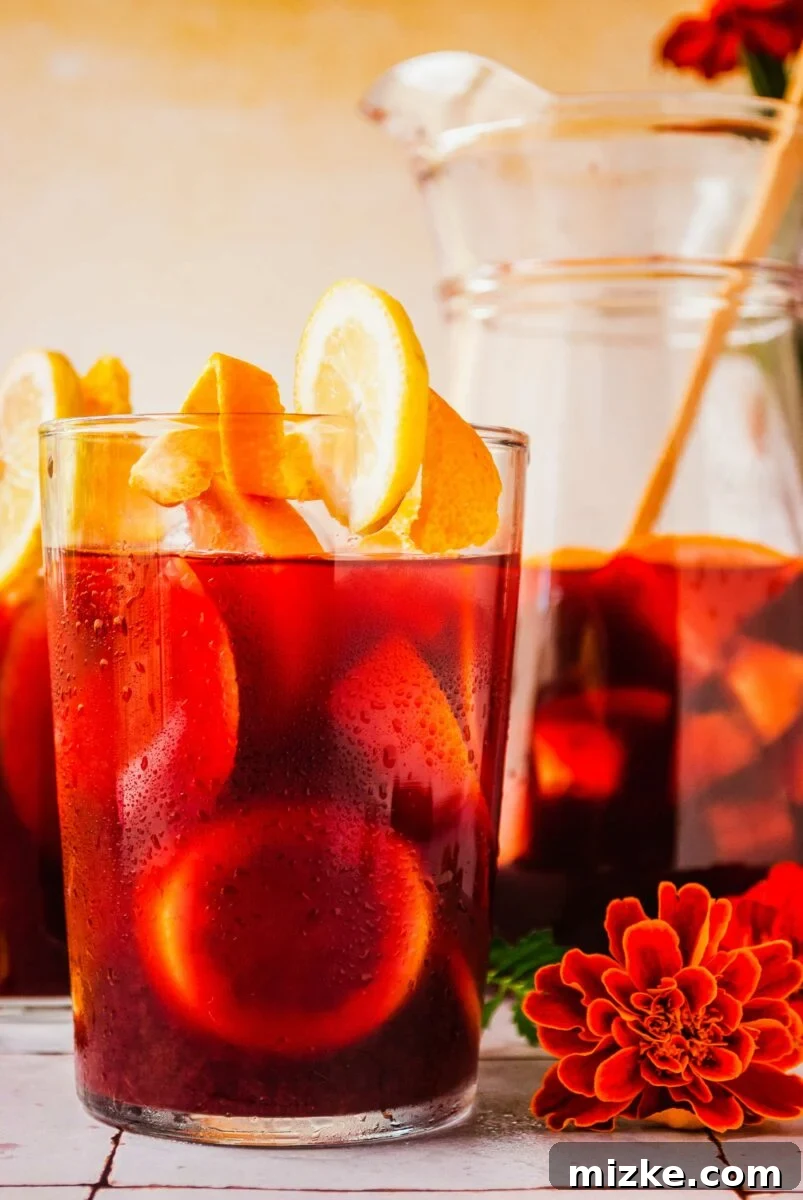
Pair Your Sangria: Delightful Food Suggestions
Sangria’s versatility makes it an excellent companion to a wide array of dishes, especially those with Spanish or Mediterranean influences. Its fruity and refreshing notes cut through rich flavors and complement lighter fare beautifully. Consider pairing your homemade Sangria with:
- Tapas: From patatas bravas and gambas al ajillo to chorizo and Manchego cheese, Sangria is the ultimate tapas partner.
- Grilled Meats and Seafood: The boldness of red wine Sangria stands up well to grilled steaks, pork, or even hearty grilled fish.
- Paella: A classic Spanish pairing. The refreshing qualities of Sangria balance the rich and complex flavors of a seafood or mixed paella.
- Fresh Salads: For lighter meals, a vibrant salad with grilled chicken or goat cheese can be beautifully accented by Sangria.
- Fruit Desserts: If you prefer a sweet finish, Sangria complements berry tarts or citrus-based desserts without being overly sweet itself.
Whether you’re hosting a full Spanish feast or a casual backyard BBQ, Sangria is sure to enhance the culinary experience for all your guests.
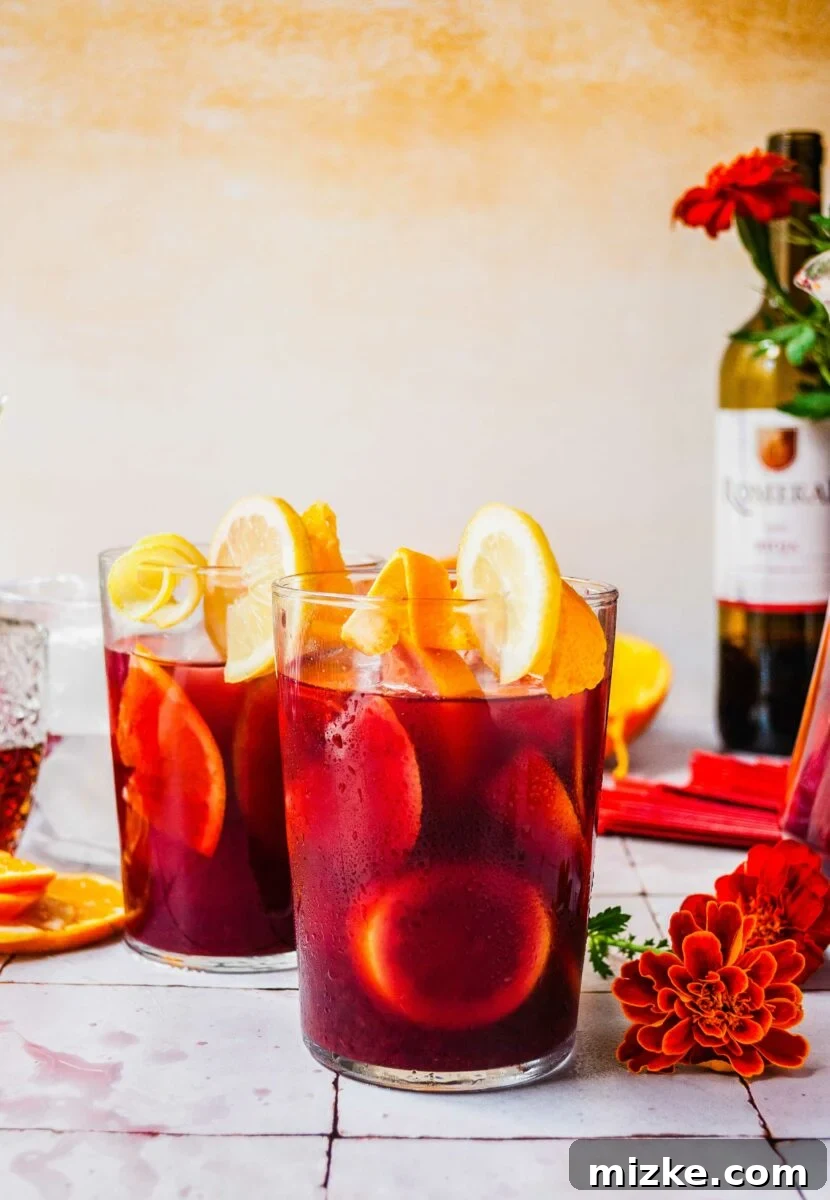
Quench Your Thirst with More Refreshing Cocktails!
If you’ve fallen in love with the vibrant flavors of Sangria, explore other delightful drinks perfect for beating the heat or simply enjoying a moment of refreshment. Here are a few recommendations to keep your spirits high:
- Watermelon Frosé
- Tinto de Verano
- Aperol Spritz
- Strawberry Rickey
Saved
Rate
Rating: 4 out of 5 stars from 2 votes
Spanish Sangria
Authentic, traditional Spanish Sangria made with red wine and fruits. A very easy, quick, and deliciously refreshing drink perfect for cooling down during the summer months!
Ingredients
- 1 bottle of red wine, I used Spanish Rioja
- 3 oranges
- 2 lemons
- 1 peach, pit removed
- 1 apple, core removed. I used a Granny Smith for the contrast in flavor and color.
- A generous dash of liquor, I used Italian Martini Rosso vermouth
- Club soda or citrus soda, optional
- 2 tablespoons granulated sugar or more to taste, optional
Instructions
-
Start by washing your fruits well. Since we are going to use them with the skin on make sure you scrub them well.
Prepare the fruit as follows:
-
Slice in wedges one of the oranges.
-
Slice in wedges one of the lemons.
-
Slice in wedges the peach.
-
Slice the apple in thinner slices.
-
Set aside.
-
Juice another one of the oranges and set aside the juice.
-
In a pitcher put the sliced fruits, add the orange juice, the bottle of red wine, and the splash of liquor. Mix well until combined. Do not add the ice at this moment. We are going to leave this Sangria mixture rest for a couple of hours.
-
Taste and adjust to your liking. Add sugar if you find it necessary. Keep in mind that you might add a bit of sweet soda for some bubbly later.
-
Let the mixture sit for at least a couple of hours in the fridge, so all the flavors in the fruits transfer into the wine and combine with the rest of the ingredients. You can also prepare it and let it sit overnight.
Prep the garnish fruit for the glasses:
-
Peel half of the remaining orange and lemon in fine strips with a potato peeler and cut them in half if they are too wide.
-
With a chopstick, roll one of the peels at a time around it and press gently for a few seconds, this will give you nice orange and lemon peel swirls. Cut them in shorter swirls and set them aside.
-
Cut the other half orange and lemon in thick slices. Cut them in triangles leaving the skin to be the bottom part of each triangle. Make a tiny slit in the zest for the triangles to sit on the glass brim.
-
Once the Sangria has been sitting for a couple of hours or overnight, transfer it into the serving pitcher. Leave some room for the sparkling drink in case you want to use it.
-
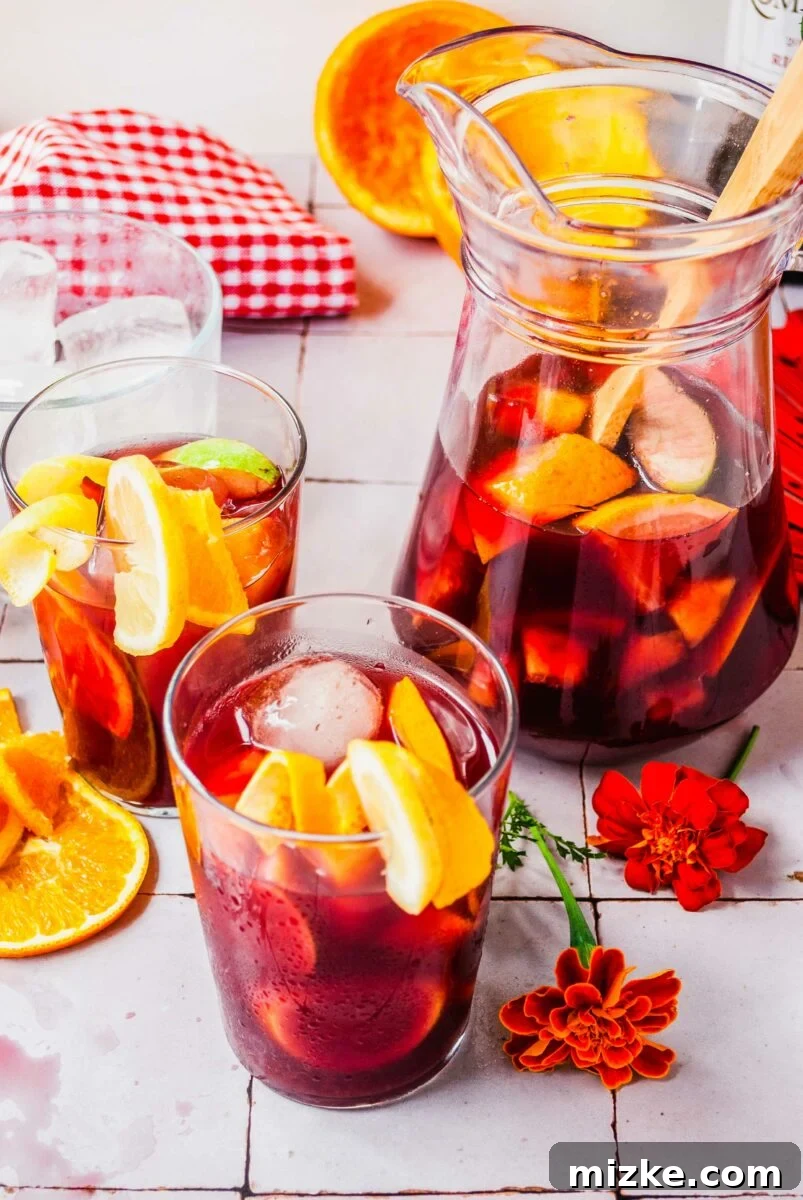
Serve each glass with some ice, Sangria, some of the fruits, and a triangle of lemon and orange in the brim as well as one of the peel swirls. Top with additional soda, if desired.
-
Enjoy! Remember you can eat the fruit after finishing your glass!
Notes
It can be stored in a glass jar for up to 4 days in the fridge; more than that it usually turns a little bit too strong since the fruit starts to ferment.
Nutrition
, Calories: 141 kcal
, Carbohydrates: 19g
, Protein: 1g
, Fat: 1g
, Saturated Fat: 1g
, Polyunsaturated Fat: 1g
, Monounsaturated Fat: 1g
, Sodium: 5mg
, Potassium: 305mg
, Fiber: 3g
, Sugar: 13g
Hide Disclaimers
This website provides approximate nutrition information for convenience and as a courtesy only. Nutrition information can vary for a variety of reasons. For the most precise nutritional data use your preferred nutrition calculator based on the actual ingredients you used in the recipe.
The default measuring system for this website is US Customary. Unit conversions are provided for convenience and as a courtesy only. While we strive to provide accurate unit conversions, please be aware that there may be some discrepancies.