

The Digital Rights Myth: Why “Found on the Internet” Doesn’t Mean “Free to Use”
In our increasingly digital world, where information and creative works are just a click away, a pervasive misconception has taken root: if it’s available online, it must be free for the taking. This widespread belief, often stemming from a lack of education on digital rights and intellectual property, leads to countless instances of content misuse and outright theft. Today, we’re setting the record straight, shedding light on the critical difference between accessibility and ownership.
Let’s make this crystal clear and repeat after me: Just because I found it on the internet, it does not mean it is free to use. This isn’t an accusation; it’s a vital educational cornerstone for navigating the internet responsibly and ethically. My intention here is not to talk down to anyone, but to foster a better understanding of how intellectual property works in the digital realm. As content creation continues to boom, refreshing our knowledge on this subject is more important than ever.
The internet, while a vast repository of knowledge and creativity, is not a free-for-all public domain. Every image, article, video, and recipe you encounter online is the product of someone’s time, effort, and skill. Behind every piece of digital content is a creator who invests resources—be it equipment, software, expertise, or simply countless hours—to bring their vision to life. This investment inherently gives their work value and legal protection, irrespective of its online presence.
Open dialogue and shared knowledge are essential to combat this widespread misunderstanding. The issue of unauthorized content usage is rampant in the creator community, harming individuals and undermining the very foundation of digital creativity. By understanding the underlying principles of intellectual property, we can collectively build a more respectful and supportive online environment for everyone.
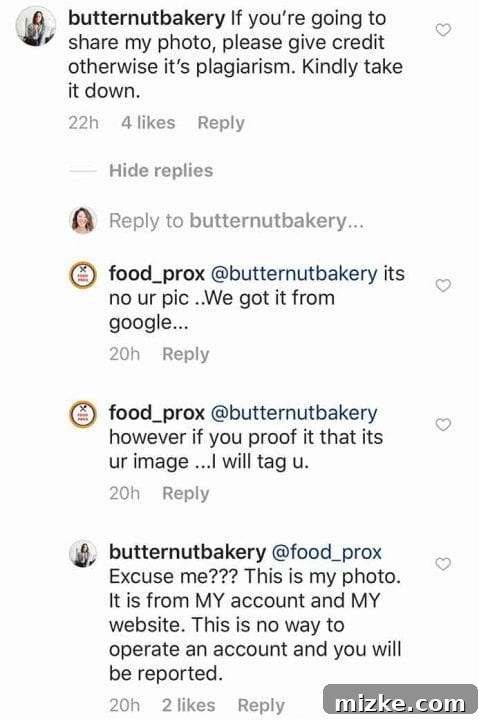
Consider the countless examples circulating on social media, like the case of the talented content creator whose baking photography was used without permission. While she handled the situation with grace, the unauthorized user often responds with dismissiveness or outright hostility, exemplifying a broader lack of respect for creative ownership. This highlights a critical point: creators shouldn’t have to constantly defend their work. The burden of proof should not fall on the person who poured their heart and soul into creating something unique.
“I found this image on Google, so it’s free for me to use.”
This common assertion is fundamentally flawed and represents a dangerous misunderstanding of copyright law. Google is merely a search engine, an indexer of information. It does not confer rights to use content just because it can locate it. Think of Google as a library catalog; finding a book in the catalog doesn’t mean you own the book or can freely copy its pages. You still need to follow the rules of the library and the law. It’s imperative to dispel this myth and understand the true implications of digital intellectual property.

The Genesis of Content Theft: How It Happens and Why It’s Wrong
The path to unauthorized content usage often begins innocently enough. Someone needs an image—perhaps for a personal blog, a social media post, or even a commercial project. They head to a search engine like Google, type in a query such as “lemon blueberry cupcake,” and are presented with a vast array of tempting visuals. The next step, all too common, is a simple right-click and “save image as.” This seemingly innocuous action, however, sets in motion a chain of events that disregards the fundamental rights of the original creator.
For every stunning photograph, compelling article, or intricate recipe you find online, there is a dedicated content creator behind it. These individuals invest significant time, effort, and resources into their craft. A food photographer, for instance, might spend hours sourcing ingredients, styling a dish, utilizing expensive photography equipment, perfecting lighting, and meticulously editing images with specialized software. This entire process, from conception to publication, represents a considerable financial and creative investment. This investment is absolutely not free.
The legal framework supporting creators is robust. Under the Federal Copyright Act of 1976, all creative works, including photographs, are automatically protected by copyright the very moment they are created. This means the instant a photographer presses the shutter button, that image is legally theirs. Any subsequent use, reproduction, or alteration of that photo without explicit permission constitutes a copyright violation. This protection is automatic; creators do not need to register their work (though registration offers additional legal advantages in infringement cases).
It’s crucial to understand the distinction between general internet availability and legal usage rights. Unless a piece of content is specifically released as royalty-free stock photography, or under a Creative Commons license that permits broader use, it is generally not free for use outside of the creator’s own platforms. Even “royalty-free” isn’t truly “free” in the sense that the creator has waived all rights; it typically means you pay a one-time fee to use it multiple times without paying royalties per use, or it’s provided by platforms that have already compensated the creator for widespread distribution.
This principle extends beyond images to other forms of content, such as recipes on a food blog. While you might access them without a direct subscription fee, this doesn’t equate to “free” from the creator’s perspective. Bloggers, for instance, incur substantial operational costs: web hosting, domain registration, premium themes and plugins, email marketing services, ingredient costs for recipe development, and countless hours of writing, photography, and technical maintenance. These expenses are often offset by advertising revenue, affiliate marketing, or product sales.
This is why you frequently see advertisements on content-rich websites. These ads are not merely an annoyance; they are a vital component of the creator economy, enabling individuals to continue producing valuable content for public consumption. Comments criticizing “too many ads” often overlook the economic reality of maintaining an online platform, essentially asking creators to provide their work and bear all associated costs for free. This is no different than supporting any other online publication or news site that relies on ads to operate.
Legitimate Content Usage: The Power of Permission
If you genuinely wish to use an image or any other piece of content you find online, the process is straightforward and ethical: seek permission. It’s remarkable how often this fundamental step is skipped, even by large public relations firms and established brands that should be well-versed in intellectual property law. These aren’t just innocent oversights by individuals unaware of the rules; they are often deliberate bypasses of proper protocols.
Not asking permission before using someone’s creative work is, in essence, a form of digital theft. The misconception that the internet is a free resource often disconnects people from this understanding, blurring the lines between borrowing and stealing. Yet, the principle remains the same as in the physical world: you wouldn’t walk into a store and take an item without paying, nor should you take digital content without the creator’s consent.
To seek permission, identify the content creator—typically found on the website where the content originated, or through social media links—and reach out directly. Most content creators are incredibly passionate about their work and are often more than happy to grant permission for its use, especially when approached respectfully. They might have specific requirements, such as how their content can be displayed, for what purpose, and for how long. The most common and crucial requirement, however, is proper attribution.
The Golden Rule: Give Credit Where Credit Is Due
Beyond seeking explicit permission, attributing the original creator is paramount. Proper attribution is not just a polite gesture; it’s a mark of respect for their labor and an acknowledgment of their intellectual property. A simple line such as “Photo by: [Creator’s Name]” followed by a link to their website or a tag to their social media account is usually sufficient. This small act can make a tremendous difference to a content creator.
Giving credit serves multiple purposes: it recognizes the creator’s effort, drives potential traffic and exposure back to their platform, and helps reinforce their brand. It’s a fundamental aspect of digital etiquette and professional courtesy. Failing to provide credit, even if permission was obtained, diminishes the creator’s recognition and can still be perceived as an ethical lapse, if not a legal one in some contexts (e.g., if specific attribution was a condition of use).
Preserving Integrity: Resist the Urge to Alter Images
Another common infringement of digital rights involves altering original images. It’s a frequent occurrence to see a content creator’s photograph cropped, filtered, modified, or incorporated into a collage without their consent. This practice is not only disrespectful to the creator’s artistic vision but also constitutes a clear copyright violation.
When a photographer captures and edits an image, they infuse it with their unique style, branding, and creative choices. Applying a different filter, cropping it to fit a certain aspect ratio, or otherwise manipulating it fundamentally changes the original work. In copyright law, this is often referred to as creating a “derivative work.” Unless explicitly permitted by the creator, making such alterations is an infringement. It compromises the integrity of their art and potentially misrepresents their brand. Respecting the creator’s work means using it as they intended, or seeking specific permission for any modifications.
Watermarks: A Flawed Shield Against Theft
The suggestion of watermarking images often arises as a potential solution to content theft. While watermarks can serve as a deterrent, they are far from a foolproof defense. In many instances, determined individuals will simply crop out the watermark, digitally remove it, or obscure it, effectively circumventing its intended purpose. This act of removing or obscuring a watermark itself can be an additional copyright infringement, as it further alters the original work and attempts to remove attribution.
Furthermore, watermarks often detract from the aesthetic appeal and overall beauty of a photograph. They can be distracting, drawing the viewer’s eye away from the subject matter and impacting the overall visual experience. Many creators find that watermarks compromise the artistic integrity of their work, which is why many have moved away from using them. The slight protection they offer often doesn’t outweigh the negative impact on the presentation of the content.
Commercial Exploitation: Using Our Work for Your Gain
One of the most frustrating forms of content theft occurs when individuals or entities actively leverage a creator’s work for their own commercial gain without permission or compensation. We frequently observe websites and social media accounts compiling our photos into collages (a clear copyright infringement as a derivative work), posting them on their platforms, and then driving traffic to themselves. A common scenario for food bloggers, for example, involves a site taking multiple recipe photos, assembling them into a “best of” list, and then directing users to “visit [original site] for the full recipe.”
While this might appear to give credit, it fundamentally misunderstands how creators monetize their work. Take, for example, sites like http://www.bestrecipess.com/side-dish-recipes/. Images of my delicata squash, pineapple fried rice, and cheesy hashbrown casserole recipes have been lifted directly from my site, repurposed into collages, and used to attract traffic to their own platform. The original creator suffers a direct loss of potential ad revenue and organic traffic that should have legitimately flowed to their site. This practice is widespread, making it incredibly challenging for individual creators to police every infringement. This is precisely why education and a shift in user behavior are so crucial.
Similarly, on platforms like Instagram, accounts frequently repost creators’ photos, then add dozens of trending hashtags to maximize likes and gain new followers. While they might tag the original creator, the primary beneficiary is the reposting account, which capitalizes on the stolen visual content to grow its audience and influence. This constitutes using someone else’s intellectual property for direct personal or commercial gain without obtaining the necessary usage rights or providing fair compensation. For content creators, this isn’t a minor issue; it’s a fundamental devaluation of their work and a direct hit to their livelihood.
The Folly of “Ask for Forgiveness Later”
A dangerous adage often surfaces in discussions about online content: “It’s better to ask for forgiveness later than permission now.” This could not be further from the truth when it comes to intellectual property. This mindset is fundamentally flawed and carries significant legal risks.
Imagine walking into a retail store, selecting an item of clothing, and then attempting to leave without paying, only to apologize if caught. This scenario is clearly theft. The digital equivalent carries the same ethical implications and potentially severe legal repercussions. Ignorance of copyright law is rarely a valid defense in court.
The consequences of copyright infringement can be substantial. Numerous instances exist where individuals or even smaller businesses, unaware of copyright laws, have faced legal action from larger brands or professional photographers/agencies. The damages awarded in such cases are often not trivial sums like a couple hundred dollars, but can escalate into tens of thousands, covering statutory damages, actual damages, and legal fees. For an individual content creator, pursuing every infringement through legal channels is often financially prohibitive. The cost of legal counsel far outweighs the potential recovery for each individual instance of theft, creating a frustrating imbalance. This reality underscores why a preventative approach—seeking permission upfront—is always the wisest and safest course of action for everyone involved.
Beyond Images: The Copyright of Recipes
For food bloggers, specifically, an often-overlooked area of copyright protection applies directly to their recipes. While the list of ingredients itself is generally not copyrightable (as it’s a factual compilation), the specific instructions, the unique method of preparation, and the descriptive text accompanying a recipe are indeed protected by copyright. This includes the narrative, tips, and step-by-step guidance that differentiate one recipe from another.
Therefore, when someone copies and pastes an entire recipe—including the detailed instructions—from a food blog directly onto their own website, social media account, or even within a forum, they are committing copyright infringement. Beyond the legal violation, this act directly harms the original creator by diverting valuable organic search traffic away from their platform. This traffic is essential for generating ad revenue and building a loyal audience, which in turn supports the creation of more content. It also undermines the potential for future cookbook sales, as why would someone purchase a cookbook if the full recipes are freely available elsewhere?
The same principle applies to sharing photos of copyrighted cookbook pages online. Distributing entire recipes or substantial portions of a cookbook digitally devalues the hard work and intellectual property of the author. It directly impacts sales and the financial viability of publishing.
However, it’s crucial to distinguish this from a beloved practice among food bloggers: when you make a recipe of ours and proudly share your own photo of the finished dish, tagging us in your post. This is what food bloggers love! We adore seeing your culinary creations and enthusiastically share what our community is making. This interaction builds community and celebrates the successful application of our recipes. What we don’t appreciate is when you replicate our entire recipe instructions verbatim for your followers, effectively stealing our content and our traffic. This distinction is vital for fostering a supportive and ethical food blogging community.
If You Didn’t Know, Now You Know: A Call to Responsible Digital Citizenship
My primary objective for this extensive discussion was to educate, clarify, and empower everyone to navigate the digital landscape with a stronger understanding of intellectual property rights. I sincerely hope this post has achieved that goal, dispelling common myths and providing clear guidelines for ethical online behavior. The internet thrives on creativity, and respecting the rights of creators is fundamental to its continued vibrancy and fairness.
Understanding and adhering to these principles is not just about avoiding legal trouble; it’s about fostering a culture of respect, valuing creativity, and ensuring that content creators can continue to share their incredible work with the world. We all have a role to play in promoting responsible digital citizenship. If you have further questions or require additional clarification on any of these points, please do not hesitate to ask in the comments section below. I am always happy to provide further insights for fellow content creators and curious users alike.