
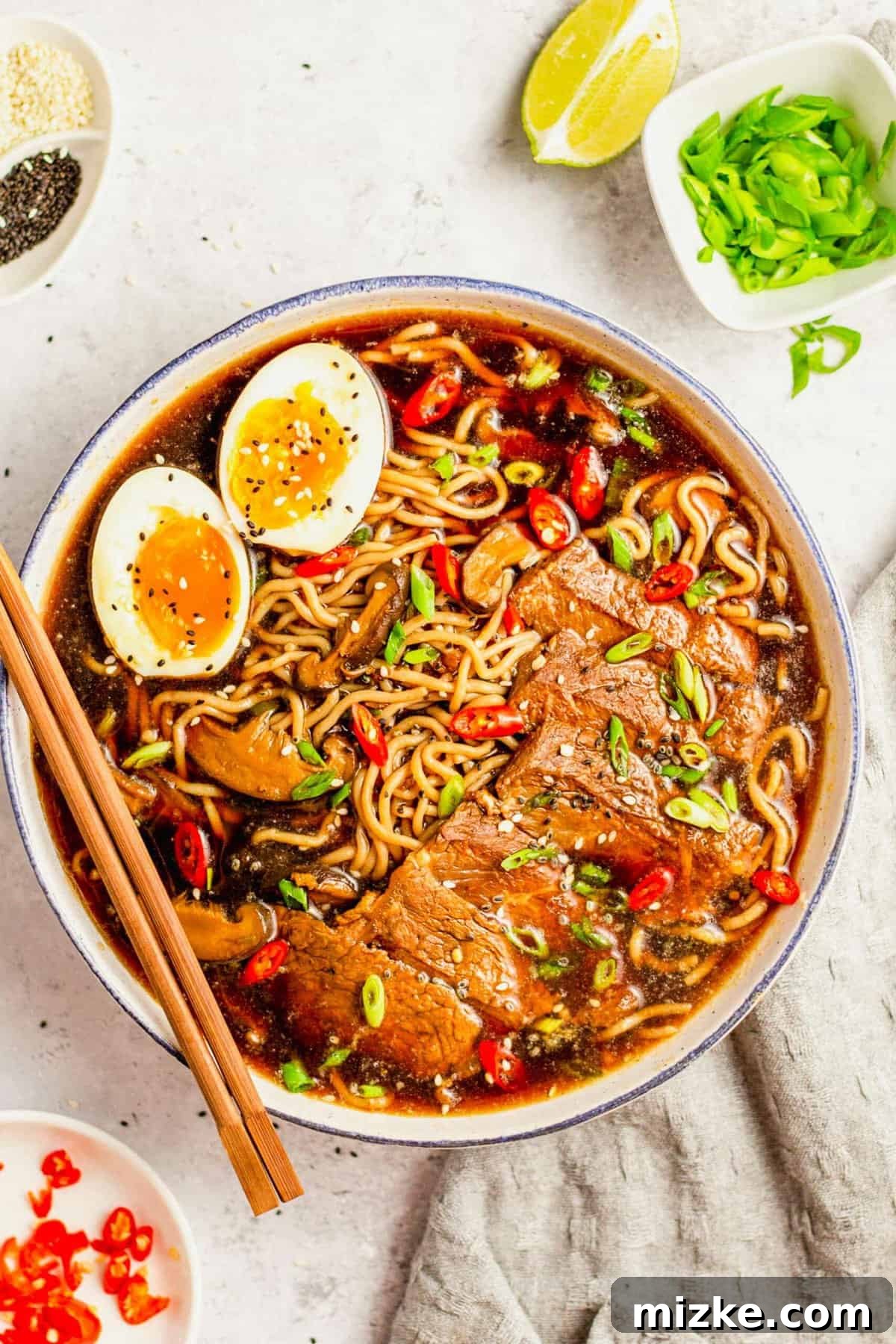
The Ultimate Homemade Beef Ramen Noodle Soup: Better Than Takeout!
Craving a rich, savory bowl of ramen but tired of overpaying for mediocre restaurant versions? It’s time to elevate your home cooking! This recipe for **The Ultimate Homemade Beef Ramen Noodle Soup** is a game-changer. Forget long commutes and hefty bills; you can now create a truly exceptional, flavor-packed ramen experience right in your own kitchen. This isn’t just a meal; it’s a celebration of comfort, packed with bold flavors and wholesome ingredients that consistently hit the spot.
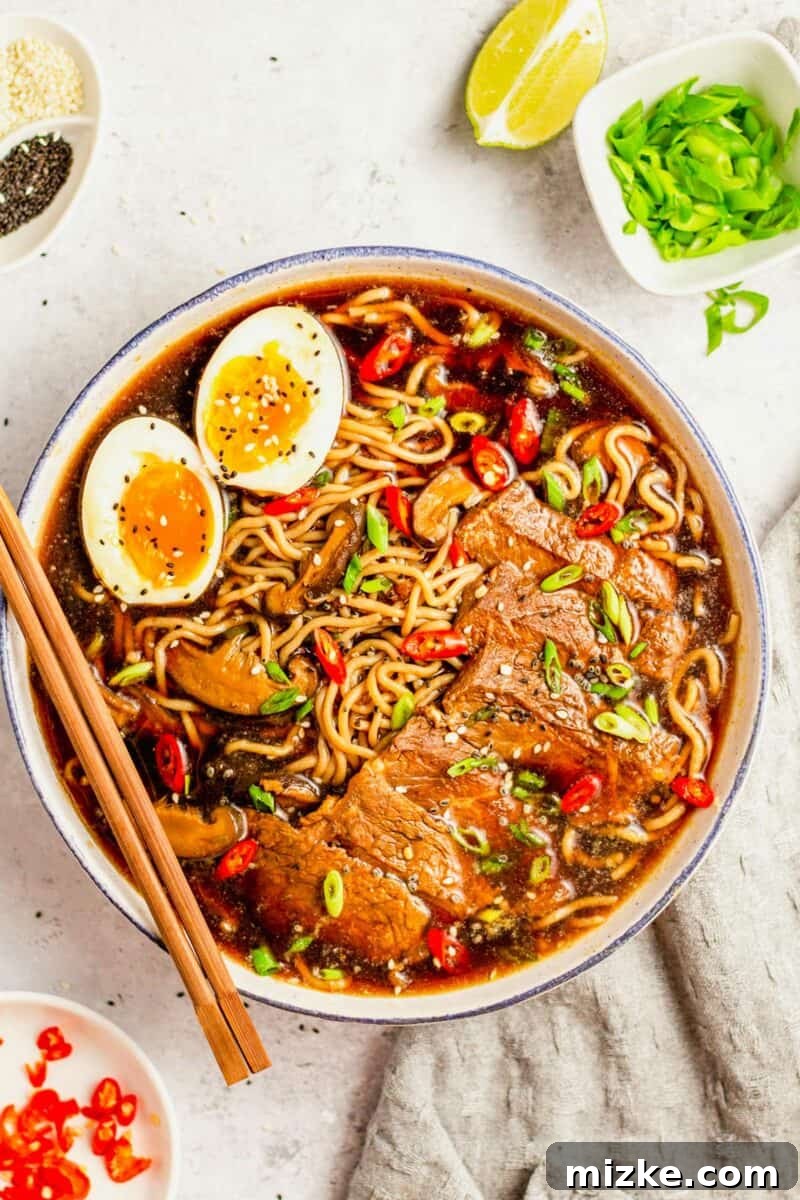
When we talk about flavor, this **beef ramen noodle soup** stands in a league of its own. It’s more than just “flavorful”; it’s a symphony for your taste buds. Imagine the aromatic essence of fresh ginger and garlic mingling with the umami depth of fish sauce and coconut aminos, all harmonized in a robust beef broth. And when you introduce tender, perfectly seared sirloin steak into this vibrant mix, it transforms into an irresistible culinary masterpiece. Each spoonful delivers a complex array of tastes that will make you wonder why you ever settled for anything less.
Many of us grew up with instant ramen, and while nostalgic, it set a low bar for what ramen could be. As adults, we often find ourselves paying upwards of $15-20 for a restaurant bowl, hoping for that truly authentic experience. Unfortunately, not all ramen joints deliver on their promise, leaving us disappointed and out of pocket. This homemade recipe is the antidote to those overpriced, underwhelming experiences. It proves that restaurant-quality ramen is not only achievable at home but often surpasses what you’ll find elsewhere.
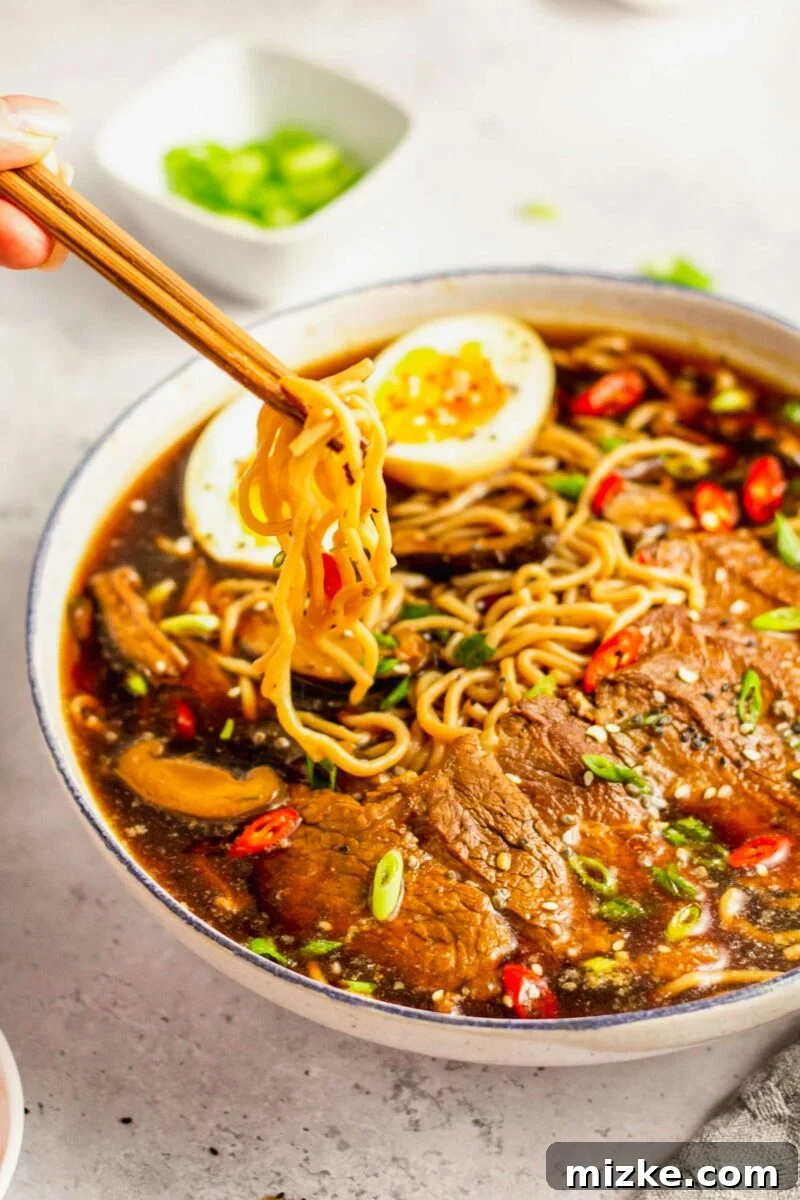
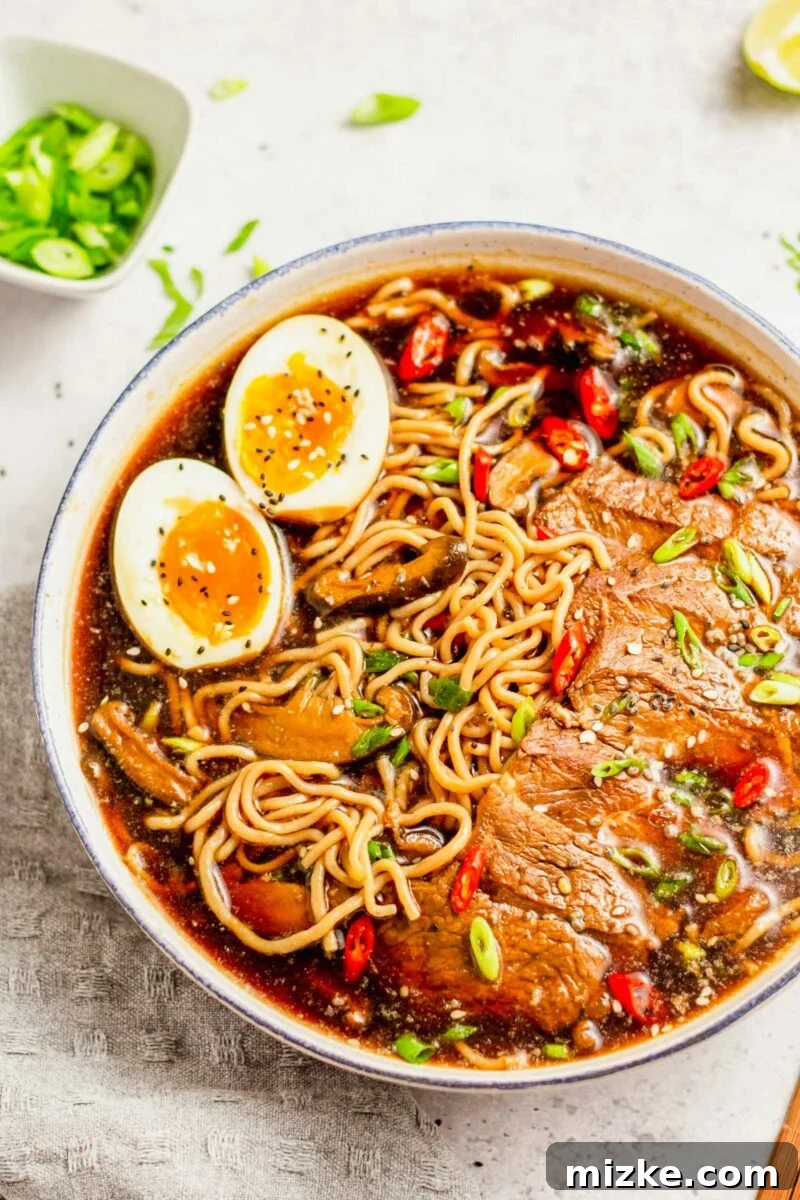
This **easy beef ramen recipe** is designed to be superior. It offers a deeply satisfying, savory broth, perfectly cooked ramen noodles, and generous slices of succulent steak. The addition of fresh vegetables and a luscious soft-boiled egg elevates it further, creating a balanced and complete meal that truly satisfies. It’s rich, comforting, and embodies all the essential elements of truly good ramen, but with the added satisfaction of having crafted it yourself.
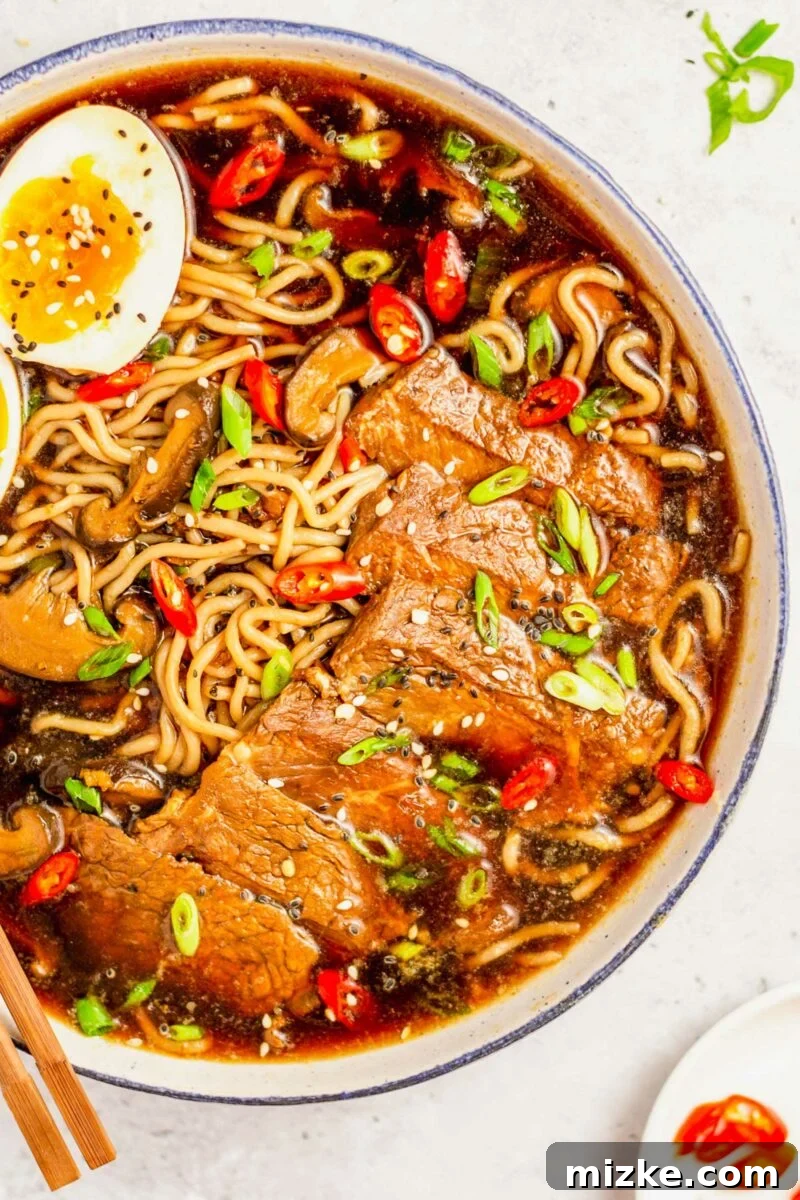
Why Make Beef Ramen at Home?
Beyond saving money, there are numerous reasons why preparing your own **homemade beef ramen** is a culinary triumph:
- Unmatched Freshness: You control every ingredient, ensuring peak freshness and quality, from the ginger to the sirloin.
- Customization: Tailor the flavors and toppings precisely to your liking. Prefer extra spice? Want more veggies? It’s all up to you!
- Cost-Effective: Enjoy a gourmet meal at a fraction of the cost of dining out. High-quality ingredients don’t have to break the bank.
- Dietary Control: Easily adjust sodium levels or substitute ingredients to fit specific dietary needs or preferences.
- Therapeutic Process: The act of cooking ramen can be incredibly rewarding, offering a sense of accomplishment with a delicious outcome.
- Impress Your Guests: Serve up an impressive, flavorful meal that will have everyone asking for the recipe.
Essential Ingredients for the BEST Beef Ramen
Every ingredient listed here plays a crucial role in building the bold, complex, and utterly delicious flavor profile of this **beef ramen noodle soup**. Don’t skimp on freshness where it counts!
- Olive Oil: Used for searing the steak and sautéing aromatics. Avocado oil is an excellent alternative due to its high smoke point and neutral flavor.
- Garlic: Freshly minced garlic is paramount for a pungent, aromatic base. While pre-minced can work in a pinch, fresh offers significantly more depth.
- Ginger: Another ingredient where fresh truly shines. Minced fresh ginger provides a warm, spicy, and fragrant note that’s irreplaceable.
- Shiitake Mushrooms: These mushrooms add a wonderful umami depth and earthy texture to the broth. Thinly slicing them ensures they cook evenly and integrate beautifully. Feel free to use fresh or dried (rehydrated) for maximum flavor.
- Sirloin Steak: A fantastic choice for its tenderness and rich beefy flavor when thinly sliced and quickly seared. Any high-quality, boneless steak cut (like flank or ribeye) can also be used, or even leftover steak for convenience.
- Ramen Noodles: The star of the bowl! While any brand of dried ramen will do, investing in fresh ramen noodles from an Asian grocery store can truly elevate the texture and experience. Even simple Maruchan noodles will be transformed by this broth.
- Beef Broth: The foundation of our flavorful soup. Using a low-sodium beef broth allows you to control the overall saltiness of the dish, adding more depth without over-seasoning.
- Soy Sauce: Contributes essential umami and salinity. Opt for low-sodium soy sauce or coconut aminos to manage sodium levels and achieve a slightly sweeter, milder flavor profile.
- Fish Sauce: Don’t be intimidated by its aroma; fish sauce is a secret weapon for adding incredible savory depth and a layer of umami that will make your ramen truly sing. Hoisin sauce can be used as a sweeter, thicker alternative if fish sauce is unavailable.
- Salt and Pepper: Basic seasonings to enhance the natural flavors of the steak and adjust the broth to perfection.
Elevate Your Bowl with Optional Garnishes
Garnishes aren’t just for aesthetics; they add layers of flavor, texture, and freshness that can transform a good bowl of ramen into an extraordinary one. While optional, these highly recommended toppings are worth the extra effort:
- Soft-Boiled Eggs: A ramen classic! Their creamy, runny yolks enrich the broth and add a luxurious texture. Learn how to cook them perfectly below.
- Green Onions: Sliced thinly, green onions (scallions) provide a fresh, pungent bite and a beautiful pop of color.
- Lime Wedges: A squeeze of fresh lime juice just before serving adds a bright, zesty acidity that cuts through the richness of the broth, balancing the flavors beautifully.
- Toasted Sesame Seeds: Adds a subtle nutty flavor and a pleasing crunch.
- Chili Oil or Red Pepper Flakes: For those who love a bit of heat, a drizzle of chili oil or a sprinkle of red pepper flakes offers a spicy kick.
- Nori (Dried Seaweed): Crispy sheets of seaweed add a delicate oceanic flavor and a unique texture that complements the ramen perfectly.
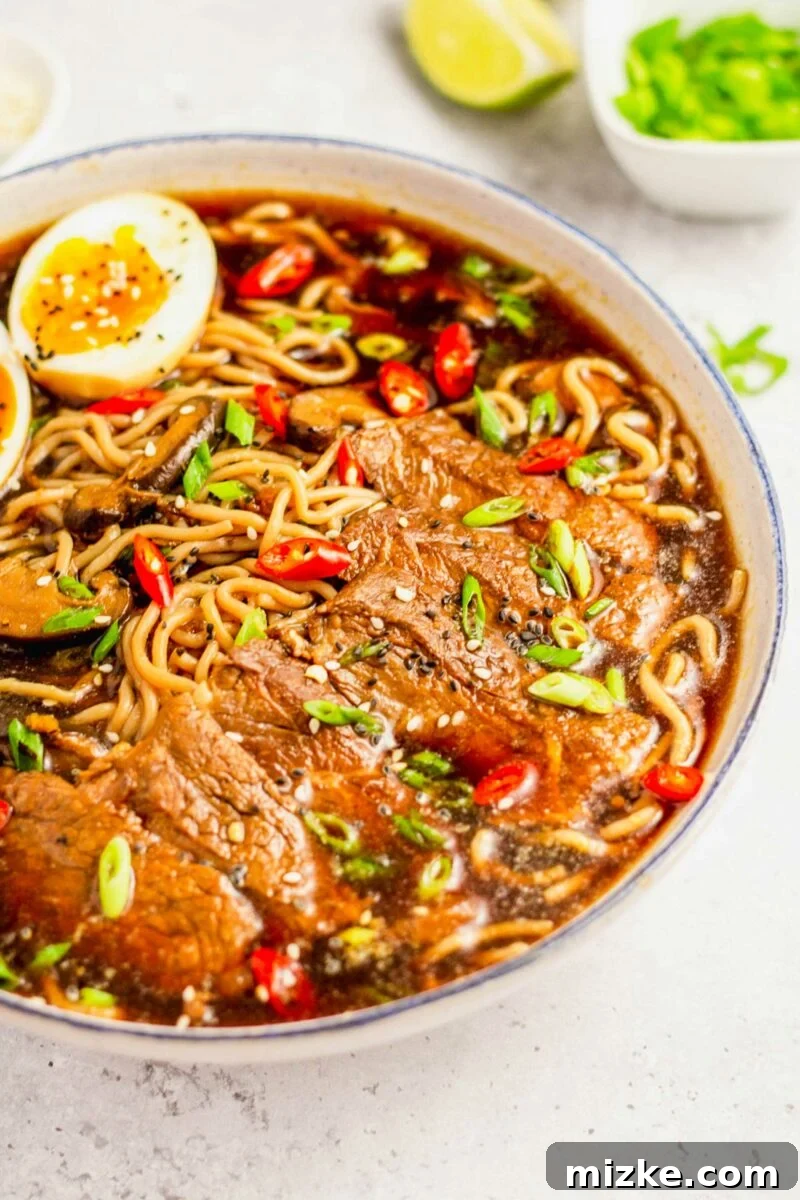
Step-by-Step: How to Make Beef Ramen Noodle Soup
Crafting this incredible **homemade beef ramen** is simpler than you might think. Follow these steps for a truly rewarding culinary experience:
- Prepare the Steak: Begin by seasoning your sirloin steak generously with salt and pepper. In a large pot or Dutch oven, heat 1 tablespoon of olive oil over medium heat. Sear the steak slices for 1-2 minutes per side until beautifully browned but still tender. Remove the steak from the pot and set it aside. This quick sear locks in flavor and creates a delicious crust.
- Build the Broth Base: Using the same pot (to capture all those flavorful browned bits from the steak), add the remaining olive oil. Toss in the minced garlic and fresh ginger and sauté for about 3 minutes until fragrant. Be careful not to burn the garlic.
- Simmer the Broth: Add the thinly sliced shiitake mushrooms, coconut aminos (or low-sodium soy sauce), fish sauce, and beef broth to the pot. Bring the mixture to a gentle simmer and let it cook for about 10 minutes. This simmering time allows the flavors to meld and deepen, creating a rich and aromatic broth.
- Perfect Your Soft-Boiled Eggs: While the broth simmers, prepare your soft-boiled eggs. In a separate saucepan, carefully place the eggs and cover them with water. Bring the water to a rolling boil, then reduce the heat slightly and let them boil for 4-5 minutes for a jammy, soft-boiled yolk. If you prefer hard-boiled, extend the cooking time to 10 minutes. Immediately transfer the cooked eggs to a bowl of ice-cold water to halt the cooking process and make them easier to peel.
- Assemble Your Ramen Bowls: Once the broth is ready, it’s time for assembly. Divide the ramen noodles evenly among four serving bowls. Ladle approximately 1 cup of the hot, flavorful broth into each bowl. Top with the seared steak slices. Carefully peel and halve your soft-boiled eggs, placing one half (or two quarters) into each bowl.
- Garnish and Serve: Finish your ramen with your choice of optional toppings. Sprinkle with sliced green onions and add a lime wedge. Serve immediately and enjoy the incredible flavors of your homemade **beef ramen noodle soup**!
Tips for Crafting the Perfect Bowl of Ramen
Achieving ramen perfection at home involves a few key considerations. Here are some tips to ensure your **homemade beef ramen** is consistently outstanding:
- Noodle Choice Matters: For the best texture, use fresh ramen noodles found in the refrigerated section of Asian markets. If using dried instant ramen (without the seasoning packet), ensure they are fully submerged in the hot broth and allowed a few minutes to cook through. The idea is that the hot broth will cook the raw/dried ramen noodles when poured into the bowl. Adjust the amount of broth based on noodle thickness; thicker noodles might absorb more liquid.
- Don’t Overcook the Steak: Sirloin cooks quickly. Sear it just enough to develop a crust and keep it tender. It will continue to cook slightly when added to the hot broth.
- Flavor Layering: Sautéing garlic and ginger until fragrant before adding liquids builds a strong aromatic foundation for your broth.
- Taste and Adjust: Always taste your broth before serving. You might want to add a pinch more salt, a dash of soy sauce, or a squeeze of lime to achieve your desired balance of savory, sweet, and tangy notes.
- Serve Immediately: Ramen is best enjoyed hot. The noodles can absorb a lot of liquid and become mushy if left sitting too long.
Creative Variations and Substitutions to Try
One of the joys of **homemade ramen** is its versatility. Feel free to experiment with different ingredients and flavors to suit your palate:
- Spice It Up: For an extra kick, stir in a teaspoon of chili paste (like gochujang or sriracha) or a generous sprinkle of red pepper flakes into the broth while it simmers. A swirl of homemade chili oil as a topping also works wonders.
- Noodle Alternatives: While ramen noodles are traditional, this recipe is delicious with other noodle types. Try Japanese udon noodles for a thicker, chewier texture, or rice noodles for a gluten-free option.
- Vegetable Boost: Don’t limit yourself to shiitake mushrooms! Incorporate other vegetables like bok choy, spinach, Napa cabbage, corn kernels, bamboo shoots, or bean sprouts for added nutrients and texture. Add quick-cooking greens like spinach or bok choy at the very end to prevent overcooking.
- Protein Swaps: Not a beef fan? This recipe adapts well to other proteins. Consider sliced chicken breast, pork tenderloin, pan-fried tofu, or even shrimp for a different take.
- Miso Addition: For a more traditional Japanese flavor profile, whisk in a tablespoon or two of miso paste (white or red, depending on your preference) into the broth just before serving. Be sure to dissolve it completely.
Storing and Reheating Your Ramen
While ramen is best fresh, you can definitely prepare components ahead of time or store leftovers. The key is to keep the broth separate from the noodles and toppings to maintain texture:
- Broth: Store leftover broth in an airtight container in the refrigerator for up to 3-4 days, or freeze for up to 2-3 months. Reheat gently on the stove.
- Steak: Store cooked steak slices separately in an airtight container in the refrigerator for up to 3 days.
- Noodles: Cooked noodles tend to get mushy if stored in broth. If you anticipate leftovers, cook only the amount of noodles you’ll eat immediately. Alternatively, cook extra noodles, rinse them with cold water, toss with a tiny bit of oil, and store separately. Reheat by briefly dunking in hot water or broth.
- Eggs and Garnishes: Store soft-boiled eggs (unpeeled is better) and fresh garnishes separately in the refrigerator. Add them fresh when serving reheated ramen.
Print Recipe
Beef Ramen Noodle Soup
Julie Chiou
10 minutes
15 minutes
25 minutes
4
Ingredients
- 1 pound (454 g) boneless sirloin steak, cut into ¼-inch thick slices
- ½ teaspoon kosher salt
- ½ teaspoon black pepper
- 2 tablespoons olive oil, divided
- 2 garlic cloves, minced
- 1 tablespoon minced fresh ginger
- 5 ounces (142 g) thinly sliced shiitake mushrooms
- 4 tablespoons coconut aminos or low-sodium soy sauce
- 1 tablespoon fish sauce
- 4 cups (946 ml) beef broth
- Dried or fresh ramen noodles (see notes below)
Toppings (optional):
- 4 soft-boiled eggs, halved
- ¼ cup (25 g) sliced green onions
- 1 lime, cut in wedges
Instructions
-
Season the steak generously with salt and pepper. Set aside.
-
In a large pot over medium heat, heat 1 tablespoon of olive oil and sear the sirloin steak for 1-2 minutes on each side. Remove from the pot and set aside.
-
In that same pot, add the rest of the olive oil and sauté the garlic and ginger for 3 minutes, until fragrant.
-
Add the sliced mushrooms, coconut aminos or soy sauce, fish sauce, and broth. Let the broth simmer for 10 minutes over medium-low heat.
-
Meanwhile, in a separate pot, add the eggs and cover them with water. Bring to a boil and let them boil for 4-5 minutes for soft-boiled eggs or 10 minutes for hard-boiled. Once cooked, transfer them to a bowl of ice-cold water. This stops the eggs from cooking further and makes them easier to peel.
-
When the broth is ready, assemble the ramen. In 4 bowls, divide the noodles equally. Add 1 cup of broth and top with 4 ounces of the cooked steak. Peel and halve your soft-boiled eggs and add one egg to each ramen bowl. Sprinkle with 1 tablespoon chopped green onions and add 1 lime wedge. Enjoy!
Notes
The idea is for the hot broth to cook the raw ramen noodles when you pour the broth into the bowl with the noodles.
At the Asian grocery store, you can find fresh ramen noodles. Divide 1 pound evenly amongst 4 bowls, then pour the hot liquid on top.
Alternatively, you can use dried ramen noodles and follow the same method. It’s similar to cooking ‘cup of noodles’ where you pour hot liquid over dried noodles and allow the heat to cook them.
Keep in mind, the thickness of the ramen noodles will determine how much liquid you need and how long they take to cook. If you use standard thin, squiggly ramen noodles, 5 cups of liquid should be more than enough.
Nutrition
Serving:
1
serving
,
Calories:
798
kcal
,
Carbohydrates:
81
g
,
Protein:
46
g
,
Fat:
31
g
,
Saturated Fat:
13
g
,
Polyunsaturated Fat:
3
g
,
Monounsaturated Fat:
14
g
,
Trans Fat:
1
g
,
Cholesterol:
233
mg
,
Sodium:
4317
mg
,
Potassium:
953
mg
,
Fiber:
4
g
,
Sugar:
3
g
This website provides approximate nutrition information for convenience and as a courtesy only. Nutrition information can vary for a variety of reasons. For the most precise nutritional data use your preferred nutrition calculator based on the actual ingredients you used in the recipe.
The default measuring system for this website is US Customary. Unit conversions are provided for convenience and as a courtesy only. While we strive to provide accurate unit conversions, please be aware that there may be some discrepancies.
Final Thoughts: Your Ramen Journey Begins
This **Beef Ramen Noodle Soup recipe** is more than just a meal; it’s an invitation to explore the rich and diverse world of ramen from the comfort of your home. By taking the time to prepare this dish, you’re not just saving money; you’re investing in a deeply satisfying culinary experience that offers incredible flavor, complete control over ingredients, and the immense joy of creating something truly special. So, gather your ingredients, follow these simple steps, and prepare to impress yourself and your loved ones with the best homemade ramen they’ve ever tasted. Enjoy your culinary journey!