
Iceland’s South Coast Wonders: Day 4 Adventure from Vík to Jökulsárlón Glacier Lagoon
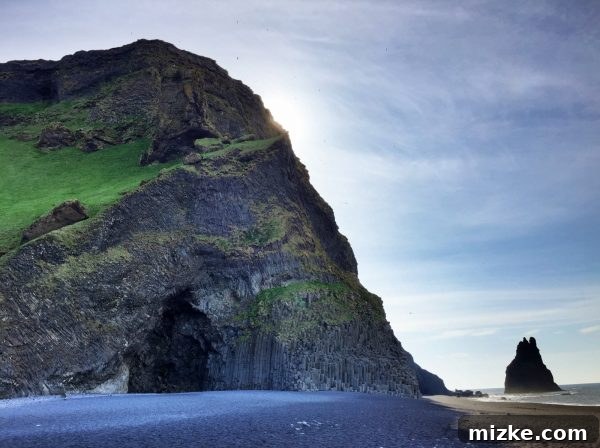
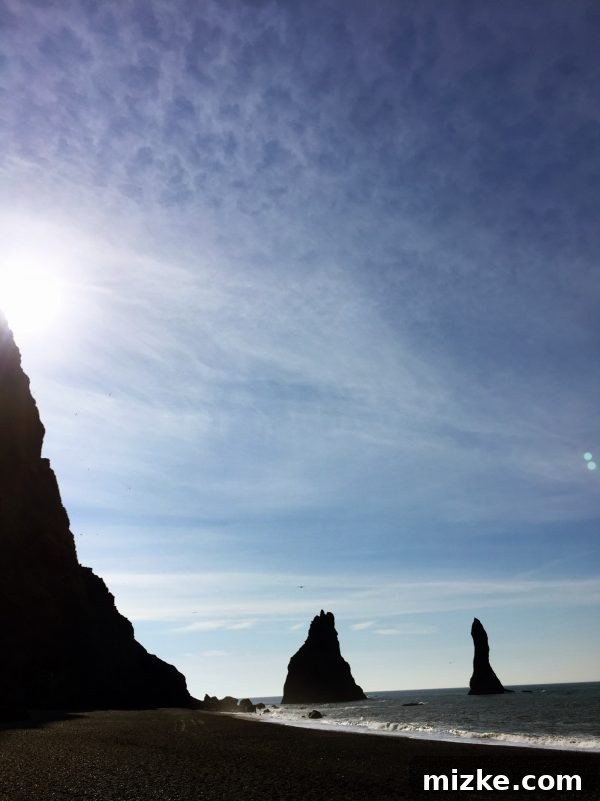
Our Icelandic odyssey continued with an early start on Day 4, promising a day packed with some of the island’s most iconic natural attractions. Leaving our accommodation, we backtracked slightly to revisit the enchanting village of Vík and its world-famous black sand beach, Reynisfjara. This incredible stretch of coastline, just a 20-minute drive with clear signage, is an absolute must-see. We quickly learned that the early bird truly catches the worm here; arriving around 7:30 AM, we had the entire majestic landscape virtually to ourselves. The tranquility of the morning, with the vast ocean stretching before us and the towering basalt columns silhouetted against the rising sun, was an unforgettable experience. By the time we departed at 8:00 AM, the first waves of eager tourists were already beginning to arrive, underscoring the value of an early start to truly soak in the serene beauty.
Reynisfjara Black Sand Beach: A Geological Marvel
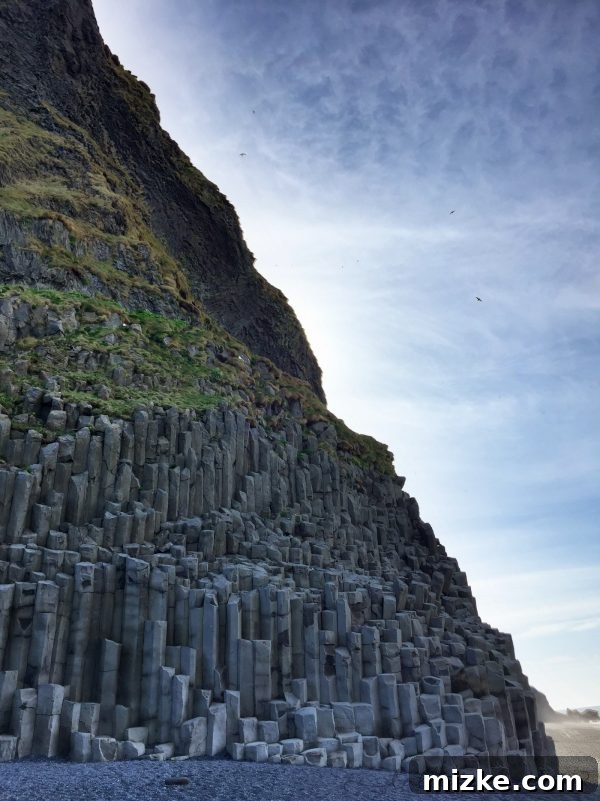
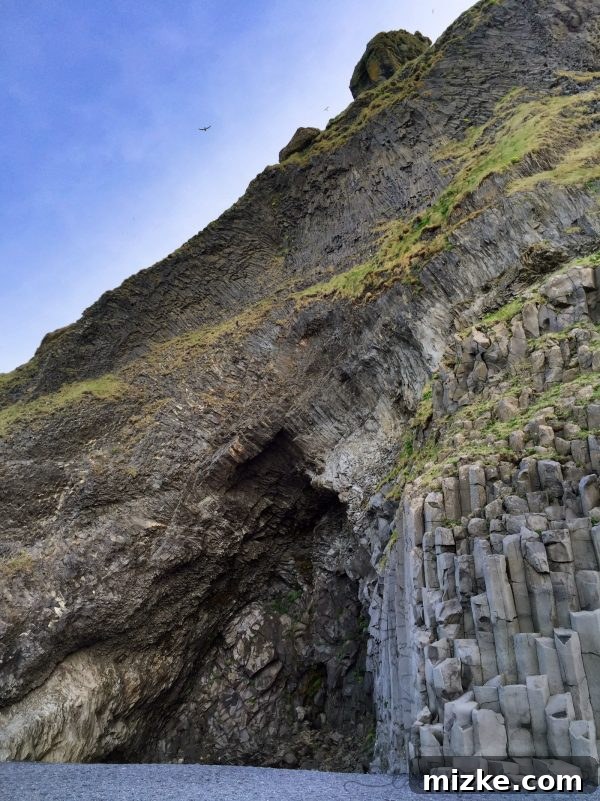
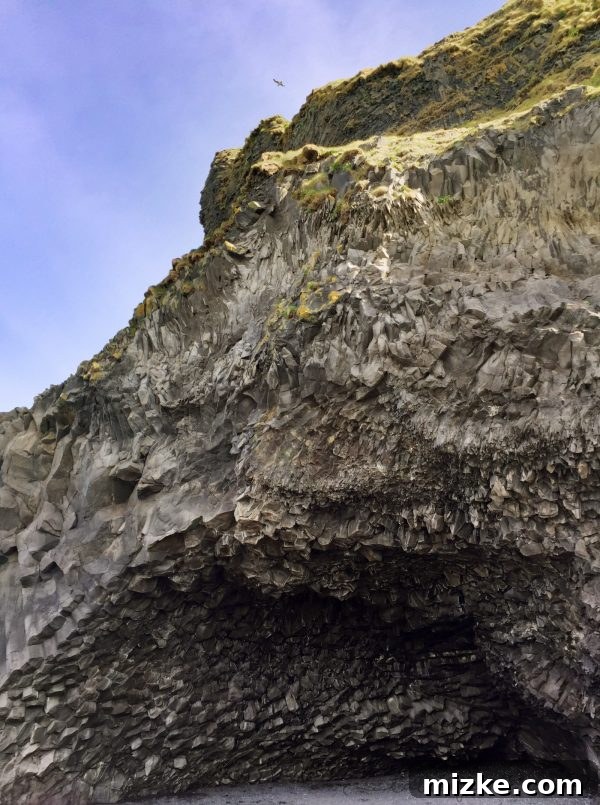
The geological formations at Reynisfjara are nothing short of spectacular. The hexagonal basalt columns, reminiscent of a giant’s staircase, rise dramatically from the sand, their geometric precision a testament to nature’s artistry. Standing beneath them, one can’t help but feel a sense of awe. The stark beauty evokes fantastical landscapes, drawing comparisons to epic sagas like Game of Thrones, particularly the textured, scale-like appearance that brings to mind the ‘Stone Men’ of that fictional world. These unique rock formations were created by cooling lava flows that contracted and fractured, forming these perfectly shaped pillars.
Beyond the columns, the powerful Atlantic waves crash onto the jet-black volcanic sands, creating a mesmerizing contrast. It’s a truly wild and untamed environment. However, visitors must exercise extreme caution here. The waves at Reynisfjara, often referred to as “sneaker waves,” are notoriously unpredictable and incredibly powerful, capable of sweeping people out to sea without warning. Always keep a safe distance from the water’s edge and never turn your back on the ocean. The striking sea stacks offshore, known as Reynisdrangar, are steeped in local folklore, said to be petrified trolls caught by the morning sun while attempting to drag ships to shore.
Sólheimasandur Plane Wreck: A Stark Reminder of Human Impact
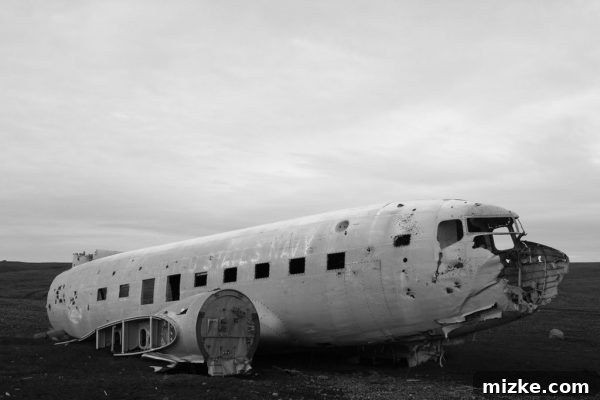
Our next planned destination was the iconic Sólheimasandur plane crash site, a desolate and eerily beautiful landmark. This famous site is home to the remains of a United States Navy Douglas Super DC-3 airplane, which made an emergency landing on the black sand beach of Sólheimasandur on November 24, 1973. Miraculously, all crew members survived the crash, but the fuselage was abandoned to the elements, slowly decaying and transforming into one of Iceland’s most popular, albeit controversial, photographic locations.
Unfortunately, the site now presents a different challenge for visitors: vehicle access to the plane has been permanently banned. This measure was a direct response to the irresponsible behavior of some tourists who, despite clear paths, decided to drive off-road, damaging the fragile surrounding landscape. The local farmers, who own the land, lacked the resources to constantly repair the environmental destruction caused by off-road driving. Consequently, the only way to reach the plane wreck now is by foot, a substantial 4-kilometer walk each way across the expansive black sands.
 (source)
We opted not to undertake the walk to the plane wreck on this particular day. While we recognize the unique photographic appeal and historical significance of the site, the prospect of an estimated two-hour round trip on foot, under a surprisingly strong Icelandic sun, coupled with one of us feeling unwell, led us to prioritize rest and continue our journey. It was a considerable bummer, as online photos, while stunning, can never fully capture the raw, remarkable presence of the actual wreckage. For those determined to see it, Google Maps provides precise directions to the parking area – just be mindful that the turn-off from the main road can be quick and abrupt.
Scenic Drive to the Glacier’s Embrace: Jökulsárlón Glacier Lagoon
After our visits to Reynisfjara and the plane wreck area, we refueled in Vík and began our highly anticipated journey towards Jökulsárlón Glacier Lagoon. Although Google Maps estimated a two-hour drive, our actual travel time stretched to a scenic 3.5 to 4 hours. This extension was entirely intentional and absolutely justified, as the South Coast of Iceland is an endless gallery of breathtaking vistas, each demanding a stop and a moment of admiration. Every turn revealed dramatic landscapes, from expansive lava fields covered in moss to distant glaciers gleaming in the sunlight, and countless unnamed waterfalls cascading down rugged cliffs.
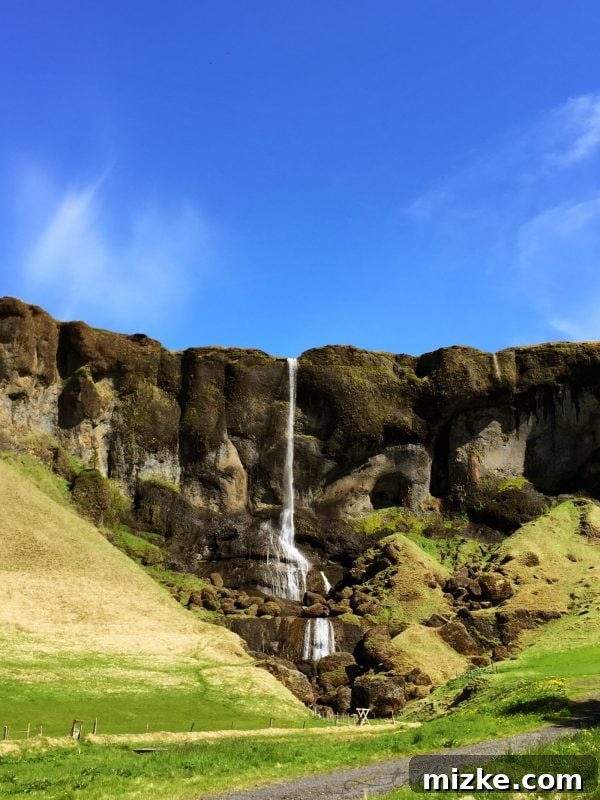
The beauty of driving Iceland’s Ring Road is the sheer abundance of natural pull-offs and viewpoints. We frequently stopped to capture the grandeur, including numerous stunning waterfalls that weren’t specifically on our itinerary but were too magnificent to simply drive past. These impromptu stops are crucial to fully appreciate the raw, untamed beauty of Iceland. It’s a constant reminder that the journey itself is as spectacular as the destinations.
Jökulsárlón Glacier Lagoon: Cruising Among Giants
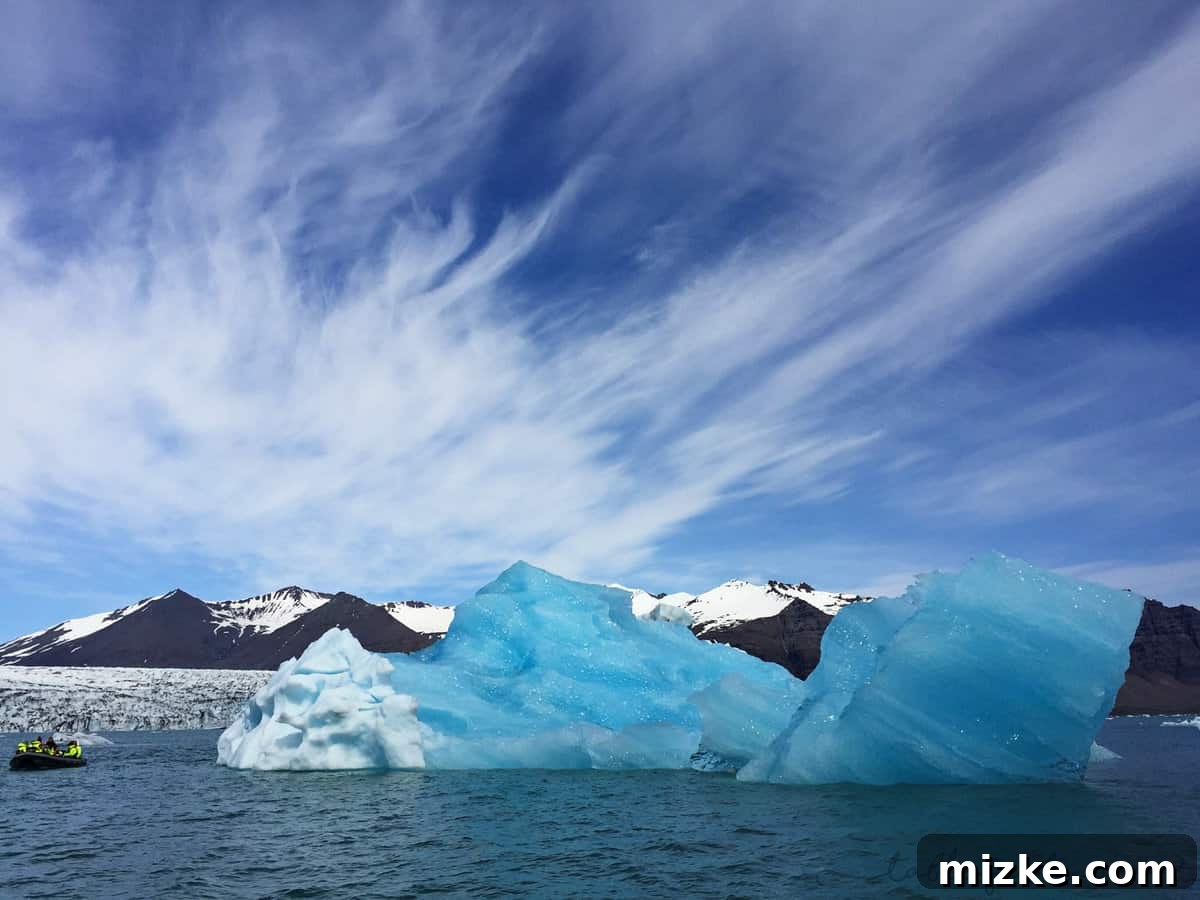
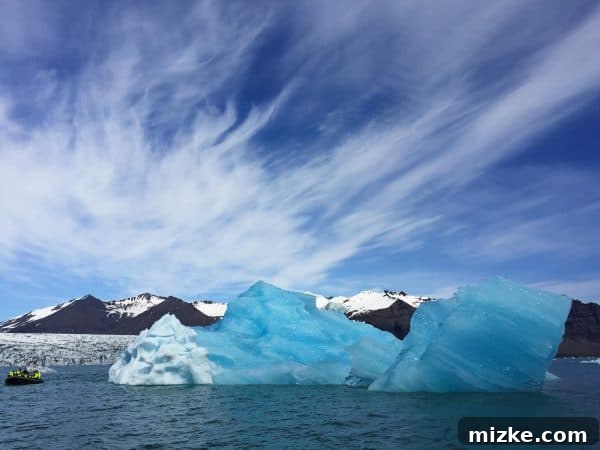
Finally, we arrived at Jökulsárlón Glacier Lagoon, a truly mesmerizing natural wonder and a major highlight of any Iceland itinerary. This deep glacial lake is fed by the retreating Breiðamerkurjökull glacier, a tongue of the vast Vatnajökull glacier, Europe’s largest. Enormous icebergs, calved from the glacier, slowly drift across the lagoon before making their way out to the Atlantic Ocean. The ever-changing landscape of ice, ranging in shades from brilliant white to deep sapphire blue, creates a dynamic and ethereal scene.
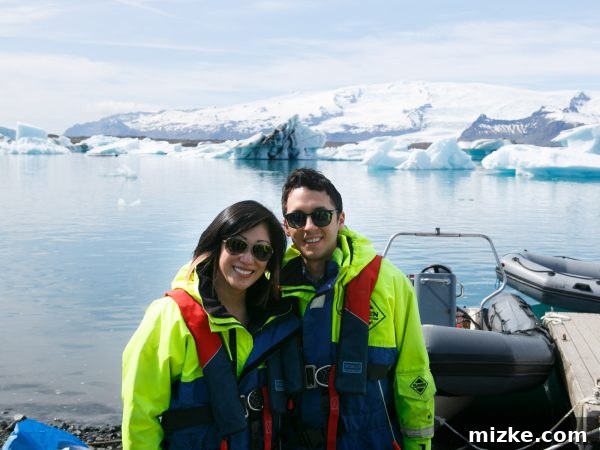
For an immersive experience, we highly recommend booking a Zodiac boat tour. These smaller, more agile boats offer an unparalleled opportunity to get up close and personal with the massive icebergs and the glacier itself, venturing deeper into the lagoon than the larger amphibian boats. Due to their popularity, Zodiac tours frequently sell out, so advance booking is absolutely essential. You can secure your spot and find more details on their official website (icelagoon.is/zodiac-tours/). The zodiac tour provides a much more intimate experience with fewer people, allowing for unobstructed views and fantastic photo opportunities.
Upon arrival, we were provided with bulky flotation suits and life jackets – essential gear for navigating the icy waters. While we found ourselves sweating profusely during the short walk to the boats, once we were out on the lagoon, the chill from the glacier quickly justified the extra layers. The sensation of gliding silently through the calm, icy waters, surrounded by colossal icebergs, is truly awe-inspiring. Our guide provided fascinating insights into the glacier’s geology and the lagoon’s ecosystem, often pointing out seals gracefully swimming between the icebergs.
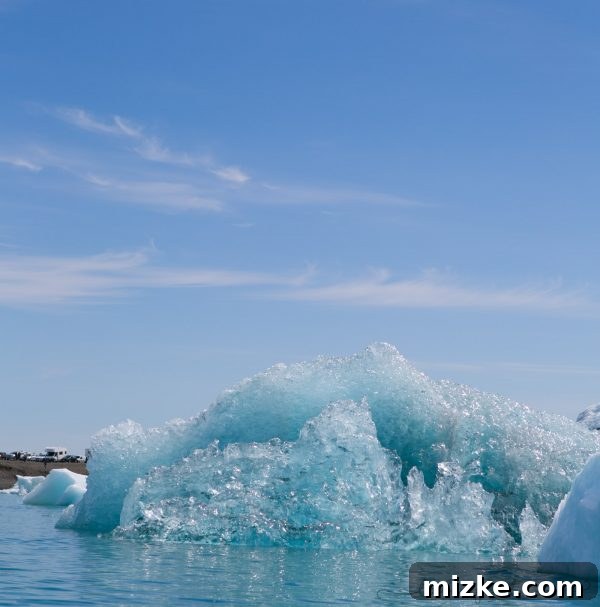
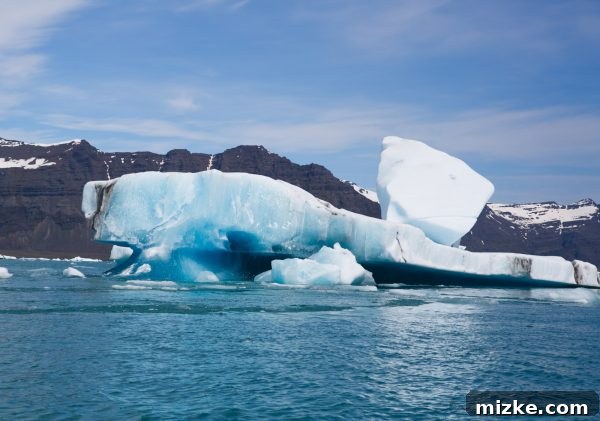
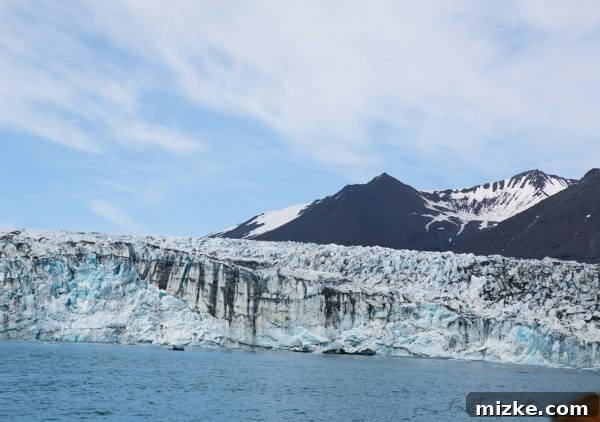
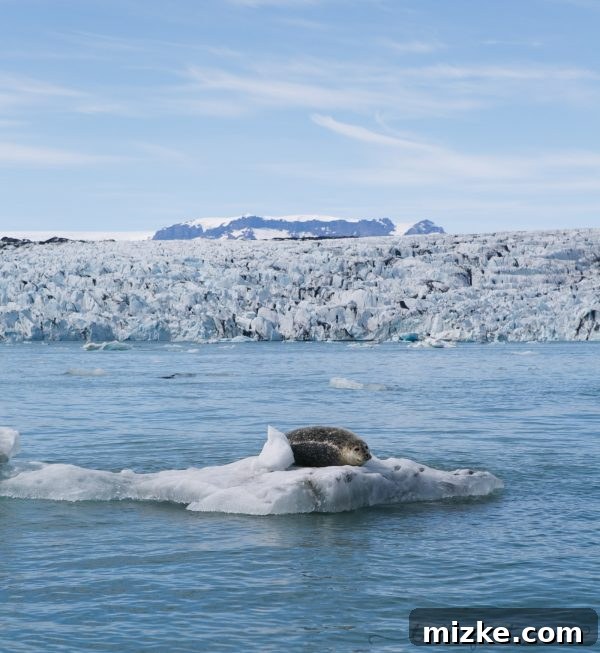
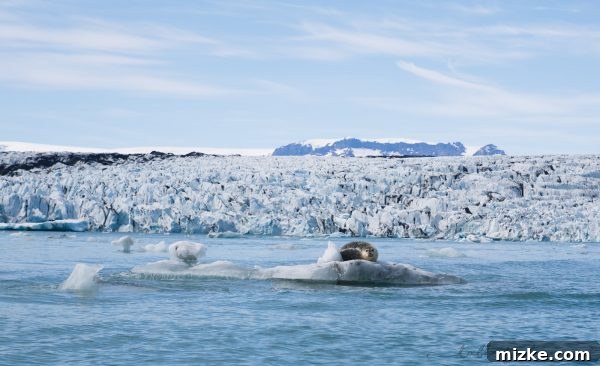
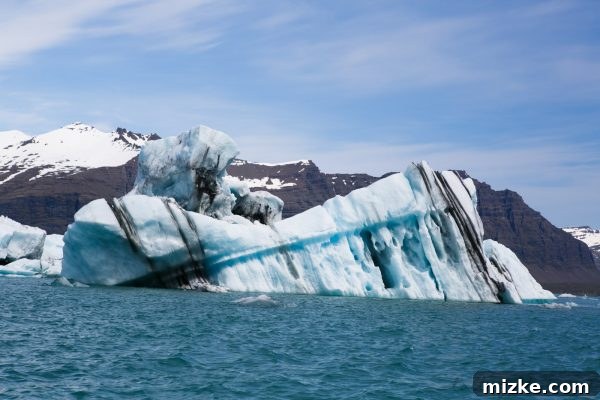
The sheer scale of these icebergs is truly humbling. The photo above, with a Zodiac boat in the background, gives a clear sense of the immense size of these floating giants. It’s a stark reminder of the powerful forces of nature at play.
Diamond Beach: A Glittering Spectacle (or Not)
Directly across the road from Jökulsárlón Glacier Lagoon lies Diamond Beach, or Breiðamerkursandur. This captivating black sand beach gets its name from the numerous chunks of ice, broken off from the lagoon’s icebergs, that wash ashore and sparkle like diamonds against the dark sand. It’s typically a photographer’s paradise, offering incredible contrasts and unique photo opportunities as the ice glistens under the sunlight.
However, nature is unpredictable. During our visit, Iceland was experiencing unusually warm weather, with temperatures soaring to around 70 degrees Fahrenheit (21°C). Consequently, by the time we arrived at Diamond Beach, there was very little ice to be seen – a significant disappointment. This experience served as a valuable lesson: natural phenomena are subject to weather and tides, and sometimes you just have to accept what nature offers (or doesn’t). For those hoping to witness the glittering spectacle, visiting during colder months or checking tidal forecasts might increase your chances of seeing more ice on the beach.
Hali Country Hotel & Reflecting on Accommodation Choices
With our itinerary for the day complete, we made the short 20-minute drive to our accommodation for the night, the Hali Country Hotel. Situated on a working family farm, the hotel offered a unique, rustic charm, with the added benefit of incredibly fresh, locally sourced food. While the experience of staying on a farm was certainly cool, our reflections on the day led to a realization: had we planned differently, we might have chosen to drive back to Vík for the night, perhaps staying at the same hotel as the previous evening.
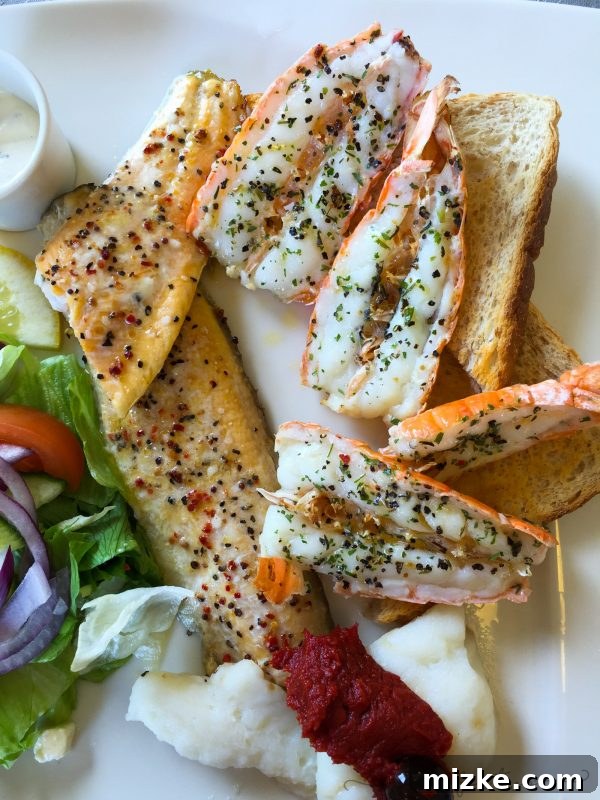
Our initial assumption was that the glacier lagoon tour would be strenuous, necessitating an accommodation closer to Jökulsárlón. However, the boat ride itself wasn’t overly taxing, and the area around Hali, while beautiful, is quite remote. The hotel was comfortable, and the dinner, though “hotel food,” was exceptionally delicious, featuring fresh-caught local ingredients like their own arctic char. Despite the excellent meal, the lack of other activities or amenities in the immediate vicinity made us wish for the more vibrant options available back in Vík. Staying in Vík would have allowed for more time to explore the town, revisit the beach, or simply enjoy a wider selection of dining and relaxation options after a day of extensive sightseeing.
This was a valuable lesson learned in travel planning, and one we hope to pass on: sometimes, centralizing your accommodation in a slightly more developed town can enhance the overall experience, even if it means a slightly longer drive at the end of the day. We had also briefly entertained the idea of continuing further west to explore more glaciers and possibly spot reindeer, but the daunting 8-hour drive back to Reykjavik from that point made it entirely unfeasible for our 5-day itinerary. Sticking to our planned route and accepting the limitations of time and geography was the sensible choice.
That evening, after a full day of incredible sights, we retired to our hotel room. The remote location meant a quiet night, which was perhaps a blessing in disguise as I started to feel quite unwell, with a sore throat intensifying. Rest was indeed in order. Day 4 along Iceland’s South Coast was a testament to the country’s unparalleled natural beauty, filled with dramatic landscapes, unique geological formations, and unforgettable experiences, even with a few unexpected detours and lessons along the way. We looked forward to what the next day in this magnificent land would bring.