
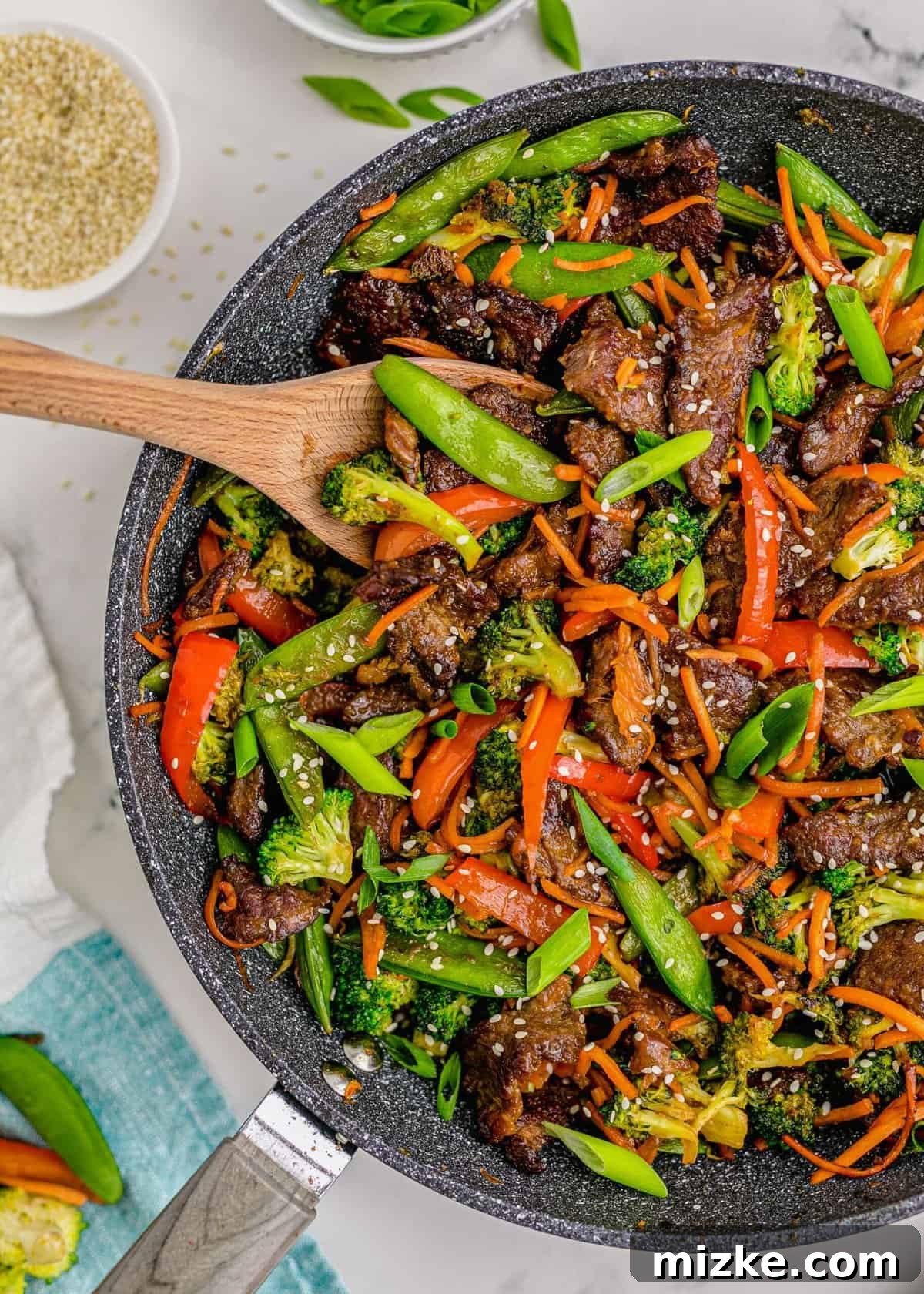
Skip the greasy takeout tonight and discover the unparalleled flavors of this homemade Beef Stir Fry! This recipe promises an effortlessly easy and incredibly flavorful meal that will quickly become a family favorite. It combines succulent, thinly sliced flank steak with a vibrant medley of fresh vegetables, including crisp broccoli, sweet carrots, and tender snow peas, all coated in a rich, savory, and subtly sweet sauce that’s guaranteed to make your mouth water. Get ready to enjoy a healthier, fresher, and utterly delicious Asian-inspired dinner right from your kitchen!
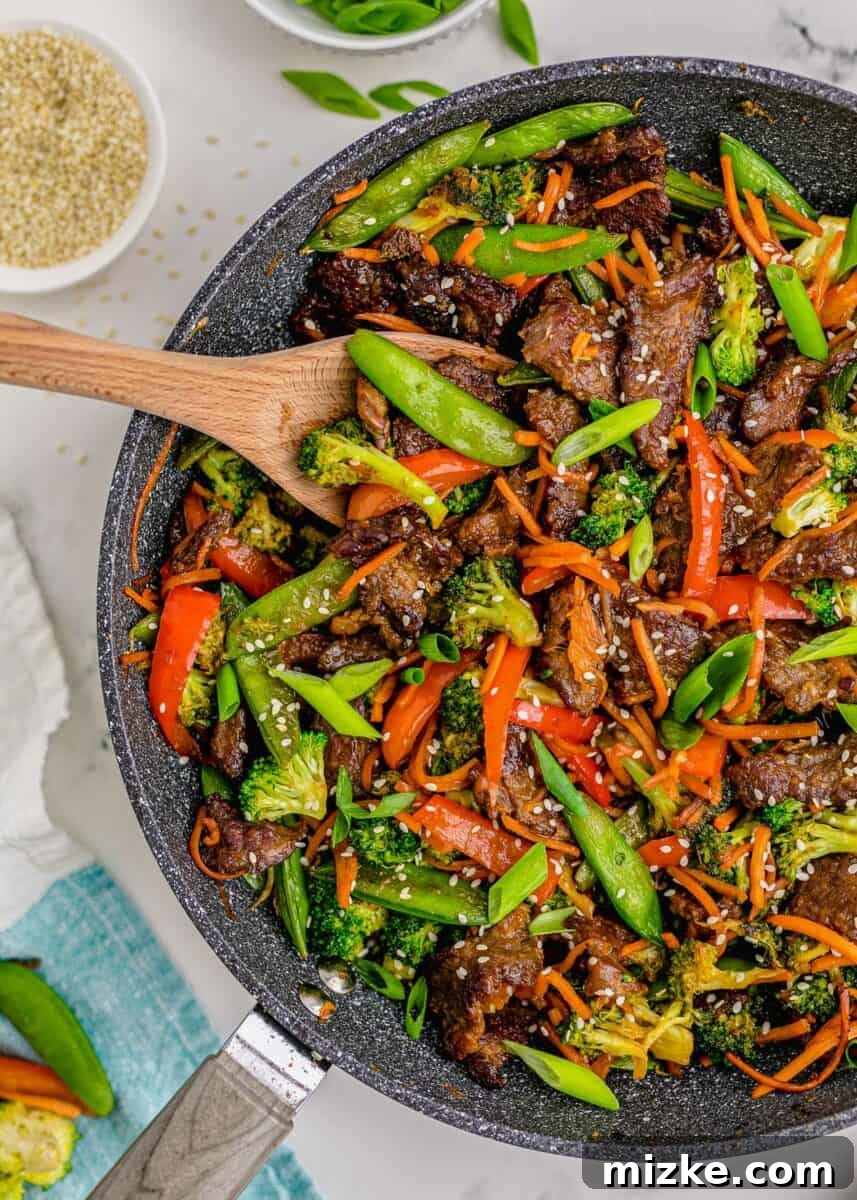
Easy & Flavorful Homemade Beef Stir Fry: Your Ultimate Weeknight Dinner Solution
When dinner dilemmas strike, a quick and satisfying stir fry is always the answer. Honestly, it’s hard to find someone who doesn’t appreciate the delightful combination of tender meat and crisp vegetables, all harmoniously blended with a savory stir fry sauce. And while I’ve enjoyed many stir-fries in my time, not all are created equal. This particular Beef Stir Fry recipe stands head and shoulders above the rest, promising a dining experience that rivals your favorite restaurant.
Once you make this beef stir fry, it’s destined to become a staple in your weekly meal rotation. Imagine perfectly seared, tender-crisp steak pieces mingling with a colorful array of fresh vegetables, all enrobed in a thick, glossy, sweet, and savory sauce. Every ingredient is thoroughly coated, ensuring no bite misses out on the incredible flavor. The best part? There’s plenty of that luscious sauce to drizzle extra over a generous serving of fluffy white rice, making for a truly indulgent yet balanced meal.
This beef stir fry truly offers the best of both culinary worlds. It’s a wholesome, well-balanced dish, rich in lean protein and packed with essential vegetables, providing excellent nutritional value. At the same time, it delivers all the comforting satisfaction and familiar flavors of your favorite restaurant takeout – without the added expense or unknown ingredients. It’s the perfect solution for those evenings when you crave something delicious, healthy, and incredibly easy to prepare at home.
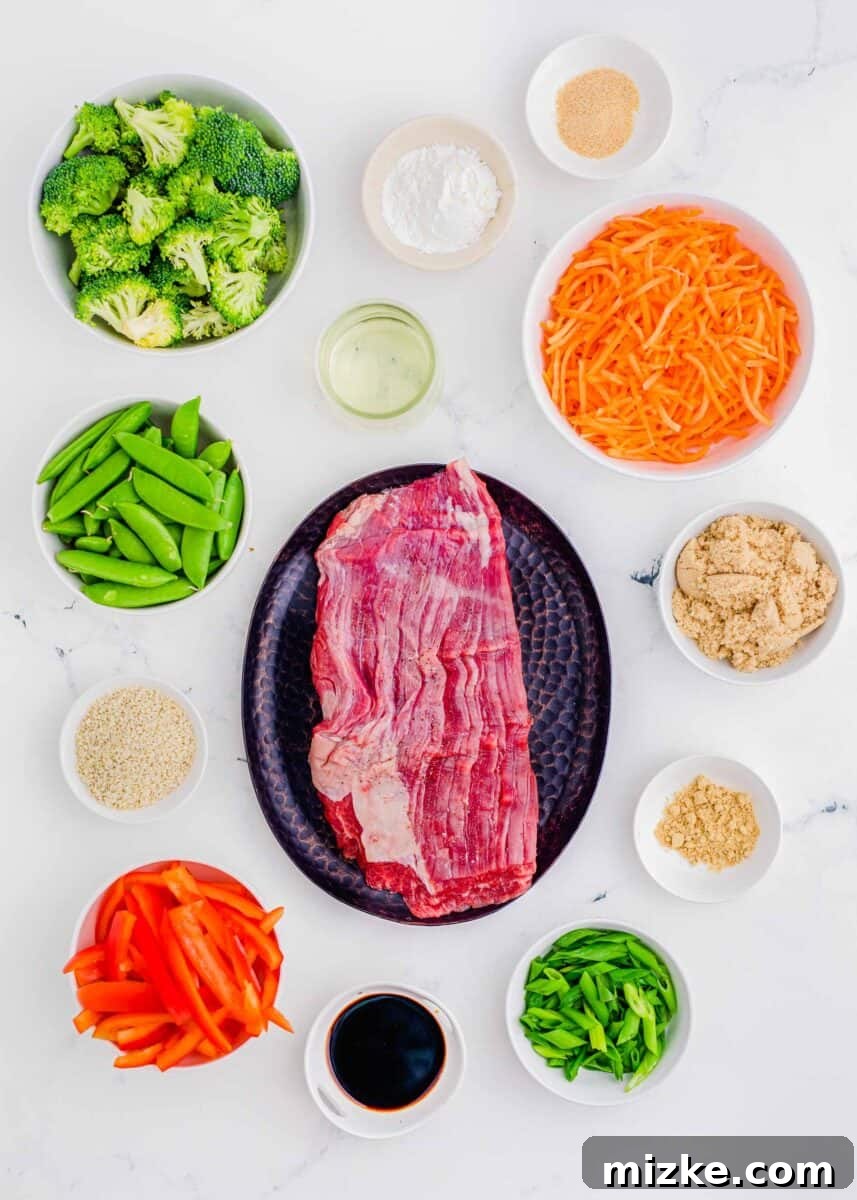
Essential Ingredients for an Authentic & Delicious Beef Stir Fry
Crafting a truly exceptional beef stir fry begins with selecting the right ingredients. Each component plays a crucial role in building the layers of flavor and achieving the desired textures. Here’s a detailed look at what you’ll need to make this incredible dish:
For the Tender and Crispy Steak:
- Flank Steak: This cut is widely regarded as the best choice for stir-frying. It’s lean, intensely flavorful, and becomes incredibly tender when sliced thinly against the grain. Its flat shape makes it easy to prepare for consistent cooking.
- Low-Sodium Soy Sauce: Used in the marinade, this ingredient is fundamental for adding a deep umami and savory base to the beef without making it excessively salty. Using a low-sodium version allows you greater control over the overall seasoning of the dish. For gluten-free options, tamari or coconut aminos work wonderfully as substitutes.
- Cornstarch: This is a secret weapon for achieving that sought-after crispy, velvety texture on your beef. When combined with soy sauce, it creates a thin coating that protects the meat from overcooking, locks in moisture, and ensures tender results with a delightful outer crisp.
- Cooking Oil (Vegetable Oil): A neutral-flavored oil like vegetable, canola, or avocado oil is perfect for this recipe. It has a high smoke point, which is essential for the high-heat cooking required for searing the beef and stir-frying the vegetables effectively without burning.
For the Vibrant Vegetable Medley:
The beauty of stir fry lies in its adaptability to various vegetables. This recipe features a classic, colorful assortment that offers both fantastic texture and natural sweetness:
- Broccoli Florets: Adds a beautiful pop of green, a subtle earthy flavor, and a satisfying tender-crisp bite that complements the rich sauce.
- Carrots: Whether shredded or thinly sliced, carrots contribute a touch of natural sweetness, a vibrant orange color, and a pleasant crunch.
- Snow Peas: These delicate peas are beloved for their crisp texture and subtly sweet flavor. They cook quickly and add an elegant touch to the stir fry.
- Red Bell Pepper: Sliced into thin strips, red bell peppers provide a sweet, juicy burst of flavor and a fantastic texture contrast. Any color bell pepper can be used, but red offers the sweetest profile and most appealing visual.
- Green Onions (Scallions): Used primarily as a fresh, pungent garnish at the very end, green onions add a bright, fresh finish that cuts through the richness of the sauce.
Crafting the Irresistible Savory-Sweet Stir Fry Sauce:
The sauce is the soul of any great stir fry, bringing all the ingredients together with its rich, balanced flavor profile. Our homemade sauce is designed to be perfectly savory, delightfully sweet, and wonderfully aromatic:
- Low-Sodium Soy Sauce: This forms the essential savory and umami base for our stir fry sauce. Again, choosing a low-sodium option allows for better control over the saltiness, letting you season to taste.
- Dark Soy Sauce: While optional, adding a small amount (around ½ tablespoon) of dark soy sauce provides a deeper, richer color to the finished dish, giving it that authentic restaurant look. It also contributes a slightly more robust and complex flavor.
- Brown Sugar: This is crucial for the sauce’s characteristic subtle sweetness. It caramelizes beautifully as the sauce thickens, balancing the saltiness of the soy sauce and enhancing the overall flavor profile.
- Fresh Garlic (Finely Minced): Forget garlic powder for the sauce! Freshly minced garlic provides an intense, aromatic punch that is simply irreplaceable in Asian cuisine. Finely mincing ensures its flavor permeates the sauce thoroughly.
- Fresh Ginger (Finely Minced): A powerful and zesty ingredient, fresh ginger adds warmth, a distinct spicy zing, and an invigorating aroma. Like garlic, fresh is best. Be mindful of the quantity, as its flavor is quite potent.
- Sesame Seeds: These tiny seeds add a delicate nutty flavor and a pleasing textural element to the sauce. Toasted sesame seeds are highly recommended as their flavor is much more pronounced and fragrant, though untoasted ones will still work if time is short. They also make an attractive garnish when sprinkled over the finished dish.
Stir Fry Variations & Creative Customization Ideas
One of the many joys of cooking stir-fries is their incredible versatility. This recipe is a fantastic starting point, but don’t hesitate to customize it to fit your personal taste, dietary needs, or whatever fresh ingredients you happen to have on hand. Here are some ideas to inspire your culinary creativity:
- Explore More Vegetable Options: Beyond the delightful mix of broccoli, carrots, snow peas, and bell peppers, there are countless vegetables that shine in a stir fry. Consider adding thinly sliced mushrooms for an earthy depth, tender baby corn for a touch of sweetness, crisp zucchini rounds, crunchy celery, fresh bean sprouts for added texture, nutritious bok choy, or finely shredded cabbage. Each addition will bring its unique flavor and texture to your dish.
- Try Different Cuts or Types of Beef: If flank steak isn’t available, skirt steak is an excellent alternative, offering similar tenderness when prepared correctly. Sirloin steak, though leaner, can also be a great choice for a slightly different texture. For a truly unique and flavorful twist, if you have leftover pineapple marinated ribeye, simply cut it into smaller pieces and incorporate it. You can then skip the initial marinade step of this recipe, as the ribeye will already be infused with delicious flavor. Pineapple and Asian flavors are a classic pairing that always works wonders!
- Adjust the Spice Level: The base recipe is designed to be mild and family-friendly. However, if you’re a fan of heat, it’s incredibly easy to make it spicier. Add a generous tablespoon (or more, to taste) of chili garlic sauce to your stir fry sauce mixture – this popular brand is a fantastic choice for a robust kick. Alternatively, you can finely slice some fresh red chilies or add a pinch of red pepper flakes during the vegetable stir-frying stage for a fiery boost.
- Make it Gluten-Free: To adapt this recipe for a gluten-free diet, simply ensure that you use gluten-free tamari or coconut aminos instead of regular soy sauce. Always double-check labels on other ingredients like dark soy sauce or chili garlic sauce to confirm they are certified gluten-free.
- Incorporate Nuts for Extra Crunch: For an additional layer of texture and nutty flavor, stir in a handful of toasted cashews or peanuts during the last minute of cooking. They add a delightful crunch that contrasts beautifully with the tender beef and vegetables.
- Add a Citrus Brightness: A squeeze of fresh lime or orange juice at the very end of cooking can add a lovely tangy note that brightens all the flavors in the stir fry.
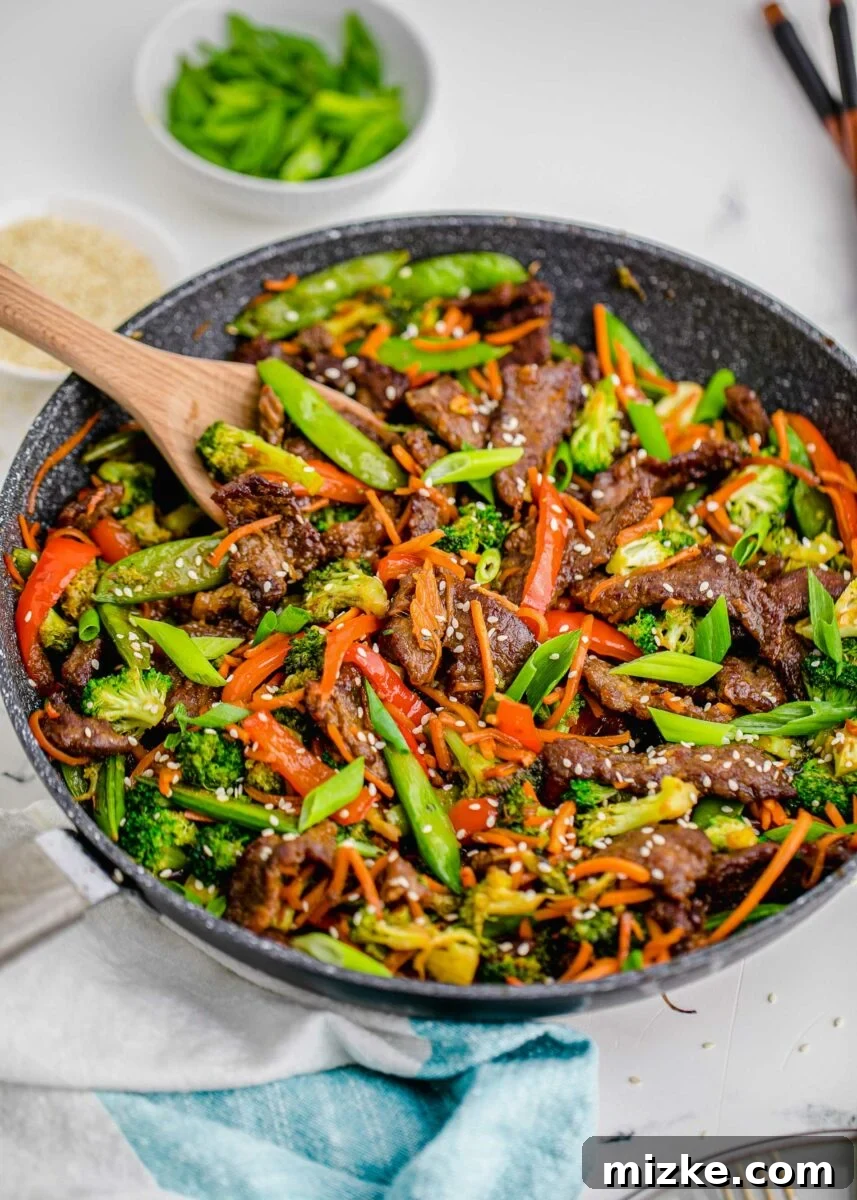
Step-by-Step Guide: How to Achieve the Best Homemade Beef Stir Fry
Creating a restaurant-quality beef stir fry at home is surprisingly straightforward, especially when you follow these clear, step-by-step instructions. The secret to success lies in meticulous preparation and cooking with high heat!
- Step 1: Prepare and Marinate the Beef for Maximum Tenderness. Start by thinly slicing your flank steak. To ensure the beef is incredibly tender, it’s crucial to slice it against the grain. Aim for uniform strips, no more than ½ inch thick and approximately 2 inches long. Transfer the sliced beef to a medium-sized bowl. Add 2 tablespoons of low-sodium soy sauce and 2 tablespoons of cornstarch, then toss everything together until each piece of beef is thoroughly coated. Allow the beef to marinate at room temperature for at least 30 minutes. This essential step not only infuses the beef with savory flavor but also tenderizes it and sets the stage for a desirable crispy exterior when cooked.
- Step 2: Master Your Mise en Place (Prep All Ingredients). Stir-frying is a rapid cooking process, so having all your ingredients prepped, measured, and within easy reach before you start cooking is absolutely vital. Chop all your chosen vegetables into uniform, bite-sized pieces to ensure even cooking. In a separate, clean bowl, whisk together all the components for your delectable stir fry sauce: ½ cup low-sodium soy sauce, ½ tablespoon dark soy sauce (if you’re using it for deeper color and flavor), 3 tablespoons packed brown sugar, 3 cloves of finely minced fresh garlic, and 1 teaspoon of finely minced fresh ginger. Set both the prepped vegetables and the whisked sauce aside right next to your stovetop.
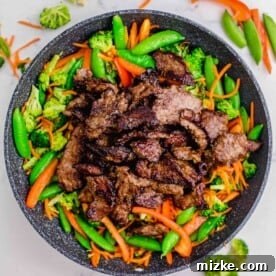
- Step 3: Perfectly Sear the Beef. Heat 1 tablespoon of cooking oil (vegetable, canola, or avocado) in a large, deep skillet or a wok over high heat. The oil should be shimmering hot, indicating it’s ready for searing. Add about half of the marinated beef to the hot skillet, ensuring it’s in a single layer to avoid overcrowding. Overcrowding will lower the pan’s temperature and cause the beef to steam rather than sear. Fry the beef for approximately 2-3 minutes, stirring occasionally, until it’s beautifully browned and develops a slight crispness on the edges. Remove this batch of cooked beef from the skillet and transfer it to a plate lined with paper towels to drain any excess oil. If needed, add another tablespoon of oil to the pan and repeat the searing process with the remaining half of the beef, then add it to the plate with the first batch. Remember, the beef doesn’t need to be fully cooked through at this stage; it will finish cooking later with the vegetables and sauce.
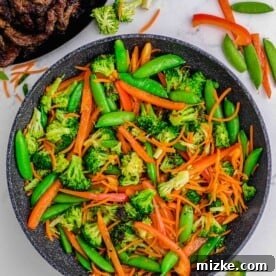
- Step 4: Stir-Fry the Vibrant Vegetables to Tender-Crisp Perfection. Using the same skillet, still over medium-high heat (add a tiny bit more oil if the pan looks dry), toss in all your chopped vegetables (broccoli, carrots, snow peas, and red bell pepper). Reserve the sliced green onions for garnish. Stir-fry the vegetables for about 2-4 minutes. The goal is for them to be tender-crisp – they should still retain a slight bite and their vibrant colors, not become soft or mushy. Avoid overcooking to maintain their fresh texture and nutritional value.
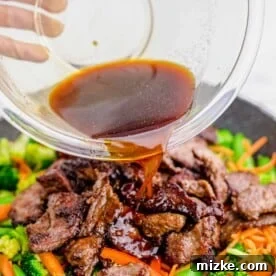
- Step 5: Combine All Ingredients and Thicken the Sauce. Once your vegetables are perfectly tender-crisp, return all the seared beef to the skillet alongside the cooked vegetables. Give your prepared stir fry sauce another quick whisk, as the cornstarch may have settled at the bottom. Pour the entire sauce mixture evenly over the beef and vegetables in the pan. Continue to stir-fry and toss all the ingredients together vigorously for another 1-2 minutes. As the sauce heats up, the cornstarch will activate, causing the sauce to thicken beautifully and coat every piece of beef and vegetable with a glossy, flavorful layer.
- Step 6: Garnish and Serve Immediately. As soon as the sauce has reached your desired thickness and all ingredients are thoroughly combined and heated through, remove the skillet from the heat. Generously sprinkle the dish with your reserved sliced green onions and additional sesame seeds for an appealing presentation and a final burst of fresh flavor and texture. Serve your homemade beef stir fry immediately over a steaming bed of white rice, brown rice, or your choice of noodles. Enjoy every delicious bite of your culinary creation!
Delightful Serving Suggestions for Your Beef Stir Fry
A perfectly executed beef stir fry is a meal in itself, but the right accompaniment can elevate the experience even further. While a classic bowl of rice is always a winner, here are several delicious ways to serve this versatile dish:
- Classic Steamed White Rice: The most popular and traditional choice, steamed white rice (such as fluffy jasmine rice or sticky sushi rice) provides a neutral canvas that perfectly absorbs all the rich, savory-sweet stir fry sauce. Both long-grain and short-grain varieties work beautifully.
- Nutrient-Rich Brown Rice: For a healthier option with a nuttier flavor and added fiber, brown rice is an excellent accompaniment that complements the robust flavors of the stir fry.
- Savory Egg Fried Rice: Transform your meal into an even more substantial feast by serving it alongside homemade fried rice. The savory eggs and vegetables in the fried rice create a wonderful synergy with the stir fry.
- Assorted Noodles: If you prefer noodles over rice, try serving your beef stir fry over a bed of cooked lo mein noodles, thin ramen noodles, or delicate vermicelli rice noodles. Each noodle type offers a unique texture and mouthfeel.
- Low-Carb Alternatives: For those following a low-carbohydrate diet, consider serving the stir fry over cauliflower rice, spiralized zucchini noodles (zoodles), or steamed quinoa for a lighter, equally satisfying meal.
- Fresh Lettuce Wraps: For a refreshing and lighter presentation, spoon the beef stir fry into crisp lettuce cups, such as butter lettuce or iceberg lettuce. This creates a delightful and interactive meal experience.
Storage and Reheating Instructions for Leftovers
One of the great advantages of this beef stir fry is how well it keeps, making it ideal for meal prepping or enjoying delicious leftovers throughout the week. Proper storage and reheating methods are key to maintaining its quality and flavor:
- Storage: After cooking, allow any leftover beef stir fry to cool completely to room temperature. This is crucial for food safety. Once cooled, transfer the stir fry to an airtight container. It will stay fresh and delicious in the refrigerator for up to 3-4 days. Always ensure that cooked food is not left at room temperature for more than two hours to prevent bacterial growth.
- Reheating on the Stovetop: For the best possible reheating results, which helps to maintain the tender texture of the beef and crispness of the vegetables, use a stovetop. Place the leftovers in a skillet or wok over medium heat. To prevent the dish from drying out and to help loosen the sauce, you may want to add a tablespoon or two of water or chicken broth. Stir the stir fry occasionally until it is thoroughly warmed through, which typically takes about 5-7 minutes.
- Reheating in the Microwave: If you’re looking for a quicker and more convenient option, the microwave works well. Transfer your beef stir fry to a microwave-safe dish. Heat on high for 1-2 minutes, stirring halfway through, until the dish is piping hot. Be mindful not to overheat, as excessive microwaving can sometimes make the beef a bit tougher.
Pro Tips for Achieving the Best Homemade Stir Fry
Elevate your stir-frying game with these expert tips, ensuring every batch of beef stir fry you make is nothing short of spectacular:
- Always Slice Beef Against the Grain: This is arguably the most important tip for tender beef. Slicing perpendicular to the muscle fibers shortens them, making the beef incredibly easy to chew and preventing it from becoming tough.
- Avoid Overcrowding the Pan: When searing the beef (and even the vegetables), cook in batches if necessary. Overcrowding a wok or skillet significantly lowers its temperature, causing the ingredients to steam rather than sear and caramelize. This results in grey, rather than beautifully browned, flavorful beef, and soggy vegetables.
- High Heat is Essential: Stir-frying is a cooking method built on speed and intense heat. Ensure your wok or skillet is screaming hot before you add any ingredients. This high heat is what creates that desirable “wok hei” (the “breath of the wok” flavor) and ensures your vegetables are perfectly tender-crisp.
- Prioritize Preparation (Mise en Place): As mentioned earlier, once you start stir-frying, everything happens very quickly. There’s no time to chop vegetables or mix sauces mid-cook. Have all your ingredients prepped, measured, and arranged within easy reach of your stovetop before you ignite the flame.
- Cook Vegetables to Tender-Crisp: Aim for vegetables that are cooked through but still retain a slight crunch and their vibrant color. Overcooked vegetables become mushy and lose their appeal.
- Taste and Adjust Your Sauce: Before adding the sauce to the pan, always taste it. This is your opportunity to adjust the sweetness, saltiness, or tanginess to your personal preference. A dash more brown sugar, a splash of rice vinegar, or a pinch of chili garlic sauce can make all the difference.
- Use a Wok for Authentic Results: While a large skillet works well, a traditional wok is ideal for stir-frying. Its sloped sides allow for continuous tossing and provide varying heat zones, which is perfect for this cooking method.
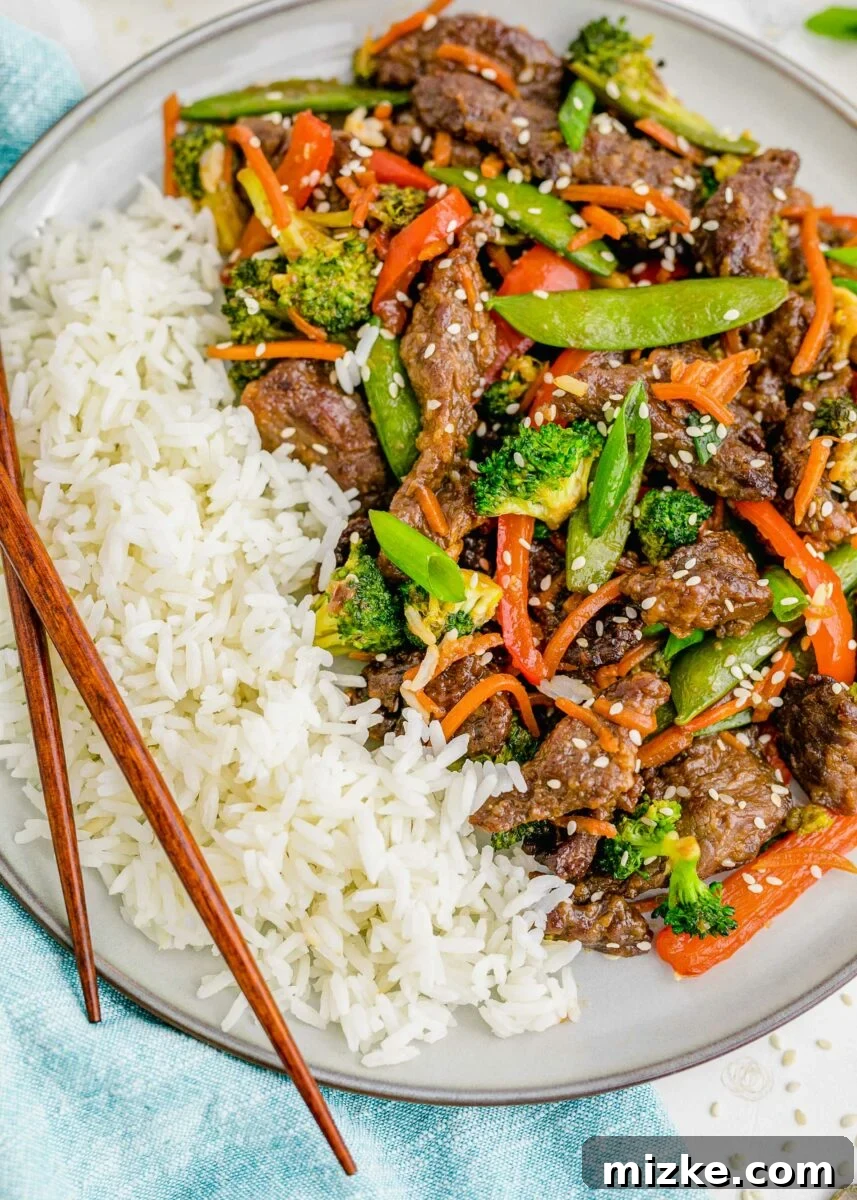

Beef Stir Fry
Equipment
-
Wok or Large Skillet
Ingredients
- 1 pound (454 g) flank steak, thinly sliced against the grain
- 2 Tablespoons low-sodium soy sauce, for marinating
- 2 Tablespoons cornstarch, for marinating
- 2-3 Tablespoons cooking oil (vegetable or canola), divided
- 2 cups (182 g) broccoli florets
- 1 cup (128 g) shredded carrots
- 1 cup (98 g) snow peas
- 1 red bell pepper, sliced
- 1-2 green onions, sliced, for garnish
For the sauce:
- ½ cup (118 ml) low-sodium soy sauce
- ½ tablespoon dark soy sauce, optional
- 3 Tablespoons brown sugar, packed
- 3 cloves garlic, finely minced
- 1 teaspoon fresh ginger, finely minced
- 1 teaspoon sesame seeds, plus more for garnish
Instructions
-
Marinate the Beef: Cut the flank steak thinly against the grain (no more than ½ inch thick, 2-inch long strips). Place it in a medium bowl. Stir in 2 Tablespoons of low-sodium soy sauce and 2 Tablespoons of cornstarch until well coated. Allow this to marinate at room temperature for at least 30 minutes.

-
Prepare Vegetables: Chop all your vegetables into uniform, bite-sized pieces. Set aside.
-
Prepare the Sauce: In a separate bowl, whisk together ½ cup low-sodium soy sauce, ½ tablespoon dark soy sauce (if using), 3 Tablespoons brown sugar, 3 cloves finely minced garlic, 1 teaspoon finely minced ginger, and 1 teaspoon sesame seeds. Set aside.
-
Heat 1 tablespoon of cooking oil in a large deep skillet or wok over high heat until it begins to shimmer.
-
Cook the Beef: Add half of the marinated beef to the hot skillet in a single layer. Fry for 2-3 minutes, stirring occasionally, until browned and slightly crispy. Remove this batch of beef and place it onto a paper towel-lined plate to drain. Add another tablespoon of oil if needed, then fry the remaining half and add it to the plate with the first batch.
-
Stir-Fry Vegetables: Add any remaining cooking oil (if necessary) and all the prepped vegetables (broccoli, carrots, snow peas, red bell pepper – except the green onions) to the same skillet over medium-high heat. Stir-fry for 2-4 minutes until the vegetables are tender-crisp.
-
Combine Beef & Veggies: Return all the cooked beef to the skillet with the vegetables.
-
Sauce & Thicken: Pour the whisked stir fry sauce over the beef and vegetables. Stir and toss everything together continuously for 1-2 minutes until the sauce thickens and evenly coats all the ingredients.
-
Garnish and Serve: Sprinkle with sliced green onions and more sesame seeds over top. Serve hot over white rice or your preferred accompaniment.


Video Overview
Nutrition Information
(Approximate values per serving, based on 4 servings)
- Serving Size: 1 serving
- Calories: 362 kcal
- Carbohydrates: 26g
- Protein: 31g
- Fat: 15g
- Saturated Fat: 3g
- Polyunsaturated Fat: 3g
- Monounsaturated Fat: 7g
- Trans Fat: 1g
- Cholesterol: 68mg
- Sodium: 1539mg
- Potassium: 931mg
- Fiber: 4g
- Sugar: 14g
Disclaimers
This website provides approximate nutrition information for convenience and as a courtesy only. Nutrition information can vary for a variety of reasons. For the most precise nutritional data, use your preferred nutrition calculator based on the actual ingredients you used in the recipe.
The default measuring system for this website is US Customary. Unit conversions are provided for convenience and as a courtesy only. While we strive to provide accurate unit conversions, please be aware that there may be some discrepancies.